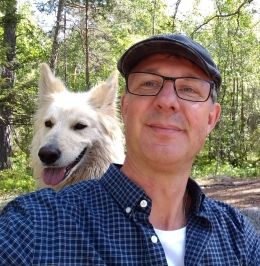
Tobias Pettersson is a Senior Lecturer at the Department of Pedagogy: Music, Dance and Drama , University of Gothenburg . His roles include Undergraduate Teaching Coordinator and Education Coordinator for both first/second cycle education and teacher training programs. He works at the intersection of musicology , gender studies , and pedagogical traditions . Current position since 2015 Active in teacher education since the 1990s Doctoral degree in musicology (2004) Research Focus: Analyzes the origins and persistence of musical traditions , gender equality in music life , and education for sustainable development . Led projects at the Centre for Environment and Sustainability (2012-2014) and developed web-based educational toolboxes. Key Contributions: Publications on Beethoven's canonization in Swedish education (2004), gender dynamics in performing arts (2006), and critical analyses of musicological epistemology (2005). His work bridges historical musicology , pedagogical theory , and sustainability education . Contact: Email: tobias.pettersson@gu.se Office: Eklandagatan 86, 41259 Göteborg
Sandra Pauletto is a Professor in Media Technology specializing in Media Production and a Docent in Sound and Music Computing at the Division of Media Technology and Interaction Design (MID), School of Electrical Engineering and Computer Science (EECS) at KTH Royal Institute of Technology. She joined KTH in 2019 after positions at the University of York and University of Huddersfield in the UK. Her work bridges the gap between artistic sound practices and technological innovation in the field of sonic interaction design. Pauletto holds a Physics degree (MPhys(Hons)) from Manchester and a Music degree in Classical Guitar from Conservatorio "G.Tartini" in Trieste, Italy. She completed her MSc and PhD in Music Technology at the University of York, UK, where her doctoral thesis focused on "Interactive non-speech auditory display of multivariate data." Her interdisciplinary background informs her approach to sound and media research. Her primary research interests focus on sound and music computing, media production, sound design, sonic interaction design, and sonification . She investigates how sound communicates both functional information (e.g., a car door shutting) and aesthetic qualities (e.g., the type of car) in interactive contexts. Her current projects apply these principles to sustainability challenges like energy consumption monitoring and environmental awareness, as well as health communication applications. She has developed methods that combine historical sound design practices with contemporary computing techniques to create more effective sonic interfaces. Analysis of her recent publications reveals a strong trend toward applying sound design to address societal challenges, particularly through projects like SonicFunc (developing sound design methods for everyday life) and SoniHED (Sonification of Health and Environmental Data). Her work increasingly incorporates interdisciplinary approaches, collaborating with experts in astronomy, environmental science, and public health to develop effective sonic interfaces for complex data. She has received funding for significant research projects including: The SonicFunc project (Principal Investigator), developing new sound design methods for the digital society The SCORe Project (Principal Investigator), using sonification to communicate public health risk data SoniHED: Conference on Sonification of Health and Environmental Data (funded by Wellcome Trust) Chronic health issues of adolescents project (funded by Centre for Chronic Diseases and Disorders) As an educator and mentor, Pauletto has served as Principal Supervisor for 5 completed PhD students and is currently Associate Supervisor for 1 PhD student. She has extensive teaching experience across all academic levels and has held management roles including Deputy Head of the MID Division at KTH and Programme Director for the MA/MSc in Postproduction with specialisation in Sound Design. She has also been a member of the Peer Review College for the UK Arts and Humanities Research Council and an expert reviewer for EU FP7 and H2020 programmes. She leads the SonicFunc research group which investigates sound function, aesthetics, and interaction in media production to create effective sonic interaction design for everyday life. Her team includes postdoctoral researchers like Rod Selfridge and PhD students working on projects related to sustainability, health communication, and innovative sound design methodologies. She has also organized multiple conferences including the SoniHED conference series and guest edited special journal issues on data sonification and sound design.
Karin Lagergren is Associate Professor in Musicology at the Department of Music and Art, Faculty of Arts and Humanities, Linnaeus University, and a Research Associate at the Alamire Foundation, Leuven University. Her academic career spans teaching and research in music history, ethnomusicology, and early music, with particular expertise in Gregorian chant and the musical traditions of the Birgittine Order from the 14th century to the present day. Dr. Lagergren's research primarily focuses on early music and Gregorian chant, with special attention to the musical traditions of the Birgittine Order founded by Saint Birgitta of Sweden. She examines how these traditions have evolved through centuries, challenging the notion that Gregorian chant is solely a medieval phenomenon. Her work combines music historical and musicological approaches with field studies to understand the transmission and adaptation of liturgical music across time. Her publication record demonstrates sustained scholarly engagement with Birgittine liturgical music, particularly chant repertoires and manuscript sources. Recent work increasingly incorporates interdisciplinary methods, including acoustic analysis and multisensory studies of medieval religious spaces. This scholarly trajectory reflects both deep historical inquiry and contemporary relevance, showing how medieval traditions continue to inform modern religious music practice. Dr. Lagergren was elected to the Royal Swedish Academy of Music in 2024 (member 1056), recognizing her significant contributions to musicology and Swedish musical culture, particularly her work on the Birgittine Order's musical traditions. She has supervised numerous theses and degree projects focusing on music historical questions, field studies, and interviews. Her research has been supported by major grants including a Swedish Research Council international postdoc (2013-2015) on 'The Transmission of the Cantus Sororoum in the Low Countries,' a Swedish Foundation for Humanities and Social Sciences project (2016-2020) on 'The Musical World of the Birgittine Order,' and participation in the Swedish Research Council's interdisciplinary project 'Multisensory Vadstena in the Late Middle Ages' (2017-2020). Dr. Lagergren co-founded Medeltidsforum Linné, a multidisciplinary network connecting researchers and students interested in the medieval period. She serves on the board of Cantus Planus, a study group within the International Musicological Society dedicated to sacred song research. Additionally, she founded the vocal ensemble Gemma in 2006, which specializes in performing medieval church music from Scandinavian sources, including the album 'Maria! Maria! 400 Years of Chant in the Birgittine Order' (2018).
Lena Liepe is a Professor of Art and Visual Studies at Linnaeus University, affiliated with the Faculty of Arts and Humanities and the Department of Music and Art. Her research focuses on Nordic medieval art and visual culture, with a particular emphasis on methodological approaches to analyzing religious and secular imagery. She leads projects like the six-year At the End of the World (2023–2028), exploring apocalyptic symbolism and medieval relic practices. Liepe has authored monographs on topics including Skåne wood sculpture, Northern Norwegian stone churches, and the exhibition history of medieval church art in Sweden. Her academic awards include the Wallquist Prize (2020), Hallenblad Award (2019), and Gad Rausings Prize (2019). She is a member of prestigious institutions like the Norwegian Academy of Science and Letters and the International Centre for Medieval Art. Liepe co-directs the Centre for Applied Heritage and participates in Medeltidsforum Linné. Key research themes include medieval relics, spatiality of sacred spaces, and the historiography of art history. Recent work combines digital humanities with medieval studies, such as creating databases for saints’ cults and analyzing relic use in Nordic parish churches.
Ingemar Markström is a Research Engineer at KTH Royal Institute of Technology's Division of Computational Science and Technology since 2019. Previously, he taught computer science courses at KTH from 2006 onwards, serving as a General Tutor in the EECS department and contributing to numerous programming courses including DD1320, DD1310, DD1339, DD2387, DD1361, DD1343, DD1396, and DD1315. He holds a Master's thesis in computer science focusing on visualization and computer graphics: 'Comparing normal estimation methods for the rendering of unorganized point clouds.' His research interests span visualization techniques, computer graphics, and innovative programming pedagogy. He has also explored recreational mathematics through the publication 'More ties than we thought,' analyzing combinatorial knot theory in necktie tying. Currently involved as an assistant in Advanced Graphics and Interaction (DH2413), Information Visualization (DH2321), and as a teacher for Program Development for Interactive Media (DM1595). Markström is affiliated with the Visualization studio VIC and maintains a creative outlet through music, playing in band Kalabalik (contemporary medieval music) and producing electronic music. No scientific awards are explicitly listed, though his work demonstrates interdisciplinary curiosity.
Daniel Möller is a Professor of Literary Studies at Halmstad University's Academy of Learning, Humanities and Society . With a PhD in Early Modern Literature (Lund University, 2011) and associate professorship since 2015, he has become a leading expert in Swedish poetry from the 17th-18th centuries. His research focuses on Occasional poetry (weddings/funerary verse) Role poetry and masking techniques Defamatory elements in historical texts Swedish pekoral and its cultural significance Research Highlights : Developed groundbreaking interpretations of Olof von Dalin's experimental works Investigated animal epitaphs as cultural artifacts Co-edited the standard anthology Svensk poesi (1072 pages) Current book on grave poetry's humorous/macabre elements (2023) His recent publications show trends in Historical manuscript analysis Interdisciplinary approaches to Scandinavian poetry Contextualizing subversive literary forms Scientific Recognition : Einar Hansens forskningspris (2020) Swedish Research Council grants (two major awards) Swedish Academy fellowships As an educator, Möller emphasizes connecting poetry with modern media – from medieval ballads to computer game narratives. He currently leads a creative writing course and serves as deputy director of research at LHS.
Lena Liepe is a Professor of Art and Visual Studies at Linnaeus University, affiliated with the Faculty of Arts and Humanities and the Department of Music and Art. She specializes in Nordic medieval art, visual culture, and the historiography of medieval art history. Her research focuses on methodological approaches to medieval artifacts, the public display of ecclesiastical heritage, and the role of relics in medieval Nordic spirituality. Key projects include the six-year research program 'At the End of the World' (2023–2028), exploring apocalyptic imagery, and a digital humanities project mapping medieval saints’ cults. She is also involved in the Centre for Applied Heritage and Medeltidsforum Linné. Her work bridges art history with material culture, emphasizing interdisciplinary and transdisciplinary methods. Liepe has authored monographs on topics such as medieval wood sculpture, stone churches, and relic use. Her awards include the Wallquistpriset (2020) and Gad Rausings pris (2019). She actively contributes to academic networks like ICMA and serves on editorial boards, including the journal Iconographisk Post . Her teaching includes Western art history courses and supervision of student projects. Current research interests include spatiality of sacred spaces and renewing art historical methodologies through world art history paradigms.
Hanna Enefalk is an Associate Professor of History at Karlstad University, specializing in 19th-century Scandinavian cultural history with expertise in nationalism, drinking cultures, gender history, and lyrics. She serves on the board of the Swedish Association for Women's and Gender History and acts as the Swedish country editor for the Scandinavian Journal of History since 2022, while contributing to Routledge's Handbook of Swedish History from 2024. Her research bridges historical analysis with contemporary societal issues, pioneering studies on alcohol and femininity in Sweden (c. 1830-1922) that examine gendered drinking standards. Work on broadside ballads reveals transitions between oral and literate culture, while recent environmental history projects explore risk and resilience in rural West Sweden. Her interdisciplinary approach integrates religious history, particularly Christianity's role in Swedish society, with analyses of church architecture and music. Enefalk's publication trends show deepening interdisciplinary engagement, moving from 19th-century nationalism studies to contemporary environmental and climate crisis historiography. Her work consistently applies gender perspectives across diverse domains—from church choirs to national identity formation—with increasing focus on rural livelihood strategies and Scandinavian unity movements. The thematic evolution reflects growing integration of environmental concerns with traditional cultural history frameworks. As an active public historian, Enefalk lectures on broadside ballads, church history, and alcohol/drug history outside academia. She contributes historical insights through Humtank think tank membership and teaches history at all university levels, emphasizing critical engagement with Sweden's cultural legacy and societal transformations.
Peter Gillgren is a Professor at the Department of Culture and Aesthetics , Stockholm University , focusing on Renaissance and Baroque art , art theory , and contemporary multimedia art . He has published extensively on Michelangelo’s Last Judgment (Sistine Chapel) and Federico Barocci’s spectatorship, emphasizing site-specific contexts and multimedia integration. Education : PhD in Art History (1995) from Uppsala University, studying Early Modern Swedish painted memorial tablets. Previous Affiliation : Lecturer at Gotland University (1998–2007). Research explores intersections of art, identity, and disciplinary historiography. His 2022 biography of Vienna School art historian Felix Horb highlights constructivist approaches. Recent publications analyze liturgical performances, post-Reformation church imagery, and Renaissance spatial aesthetics. Collaborations include co-edited works like Performativity and performance in baroque Rome (2012). While no specific grants or awards are documented in the text, his leadership in interpreting iconic artworks within cultural rituals (e.g., Tenebrae ceremonies) underscores his scholarly impact.
Johan Berg is a Senior Lecturer at the Department of Human Geography , Stockholm University . His work bridges historical geography and economic history , focusing on Medieval Sweden , land ownership structures , and rural landscape evolution . Current affiliation: Stockholm University, Department of Human Geography Email: johan.berg@humangeo.su.se Research Themes : Medieval land tenure systems and aristocratic power dynamics Historical urbanization processes in Sweden Economic fluctuations in pre-industrial agrarian societies Contextual influences in modern digital marketing Climate and environmental impacts on medieval settlements Game music effects on player immersion Recent Publications span topics from Medieval Swedish grain prices to contemporary digital marketing strategies , reflecting his interdisciplinary approach to human-environment interactions across temporal and digital landscapes. Key Collaborations include projects with Ulf Jansson and Anders Wästfelt on landscape historiography, and with Lowe Börjeson on rural landscape open-access initiatives.
Meghan Quinlan serves as an Affiliated Researcher in the Department of Musicology at Uppsala University, Sweden. Her interdisciplinary scholarship bridges medieval musicology, literary studies, and cultural history with a focus on French and Occitan song traditions from the Middle Ages. Her academic foundation includes: B.Arts.Sc. in Liberal Arts and Natural Sciences from McMaster University M.St. in Medieval Studies from the University of Oxford DPhil in Musicology from the University of Oxford Quinlan's research specializes in the intersection of text and music in medieval song, particularly examining female-voiced contrafacta, gender representation, and historical narrative construction. As both a scholar and trained choral conductor/singer, she integrates performance practice into her methodology, sharing interpretations through her videocast 'Chanter m'estuet'. Her work reveals how medieval songs functioned as cultural artifacts that negotiated identity, power, and community. Analysis of her 2019-2022 publications shows consistent engagement with Gautier de Coinci's miracle songs, troubadour/trouvère repertoire, and the adaptation of melodies across linguistic contexts. Key thematic threads include the semiotic potential of musical repetition, the transformation of historical figures into lyric subjects, and the reconstruction of lost performance practices. Her scholarship demonstrates rigorous interdisciplinary methodology connecting musicology with literary criticism, gender studies, and cultural anthropology. Information regarding graduate student supervision and external research funding was not documented in available sources.
Johan Eddebo serves as an Associate Professor of Philosophy of Religion at Uppsala University, affiliated with the Department of Theology and the Center for Multidisciplinary Research on Religion and Society (CRS). His academic profile integrates philosophical inquiry with theological perspectives to examine technology's societal implications, particularly regarding democracy and human dignity. Eddebo's research spans metaphysics, philosophy of mind, philosophy of science, and epistemology, with a distinctive focus on how worldviews interact with technological development and political structures. Drawing from analytical philosophy while incorporating phenomenological, medieval, and Aristotelian traditions, his work addresses contemporary challenges such as AI governance, hate speech regulation, and the metaphysical dimensions of digital culture. Current projects include the WASP-HS initiative Artificial Intelligence, Democracy and Human Dignity , which investigates how algorithmic systems shape democratic processes and societal values. Analysis of Eddebo's recent publications (2022-2025) reveals three dominant thematic clusters: (1) ethical and political dimensions of artificial intelligence, particularly concerning governance transparency and democratic integrity; (2) hate speech dynamics in digital spaces, combining technical detection methods with philosophical analysis of free expression; and (3) metaphysical explorations of technology's impact on human subjectivity, often bridging Western and non-Western philosophical traditions. His interdisciplinary approach consistently connects historical religious thought with contemporary technological challenges. Scientific Awards : No awards documented in available sources Eddebo participates in major collaborative research initiatives, notably the Wallenberg-funded WASP-HS program, though specific grant details remain undisclosed. His mentorship activities and formal student supervision are not publicly enumerated in the provided materials. Within Uppsala University's Center for Multidisciplinary Research on Religion and Society (CRS), Eddebo contributes to interdisciplinary teams examining religion's evolving societal role. His current work in the WASP-HS project involves cross-institutional collaboration between humanities scholars, social scientists, and technical experts to develop frameworks for responsible AI development that uphold democratic values and human dignity.
Martina Böök is affiliated with Linnaeus University, holding roles in both teaching and research within the Faculty of Arts and Humanities. She earned her doctorate in history in December 2023 with a thesis analyzing clothing choices and cultural context among the common people of Virestad Parish between 1750–1850. She is qualified as a teacher in history and music for elementary and secondary education. Doctoral studies at Linnaeus University (2015–2023) Student representative on Faculty Board for Arts and Humanities (2018–2023) Her research focuses on folk culture, fashion history, and material culture. Using microhistorical methods and sources like estate inventories and parish records, her work bridges early ethnological perspectives with modern cultural history theories. Recent publications explore the interplay between global fashion trends and local clothing traditions in 18th-19th century Sweden. Teaching includes medieval/early modern history courses, thesis supervision at B/C levels, and contributions to teacher education programs for elementary and secondary school educators.
Sven Olofsson is a Senior Lecturer at Mid Sweden University's Department of Humanities and Social Sciences in Sundsvall. Holding a Doctor of Philosophy degree, he specializes in economic and social history with particular focus on pre-industrial trade systems, Sami studies, and regional development. His research spans: 18th-19th century society and business dynamics Church music in peasant communities Urban history of Sundsvall Sami cultural and institutional history Recent publications analyze global commodity chains, early modern market practices, and Sami-forest relations. His 2025 work examines Swedish copper trade networks during the global arms race period. Awarded the MFS Pedagogical Award in 2019, he teaches history at all levels of teacher education including: F-3/4-6 teacher training History theory and methodology Subject teacher didactics Supervision of B/C-level students
Mikhail Lopatin serves as an Affiliated Researcher at Uppsala University's Department of Musicology, specializing in Italian Trecento and early Quattrocento music with expertise in musico-textual relationships, metapoesis, music theory, and intersensoriality. His international research trajectory includes prestigious appointments at Oxford, Würzburg, and Harvard's Villa I Tatti. His academic foundation: PhD in Musicology, Moscow P.I. Tchaikovsky Conservatory (2011) Lopatin's research centers on 14th-15th century Italian music, examining how musical structures interact with poetic texts through metapoetic devices and sensory experiences. His work bridges musicology, medieval literature, and theoretical frameworks, published in leading journals including Early Music , Music Analysis , and Studi musicali . Current projects explore intersensoriality in late medieval song. Analysis of his 2019-2023 publications reveals consistent focus on manuscript studies (particularly the San Lorenzo Palimpsest), Dante's influence on musical form, and cross-cultural connections between Italian trecento and Nordic traditions as evidenced by his Baltic Sea pilgrimage research. Major recognitions: Newton International Fellowship, University of Oxford (2015-2017) Humboldt Research Fellowship, University of Würzburg (2018-2020) Villa I Tatti Short-Term Fellowship, Harvard University (2014) Villa I Tatti Fellowship, Harvard University (2020-2021) No public information indicates current graduate student supervision or external grant funding beyond fellowship appointments. His research operates within Uppsala University's Department of Musicology framework without dedicated laboratory or team structures mentioned.