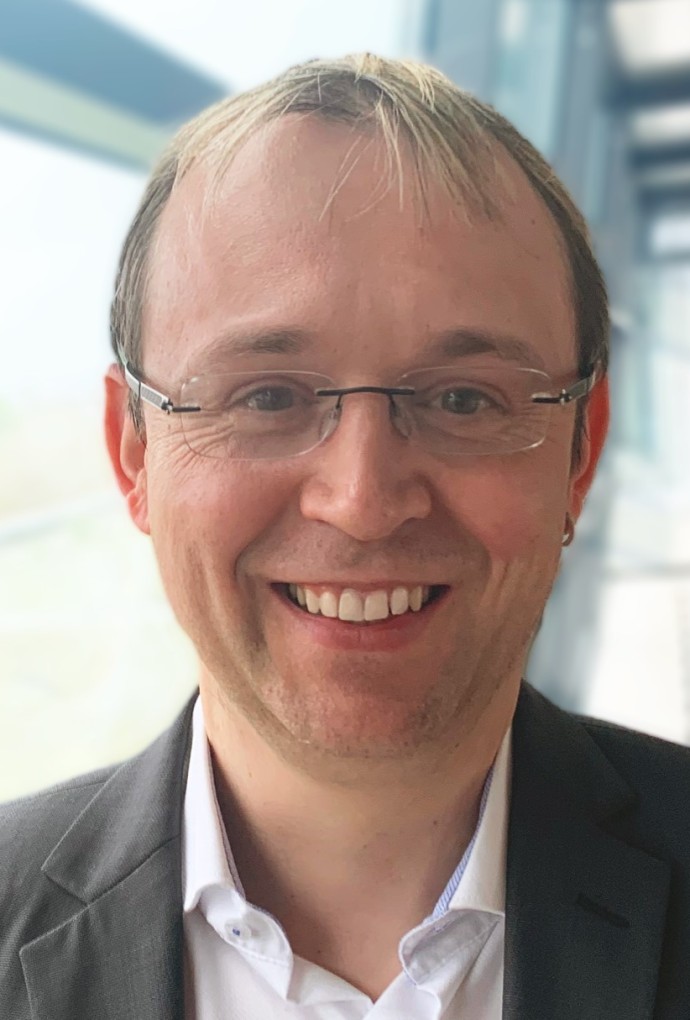
Zoltán Kacsuk is a Research Fellow specializing in Digital Humanities, Otaku Culture, and Manga/Anime Studies. His work focuses on integrating fan-generated data into academic research, legal frameworks for open databases, and the cultural significance of Japanese visual media. He contributes to projects like the Japanese Visual Media Graph, a domain-specific knowledge graph for anime, manga, and otaku culture research. Kacsuk employs text mining and machine learning techniques to analyze cultural and political datasets, blending social science methodologies with computational approaches. His research interests include re-evaluating foundational concepts in manga studies, the global dissemination of Japanese media, and the application of digital humanities tools to cultural analysis. He has published extensively on topics ranging from the landmark status of anime like Neon Genesis Evangelion to the theoretical evolution of Azuma's 'database animals' concept. Kacsuk also explores interdisciplinary methods for classifying political texts using machine learning, demonstrating a dual focus on humanities and computational methods. His work bridges legal, cultural, and technical challenges in open knowledge systems, particularly through collaborative projects that synthesize academic and enthusiast community data. Despite no listed awards, his contributions highlight innovative approaches to preserving and analyzing cultural heritage through technology.
University of Music, Drama and Media HanoverGermany
Robin Leuppert, M.A., is a Research Assistant and PhD Student at the Department of Journalism and Communication Research at the Hanover University of Music, Drama and Media. His research focuses on political communication, particularly news usage and its determinants; reception and effects research; computational methods in empirical social research; and media entrepreneurship. He holds a Master’s degree in Media Management from the same department and has professional experience in media measurement, business development, and sales analytics. Leuppert is an active member of academic associations including the International Communication Association (ICA), European Communication Research and Education Association (ECREA), and German Society of Mass Communication (DGPuK). His work bridges theoretical and applied research, addressing topics such as AI in journalism, media brand perceptions, and information behavior during health crises. He has presented at major global conferences like ICA and contributed to peer-reviewed journals in communication and media studies.
University of Music, Drama and Media HanoverGermany
Professor Dr. Andrea Welte is a Professor of Music Education at the Hanover University of Music, Drama and Media since 2023. She serves as spokesperson for the Committee for Artistic-Pedagogical Study Programmes (KPS) in the Rectors' Conference of Music Universities and Managing Director of the Institute for Music Education Research (ifmpf). Her roles include leading the Erasmus+ project Everyone can improvise and the ImproKultur initiative, focusing on music improvisation in diverse social contexts. She also co-leads the Inclusive University Development working group and has held leadership roles in digital teaching and learning initiatives. Her education includes a Diplom in Orchestral Music (Flute) from the Hanns Eisler School of Music Berlin and a PhD in Music Education from the University of the Arts Berlin. She has extensive experience in teaching, research, and artistic performance, including collaborations with ensembles like the Kammerensemble Neue Musik Berlin. Her research prioritizes improvisation pedagogy, mindfulness in education, and inclusive practices. She has received scholarships from the Franco-German Cultural Council and DAAD, and her work has been supported by grants from the Hanover Monastery Chamber and others. Her contributions span academic leadership, curriculum development, and community engagement through projects like ImproKultur , which explores music education in heterogeneous and migratory contexts. Her teaching responsibilities include leading the Bachelor's and Master's programs in Artistic-Pedagogical Education and serving on academic committees such as the Senate and the Promotion Committee. She is also a juror for the Förderpreis Musikvermittlung .
Prof. Dr. Myropi-Margarita Tsomou is a Greek cultural scientist and professor of Contemporary Theatre Practice at Osnabrück University of Applied Sciences, affiliated with the Faculty of Management, Culture and Technology and the Institute for Theatre Pedagogy. She holds a PhD from the Hamburg University of Applied Sciences' Graduiertenkolleg on urban public spaces and performative arts. Her research focuses on queer feminism, planetary feminism, performance theory, and critical pedagogy, intertwining ecology, gender, colonialism, and economics. She curates discursive programs at HAU Hebbel am Ufer (Berlin) and co-founded the pop-feminist magazine Missy Magazine. Recent curation highlights include 'Burning Futures: Ecologies of Existence' and 'On Violence' series. Education: Bachelor/Master in Applied Cultural Sciences, Leuphana University Lüneburg (1999–2005) PhD in Performance Studies, Hafen City University Hamburg (2018) under the Graduiertenkolleg 'Versammlung und Teilhabe' Key Research Interests: Planetary Feminism linking ecological and social crises Interventionist art and political performance Gender and body theories Cultural education and intermedial practices Curatorial Work: 'Burning Futures' series (HAU Berlin) with Maja Göpel and Kodwo Eshun 'On Violence' conference with Elsa Dorlin and Fred Moten Documenta 14's 'Apatride Society' program Artistic Collaborations: Maxim Gorki Theatre Kampnagel Hamburg Goethe-Institut Athens Ensemble Modern
Prof. Dr. Ingmar Ickerott is a faculty member at Osnabrück University of Applied Sciences, affiliated with the School of Management, Kultur und Technik (MKT, Campus Lingen) under the University management department. His academic career spans over two decades, focusing on logistics management, digitalization in supply chains, and smart technology applications like Smart Glasses and Augmented Reality . Academic Background : Diplom-Kaufmann in Business Administration (2001), Ph.D. in Economics (2006). Professional Roles : Senior Project Manager at arvato (2008–2010), Professor since 2010, Dean of MKT since 2019, Vice President for Digitalization since 2019. His research emphasizes logistics innovation , Lean Management , and digital solutions in rural healthcare . Key projects include Land.Digital (2019–2022) and LEAN 4.0 (Erasmus+, 2019–2021). Publications since 2004 cover agent-based simulation , Smart Device economics , and AR in logistics . He actively lectures on topics like Logistics 4.0 and Digital Onboarding . Projects & Grants : Land.Digital : €165,000+ (Erasmus+), 2019–2021. Dorfgemeinschaft 2.0 : €1.46M (BMBF), 2015–2021. Glasshouse : €208,557 (BMBF), 2015–2019.
Prof. Dr. Rüdiger Anlauf is a retired professor at Osnabrück University of Applied Sciences, affiliated with the Faculty of Agricultural Sciences and Landscape Architecture. He specializes in soil physics, substrate science, and GIS-based environmental modeling. His research focuses on soil-water dynamics, sustainable land use, and climate change adaptation in agroecosystems. He has taught courses on soil evaluation, substrate development, and modeling in agriculture. Education: Dr. rer.hort. from the University of Hannover (1987), with studies in soil science and tropical crop production. Professional Experience: Previously worked at Hannover University and Hannover Waterworks, now focuses on academic research and supervision of student projects. Research interests include soil reclamation, substrate innovation, and environmental impact assessment. His recent studies address climate resilience in Mali, sustainable sports turf irrigation, and wood fiber utilization in horticulture. He collaborates internationally on projects in Thailand, Mali, and Algeria. Publications span over three decades, addressing topics like soil aggregate stability, pesticide contamination, and GIS applications in agriculture. He actively contributes to environmental sustainability and agricultural engineering advancements.
Prof. Dr. Iris Thye was a Professor of Social Sciences at the Faculty of Economics and Social Sciences, Osnabrück University of Applied Sciences (part-time since 1993). Her academic career began with studies in German, Sociology, and History, leading to a PhD in Sociology (summa cum laude) from Westfälische Wilhelms-Universität Münster. She specialized in communication theory, media sociology, and organizational sociology. Her research focused on societal structures, communication systems, and public administration reform. Education: 1977–1984: Studies in German, Sociology, and History at Westfälische Wilhelms-Universität Münster 1997–1999: PhD in Sociology at Münster and Ludwig-Maximilians-Universität München Research Interests: System theory, media sociology, organizational sociology, higher education management, and public communication. Her notable work Kommunikation und Gesellschaft (2013) analyzes communication systems from a sociological perspective, emphasizing digital media’s societal impact. She contributed to projects like “Kommunale Bildungsplanung” and “Bürokratieabbau” in public administration reform. Prof. Thye’s academic legacy includes teaching in social sciences, public management, and communication studies, alongside leadership roles in institutional communication and academic policy.
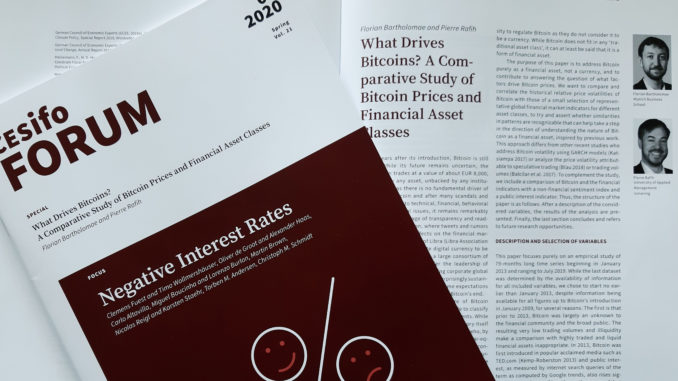
Florian Bartholomae is a Professor of Economics at Munich Business School (MBS), where he teaches basic economics and mathematics courses at the bachelor's level and advanced economics courses at the master's level. He also serves as a private lecturer at the Institute for Economics and Law of the Global Economy at the Bundeswehr University of Munich and as an external lecturer at the IMC University of Applied Sciences Krems. Additionally, he is a partner in the policy consultancy Bartholomae & Schoenberg Partnership. His research focuses on the economics of the information society and regional economics, with specific expertise in digitalization impacts, game theory applications, and urban economic development. Professor Bartholomae has conducted significant research on urban shrinkage and resurgence patterns in German cities, particularly in Eastern Germany, and has published influential work on bitcoin economics and principal-agent theory. His recent work includes analyzing the economic impacts of the coronavirus pandemic and studying different digitization patterns across industries. His publications span diverse economic subfields, with notable contributions to understanding cryptocurrency price determinants, urban economic development patterns, and information economics. Professor Bartholomae regularly presents his research at major international conferences, including the Annual North American Meetings of the Regional Science Association International. His work often examines the intersection of theoretical economic models with practical business applications, particularly in the context of digital transformation and regional economic development. Professor Bartholomae has collaborated extensively with researchers including Alina Schoenberg from IMC Krems, Prof. Dr. Nam from the ifo Institute, and Prof. Dr. Eva Stumpfegger. His research has been published in journals such as CESifo Forum and WISU – Das Wirtschaftsstudium, with approximately 34 published articles to date. He has also presented his findings at major international conferences including the Regional Science Association International meetings in Pittsburgh and San Antonio. His teaching includes the Game Theory module in the Certified Strategy Manager program, where he applies economic theory to real-world business strategy problems. Professor Bartholomae has also written about economic aspects of cultural phenomena including Christmas and Easter traditions, demonstrating the practical applications of economic theory to everyday life.
Nordakademie University of Applied SciencesGermany
Prof. Dr. Christoph Stockstrom is a Professor of Marketing and Innovation at Nordakademie University, where he serves as Head of the Marketing and Sales Management program and the doctoral program. His academic expertise spans digital marketing, online market research, e-commerce, and innovation management. He holds a PhD from TU Hamburg-Harburg (2009), recognized with the Karl H. Ditze Preis for outstanding research in innovation planning and execution. Education: Diplom-Kaufmann (Business Administration), Universität Hamburg (2003) Doctorate (Dr. rer. pol.), TU Hamburg-Harburg (2009) Visiting Researcher, Tohoku University, Japan (2004) Research Focus: His work emphasizes digital platforms, user innovation, and strategic marketing. Key themes include maker communities, cost advantages in innovation, and the role of SMEs in innovation ecosystems. He also explores ad tech ecosystems, negotiation strategies, and data analytics applications in marketing. Teaching & Leadership: Teaches courses such as Innovation Marketing and Strategic International Management . Previously held roles at TU Hamburg-Harburg, TU München, and FOM Hamburg. Leads doctoral programs and advises student startups via the Northern Institute of Technology Management (NIT). Awards & Recognition: Karl H. Ditze Preis (2009) Consulting & Industry Contributions: Advises medical technology firms on market research and R&D strategies. Collaborates with companies on creative workshops for medical devices and digital platforms. Active in German innovation audits and regional SME support initiatives. Publications: Over 20 peer-reviewed articles and books, including works on user innovation in medical devices and front-end NPD practices in Japanese firms. Recent focus on maker communities and innovation outcomes in collaborative environments.
Prof. Dr. Philipp A. Rauschnabel is a Professor of Digital Marketing and Media Innovation at the University of the Federal Armed Forces Munich. He holds a PhD in Psychological Brand Management (summa cum laude) from the University of Bamberg and previously served as an Assistant Professor at the University of Michigan-Dearborn. His research focuses on augmented reality (AR), virtual reality (VR), and the metaverse, with an emphasis on their applications in marketing and digital innovation. He is recognized as a top 1% scientist (Clarivate, 2023) and top 2% scientist (Stanford List 2023). His work bridges academic research and industry practice, advising global companies on spatial computing strategies. He has authored over 20 peer-reviewed articles and regularly contributes to media discussions on XR technologies. He also leads the annual Christmas Study, analyzing consumer behavior and cultural trends in Germany. He advises organizations like XR Bavaria and chairs the bdvb research institute. His consulting spans sectors including retail, automotive, and telecommunications. Beyond academia, he advocates for ethical tech adoption and advises the German Federal Government on Web3/Metaverse policies.
Prof. Susanne Kinnebrock holds a professorship at the University of Augsburg's Department of Communication Science. Her research focuses on Gender Studies, Media Change, and Health Communication, emphasizing historical perspectives and societal impacts. Key contributions include studies on public communication dynamics, digital stress, and media's role in social movements. She has led DFG-funded projects exploring pandemic communication and health narratives. Her career spans academic roles since 2012, with notable mentorship from pioneers like Ursula E. Koch. Notable works include analyses of feminist activism in World War I and the WAVES study on healthcare communication. She advocates for interdisciplinary approaches, blending media history with contemporary challenges like digital polarization. Education: Studied at Ludwig Maximilian University of Munich (LMU), completing her doctorate under Ursula E. Koch. Early career involved researching early female journalists and German suffrage movements. Research Interests: Gender equity in media and academia Historical media analysis Social conflict dynamics in digital spaces Health communication strategies Articles Trends: Recent work highlights pandemic-related communication (e.g., WAVES study), digital stress management, and the intersection of media logics with historical social movements. Her studies bridge historical patterns and modern challenges in public discourse. Awards/Grants: DFG-funded projects on science communication during the pandemic and narrative processing in health campaigns. Active in collaborative research with Helena Bilandzic on media reception theories. Labs/Teams: Associated with the Center for Interdisciplinary Health Research (ZIG) at the University of Augsburg, focusing on healthcare communication and ethical debates.
Prof. Dr. Ingo Schünemann is a Professor of Media Management at bbw Hochschule - University of Applied Sciences in Berlin. He leads the Media Management program and holds academic roles at HTW Berlin. His expertise spans media economics, educational innovation, and film production. He earned a PhD in Media Studies from TU Berlin and a Diplom-Betriebswirt from Fachhochschule Köln. Research interests include blended learning models for media education, German SME economic dynamics, and creative industry processes. He actively engages with media industries through roles at Splendid Medien AG and Polarlicht Film GmbH. His filmography includes directorial and production credits in independent cinema. Administrative roles include Vice President of Teaching and Program Director for Media Economics programs. Collaborates with institutions like fib Research Institute on applied media studies projects.
Professor Rune Ellemose Gulev serves as Professor of International Business Management at Kiel University of Applied Sciences (HAW Kiel) in Germany, where he has been employed since 2010. He additionally holds the position of Academic Director of the Centre for Languages and Intercultural Studies (ZSIK). Originally from Denmark, Professor Gulev has built an international academic career with previous appointments including Assistant Professor at the University of Primorska in Slovenia (2008-2010) and involvement with numerous international institutions such as Harvard University, Tecnologica de Monterrey, and Copenhagen Business School. Professor Gulev's research focuses on the intersection of cultural dynamics and business practices. His primary research interests include Intercultural Management & Cross Cultural Leadership, Managing Sustainability for Modern Businesses, and Strategic Management. He investigates how national cultural variances influence organizational behavior, with specific attention to environments that foster workplace creativity, levels of alcohol acceptance in professional settings, and the connection between consumer cultural orientation and purchasing behaviors. His work bridges theoretical cultural frameworks with practical business applications, particularly examining how trust and cultural values impact innovation, sustainability practices, and economic performance across different national contexts. Professor Gulev's publication record demonstrates a clear evolution from theoretical cultural frameworks to practical business applications. His early work focused on intercultural subsidiary management and knowledge sharing across cultures, while more recent publications examine specific workplace behaviors like alcohol consumption across cultures (2024) and mindfulness-based stress reduction (2021). His research consistently explores how cultural values shape business practices, sustainability behaviors, and organizational innovation across European and global contexts, with a particular emphasis on trust as a mediating factor in economic and organizational outcomes. Best Paper Award at Management International Conference 2008 for 'Cultural Repercussions' Professor Gulev provides specialized seminars for companies and higher education institutions on improving efficiency in multicultural workplaces. His consulting work spans from team structure optimization to developing culturally appropriate motivational techniques. His expertise is sought internationally, as evidenced by his academic affiliations with institutions across Europe and beyond. As Academic Director of ZSIK, he oversees language and intercultural competence programs that support internationalization efforts at HAW Kiel. Through his leadership of the Centre for Languages and Intercultural Studies (ZSIK), Professor Gulev directs initiatives that promote intercultural competence across the university. He has been instrumental in developing interdisciplinary programs like the 'International Marketing & PR Minor' that combine business, media, and language studies. His work bridges academic research with practical applications, creating environments where cultural diversity is leveraged as a strategic advantage in both educational and business contexts.
Prof. Dr. Alexander Carôt is a Professor of Media Informatics at Anhalt University of Applied Sciences, leading the Faculty of Computer Science and Languages as its Dean. His work bridges physics, computer science, and music, with a focus on networked music performance and low-latency audio systems. He developed the SoundJack software, enabling remote collaborative music-making, and contributed to projects like FAST-MUSIC and 5GUK trials for distributed music sessions. His research spans telemedicine applications, real-time streaming optimization, and quantum effects in telecommunications. Education: Ingenieursdiplom (2004) Doctorate in Engineering (2009) Research Interests: Prof. Carôt explores interdisciplinary fields combining technology and music. Key areas include: Real-time audio networking for live performances 5G-enabled tele-music systems Medical tele-rehabilitation using music feedback Low-latency multimedia streaming protocols Grants & Projects: Led initiatives like the FAST-MUSIC project and 5G trials, focusing on distributed music collaboration. Active in EU-funded research on telematic systems and networked audio. Labs/Teams: Directs the SoundJack development team and collaborates with industry partners on 5G infrastructure for arts and healthcare.
Markus Stäuble is a Professor at Technical University of Munich (Faculty 05), located at Lothstraße 34, 80335 Munich. His office is in Room G 2.41. He holds key roles including Chair of the Digital Media & Print Examination Committee, Member of the Faculty Council, and is a Mental Health First Aider. His consultation hours during the summer semester 2025 are Monday 2:15–3:00 p.m., in person or online. His research focuses on Multichannel Publishing, Mobile Computing, Content Management Systems, Web Architectures, and Software Engineering, with notable work on Gamification for Team Motivation, as highlighted in a YouTube video where he discusses virtual collaboration strategies. He actively contributes to academic governance through membership in examination committees and the Faculty Council, emphasizing both technical and institutional leadership roles.