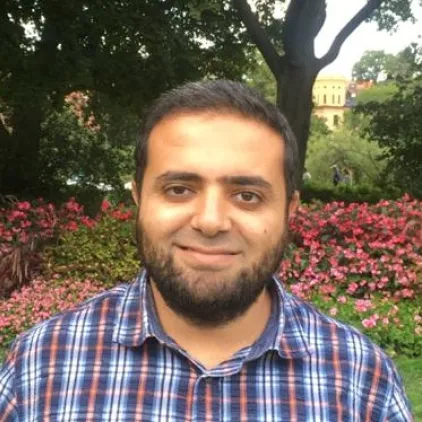
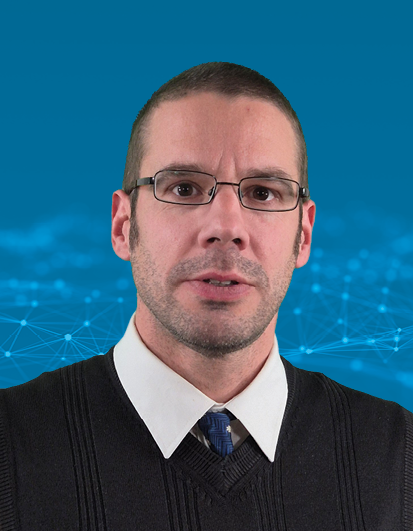
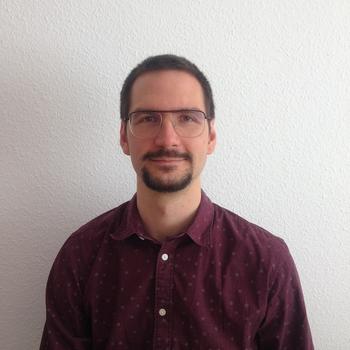
Mark Sidorovic serves as a Research Associate at the Institute for Computational Mechanics, Technical University of Munich since 2023, specializing in advanced numerical methods for engineering simulations. His academic qualifications include: Master of Science (M.Sc.) in Mathematics, University of Bonn (2023) Bachelor of Science (B.Sc.) in Mathematics, University of Bonn (2021) His research integrates computational fluid dynamics with structural mechanics through innovative Monolithic Approaches and Matrix Free Methods , supported by rigorous theoretical frameworks in Functional Analysis and PDE Theory . This work enables high-fidelity modeling of complex multiphysics systems like fluid-structure interactions. He instructs the practical course Practical Software Development for Complex Simulation Environments in Engineering , equipping students with hands-on skills for building industrial-grade simulation tools using modern computational frameworks.
Prof. Dr. Martin Kronbichler is the Head of the Chair of Numerical Mechanics at the Institute for Computational Mechanics , Technische Universität München (TUM). He leads the ExaDG project within the DFG Priority Program SPPEXA, focusing on high-performance implementations of high-order finite elements. Research expertise in discontinuous Galerkin methods for flow problems, photoacoustic imaging, and cut problems. Develops parallel and matrix-free numerical algorithms using sum factorization. Education: Doctor of Philosophy (Ph.D.) in Scientific Computing (2012), Uppsala University, Sweden Diplom in Engineering Mathematics (2007), TU München Research Interests: Galerkin methods (finite elements, discontinuous Galerkin) for computational mechanics, including: High-order discontinuous Galerkin methods for incompressible flow Hybridizable discontinuous Galerkin methods for weakly compressible flows High-performance finite differences for fluid mechanics Teaching: Offers courses on numerical methods, discontinuous Galerkin methods, finite element methods, and high-performance computing for engineers at TUM. Collaborations: Works with researchers like Niklas Fehn, Peter Münch, and Andrea La Spina on flow problems and computational methods.
Professor Gaëtan Borot is a faculty member at the Institute of Mathematics, Faculty of Mathematics and Natural Sciences, Humboldt-Universität zu Berlin. He leads a research group in Mathematical Physics with connections to quantum field theory, string theory, and geometric analysis. His work is supported by multiple Research Training Groups including Rethinking QFT (2019-2029), From geometry to numbers (2024-2029), and the College of Mathematics and Physics Berlin (2020-2029). Professor Borot's research centers around topological recursion and its applications across mathematical physics. His work connects enumerative geometry, quantum algebra, moduli spaces, and random matrix theory through a unifying framework that reveals deep connections between seemingly disparate fields. He investigates how topological recursion provides methods to study quantization of geometric objects and field theories, with applications ranging from Gromov-Witten theory to statistical physics models on random surfaces. Analysis of his recent publications (2021-2024) shows a strong focus on the mathematical structures underlying conformal field theories, particularly Liouville CFT, where he explores Virasoro representations, scattering matrices, and equations of motion. His work on topological recursion continues to expand into new domains including cohomological field theories, Hurwitz theory, and spectral curves, demonstrating the versatility of this algebraic structure across mathematical physics. Professor Borot actively supervises PhD students including Giacomo Umer (who successfully defended in May 2025), Davide Scazzuso, and Niklas Martensen, along with numerous master's and bachelor's students. He organizes the Mathematical Physics Seminar held weekly in Adlershof and has taught courses on integrable systems, random matrix theory, and differential geometry. Despite currently being on leave until September 2025, he continues to supervise thesis projects with availability starting October 2025.
Maximilian Bergbauer is a Researcher at the Technische Universität München , focusing on computational mechanics and numerical methods. He obtained his M.Sc. and B.Sc. in Mechanical Engineering from TUM in 2020 and 2017, respectively. His research interests include Cut Finite Element Methods Discontinuous Galerkin Methods Computational Fluid Dynamics High Performance Computing with applications in fluid dynamics and biomedical simulations. Recent work highlights trends in high-order numerical methods, matrix-free solvers, and parallel computing as reflected in publications. He has supervised student projects on unfitted methods, tetrahedral solvers, and Navier-Stokes implementations. Bergbauer teaches courses on Discontinuous Galerkin Methods and Numerical Methods for Engineers, and can be contacted at maximilian.bergbauer@tum.de or +49 (89) 289-15257.
Bernd Brumm is a Researcher at the Department of Mathematics , University of Tübingen . His work focuses on numerical methods for high-dimensional and highly-oscillatory systems in quantum dynamics. Specializes in spectral methods and matrix-free algorithms Active in DFG projects related to quantum systems and complex information extraction Teaching experience in numerical analysis and computational methods since 2007 His research connects computational mathematics with quantum physics, developing efficient algorithms for Schrödinger equations and oscillatory systems. Publications emphasize scalability and precision in high-dimensional problems. Contributions include: Advancing heterogeneous multiscale techniques for mechanical systems Optimizing spectral approximations in quantum dynamics Implementing practical C-based solutions for matrix-free computations
Carlos I. Perez-Sanchez is a postdoctoral researcher at the Institute for Theoretical Physics , University of Heidelberg, working under Răzvan Gurău . He previously held postdoctoral positions at the University of Warsaw (2021) and completed his PhD in mathematics at the University of Münster under Raimar Wulkenhaar. His research spans mathematical physics , focusing on random noncommutative geometry , tensor field theory , and their intersections with quantum gravity , functional renormalization , and bootstrap methods . His work on noncommutative geometry involves quantizing spectral triples via random matrices and unitary matrix ensembles to model gauge-Higgs theories and quantum gravity. He has advanced tensor field theory through topological recursion and Ward-Takahashi identities , bridging combinatorial structures with physical partition functions. His recent focus on functional renormalization (Wetterich equation) explores the renormalization group flow in multi-trace matrix models and free algebra frameworks. Publications include 15 recent articles (2025–2018) on topics like loop equations , Borel summability , and quiver-based noncommutative geometries . He co-organized workshops such as The QFT Path (2024) and Random Geometry in Heidelberg (2022), and has delivered talks at institutions in Bordeaux, Vienna, Warsaw, and Okinawa. His teaching includes Theoretical Statistical Physics and Large-N Methods in Field Theory at Heidelberg.
Stefan Zimmer is a Senior Lecturer and Academic Councillor at the University of Stuttgart, affiliated with the Simulation of Large Systems department under the IPVS institute. His work focuses on numerical simulation, computational science, and algorithm development with applications in sparse grids, multigrid methods, and high-performance computing. Research interests include adaptive algorithms for large-scale systems, model reduction techniques, and interdisciplinary challenges in technical education. He has contributed to foundational works in sparse grid techniques and parallel computing architectures. Publications span from 1993 to 2015, emphasizing advancements in numerical methods, data mining, and computational fluid dynamics. Notable works include the 2015 multigrid method for adaptive sparse grids and a 2009 textbook on modeling and simulation methodologies. No awards or student advisees are explicitly listed in the provided text.
Amr Alanwar Abdelhafez is an Adjunct Professor of Computer Science at Constructor University Bremen’s School of Computer Science & Engineering. Previously, he held Assistant Professor roles at Technical University of Munich (Heilbronn Campus) and Jacobs University Bremen. His research focuses on Cyber-Physical Systems (CPS), emphasizing safety, privacy, and formal verification. He earned his Ph.D. from TU Munich’s Cyber-Physical Systems Group (2020), with prior roles including postdoc at KTH Royal Institute of Technology and research positions at UCLA and University of Waterloo. Education: Ph.D. in Cyber-Physical Systems, Technical University of Munich (2015–2020) M.Sc. in Engineering Science (Protection and Detection Hardware Trojan), Ain Shams University (2010–2013) B.Sc. in Computer and Control Systems Engineering, Ain Shams University (2005–2010) Research Interests: His work bridges theoretical foundations and practical applications in CPS, including privacy-preserving state estimation, resilient control systems, reachability analysis, and formal verification for autonomous systems. He develops methods to ensure safety and privacy in distributed systems, leveraging tools like zonotopes and homomorphic encryption. Key Contributions: Developed logical zonotopes for efficient representation of discrete systems. Advanced event-triggered control and diffusion strategies for distributed systems. Pioneered privacy-preserving techniques (e.g., CryptoImg, PrOLoc) using homomorphic encryption. Contributed to safety-critical applications like autonomous vehicle situational awareness and secure sensor networks. Awards & Recognition: Best Demonstration Paper Award at IPSN/CPSWeek 2017 Qualcomm Innovation Fellowship finalist (2017 and 2018) First place in TUM Graduate School Competition (2019) Grants & Industry Links: His work is supported by collaborations with institutions like IBM and JetBrains, and his open-source tools (e.g., Event-Triggered Diffusion Kalman Filters, Logical-Zonotope repository) are widely used in CPS research. Labs & Teams: Leads research on CPS safety and privacy at TU Munich, with active contributions to Constructor University’s CPS initiatives and GitHub repositories showcasing implementations of his methodologies.
Prof. Dr. Andreas Kleefeld is a Professor at the University of Applied Sciences Aachen (Campus Jülich) in the Faculty of Medical Engineering and Technomathematics, where he teaches courses such as Analysis and Stochastics. He also leads the Algorithm, Tools and Methods Lab (Numerical and Statistical Methods) at the Jülich Supercomputing Centre (JSC), part of the Institute for Advanced Simulation (IAS) at Forschungszentrum Jülich. His research focuses on boundary integral equations, non-linear eigenvalue problems, acoustic and electromagnetic scattering, and inverse problems. He is a Principal Investigator in the Helmholtz Information Program 1, Topic 1. Research Interests: Kleefeld’s work bridges theoretical and applied mathematics, with emphasis on numerical methods for partial differential equations, scattering theory, and resilience modeling in economic systems. His contributions include advancements in direct sampling methods for inverse scattering, spectral Galerkin schemes for stochastic PDEs, and applications of mathematical morphology in color image processing. Recent Publications: His 2025 works explore economic resilience in global supply networks and fourth-order numerical schemes for reaction-diffusion systems. He has also published extensively on inverse scattering techniques for anisotropic materials and boundary value problems. Labs & Teams: As Group Leader at JSC, he oversees the development of numerical algorithms and statistical methods applied to high-performance computing challenges. His lab collaborates on projects within the Helmholtz Association, focusing on information science and simulation infrastructure.
Dr. Ho-Sik Lee is a researcher affiliated with the Faculty of Mathematics at Bielefeld University, specializing in partial differential equations, nonlocal problems, and regularity theory. He contributes to projects within the International Research Training Group 2235 and the Bielefeld Graduate School in Theoretical Sciences. Faculty of Mathematics, Bielefeld University Bielefeld Graduate School in Theoretical Sciences International Research Training Group 2235 His research focuses on advanced mathematical analysis of nonlinear and nonlocal equations, including degenerate weights, mixed local/nonlocal operators, and regularity estimates for problems arising in calculus of variations and applied contexts. Recent work explores the Zaremba problem, fractional p-Laplacian, kinetic Fokker-Planck equations, and double phase functionals. Analysis of his 15 most recent publications (2023–2025) reveals expertise in parabolic equations, nonlocal diffusion, Hölder continuity, gradient estimates, and weighted Sobolev spaces. These works intersect with mathematical physics, functional analysis, and applications in nonlinear dynamics.
Georg Loho is a Professor at Freie Universität Berlin (FU Berlin), acting head of the Discrete Geometry and Topological Combinatorics Group. Previously, he held an assistant professorship at the University of Twente (on leave since 2023). He specializes in discrete geometry, optimization, and algebraic combinatorics, with notable contributions to tropical geometry and machine learning. His research integrates geometric and combinatorial methods with applications in optimization and data science. Education: PhD in Mathematics (2017) from TU Berlin Diploma in Mathematics (2012) from Universität Würzburg Research Interests: Focuses on tropical geometry, discrete optimization, and their applications in machine learning. Explores geometric structures like oriented matroids, polytopes, and their connections to neural networks and algorithm design. Advocates for sustainability in research and education. Teaching: Leads courses on discrete geometry, mathematics & sustainability, and optimization. Active in educational innovation, including free open-source course materials and the MatchTheNet educational game on polytopes. Grants & Collaborations: Participated in the HIM Trimester Program (Bonn, 2021), substitute professorships (Kassel, 2020–2021), and multiple ERC-funded projects. Collaborates with institutions like the London School of Economics (LSE) and EPFL. Labs/Teams: Coordinates the Discrete Geometry and Topological Combinatorics research group at FU Berlin, fostering interdisciplinary projects in geometry, combinatorics, and optimization.
Prof. Dr. Willy Dörfler is a full professor at the Institute for Applied and Numerical Mathematics within the Faculty of Mathematics at Karlsruhe Institute of Technology (KIT). He leads the research group on Numerical Methods for Partial Differential Equations and teaches advanced courses including Adaptive Finite Element Methods and Modeling and Simulation of Li-Ion Batteries . His work focuses on numerical analysis, scientific computing, and multi-physics simulations. His research spans Partial differential equations with adaptive discretization Wave propagation and space-time methods Battery modeling with chemo-mechanical coupling Lattice Boltzmann techniques for fluid dynamics Applications in mechanics, optics, and electrochemistry as evidenced by his 15 most recent publications. These works emphasize finite element methods, discontinuous Galerkin approaches, and high-performance computing for complex systems. Contact: willy.doerfler@kit.edu | Office hours: Mondays 14:30–15:30 during lecture periods
Mahsa Shirmohammadi is a CNRS researcher at Institut de Recherche en Informatique Fondamentale (IRIF) , Université de Paris. Her research focuses on verification, probabilistic models, infinite-state systems, automata theory, and numerical computation. Education : PhD from LSV, ENS de Cachan (France) and ULB (Belgium). Previous Affiliation : Postdoctoral researcher at University of Oxford (UK). Her work addresses stochastic games , timed automata , matrix groups , and algebraic computation . Recent publications analyze strategy complexity, synchronization in decision processes, and parametric algebraic problems. Key collaborators include Stefan Kiefer, Richard Mayr, James Worrell, and Patrick Totzke. Her research has been published in venues like ACM SIGLOG News, ICALP, LICS, and ISSAC. Contact: mahsa@irif.fr , +33 (0)1 57 27 92 29, Office 4017 (Sophie Germain building, Paris).
Hans-Jörg Gusovius is a senior researcher at the Leibniz Institute for Agricultural Engineering and Bioeconomy (ATB) in Potsdam, Germany, with specific focus on Process Systems Engineering . He has held this position since 2007, following his PhD studies at Humboldt University of Berlin and earlier research at Brandenburg University of Technology Cottbus. His work centers on natural fiber processing and biorefinery systems , particularly for hemp, flax, and linseed straw . His research interests include: Development of mechanical and chemical fiber extraction methods Optimization of bast fiber processing lines Utilization of agricultural residues in composite materials Biodegradation and retting technologies Agro-industrial system integration Recent publications highlight his expertise in nettle fiber composites , hemp silage preservation , and linseed straw valorization . He has contributed to projects assessing fiber properties under varying processing conditions, including impact-free harvesting techniques and shive separation . Notable collaborations include work with Benno P. Weiß, Jérôme Müssig, and international teams in Central Asia and France. As a member of professional organizations like the German Hemp Academy eV and Sachsen-Leinen eV , he actively participates in industry-standard development. While no specific scientific awards are mentioned in available records, his 15+ peer-reviewed publications since 2003 demonstrate sustained academic contribution to sustainable fiber technologies.
Peter Münch is a postdoctoral researcher at the Chair of Numerical Methods for Partial Differential Equations within the Institute of Mathematics at Technical University of Berlin (TU Berlin), Faculty II - Mathematics and Natural Sciences. He has held research positions at Uppsala University, University of Augsburg, Helmholtz-Zentrum Hereon, and Technical University of Munich. Dr. Münch's research focuses on high-performance scientific computing with expertise in matrix-free computations, dynamic sparse communication patterns, node-level optimization, iterative solvers including multigrid and block preconditioners, and efficient algorithms for high-dimensional partial differential equations. His work spans discontinuous Galerkin methods, computational fluid dynamics, and simulation of additive manufacturing processes including solid-state sintering and melt-pool modeling. He is one of the principal developers of the deal.II finite-element library, which won the SIAM/ACM Prize in Computational Science and Engineering in 2025. His recent publications demonstrate significant contributions to matrix-free finite element methods, multigrid solvers, and applications in computational fluid dynamics and materials science. The research shows a strong trend toward high-performance implementations of numerical methods for extreme-scale computing, with particular emphasis on matrix-free approaches that avoid explicit storage of large sparse matrices. SIAM/ACM Prize in Computational Science and Engineering 2025 (for deal.II) Dr. Münch has supervised numerous student projects including Master's theses, Bachelor's theses, and term papers on topics ranging from immersed boundary methods to high-order discontinuous Galerkin methods. His teaching activities include courses on Numerical Methods for ODEs, PDEs, and High-Performance Parallel Computing. He has contributed to multiple deal.II tutorial programs (steps 19, 68, 75, 76, 87) demonstrating advanced finite element techniques. As a principal developer of the deal.II finite element library, Dr. Münch is actively involved in the open-source scientific computing community, contributing to one of the most widely used finite element frameworks in computational science and engineering. His GitHub profile shows consistent contributions to deal.II and related projects, with significant activity in 2025.