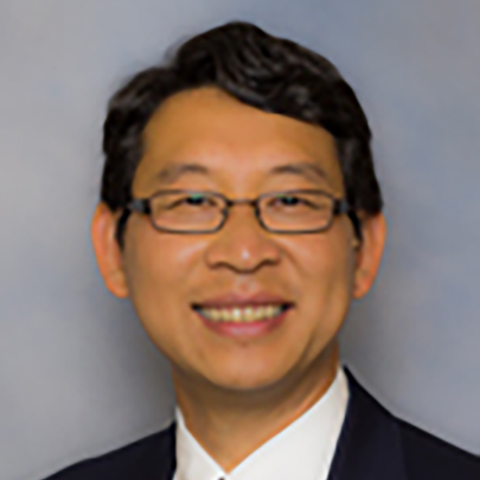
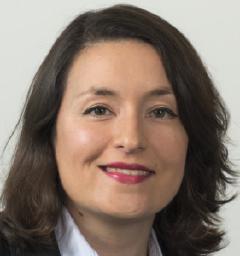
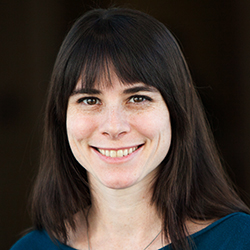
Anja Verena Mudring is a Professor in the Department of Biological and Chemical Engineering at Aarhus University, Denmark, under the AU Engineering school. Her research focuses on advanced inorganic and materials chemistry, with a strong emphasis on sustainable and functional materials. She leads major research projects including the Villum Investigator, AUFF Starting Grant, and Novo Nordisk RECRUIT grants, indicating her leadership and active status in the academic community. Her research interests span Inorganic Chemistry , Materials Chemistry , Solid-State Chemistry , Crystal Engineering , and Green Chemistry . She investigates novel intermetallic compounds, rare-earth materials, ionic liquids, and luminescent nanocrystals, aiming to develop sustainable and high-performance materials. Her work integrates synthesis, structural analysis, and property optimization. Her recent publications in top journals such as Journal of the American Chemical Society , Chemistry of Materials , and Green Chemistry reflect a strong trend toward environmentally responsible materials design, crystal structure prediction, and functional inorganic systems. Themes include geometric frustration in magnetism, luminescence control, and green solvent development. Scientific recognition includes the prestigious Villum Investigator award. Other major grants include: Villum Investigator (2022–2027) AUFF Starting Grant (2021–2024) Novo Nordisk RECRUIT (2021–2028) She advises students and researchers through her funded projects and is actively involved in graduate training and research supervision. Her lab focuses on the synthesis and characterization of novel inorganic materials, particularly those with potential in energy, sustainability, and advanced technologies.
Igor V. Pivkin is a full professor at the Institute of Computing within the Faculty of Informatics at the University of Lugano (USI). He holds a B.Sc. and M.Sc. in Mathematics from Novosibirsk State University, followed by an M.Sc. in Computer Science and a Ph.D. in Applied Mathematics from Brown University. Before joining USI, he was a Postdoctoral Associate at MIT's Department of Materials Science and Engineering. His research focuses on multiscale/multiphysics modeling , numerical methods, and large-scale simulations of biological and physical systems. Key areas include biophysics, cellular/molecular biomechanics, stochastic modeling, and coarse-grained molecular simulations. He leverages high-performance computing and particle-based methods to address complex biological phenomena. His work spans diverse applications, including cancer cell dynamics, bioleaching bacterial biofilms, and erythrocyte mechanics in human spleen circulation. He has pioneered computational tools such as the Bayesian recursive global optimizer (BaRGO) and the in-silico lab-on-a-chip framework, enabling petascale simulations of microfluidic systems at cellular resolution. Pivkin collaborates extensively with institutions like the SIB Swiss Institute of Bioinformatics and has contributed to advancing methodologies for multi-model scientific simulations. His research integrates experimental data with computational models to bridge gaps between microscopic and macroscopic biological processes.
Michael Alexander Riegler is a full-time Professor at Oslo Metropolitan University's Faculty of Social Sciences, specifically in the Department of Social Work, Child Welfare and Social Policy. While his formal academic affiliation focuses on social sciences, his research interests span interdisciplinary domains including computer technology, information and communication systems, medical technology, and mathematics/natural sciences. Current research projects: Strengthening solidarity for democratic unity across border (SOLIDEM) addressing trust erosion in European welfare states, and Artificial intelligence in assisted reproduction technology improving embryo/sperm selection Recent publications (2025) focus on AI applications in healthcare (wearable sensors, ECG reconstruction), anomaly detection in time-series data, multimodal healthcare data analysis, and psychiatric motor activity datasets
Dr. B. Tyr Fothergill is a Research Fellow at the Centre for Computing and Social Responsibility , De Montfort University, specializing in ethics support for the Human Brain Project . She chairs the HBP Data Governance Working Group and contributes to the Medical Informatics Platform Steering Committee. PhD in Archaeology (University of Leicester, 2012) MA in Archaeology (Simon Fraser University, 2008) BA in Anthropology (University of Colorado, 2003) Her research bridges ethics in neuro-ICT and archaeological insights into human relationships with non-human entities. Key interests include: Responsible Data Governance Neuroethics and Digital Ethics Archaeology of Human-Animal Relationships Intersectionality in Technology Applied Ethics in Video Games Historical Epidemiology Recent publications focus on ethics in neurotechnology and human-chicken co-evolution . She has received awards for ethics outreach and diversity in tech, including the 2018 Diversity Award from DMU's Faculty of Computing, Engineering and Media. Scientific contributions include: Developing temporally-contingent ethics frameworks Pioneering research on avian disease transmission Interdisciplinary work merging archaeology and digital ethics Leadership in the Human Brain Project Public engagement through exhibits and media interviews Peer-review roles for journals and conferences
Kevin Lertwachara is a Professor and Management Area Chair at the Orfalea College of Business, California Polytechnic State University, recognized with the 2009 Orfalea College’s Distinguished Teacher of the Year Award for his instructional excellence. His educational foundation includes a Ph.D. in Operations and Information Management from the University of Connecticut, an MBA specializing in Management Information Systems from Westminster College, and a Bachelor of Science in Physics with a Computer Engineering minor from King Mongkut’s Institute of Technology, Thailand. Dr. Lertwachara's research centers on technology-driven transformation across retail services, e-commerce, health informatics, and social networks. His investigations into electronic health records, peer-to-peer systems, digital copyright, and Web 2.0 have yielded publications in premier journals including Management Science, Journal of Law and Economics, and Journal of Management Information Systems, highlighting interdisciplinary approaches to digital innovation. His scholarly impact is evidenced by the Boeing Welliver faculty fellowship (2007) for knowledge management workshops and a 2008 visiting scholar appointment at Brock University focused on online retailing. Teaching expertise spans Microsoft.NET and open-source application development, database systems, Business Intelligence, and operations management. No information regarding student advisement or research grants is provided in available materials. Professional activities include industry collaboration with Boeing and Brock University, though laboratory affiliations or dedicated research teams are not mentioned in source documentation.
Kumar Ankit is an Associate Professor of Materials Science and Engineering (MSE) and Graduate Program Chair in the School for Engineering of Matter, Transport and Energy at Arizona State University. His research focuses on computational materials science with emphasis on phase-field modeling of microstructural evolution in materials. He leads the 4D ICE (Laboratory for 4D Interface Control & Engineering) research group, which develops computational tools for discovering efficient processing routes for advanced materials synthesis. Education: Ph.D. (Dr.-Ing.) Summa Cum Laude, Mechanical Engineering, Karlsruhe Institute of Technology, Germany (2015) Integrated Dual Degree (B.Tech/M.Tech) Metallurgical Engineering, Indian Institute of Technology-BHU (2010) Dr. Ankit's research spans multiple domains of computational materials science, with particular expertise in quantitative phase-field modeling. His work integrates computational approaches with machine learning to address fundamental challenges in microstructure science and engineering. His group investigates phenomena including solidification, solid-state transformations, grain coarsening in multicomponent alloys, electromigration-induced damage, and self-organization in polymers and vapor-deposited films. A growing emphasis in his recent work involves developing data-driven emulators that can predict complex microstructural evolution more efficiently than traditional simulation methods. Analysis of Dr. Ankit's recent publications reveals a strong trend toward integrating machine learning with traditional computational materials science methods. His work increasingly focuses on developing data-driven approaches to model complex microstructural evolution, particularly in electromigration and phase separation phenomena. The research spans multiple disciplines including materials science, computational physics, and machine learning, with applications in semiconductor manufacturing, microelectronics reliability, and advanced materials processing. Scientific Awards: 2024 Wenner-Gren Fellow (Sweden) 2022 NSF Early Career Award (CAREER) 2022 Editors' choice award, Journal of Phase Equilibria and Diffusion 2018 Robert W. Cahn prize of Springer Nature and the Journal of Materials Science 2016 Early Career Investigator Award of the German Research Foundation (DFG) Dr. Ankit has successfully secured significant research funding including a $560,000 NSF CAREER award for studying pearlite discontinuities in eutectoid microstructures, a $5 million DOE Earthshots grant as co-PI for carbon-free steelmaking technology, and multiple NSF grants focused on electromigration and materials characterization. He mentors several PhD students who work on diverse research projects spanning computational modeling of electromigration, nanostructural self-assembly, and capillary-mediated interface phenomena. Dr. Ankit co-founded the MateriAlZ Seminar series with collaborators at ASU and the University of Arizona to promote student engagement and increase the visibility of Arizona universities in Materials Science and Engineering. Dr. Ankit directs the 4D ICE research laboratory, which focuses on developing computational tools for rapid discovery of time-, energy-, and cost-efficient processing routes for materials with tailored functionality. The lab's work lies at the intersection of phase-field modeling, machine learning, and high-performance computing. Current projects include investigating capillary-mediated solid-liquid interface energy fields (funded by NASA), electromigration-induced defects in electronic materials (funded by NSF), and nanostructural self-assembly in vapor-deposited films (funded by ASU College of Engineering). The lab maintains strong collaborations with researchers at national laboratories and in industry.
Marie Puren is an Associate Professor in history and digital humanities at EPITECH Paris , where she leads the Digital Methods for Humanities and Social Sciences (MNSHS) team since 2022. She also holds research affiliations with the LRE laboratory , Jean-Mabillon Center , and LARHRA in Lyon. Her work bridges historical analysis with computational techniques, focusing on political ideologies, cultural heritage preservation, and digital methodologies. Her research interests include: Digital Humanities and Computational History Political Ideologies in the French Third Republic Cultural Heritage Modeling Textual Analysis with NLP and XML-TEI History of Publishing and Literary Collaboration Marie contributes to major projects like AGODA (parliamentary debates analysis) and SILKNOW (silk heritage preservation). She teaches courses on digital methodologies, historical research, and environmental impacts of technology. Her leadership in Humanistica and participation in international conferences highlight her academic influence.
Tanja Jadin is a Professor at the University of Applied Sciences Upper Austria, working at the Research Center Hagenberg within the School of Informatics, Communications and Media. She leads the Knowledge Media and Engineering department and specializes in digital transformation, educational technology, and knowledge media. Her work focuses on developing innovative educational approaches that integrate digital technologies with traditional teaching methodologies. Dr. Jadin's research interests center on Digital Education, Online Learning, Open Educational Resources (OER), Massive Open Online Courses (MOOCs), and the integration of Artificial Intelligence in educational contexts. She has developed numerous educational frameworks including hybrid learning paths, workplace-integrated learning systems for smart factories, and individualized learning environments. Her work bridges the gap between theoretical educational research and practical implementation in higher education institutions. Her publication trends reveal a consistent focus on the evolving relationship between technology and education, with recent work emphasizing AI applications in teaching and learning. The 2023-2025 publications show a clear trajectory toward integrating artificial intelligence into educational frameworks while maintaining a strong foundation in open educational resources and social innovation. Her work addresses both theoretical aspects of digital education and practical implementation challenges faced by institutions. Dr. Jadin has led multiple significant research projects including Intelligent Hybrid Learning (iHL), Hybrid Learning Path development, Empirical Social Research iMooX, ALeS (Workplace-Integrated Learning in Smart Factory), and chabaDoo (individual learning spaces). These projects demonstrate her commitment to developing practical, evidence-based educational solutions that address contemporary challenges in higher education. Her work extends to educational leadership through the development of certification frameworks for OER implementation in Austrian higher education institutions, showing her influence on educational policy and institutional change. She regularly presents her research findings at conferences and workshops, contributing to the broader educational technology community through knowledge sharing and collaborative development.
Ruşen ERDEM is a Lecturer at the Faculty of Dentistry , Atatürk University , specializing in Clinical Sciences Orthodontics . He holds a Doctorate in Orthodontics from Atatürk University (2019-2024) and a Bachelor's Degree in Dentistry from Istanbul University (2010-2015). Education Doctorate: Orthodontics, Atatürk University, Institute of Health Sciences (2019-2024) Bachelor's: Dentistry, Istanbul University, Faculty of Dentistry (2010-2015) His research focuses on bibliometric analysis of orthodontic and dental AI applications, TMJ disorders, and gummy smile treatments. Recent work includes evaluating AI implementation in dental implantology and cariology, as well as analyzing citation patterns in top orthodontic publications. Current projects involve biomechanical analysis of interradicular and infrazygomatic miniscrew anchorage systems (2022-2024). Collaborations span institutions like Bolu Abant İzzet Baysal University and Alanya Alaaddin Keykubat University.
Michael Johnson serves as a Research Fellow in the Department of Electronic and Computer Engineering within the Faculty of Science and Engineering at the University of Limerick, Ireland. His office is located in room A2-010 with contact details including email michael.johnson@ul.ie and phone +353-(0)61-202460. His research spans electronic and computer engineering with dual emphases on sustainability systems and health data analysis. Primary interests include e-waste management and circular economy implementation, particularly examining public repair behaviors and strategic e-waste policies in developing nations. Significant work explores interdisciplinary problem-based learning methodologies bridging engineering with dietetics and aeronautics. Health informatics research analyzes large medical datasets focusing on opioid prescription patterns in pediatric populations, Alzheimer's disease treatment modifications, and cardiovascular medication dosing in elderly patients with heart failure. Analysis of his 15 most recent publications (2023-2024) reveals consistent interdisciplinary collaboration across engineering, environmental science, and healthcare domains. Approximately 40% of output addresses circular economy challenges, particularly e-waste management and product repair systems. Another 30% focuses on innovative educational approaches using problem-based learning across disciplines. Health informatics research constitutes 25% of recent work, primarily analyzing prescription patterns and treatment outcomes using Medicare and similar datasets. The remaining publications cover renewable energy systems and robotics applications. Scientific Awards No awards or fellowships were documented in the provided materials Advising and Grants No student advisees or doctoral supervision activities were mentioned No research grants, funding sources, or project leadership roles were specified Labs and Teams No dedicated laboratory facilities were described Collaborative work appears primarily through institutional partnerships within University of Limerick Interdisciplinary projects suggest connections with dietetics and medical research units
Dongyi Wang is an Assistant Professor in the Department of Biological and Agricultural Engineering at the University of Arkansas, where he directs the Smart Agriculture and Food Engineering (SAFE) Lab. His work bridges advanced technologies like artificial intelligence, robotics, and machine vision with agrifood manufacturing to enhance product quality, safety, and worker welfare. Ph.D. in Bioengineering from the University of Maryland, College Park B.S. in Electrical and Computer Engineering from Fudan University Visiting experience at The Chinese University of Hong Kong Research interests span smart agrifood manufacturing , robotics , machine vision , and artificial intelligence , with applications in crop monitoring, food safety, and healthcare. His lab develops solutions like automated defect detection, pathogen sensing, and sustainable processing systems. Article analysis reveals a focus on AI-driven agricultural automation , hyperspectral imaging , robotic manipulation of bio-products , and food safety innovations . Recent works include YOLO-based tomato defect segmentation, E. coli biosensing, and UAV-based blackberry monitoring. Awards & Memberships College of Engineering Dean’s Award of Excellence Rising Star Research Award (UARK) Outstanding Mentor Award (UARK) Professional memberships in ASABE and IEEE As an educator, he teaches instrumentation and artificial intelligence in agrifood manufacturing . The SAFE Lab, funded by USDA NIFA, NSF, and federal/local agencies (> $7M), prioritizes workforce development in AI/robotics for agrifood industries.
Dr. Jan Swart is a Professor at the Department of Probability and Mathematical Statistics within the Faculty of Mathematics and Physics at Charles University, and a researcher at the Institute of Information Theory and Automation (UTIA) of The Czech Academy of Sciences in Prague. His office is located at Pod vodarenskou vezi 4, 18200 Praha 8, Czech Republic, where he works in Room 112 of the Stochastic Informatics department. Professor Swart specializes in probability theory with particular expertise in interacting particle systems, stochastic processes, and their mathematical foundations. His research spans quantum probability, random matrix theory, Markov chains, large deviations, and Brownian continuum objects. He has developed significant theoretical frameworks for understanding complex stochastic systems and their scaling limits. His publication record shows a consistent focus on advancing the mathematical understanding of interacting systems, with lecture notes and research materials that have become valuable resources in the field. His work demonstrates strong connections between theoretical probability and applications in statistical physics and theoretical biology. Professor Swart has supervised numerous theses and taught a wide range of advanced courses including Quantum Probability Theory, Interacting Particle Systems, Random Matrix Theory, and Advanced Markov Chains. He has also created a comprehensive simulation library for interacting particle systems that enables numerical exploration of these complex models. Notably, Professor Swart has also contributed to mathematical education through creative works including a mathematical fairy tale titled "Roulette a la princess" that explores game theory and probability concepts in an engaging narrative format. His work on the Czech language demonstrates his integration into the local academic community while maintaining international scholarly connections.
Zoltan Nagy is the Arvind Varma Professor of Chemical Engineering at Purdue University's Davidson School of Chemical Engineering. He joined Purdue in 2012 and holds a B.S. (1994) and Ph.D. (2001) from Babeș-Bolyai University, Romania. His research focuses on process systems engineering for pharmaceutical, biotechnology, and agrochemical industries, emphasizing crystallization systems, control engineering, and process analytical technologies. Research highlights include developing model-based control approaches for crystallization systems, integrating PAT technologies, and advancing continuous manufacturing processes. His work aims to optimize product quality (e.g., crystal size/shape, purity) while reducing costs and variability. Collaborations include the University of Loughborough and the UK's Innovative Manufacturing Research Center. Awards: IChemE Innovator of the Year (2011/2010), EFChE Membership (2010), Tudor Tanasescu Award (2008), and multiple journal best paper awards. Editorial Roles: Associate Editor of Journal of Process Control (2011–), Control Engineering Practice (2008–), and Asia-Pacific Journal of Chemical Engineering (2012–). His research group includes postdocs, visiting scholars, and 13 graduate students (listed in full description). Key projects involve intelligent manufacturing systems, real-time process monitoring, and decision support tools like the Crystallization Process Informatics System (CryPRINS).
Rasool Keshavarz is a Senior Research Fellow at the University of Technology Sydney (UTS), affiliated with the School of Electrical and Data Engineering within the Faculty of Engineering and Information Technology. He holds a Ph.D. in Telecommunications Engineering from Amirkabir University of Technology, Iran. His research focuses on RF/microwave/mm-wave systems, antennas, sensors, and electromagnetic compatibility (EMC), with a strong emphasis on applications in precision agriculture and IoT. He leads projects like 'Sustainable Sensing for Precision Agriculture' (funded by Food Agility-CRC and NTT) and collaborates with Zetifi Company on rural connectivity solutions. Education: Ph.D. in Telecommunications Engineering (Amirkabir University of Technology), M.Sc./B.Sc. details not specified. Professional roles at UTS include Senior Research Fellow (2023–present), Postdoctoral Research Fellow (2022–2023), and Visiting Fellow (2019–2021). He teaches courses such as 'Introduction to Satellite Communication and Sensing' and supervises graduate projects in 5G antennas, energy harvesting, and sensor design. Research interests span metamaterials, wireless power transfer, agricultural sensing systems, and antenna design for IoT. Key projects involve developing compact, low-cost RF systems for rural connectivity and sensor PCBs for soil quality analysis. His work integrates AI-driven data fusion strategies and advanced electromagnetic modeling. Recent publications highlight innovations in THz beamforming, soil permittivity spectroscopy, and reconfigurable antennas for smart agriculture. He is a technical leader in EMC compliance testing and contributes to industry partnerships for agricultural technology advancements.
Niall Mangan is an Assistant Professor of Engineering Sciences and Applied Mathematics at Northwestern University's McCormick School of Engineering . He leads research in data-driven modeling, biological networks, and renewable energy systems. His work bridges mechanistic modeling with data science to optimize engineering solutions. Education: Ph.D. in Systems Biology from Harvard University (2013), Dual B.S. in Physics and Mathematics from Clarkson University (2008). Research Interests: Data-driven methods for complex systems design Biological network dynamics and uncertainty quantification Spatial organization in cellular biochemistry Renewable energy systems modeling Key Contributions: Developed frameworks for inferring biological networks via sparse identification of nonlinear dynamics. Advanced methods for solar cell interface analysis and wastewater surveillance epidemiology modeling. Scientific Awards: Sloan Research Fellowship DOE Early Career Award NSF Graduate Fellowship (2008) Grants & Affiliations: Member of the NSF-Simons Center for Quantitative Biology, Trienens Institute for Sustainability, and Center for Synthetic Biology. Supported by DOE, Sloan Foundation, and Northwestern grants. Labs & Teams: Leads research groups focused on systems biology and sustainable energy, collaborating with interdisciplinary teams in synthetic biology and environmental engineering.