
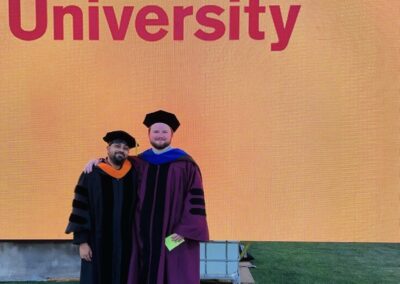
About
Kumar Ankit is an Associate Professor of Materials Science and Engineering (MSE) and Graduate Program Chair in the School for Engineering of Matter, Transport and Energy at Arizona State University. His research focuses on computational materials science with emphasis on phase-field modeling of microstructural evolution in materials. He leads the 4D ICE (Laboratory for 4D Interface Control & Engineering) research group, which develops computational tools for discovering efficient processing routes for advanced materials synthesis.
Education:
- Ph.D. (Dr.-Ing.) Summa Cum Laude, Mechanical Engineering, Karlsruhe Institute of Technology, Germany (2015)
- Integrated Dual Degree (B.Tech/M.Tech) Metallurgical Engineering, Indian Institute of Technology-BHU (2010)
Dr. Ankit's research spans multiple domains of computational materials science, with particular expertise in quantitative phase-field modeling. His work integrates computational approaches with machine learning to address fundamental challenges in microstructure science and engineering. His group investigates phenomena including solidification, solid-state transformations, grain coarsening in multicomponent alloys, electromigration-induced damage, and self-organization in polymers and vapor-deposited films. A growing emphasis in his recent work involves developing data-driven emulators that can predict complex microstructural evolution more efficiently than traditional simulation methods.
Analysis of Dr. Ankit's recent publications reveals a strong trend toward integrating machine learning with traditional computational materials science methods. His work increasingly focuses on developing data-driven approaches to model complex microstructural evolution, particularly in electromigration and phase separation phenomena. The research spans multiple disciplines including materials science, computational physics, and machine learning, with applications in semiconductor manufacturing, microelectronics reliability, and advanced materials processing.
Scientific Awards:
- 2024 Wenner-Gren Fellow (Sweden)
- 2022 NSF Early Career Award (CAREER)
- 2022 Editors' choice award, Journal of Phase Equilibria and Diffusion
- 2018 Robert W. Cahn prize of Springer Nature and the Journal of Materials Science
- 2016 Early Career Investigator Award of the German Research Foundation (DFG)
Dr. Ankit has successfully secured significant research funding including a $560,000 NSF CAREER award for studying pearlite discontinuities in eutectoid microstructures, a $5 million DOE Earthshots grant as co-PI for carbon-free steelmaking technology, and multiple NSF grants focused on electromigration and materials characterization. He mentors several PhD students who work on diverse research projects spanning computational modeling of electromigration, nanostructural self-assembly, and capillary-mediated interface phenomena. Dr. Ankit co-founded the MateriAlZ Seminar series with collaborators at ASU and the University of Arizona to promote student engagement and increase the visibility of Arizona universities in Materials Science and Engineering.
Dr. Ankit directs the 4D ICE research laboratory, which focuses on developing computational tools for rapid discovery of time-, energy-, and cost-efficient processing routes for materials with tailored functionality. The lab's work lies at the intersection of phase-field modeling, machine learning, and high-performance computing. Current projects include investigating capillary-mediated solid-liquid interface energy fields (funded by NASA), electromigration-induced defects in electronic materials (funded by NSF), and nanostructural self-assembly in vapor-deposited films (funded by ASU College of Engineering). The lab maintains strong collaborations with researchers at national laboratories and in industry.
Find Kumar Ankit elsewhere
Related Searches
You Might Also Like
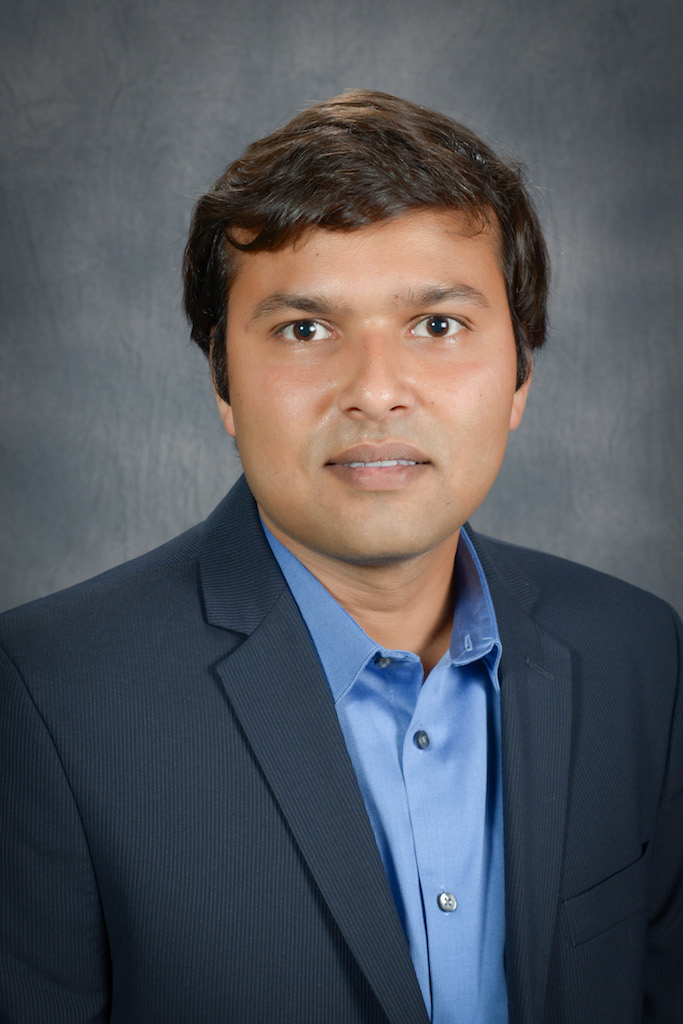 Ankit SrivastavaTexas A&M University · Associate Professor
- MMichael GoryllArizona State University · Associate Professor
 Yang JiaoArizona State University · Professor
 Ankit AgrawalNorthwestern University · Research Professor
- HHouman ZahedmaneshKU Leuven · Associate Professor
 Ted BennettUniversity of California , Santa Barbara (UCSB) · Associate Professor