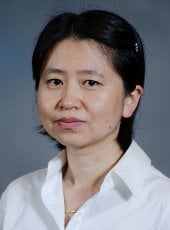
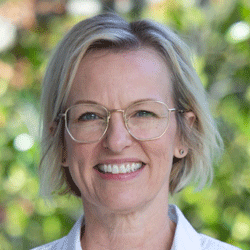
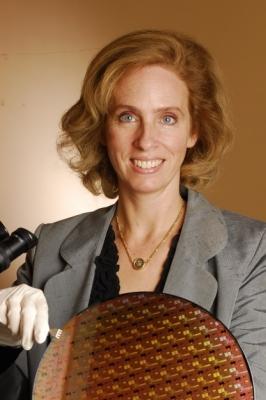
Mervi Paulasto-Kröckel is a Professor in the Department of Electrical Engineering and Automation at Aalto University, specializing in Electronics Integration and Reliability. With a doctoral degree in Engineering and Technology from Helsinki University of Technology (1995) and a Master's degree from the same institution (1990), her work focuses on microelectronics packaging, MEMS, and sustainable electronic manufacturing. Doctoral Degree: Engineering and Technology, Helsinki University of Technology (1995) Master's Degree: Engineering and Technology, Helsinki University of Technology (1990) Her research explores advanced packaging techniques like SLID bonding, reliability of microbumps, and thermally conductive materials. Recent work includes buried aluminum nitride for silicon-on-insulator and fatigue crack analysis in IGBT modules. Her publications emphasize low-temperature processes, interdiffusion, and MEMS reliability. Awards include the JVST A Best ALD Paper Award (2021) and a Best paper award (2000). She leads projects like PowerizeD and 3DPiezoMems, focusing on digitalization and 3D MEMS development. Best paper award (2000) JVST A Best ALD Paper Award (2021)
Eduard Arzt is a Distinguished Visiting Professor in the Department of Material Science and Engineering at the University of California, San Diego. He is internationally recognized for his pioneering work in materials science, with a focus on functional microstructures, bioinspired adhesives, and sustainable materials solutions. His current research explores innovative applications in biomedical engineering and space technology. His research interests center on the micropatterning of elastomeric surfaces to control mechanical interactions sustainably. Key areas include gecko-inspired adhesives for biomedical use and novel microstructures for space applications such as satellite debris retrieval. He also promotes biodiscovery as a strategy for developing materials for extreme environments. His interdisciplinary approach bridges materials physics, biology, and engineering. The trends in his recent work emphasize sustainability, bioinspiration, and the application of advanced materials in both medical and extraterrestrial contexts. His research integrates principles from nanotechnology, soft matter physics, and robotics to create next-generation functional materials. Notable scientific honors include: 2023 William D. Nix Award (TMS) Elected member of the Leopoldina German Academy of Sciences Elected member of the Austrian Academy of Sciences Elected member of the US National Academy of Engineering Prof. Arzt has held leadership roles in major research institutions and actively mentors researchers through his labs and collaborative networks. He is Editor-in-Chief of Progress in Materials Science and co-founded a deep-tech robotics startup, reflecting his commitment to translating scientific innovation into real-world applications. He has secured significant research funding through national and international grants, though specific grants are not detailed here. His research is conducted in collaboration with interdisciplinary teams and leverages advanced fabrication and characterization facilities. He fosters strong international partnerships, particularly between European and American research institutions, and promotes sustainable innovation through bioinspired design principles.
David Warsinger is an Assistant Professor of Mechanical Engineering at Purdue University's College of Engineering, located in West Lafayette, IN. He holds a Ph.D. from MIT and degrees from Cornell University. His research focuses on thermofluids, nanotechnology, and membrane science applied to water treatment, energy systems, and sustainable technologies. Key areas include desalination innovation, the water-food-energy nexus, and HVAC efficiency. He leads the Warsinger Lab, which develops advanced membrane materials, dehumidification systems, and renewable energy integration for desalination. Education: Ph.D., Mechanical Engineering (MIT), M.Eng. and B.S. (Cornell University). Awards include the MIT Outstanding UROP Mentor (2015), UCOWR Dissertation Award (2016), and Purdue's Early Career Teaching Award (2025). His lab collaborates on grants from DOE, NSF, and industry, with recent focus on batch reverse osmosis, solar desalination, and membrane-based HVAC systems. Research emphasizes high-impact applications like atmospheric water harvesting, photocatalytic air purification, and CO₂ removal for space exploration. The lab's capabilities include membrane testing, multiphysics modeling, and partnerships with ARUP for sustainable building design. Current projects include NSF-funded ReNEW initiatives and innovations in wave-powered desalination. Awards include over $4M in grants, including a 2025 $75k Showalter Grant and a 2022 DOE $2.4M award. His lab publishes in top journals and presents at ASME, NAMS, and international conferences. Undergraduate and graduate training emphasizes diversity and entrepreneurship, with alumni securing roles at top universities and companies like SpaceX.
Subramanian Iyer is a Distinguished Professor at the University of California, Los Angeles (UCLA), holding the Charles P. Reames Endowed Chair in Electrical Engineering with joint appointments in Electrical and Computer Engineering and Materials Science and Engineering. His laboratory focuses on cutting-edge semiconductor research. Primary research domains include: System Scaling Technology : Innovations in semiconductor miniaturization 3D Integration & Advanced Packaging : Techniques for vertical chip stacking and heterogeneous integration Memory Subsystems : Development of embedded DRAM and novel memory architectures Neuromorphic Computing : Hardware implementations of brain-inspired computing Publication analysis reveals three dominant themes across 35+ years of research: Semiconductor materials innovation (SiGe alloys, silicides, MBE growth) Memory technology evolution (embedded DRAM, eFUSE, low-latency designs) System integration advancements (3D packaging, TSV, heterogeneous integration) Significant honors include: IEEE Fellow (1995) and Daniel Noble Award (2012) National Academy of Inventors Fellow (2017) IBM Fellow (2010) with 30+ invention plateaus IMAPS Educator Award (2021) and Daniel C. Hughes Memorial Award (2020) He leads UCLA's NanoLab facility and has been featured in The New York Times and Wall Street Journal for pioneering chiplet technology. Current work focuses on megachip architectures and open-access semiconductor prototyping.
Joakim Jaldén is a Professor at the Division of Information Science and Engineering, School of Electrical Engineering and Computer Science (EECS), KTH Royal Institute of Technology. He holds a Ph.D. in Electrical Engineering from KTH (2007) and completed post-doctoral studies at Vienna University of Technology (2007-2009). With affiliations at Stanford University and ETH Zürich, his academic journey reflects global expertise. 2002: M.Sc. in Electrical Engineering, KTH 2007: Ph.D. in Electrical Engineering, KTH 2007-2009: Post-Doctoral Researcher, Vienna University of Technology Jaldén's research spans Signal Processing , Wireless Communications , and Biomedical Data Analysis . He pioneered MIMO communications and later developed ELISpot/FluoroSpot analysis algorithms commercialized by Mabtech AB. His work on cell migration tracking (IEEE ISBI 2012) and distributed optimization (ECO-PANDA method) demonstrates interdisciplinary impact. Key publication trends include Hidden Markov Models for DNA sequencing, Reinforcement Learning in communication systems, and Low-Complexity Beamforming for MU-MIMO networks. His 2024 work on mmWave MIMO beam coherence showcases continued leadership in wireless channel modeling. Scientific recognition includes: IEEE Signal Processing Society 2006 Young Author Best Paper Award Ingvar Carlsson Career Award 2009 (Swedish Foundation for Strategic Research) IEEE ISBI 2012 Best Paper Award Bitplane Awards (2013-2015) for cell tracking challenges As Program Director of KTH's 5-year Electrical Engineering Degree Program (CELTE) since 2016 and Vice-Chair of EECS Faculty Board , Jaldén leads academic initiatives. His collaborations with industry (e.g., Mabtech AB) and roles as examiner for advanced courses in communication systems highlight his educational impact.
Yongmei M. Jin is a Professor in the Department of Materials Science and Engineering at Michigan Technological University (MTU), affiliated with the College of Engineering. She holds a PhD in Materials Science and Engineering from Rutgers University. Her research focuses on microstructure evolution in crystalline solids, solid-state phase transformations, magnetic domains, computational materials science, and single crystal diffraction techniques. Notable work includes studies on magnetic domain boundary dynamics in Fe-Ga alloys, electric field control of magnetism at material interfaces, and phase field modeling of microstructural evolution. Selected publications demonstrate expertise in modeling material behavior under external stimuli (e.g., electric fields, currents) and analyzing microstructural changes at atomic and macroscopic scales. Teaching responsibilities include courses on materials processing, mechanical behavior of materials, and transmission electron microscopy.
David Huitink is an Associate Professor and Twenty-First Century Professor in the Department of Mechanical Engineering at the University of Arkansas College of Engineering. His research spans the intersection of materials and thermal sciences, with a focus on leveraging fundamental thermophysical material behaviors for engineered applications. He directs the EMPIRE Laboratory (Engineered Multi-Physical Interactions & Reliability Evaluation), which focuses on reliability engineering for next-generation electronic packaging solutions. Dr. Huitink received his educational foundation at Texas A&M University, earning a Bachelor of Science (2006), Master of Science (2007), and Doctor of Philosophy (2011), all in Mechanical Engineering. As an NSF Graduate Research Fellow during his doctoral studies, he specialized in complex nano-scale interactions at material interfaces under chemical and mechanical influence. His research interests encompass materials science, thermal sciences, and reliability engineering, with particular focus on thermophysical material behaviors, energy sciences, and thermally active functional materials. The Huitink lab works closely with Electrical Engineering collaborators to develop next-generation high-density power electronics for electrified transportation and power conversion systems. Recent efforts include additive manufacturing for hot-spot thermal management, transient temperature abatement, and interconnect fabrication technology development for enhanced electronic packaging lifetimes through thermal cycling events. Analyzing his recent publication record reveals a clear trend toward advanced thermal management solutions for power electronics, with increasing focus on phase change materials, nanowire-enhanced interconnects, and reliability modeling under combined stress conditions. His work bridges fundamental materials science with practical engineering applications in high-power systems, particularly for electric vehicle technologies and aerospace applications. NSF Graduate Research Fellow (2007-2011) Texas A&M Graduate Diversity Fellow (2008-2011) Texas A&M Graduate Merit Fellow (2006-2007) National Merit Scholar (2002-2006) BSA Eagle Scout (2001) Dr. Huitink brings significant industry experience to his academic role, having spent over five years at Intel Corporation as Quality & Reliability Engineering Program Manager for Intel's Custom Foundry Division. There he pioneered advanced reliability prediction methods for silicon-based flip chip microelectronic packages and developed testing protocols and FEA methods for Design for Reliability guidance. He currently serves as Associate Editor of Microelectronics Reliability Journal and has patent applications filed in Low Z-height Electronic System design and thermal optimization of space-limited electronic systems. The EMPIRE Laboratory maintains strong connections with Arkansas's multi-disciplinary power electronics program, which includes 14 faculty members across 4 departments, approximately 100 graduate students, and nearly $10 million in annual research expenditures. The lab collaborates with several centers of excellence including GRAPES, POETS, and SEEDS, utilizing state-of-the-art facilities such as NANO, HiDEC, and NCREPT.
Jaakko Akola is a Professor in the Department of Physics at the Norwegian University of Science and Technology (NTNU). His research focuses on computational materials science, particularly density functional theory (DFT) and atomistic simulations of materials, nanoparticles, molecules, and interfaces. He leads significant projects such as "SIDI" (inoculation in cast iron), "Infinity-RETIS" (chemical rare events), and "AllDesign" (rational alloy design), alongside coordinating EU-funded initiatives like "CritCat" for catalyst development. The Materials Theory group under Akola employs DFT, molecular mechanics, and Monte Carlo methods to explore atomic-scale structures and functions in technological applications. Key research areas include platinum-free catalysts for hydrogen energy, amorphous semiconductors for memory devices, noble metal nanoparticles in biological environments, and alloy design for cast iron and aluminum. Recent work integrates machine learning to advance theory-driven material design, reducing reliance on experimental trial-and-error. Akola's publications highlight advancements in hydrogen evolution catalysis, phase-change memory materials, and alloy precipitation. His projects often involve interdisciplinary collaborations with experimental teams. He teaches Quantum Physics 1 (FY2045) and Computational Physics (TFY4235) at NTNU, reflecting his commitment to education alongside research.
Carolyn Duran is an Adjunct Professor of Materials Science and Engineering at Northwestern University and Senior Director, Product Integrity at Apple. She previously spent 25 years at Intel Corporation in leadership roles spanning technology development, memory/IO technologies, and supply chain sustainability. Her expertise includes semiconductor materials, electromigration mitigation, and ethical supply chain practices. Education: Ph.D., Materials Science and Engineering, Northwestern University B.S., Materials Science and Engineering, Carnegie Mellon University Her research focuses on advanced materials for semiconductors and sustainable supply chain practices. She has led initiatives in DRAM memory architecture, high-speed IO technologies, and responsible minerals sourcing. Carolyn holds multiple patents in electromigration-resistant alloys and ferroelectric polymers. Awards: Fast Company's 'Most Creative People in Business 1000' (2016) Business Insider's 'Most Powerful Women Engineers' (2014) Intel Achievement Award (2014) National Science Foundation Fellowship (1994) Advisory Roles: External Advisory Board, Ohio State University Center for Emergent Materials (2023–present) Materials Research Society President (2022) Northwestern University Materials Science & Engineering Academic Advisory Board (2008–present) Her professional service includes leadership roles in the Responsible Business Alliance and Responsible Minerals Initiative.
Ryan Wagner is a Research Assistant Professor in the School of Mechanical Engineering at Purdue University. He holds a B.S. (2008) and Ph.D. (2014) in Mechanical Engineering from Purdue University, with a minor in Physics. His research focuses on nanotechnology, microscopy, metrology, and dynamics, with applications in optomechanics and micro/nanotechnology. He has held postdoctoral positions at the National Institute of Standards and Technology (NIST) and Asylum Research, specializing in atomic force microscopy (AFM) instrumentation and optomechanical force standards. Education: B.S. in Mechanical Engineering, Purdue University (2008) Ph.D. in Mechanical Engineering, Purdue University (2014), Thesis: Advanced AFM Techniques for Cellulosic Nanomaterials Research Interests: Nanomechanics and optomechanics AFM-based material characterization Development of force/mass standards using optical cavities Biomedical applications of nanotechnology Articles Trends: Recent work emphasizes optomechanical systems, precision measurements in AFM, and interdisciplinary applications in biomedicine and materials science. Publications span Nature , Proceedings of the National Academy of Sciences , and Optics Express . Awards: National Research Council Postdoctoral Fellowship (2014) Office of Naval Research Summer Faculty Fellowship (2021) Charles C. Chappelle Fellowship (2009) Advising/Grants: Active in mentoring graduate students and securing grants for interdisciplinary projects. His lab focuses on applying vibration dynamics to multiphysics problems in collaboration with industry and national labs. Labs/Teams: Leads research in optomechanical force standards and AFM instrumentation development at Purdue’s School of Mechanical Engineering.
Houman Zahedmanesh is an Associate Professor in the Department of Mechanical Engineering at KU Leuven's Faculty of Engineering Science. His work focuses on electromigration reliability in nano-interconnects, leveraging machine learning and AI to address thermal hotspots in semiconductor systems. He leads projects like the 2025-2029 BEOL thermal management initiative and contributes to computational materials science research. Current Affiliation: KU Leuven, Faculty of Engineering Science Department: Mechanical Engineering Research Focus: Electromigration, nano-interconnect reliability, AI-driven materials analysis Research Interests: Dr. Zahedmanesh's research bridges materials science and electrical engineering, with emphasis on: Electromigration-induced failure in copper interconnects Thermal gradient effects on electronic reliability Machine learning applications for predictive material modeling Microstructure-aware simulations in nanotechnology Hybrid physical-statistical frameworks for semiconductor reliability Publication Trends: Recent works demonstrate his expertise in AI-driven materials analysis (2025), microstructure modeling (2024), and multiphysics simulations of electromigration (2023). His research aligns with KU Leuven's focus on computational materials science and nanotechnology.
Prof. Wolfgang Rheinheimer is a Professor and Institute Director at the Institute for Ceramic Materials and Technologies , University of Stuttgart, since 2023. Previously, he held academic positions at RWTH Aachen (2022-2023), Forschungszentrum Jülich (Emmy Noether Group Leader, 2020-2022), TU Darmstadt (2020), and Karlsruhe Institute of Technology (2010-2017). Academic Rank: Full Professor Research Focus: Advanced sintering technologies, grain boundary engineering, defect chemistry, conductivity in ceramics, and microstructure evolution His research spans experimental and computational approaches to ceramic materials, with emphasis on field-assisted processing (electric/magnetic), grain boundary properties , and solid-state electrolytes . He has pioneered studies on flash sintering , cold sintering , and blacklight sintering mechanisms. Scientific Awards : Emmy Noether Fellowship (2020-2022) for establishing his independent research group His work integrates phase-field modeling with experimental characterization to optimize ceramic properties for energy applications (solid-state batteries, fuel cells) and structural uses. Collaborations include Robert Bosch GmbH and Purdue University (2018-2019 Visiting Professorship).
Linda S Milor is a Professor in the School of Electrical and Computer Engineering at the Georgia Institute of Technology. She specializes in reliability modeling of semiconductor circuits, analog and mixed-signal testing, and yield optimization. Dr. Milor holds an IEEE Fellow distinction and has received multiple awards, including 8 best paper awards and the NSF Career Grant (1995). She has advised 18 Ph.D. students and contributed over 200 publications on semiconductor reliability and testing. Education: B.S. in Engineering Physics from UC Berkeley (undergraduate details unspecified) and a Ph.D. in Electrical Engineering from UC Berkeley (1992), focusing on analog/mixed-signal circuit testing. Research Interests Reliability modeling for semiconductor circuits Circuit performance prediction under manufacturing variations Analog and mixed-signal testing methodologies Statistical process modeling for yield enhancement Key Contributions Her work emphasizes aging analysis in SRAM, FinFET technology, and dielectric breakdown mechanisms. She pioneered techniques for on-line testing of memory systems and developed frameworks for accelerated life testing. Awards & Recognition IEEE Fellow (2014) 2004 Best Paper in IEEE Transactions on Semiconductor Manufacturing NSF Career Award (1995) Advising & Grants Advised 18 Ph.D. students and secured grants including the NSF Career Grant. Her research has been applied in industrial contexts through consulting roles for semiconductor manufacturers. Labs & Collaborations Her work integrates semiconductor reliability research with industry partnerships, focusing on practical applications of aging prediction and wearout mitigation.
Mircea R. Stan is a Professor of Electrical and Computer Engineering at the University of Virginia, serving as Director of Computer Engineering and Virginia Microelectronics Consortium (VMEC) Professor. He leads the High-Performance Low-Power (HPLP) lab and is an associate director of the Center for Automata Processing (CAP). His research focuses on AI hardware, Processing in Memory, Low Power Design, Cyber-Physical Systems, and Spintronics. Education: Ph.D. (1996) and M.S. (1994) from UMass Amherst; Diploma (1984) from Politehnica University, Bucharest. Research interests include energy-efficient computing architectures, IoT systems, and emerging technologies like magnetic skyrmions and memristors. He has pioneered work on asynchronous stochastic computing, thermal-aware microarchitecture, and microfluidic cooling for 3D-ICs. Key awards include the 2024 A. Richard Newton Technical Impact Award, 2018 ISCA Influential Paper Award, and IEEE Fellow (2014). He has held editorial roles at IEEE TVLSI, IEEE TNano, and IEEE Design & Test. Notable contributions include the HPLP lab’s advancements in low-power logic computing, the VCRFID framework for Industry 4.0, and thermal-aware design tools like Hot-LEGO and Cool-3D.
Dr. QUAN Chen is an Associate Professor at the School of Microelectronics, Southern University of Science and Technology (SUSTech), holding this position since May 2025 after serving as Assistant Professor (2019-2025) and Research Assistant Professor at the University of Hong Kong (2012-2018). A Shenzhen high-level overseas talent, he earned his PhD from the University of Hong Kong and conducts cutting-edge research in electronic design automation. His academic credentials include: Ph.D. from The University of Hong Kong (2010) Master's degree from The University of Hong Kong (2007) Bachelor's degree from Sun Yat-Sen University (2005) Dr. Chen's research pioneers advanced EDA algorithms for large-scale analog/RF circuit simulation, post-Moore multi-physics analysis, and AI-assisted design technologies. His work addresses critical challenges in nanodevice modeling and quantum computing circuits, resulting in over 50 publications in top venues like IEEE TCAD and DAC, plus four Chinese patents. Analysis of his recent publications reveals dominant trends in exponential integrator methods for transient simulation, model order reduction techniques, and physics-informed machine learning for reliability analysis. His work bridges numerical mathematics with practical EDA applications across analog circuits, quantum hardware, and emerging memory technologies. Key recognitions include: Wu Wenjun Artificial Intelligence Science and Technology Award, Second Prize (2020) ICCAD Best Paper Award Nomination (2012) Dr. Chen actively recruits Postdoctoral Fellows, Research Assistants, and Graduate Students while leading major funded projects including NSFC key/general programs and Guangdong Provincial R&D initiatives. His industry partnerships with Huawei, Empyrean, and Guowei Group translate theoretical advances into real-world EDA solutions. He directs a specialized research group at SUSTech focused on computational methods for next-generation circuit design, fostering innovation in simulation algorithms and multi-physics analysis through academic-industry collaboration.