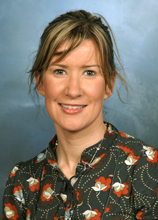
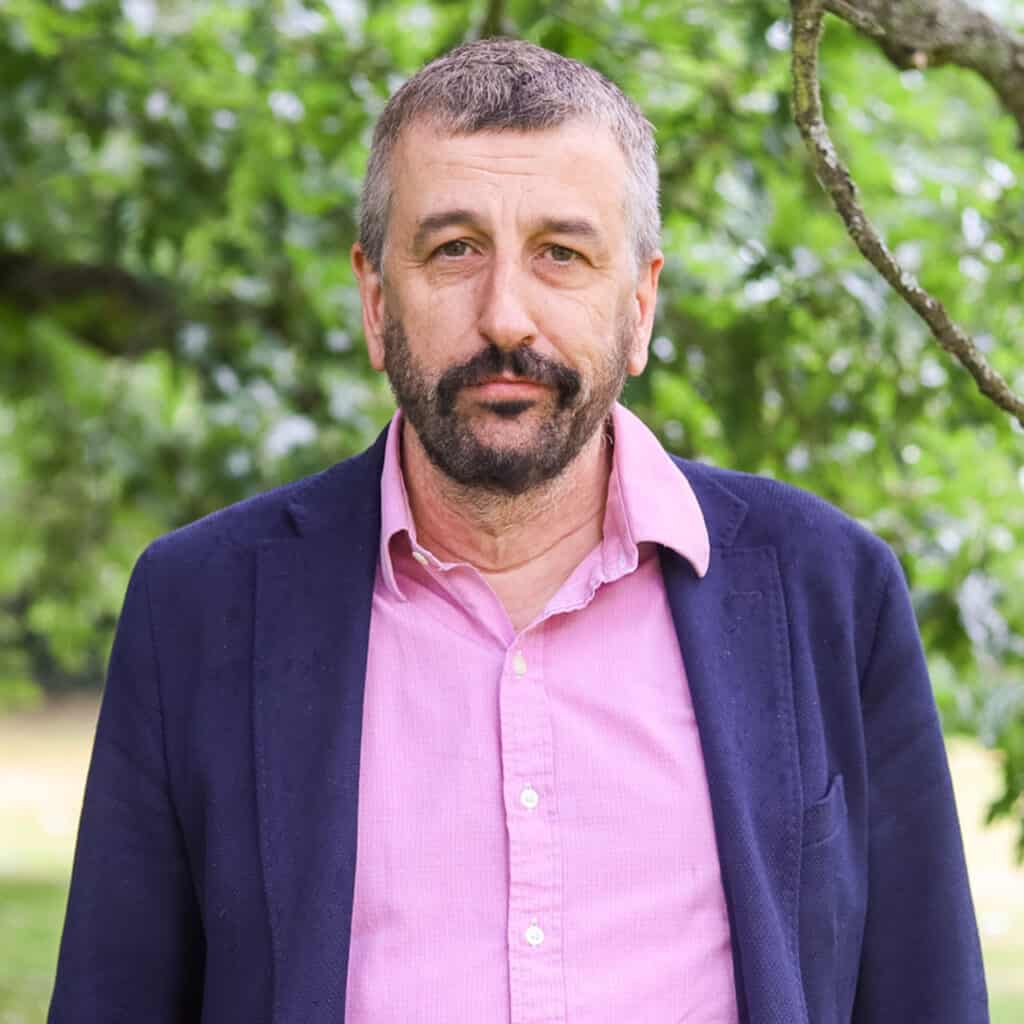
Katia Adimora is a Visiting Lecturer and PhD Researcher at Edge Hill University, specializing in Mexican immigration to the US, particularly under Trump and Biden's presidencies. Her work employs Corpus-Based Discourse Studies to analyze media narratives. She founded the Spanish and Latin American Research Group (ESAL) at Edge Hill. Adimora holds an MSc in Spanish Linguistics from the University of Ljubljana (Slovenia), with research collaboration at UNAM (Mexico). She has taught Spanish language and modules on political rhetoric, migration, and censorship. Certified in teaching Spanish methodology from Universidad de Salamanca, she also served as a Graduate Teaching Assistant. Her research interests include US Latino socio-political dynamics, migration discourses, and Spanish linguistics. Awards include grants from Edge Hill University, AHGBI, and the Mexican Government for research visits to Spain and Mexico. She has presented at conferences like the American Politics Group and the Edge Hill Corpus Research Group. Adimora’s media contributions include analyses on migration policies and cartel violence, featured in The Conversation and Los Angeles Times en español . Her work bridges academia and policy, emphasizing critical discourse analysis of migration narratives.
Lilian Schofield is a Senior Lecturer in Non-Profit Management Practice at Queen Mary University of London (QMUL), serving as Deputy Director of Education (Student Experience) and Academic Lead for Undergraduate Year in Industry Programmes. Her academic background includes a PhD in Construction and Property Management from the University of Salford, an MA in International Development from the University of Manchester, and a BA in Public Administration from Ahmadu Bello University, Nigeria. Her teaching focuses on Non-Profit Management, International Development, Social Change, and Critical Management Pedagogy. She previously taught at University College London (UCL) and Birkbeck. Her research emphasizes AI literacy in education, transformative learning, and challenges faced by educators in precarious employment. Awarded the President and Principal’s Fund for Educational Excellence (2024) and recognized for contributions to employability via the AGCAS Award, Schofield also leads interdisciplinary initiatives like the AI Literacy project. She serves on the Academy of Management’s Teaching and Learning Committee and reviews for journals like Journal of Learning Development in Higher Education . Her grants include funding for AI curriculum integration and experiential learning programs. Schofield actively engages with public discourse on education’s role in addressing global challenges, including youth unemployment and sustainable development.
Chelsea Morroni is a Senior Lecturer at the University of Liverpool, affiliated with the Deanery of Clinical Sciences and the Centre for Reproductive Health. Her research focuses on pharmacological interventions in reproductive health, particularly pain management during medical abortion and clinical trial methodologies. She leads multiple international projects funded by the National Institute for Health Research and the Wellcome Trust, addressing maternal healthcare quality, sexual health in pregnancy, and genomic epidemiology of sexually transmitted infections in Africa. Her work spans both primary research and systematic reviews, with publications in The Lancet and Contraception . Key collaborations include global health initiatives and partnerships with institutions in Africa. As Principal Investigator, she oversees projects such as 'Improving Sexual Health in Pregnancy in Africa' and 'Genomic epidemiology of Treponema pallidum in Southern Africa.' Her research interests emphasize translating evidence into clinical practice, with a focus on marginalized populations. She also contributes to training through co-investigator roles in PhD fellowships like the ECAT-i/Wellcome Trust program.
Professor Kay Tisdall is a Chair of Childhood Policy at the Moray House School of Education and Sport, University of Edinburgh, within the College of Arts, Humanities and Social Sciences. She holds a PhD in Social Policy from the University of Edinburgh, an LLB from Strathclyde University, and an undergraduate degree from Harvard University. Her work focuses on children’s human rights, participation in decision-making, and methodologies for research and policy engagement with children and young people. She has led and contributed to numerous international projects, including the Observatory of Children's Human Rights Scotland and the ESRC-funded ‘CAFADA’ project on domestic abuse. Key research areas include contested child contact in domestic abuse contexts, child activism against child marriage, and arts-based peacebuilding. She has held roles such as Member of the Expert Committee on Competency Framework for Child Participation (International Bureau for Children’s Rights) and member of UNICEF UK’s Child Rights Partners Advisory Group. Her teaching includes convening modules on Global Childhoods & Human Rights and Involving Children & Young People in Research. Current PhD supervision spans topics like children’s agency in sport and participatory approaches in child protection systems.
Dr Alan Mackie is a Lecturer in Youth and Community Work at the University of Dundee, affiliated with the Department of Education and Society within the School of Humanities, Social Sciences and Law. He joined the university in November 2020 following over a decade of work in community education, focusing on marginalized youth in areas like homelessness, mental health, and employability. Education: BA (Hons) in Community Education (Moray House, 2011) MSc in Educational Research Methodologies (2014) PhD (funded by ESRC) on social justice and youth work responses in Scottish communities (completed prior to 2020) Research Interests: Sociology of youth, social justice, class, and intersectionality Youth transitions and post-school pathways, particularly in EU contexts Impact of neoliberalism on youth identity and belonging Post-pandemic orientations of young people Grants and Activities: Co-investigator on grants: 'Analysis of Power and Complexity in Community Development' (2024–2028), 'Policing after Lockdown' (2023), and 'SGSSS Student-led Open Competition' (2023–2028) Member of British Academy Early Career Network (2024) Labs/Teams: Active in the Community Education team at Dundee and collaborates on interdisciplinary youth-focused projects.
Martine Verheul is a Senior Lecturer in Skill Acquisition & Motor Control at the Moray House School of Education and Sport, University of Edinburgh. She leads the Human Performance Science Research Group and is affiliated with the Institute for Sport, Physical Education & Health Sciences (ISPEHS) and the Perception Movement Action Research Centre. Her expertise spans adapted physical activity, disability sport, and motor control in special populations. Dr. Verheul holds a PhD in Neuropsychology from the University of Groningen and has conducted post-doctoral research at Manchester Metropolitan University. Her teaching spans undergraduate and postgraduate levels, focusing on motor control, motor learning, and skill acquisition in Sport Science and Physical Education programs. She supervises PhD students in adapted physical activity and disability sport. Her research emphasizes para sport (e.g., frame running), motor control in neurological conditions (cerebral palsy, Parkinson’s, stroke), and motor development. Notable projects include: Developing frame running classification systems for World Para Athletics Evaluating swimming interventions for children with cerebral palsy Analyzing impairment-performance relationships in athletes with neurological impairments Her work prioritizes accessibility and psychosocial benefits of sport for marginalized populations. She collaborates with institutions like Queen Margaret University on classification systems and health equity initiatives.
Carole Faucher is a Teaching Professor in Education and International Development at the Moray House School of Education and Sport, University of Edinburgh. Her research focuses on anthropology of education, health education, student wellbeing, and epistemological diversity, with a geographic emphasis on Southeast Asia and Central Asia. She has held faculty positions at institutions including Nazarbayev University, University of Tsukuba, and the National University of Singapore, and has been a visiting fellow at numerous global institutions. Education: PhD Anthropology, National University of Singapore (1999) MSc Anthropology, Université de Montréal (1995) BSc Anthropology, Université de Montréal (1991) Research Interests: Dr. Faucher explores how educational systems intersect with health, identity, and global development. She investigates marginalized populations' experiences, including epistemological diversity in knowledge co-construction, and the impact of crisis (e.g., pandemics) on youth wellbeing. Her work bridges anthropology, sociology, and policy analysis. Affiliations & Roles: Member, Steering Committee of CEID Research Group Advisory Board Member, The Nordic Center for Conflict Transformation Member, Core Scientific Committee of WHO Collaborative Center and UNESCO Chair Global Health & Education Co-convenor, European Educational Research Association Network 8 (Health and Wellbeing Education) Grants & Labs: Involved in collaborative projects such as the University of Cambridge-Nazarbayev University research on Kazakhstani education transitions. Active in global health education initiatives through UNESCO partnerships. Future Work: Expanding research on knowledge pluralism in health education and policy implications of global north-south divides in education systems.
Professor Lindsey Pope is a GP, Professor of Medical Education, and Dean of Internationalisation in the School of Health and Wellbeing at the University of Glasgow. She leads the Scottish School of Primary Care and advises the Scottish Government’s Chief Medical Officer on General Practice. As a member of the University Senate and Medical Schools Council ED&I Alliance Board, she actively shapes medical education policy and diversity initiatives. Her research focuses on clinical learning environments, GP workforce development, and doctors’ wellbeing. Notable projects include studies on medical students’ experiences in clinical settings, GP curriculum innovation, and interprofessional collaboration. She has authored over 50 peer-reviewed publications and edited chapters in medical education. Professor Pope holds roles as an RCGP examiner, GMC Education Associate, and editorial board member for Virtual Primary Care . She has secured grants from the Chief Scientist Office and NHS Education for Scotland to develop interventions supporting healthcare worker resilience. Supervising doctoral students in medical education, she also contributes to the Health Professions Education program. Key achievements include advancing generalist medical practice, redesigning Glasgow’s GP teaching model, and advocating for inclusive healthcare education through her leadership in national and international medical education bodies.
Lynsey Yeoman is a Clinical University GP Lecturer and Deputy Director of Vocational Studies (General Practice & Primary Care) at the University of Glasgow. Her work focuses on improving healthcare access for marginalized populations and advancing medical education. She has contributed to systematic reviews addressing chronic disease management in homeless adults and has explored integrating quality improvement into undergraduate medical curricula. Her research spans public health, primary care, and healthcare education with an emphasis on vulnerable populations. Recent work highlights innovations in medical training and evidence-based interventions for long-term conditions. Yeoman has presented at conferences such as the NADEGS Annual Conference and published in journals like BMJ Open and Nephrology Dialysis Transplantation . Her academic contributions reflect a commitment to bridging clinical practice and educational excellence.
Prof Nematollah Azizi is a Professor affiliated with the School of Education at the University of Glasgow. His research focuses on higher education policy, university-industry collaboration, curriculum design, and institutional branding. He has conducted comparative studies on educational systems in Iran, Sweden, England, Finland, and Japan. Key research topics include academic capitalism, global university rankings, and crisis response roles of universities. Active in collaborative projects like the SUEUAA initiative addressing marginalized communities' education needs. Co-authored over 30 peer-reviewed articles and policy reports since 2018. His recent work highlights university engagement in humanitarian crises (e.g., University of Duhok’s health services for refugees) and critical analysis of Iranian higher education reforms. He also explores branding strategies for technical universities and the mediating role of organizational culture in academic leadership. His publications frequently address policy implications for equitable education access, academic integrity, and cross-cultural institutional partnerships.
Helen Williams is an academic affiliated with the University of Sunderland, focusing on criminology, disability rights, and higher education pedagogy. Her work addresses critical issues such as sexual violence within marginalized communities, neurodiversity advocacy, LGBTQ+ inclusivity, and the intersection of media activism. She has presented at major conferences like the British Society of Criminology Annual Conference and the Nordic Network on Disability Research Conference, contributing to policy reforms and academic discourse. Her research spans topics including criminal justice responses to neurodivergent victims, transgender student experiences, and the decriminalization of sex work. She has published in journals such as Disability & Society , Radio Journal , and Higher Education . Williams has also led projects like the 'Criminology Retention Project' and evaluated initiatives like the 'Evolve' program, demonstrating her commitment to both academic rigor and practical impact. Her recent work highlights barriers faced by learning-disabled individuals in reporting sexual violence and explores innovative methods like participatory theater for data collection. She collaborates with organizations like St Mary’s SARC and the National Custody Forum, bridging academic research with real-world applications.
Sneha Raman serves as a Research and Teaching Fellow at the Design for Health and Wellbeing group within the Institute of Design Innovation at the Glasgow School of Art's School of Innovation and Technology. Her work centers on co-design and participatory methodologies in health and social care contexts, with particular emphasis on engaging vulnerable populations including young people, individuals with learning disabilities, and those with lived experience of mental health conditions or eating disorders. She has led significant projects addressing mental health transitions, palliative care innovation, and digital health solutions through collaborations with NHS Scotland, the Digital Health and Care Innovation Centre, and international partners. Raman's research focuses on developing ethical frameworks for genuine participation in co-design, addressing power imbalances in collaborative research, and creating transformative healthcare experiences. Key areas include culturally sensitive mental health interventions for ethnically diverse youth, eating disorder recovery pathways, and digital solutions for care transitions. Her work consistently integrates lived experience to inform service design while navigating sensitive contexts such as trauma and disability, with strong emphasis on relational approaches and equity in healthcare delivery. Analysis of her recent publications reveals evolving expertise in applying co-design to complex health disparities, particularly through projects like REALITIES (addressing embodied health systems) and EDIFY (mapping eating disorder trajectories). There is a pronounced shift toward digital health innovation as seen in Virtual Hospice and Digital Lifelines initiatives, alongside sustained focus on mental health across school transitions and palliative care. Her scholarship bridges theoretical frameworks with practical tools, demonstrating consistent engagement with marginalized communities and methodological rigor in participatory research. No scientific awards were mentioned in the provided text. Raman demonstrates substantial grant acquisition and project leadership through major initiatives including EDIFY (UKRI-funded), REALITIES, and the Virtual Hospice project. These endeavors, often supported by the Scottish Universities Insight Institute and Digital Health and Care Innovation Centre, involve interdisciplinary teams spanning healthcare providers, academic institutions, and community organizations. While formal student advising isn't documented, her role includes mentoring junior researchers through co-design workshops and collaborative projects that integrate academic and community stakeholders. As a core member of the Design for Health and Wellbeing research group, Raman pioneers the Experience Labs methodology which convenes patients, caregivers, clinicians, and designers to co-create health innovations. Her work extends through the Digital Health and Care Innovation Centre partnership and transnational collaborations including the Catalonia-Scotland comparative study on right-to-care movements. This ecosystem enables development of practical tools like the Community Compass resource while fostering cross-sector learning in social care transformation.
David Gaylard is a Senior Lecturer at the University of Chichester, affiliated with the Institute of Education and Social Sciences. With over three decades of professional experience, he has held roles in social work, nursing, and management across Hertfordshire, London, and Sussex. He holds an MA in Management (Health & Social Care Services) and an MA in Social Work Research & Evaluation, and is currently pursuing a doctoral thesis on personalisation under austerity. David teaches across undergraduate, postgraduate, and post-qualifying social work programs. His research focuses on personalisation, adult safeguarding, collaborative service delivery, diversity, and mental health in elderly populations. Education: Practice Teachers Award, Goldsmith’s College, University of London MA in Management (Health & Social Care Services), University of Chichester (2008) MA in Social Work Research & Evaluation, University of Sussex (2013) Doctoral Research: Personalisation under Austerity (ongoing) Professional Roles: External Examiner for Lincoln University BSc (Hons) Social Work (since 2016) Former Research Ethics Committee member (4 years) David’s publications contribute to social work practice, including chapters on policy implementation, safeguarding, and geriatric mental health. His work bridges academic research and practical service delivery in adult social care.
Elaine Arnull is a Professor at Southampton Solent University in the Department of Social Sciences and Nursing. Her research focuses on social work, criminal justice, and domestic violence, with a particular emphasis on vulnerable populations and policy evaluation. Primary Affiliation: Southampton Solent University Department: Social Sciences and Nursing Role: Professor Arnull's recent research outputs highlight interdisciplinary collaborations and critical examinations of social systems. Key themes include: Boundary-crossing models for youth protection Co-production of social work knowledge Evaluation of domestic violence support services Discourse analysis in family violence contexts Equity challenges in healthcare access Her work intersects with organized crime, marginalized communities, and institutional care systems, often utilizing lived experience and critical policy analysis frameworks. Current projects include Crossing Boundaries: Creating a Shared Model to Support Vulnerable Young People (2024-2025) funded by the Nuffield Foundation, exploring intersections between youth vulnerability and exploitation prevention.
Rory Wells is a PhD Researcher at York St John University's School of the Arts , supervised by Professor Lee Higgins. His work focuses on establishing local and global networks for activist-musicianship to develop community music interventions around social justice issues. Currently, he works at Touchstone (Yorkshire-wide mental health charity) as Creative Arts Lead and Asset-Based Community Development (ABCD) community builder for newly arrived populations. PhD Research : Community music and social change networks Practice Areas : Involuntary displacement, mental health advocacy, youth work, global ABCD movements His research emphasizes collaborative development of socially just music interventions, participation frameworks, and marginalized voice amplification. While no specific awards are listed, his work bridges community development with creative arts practice.


.jpg)