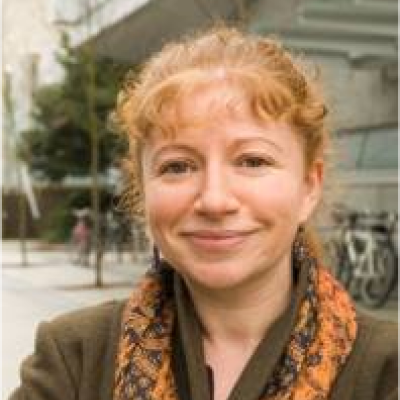
Steven Vertovec is a leading scholar in migration studies, currently serving as Director of the Max Planck Institute for the Study of Religious and Ethnic Diversity and Honorary Joint Professor of Sociology and Ethnology at the University of Göttingen. Previously, he was Professor of Transnational Anthropology at the University of Oxford and Director of COMPAS (Centre on Migration, Policy and Society). Research Focus: Superdiversity, transnationalism, multiculturalism, and social complexity Key Roles: Editor of Global Networks , series editor of Routledge Transnationalism , consultant to global agencies (World Bank, UNESCO, European Commission) His work spans theoretical and empirical studies of diasporic communities, integration policies, and urban diversity. Recent publications emphasize superdiversity as a framework for understanding contemporary migration patterns and social transformations. Selected Contributions: Pioneering analysis of Hindu diaspora patterns, co-editor of major works on multiculturalism, and developer of data visualization tools for urban migration studies.
Dr Aljosha Karim Schapals is a Senior Lecturer in Journalism and Political Communication at QUT's School of Communication, part of the Faculty of Creative Industries, Education & Social Justice. He serves as Chief Investigator at the Digital Media Research Centre (DMRC) and Book Review Editor for Media International Australia (Q1 journal). Former roles include Visiting Lecturer at City, University of London and journalist for the Financial Times and German Federal Agency for Civic Education. Education: PhD (City University, London). Research focuses on digital transformation of news production/consumption, social media verification, algorithmic journalism, and political communication. Specializes in autocratic media systems, media concentration, and AI ethics in journalism. Recent publications explore dark political communication, TikTok electioneering, and automated journalism ethics. Awards include 2023 School of Communication Teaching Award and 2022 ICA Top Reviewer honor. Supervises research on digital publics and newsroom practices. Active in professional associations like ANZCA, ICA, and JERAA. Teaching includes Foundations of Journalism (CJB101) and capstone Newsdesk unit (CJB302). Grants include ARC-funded projects on combatting dark political communication and redefining news value. Part of interdisciplinary teams addressing media ethics and democratic accountability.
Alva L. Couch is an Associate Professor at Tufts University's School of Engineering, Department of Computer Science, with a career spanning over 30 years. His work bridges network/system administration, autonomic computing, and hydrologic data science, focusing on scalable solutions for data management and automated system administration. Education: Ph.D. in Mathematics (1988), B.S. in Architecture (1978), and B.A. in Bassoon/Contrabassoon Performance (1978). Research Interests His research centers on: Network and System Administration: Tools like SLINK, Maelstrom, and Babble for dependency analysis, cloud migration, and policy enforcement. Geo-informatics: MEDFORD metadata language and HydroShare platform for hydrologic data curation and discovery. Autonomic Computing: Promise theory, convergent operators, and closure models for self-managing systems. Recent Work Trends His 2024-2018 publications emphasize: Cloud-based hydrologic data management (AnVILMEDFORD, HydroShare) Metadata standards for interdisciplinary research Machine learning for system administration Agent-based resource sharing models Scientific Awards Liebner Teaching Award (1996) Seymour Simches Advising Award (2017) Best Paper Awards: LISA 1996, AIMS 2008, LISA 2001 LISA 2000 Best Student Paper (with Michael Gilfix) Contributions He developed key software like Peep (network auralization) and Slink (configuration management), supported by NSF grants and industry partnerships. His work with CUAHSI's Water Data Center shapes national hydrologic data infrastructure. He also advocates for science education and privacy in computing.
Dr. Michael (Miek) Dunbar is a Lecturer in Communication Design at RMIT University's School of Design , specializing in interaction and service design for regenerative futures. He co-leads the Greater Melbourne City Portrait initiative with Regen Melbourne, focusing on creating safe social and ecological urban frameworks. His work challenges anthropocentric data practices while developing digital public tools for urban decision-making. Key research areas include: Regenerative Design, More-than-human Data Sets, Collaborative Design Teams Teaching: Master of Communication Design program, Service Design, Work Integrated Learning His publications address urban data infrastructures, collaborative design methods, and regenerative practices. Projects like Australia's first Housing Monitor demonstrate his focus on civic data systems and urban sustainability. Current research explores: Relational ontologies in data visualization Multi-species sensing apparatuses Expanded participatory data governance
Jacob Gorm Davidsen is an Associate Professor at Aalborg University's Department of Communication and Psychology, affiliated with The Faculty of Social Sciences and Humanities. He leads the Collaboratory for Human-Centered Immersive Problem-Solving Spaces (CHIPS) and co-founded initiatives like VILA and AVA360VR. His research focuses on leveraging digital technologies, particularly Virtual Reality (VR), to enhance learning, collaboration, and problem-solving in immersive environments. He holds a PhD in Human Centered Communication and Informatics. Key projects include 'En bedre start' (funded by Independent Research Fund Denmark) exploring VR for teacher training and the 360mash project addressing GPU cloud and software anonymization. His work bridges computer science, education, and human-centered design. Main research interests include immersive VR applications, collaborative learning environments, and digital infrastructure for social sciences. His contributions span 105+ publications, with recent emphasis on activity-based VR frameworks and near-future educational technologies. He serves on editorial boards (e.g., European Journal of Engineering Education) and actively reviews manuscripts. Notable software tools developed include DOTE and AVA360VR for qualitative analysis and video collaboration.
Dr. Sharon O'Rourke is an Assistant Professor and Ad Astra Fellow at the University College Dublin (UCD) School of Biosystems and Food Engineering since 2019. Previously, she held roles at the University of Sydney and UCD's School of Agriculture and Food Science, focusing on soil science and environmental protection. She holds a BAgrSc from UCD and a PhD in Soil Nutrient Management from Queen's University Belfast. Research Interests: Her work centers on sustainable soil management, soil carbon sequestration, and environmental protection. She employs spectral techniques (e.g., mid-infrared, hyperspectral imaging) and modeling to study soil geochemistry, carbon dynamics, and climate change mitigation. Current projects include ClimateCropping (EU-wide soil carbon management), PRISM (in-field soil sensors), and CFunction (carbon-nutrient stoichiometry). Grants & Projects: Key grants include funding from Teagasc, the Department of Agriculture, and the Sustainable Energy Authority of Ireland. Notable projects include proximal soil sensing for carbon monitoring and bio-based product development via pyrolysis. Teaching: She coordinates modules such as 'Carbon & Sustainability,' 'Soil Technology,' and 'Research Skills,' emphasizing agricultural systems and climate-smart practices. Awards: Recognized as an Ad Astra Fellow, highlighting her contributions to innovative soil science research.
Jeffrey A. Lee is a Professor in the Department of Geosciences at Texas Tech University, specializing in aeolian geomorphology and environmental processes. With academic appointments since 1988, his work focuses on wind-driven sediment transport and dune dynamics across multiple continents. Education: B.A. in Geography (1979), University of California, Los Angeles M.A. in Geography (1984), University of California, Los Angeles Ph.D. in Geography (1990), Arizona State University Research interests center on aeolian processes, particularly dust emission dynamics and wind erosion patterns. His work examines temporal trends in blowing dust across Texas and the American Southwest, while also investigating long-term shifts in wind climate patterns. Professor Lee teaches foundational physical geography courses including Global Environmental Science and advanced topics in arid land geomorphology. Recent publications demonstrate interdisciplinary focus across aeolian geomorphology, environmental monitoring, and climate science. Key themes include dust source characterization using satellite data, drought legacy effects on erosion, and historical analysis of environmental disasters like the Dust Bowl. Contact: jeff.lee@ttu.edu | 213 Holden Hall, Texas Tech University | (806) 834-8228
Birger Sevaldson is a Professor affiliated with the Oslo School of Architecture and Design (AHO), Norway, and co-founder of the Systemic Design Association (SDA). He collaborates closely with OCAD University, Toronto, where he helped anchor the Strategic Innovation Lab (sLab). His work focuses on advancing systemic design as an integrative discipline combining systems thinking with design practices. Research interests include complexity visualization (via gigamapping), socio-technical systems design, and strategic innovation frameworks. He co-organizes the annual Relating Systems Thinking to Design (RSD) symposium and has published seminal works on systemic design methodologies. He advocates for ethical and accountable design practices addressing societal challenges like urbanization and healthcare systems. Professional contributions include co-founding the SDA in 2011 alongside Peter Jones, Harold Nelson, and Alex Ryan. His collaborations bridge academia and industry through initiatives like the SDA Newsletter and global symposia. He has advised on systemic design education and policy innovation for governments including Elections Canada and Alberta's policy groups. Labs/Teams: Strategic Innovation Lab (sLab) at OCAD University, Systemic Design Research Network (SDRN).
Dr. Alexandra Fedorova is a Professor in the Department of Electrical and Computer Engineering at the University of British Columbia (UBC), with an Associate Member role in the Computer Science department. She leads the Systopia systems research group, focusing on system software design, memory/storage management, and accelerator-centric computing. Her work emphasizes performance optimization, energy efficiency, and hardware-software co-design. She holds a PhD from Harvard University (2006), where she researched operating system scheduling under Margo Seltzer. Prior to UBC, she was an Associate Professor at Simon Fraser University (2006–2015). Fedorova is a recipient of the Alfred P. Sloan Research Fellowship and the Anita Borg Early Career Award. She consults for MongoDB's storage engine team and collaborates with industry on storage and performance challenges. Her research spans tools like Non-sequitur for program trace visualization, studies on storage-class memory (e.g., Optane), and frameworks for GPU acceleration. Recent efforts include Sunstone (spatial accelerator scheduling) and ExtMem (application-aware memory management). Her work bridges low-level systems with high-performance computing needs. Key contributions include optimizing NUMA systems, improving storage engine performance, and exploring processing-in-memory architectures. Fedorova’s projects often involve open-source collaboration, reflected in her GitHub repositories such as vividperf and perf-logging , which support performance analysis tools.
Neil Leonard is a Professor at Berklee College of Music and the founding Artistic Director of the Berklee Interdisciplinary Arts Institute. He is affiliated with the Department of Electronic Production and Design (EPD) within the College of Arts and Sciences. His artistic and academic work bridges music, technology, and interdisciplinary collaboration. Ph.D. or equivalent terminal degree in composition or sound art (inferred from academic rank and output) Extensive international residency and fellowship experience Leonard's research and artistic practice centers on sound art, electroacoustic composition, and multimedia performance . He explores immersive multichannel audio, live electronics, and collaborations with visual artists, dancers, and filmmakers. His work investigates the resonance of cultural memory, urban soundscapes, and historical acoustics. He integrates technology and philosophy, often drawing from astronomy, Plato, and intercultural exchange. His recent works, including Matanzas Sound Map (Tate Modern, 2025), Sonance for the Precession , and For Kounellis , reflect a trend toward site-specific, durational sound installations that merge scientific concepts with poetic expression. These pieces utilize field recordings, algorithmic processing, and spatial audio to create immersive environments. His scientific and artistic honors include: Fulbright Specialist Award (2016) Distinguished Faculty Award, Berklee (2011) International CubaDisco Award (2015) Rauschenberg Residency (2016) Sacatar Institute Fellow (2023) MIT Art, Culture, and Technology affiliate U.S. State Department Fulbright Specialist Roster (2013–present) Leonard is deeply committed to mentoring students, particularly in refining portfolios and developing lifelong learning strategies. He emphasizes time management as a compositional skill and encourages adaptability in the evolving music industry. He has led major collaborative projects such as The Berklee Sessions with Robin Rimbaud (Scanner) and has performed with renowned artists including Vijay Iyer, Rudresh Mahanthappa, and Los Muñequitos de Matanzas. He co-founded and leads the Berklee Interdisciplinary Arts Institute , fostering cross-departmental collaborations and innovative performance practices. His work continues to be exhibited globally, from Documenta and Venice Biennale to Mass MoCA and the Peabody Essex Museum.
Ahmed Bin Zaman serves as an Assistant Professor in the Department of Computer Science at George Mason University, where his research bridges computational methods with biological discovery. His academic profile emphasizes innovative approaches to protein structure prediction and optimization challenges. His educational foundation includes: PhD in Computer Science, George Mason University (2021) Master of Science in Computer Science, George Mason University (2020) Zaman's research program centers on computational biology, with specialized expertise in evolutionary computation and artificial intelligence applied to protein conformation analysis. He develops stochastic optimization frameworks to enhance protein structure prediction accuracy, focusing on conformational space mapping and decoy ensemble generation. His methodology integrates evolutionary algorithms with multi-objective optimization to navigate complex molecular landscapes, contributing significantly to template-free protein structure determination. His publication trajectory from 2017-2022 reveals distinct research phases: initial work in cybersecurity threat detection evolved into a concentrated focus on computational structural biology. Thirteen protein-related publications demonstrate consistent innovation in conformational sampling techniques, while maintaining methodological rigor through evolutionary computation and machine learning integration. Key contributions include conformation space mapping frameworks and adaptive stochastic optimization systems that address decoy diversity challenges. Professional development shows progression from industry experience at Technext Limited (as team leader/researcher) and lecturing at Metropolitan University to his current academic role. His teaching philosophy emphasizes cultivating independent problem-solving capabilities in students through cognitive tool development.
Spencer Williams is an Associate Professor of Law at California Western School of Law and Golden Gate University School of Law , where he researches and teaches at the intersection of business law and technological innovation . His work focuses on AI applications in legal practice , complex systems theory , and venture capital financing . He holds a JD from Stanford Law School and a BS in Economics from MIT . Prior to his academic career, Professor Williams practiced corporate and securities law at Wilson Sonsini Goodrich & Rosati and served as General Counsel for a Y Combinator-backed technology startup . Current Research Interests: AI-driven contract modeling Algorithmic price regulation Network theory in legal systems Smart contract frameworks Venture capital term optimization Legal informatics His recent publications analyze generative AI in contract design (2024), LLM benchmarking (2023), and edge computing contracts (2023). He contributes to the CodeX - Center for Legal Informatics and Stanford Legal Design Lab . Contact: swilliams@ggu.edu | Office: 415-442-6651
Alla Sheffer is a Professor and Associate Head of Faculty Affairs in the Department of Computer Science at the University of British Columbia, Faculty of Science. She is affiliated with multiple research centers including CAIDA (Centre for Artificial Intelligence Decision-making and Action), the Institute of Applied Mathematics, and ICICS (Institute for Computing, Information and Cognitive Systems). B.Sc., Hebrew University, Jerusalem (1991) M.Sc., Hebrew University, Jerusalem (1995) Ph.D., Hebrew University, Jerusalem (1999) Postdoctoral Research Associate, University of Illinois, Urbana-Champaign (1999-2001) Assistant Professor, Technion, Israel (2001-2003) Assistant Professor, University of British Columbia (2003-2008) Associate Professor, University of British Columbia (2008-present) Professor Sheffer's research focuses on geometry processing, addressing algorithmic challenges in digital shape modeling and manipulation. Her work primarily deals with discrete geometry representations, specifically meshes (polygonal model representations), with applications in computer graphics and computer-aided engineering. She utilizes tools from computational and differential geometry, discrete mathematics, and graph theory to generate, manipulate, and edit discrete geometric models. Her research spans virtual and augmented reality, visual computing, and 3D modeling, with significant contributions to sketch-based modeling, mesh processing, and cloth simulation. The 15 most recent publications reveal a consistent research trajectory in geometry processing, with recent work focusing on vector sketch processing, VR drawing tools, and advanced mesh manipulation techniques. Her work demonstrates a strong connection between human perception and computational methods, particularly in the interpretation of freehand sketches and the generation of perceptually-accurate geometric representations. The recurring themes across her publications include flowlines, curve networks, mesh parameterization, and the application of perceptual studies to improve algorithmic outputs. Eurographics Fellow ACM Fellow IEEE Fellow Royal Society of Canada Fellow SIGGRAPH Academy Member UBC Killam Research Prize NSERC Discovery Accelerator Supplement IBM Faculty Award Professor Sheffer has supervised numerous doctoral and master's students, with recent theses focusing on geometric mesh processing, vector sketch interpretation, VR drawing tools, and garment modeling. Her research group maintains strong connections with industry through various partnerships and has received substantial grant funding to support their innovative work in geometry processing and computer graphics. She teaches courses in computer graphics, geometric modeling, and video game programming, contributing significantly to both undergraduate and graduate education in computer science.
Steph Ceraso is an Associate Professor of Digital Writing & Rhetoric at the University of Virginia in the Department of English within the College of Arts and Sciences. She maintains an active research agenda at the intersection of sound studies, digital rhetoric, and composition pedagogy, with a particular focus on sensory and multimodal approaches to writing instruction. Ph.D. in English from University of Pittsburgh (2013) M.A. in English from University of Vermont (2006) B.A. in English from Washington and Jefferson College (2004) Her research interests span Composition Pedagogy and Theory, Digital Rhetoric, Sound Studies, Multimodality, and Sensory Studies. Ceraso's work explores how embodied listening practices can transform writing instruction and composition theory, arguing for more sensory-rich approaches to multimodal composition. Her scholarship demonstrates how sound and sensory experiences can enhance rhetorical awareness and writing development. Her publications reveal a consistent trajectory exploring the relationship between sound, writing, and embodied experience. Recent work examines the rhetoric of academic labor ('Ticking Clocks: Rhetorics of Tenure and (In)Fertility', 2023) while earlier scholarship established foundational work in sensory composition pedagogy, including her award-winning article '(Re)Educating the Senses' (2014) and her book 'Sounding Composition' (2018). NEH Mayo Distinguished Teaching Professorship (2022-2025) Richard Ohmann Award for Outstanding Article in College English (2015) Andrew Mellon Dissertation Fellowship (2012-2013) English Department's Distinguished Teaching Award (2012) Elizabeth Baranger Excellence in Teaching Award (2011) Ceraso maintains an active presence in the scholarly community through conference presentations at venues like the Conference on College Composition and Communication. Her work bridges theoretical scholarship with practical pedagogy, developing innovative approaches to writing instruction that incorporate sensory and multimodal elements. She has secured significant funding for her teaching through the NEH Mayo Professorship and has demonstrated excellence in both research and teaching throughout her career.
Mario Dipoppa is an Assistant Professor in the Department of Neurobiology at the University of California, Los Angeles. His research focuses on computational neuroscience, cortical adaptation, and neural circuit dynamics. Position: Assistant Professor, Neurobiology Email: mdipoppa@g.ucla.edu Research Interests: Mario's work explores how neural populations in the visual cortex adapt to sensory input, with a particular emphasis on the interplay between neural oscillations, synchrony, and cognitive functions like working memory. His recent studies investigate optimal coding strategies in visual adaptation, contextual modulation mechanisms, and the role of transcriptomic diversity in cortical interneuron function. Publications Trends: His research spans computational modeling of cortical networks, visual neuroscience, and neurogenetic analyses of brain circuits. Early work (2013-2016) focused on working memory mechanisms and neural oscillations, while recent studies (2022-2025) emphasize visual cortex adaptation, population coding, and cross-species circuit comparisons.