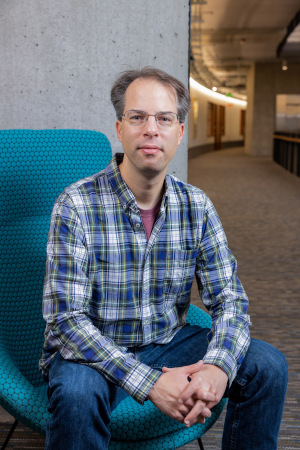
Tilmann Rabl is a Professor affiliated with the Hasso Plattner Institute (HPI) at the University of Potsdam, Germany. His research focuses on database systems, distributed computing, and scalable data processing. He leads projects exploring serverless cloud infrastructure, stream processing, and machine learning integration with databases. Key areas of research include optimizing GPU-based data processing, developing benchmarks like TPCx-IoT and TPCx-AI, and advancing techniques for distributed systems, including RDMA and NVLink-based architectures. His work emphasizes practical systems, such as Skyrise (serverless data processing), Rhino (distributed state management), and PROTEUS (scalable machine learning). Rabl has contributed to foundational tools like BlockJoin for matrix partitioning and has explored performance trade-offs in persistent memory and CXL device memory. His collaborative projects address challenges in real-time data analytics, sensor data coherence, and interoperable data science workflows.
Wolfgang Lehner is a Full Professor and head of the Database Research Group at TU Dresden (since 2002/10), and a Professor in the Data Engineering, Science and Systems Group at Aalborg University (since 2024/05). He has held visiting scientist roles at SAP, Microsoft Research, IBM Almaden, and other institutions, alongside leadership as Director of the Institute of Systems Architecture at TU Dresden (2006–2020, 2022–present). Fields of Scholarship Database technology for openData platforms Advanced analytics support in databases Realtime analytics in data warehouses Main-memory database systems for mixed workloads His awards include the DFG Reinhart Koselleck Program (2021), Facebook Next-Generation Data Infrastructure Award (2021), and multiple ACM SIGMOD, SAP, IBM, and Huawei awards. He leads the TU Dresden Database Research Group and has directed the Institute of Systems Architecture since 2022/11.
Roland YAP Hock Chuan serves as an Associate Professor in the Department of Computer Science at the School of Computing, National University of Singapore (NUS), and previously held the role of assistant director at The Logistics Institute Asia Pacific (TLI-AP). His academic foundation was built at Monash University, Australia, where he earned comprehensive qualifications in Computer Science. Education: Ph.D. in Computer Science, Monash University, Australia M.Sc. in Computer Science, Monash University, Australia B.Sc. (Honours) in Computer Science, Monash University, Australia Research Focus: Renowned for pioneering the CLP(R) system that revolutionized Constraint Programming, Prof. Yap's work now spans artificial intelligence, security, programming languages, and social networks. His research bridges theoretical rigor with real-world applications, particularly in data analytics and knowledge compilation for industrial systems. Publication Evolution: His scholarly output reveals a strategic progression from foundational constraint logic programming (1990s) to cutting-edge security mechanisms and AI-driven solutions (2010s). Recent works demonstrate expertise in robust search algorithms, memory protection systems, and social network defense strategies, reflecting continuous adaptation to emerging computational challenges. Scientific Recognition: Best student paper award at SCA 2011 for social network research Best student runner-up paper at CIKM 2009 1995 Australian Computer Science Ph.D. Prize (1996) Praxa Computer Prize for theoretical computing achievements (1985) Academic Leadership: Prof. Yap directs the Tier 1 research project 'Investigating Product Configuration as Knowledge Compilation,' developing accelerated industrial solvers through innovative KC integration. His teaching portfolio includes advanced security courses (CS4239/5439/6231), shaping next-generation cybersecurity expertise. Mentoring excellence is evidenced by multiple student award-winning publications in top-tier conferences. Collaborative Infrastructure: Through his leadership role at TLI-AP, he contributes to NUS's interdisciplinary logistics research ecosystem, connecting computer science with supply chain innovation and operational optimization challenges.
Tsichlas Kostas serves as an Associate Professor in the Department of Computer Engineering and Informatics at the University of Patras, Greece, within the Division of Applications and Foundations of Computer Science. His research spans fundamental and applied computing domains with active involvement in the ML@Cloud laboratory. His expertise centers on algorithmic innovation across multiple dimensions: Memory-optimized algorithms for primary/secondary storage systems Distributed environment data structures and computational geometry Physics-informed computing and complex network analysis Specialized domains including alphanumeric and graph algorithms Recent publication trends (2022-2025) demonstrate concentrated research in historical graph management systems, temporal network analysis, and physics-computing intersections. Key contributions include vertex-centric partitioning strategies, temporal community detection frameworks, and machine learning applications for energy data motif discovery. He maintains active laboratory affiliations with the LARGE-SCALE CLOUD DATA MACHINE LEARNING WORKSHOP (ML@Cloud lab), Combinatorial Algorithms Laboratory, and Distributed Systems and Telematics Laboratory, contributing to Greece's computational research infrastructure.
Prof. Dr. Alfons Kemper is a Full Professor of Computer Science at Technische Universität München (TUM), leading the Chair of Database Systems (Computer Science III) within the School of Computation, Information and Technology. He has held academic roles since 1984, including Dean of the Faculty of Computer Science at TUM (2006–2010) and Head of the Department of Computer Science at TUM since 2022. His research focuses on optimizing database systems for distributed and main-memory environments, with contributions to query optimization, transaction management, and hybrid OLTP/OLAP systems. Education: M.Sc. (1981), Ph.D. (1984) from USC Los Angeles; Habilitation (1991) from Karlsruhe Institute of Technology. Research Interests: Main-memory database systems, distributed database architectures, query optimization techniques, and hardware-aware database designs. His work emphasizes leveraging modern hardware (e.g., HTM) and addressing data explosion challenges in both enterprise and scientific applications. Awards: ACM Fellow (2022), ICDE Ten-Year Influential Paper Award (2021), Fellow of GI (2016). Major publications include the seminal textbook Database Systems: An Introduction (10th ed., 2016) and foundational work on HyPer, a hybrid main-memory database system. Leadership: Organized VLDB 2017 in Munich, served as PC co-chair for ICDE 2017. Active in academic governance, including roles at the Free University of Bozen-Bolzano and TUM's Bavarian Elite Master Program in Software Engineering.
Panagiotis (Panos) Bouros is an Assistant Professor at the Institute of Computer Science, Johannes Gutenberg University Mainz (JGU), Germany, and founder of JGU's Data Management research group. He holds a PhD (2011) and Diploma (2003) in Computer Science/Engineering from the National Technical University of Athens (NTUA). His research focuses on data management, query processing for non-traditional data types (spatial, temporal, graphs), and parallel computing. Prior to JGU, he worked at Aarhus University, Humboldt-Universität zu Berlin, and the University of Hong Kong. Key roles include teaching Database Systems courses at JGU since 2018, supervising over 40 students, and leading projects on in-memory databases and spatial data analytics. Notable achievements include a Best Paper Award (2015 SSTD) and publications in top venues like IEEE TKDE and ACM SIGMOD. He actively reviews for VLDBJ, ACM TODS, and organizes workshops like LocalRec and GeoRich. Research interests span database systems, spatial/temporal data, and algorithm optimization. His work addresses challenges in indexing, query processing, and scalable data management for modern hardware. Current projects include temporal information retrieval and geosocial network analysis.
Walid G. Aref is a Professor at Purdue University, West Lafayette, USA, specializing in database systems, spatial data processing, and big data technologies. His work focuses on adaptive indexing, LSM trees, and graph data systems. 2025: Research on skiplists, GTX graph systems, and BMTree indexing 2024: Contributions to trajectory indexing and HTAP-optimized data systems 2023: Editorial roles in ACM Transactions on Spatial Algorithms and Systems His research spans scalable spatial-keyword query processing, distributed streaming systems, and hardware-aware database optimization. Notable collaborations include Ahmed R. Mahmood and Mourad Ouzzani. Recent publications highlight trends in machine learning for indexing , NUMA-aware optimization , and multi-dimensional data structures . He has no listed scientific awards in this dataset. Walid actively contributes to transactional graph systems , load balancing , and spatiotemporal data management , with a 2021 IEEE Transactions paper on attack-resilient load balancing.
Joong Chae Na is a Professor at the Department of Computer Science and Engineering, Sejong University. He holds a Ph.D. (2005), M.S. (2000), and B.S. (1998) in Computer Science from Seoul National University. His professional experience includes: Researcher at the Department of Computer Science, University of Helsinki (2006) Research Professor at the Department of Advanced Technology Fusion, Konkuk University (2007) Professor at Sejong University (2008–present) Research Interests: Computer Algorithms Theory of Computation Parallel Algorithms Bioinformatics String Algorithms Index Data Structures Publications focus on pattern matching, data structures, and bioinformatics applications with topics like order-preserving matching, B+tree variants, and GPU-accelerated haplotyping. His work spans theoretical and applied computer science. No scientific awards were explicitly mentioned in the provided text.
Ron C. Chiang is an Associate Professor at the University of St. Thomas, specializing in software engineering, distributed systems, and cloud computing. His research focuses on optimizing virtualization, resource management, and high-performance architectures. He holds a Ph.D. in Computer Engineering from George Washington University and has contributed to advancements in cloud security, I/O prefetching, and precision agriculture through machine learning. Education: Ph.D. in Computer Engineering (George Washington University). Research Interests: Distributed systems, cloud computing, virtualization systems, and data-intensive applications. He has developed innovative solutions for container placement strategies, interference-aware scheduling, and energy-efficient memory management. Awards include the Best Student Paper Finalist at SC11, a 'Best of HotPower' award, and grants from IBM and Amazon. He teaches courses on cloud computing, database systems, and infrastructure as code. His work integrates theoretical computer science with practical applications, such as sustainable farming through AI and healthcare platforms in cloud environments. Grants: IBM Academic Initiative (2015–2017), Amazon AWS Educator Credits (2015–2016). He has published extensively in journals like IEEE Transactions and at conferences including SC, ICAC, and ICPA.
Alvin Cheung is an Associate Professor in the Department of Computer Science at the University of California, Berkeley, where he is a member of the Data Systems and Foundations group and Programming Systems group. He also participates in the Sky Computing Lab and SpeciaLIzed Computing Ecosystems (SLICE) Lab, and serves as a faculty affiliate at the Berkeley Institute for Data Science. His research spans database systems, programming languages, and software engineering with applications across various domains. Professor Cheung's research focuses on creating systems that bridge the gap between data management and programming languages. His work centers on three main themes: verified lifting techniques for inferring program properties; designing new data processing and programming language techniques; and improving end-user data programming experiences through novel interfaces and code generators. His research integrates formal methods, deep learning, and program synthesis to solve practical challenges in data-intensive applications. His publications reveal a strong trend toward leveraging machine learning, particularly large language models, to enhance code generation, optimization, and understanding. Recent work increasingly focuses on verified approaches that combine formal reasoning with neural techniques, addressing challenges in database systems, compiler design, and programming language theory while maintaining correctness guarantees. ACSIC Rock Star Award (2025) AITO Dahl Nygaard Junior Prize (2024) VLDB Early Career Research Contributions Award (2023) Army Research Office Young Investigator Award (2022) Office of Naval Research Young Investigator Award (2021) Sloan Research Fellowship (2019) DOE Presidential Early Career Award for Scientists & Engineers (2019) Professor Cheung has advised numerous doctoral and master's students who have gone on to positions at leading technology companies including AWS, OpenAI, Microsoft Research, and Adobe Research. His research has been generously supported by multiple federal agencies including the National Science Foundation, Department of Energy, Office of Naval Research, Army Research Office, and Intel Corporation, reflecting the significance and impact of his work across both academic and industrial settings. He leads research efforts in the EPIC Data Lab, Sky Computing Lab, and SLICE Lab, where his team develops innovative approaches to data management, programming systems, and specialized computing ecosystems. Current projects focus on applying verified lifting techniques, developing new data processing frameworks, and creating user-friendly interfaces for data programming across diverse application domains.
Univ.-Prof. Dr. Günther Specht is a faculty member in the Department of Computer Science at Universität Innsbruck. His research focuses on machine learning, data mining, and their applications in recommendation systems, music information retrieval, and authorship attribution. He has contributed to projects such as HPT4Rec (a hyperparameter optimization framework for recommenders) and Cloudgene (a cloud computing tool for biomedical pipelines). His work spans database systems, text analysis, and social media analytics. Notable tools include HaploGrep 2 (for mitochondrial DNA analysis) and StyleExplorer (for textual style visualization). Key research areas include: (1) Developing algorithms for music popularity prediction and playlist analysis; (2) Enhancing authorship attribution techniques using grammar profiling and syntax tree analysis; (3) Designing efficient database index structures like Height Optimized Tries; and (4) Investigating ethical aspects of recommendation systems and plagiarism detection. Publications from 2020-2024 highlight advancements in cross-domain text classification, social media behavior analysis, and automated music genre recognition. His work bridges traditional statistical methods with modern machine learning, emphasizing practical applications in both academic and industry contexts.
Katia Papakonstantinopoulou serves as a Teaching Professor and Researcher in the Department of Informatics at Athens University of Economics & Business (AUEB). She is an active member of the network analysis group and the Theory, Economics and Systems Laboratory (Main Building, Antoniadou wing, 4th floor), and contributes to the 5G-VINNI research project. Her academic credentials include: B.S. in Informatics and Telecommunications (University of Athens) M.Sc. in Advanced Information Systems (University of Athens) Ph.D. in Computer Science (University of Athens, supervised by Prof. Elias Koutsoupias) Her research integrates Game Theory for modeling selfish network behavior and Information Theory for compact network representations. Current work spans social network analysis, epidemic spread prediction using graph ML, and time series/graph compression techniques. She has significantly advanced lossless floating-point compression (CHimp/Chimp systems) and temporal graph compression. Recent publications (2022-2024) reveal strong focus on data compression efficiency for time-series databases and epidemic modeling, while earlier work (2016-2020) established foundations in community detection and distributed graph processing. Her research consistently bridges theoretical algorithms with practical network applications. Her scientific recognition includes: Doctoral Scholarship from the Greek State Scholarships Foundation She mentors students through research projects in algorithms and network analysis, particularly in the Master of Science in Data Science program (ranked 14th globally in Big Data Management by Eduniversal 2019). Her teaching portfolio includes graduate courses in Social Network Analysis and Algorithms, plus undergraduate instruction in core CS subjects. Her research operations center on the Theory, Economics and Systems Laboratory where she develops compression algorithms and network models, with recent work supporting 5G network slicing economics through the 5G-VINNI project.
Simon Peter is an Associate Professor in the Paul G. Allen School of Computer Science and Engineering at the University of Washington since 2022. His research focuses on operating systems, networking, and energy-efficient data center systems. Previously, he held positions as an Assistant Professor at UT Austin (2016–2022) and earned his Ph.D. (Dr. sc. ETH) from ETH Zurich in 2012, with a Dipl.-Inf. from Carl-von-Ossietzky University of Oldenburg in 2006. Education: Ph.D. in Computer Science, ETH Zurich, 2012 Dipl.-Inf. (M.Sc.), Computer Science, Oldenburg University, 2006 Research Interests: Design of low-latency, scalable, and energy-efficient data center systems Virtual machine and OS design (QoS in memory management, zero-copy I/O) Programmable NICs/switches (RDMA offloading, in-network ML preprocessing) Power control planes and disaggregated storage systems Teaching: Recent courses include CSE481A Operating Systems Capstone and Data Center Systems Extensive teaching history at UW and UT Austin in operating systems and data center topics Awards & Recognition: Not explicitly listed in provided materials Advising & Grants: Actively recruiting Ph.D. students via UW’s program No grant details provided in current text Labs & Teams: Part of UW’s Distributed Systems Lab Collaborates with industry on data center innovations Personal: Music enthusiast with background in violin, electronic music production, and DJing Outdoor activities include skiing and hiking Former Demoscene participant in Germany
Stefan Manegold is a Professor for Data Management (0.2 fte) at Leiden University's Faculty of Science within the Leiden Institute of Advanced Computer Science (LIACS), while also serving as a Senior Researcher (0.8 fte) and former Head (2011-2024) of the Database Architectures Research Group at Centrum Wiskunde & Informatica (CWI) in Amsterdam. His career spans over 27 years at CWI and 11 years as a professor at Leiden University, with prior experience at Humboldt-Universität zu Berlin. Professor Manegold's research focuses on innovative database architectures, particularly column-store systems and hardware-aware database technologies. His expertise spans database query optimization, parallel and distributed information systems, XML storage and processing, and scientific data management. He has pioneered work in adaptive indexing, progressive query processing, and main-memory database systems that leverage modern hardware capabilities. His research bridges theoretical database concepts with practical implementations, as evidenced by his involvement in the MonetDB open-source database system. His work shows a clear evolution from foundational database research toward addressing modern challenges in big data management, scientific data processing, and interactive analytics. Recent publications demonstrate his continued leadership in database indexing techniques, GPU-accelerated database operations, and geospatial data management. Professor Manegold has received significant recognition for his contributions to the database community, including the prestigious 2020 ACM SIGMOD Contributions Award, the VLDB'2011 Challenges & Visions Track Best Paper Award, and the VLDB'2009 10-year Best Paper Award. His work has had substantial impact on both academic research and practical database system design. He has been actively involved in the academic community through conference organization, particularly with SIGMOD and VLDB events, and has contributed to numerous workshops including the Data Management on New Hardware (DaMoN) series. His leadership extends to collaborative research projects such as SciLens, PROMIMOOC, and DAMIOSO, which address data management challenges in scientific domains. Professor Manegold leads the Database Architectures Research Group at CWI, which has been at the forefront of database system research for decades. The group's work on MonetDB has influenced modern column-store database systems and continues to push boundaries in areas like progressive query processing and hardware-aware database design.
Rudolf Schneider is a researcher in Data Science and Artificial Intelligence at Beuth University of Applied Sciences Berlin. He holds a PhD in Computer Science (2023) with focus on medical text mining and neural information retrieval. His academic roles included Research Assistant at DATEXIS and doctoral studies under Prof. Alexander Löser's supervision. Key research interests span Deep Learning applications in healthcare, information extraction from clinical notes, and neural retrieval systems. Current work involves BMWi-funded MACSS project for medical service solutions. Notable contributions include SECTOR (topic segmentation) and Smart-MD (medical paragraph retrieval) models. Publications highlight advancements in Open Information Extraction (OIE) benchmarking, relational database interactions, and NLP system evaluations. Active in conferences like ISWC and WWW. Organizational involvement includes heavy metal festival coordination and Chaos Computer Club participation.