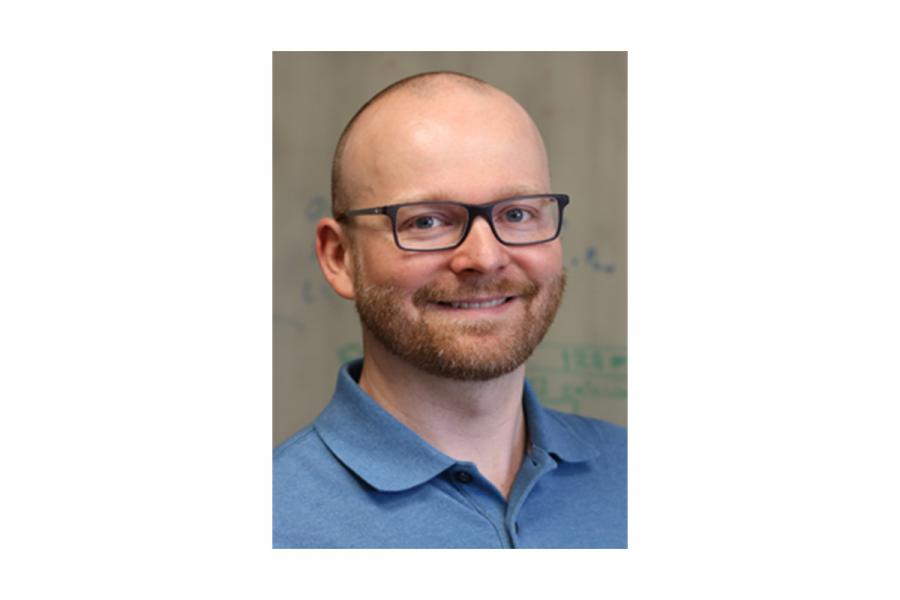
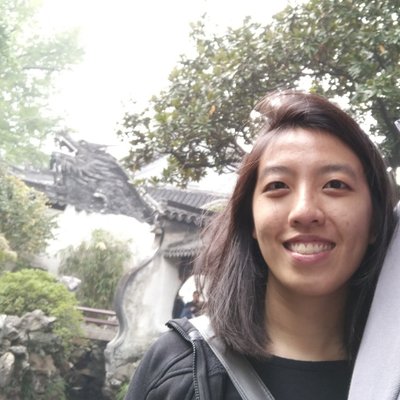
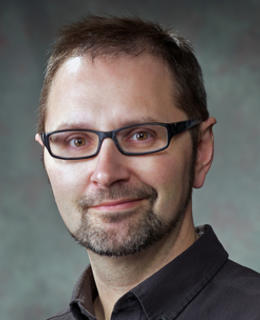
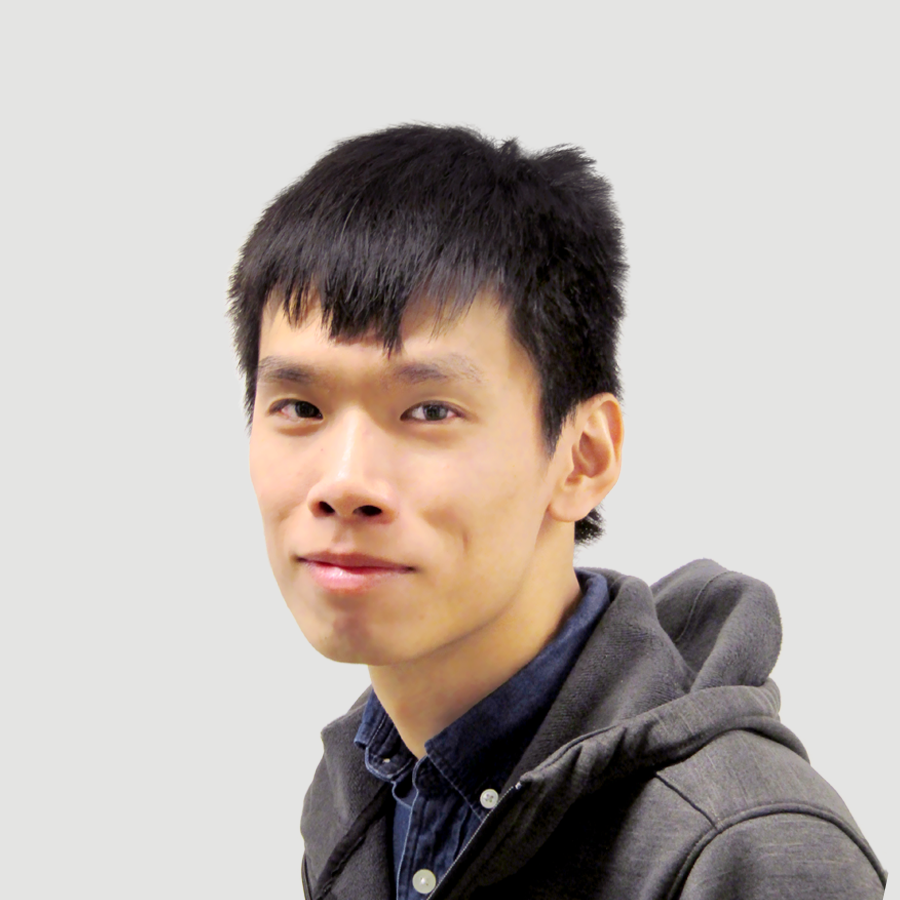
Christopher James Henry is an Associate Professor in the Department of Computer Science at the University of Manitoba , Faculty of Science . He also serves as an Adjunct Professor in the Department of Applied Computer Science at the University of Winnipeg . Roles: Associate Professor, Department of Computer Science, University of Manitoba Adjunct Professor, Department of Applied Computer Science, University of Winnipeg Research Focus: Machine learning and deep learning, particularly in digital agriculture and remote sensing Domain adaptation and generative image models General-purpose GPU computing (GPGPU) and image analysis Labs & Teams: Co-founder of the Applied Parallel Computing and Collaborative Research Laboratory Co-leader of the TerraByte research group , specializing in embedded/robotic systems for agricultural dataset creation
Jean Pierre David is a Full Professor in the Department of Electrical Engineering at Polytechnique Montréal. He has been with the institution since January 2006, was promoted to Associate Professor in June 2013, and became a Full Professor in June 2021. His research focuses on digital systems design, reconfigurable systems, and hardware implementations of artificial intelligence applications. David received his Electrical Engineering degree (specializing in electronics) from the University of Liège (Belgium) in 1995. He completed his Ph.D. in June 2002 at the Catholic University of Louvain, with research focused on reconfigurable systems (FPGAs). Before joining Polytechnique Montréal, he was a professor at the University of Montreal from August 2002 to January 2006. Jean Pierre David's research spans several key areas in electrical engineering and computer science. His primary focus is on digital systems design, configuration, and programming, with particular expertise in reconfigurable systems such as FPGAs and microcontrollers. He has made significant contributions to Hardware Description Languages (HDL), developing methodologies for fast, safe, and simple design of digital architectures. His work extends to Hardware-in-the-Loop (HIL) simulation, Deep Packet Inspection (DPI) for high-speed communications (10GBE, 40GBE, 100GBE), and applications of digital systems in artificial intelligence, particularly neural network implementations. David's recent research has increasingly focused on energy-efficient AI hardware, RISC-V processor design for neural network acceleration, and specialized architectures for low-precision computation. His publication record shows a clear evolution from foundational work in digital system design and FPGA implementation toward increasingly sophisticated applications in artificial intelligence and neural network acceleration. The most recent publications demonstrate expertise in creating specialized hardware for efficient AI computation, with a strong emphasis on low-precision and binary neural networks that can run efficiently on resource-constrained devices. His work bridges computer architecture, electrical engineering, and artificial intelligence, creating practical hardware solutions for emerging computational challenges. David is affiliated with several important research groups and institutions including the Strategic Microsystems Group of Quebec (ReSMiQ), the Institute of Electrical and Electronics Engineers (IEEE), and the Institute for Data Valorization (IVADO). His work has been recognized through numerous publications in high-impact journals and conferences, with a total of 108 publications to his name. Professor David has supervised an impressive number of graduate students throughout his career, mentoring 9 Ph.D. students and 24 Master's students to completion. His students have worked on diverse topics including FPGA-based neural network acceleration, hardware implementations of deep learning algorithms, energy harvesting systems for IoT devices, and specialized architectures for low-precision computation. His lab appears to maintain strong connections with industry through various research projects and collaborations with researchers like Yves Savaria. His research laboratory focuses on the intersection of hardware design and artificial intelligence, with particular emphasis on creating efficient implementations of neural networks on specialized hardware platforms. The lab maintains strong connections with industry partners and collaborates extensively on projects related to network processing, AI acceleration, and energy-efficient computing systems.
Aurelian Vadean is an Associate Professor in the Department of Mechanical Engineering at Polytechnique Montréal, where he conducts research in advanced mechanical systems analysis and optimization. He holds a Doctorate from INSA Toulouse, France, along with DEA and Engineering credentials. His work is primarily conducted through the GAOSYM - Mechanical Systems Analysis and Optimization Group, and he serves as Research Director of the Road Safety Team: Vehicle Collisions, Defects and Special Investigations. Dr. Vadean's research spans multiple domains including topological optimization, biomechanics of implants, AI-driven structural design, joint optimization, and numerical simulation methods. His work addresses challenges in aerospace, automotive, and hydraulic turbine applications, with particular focus on composite materials and structural integrity. He has developed expertise in both theoretical and applied aspects of mechanical engineering, with strong connections to industry partners including Bombardier, Airbus, and Transport Canada. His publication record demonstrates a clear progression from fundamental mechanical analysis toward increasingly sophisticated computational methods integrating artificial intelligence with traditional engineering approaches. Recent work shows particular emphasis on topology optimization enhanced by machine learning techniques, composite materials for specialized applications, and biomechanical modeling for medical implants. Design Society, Member Research Center for High-Performance Polymer and Composite Systems (CREPEC), Member Dr. Vadean maintains an active supervision portfolio with numerous doctoral and master's students working on cutting-edge mechanical engineering problems. His research is supported by major funding from Transport Canada, NSERC, CRIAQ, Bombardier, and Airbus Atlantic Canada, focusing on vehicle collision investigations and topological optimization of aerostructure components. He leads research teams working on practical applications in transportation safety, sustainable infrastructure, and advanced manufacturing.
Dr. Cheng-Zhi Anna Huang is currently a faculty member at the Massachusetts Institute of Technology (MIT) with a joint appointment between the Department of Electrical Engineering and Computer Science (EECS) and the Department of Music and Theater Arts (MTA), spanning both the College of Computing and School of Humanities, Arts, and Social Sciences. She simultaneously holds an adjunct associate professor position at the Université de Montréal's Department of Computer Science and Operations Research. Her academic background includes a PhD from Harvard University, a master's from the MIT Media Lab, and dual bachelor's degrees in music composition and computer science from the University of Southern California. Dr. Huang's research focuses on human-AI co-creation in music, with particular emphasis on: Generative AI models for music composition and performance Neural network interpretability for musical applications Interactive systems for real-time human-AI collaboration Reinforcement learning frameworks for creative expression Cross-cultural music modeling and computational musicology She pioneers novel approaches to musical interaction through machine learning, aiming to develop systems that extend how humans understand, learn, and create music. Her publication portfolio shows strong emphasis on generative models for music, particularly transformer architectures, with consistent output in top AI/ML venues since 2014. Recent work focuses on controllable music synthesis, human-AI co-creation frameworks, and performance modeling. The 14 most recent publications demonstrate progression from fundamental music representation research toward sophisticated interactive systems and evaluation frameworks. Awards and Honors: Canada CIFAR AI Chair (Mila) Outstanding Paper Award at NeurIPS Workshop CtrlGen (2021) First Prize in San Francisco Choral Artists New Voices Project (composition) Dr. Huang actively supervises graduate students, with recent master's advisees including Nithya Shikarpur (2024) working on human-AI co-creation for Hindustani music, and Yusong Wu (2023) researching controllable performance synthesis. She is currently recruiting postdoctoral researchers and PhD students for her MIT Music Technology laboratory, focusing on multi-agent reinforcement learning and human-AI interaction in musical contexts.
Marc G. Bellemare is a Canada CIFAR AI Chair at Mila, an Adjunct Professor at the School of Computer Science at McGill University and Université de Montréal, and the Chief Scientific Officer at Reliant AI, a Montréal-Berlin startup. His research focuses on reinforcement learning and generative modeling, with significant contributions to distributional reinforcement learning, exploration in high-dimensional spaces, and the development of the Arcade Learning Environment (ALE). He has held previous roles at the Google Brain team and DeepMind. Marc’s work includes both theoretical and applied advancements, such as distributional reinforcement learning theory, exploration strategies, and the commercial application of RL for Loon’s stratospheric balloons. His publications span journals like Nature and top conferences including NeurIPS, ICML, and AAAI. He has received multiple best paper awards, including at NeurIPS 2021 and ICML 2019 Workshop. Current Students: Adrien Ali Taiga, Jacob Buckman, Harley Wiltzer, Pierluca D'Oro, Nathan U. Rahn, Jesse Farebrother Graduated Students: Rishabh Agarwal, Charline Le Lan, Max Schwarzer, Johan Obando Céron, Philip Amortila, Vishal Jain His recent articles emphasize distributional RL, exploration strategies, and large-scale applications. Scientific awards include best papers at NeurIPS, ICML, and RLDM. He is also a co-founder of Reliant AI and developed the ALE benchmark, which underpins deep RL research.
Rob Deardon is a Professor jointly appointed in the Faculty of Veterinary Medicine and the Department of Mathematics and Statistics at the University of Calgary. His research spans Bayesian statistics, infectious disease epidemiology, and spatial modeling, with applications in human and animal health. PhD in Applied Statistics, University of Reading (2001) MSc in Medical Statistics, University of Southampton (1997) BSc in Pure Mathematics & Mathematical Statistics, University of Exeter (1996) Rob Deardon's work focuses on computational statistics, infectious disease modeling (including foot-and-mouth disease and influenza), and spatio-temporal analysis. His methodological interests include Monte Carlo methods, approximate Bayesian computation, and statistical learning. Recent publications emphasize spatial epidemic models, behavioral change analysis, and computational methods for disease surveillance. He leads a research group of 10 graduate students. He teaches graduate courses in infectious disease modeling and maintains collaborations across biostatistics, veterinary medicine, and public health.
Shih-Yang Su is a recent PhD graduate in Computer Science from the University of British Columbia, specializing in Human Motion Learning, 3D Vision, and Character Animation. His research bridges computer vision and graphics, with significant contributions to neural rendering and articulated human modeling. His primary research interests include: Human Motion Learning and Character Animation using neural representations Neural Radiance Fields (NeRF) for articulated objects and human bodies 3D Vision techniques for novel view synthesis and depth inpainting Reinforcement Learning applications in embodied environments His publication record shows a clear progression from reinforcement learning (2017-2018) toward neural rendering and human modeling (2020-2024), with increasing focus on articulated neural representations. Key publications include work on Neural Point Characters (ICCV 2023) and DANBO (ECCV 2022), which address fundamental challenges in representing articulated human bodies. Collaborations span multiple institutions including Meta Reality Labs (with Dr. Michael Zollhöfer and Dr. Timur Bagautdinov), University of Maryland (with Prof. Jia-Bin Huang), Borealis AI (with Dr. Hossein Hajimirsadeghi), and Academia Sinica (with Dr. Yi-Hsuang Yang and Dr. Li Su).
Dr. Janine Mendola is a Scientist at the Research Institute of the McGill University Health Centre (RI-MUHC) at the Montreal General Hospital site and an Associate Professor in the Department of Ophthalmology and Visual Sciences within McGill University's Faculty of Medicine and Health Sciences. She is a key member of the Brain Repair and Integrative Neuroscience (BRaIN) Program and the Centre for Translational Biology at RI-MUHC, contributing to McGill Vision Research, an interdisciplinary unit with six faculty members working collaboratively on visual neuroscience. Her research focuses on the functional organization of the human visual system and the neural basis of perception in health and disease. She investigates binocular vision, form perception, and visual processing using advanced neuroimaging techniques including functional magnetic resonance imaging (fMRI) and magnetoencephalography (MEG). Her work spans both basic science and clinical applications, with particular emphasis on amblyopia (lazy eye), inherited retinal diseases, and traumatic optic nerve injury. She employs diffusion tensor imaging and machine learning approaches to characterize visual system abnormalities. Dr. Mendola's recent publications reveal a strong trend toward integrating advanced imaging techniques with computational approaches to understand visual processing. Her work increasingly focuses on binocular rivalry mechanisms, visual cortex connectivity in pathological conditions, and the application of novel image analysis methods like nested attention mechanisms to medical imaging. The research spans multiple disciplines including neuroscience, ophthalmology, neuroimaging, and computer science, with applications ranging from fundamental understanding of visual perception to clinical diagnostics for visual disorders. As part of McGill Vision Research, Dr. Mendola collaborates with researchers across multiple disciplines including neurology, neurosurgery, psychology, biomedical engineering, and physiology. Her laboratory contributes to the institute's mission of understanding how the brain processes visual information and enables us to see, with particular focus on motion, form, depth, and color processing in the visual scene.
Samrudhdhi B Rangrej is a Research Scientist at the Samsung Artificial Intelligence Center (SAIC), Toronto, focusing on computer vision, multimodal learning, and deep learning. They earned their PhD from McGill University under Prof. James J Clark, with prior research experience at the Center for Visual Information Technology (CVIT) at IIIT-Hyderabad under Prof. Jayanthi Sivaswamy. PhD, Computer Science, McGill University MS by Research, Computer Science, IIIT-Hyderabad Their research spans computer vision, particularly attention mechanisms and sequential modeling, with applications in medical imaging, generative models, and robust learning. Recent work includes image super-resolution , action anticipation in videos , and transformer-based attention models . Key trends in their publications include attention mechanisms for partially observable environments, transformer architectures , noise-robust learning , and medical imaging applications for diabetic retinopathy and retinal layer segmentation. Member of the Center for Visual Information Technology (CVIT), IIIT-Hyderabad They actively contribute to deep learning frameworks in computer vision and healthcare AI, with a history of internships at Facebook, Inc., and projects in reinforcement learning, generative models, and multimodal analysis.
Japan Trivedi, PhD, P.Eng is a Professor in the Civil and Environmental Engineering Department at the University of Alberta . His research focuses on Enhanced Oil Recovery (EOR) , CO2 Sequestration , Unconventional Reservoirs , and integration of Machine Learning in reservoir simulation. His lab operates at the Natural Resources Engineering Facility (NREF) under the School of Mining and Petroleum Engineering . Research Areas: Chemical EOR (polymers, surfactants, nanofluids) CO2 utilization for EOR and storage Reinforcement Learning for SAGD optimization Extensional rheology of complex fluids Techniques: Reservoir simulation Machine learning integration Micromodel experiments Field-scale modeling Key Projects: Include CO2 EOR/sequestration, Tight Oil EOR, ASP polymer characterization, and real-time SAGD optimization. His group collaborates on underground coal gasification and fracture reservoir characterization . Teaching: Offers courses like PET E 377 - Modelling in Petroleum Engineering and PET E 649 - Advanced Reservoir Simulation , emphasizing numerical methods, EOR processes, and simulation tools.
James R. Wright is an Associate Professor in the Department of Computing Science at the University of Alberta and a Fellow & Canada CIFAR AI Chair at the Alberta Machine Intelligence Institute (Amii). He holds a Ph.D. from the University of British Columbia (2016) under Kevin Leyton-Brown, with prior postdoctoral work at Microsoft Research (2016–2018). His research focuses on modeling human strategic behavior using machine learning, emphasizing interactions where participants' rewards depend on others' actions. Key areas include algorithm design for bounded rational agents, multiagent systems, and game theory applications. Education: Ph.D. (Computer Science, UBC, 2016), M.Sc. (Computer Science, UBC, 2010), B.Sc. (Computing Science, Simon Fraser University, 2000). Research interests include data-driven models for predicting human strategic decisions, algorithmic fairness, and reinforcement learning. Recent work addresses self-play guarantees in multiplayer games, peer prediction mechanisms, and software vulnerability detection via static analyzers. His work has been published in top venues like AAAI, NeurIPS, and ICML. Awards include the ACM SIGecom Doctoral Dissertation Award (Honorable Mention), NSERC grants, and the Canada CIFAR AI Chair. He advises multiple graduate students and has served on numerous editorial and conference committees. Teaching includes courses on artificial intelligence, modeling human strategic behavior, and intelligent systems. He leads the Algorithmic and Behavioral Game Theory (ABGT) reading group at UAlberta.
Dr. Xiang Chen is a Professor in the Department of Electrical and Computer Engineering (ECE) at the University of Windsor. He holds a PhD from Louisiana State University (1998), an MSc (1996), and a BEng from Huazhong University of Science and Technology (1985). His research focuses on advanced control systems, including multi-objective complementary control (MOCC), autonomous systems, and automotive control. He is also involved in model-guided data-driven optimization and sensor networks. Dr. Chen serves as an Associate Editor for the SIAM Journal on Control and Optimization and a Technical Editor for the IEEE/ASME Transactions on Mechatronics . He is a member of IEEE, ASME, and SAE, and holds P.Eng certification in Ontario. His research interests span control theory, robotics, and systems engineering, with recent work addressing cybersecurity in software systems, telecommunication protocols, and materials science applications. His publications in 2025 include advancements in vulnerability assessment via machine learning, beam management in wireless networks, and studies on epigenetics and psoriasis. Dr. Chen’s contributions bridge theoretical control systems with practical applications in automotive, healthcare, and telecommunications. His work emphasizes interdisciplinary solutions to complex engineering challenges.
Warren Gross is a Professor and Chair of the Department of Electrical & Computer Engineering at McGill University's Faculty of Engineering. Holding the prestigious James McGill Professor title, he leads research in integrated hardware systems from his office in Montreal's McConnell Engineering Building. His work bridges theoretical coding theory with practical VLSI implementations for next-generation communication networks. Professor Gross specializes in Integrated Circuits and Systems with deep expertise in error-correcting codes, particularly polar and Reed-Muller codes. His research spans hardware acceleration for machine learning, stochastic computing architectures, and VLSI design for low-latency wireless systems. Current projects focus on 6G air interface technologies, energy-efficient edge AI, and novel decoding algorithms that balance performance with hardware constraints. The ISIP Lab (Integrated Systems and Image Processing) serves as his primary research hub, advancing both theoretical frameworks and physical implementations. Analysis of his 2023-2025 publications reveals three dominant trends: (1) Hardware-optimized decoding algorithms for polar codes targeting sub-1ms latency in 6G systems; (2) Model compression techniques for transformer networks deployed on resource-constrained edge devices; (3) Stochastic computing approaches for combinatorial optimization problems. These themes reflect his dual focus on communication theory and efficient hardware realization, with increasing emphasis on machine learning integration. Scientific recognition includes: James McGill Professor (McGill University's highest academic honor) As Department Chair and research leader, Professor Gross oversees multiple collaborative projects with industry partners in telecommunications and semiconductor sectors. His lab maintains active partnerships with 5G/6G standardization bodies and chip manufacturers, though specific grant details aren't publicly enumerated. The ISIP Lab operates advanced VLSI design facilities and FPGA testbeds supporting both academic research and industry prototyping. Research infrastructure includes specialized labs for stochastic computing implementation, polar code decoder validation, and edge AI acceleration. Current efforts focus on quantum-inspired annealing techniques for MIMO detection and hardware-friendly transformer architectures, with several patents pending in decoding methodology and model compression.
Marlos C. Machado is an Assistant Professor at the University of Alberta's Faculty of Science, Department of Computing Science, affiliated with the Alberta Machine Intelligence Institute (Amii) as a Canada CIFAR AI Chair and RLAI principal investigator. His research focuses on reinforcement learning, representation learning, and continual learning, with applications in real-world systems. Education includes B.Sc. and M.Sc. from UFMG Brazil, and Ph.D. from University of Alberta. Research pioneered temporally-extended exploration concepts and contributed to deep reinforcement learning for stratospheric balloon control. Awards include: Canada CIFAR AI Chair (2021) Amii Fellow (2021) AISTATS Best Paper Honorable Mention (2022) NSERC Discovery Grant for state/temporal abstraction research Advises 15+ graduate students and secured $882,858 in research funding. Leads the Reinforcement Learning and Artificial Intelligence group developing novel algorithms for credit assignment and exploration.
Amin Barari is an Adjunct Professor in the School of Engineering at RMIT University. His research focuses on geotechnical engineering, particularly in offshore wind turbine foundations, soil mechanics, and structural stability. He is affiliated with RMIT’s City Campus in Australia and actively supervises research projects on resilient foundations and dynamic soil-structure interactions. Key research interests include the behavior of pile foundations in problematic soils, suction bucket foundations under cyclic loads, and liquefaction-induced settlement in offshore environments. His recent work integrates machine learning and AI for predictive modeling in geotechnical applications. Barari has published extensively on topics like axial load testing of tapered piles, seismic bearing capacity of offshore structures, and wave-induced liquefaction. His articles often explore numerical simulations, experimental studies, and advanced frameworks for predicting geotechnical risks. He is open to supervising Masters and PhD students in areas such as resilient foundations in calcareous deposits and dynamic behavior of wind turbines. No specific scientific awards are listed, but his contributions to offshore and geotechnical engineering are notable through his publications and collaborations.