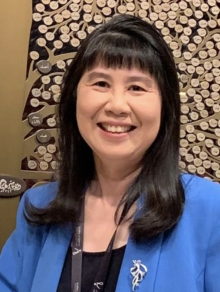
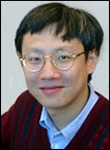
Ming Lin is a Distinguished University Professor at the University of Maryland, College Park, holding joint appointments in Computer Science (Department of Computer Science), the Institute for Advanced Computer Studies (UMIACS), Electrical and Computer Engineering (ECE), and the Maryland Robotics Center. She holds the Dr. Barry Mersky and Capital One E-Nnovate Endowed Professorships. Her research focuses on physically-based modeling, virtual environments, haptics, robotics, and AI applications in healthcare and urban computing. Education: Ph.D., M.S., and B.S. in Electrical Engineering & Computer Sciences from UC Berkeley. She previously spent 20 years at UNC Chapel Hill before joining UMD in 2018. Research interests include collision detection algorithms (e.g., Lin-Canny algorithm), real-time physics simulation, virtual/augmented reality systems, and medical imaging applications. Her work has led to over 2 million downloads of her group's software tools and licenses with 60+ companies. Notable contributions include the Oculus Rift-related VR technologies and Amazon's virtual try-on system. Awards: IEEE Fellow (2012), ACM Fellow (2011), NAI Fellow (2022), and Washington Academy of Sciences Distinguished Career Award (2020). Active in professional service, she serves on the CRA Board and chairs the Committee on Widening Participation in Computing Research. Advising: Supervises 12+ PhD/Master's students. Her lab (GAMMA Group) focuses on AI-driven robotics, autonomous systems, and physically-based simulations. Key projects include traffic simulation frameworks, medical VR applications, and 3D garment modeling.
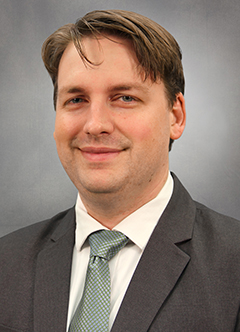
Kirk Roberts, PhD, is an Associate Professor in the Department of Health Data Science and Artificial Intelligence at the McWilliams School of Biomedical Informatics, UTHealth Houston. He specializes in Natural Language Processing (NLP), with a focus on clinical information extraction, spatial information extraction, and medical information retrieval. His work bridges computer science, medicine, linguistics, and machine learning to improve accessibility and usability of biomedical data. Education: PhD (2013) and MS (2009) in Computer Science from the University of Texas at Dallas; BS (2005) in Computer Science from Georgia Institute of Technology. Research emphasizes NLP applications for healthcare, including question-answering systems, EHR analysis, and spatial relation extraction. He leads the TREC Clinical Decision Support track and has been recognized with a National Library of Medicine Career Development Award. His contributions span over 20 peer-reviewed publications in journals like JAMIA and conferences such as ACL and AMIA. Key areas include: advancing clinical decision support via NLP, optimizing biomedical literature retrieval, and improving health data dissemination through natural language systems.
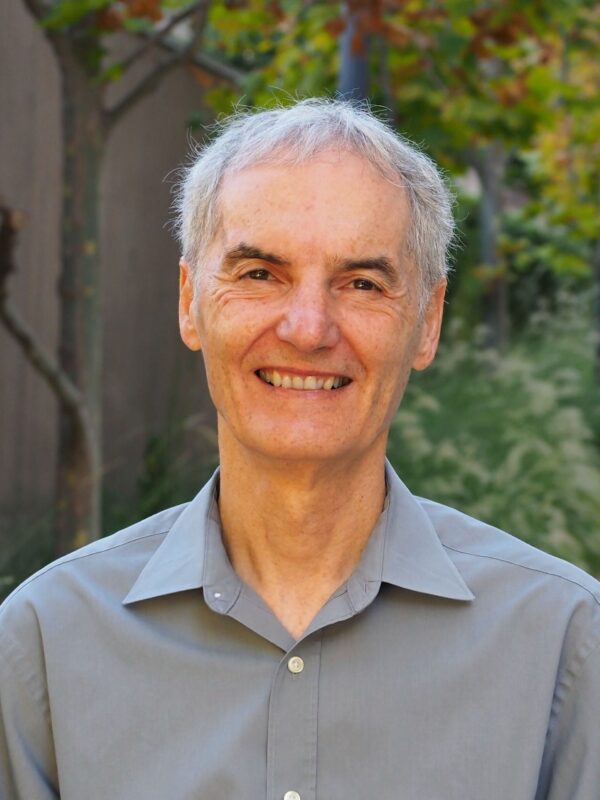
Mark S. Handcock is a Distinguished Professor in the Department of Statistics and Data Science at the University of California, Los Angeles (UCLA), where he leads research at the intersection of statistical methodology and applied problems in social sciences, epidemiology, and environmental science. His work bridges theoretical statistics with real-world challenges through innovative methodological development. His primary research interests encompass statistical models for social networks, network inference, methodology for hard-to-reach population surveys, spatial processes, demography, and environmetrics. Handcock has pioneered advances in exponential-family random graph models (ERGMs) and developed foundational R packages like ergm and tergm within the statnet suite, enabling sophisticated network analysis across disciplines. Analysis of his recent publications (2023-2025) reveals three dominant research thrusts: (1) Antarctic sea ice modeling using Bayesian reconstruction and temporal variability analysis, (2) epidemiological modeling of infectious disease transmission dynamics (particularly COVID-19), and (3) methodological innovations in network inference and causal analysis over stochastic networks. His work consistently integrates advanced computational statistics with domain-specific applications in climate science, public health, and social systems.
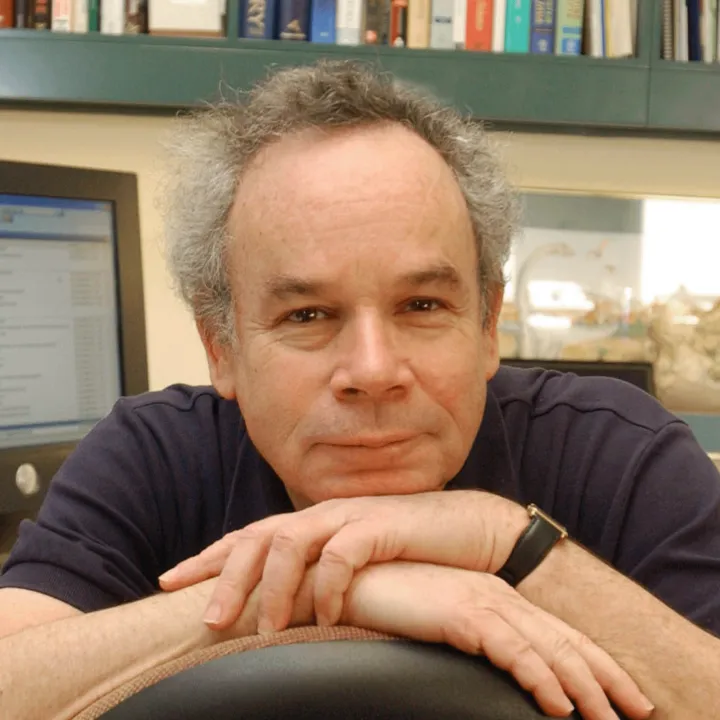
Abraham Silberschatz is the Sidney J. Weinberg Professor of Computer Science at Yale University. He previously served as Vice President of the Information Sciences Research Center at Bell Laboratories and held a chaired professorship at the University of Texas at Austin. His research focuses on database systems, operating systems, and network management. Silberschatz has advised over a dozen PhD students, many now in academia and industry. Education: Ph.D., Computer Science, Stony Brook University (SUNY) Research Interests: His work spans database systems, operating systems, storage systems, and network management. Notable contributions include foundational textbooks like Operating System Concepts and Database System Concepts , which have become industry standards. He has also developed innovative systems like DataPlay and contributed to projects such as NetInventory. Publications: His 15+ years of research include influential papers on database architecture, network routing, and distributed systems. Recent work explores leveraging non-volatile memory technologies in systems design. Awards: ACM Karl V. Karlstrom Outstanding Educator Award (1998) IEEE Taylor L. Booth Education Award (2002) VLDB Test of Time Award (2019) Multiple Bell Laboratories President's Awards for innovation Grants & Patents: Recipient of over two dozen grants and over four dozen patents, including foundational IP in multimedia storage and distributed systems. His team's HadoopDB project merged MapReduce and DBMS technologies. Labs/Teams: Collaborates with Prof. Robert Soulé on projects in database systems and networking, focusing on next-gen memory technologies. Active in mentoring graduate students and postdocs in their research group.
Malcolm von Schantz is a Professor and Deputy Faculty Pro Vice-Chancellor at Northumbria University, affiliated with the HLS Faculty Management and Administration. Previously, he held leadership roles at the University of Surrey, including Associate Dean (International) and acting Pro-Vice Chancellor (International Relations). He is also an Honorary Professor at the University of the Witwatersrand, South Africa. He holds a PhD in Zoology from an unspecified institution (awarded 10 Dec 1994). His research focuses on human circadian rhythms and sleep, their molecular determinants, and links to physical/mental health. He has secured over £6.4M in research funding from bodies like the MRC, Wellcome Trust, and NIH. Key research areas include sleep architecture, chronotype variability, HIV-related sleep disruptions, and cardiometabolic health correlations. His work has been published in high-impact journals and widely featured in media. He actively participates in international conferences and public outreach, including translating sleep education materials into multiple languages. Notable collaborations include the BioClocks UK initiative and the Baependi Heart Study in Brazil. His recent articles address daylight saving policies, gender-specific sleep-cardiovascular links, and light sensitivity in bipolar disorder. He supervises PhD students and engages in editorial roles across journals. Public impacts include translating educational comics and participating in community health events. His research emphasizes global health equity, particularly in low-resource settings.
Professor Li Hui serves as the executive dean of the School of Network and Information Security at Xidian University, where he holds the position of second-level professor and doctoral supervisor. He is nationally recognized as a distinguished teacher and serves in multiple prestigious roles including member of the National Steering Committee for Postgraduate Education in Cryptography, inaugural president of ACM SIGSAC CHINA, and director of several major academic societies related to cryptography and information security. Professor Li's research spans cryptographic information security, privacy computing, information theory, and coding theory, with significant contributions to network and cyberspace security. His work demonstrates a strong focus on both theoretical foundations and practical applications, particularly in developing security protocols for emerging technologies like blockchain, federated learning systems, and IoT environments. His research output shows consistent innovation in balancing security requirements with computational efficiency across diverse application domains. With over 300 publications and more than 15,000 Google Scholar citations (H-index 60), Professor Li's scholarly impact is substantial. His recent publications demonstrate increasing emphasis on privacy-preserving machine learning, secure multi-party computation, and cryptographic protocols for distributed systems, reflecting the evolving security challenges in the AI era. Three second-class national teaching achievement awards Special prize and first-class national teaching achievement awards Four first-class provincial and ministerial science and technology progress awards Privacy Computing Theory award (Qian Weichang Chinese Information Processing Science and Technology Award) Multiple patents with over 80 granted inventions Professor Li leads the Cyber Changan Team and serves as head of the Shaanxi Provincial Innovation Team for Mobile Internet Security. He has successfully supervised numerous doctoral and master's students who have gone on to win prestigious competitions like the National College Student Information Security Competition. His research is supported by major national grants including a National Key R&D Program project and key projects from the National Natural Science Foundation of China.
Dr. Tiffany Ho is an Assistant Professor in the Department of Psychology at the University of California, Los Angeles (UCLA). She is also affiliated with the Cognition, Affect, and Neurodevelopment in Youth (CANDY) lab, where she leads research on adolescent neurodevelopment, depression, and the neurobiological impacts of early adversity. Her work integrates neuroimaging, psychophysiology, and immunology to understand how stress and adversity shape brain circuits underlying emotion and behavior during adolescence. Education: Ph.D. in Psychology, University of California, San Diego B.A. in Cognitive Science, University of California, Berkeley Postdoctoral Fellowship in Clinical Neuroscience, University of California, San Francisco Postdoctoral Training in Affective Science, Stanford University Research Interests: Dr. Ho’s research focuses on understanding how brain circuits underlying thoughts, emotions, and behaviors change during adolescent development. She investigates how experiences of adversity and perceptions of stress shape neurodevelopment, and how these changes impact the etiology, course, and treatment of depression. Her lab uses a multimodal approach, including behavioral, cognitive, endocrine, immune, and neuroimaging techniques, and leverages big data and global initiatives to identify robust brain imaging markers associated with depression and related conditions. Grants and Funding: Her research has been generously funded by the Klingenstein Third Generation Foundation and the National Institute of Mental Health . Publications and Impact: Dr. Ho has published extensively in high-impact journals, with over 100 peer-reviewed articles. Her recent work includes studies on the effects of COVID-19 on adolescent mental health, the role of inflammation in depression, and the use of machine learning to classify major depressive disorder using neuroimaging data. She is also a key contributor to the ENIGMA consortium, a global initiative aimed at understanding brain alterations in psychiatric disorders.
Chee-Ming Ting is an Associate Professor in the School of Information Technology at Monash University Malaysia. His expertise lies in machine learning, data science, and biomedical engineering, with a focus on signal processing, computational neuroimaging, and computer-aided detection. Previously, he held positions at King Abdullah University of Science and Technology (Research Scientist) and Universiti Teknologi Malaysia (Senior Lecturer). He has authored over 26 journal papers and 43 conference papers, and has secured research grants totaling RM2.5 million as PI/Co-PI. Education: PhD in Mathematics - Statistics, Master of Engineering in Electrical Engineering, and Bachelor of Engineering (Hons.) in Electrical & Electronics Engineering. Research interests include biomedical signal/image analysis, deep learning, spatio-temporal modeling, and neuroimaging applications for disease prediction and patient monitoring. He has supervised 9 graduate students (4 PhD, 5 Masters) and currently oversees 10 PhD candidates. Awards include the IEEE Signal Processing Society Malaysia's Research Excellence Award (2019, 2022) and several national/international innovation awards. His work contributes to UN Sustainable Development Goals related to health and technological advancement. Key projects include frameworks for neurological disease prediction using brain networks and generative adversarial networks for medical imaging enhancement.
Magnus Boman is a Professor of AI and Health at the Department of Medicine, Solna, Karolinska Institutet (KI), where he leads the AI@KI initiative to support researchers in AI integration. He is affiliated with the Chronic Inflammatory Disease Epidemiology research group under Johan Askling. His research focuses on AI applications in precision medicine, multimodal prediction, ethical norms in AI systems, energy-efficient computing, and quantum sensor data interpretation. Research Interests: Artificial Intelligence in healthcare and precision medicine Multimodal data analysis for disease prediction and treatment Machine learning for clinical decision support systems Ethical and societal implications of AI Grants: Swedish Research Council: Improving breast cancer histology image classification (2024-2026) Scalable Federated Learning (2022-2025) Ai in sustainable cities (VINNOVA, 2019) Advising & Students: Supervised over 50 PhD and Master's students across KI, KTH, and Stockholm University, focusing on AI applications in healthcare, machine learning, and computational epidemiology. Notable projects include predictive modeling for mental health outcomes and variant filtering in genetic data. Labs & Teams: Leads AI@KI, fostering AI adoption in medical research. Collaborates with the Johan Askling group on epidemiology and chronic disease studies.
Professor David Taubman is a distinguished academic serving as Professor and Deputy Head of School (Research) at the School of Electrical Engineering and Telecommunications (EE&T) at the University of New South Wales (UNSW) in Sydney, Australia. He is also co-director of Kakadu Software Pty. Ltd. and its affiliates Kakadu R&D and Kakadu GPU. With a career spanning over three decades, Professor Taubman has made significant contributions to the field of image and video compression, most notably as the author of the EBCOT coding algorithm adopted in the JPEG2000 international standard. Professor Taubman earned his B.Sc. in Mathematics and Computer Science (1986) and B.E. (Medal) in Electrical Engineering (1988) from the University of Sydney, followed by an M.Sc. (1992) and Ph.D. (1994) in Electrical Engineering from the University of California at Berkeley. His professional journey includes engineering work at the Electricity Commission of N.S.W. (1988-1990), research positions at Hewlett-Packard Laboratories in Palo Alto (1994-1998), and an academic career at UNSW where he progressed from Senior Lecturer (1998-2003) to Associate Professor (2004-2009) and finally to Professor (2009-present). He has held various leadership roles including Head of the EE&T Telecommunications Research Group (2003-2014), Head of the EE&T Signal Processing Research Group (2014-present), Director of Research for the School of EE&T (2011-2016), and Deputy Head of School (Research) since 2017. Professor Taubman's research interests center on image and video compression, with particular expertise in JPEG2000 standards and implementations. His work spans signal processing, wavelet transforms, scalable video coding, motion modeling, and multimedia systems. He has pioneered numerous compression algorithms and frameworks, including the EBCOT coding algorithm that became central to the JPEG2000 standard. His recent research focuses on efficient motion modeling with cuboidal partitioning, learned lifting-based transform structures, and high-throughput implementations of JPEG2000 for video applications. His work bridges theoretical foundations with practical implementations, as evidenced by the commercially successful Kakadu Software tools that have garnered around 500 commercial licensees. Analysis of Professor Taubman's recent publications reveals a consistent focus on advancing compression technologies with particular emphasis on scalability, efficiency, and adaptability. His work spans traditional image compression (JPEG2000 extensions), video coding (cuboid-based partitioning for UHD/360-degree video), and emerging applications (nanopore sequencing data compression). A notable trend is the integration of machine learning techniques with traditional compression frameworks, as seen in his work on learned lifting-based transform structures. His research maintains strong connections to real-world applications across diverse domains including medical imaging, astronomical data processing, and genomic sequencing. IEEE Fellow Engineers Australia Fellow (by invitation) Professor Taubman has served as Associate Editor for the IEEE Transactions on Image Processing for two four-year appointments (2003-2005 and 2010-2013). He has been actively involved in numerous research grants focused on image and video compression technologies, particularly those related to the JPEG2000 standard and its extensions. His work has received significant industry support, reflected in his consultancy with various U.S., Japanese, and Australian corporations. He has also contributed to international standards development as a member of Standards Australia Technical Committee MS-065 (mirroring ISO TC42 on Digital Photography) and as a constitutional member of Standards Australia Technical Committee IT-029 (Coded Representation of Picture, Audio and Multimedia/Hypermedia Information). Professor Taubman co-directs Kakadu Software Pty. Ltd. and its research affiliates Kakadu R&D and Kakadu GPU, which have developed the commercially successful Kakadu Software tools for JPEG2000. His research group at UNSW focuses on advanced image and video compression techniques, with particular expertise in wavelet-based methods, scalable coding, and motion modeling. The group maintains strong industry connections and has contributed significantly to the development and standardization of image compression technologies worldwide.
Prof. Maosong Sun is a Professor at the Department of Computer Science and Technology, Tsinghua University, China. He holds additional leadership roles including Executive Vice Dean of the Institute for Artificial Intelligence and Deputy Director of the National Engineering Laboratory for Cyberlearning and Intelligent Technology. His research focuses on natural language processing (NLP), artificial intelligence, machine learning, and computational education. He leads interdisciplinary projects in computational humanities, knowledge graphs, and MOOC platforms like XuetangX, which has over 58.8 million registered learners. Key contributions include pioneering work in Chinese NLP tools, poetry generation systems like Jiuge, and large-scale research initiatives funded by Chinese and Singaporean programs. Awards include the Tsinghua University Education Award (2019) and the National Outstanding Practitioner Award (2007). Established NLP and Computational Humanities & Social Sciences Lab (2008) Co-director of the Joint Research Center for Extreme Search (2011-present) Over 200 publications with 11,000+ citations (h-index 47)
Dr. Teresa Wang is a Senior Lecturer in Data Science at Monash University's Faculty of Information Technology, specializing in entity/user modeling, relational/structural machine learning, and graph/network analysis. She holds a Ph.D. from the University of Queensland and degrees from Nanjing University. Currently, she directs the Master of Data Science Program and teaches courses like FIT5201 Machine Learning. Her research focuses on social, e-commerce, and health data modeling, with notable projects including the Knowledge Enriched Approach for Effective Personalization (2025–2027) and collaborations on AI in Mental Health and Site Safety. Dr. Wang has co-authored over 59 publications, emphasizing areas like ontology matching and multimodal data analysis. She actively supervises PhD students and contributes to initiatives like the CSIRO Next Generation Graduates Program for clean energy and sustainability. Education: Ph.D. in Computer Science (2017), University of Queensland Master of Computer Science (2013), Nanjing University Bachelor of Software Engineering (2010), Nanjing University Research Interests: Entity modeling, spatio-temporal data analysis, graph mining, recommender systems, and health/medical records mining. She explores applications in social media, e-commerce, and healthcare sectors. Projects: "Knowledge Enriched Approach for Effective Personalization" (2025–2027) "AI for Clean Energy and Sustainability" (2023–2027) "CSIRO Next Generation Graduates Program: AI in Mental Health" (2023–2027) "Large-scale multimodal knowledge management" (2022–2025) Grants & Collaborations: Engaged with CSIRO, Crank Group, and Pola Practice Pty Ltd. Her work aligns with UN SDGs in education and sustainable energy systems. Labs/Teams: Part of the Monash Energy Institute and Monash Data Futures Institute, contributing to interdisciplinary AI and energy research.
Dr. Jose Luis SANCHEZ LOPEZ is a Research Scientist at the Interdisciplinary Centre for Security, Reliability and Trust (SnT) of the University of Luxembourg, leading the Aerial Robotics Lab (AeRoLab) within the Automation & Robotics Research Group (ARG). He joined SnT in 2017 as a Postdoc Research Associate, promoted to Research Scientist in 2021. His research focuses on autonomous robotics, particularly aerial systems, emphasizing situational awareness, SLAM, and trajectory planning. Education: Ph.D. in Robotics (2017), M.Sc. in Automation & Robotics (2012), and Engineering degree in Industrial Engineering (2010), all from the Technical University of Madrid. Visiting Research: Arizona State University (2012), LAAS-CNRS (2014–2016). Research Interests: Multi-agent robotic systems, sensor fusion, localization/mapping, computer vision, machine learning, and trajectory control. He has authored over 56 peer-reviewed publications, with an h-index of 18. Projects: Leads projects like DEUS (PI), NEDA, ÄerdFly (PI), and RoboSAUR. Contributions span European, Luxembourg, and Spain-funded initiatives, focusing on autonomous systems, 5G integration, and construction-site robotics. Teaching: Lectured in MICS, BiCS, BING (Uni.lu) and GITI (UPM). Actively involved in academic service as a reviewer, editor, and competition participant (e.g., IMAV, IARC). Outreach: National Coordinator for Luxembourg’s Robotics European Week, promotes robotics education in schools and public events.
Pixu Shi is an Assistant Professor in the Department of Biostatistics and Bioinformatics at Duke University's School of Medicine. Previously, they served as a Visiting Assistant Professor in the Department of Statistics at the University of Wisconsin-Madison (2018-2020) and as a Postdoctoral Researcher in the Department of Biostatistics at the University of Wisconsin-Madison (2016-2018). Dr. Shi earned their PhD in Biostatistics from the University of Pennsylvania in 2016 under advisor Hongzhe Li. They also hold an MS in Biostatistics from the University of Pennsylvania (2015), an MS in Statistics from Rutgers University (2012), and a BS in Statistics from Peking University (2010). Dr. Shi's research focuses on developing statistical methods for Microbiome Research, Longitudinal/Temporal Omic Data analysis, Integration of Omic Data, Spatial Omics, and High-dimensional Statistical Inference. Their work bridges statistical theory with practical applications in biomedical research, particularly in microbiome studies where they've made significant contributions with the TEMPTED (TEMPoral TEnsor Decomposition) method. The article trends show a strong focus on microbiome analysis, statistical methodology development, and applications in obesity, infectious disease, and cancer research. Their most recent work (2024-2025) demonstrates expertise in tensor decomposition methods, longitudinal data analysis, and integrating microbiome data with clinical outcomes across diverse areas including adolescent obesity, viral infections, and cancer metastases. Dr. Shi has secured multiple substantial research grants from major institutions including the National Institutes of Health (NIMH, NIAID, NCI, NIDDK, NIA), totaling over a decade of continuous funding for projects related to microbiome research, HIV/AIDS, cancer biomarkers, and metabolic studies. They actively contribute to education through teaching courses such as BIOSTAT 905: Linear Models and Inference at Duke University and previously taught statistics courses at the University of Wisconsin-Madison. Dr. Shi has also organized specialized workshop series including Quantitative Methods for HIV/AIDS, Microbiome, Immunology, and Cancer Bioinformatics.
Jimmy Huang is a Full Professor and Tier 1 York Research Chair in Big Data Analytics at the School of Information Technology, York University. His research focuses on information retrieval, AI, NLP, and big data analytics in healthcare and web systems. He has published 360+ papers in top venues like SIGIR and ACL, and leads grants totaling $4M+. Huang chairs IEEE's Technical Community on Intelligent Informatics and serves on numerous conference committees. Education: PhD in Information Science (City, University of London), M.Eng and B.Eng in Computer Science Roles: Chair of IEEE TCII, General Chair of SIGIR 2020 and CIKM 2008 Research interests span task-oriented IR, conversational search, healthcare analytics, and graph-based models. His work on hypergraph collaborative filtering (SIGIR 2022) was named a top influential paper. Current projects include NSERC Discovery Grants ($384K) and ADERSIM CREATE ($1.65M). Award highlights include Fellowships from ACM, IEEE, and Canadian Academy of Engineering. Supervised over 90 students, currently mentoring 12 PhD/MSc candidates and 3 postdocs. Active in surgical safety checklist research and medical data analytics. Labs include the IRLab focused on IR and NLP innovations. Major grants include ORF-RE ($3.5M), NSERC CREATE, and multiple CRD partnerships with industry.