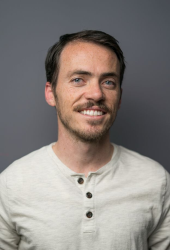
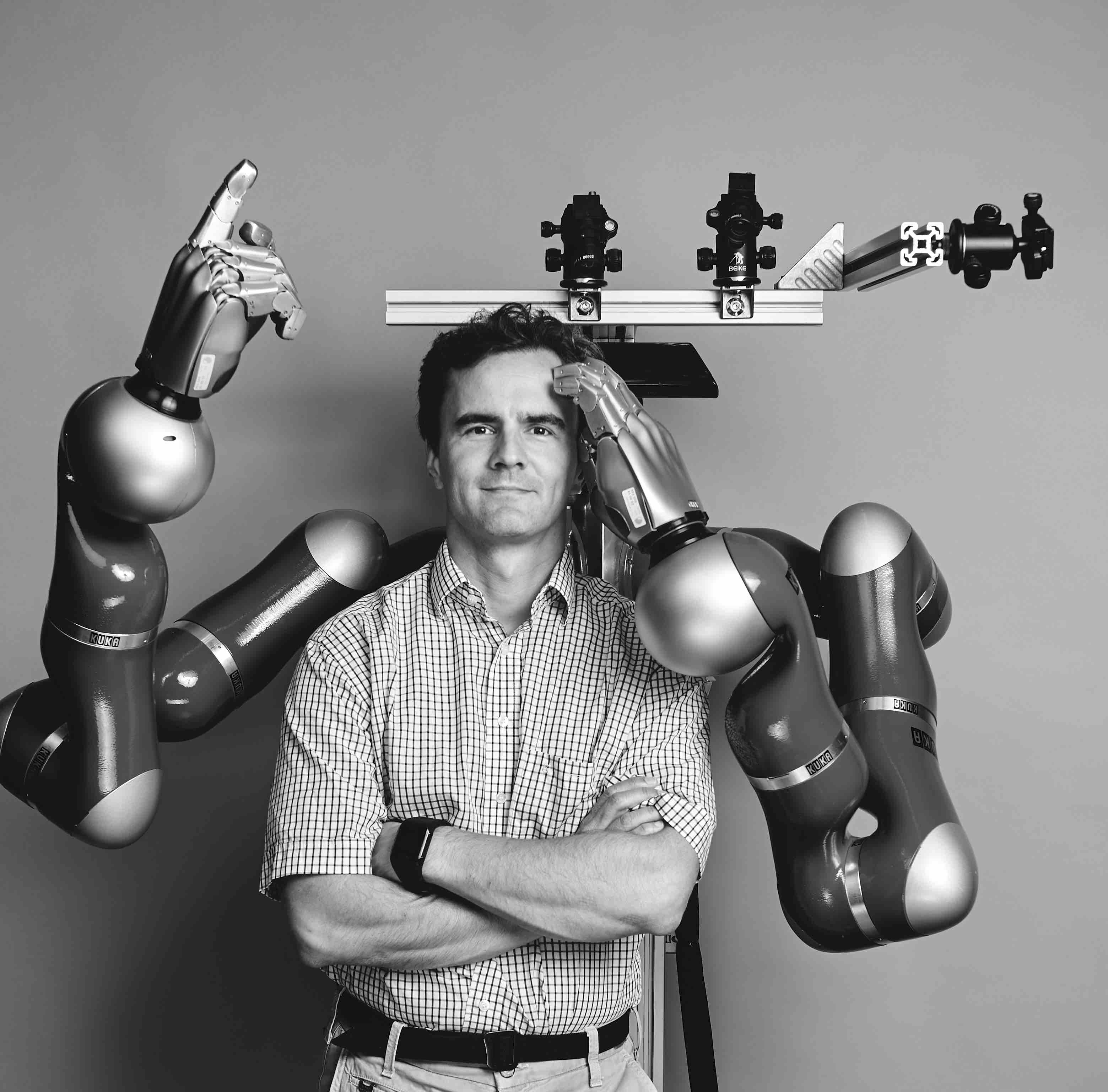
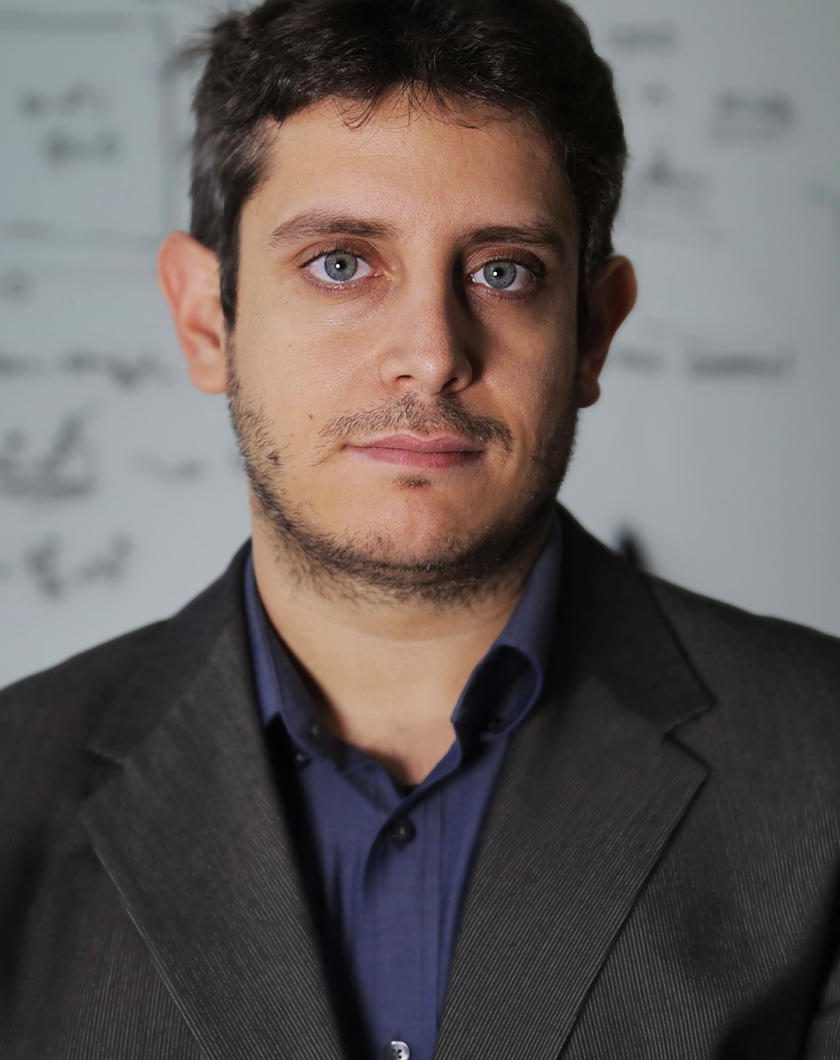
Michalis Vazirgiannis is a Professor at LIX, École Polytechnique (France) leading the Data Science and Mining (DaSciM) group. With academic backgrounds in Physics (Athens University), AI (Heriot-Watt University), and Informatics (Athens University), he has conducted research at Fraunhofer, Max Planck MPI, and INRIA/FUTURS while teaching at institutions across Greece, France, China, and Spain. His research spans Machine/Deep Learning for Graphs (GNNs, graph kernels, embeddings) Text Mining & NLP (Graph-of-Words, biomedical text analysis) Combinatorial Optimization for pandemic forecasting and energy systems Event/Anomaly Detection in time series and sensory data Industrial collaborations with Airbus, Google, Tencent, and BNP . He has supervised 29 completed PhD theses, published over 250 papers, and received prestigious awards including Marie Curie and Tencent Rhino-Bird Fellowships. His team leads the ANR-HELAS Chair (2020-2025) focusing on heterogeneous data deep learning.
Panruo Wu is an Associate Professor in the Department of Computer Science at the University of Houston (UH). He joined UH in 2018 as an Assistant Professor, transitioning to his current rank. His research focuses on high-performance computing, numerical algorithms, parallel and distributed systems, and fault tolerance. He holds a Ph.D. in Computer Science from the University of California, Riverside (2016), advised by Zizhong Chen, and a B.S. in Mathematics from the University of Science and Technology of China (USTC). Research Interests: His work spans high-performance computing, numerical linear algebra, GPU acceleration, fault-tolerant systems, and scalable machine learning. Key projects include LATER (Linear Algebra on Tensor Cores), LibKernel (a scalable kernel machine framework), and Wukong (a serverless parallel computing framework). He emphasizes energy-efficient and hardware-aware algorithms. Publications: Dr. Wu's recent work includes advancements in QR factorization using tensor cores, symmetric eigenvalue decomposition optimizations, and fault-tolerant algorithms for heterogeneous systems. His research often addresses computational challenges in big data and exascale computing. Awards & Grants: Received NSF Grant No. 2146509. His work on high-accuracy matrix computations was a Best Paper Nominee at HPDC'20. He has authored over 30 peer-reviewed publications in top venues like SC, ICS, and IEEE TPDS. Students & Advising: Advises PhD students including Shaoshuai Zhang, Ruchi Shah, Benjamin Carver, and Ao Wang. His students have contributed to projects like LibKernel and fault-tolerant linear algebra libraries. Labs & Collaborations: Leads research in UH's high-performance computing group, collaborating with institutions like Jack Dongarra's Innovative Computing Lab (University of Tennessee) and industry partners on exascale computing initiatives.
Eugene Tang is an Assistant Professor in the Department of Mathematics and Physics at Northeastern University. His research focuses on quantum information theory and the theoretical limitations of quantum computing, particularly quantum error correction and efficient protocols using high-rate codes. He received his PhD from the California Institute of Technology in 2021. Dr. Tang's research interests include quantum error correction, the development of efficient quantum protocols surpassing conventional schemes, and the study of quantum algorithms such as QAOA. He explores the theoretical boundaries of quantum computing, with a focus on optimizing error detection and decoding methods for quantum LDPC codes and subsystem codes. His work also intersects with quantum gravity, particularly in the context of black hole interiors and bulk geometry construction through tensor methods. His recent publications highlight advancements in quantum error correction, including optimal locality in subsystem codes and efficient decoding strategies for quantum LDPC codes. His work on variational quantum optimization addresses challenges in scalability, such as QAOA's performance at large qubit scales and symmetry-related obstacles. Earlier contributions include research on superoscillations and hybrid quantum-classical algorithms for graph coloring. No scientific awards or grants are explicitly mentioned in the provided information. No specific labs or teams are associated with his work in the given data.
Anirban Bhattacharya is a Professor at the Department of Statistics, Texas A&M University, and holds the Patricia R. Smith and Dr. William B. Smith Faculty Fellow for Statistics position. His research focuses broadly on statistical inference, Bayesian methodology, and computational statistics. Education Ph.D. in Statistics (2012) from Duke University Master of Statistics (2008) from Indian Statistical Institute Bachelor of Statistics (2006) from Indian Statistical Institute Scientific Awards Patricia R. Smith and Dr. William B. Smith Faculty Fellow for Statistics
Prof. Torsten Wolfgang Kuhlen serves as a Universitätsprofessor at RWTH Aachen University, leading the Teaching and Research Area for Virtual Reality and Immersive Visualization within the Department of Computer Science. He is affiliated with Chair of Computer Science 12 (High Performance Computing), the Visual Computing Institute, and remains an integral part of the RWTH IT Center where his research group operates one of the world's largest Virtual Reality laboratories including the 30 sqm aixCAVE visualization chamber. The group maintains strong connections with Computational Science & Engineering Division, National High Performance Computing Center for Computational Engineering Science (NHR4CES), and VR in Science and Industry Network NRW e.V. Prof. Kuhlen's research spans virtual reality, immersive visualization, and multimodal 3D user interfaces with applications across simulation science, production technology, neuroscience, and medicine. His work combines basic research on advanced methods and algorithms with interdisciplinary collaborations involving RWTH Aachen institutes, Forschungszentrum Jülich, and industry partners. Recent publications demonstrate strong focus on audiovisual perception, immersive analytics, collaborative virtual environments, and practical VR applications in education and manufacturing. His research group has produced significant work on listening effort in virtual environments, immersive authoring techniques, and VR applications for scientific visualization. Notable projects include VRScenarioBuilder for automated vehicle testing and applications in monitoring additive manufacturing processes. The group actively participates in major conferences including IEEE VIS and EuroVis, with several award-winning contributions. Prof. Kuhlen has advised PhD students including Martin Bellgardt who recently completed his doctoral degree on "Increasing Immersion in Machine Learning Pipelines for Mechanical Engineering". The research group maintains state-of-the-art VR infrastructure including the aixCAVE facility which is open to all RWTH research groups.
Taylor Sparks is a Professor of Materials Science and Engineering at the University of Utah, where he also serves as Director of Graduate Affairs for the John and Marcia Price College of Engineering. He holds a PhD in Applied Physics from Harvard University, an MS in Materials from the University of California, Santa Barbara, and a BS in Materials Science & Engineering from the University of Utah. His research focuses on advancing materials discovery using machine learning to streamline and optimize material design, with applications in energy materials, dental materials, and sustainable engineering. His work integrates big data and materials informatics to explore new synthetic techniques, structure-property relationships, and sustainable materials that balance performance with economic factors. The Sparks Research Group has secured funding from agencies including DOE, NSF, DOD, and various industry partners. Sparks' recent research output demonstrates a strong trend toward leveraging artificial intelligence and machine learning to accelerate materials discovery, with particular emphasis on large language models for materials science, Bayesian optimization for experimental design, and novel approaches to crystal structure prediction. His work bridges the gap between theoretical predictions and experimental validation in materials science. NSF CAREER Award Royal Society Wolfson Visiting Fellow Acta Materialia Outstanding Reviewer Award for 2020 Honorary Outstanding Faculty Teaching Award of 2020-2021 Materials Science & Engineering Department Research Award for 2023 John G. Francis Prize for Undergraduate Student Mentoring Sparks has advised numerous graduate students who have gone on to successful careers in academia and industry. His research has been supported by significant grants from NSF, DOE, DOD, Army Research Office, and industry partners. His group has developed innovative tools including the Materialism Podcast, a materials science YouTube channel, and the Honegumi interface for Bayesian optimization, demonstrating his commitment to both research excellence and science communication. The Sparks Research Group operates multiple laboratories focused on materials characterization, synthesis, and informatics. They collaborate extensively with other institutions globally, host visiting researchers, and run outreach initiatives including the Materialism Podcast and YouTube channel to make materials science more accessible to broader audiences.
Jan Peters is a full professor (W3) at the Computer Science Department of Technische Universität Darmstadt and serves as the department head of the Systems AI for Robot Learning (SAIROL) at the German Research Center for AI (DFKI) . He is also a founding faculty member of the Hessian Centre for Artificial Intelligence . Peters holds a Ph.D. in Computer Science from the University of Southern California (2007) and dual master’s degrees in Computer Science and Electrical Engineering from USC and TU Munich respectively. Research Themes : Robot Learning, Reinforcement Learning, Imitation Learning, Tactile Sensing, Human-Robot Interaction, and Safe AI. Recent Article Trends : Focus on deep reinforcement learning (Iterated Q-Networks, Adaptive Q-Networks), safe robot foundation models , tactile-enhanced imitation learning , and physics-informed machine learning . Scientific Recognition : Recipient of the Dick Volz Best PhD Thesis Award , ERC Starting Grant , IEEE Fellow , and Amazon Research Award . Leadership : Founder of the IEEE RAS Technical Committee on Robot Learning and editor for journals including Autonomous Robots and IEEE Transactions on Robotics .
Yashar Ganjali is a Professor in the Department of Computer Science at the University of Toronto , leading the Systems and Networking Group . His research spans computer networks , with a focus on data center networking , software-defined networking (SDN) , and congestion control . Education : Not explicitly detailed, but inferred from academic rank as a Professor. His work on flow consolidation , load migration in SDN controllers , and machine learning for network management has been influential. Recent projects include FORESIGHT (2025) for ML-driven scheduling and Meta-Migration (2023) to reduce switch migration latency. Scientific Awards include the IFIP Networking 2025 Best Paper Award . Collaborations with institutions like Google (2024) and Facebook (2019) highlight his industry impact. Advisees include Sepehr Abbasi Zadeh (PhD, 2024). Current projects integrate optical packet switching and eBPF-based network augmentation , aiming to address scalability, micro-bursts, and resource allocation efficiency in cloud environments.
Martin Gosau is a Professor at the Clinic and Polyclinic for Oral and Maxillofacial Surgery within the Medical Faculty of the University Medical Center Hamburg-Eppendorf (UKE). His research focuses on Oral Surgery , Maxillofacial Surgery , and Regenerative Medicine , with a strong emphasis on Dental Implants , Head and Neck Cancer , and Oral Pathology . University: University Medical Center Hamburg-Eppendorf School: Medical Faculty Department: Oral and Maxillofacial Surgery Academic Rank: Professor His recent work explores: Oral Health in Genetic Disorders (e.g., hypophosphatasia) Advanced Surgical Techniques (e.g., nanosecond lasers, fluorescence angiography) Biomaterials and Tissue Engineering (e.g., silk fibroin membranes, extracellular vesicles) Cancer Prognostics (e.g., DCBLD1 overexpression in HNSCC) Key trends in his 15 most recent articles include applications of machine learning in oral diagnostics, stem cell research for bone regeneration, and biomaterials in reconstructive surgery. He frequently collaborates with Ralf Smeets and Thomas Vollkommer , with publications spanning Frontiers in Immunology , Oral Surgery , and Scientific Reports .
Sri Kolla, Ph.D. is a tenured Professor in the Department of Electronics and Computer Engineering Technology at Bowling Green State University (BGSU) , where he has served since August 2002. He also served as a Visiting Professor at the Indian Institute of Science (2017) and as a Fulbright Research Scholar (2008-2009). His academic career spans faculty roles at Penn State University, University of Toledo, and consortium graduate faculty at Indiana State University. Education: Ph.D. in Electrical Engineering and Computer Science (University of Toledo, 1989) M.S. in Electrical and Computer Engineering (University of Saskatchewan, 1986) M.E. in Electrical Engineering (Indian Institute of Science, 1983) B.E. in Electrical Engineering (Andhra University, 1981) Research Interests: Dr. Kolla specializes in Electrical Power and Energy Systems with Smart Grid applications, Control Systems for networked environments, and Machine Learning techniques for power system diagnostics. His work focuses on fault detection in microgrids using LSTM networks, stability robustness of discrete-time systems, and multi-agent protection schemes for power infrastructure. Scientific Contributions: Developed robust control frameworks for microgrid systems under parameter variations (2023-2025) Pioneered AI-based fault identification in induction motors and transformers (1995-2000) Advanced networked control system designs addressing time delays (2002-2012) Published 82+ technical articles in IEEE, ISA Transactions, and conference proceedings Honors and Recognition: Recipient of the Fulbright-Nehru Academic and Professional Excellence Award and Whiteford Scholarship . Senior member of IEEE and ISA , with listings in Marquis Who’s Who and fellowships in The Institute of Engineers (India) .
Yves-Alexandre de Montjoye is an Associate Professor of Applied Mathematics and Computer Science at Imperial College London, where he leads the Computational Privacy Group. He holds a joint affiliation between the Department of Computing and the Data Science Institute. His roles include serving as a Special Adviser on AI and Data Protection to the EC Justice Commissioner Didier Reynders, a Parliament-appointed Commissioner for the Belgian Data Protection Agency, and a Special Adviser to EC Competition Commissioner Margrethe Vestager, co-authoring the 'Competition Policy for the Digital Era' report. He earned his PhD from MIT in 2015 under Alex 'Sandy' Pentland. His master's degrees include an M.Sc. in Applied Mathematics from UCLouvain, an M.Sc. (Centralien) from École Centrale Paris, and an M.Sc. in Mathematical Engineering from KU Leuven. He also holds a B.Sc. in Engineering from UCLouvain. His research interests focus on computational privacy, anonymization techniques, AI safety, and machine learning attacks. He develops methods to 'red team' AI systems and create privacy-preserving mechanisms. His work addresses vulnerabilities such as membership inference, attribute inference, and re-identification risks in datasets, with applications to location tracking, synthetic data, and LLMs. His articles analyze adversarial attacks against privacy systems, emphasizing robustness and practical guarantees. He advocates for privacy-by-design approaches in big data analytics and has explored ethical AI, competition policy in digital markets, and humanitarian uses of mobile data. While no scientific awards are explicitly listed, his contributions have been widely covered in media. He is currently recruiting motivated PhD students for his group at Imperial College. His advising and grants narrative includes work on privacy-preserving technologies and policy implications of AI, with collaborations across academia and public institutions. He is affiliated with the Computational Privacy Group and contributes to platforms like OPAL for privacy analytics. His office is in the ACE Extension building (ACEX 259), accessible via Exhibition Road.
Themistoklis Sapsis is a Professor in the Department of Mechanical Engineering at the Massachusetts Institute of Technology (MIT), where he also holds an affiliation with the MIT Institute for Data, Systems, and Society. He earned his Ph.D. in Mechanical Engineering from MIT in 2011 and previously served as an Assistant Research Scientist at NYU’s Courant Institute of Mathematical Sciences. His research focuses on developing analytical, computational, and data-driven methods to predict and quantify extreme events in high-dimensional nonlinear systems, such as turbulent fluid flows and mechanical systems. Key areas include probabilistic modeling of climate extremes, machine learning for climate simulation corrections, and uncertainty quantification in complex dynamical systems. Recent work emphasizes applications in ocean engineering (e.g., vortex-induced vibrations, wave energy systems) and environmental science (e.g., spatially resolved climate extremes, bias correction in Earth system models). His methodologies combine stochastic emulators, Bayesian experimental design, and neural networks to address challenges in data sparsity and model fidelity. Notable contributions include frameworks for correcting coarse-scale climate simulations using machine learning, real-time ocean temperature reconstruction from satellite data, and data-driven modeling of hydrodynamic interactions in marine risers. His research bridges theoretical developments with practical applications in energy systems, structural monitoring, and autonomous systems. Prof. Sapsis collaborates with interdisciplinary teams and has contributed to initiatives such as FIRSTLING-DIGIMAR (a marine riser digital twin) and multi-fidelity frameworks for autonomous seakeeping. His work is supported by grants focused on advancing machine learning in scientific modeling and extreme event prediction.
Yaoqing Yang is an Assistant Professor at the Department of Computer Science, Dartmouth College. He earned his PhD in Electrical and Computer Engineering (ECE) from Carnegie Mellon University (CMU) and completed postdoctoral research at UC Berkeley's RISE Lab. His work focuses on robustness in machine learning systems, spectral analysis of neural networks, and algorithm design for structured data like graphs and point clouds. PhD in ECE, Carnegie Mellon University Postdoc, RISE Lab, UC Berkeley BS in Electrical Engineering, Tsinghua University Research interests include diagnosing and mitigating model failures through heavy-tailed spectral analysis, decision boundary studies, and loss landscape visualization. He develops methods such as AlphaPruning and SharpBalance to enhance large language models and ensemble learning. Recent work spans 2025 publications on spectral evolution of neural networks, agentic AI for science, and LLM safety. Key collaborations include Michael W. Mahoney and other researchers. Burke Research Initiation Award, Dartmouth (2024) DOE grant for scientific foundation models (2024) DARPA grant for AI robustness (2024) He serves as Area Chair at NeurIPS 2025 and ICLR 2026, and has presented at Google Research, Lawrence Berkeley National Laboratory, and leading universities worldwide. His lab at Dartmouth engages in theoretical and applied research, with connections to UC Berkeley's RISE Lab and collaborations across institutions like CMU and Tsinghua University.
Barbara Plank is a full professor and chair for AI and Computational Linguistics at Ludwig Maximilian University of Munich (LMU), where she heads the Munich AI and NLP (MaiNLP) lab and co-directs the Center for Information and Language Processing (CIS). She additionally serves as a visiting full professor at the IT University of Copenhagen, maintaining active dual institutional affiliations in computational linguistics and NLP research. Her research focuses on human-centric natural language processing challenges, particularly learning under sample selection bias (domain adaptation, transfer learning) and annotation bias, learning with limited data through continual/semi-supervised/weakly-supervised methods, multimodal learning at language-vision-speech interfaces, and fortuitous supervision for variety-space aware language understanding. She pioneers methodologies addressing human label variation as a critical factor in model robustness rather than mere noise. Recent publications (2024-2025) reveal dominant trends in modeling human label variation across NLP tasks, especially natural language inference and entity recognition, alongside dialectal language processing and LLM evaluation frameworks. Her work systematically investigates how human disagreement in annotations can be leveraged to build more robust, adaptable systems rather than treated as errors. Scientific recognition includes: ERC Consolidator Grant for the DIALECT project advancing natural language understanding for non-standard languages and dialects ACL 2024 Area Chair Award for the paper 'VariErr NLI: Separating Annotation Error from Human Label Variation' Leading the MaiNLP lab at CIS (LMU), she directs research integrated with MCML (Munich Center for Machine Learning), Munich Intelligent Robotics, ELLIS Unit Munich, UniDive, and COST action. Current projects include ERC-funded DIALECT and KLIMA-MEMES, focusing on human-facing NLP solutions for real-world language diversity challenges. She actively shapes the field through ACL leadership as VP-Elect and numerous keynotes emphasizing human-centric approaches. The MaiNLP lab at Akademiestr. 7, 80799 Munich, drives innovation in computational linguistics through interdisciplinary collaboration, maintaining strong ties with European research networks while developing practical applications for language variation and robust NLP systems. The lab's work directly informs her teaching in LMU's Computational Linguistics programs, bridging research and education in cutting-edge NLP methodologies.
Gabriele Facciolo is a Professor at the Centre Borelli, ENS Paris-Saclay, France. He is a Senior Member of the Institut Universitaire de France (IUF) and holds an Innovation Chair (2025). His research focuses on image and video processing, remote sensing, and super-resolution techniques. Current affiliations: Centre Borelli (ENS Paris-Saclay), Institut Universitaire de France His research explores advanced algorithms for satellite stereo pipelines, real-time deblurring, denoising, and explainable AI systems for legal evidence enhancement. He coordinates projects like ANR SURECAVI (Super-resolution for visible camera systems) and ANR IMPROVED (video enhancement for judicial use), with recent work on Gaussian Splatting for Earth Observation and multi-date satellite super-resolution. Notable scientific achievements include the IGARSS 2025 Top 10 Student Paper Award and leadership in projects funded by ANR (€890k) and Prime Minister's entities (SGDSN/ANSSI). His work bridges computational imaging, defense applications, and digital forensics. Project leadership: SURECAVI, IMPROVED, BOFOR Key technologies: GPU acceleration, real-time processing, optical flow estimation, RPC refinement Gabriele actively contributes to open-source tools like S2P (Satellite Stereo Pipeline), MGM (MultiGlobal Matching), and OMNIflip. He teaches in the Master MVA program and collaborates across institutions (ENPC, UPF).