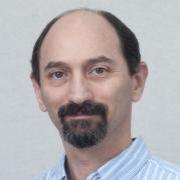
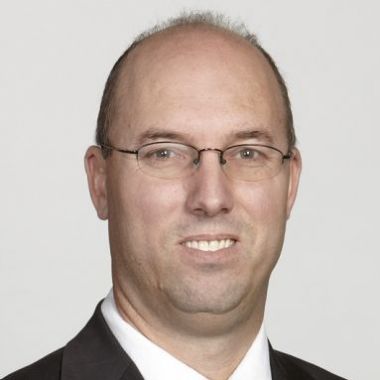
Prof. Dr. rer. nat. Andreas Tewes is a Professor of Applied Mathematics at the Department II Mathematics - Physics - Chemistry, Berlin University of Technology. His expertise spans mathematical methods for signal and image processing, machine learning, computer vision, and applications in medical physics, automotive radar systems, and mathematical education. Education: Diploma in Physics (University of Essen, 1998) PhD in Neuroinformatics (Ruhr University Bochum, 2006) Certificate in Medical Physics and Technology (Distance University of Kaiserslautern, 2000) His research focuses on facial recognition, medical imaging, and mathematical visualization through tools like GeoGebra. He also contributes to projects like voxels.berlin for digital teaching. Previously, he led sensor solutions at Hella Aglaia Mobile Vision GmbH and worked at Ruhr University Bochum's Institute of Neuroinformatics. As part of the GeoGebra working group (GIBB), he promotes visual learning methods and open educational software. His teaching includes courses in mathematics for medical physicists, engineers, and automated driving applications. Contact: atewes@bht-berlin.de .
Daniel Einarson is a Senior Lecturer in Computer Science at Kristianstad University’s Faculty of Natural Science, where he teaches Software Engineering and contributes to the Master Programme in Computer Science with a focus on Sustainable Development. He also instructs pedagogical courses on Education for Sustainable Development (ESD) for university teachers and participates in university-wide sustainability initiatives. Research Interests : Programming language theory, real-time systems, IoT applications for e-health and sustainable development, distributed systems, and ICT’s role in environmental progress. Teaching : Software Engineering, ESD pedagogy, and sustainable development integration in higher education. Research Output : His recent work includes: IoMT systems for predicting medical device failures in home care IoT solutions for vulnerable populations Machine learning in concrete crack detection Employer perspectives on alumni contributions to sustainability Behavioral modeling of birds Home healthcare IT systems Distributed systems for environmental monitoring Collaborations : Active in cross-disciplinary projects, partnering with researchers like K. Klonowska, D. Mengistu, and M. Teljega. Engaged in international conferences such as SNCNW 2025 and the International Conference on Electronic Systems and Intelligent Computing. He serves as a reviewer for journals like Measurement and supervises PhD theses externally.
Professor Stuart Clark is a distinguished academic at the University of New South Wales (UNSW), currently serving as Professor in the Civil and Environmental Engineering department within the Faculty of Engineering. He was appointed Director of Governance for the Faculty of Engineering in 2024 and promoted to Professor in 2025. Previously, he was an Associate Professor (2021-2025) and Senior Lecturer (2017-2021) in the Minerals and Energy Resources School at UNSW. His educational background includes a PhD in Geophysics from the University of Sydney (2007), Master of Arts from the University of Melbourne (2004), and BSc.(Hons)/B. Arts from the University of Sydney (2002). He also earned a Graduate Certificate in University Learning and Teaching from UNSW in 2022. Professor Clark's research focuses on understanding the influence of deep Earth processes on sedimentary basin development and applying machine learning to geological modeling. His work spans quantitative sedimentary basin dynamics, numerical simulations of Earth processes like subduction and sediment transport, and innovative applications at the intersection of geology and machine learning. His research has significant implications for sustainable resource use and exploration. His recent publications reveal a strong emphasis on basin analysis, particularly in the Northern Carnarvon Basin, with applications spanning petroleum geology, resource distribution, and geological modeling using advanced statistical methods like Bayesian inference. His work increasingly bridges traditional geology with computational approaches, including machine learning applications for fracture detection, fault identification, and image analysis of geological structures. Arc Postgraduate Council's Supervisor Award (2021) UNSW Vice Chancellor's Teaching Excellence Award - Rising Star (2019) UNSW Engineering Hero Award (2020) Professor Clark has successfully secured multiple significant research grants, including the Geodynamical Assessments of Subsidence in the North West Shelf in Australia (2024-2025), the ARC Industry Transformation Research Hub for Resilient and Intelligent Infrastructure Systems (2021-2027), and several Australian Research Council Linkage projects. He currently supervises numerous PhD and research master's students working on diverse projects related to basin evolution, dynamic topography, fracture mechanics, and resource exploration. His teaching portfolio includes undergraduate and postgraduate courses in geology, sedimentary and energy resources, and seismic imaging.
Claude R. Duguay is a Professor and University Research Chair in Cryosphere & Hydrosphere from Space at the University of Waterloo , specifically within the Department of Geography and Environmental Management . He also serves as the founding director of the Interdisciplinary Centre on Climate Change , where he leads research on cold region studies and remote sensing technologies. Current research focuses on Arctic hydro-climatology and remote sensing of cryospheric processes. Teaches courses like Earth from Space Using Remote Sensing , The Cryosphere , and Remote Sensing of Cold Regions . His research involves developing remote sensing algorithms and numerical models to study lake/land-atmosphere interactions in cold environments. Key areas include lake ice dynamics , permafrost monitoring , microwave backscatter analysis , and climate change impact assessments . Publications emphasize satellite-based climate products and machine learning applications for ice and hydrology studies. Recent publications highlight trends in SAR and microwave remote sensing for ice thickness, snow properties, and climate feedback mechanisms. His work bridges environmental physics and data science to improve predictive models for cold regions. Scientific recognition includes the University Research Chair in Cryosphere & Hydrosphere from Space . Collaborative projects involve institutions like the Water Institute and Waterloo-Laurier Graduate Program in Geography . Graduate supervision includes Jaya Sree Mugunthan (MSc radar altimetry thesis). Research facilities utilize X/Ku/C-band microwave systems and 1-D lake models .
Louis Denaud is a Full Professor and Director of LaBoMaP (Laboratory of Mechanical and Physical Properties of Materials) at Arts et Métiers ParisTech. His work focuses on the mechanical and physical characterization of wood and engineered wood products, with emphasis on non-destructive evaluation and sustainable applications in structural engineering. His research spans Wood Science , Materials Engineering , and Non-Destructive Testing . Key interests include X-ray and terahertz imaging for wood property analysis, deep learning applications for defect detection in veneers, mechanical grading of heterogeneous wood materials, and sustainable wood composites for structural applications. He investigates fiber orientation effects on mechanical behavior, optical characterization via the tracheid effect, and processing parameter optimization for veneer production. Analysis of his 2023-2025 publications reveals dominant trends in integrating advanced imaging techniques (terahertz, X-ray, hyperspectral) with machine learning for wood characterization, alongside significant focus on sustainable wood utilization in mobility applications and mechanical grading for stiffness-optimized structural beams. His work bridges fundamental wood physics with industrial applications in plywood, LVL, and agroforestry systems. No scientific awards are mentioned in the source material. Information regarding student advising and research grants is not provided in the available text. As Director of LaBoMaP (research unit EA3633), Denaud leads a team specializing in wood mechanics and non-destructive testing. The laboratory conducts research on wood drying processes, veneer production parameters, terahertz densitometry (BOOST project), optical wood characterization (WOOPS project), and sustainable wood composites for structural applications.
Dr. Edwin Peters is a Lecturer in Electrical Engineering at UNSW Canberra, Australia. He specializes in signal processing, satellite communications, radar systems, and embedded technologies (FPGA, GPU, edge computing), with applications in space domain awareness, spacecraft tracking, and near-Earth asteroid characterization via radar. His teaching includes courses like ZEIT3223: Embedded Systems and ZEIT8219: Satellite Communications . Research Focus: Radio frequency sensing for space domain awareness, bi-static/passive radar, and algorithm development for GPU/FPGA platforms. Supervision: Advises PhD candidates in applied signal processing, machine learning, and radar applications for space monitoring. Engagement: Leads outreach programs Young Women in Engineering (YoWIE) and Young Space Explorers to promote STEM participation.
Dr. Jinfei Wang is a Full Professor in the Department of Geography and Environment at the University of Western Ontario, affiliated with the Faculty of Social Science. She holds a B.S. and M.Sc. from Peking University and a Ph.D. from the University of Waterloo. Her research encompasses: Advanced remote sensing techniques for environmental monitoring Urban land use/cover change detection Agricultural applications using multi-platform data (UAV, satellite, radar) Machine learning applications in geography and planetary science Hyperspectral/Lidar data processing Big data analytics for Earth observation Analysis of her 2021 publications reveals strong focus on: Precision agriculture applications (crop health, yield estimation, soil moisture) Multi-sensor data fusion (UAV, RADARSAT-2, Sentinel) Machine learning for environmental parameter retrieval Urban development patterns and land cover mapping She teaches undergraduate and graduate courses including: GEO 2230: Remote Sensing GEO 3231: Advanced Topics in Remote Sensing GEO 9110: Introduction to Geographic Information Systems GEO 9418: Remote Sensing Digital Image Analysis Professor Wang has supervised 38 graduate students (16 PhD, 22 Masters) researching topics spanning agricultural remote sensing, urban studies, flood hazard mapping, and planetary feature extraction.
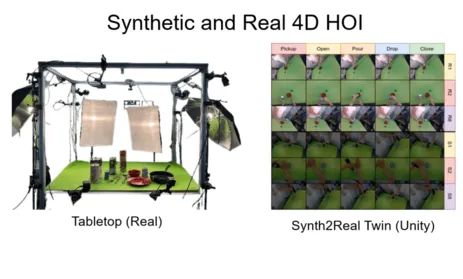
Marsil Zakour is a Ph.D. Candidate and Researcher at the Chair of Media Technology (Technical University of Munich). He holds a Master of Science in Computer Science from TUM (2021) and a Bachelor of Science in Software Engineering from Al-Baath University (2016). His work focuses on 3D reconstruction, understanding, and synthesis of hand-object interactions. Research Interests 3D Hand-Object Interaction Modeling Human Activity Understanding Computer Vision Machine Learning Key Projects Centre for Tactile Internet with Human-in-the-Loop (CeTI) 5G Testbed Bayern (eHealth focus) KMU-Innovativ: KIMaps IEEE P1918.1.1 Haptic Codecs Publications His research spans action segmentation, embodied AI, and 3D object feature modeling, with recent works on procedural mistake detection (ICCV 2025), vision-language models (CVPR 2025), and domain adaptation (IROS 2024). Supervision Zakour mentors students in projects like Hand Pose Estimation Using Multi-View RGB-D Sequences , requiring expertise in computer vision and deep learning frameworks.
Alexandre Langlois is a Professor at the University of Sherbrooke specializing in Arctic cryospheric research. His work bridges geomatics, hydrology, and climate science with a focus on winter extreme events and remote sensing applications. His research interests center on Arctic snow and ice processes, particularly rain-on-snow events, extreme precipitation, and the development of remote sensing methods for quantifying surface changes in snow, sea ice, and glacier mass balance. Key areas include passive microwave radiometry, radar applications, UAV-based snow monitoring, and avalanche risk assessment. Langlois' recent publications demonstrate strong trends in Arctic climate monitoring, with emphasis on microwave remote sensing techniques for snow water equivalent retrieval, freeze-thaw cycle detection, and climate change impacts on northern ecosystems. His work frequently integrates field measurements with satellite observations and numerical modeling. Bronze Medal from Canadian Remote Sensing Society 2017 Langlois has secured substantial funding as Principal Applicant for projects including NSERC Discovery grants on Arctic winter extreme events ($225,000), CFI Innovation Fund for Arctic climate monitoring ($4.26M), and multiple FRQNT and NSS contracts for avalanche hazard assessment. His research directly supports Indigenous knowledge integration for caribou habitat conservation and operational avalanche forecasting systems. He leads the MOACC (Multidisciplinary Observatory for Arctic Climate Change) initiative and collaborates internationally with UK, Sweden, USA, and France on polar research. His lab develops specialized instrumentation including portable FMCW radars for snow stratigraphy analysis and UAV-based snow depth mapping systems.
Dr. Jeffrey R. French is the Department Head and Associate Professor in the Department of Atmospheric Science at the University of Wyoming. He leads research focused on cloud physics and precipitation processes, with particular expertise in airborne measurements of atmospheric phenomena. Dr. French manages the University of Wyoming King Air (UWKA) research aircraft facility, which serves as a national resource for atmospheric research through a cooperative agreement with the National Science Foundation. Dr. French's educational background includes: BS in Physics from South Dakota School of Mines and Technology (1992) MS in Meteorology from South Dakota School of Mines and Technology (1994) PhD in Atmospheric Science from University of Wyoming (1998) Dr. French's research primarily focuses on microphysical processes in clouds that lead to precipitation formation. He utilizes airborne observations from research aircraft to characterize thermodynamic, dynamic, and microphysical properties of clouds. A significant portion of his work involves instrument calibration and characterization to ensure accurate measurements from aircraft platforms. His research has important applications in understanding orographic cloud seeding , wintertime precipitation processes , and convective cloud systems . Dr. French's recent publications demonstrate a strong focus on orographic cloud systems, particularly through the SNOWIE (Seeded and Natural Orographic Wintertime clouds: the Idaho Experiment) project. His work combines detailed airborne measurements with numerical modeling to understand precipitation formation processes. A notable trend in his recent work is the application of advanced data analysis techniques, including machine learning approaches, to better interpret complex atmospheric measurements. Dr. French has received funding for several significant research projects: SNOWIE: Seeded and Natural Orographic Wintertime clouds: the Idaho Experiment (NSF) Improving Cloud Characterization from Instrumented Aircraft (NSF) University of Wyoming King Air (UWKA) as a National Facility (NSF) Convective Precipitation Experiment: Microphysics and Entrainment Dependencies (COPE-MED) (NSF) Dr. French actively mentors graduate students, with several currently working on MS and PhD research projects related to cloud physics and airborne measurements. He teaches graduate courses including ATSC 5880 (Aircraft Instrumentation for Atmospheric Measurements), ATSC 5010 (Physical Meteorology I), and ATSC 5018 (Ethics and Research Methods). His teaching philosophy emphasizes engagement through dialogue, hands-on mathematical derivations, and connecting physical concepts to real-world atmospheric problems. Dr. French leads the cloud physics laboratory at the University of Wyoming, which focuses on improving in-situ measurements from the UWKA research aircraft. His laboratory develops tools and techniques to quantify errors and uncertainties associated with cloud droplet measurements and processes data from aircraft-based cloud imaging probes.
Jens Behley is a Lecturer (Privatdozent) at the Institute of Geodesy and Geoinformation, University of Bonn, where he actively teaches graduate courses in robotics and computer vision while leading cutting-edge research in 3D perception. His work bridges theoretical advances with real-world agricultural and automotive applications, focusing on robust algorithms for unstructured environments. Behley's research centers on 3D point cloud processing, semantic segmentation, and SLAM systems, with specialized expertise in agricultural robotics for crop phenotyping and autonomous vehicle navigation. He develops novel techniques for plant organ-level analysis, fruit shape completion, and radar-based localization, emphasizing solutions that function under real-field conditions with sensor noise and dynamic changes. His methodologies frequently integrate deep learning with geometric computer vision to achieve precision in challenging outdoor settings. Analysis of his recent publications reveals a dominant trend toward neural implicit representations (e.g., Gaussian Splatting) and diffusion models for 3D scene understanding, alongside continued innovation in LiDAR processing for agricultural robotics. Key thematic clusters include plant phenotyping (18% of recent work), neural mapping techniques (24%), and robust sensor fusion for autonomous systems (31%), with growing emphasis on generative models for data synthesis. Scientific Awards Outstanding Reviewer at IEEE Robotics and Automation Letters (RA-L), 2024 Outstanding Reviewer at European Conference on Computer Vision (ECCV), 2024 Best Agri-Robotics Paper Award for “BonnBeetClouds3D...” at IROS, 2024 Best Paper Award in Workshop “Agricultural Robotics for Sustainable Futures” at IROS, 2024 Best Paper Award Second Place in Workshop “AI and Robotics For Future Farming” at IROS, 2024 Outstanding Reviewer at CVPR, 2024 Finalist Best Paper Award in Service Robotics at ICRA, 2024 Best Paper for “KISS-ICP...” by RA-L, 2023 Honorable Mention for “High Precision Leaf Instance Segmentation...” by RA-L, 2023 Outstanding Reviewer at CVPR, 2023 Outstanding Reviewer at ECCV, 2022 Finalist IROS Best Paper Award on Agri-Robotics, 2022 Outstanding Reviewer at RA-L, 2022 Outstanding Reviewer at ICRA, 2022 Outstanding Reviewer at ICCV, 2021 Faculty Award for Geodesy from Agricultural Faculty of University of Bonn, 2021 Outstanding Reviewer at CVPR, 2021 Finalist Best System Paper at RSS, 2020 Diplomarbeitspreis der Bonner Informatik Gesellschaft e.V., 2009 Behley actively mentors students through advanced coursework including “Machine Learning for Robotics and Computer Vision” and “Techniques for Self-Driving Cars,” though specific advisees aren't documented. His research is supported by extensive collaborations with Prof. Cyrill Stachniss's robotics group at Bonn, with publications appearing in top venues like RA-L, ICRA, and CVPR. Current projects focus on neural scene representations for agricultural robotics and robust localization in changing environments, with datasets like BonnBeetClouds3D establishing new benchmarks in plant phenotyping.
Prof. Avishai Wool is a faculty member at Tel Aviv University, serving as Head of the Systems Department in the School of Electrical and Computer Engineering and Deputy-Director of the Interdisciplinary Cyber Research Center. He received his B.Sc. (1989), M.Sc. (1992), and Ph.D. (1997) in Mathematics/Computer Science from Tel Aviv University and the Weizmann Institute. His career includes co-founding cybersecurity companies AlgoSec and Lumeta Corp. Research Interests: His work focuses on computer security , network security , SCADA systems , side-channel cryptanalysis , and firewall technology . Recent publications explore GPU overclocking faults , vehicular radar spoofing , power grid protocol diversity , and password strength estimation . Recent Article Trends: His 2024-2025 research spans SCADA network modeling , DDoS detection via stream analysis , password security via data-driven recommendations , vehicular camera spoofing , and RSA vulnerabilities from GPU faults . Earlier work includes cache attacks on TrustZone , Wi-Fi direction finding , and encrypted IoT traffic classification . Labs & Teams: He leads the Systems Department and contributes to the Interdisciplinary Cyber Research Center, focusing on practical cybersecurity solutions for industrial systems, wireless networks, and embedded devices.
Jeffrey Walker is a Research Fellow in the School of Civil Engineering at the University of New South Wales . His work focuses on soil moisture retrieval using advanced remote sensing technologies, including synthetic aperture radar (SAR), L-band and P-band radiometers, and GNSS-R systems. He integrates machine learning algorithms for spatial downscaling, multi-scale modeling, and time-series analysis to improve hydrological monitoring in agricultural, urban, and infrastructure contexts. Key Research Areas : Soil moisture remote sensing, microwave radiometry, machine learning applications in environmental data, geospatial modeling, sustainable construction, and eco-friendly pavement design. Notable Contributions : Development of LSTM neural networks for pavement moisture prediction, novel downscaling methods using optical trapezoid models, and assimilation frameworks for land surface models. Recent Trends : Emphasis on UAV-based radiometry, multi-frequency sensor fusion, and addressing over-optimism in SAR soil moisture modeling. Applications : Smart rehabilitation of pavements, flood model calibration with crowd-sourced data, and crop yield estimation via satellite imagery fusion.
Dr. Todd Humphreys is an Assistant Professor in the Department of Aerospace Engineering and Engineering Mechanics at The University of Texas at Austin. He directs the Radionavigation Laboratory, focusing on software-defined GPS receivers and LEO-based positioning systems. His research emphasizes defending against GNSS spoofing/jamming and exploring satellite navigation innovations. Research interests include satellite navigation, orbital dynamics, and signal processing with applications in ionospheric remote sensing and cybersecurity. He co-founded Coherent Navigation to develop hardened GPS systems using Iridium signals. Recent work focuses on LEO mega-constellations (Starlink, OneWeb) for resilient PNT solutions, spoofing detection via single/dual-satellite geolocation, and multi-modal fusion for urban navigation (TEXR Dataset). His publications address OFDM signal design for ranging, radar-inertial positioning, and anti-spoofing countermeasures. Current projects involve beamforming optimization for LEO terminals and TITAN inertial-terrain navigation.
Cyril Grima is a Research Assistant Professor at the Institute for Geophysics within the Jackson School of Geosciences at The University of Texas at Austin. His work focuses on planetary geophysics, with expertise in radar remote sensing techniques applied to Mars, Europa, and Titan. He contributes to major missions like the Europa Clipper and utilizes radar data to study ice sheets, surface roughness, and subsurface structures. His research interests span planetary radar instrumentation, glaciology, and ionospheric physics. Key areas include subsurface ice detection on Mars and Europa, radar signal processing for planetary missions, and the analysis of subglacial water systems in polar regions. Grima’s studies leverage machine learning and statistical methods to improve data interpretation from ice-penetrating radar systems. Recent work highlights include advancing Europa’s subsurface composition understanding through the REASON radar instrument, analyzing Martian surface heterogeneity with decametric-scale radar statistics, and developing ice thickness estimation algorithms using deep learning frameworks. His contributions are critical for future planetary exploration missions and climate change studies in polar environments. Laboratory affiliations include the Institute for Geophysics, where he collaborates on mission planning and instrument development. His research has led to breakthroughs in detecting subglacial lakes and improving radar imaging techniques for icy planetary bodies.