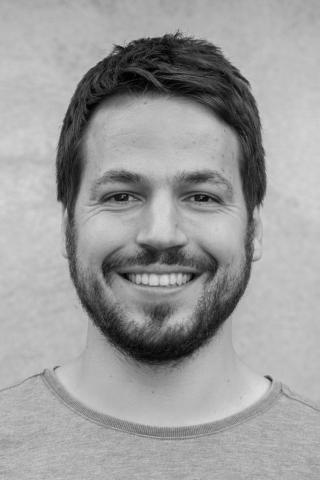
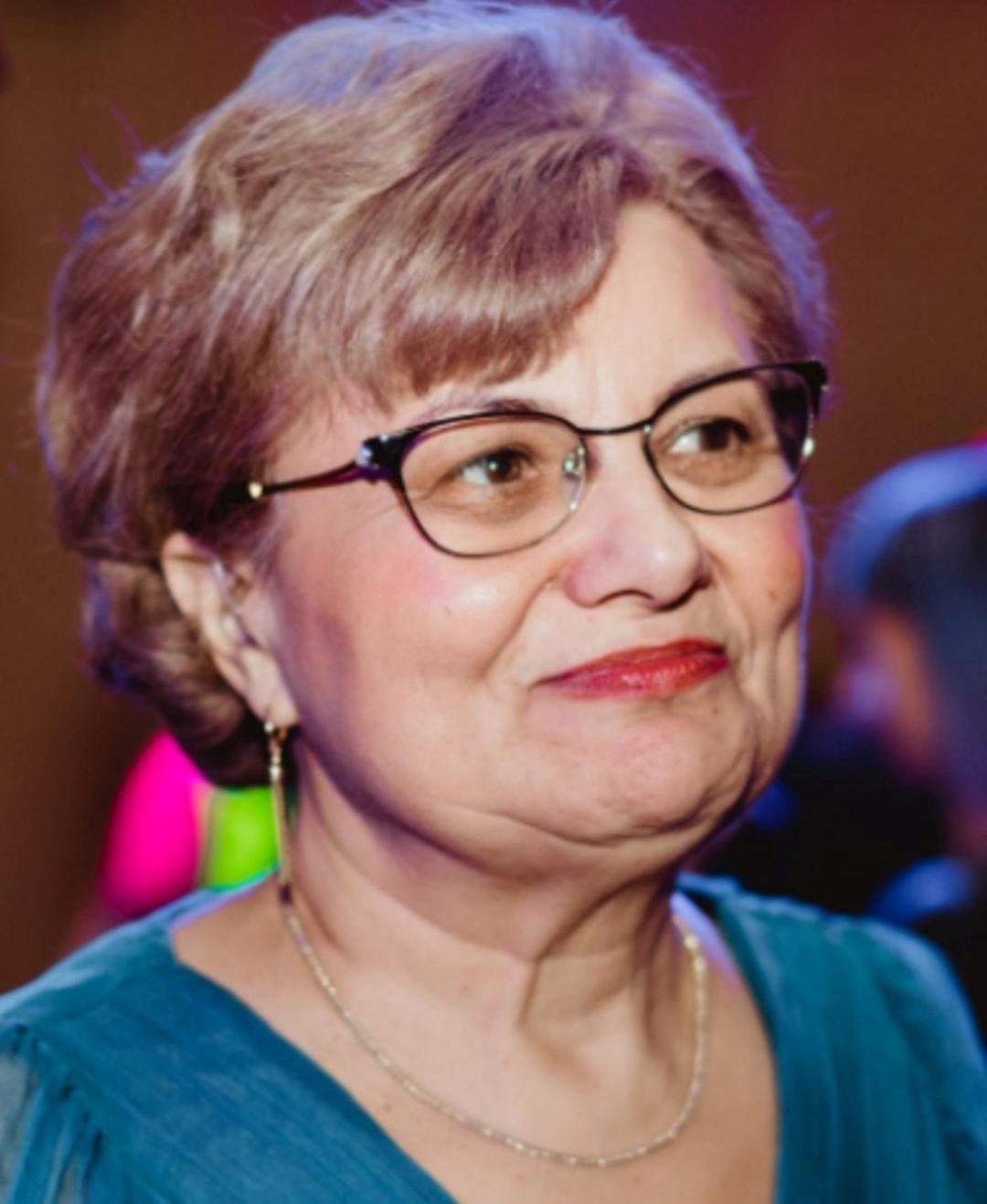
Rafael Gómez-Bombarelli is the Paul M. Cook Career Development Professor and Associate Professor of Materials Science and Engineering at MIT. He leads the Learning Matter Lab, focusing on computational materials design. His research integrates atomistic simulations with machine learning to accelerate the discovery of materials for energy, sustainability, and healthcare. Key areas include zeolite synthesis, photoswitchable drugs, and polymer electrolytes. Education: BSc, MSc, and PhD in Chemistry from the University of Salamanca (Spain). Postdoctoral research at Heriot-Watt University (Scotland), Harvard University (Aspuru-Guzik Lab), and industry experience at Kyulux (Japan). Research interests span materials design rules linking atomic-scale properties to macroscopic performance. Recent breakthroughs include custom-designed zeolites for decarbonization and machine learning approaches for photoswitchable drugs. Awards include the Sloan Research Fellowship (2023) and Dreyfus Award (2021). He co-founded Calculario, a materials discovery startup applying quantum chemistry and ML. Active in bridging academia and industry, his work has been featured in MIT Technology Review and Wall Street Journal. Grants and collaborations include Google Faculty Award funding. His lab emphasizes interdisciplinary approaches combining physics-based models with AI, addressing challenges in energy storage, catalysis, and sustainable polymers.
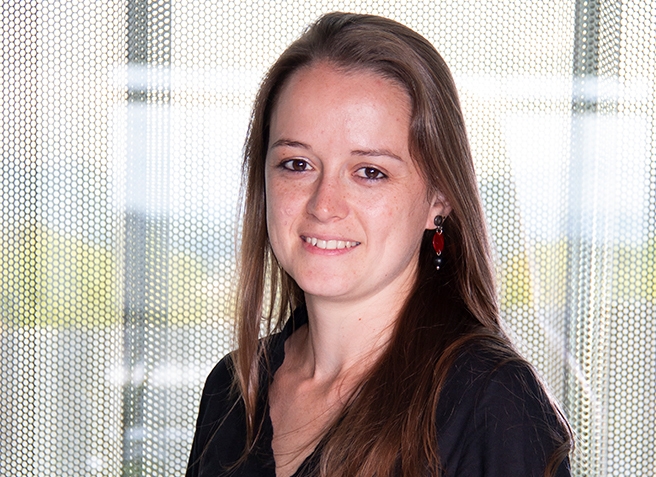
Antonia Statt is an Assistant Professor at the University of Illinois Urbana-Champaign, affiliated with the Grainger College of Engineering's Department of Materials Science and Engineering. She holds joint appointments in Chemical & Biomolecular Engineering, the Beckman Institute, and the Materials Research Lab. Her research focuses on designing functional polymer materials, with a strong emphasis on computational modeling, soft matter systems, and non-equilibrium phenomena like crystallization and aggregation. Statt earned her Diploma (2012) and PhD (2015) in Physics from the University of Mainz. Prior to her faculty role, she was a Postdoctoral Fellow at Princeton University's Chemical and Biological Engineering department. Her work integrates empirical modeling, statistical mechanics, and GPU-accelerated simulations to study polymer and colloidal systems. Recent research highlights include simulating curved lipid membranes, predicting copolymer self-assembly, and applying large language models for macromolecular design. She teaches courses such as Polymer Physics, Surfaces and Colloids, and Atomic Scale Simulations. Statt actively mentors graduate and undergraduate students, emphasizing motivated learners in materials discovery and computational methods. Her lab prioritizes data-driven approaches and collaborates across disciplines to address challenges in energy, environment, and technology. Recent publications span lipid membrane dynamics, polymer self-assembly, and machine learning applications in materials science.
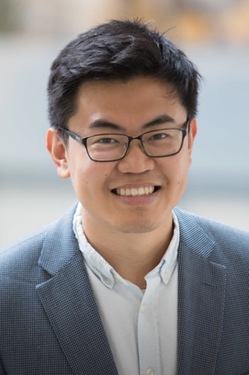
Eric Homer is an Associate Professor in the Department of Mechanical Engineering at Brigham Young University, College of Engineering. His research focuses on grain boundary structure-property relationships, mechanical behavior of polycrystalline metals, and computational materials science. PhD in Materials Science & Engineering, MIT (2010) MS in Mechanical Engineering, BYU (2006) BS in Mechanical Engineering, BYU (2006), Magna Cum Laude Homer’s research integrates materials science, mechanical engineering, and advanced computational techniques to study microstructural evolution, metallic glasses, and deformation mechanisms. His work leverages machine learning and atomistic simulations to model grain boundary dynamics and mechanical properties. Homer’s recent publications emphasize grain boundary characterization, machine learning applications in materials science, and deformation behavior of metallic glasses. Key trends include the use of digital image correlation, 5D crystallographic analysis, and hydrogen diffusion studies in nickel boundaries. He has advised multiple graduate students, including PhD candidate Stephen Cluff and MS students Casey Messick, Devin Adams, Adam Herron, Jonathan Priedeman, and David Page. Teaching responsibilities include courses such as ME EN 101: Static Systems in Mechanical Engineering ME EN 250: Materials Science ME EN 452: Intermediate Materials ME EN 556: Materials Modeling Office hours for Winter 2025 are held Mondays 1pm-2pm, Wednesdays 3pm-4pm, and Fridays 3pm-4pm.
Ankit Agrawal is a Research Professor in the Department of Electrical and Computer Engineering at Northwestern University's McCormick School of Engineering and Applied Science. He also holds an Honorary Professor position at Amity University in India. With over 200 peer-reviewed publications (100+ as first/last author), 15,000+ citations (h-index: 50+), and 75+ invited/keynote talks, he is a leading researcher at the intersection of artificial intelligence and materials science. His work spans multiple disciplines with significant contributions to both theoretical frameworks and practical applications. Ankit earned his Ph.D. in Computer Science with a minor in Bioinformatics and Computational Biology from Iowa State University (2006-2009), followed by a B.Tech. in Computer Science and Engineering from the Indian Institute of Technology, Roorkee (2002-2006). His academic journey progressed from Graduate Assistant at Iowa State to Postdoctoral Fellow at Northwestern, eventually leading to his current position as Research Professor. Dr. Agrawal's research focuses on Artificial Intelligence, High Performance Data Mining, Materials Informatics, Healthcare Informatics, Social Media Analytics, and Bioinformatics. His work bridges computational methods with domain-specific applications, particularly in developing AI-driven approaches for materials discovery, healthcare analytics, and social media analysis. He has pioneered techniques for materials property prediction using deep learning, microstructure optimization, and AI-driven nanocombinatorics for accelerated structural characterization. His extensive publication record demonstrates a clear trajectory toward increasingly sophisticated AI applications in materials science, with recent work focusing on hybrid AI models (combining LLMs with graph neural networks), structure-aware transfer learning, and inverse design frameworks. The publications reveal a strong emphasis on practical applications that bridge the gap between computational prediction and experimental validation in materials science. Featured in Stanford/Elsevier's list of top 2% scientists worldwide (09/2024) Named a Top Scholar by ScholarGPS for being in top 0.5% of scholars worldwide in machine learning, deep learning, and informatics (07/2024) Dr. Agrawal has secured substantial research funding as PI or Co-PI on over 20 projects totaling millions of dollars from prestigious agencies including NSF, DOE, NIST, DARPA, and industry partners like Toyota. His current projects include the Center for Hierarchical Materials Design (CHiMaD) Phase III, AI-Driven Nanocombinatorics for Accelerated Structural Characterization, and Explainable AI for Science and Engineering (XAISE). He has also developed multiple software tools that have advanced the field of materials informatics. As a key contributor to Northwestern's Center for Nanocombinatorics and the Center for Hierarchical Materials Design, Dr. Agrawal leads interdisciplinary teams that integrate AI expertise with domain knowledge in materials science. His work has established important frameworks for data-driven materials discovery and has been instrumental in advancing the 'fourth paradigm' of science in materials research through informatics and big data approaches.
Yusuf ÖZTÜRK is an Assistant Professor at the Department of Electrical and Electronic Engineering at Antalya Bilim University since September 2017. He earned his B.Sc., M.Sc., and Ph.D. in Electrical and Electronics Engineering from Ankara University in 1997, 2002, and 2014, respectively. His research focuses on metamaterials , photonic devices , laser physics , image processing , and machine learning applications in industrial systems . Education: Ankara University (B.Sc., M.Sc., Ph.D.) Research Themes: Electromagnetic wave control, metamaterial design, laser optimization, predictive maintenance Recent publications highlight his interdisciplinary work, including: Renewable energy applications (solar power for rural regions) Machine learning for industrial power overload prediction Advanced laser systems (Cr:LiSAF, Cr:LiCAF) with tunable wavelength operations Metamaterial modeling for multi-band electromagnetic absorption
Felix Binkowski is a researcher at the Zuse Institute Berlin within the Modeling and Simulation of Complex Processes department and Computational Nano Optics group. His work focuses on computational methods for photonic systems and quantum technologies. Position: Researcher Email: binkowski@zib.de Research Interests include: modal analysis of nanophotonic devices, resonance phenomena in non-Hermitian systems, Purcell effect optimization for quantum emitters, and application of Riesz projections to eigenvalue problems. His projects span from theoretical developments to experimental validation of optical materials. Key methodologies: AAA rational approximation, Riesz projections, Gaussian process optimization Application areas: photovoltaics, nanolasers, plasmonic systems Recent Publications (2024-2025) demonstrate expertise in: computational resonance extraction, pole-zero analysis of photonic systems, and uncertainty-guided design optimization. Notable works include software frameworks for resonance expansion (RPExpand) and studies on Purcell enhancement in 2D material-based nanoresonators. Education includes a doctoral degree (2023) from Freie Universität Berlin under Christof Schütte, and a Master's (2017) from Technische Universität Berlin with advisors Jörg Liesen and Martin Weiser.
Emil Vainio is a Research Fellow at the Faculty of Science and Engineering, Åbo Akademi University. His work focuses on high-temperature corrosion, biomass combustion, and sustainable energy technologies, contributing to the UN Sustainable Development Goals related to clean energy and environmental sustainability. University: Åbo Akademi University School: Faculty of Science and Engineering Rank: Research Fellow His research explores corrosion mechanisms in energy systems, particularly in biomass and waste combustion, emphasizing the role of alkali chlorides, sulfuric acid, and hygroscopic salts. He develops innovative monitoring techniques (e.g., linear polarization resistance) and investigates chemical looping combustion and NOx emission reduction. Recent publications (2022–2025) highlight his expertise in calcium chloride behavior, ammonium chloride corrosion, and sustainable extraction of critical metals from e-waste. His work bridges experimental studies with thermodynamic modeling, addressing both industrial and environmental challenges. Projects like GLCE (Greener and Low-Carbon Extraction) involve collaborations across institutions, focusing on e-waste recycling and energy recovery. While no specific scientific awards are listed, his contributions to combustion technologies and material science are evident in peer-reviewed articles and conference participation.
Juan Francisco Bada Juarez is a Scientist at the École Polytechnique Fédérale de Lausanne (EPFL), affiliated with the Prof. Dal Peraro Group within the Institute of Bioengineering (IBI-SV). His research focuses on structural biology, membrane proteins, and nanopore technology, particularly leveraging lipid-based systems like lipodisq nanoparticles for protein stabilization and drug delivery. He contributes to innovative methods for detergent-free membrane protein extraction and high-resolution structural characterization. His work integrates experimental and computational approaches, including single-molecule detection with biological nanopores and deep learning-assisted analysis. Key projects involve engineering aerolysin-based nanopores for biosensing, dissecting membrane association mechanisms of pore-forming toxins, and developing light-sensitive membrane proteins for dynamic studies. He is based at EPFL’s School of Basic Sciences, contributing to interdisciplinary research at the intersection of biophysics and nanotechnology. Juan’s lab investigates applications of structural biology to antimicrobial peptides, drug delivery systems, and protein engineering, with a focus on maintaining protein functionality in native-like environments. His research has advanced understanding of protein-membrane interactions, enabling breakthroughs in biomolecular detection and therapeutic delivery mechanisms.
Dr. Marine Reynaud is a Research Team Leader at CIC energiGUNE , specializing in electrochemical energy storage materials. She holds a Diplôme d'Ingénieur from Chimie ParisTech and a Master's degree in Chemistry from UPMC-ENSCP, followed by a cum laude Ph.D. in Materials Science from UPJV under Prof. Jean-Marie Tarascon. Scientific Focus : Development of polyanionic electrode materials for Li/Na-ion batteries Expertise : X-ray/neutron diffraction, electron microscopy, solid-state NMR, Mössbauer spectroscopy Contributions : Co-developer of the FAULTS software for microstructural defect analysis Her research explores structure-(micro)structure-electrochemistry correlations, reaction mechanisms, and accelerated materials discovery. She has secured prestigious grants including the Juan de la Cierva fellowship and supervised 12+ students. Scientific Recognition : Prix de thèse 2014 (UPJV) Finalist Premio Jóvenes Investigadores IUMA (2017) Prix du Centenaire Chimie ParisTech (2010)
Professor Richard Catlow is a distinguished Research Professor in the Department of Chemistry at University College London (UCL), where he has held various leadership roles including Dean of the Faculty of Mathematical and Physical Sciences (2007-2014) and Head of the Chemistry Department (2002-2007). His career spans over four decades, with significant contributions to computational and experimental chemistry across multiple institutions including The Royal Institution and Keele University. Professor Catlow's educational background includes: Doctor of Philosophy from the University of Oxford (1974) Bachelor of Arts (Honours) from the University of Oxford (1970) Professor Catlow's research focuses on computational and experimental studies of complex inorganic materials, with particular expertise in microporous and oxide catalysts, ionic conductors, electronic ceramics, and silicate minerals. He has pioneered embedded cluster methodologies for studying catalytic reactions and has made significant contributions to understanding material properties at the atomic level through the integration of computational techniques with experimental methods including neutron scattering and synchrotron radiation. Analysis of Professor Catlow's recent publications reveals a strong focus on sustainable chemistry, catalysis for energy applications, and the integration of computational and experimental approaches. His work spans methane conversion to ethanol, CO2 reduction to methanol, and deNOx catalysis, reflecting his commitment to addressing global energy and environmental challenges through fundamental chemical research. Professor Catlow has received numerous prestigious awards for his contributions to chemistry: Fellowship of the Royal Society (2004) Liversidge Medal (2008) Royal Society of Chemistry Interdisciplinary Medal (1998) Royal Society of Chemistry Medal (1992) Fellow of the Royal Society of Chemistry (1990) Fellow of the Institute of Physics UK (1995) Honorary Member of the Materials Research Society of India (1996) Throughout his career, Professor Catlow has secured substantial research funding for projects related to computational chemistry, materials science, and catalysis, supporting both experimental and theoretical work in his research group. He has led major research initiatives including his role as Director of the Davy Faraday Research Laboratory at The Royal Institution (1998-2007) and has maintained extensive collaborations across the UK and internationally. Professor Catlow has led several prominent research teams throughout his career, including his long-standing group at The Royal Institution and his current research team at UCL. His work aligns with Sustainable Development Goals 7 (Affordable and Clean Energy) and 13 (Climate Action), demonstrating his commitment to applying fundamental chemical research to address pressing global challenges. With over 1,080 publications, he remains an active and influential researcher in the field of computational and experimental chemistry.
Azeem Ahmad is a Researcher at the Department of Physics and Technology , UiT The Arctic University of Norway. His work focuses on advanced imaging techniques in ultrasound, microwaves, and optics , particularly in the areas of quantitative phase microscopy , acoustic microscopy , and photonic chip engineering . Key research areas: Quantitative phase imaging, acoustic wave modeling, biomedical diagnostics, interferometry, machine learning integration, and photonic device optimization Collaborative projects: Developments in label-free histology, super-resolution microscopy, and noise reduction algorithms Recent publications: 2025 studies on subsurface damage detection in ceramics and acoustic transducer modeling His work bridges optical engineering , biomedical applications , and computational imaging , with affiliations to the Ultrasound, Microwaves and Optics and Optical Nanoscopy research groups.
Professor Tomokatsu Hayakawa is a faculty member in the Department of Life and Applied Chemistry, Environmental Ceramics Program at Nagoya Institute of Technology's Engineering Major. He holds a Master of Engineering (1994) and Doctor of Arts (1997) from Saitama University, where he also completed his undergraduate studies in Engineering (1992). His research focuses on optical functional materials, particularly in the areas of: Semiconductors and optical properties of condensed matter Functional solid state chemistry Inorganic compounds and materials chemistry Nanotechnology applications in optical materials Professor Hayakawa's recent publications reveal a strong emphasis on perovskite materials, glass-ceramics, and phosphor development, with particular attention to rare earth doping, bandgap engineering, and optical property characterization. His work demonstrates significant international collaboration, especially with French and German institutions. His scientific recognition includes the Young Scientist Award from the Japanese Society of Applied Physics (2002). He has secured multiple research grants, including the Special International Cooperative Research Program and International Joint Research Projects. Professor Hayakawa serves as Editor-in-chief of New Glass magazine at the New Glass Forum and teaches graduate courses in Advanced Nano-Photonics Science and Advanced Physical Properties of Nano-Photomaterials, along with undergraduate courses in Ceramics Basic Science and Ceramic nanostructure design.
Wenhao Sun is an Assistant Professor in the Department of Materials Science & Engineering at the University of Michigan, where he leads research at the intersection of computational physics and materials synthesis. His work addresses fundamental bottlenecks in the computational materials design pipeline through advanced thermodynamic modeling and high-throughput simulations. Education: BS in Materials Science and Engineering, Northwestern University (2010) BS in Engineering Sciences and Applied Mathematics, Northwestern University (2010) PhD in Materials Science and Engineering, Massachusetts Institute of Technology (2016) Research Interests: Dr. Sun's primary focus is developing predictive theories for inorganic materials synthesis , particularly non-equilibrium crystallization pathways that enable synthesis of computationally predicted materials. His group employs high-throughput density functional theory , applied thermodynamics , and materials informatics to map stability landscapes across broad chemical spaces. This work directly supports the U.S. Materials Genome Initiative's goal of accelerating materials discovery through fundamental insights into synthesis-structure-property relationships. Research Trends: Analysis of Dr. Sun's 2024-2025 publications reveals three dominant themes: (1) geometric analysis of high-dimensional phase diagrams for stability prediction, (2) machine learning applications for synthesis pathway optimization, and (3) thermodynamic engineering of nitride-based materials for energy applications. His work consistently bridges computational prediction with experimental validation challenges. Awards: Karl F. and Patricia J. Betz Family Faculty Scholar Advising and Grants: Dr. Sun actively recruits graduate students and postdocs for his research group, with current projects funded through federal grants supporting computational materials design initiatives. His advising philosophy emphasizes interdisciplinary training in both computational methods and experimental materials synthesis. Laboratory: The Whsun Research Group operates as a computational hub within Michigan's Materials Science & Engineering department, collaborating extensively with experimental groups at Lawrence Berkeley National Laboratory and other institutions to validate theoretical predictions through robotic synthesis platforms.
Catalin Lisa serves as Head of Works at the Department of Chemical Engineering within the Faculty of Chemical Engineering and Environmental Protection at Gheorghe Asachi Technical University of Iasi. Holding a doctorate in chemical engineering (2010) with a focus on AI applications in polymerization, he has maintained continuous academic engagement since 1988 through teaching and research roles. His educational background includes an engineering degree in Macromolecular Compounds Technology (1988) and doctoral studies at the same institution. Research interests span mass/heat/momentum transfer , thermodynamic property evaluation , and pioneering AI applications in chemical engineering and ophthalmology . His publication record demonstrates consistent output in fluid dynamics, mixture thermodynamics, and medical AI applications. Recent scholarly contributions show increasing focus on medical diagnostics (particularly glaucoma progression modeling) while maintaining core chemical engineering research. His work integrates experimental data with neural networks and machine learning across domains from polymer science to ophthalmology. Led 22 competitive grants (2 as director) with significant research impact: 65 publications (43 ISI), 6 patents, 174+ Web of Science citations, and h-index of 10. Active in academic service as member of admission committees, scientific event organizers, and faculty electoral commissions. Maintains modern teaching practices through digital course materials (2024 e-learning modules for Hydrodynamic Operations) and laboratory innovations including new 2024 experiments on solid density measurement and aerodynamic profiling. Supervises course projects in chemical reactor design and process scaling.
Silvia Curteanu is a Professor at the Faculty of Chemical Engineering and Environmental Protection of the Gheorghe Asachi Technical University of Iasi, Romania. Her academic career spans over 40 years, with roles ranging from researcher to PhD supervisor in chemical engineering and applied informatics. She holds a PhD in Chemical Engineering (1998) and a License in Chemical Engineering (1981). University: Gheorghe Asachi Technical University of Iasi School: Faculty of Chemical Engineering and Environmental Protection Department: Department of Chemical Engineering Academic Rank: Professor Research Interests: Specializing in artificial intelligence applications for chemical processes, Silvia Curteanu has developed methodologies using neural networks , genetic algorithms , and hybrid models for tasks like process modeling, optimization, and inverse problem solving. Her work addresses polymerization , bio-processes , electrochemical treatments , and molecular design , with notable contributions to soft sensors and multi-objective optimization . Scientific Output: With over 192 papers (133 ISI-indexed), 23 books/chapters, 14 patents, and 32 research grants, her articles focus on neural network topology , biologically inspired algorithms , and chemical process optimization . Her work has been published in journals like Journal of Chemical Engineering , Environmental Science and Pollution Research , and Applied Soft Computing . Scientific Awards: Best Paper Award (2016) for 'Performance Comparison of Different Regression Methods for a Polymerization Process with Adaptive Sampling' Grants & Projects: 32 research grants, including international collaborations 11 projects as director (1 international) Advising: Acted as PhD supervisor since 2005, mentoring students in chemical engineering and AI applications. Her laboratory collaborates with institutions like Oxford University and Aristotle University of Thessaloniki.



.jpeg)