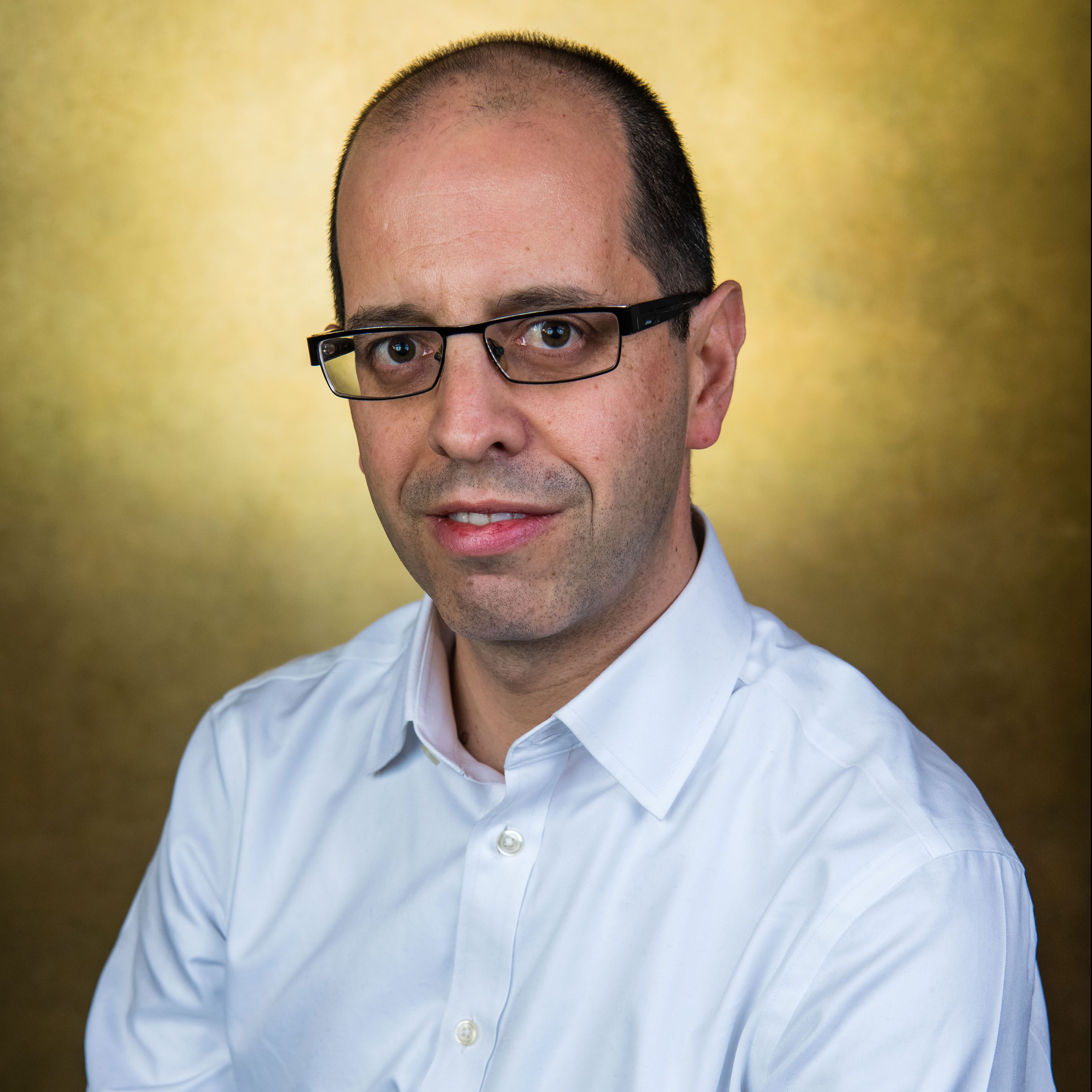
Dr Richard Collins is a Senior Lecturer in Water Engineering at the University of Sheffield , affiliated with the School of Mechanical, Aerospace and Civil Engineering. His research focuses on hydraulic transients , pipeline integrity , and smart water infrastructure . Graduated with an Aerospace Engineering degree (2005) and PhD in Materials and Mechanical Engineering (2009) Current research explores pressure transients , leak detection , and autonomous robotic systems for pipeline inspection Projects include fatigue analysis , biofilm mobilisation , and ultrasound-based pipe assessment His publications emphasize cast iron pipe fatigue , acoustic leak detection , and transient-induced contamination . Funded by RCUK and Datatecnics , his work bridges mechanical engineering and civil infrastructure challenges.
Dr James Shucksmith is a Senior Lecturer in Water Engineering at the School of Mechanical, Aerospace and Civil Engineering, University of Sheffield. After completing his undergraduate degree and PhD at the same department, he joined the academic staff in 2010 following a KTP associate role with Yorkshire Water. His research focuses on urban flooding hydrodynamics, water quality modeling, and sustainable drainage systems. Co-director of EPSRC Centre for Doctoral Training in Water Infrastructure and Resilience Current projects: Real Time Abstraction Management (with Severn Trent Water), Centaur FloodInteract Research interests include: Urban flood hydrodynamics and drainage-surface flow interactions Water quality forecasting tools for surface water abstraction Development of local real-time control systems for urban drainage Experimental validation of flood models using PIV measurements His publications (2010-2025) cover topics like contaminant transport in flooded sewer systems, longitudinal dispersion modeling, and real-time control optimization. Recent work focuses on data-driven approaches for Cryptosporidium prediction and E. coli forecasting.
Prof. Monika Sester is a distinguished Professor and Executive Director of the Institute of Cartography and Geoinformatics at Leibniz University Hannover, within the Faculty of Civil Engineering and Geodetic Science. She also serves as Spokesperson for the Leibniz Research Center FZ:GEO and holds multiple leadership roles including Faculty Information Officer (FIO) for the Faculty of Civil Engineering and Geodetic Science, Ombudsman for Good Scientific Practice, and Exchange Coordinator for Geodetic Science and Geoinformatics. Her research focuses on the intersection of geospatial information science, cartography, and urban mobility. Prof. Sester's work spans several key areas: Geospatial data processing and analysis Cartographic representation and visualization Urban mobility and transportation systems Spatial data uncertainty and quality Digital mapping technologies and applications Historical map analysis and interpretation Prof. Sester's recent publications demonstrate a strong focus on applying advanced computational techniques to geospatial problems. Her work shows increasing emphasis on machine learning applications for map analysis, urban mobility optimization, and 3D spatial modeling. She has been particularly active in researching applications of deep learning for historical map interpretation, urban mobility patterns, and spatial uncertainty visualization. Her contributions to the field have been recognized through leadership positions in major research initiatives: Executive Director, Institute of Cartography and Geoinformatics Spokesperson, Leibniz Research Center FZ:GEO Faculty Information Officer, Faculty of Civil Engineering and Geodetic Science Ombudsman for Good Scientific Practice Member of multiple academic committees including the Admissions and Examination Board Prof. Sester actively collaborates with students and researchers across multiple projects focused on geospatial information systems, urban mobility, and cartographic visualization. Her leadership extends to guiding research directions within the Leibniz Research Center FZ:GEO, which brings together interdisciplinary expertise to address complex spatial challenges.
Maarten Bassier is an Assistant Professor (tenure track) at KU Leuven, affiliated with the Department of Civil Engineering within the Faculty of Engineering Technology. He is based at the Geomatics unit operating at the Ghent and Aalst Campuses. His academic profile combines research, teaching, and institutional service, with significant contributions to the field of digital construction technologies. As senior academic staff, he serves on both the Council of the Faculty of Engineering Technology and the Civil Engineering Department Council, actively participating in institutional governance while maintaining a robust research program focused on Scan-to-BIM methodologies and geospatial applications in construction. Dr. Bassier's research centers on Scan-to-BIM methodologies, which involve converting 3D scans of existing buildings into Building Information Models. His work bridges geomatics, computer vision, and civil engineering, with applications in construction progress monitoring, infrastructure inspection, and heritage documentation. He applies machine learning techniques to automate aspects of the modeling process, particularly semantic segmentation of point clouds and integration of UAV (drone) data. His research increasingly incorporates deep learning approaches for object detection, segmentation, and completion in complex built environments, with practical applications spanning road construction, bridge inspections, and electrical substation modeling. His interdisciplinary approach connects civil engineering with computer science to solve practical construction challenges through digital innovation. Bassier's recent publication record demonstrates a strong focus on automating the Scan-to-BIM process through advanced computational techniques. His work spans multiple application domains while maintaining a consistent methodological thread of integrating sensing technologies with semantic understanding of construction environments. The trajectory of his research shows increasing sophistication in machine learning applications, moving from basic point cloud processing to complex semantic understanding and automated model generation. His publications appear in high-impact journals across civil engineering, remote sensing, and computer vision domains, reflecting the interdisciplinary nature of his work. SESAME - Semantic Segmentation of Electrical Substations and Derived Models for Engineering (2024-2026) - Promotor UAV-assisted bridge inspections (2022-2027) - Co-promotor XR-empowered dynamic reality modeling for AECO applications (2021-2026) - Co-promotor Digitization in road construction: automating as-built models (2020-2026) - Co-promotor SCAN-to-BIM Automation of as-built BIM production through digitization and machine learning (2020-2025) - Co-promotor As a member of the Division Digital and Sustainable Civil Engineering and the Subdivision Geomatics Ghent, Dr. Bassier contributes to KU Leuven's research ecosystem focused on digital transformation in civil engineering. His teaching portfolio includes courses on BIM, industrial measurements, Scan-to-BIM, 3D modeling, and geomatics, preparing the next generation of civil engineers for the digital construction landscape. His work represents the cutting edge of digital construction technologies, with practical applications that address real-world challenges in infrastructure development and maintenance.
Ahed Alboody is a Professor and Researcher at HESAM University Group, specifically affiliated with CESI and the Digital Innovation Laboratory for Businesses and Learning to Support Territorial Competitiveness (LINEACT) in Nice, France. He holds a specialized doctorate in computer science from the University of Toulouse 3 Paul Sabatier and has extensive experience in deep learning, computer vision, and remote sensing applications. His work bridges academic research with practical applications in environmental monitoring, human-computer interaction, and spatial reasoning systems. Education: Specialized Doctorate in Computer Science, University of Toulouse 3 Paul Sabatier (IRIT), 2011 Master 2 Research in Electronics, Automation and Systems Engineering, National Polytechnic Institute of Toulouse (INPT-ENSEEIHT), National School of Civil Aviation (ENAC), ISAE-SUPAERO, and University of Toulouse III, 2006 Engineering Diploma in Electronics and Telecommunications, University of Tishreen (Techrine), Lattakia, Syria, 2002-2003 Undergraduate studies in Electronics and Telecommunications, University of Tishreen (Techrine), Lattakia, Syria, 2002 Alboody's research focuses on advanced applications of deep learning and computer vision, particularly in the areas of 3D hand gesture recognition, hyperspectral and multispectral image processing, and semantic segmentation. His work combines theoretical advancements in mixture-of-experts architectures with practical applications in remote sensing and environmental monitoring. He has pioneered approaches in frugal learning and zero-shot learning for image segmentation tasks, with applications in digital twins and collaborative robot environments. His publication record demonstrates a clear evolution from foundational work in spatial reasoning systems (2008-2012) to current cutting-edge research in deep learning architectures for 3D gesture recognition and hyperspectral image analysis. Recent publications (2022-2024) show a strong focus on mixture-of-experts transformers, parallel architectures for efficient computation, and applications in environmental monitoring with drones and satellite imagery. Alboody actively supervises Master's level research projects (two M2 level projects mentioned) and serves as a reviewer for prestigious journals including IEEE Transactions on Neural Networks and Learning Systems and IEEE Transactions on Geoscience and Remote Sensing. He has also been a member of the Technical Program Committee for international conferences on databases and knowledge applications. His laboratory work centers around the Digital Innovation Laboratory for Businesses and Learning to Support Territorial Competitiveness (LINEACT), where he leads research in engineering and digital tools. Current projects include developing graph neural networks for 3D hand gesture recognition using depth and skeleton data, and implementing frugal learning approaches for semantic image segmentation in collaborative robot environments.
Jean-Daniel Penot is a Researcher at CESI's Research and Innovation Department , with expertise in additive manufacturing, materials science, and industrial integration. His work bridges advanced manufacturing technologies with environmental sustainability and educational innovation. Doctorate in Materials Physics (2010) Engineering Degree in Physics (2007) Research Master in Optoelectronics (2007) Penot's research spans Additive Manufacturing and its applications in automotive, nuclear, and construction sectors. He focuses on Laser-Material Interaction , Machine Learning for process optimization, and Sustainable Engineering through life cycle assessments and geopolymer applications. His recent publications emphasize BIM , AM Modular Plants , and Defect Analysis in 3D-printed metals. Penot leads France Additive initiatives and contributes to International Standards as a board member. Penot supervises PhD students including Maryam Houhou and Amal Khabouchi , with a focus on Industrial Security and Energy Transitions . His projects integrate Thermal Comfort , Ultrasonic Inspection , and Quality Assurance in additive manufacturing systems.
Julia K. Green is an Assistant Professor at the University of Arizona , specializing in environmental science. Her research focuses on biosphere-atmosphere interactions and linkages between carbon, water, and energy fluxes through vegetation activity. Ph.D. in Environmental Engineering, Columbia University M.Phil. in Earth and Environmental Engineering, Columbia University MS in Environmental Engineering, Columbia University BS in Civil Engineering, Tufts University Green employs big datasets from climate models, remote sensing, flux towers, and field measurements to study vegetation stress and global change impacts. Her work intersects climate change, drought impacts, and critical zone science. She can be contacted via email at juliakgreen@arizona.edu , and her lab's research emphasizes data-driven approaches using machine learning techniques.
Professor Vasilis Sarhosis is a Professor of Resilient Structures and Infrastructure at the School of Civil Engineering, University of Leeds, within the Faculty of Engineering and Physical Sciences. He also serves as a visiting Professor at Southeast University, Nanjing, China, and is a CDRI (Coalition for Disaster Resilience Infrastructure) Fellow. His academic credentials include multiple degrees from the University of Leeds: a Ph.D. in Computational modelling of low bond strength masonry (2012), an MSc in Sustainable Waste Management (2006), an MSc in Infrastructure Asset Maintenance and Management (2004), and a BEng in Civil Engineering (2003). Professor Sarhosis's research focuses on understanding the long-term behaviour of existing masonry infrastructure and historic structures. His work encompasses both 'blue skies' research and 'near-to-market' development, with a strong translational focus. His research group investigates inspection, monitoring and condition appraisal of masonry infrastructure; structural assessment; and maintenance, repair and rehabilitation of masonry infrastructure. His expertise spans machine learning, artificial intelligence, structural health monitoring, sensor technology, digital twins, cultural heritage preservation, and masonry structures. Analysis of his recent publications (2021-2023) reveals a strong focus on computational modeling of masonry structures, particularly using discrete element methods. His work integrates artificial intelligence and machine learning techniques for structural health monitoring and assessment. Key research areas include seismic performance of masonry structures, digital twin technology for infrastructure assessment, and the development of smart materials for structural monitoring and rehabilitation. His work frequently addresses heritage conservation challenges and disaster resilience for masonry infrastructure. Scientific Awards: International Partnership Award, University of Leeds (2021) Queen's Anniversary Prize for Higher and Further Education (2013) First price award for Commercialisation of Research: Project sDNA (2014) Professor Sarhosis has successfully secured significant research funding including EPSRC grants, UKRI HEIF funding, MSCA-IF projects, and British Academy GCRF funding. He serves as Subject Editor for Engineering Failure Analysis (Elsevier) and Associate Editor for the International Journal of Masonry Research and Innovation. He has examined numerous PhD theses at institutions worldwide including Heriot-Watt University, Newcastle University, Politecnico di Milano, and ETH-Zurich. His professional memberships include Fellow of the Institution of Civil Engineers (FICE), Fellow of the Institute of Mechanical Engineers (FIMEchE), and Chartered Engineer (CEng).
Chrysanthos Maraveas is an Assistant Professor at the Department of Technology and Natural Resources Management & Agricultural Engineering in the School of Environment and Agricultural Engineering at the Agricultural University of Athens since 2022. He earned his PhD in Structural Engineering from the University of Manchester and has held postdoctoral research positions at the University of Liège (EU-funded) and the University of Patras (Greek Ministry of Development-funded). Research Interests : Applications of AI and quantum computing in agriculture Sustainable materials and biodegradable polymers from agricultural waste Internet of Things (IoT) for greenhouse optimization Structural durability and corrosion resistance in agricultural environments Plastic waste management in agrifood systems 4D printing for sustainable agricultural plastics Scientific Recognition : Ranked in the top 2% of scientists worldwide by Stanford University (based on citations and h-index) Publications focus on: Cybersecurity in Agriculture 4.0/5.0 Smart sensors and edge computing for resource management Biopolymer innovations and nanotechnology Structural analysis of agricultural systems Sustainable construction materials from agro-waste Fire resistance in steel and composite structures
Rui Pedro Carvalho Lima de Sousa is a postdoctoral researcher at the Textile Science and Technology Center (2C2T) of the University of Minho. His career focuses on organic-inorganic hybrid materials for sensors and advanced textile applications, with expertise in sol-gel chemistry , electrospinning , and optical sensing . PhD in Applied Chemistry (University of Minho, 2023), thesis: "Sol-gel based optical sensors for monitoring of biocides and other analytes" MSc in Chemical Characterization and Analysis Techniques (2018), BSc in Biochemistry (2016) Research interests span: Development of smart textile materials for filtration and adsorption via electrospinning Biocide detection using quinoline and hydrazone derivatives Hybrid sol-gel matrices for corrosion protection and concrete durability monitoring Integration of machine learning in sensor design Recent publications highlight work in NIR fluorescent probes , ion chemosensors , and environmental monitoring applications. Key collaborations include projects with the Institute of Systems Engineering and Computers (INESC) and University of Trás-os-Montes . Scientific recognitions : Best Doctoral Thesis in Chemistry (PYCA Award) FlashChem Photography Contest (2024) Advising includes mentoring students like Oscar Martinez-Rico and Joana Rocha on electrospun membrane projects, with past contributions to organic-inorganic hybrid material research.
Dr. Wang Yuzhou is an Assistant Professor in the Zachry Department of Civil and Environmental Engineering at Texas A&M University. He completed his Ph.D. in Environmental Engineering from the University of Washington in 2023 and holds dual bachelor's degrees from Tsinghua University in Environmental Engineering and Business Administration. His educational background includes: Ph.D., Environmental Engineering, University of Washington (2023) B.E., Environmental Engineering, Tsinghua University (2017) B.A., Business Administration, Tsinghua University (2017) Dr. Wang's research focuses on air pollution, air quality modeling, and environmental justice. His work examines racial-ethnic disparities in air pollution exposure, particularly for PM2.5, and develops data-driven models to address environmental, climate, and health impacts from emission activities. He has made significant contributions to understanding how different emission-reduction approaches affect national racial-ethnic exposure disparities, with findings published in top journals like Science and PNAS. His research also extends to environmental inequality in China and spatial decomposition of air pollution across the United States. Dr. Wang's publications reveal that location-specific emission reduction strategies can eliminate national racial-ethnic disparities with only modest emission reductions (approximately 1% of total emissions), whereas current regulatory approaches are substantially less effective. His work demonstrates that environmental racism legacies require fundamentally different regulatory frameworks that center overburdened communities. His research has important implications for environmental policy, particularly for the Biden administration's Justice40 Initiative. Dr. Wang has shown that the current method for identifying disadvantaged communities (CEJST) will only eliminate disparities by income but not racial-ethnic disparities, highlighting the need for race-conscious approaches to environmental justice. Dr. Wang can be reached at yuzhouw@tamu.edu for research collaborations and academic inquiries.
Yafeng Yin is Professor of Civil and Environmental Engineering and Professor of Industrial and Operations Engineering at the University of Michigan, College of Engineering, where he serves as Donald Malloure Department Chair of Civil and Environmental Engineering and holds the Donald Cleveland Collegiate Professorship in Engineering. His educational background includes: PhD in Civil Engineering from University of Tokyo (2002) ME in Civil Engineering from Tsinghua University (1996) BE in Environmental Engineering from Tsinghua University (1994) BE in Structural Engineering from Tsinghua University (1994) Dr. Yin's research centers on developing sustainable and economically efficient transportation systems through analysis, modeling, design, and optimization. He investigates how emerging technologies—including connected/automated vehicles, electric vehicles, drones, and mobile sensing—impact transportation demand and supply. His work extends to interdependencies between transportation, power, and communications networks in urban infrastructure systems. Key focus areas include mobility services, ride-sourcing markets, traffic management, and integration of artificial intelligence in transportation. His recent publications (2023-2025) demonstrate a pronounced shift toward leveraging large language models and agent-based frameworks for transportation analysis, with significant emphasis on on-demand mobility services (ride-sourcing, food delivery), traffic control with connected vehicles, and economic implications of emerging technologies. The research spans theoretical foundations in game theory and optimization to practical applications in urban settings. As director of the Lab for Innovative Mobility Systems, Dr. Yin leads interdisciplinary research developing solutions that enhance transportation efficiency, reliability, safety, and service diversity through technological integration. His work bridges theoretical modeling with real-world implementation challenges in evolving transportation ecosystems.
Professor Vanni Bucci is a faculty member at the UMass Chan Medical School in the Department of Microbiology, with an adjunct appointment at the University of Massachusetts Dartmouth. His research focuses on host-microbiome interactions through computational biology, synthetic biology, and systems biology approaches. He received education at the University of Florence (BS Environmental Engineering) and Northeastern University (MS/PhD Civil Engineering), followed by postdoctoral work at Memorial Sloan-Kettering Cancer Center. Current research spans microbiome engineering , immune modulation , and antimicrobial discovery , with recent publications on microcins, gut-brain axis dynamics, and tuberculosis microbiome interactions. Host-microbiome interactions Synthetic biology applications Computational modeling of microbiomes Antimicrobial peptide engineering His lab develops bioinformatic tools like MDITRE for microbiome prediction, while recent articles demonstrate expertise in Clostridioides difficile colonization resistance, Enterobacteriaceae inhibition, and Alzheimer's disease microbiome connections. Collaborations span institutions including Weill Cornell, NIH, and Gates Foundation. Scientific Awards & Funding NIH U01 grant ($2.9M) for intestinal barrier-targeted therapeutics Bill & Melinda Gates Foundation grant for microbiome intervention methods Department of Defense funding for ESBL-PE eradication
Daniel Barreto is a Professor at Edinburgh Napier University , specializing in Discrete Element Method (DEM) simulations and soil mechanics . His research emphasizes particle shape and size distribution effects on granular material behavior, with applications in permeability estimation, liquefaction mitigation, and nature-inspired ground engineering. Education : PhD in Soil Mechanics (Imperial College London, 2010), MSc in Soil Mechanics and Engineering Seismology (Imperial, 2005), Civil Engineering (Universidad de los Andes, 2003). Research : Focuses on DEM, grading entropy theory, and particle-scale interactions in sand-rubber mixtures, with implications for seismic isolation and sustainable soil stabilization. Awards : Royal Academy of Engineering Leverhulme Trust Fellowship COST Action Chair for Open Network on DEM Simulations (ON-DEM) Emeritus Member of Royal Society of Edinburgh Young Academy of Scotland Publications : Pioneering studies on DEM-based critical state behavior, particle breakage quantification, and permeability models for granular soils, with a 2023 Transportation Geotechnics paper on hydraulic radius applications. Collaborations : Leads ON-DEM, a global network advancing open-source DEM tools, and contributes to interdisciplinary projects involving synthetic root mimics and microbial soil interactions.
Dr. Hendrik Morgenstern serves as a Postdoc and Senior Engineer at RWTH Aachen University's Chair and Institute of Construction Management, Digital Engineering and Robotics in Construction (ICoM), where he advances digital solutions for building maintenance and construction robotics. His work focuses on integrating Building Information Modeling (BIM) with diagnostic data to optimize infrastructure lifecycle management. Morgenstern earned his B.Sc. and M.Sc. in Civil Engineering with specialization in Functional and Structural Engineering from Karlsruhe Institute of Technology (KIT), complemented by studies in Sustainable Development. He completed his Dr.-Ing. doctorate at RWTH Aachen in 2023 with research on automated maintenance planning using BIM-enriched diagnostic data. His research program centers on digitized building maintenance, BIM applications for existing structures, and robotics automation in construction. Key contributions include predictive maintenance frameworks using Bayesian inference, geopolymer material development for structural repair, and point cloud integration for as-built modeling. He emphasizes resource efficiency and data-driven decision-making across all projects. Analysis of his 15 publications (2021-2025) reveals three dominant trends: (1) Convergence of BIM with non-destructive diagnostics for predictive maintenance, (2) Development of smart materials like temperature-stable geopolymers for crack injection, and (3) Integration of robotics and AI for automated facility management. His work consistently bridges civil engineering fundamentals with computer science innovations. Morgenstern actively contributes to major research initiatives including the RoboTUNN project (awarded bauma Innovation Award 2025 for tunneling robotics) and the BIM4People consortium focused on digital transformation in construction. His work demonstrates strong industry collaboration through projects with German construction firms and participation in standards development.