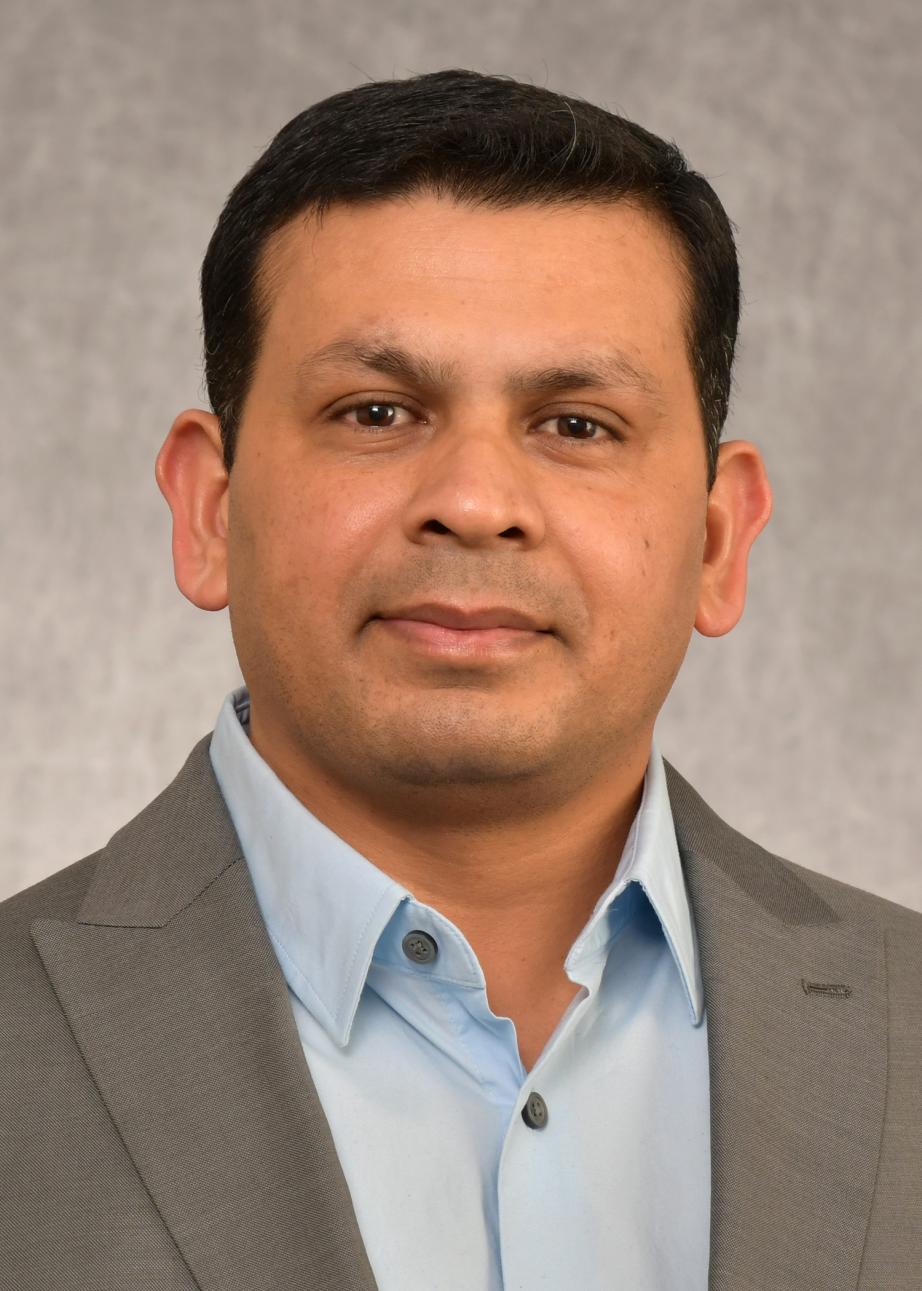
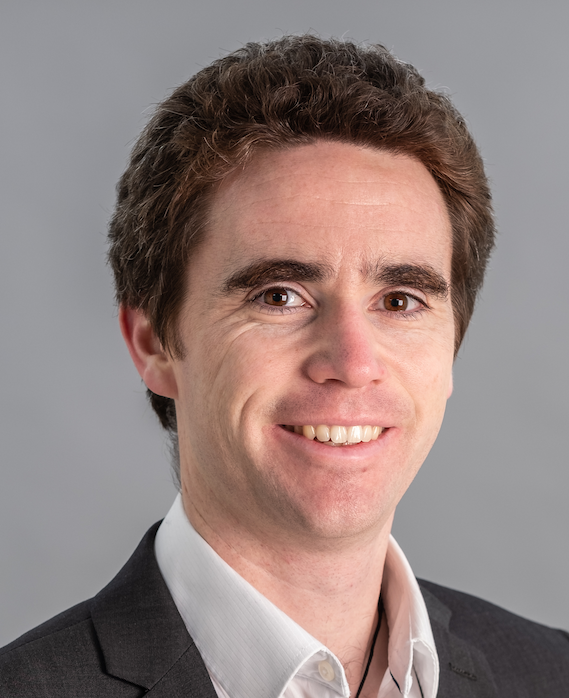
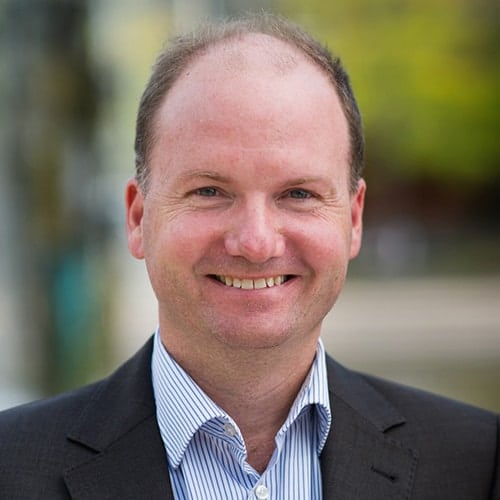
Per Møldrup is a Professor at the Department of the Built Environment, Aalborg University, within The Faculty of Engineering and Science. His research focuses on soil hydrology, environmental engineering, and geotechnical systems. He leads projects such as the Sustainable Living Lab (AAU LeadENG) and has contributed to over 448 publications. Key research areas include soil water repellency, gas diffusion in soils, and sustainable building materials. Research Highlights: Developed physics-informed neural networks for soil water retention modeling. Explored prokaryotic community influences on soil properties in natural habitats. Investigated recycled concrete aggregates for road pavements. Notable Awards: Teacher of the Year 2022, 2020, and 2014 at Aalborg University. Best Paper Award at RM4L2020 Conference. His work bridges environmental science and engineering, emphasizing sustainable solutions for soil and urban systems. He collaborates widely, contributing to projects on Greenlandic agriculture, Danish soil mapping, and anthropogenic chemical impacts.
Prof. Dr. Benjamin Burkhard is a Professor at the Institute of Earth System Sciences within the Faculty of Natural Sciences at Leibniz University Hannover. He serves as Deputy Head of the Examining Board for Landscape Sciences (MSc) and holds management responsibilities in the Physical Geography and Landscape Ecology Section. Additionally, he represents professors on the Faculty Council and the Examination Board for Geography (BSc), demonstrating his significant institutional involvement. His research spans three primary domains: physical geography and landscape ecology (focusing on mapping and analysis of landscape structures, processes and functions across different spatio-temporal scales), ecosystem services (with emphasis on modeling, quantification and mapping), and human-environmental relations (particularly indication, modeling and land use assessments). This interdisciplinary approach positions him at the forefront of environmental systems research. Prof. Burkhard's scholarly output reveals a strong focus on ecosystem services assessment methodologies, with recent publications addressing standardized ecosystem condition assessments, cultural ecosystem services valuation, and marine ecosystem services mapping. His work demonstrates a clear progression from theoretical frameworks toward practical applications for environmental management and policy-making, with increasing emphasis on participatory approaches and standardized assessment protocols. He leads numerous significant research projects including 'SMILES: Enhancing Small-Medium Islands resilience by securing the sustainability of Ecosystem Services' (2022-2026), 'SELINA: Science for Evidence-based and sustainable decisions about natural capital' (2022-2027), and long-term erosion monitoring projects in Lower Saxony. These projects reflect his commitment to addressing pressing environmental challenges through rigorous scientific investigation. Prof. Burkhard actively contributes to developing methodological frameworks for ecosystem services assessment, participating in European research networks and initiatives that bridge the gap between scientific research and practical environmental management applications. His work has established him as a key contributor to the evolving field of ecosystem services science and its application in policy contexts.
Prof. Hande Demirel is a Professor at the Department of Geomatics Engineering, Istanbul Technical University. She holds a PhD in Geoinformatics from Technical University of Berlin (2002). Her academic career includes roles as Associate Professor (2008–2019) and Assistant Professor (2004–2008) at ITU, alongside research at the European Commission Joint Research Center (2011–2014). She specializes in GIS applications, remote sensing, photogrammetry, and spatial data analysis. Education: B.Sc. (1996) and M.Sc. (1998) in Geodesy & Photogrammetry from ITU, followed by a PhD in Geoinformatics (2002) from TU Berlin. Awards include Best PhD Award (2003), DAAD Scholarship (2007), and Best Poster Award (2016). Research focuses on transportation accessibility, climate change impacts, 3D spatial modeling, and BIM-GIS integration. She leads projects like 'Building Information Model Based Fire Evacuation Simulation' (TUBITAK-funded) and 'Spatio-Temporal Accessibility Analysis in Istanbul'. Key contributions include over 30 peer-reviewed publications, including works on land use prediction, ship detection via AI, and indoor navigation systems. She advises numerous graduate students, with 15+ theses supervised since 2009. Active in professional societies including the German and American Associations for Remote Sensing.
Md Liakat Ali is an Associate Professor in the Department of Computer Science and Physics at Rider University, New Jersey. He holds a Ph.D. in Computer Science from Pace University and multiple Master's degrees from Blekinge Institute of Technology and International Islamic University Chittagong. His academic career includes roles at Rider University since 2018, prior positions at Caldwell University, Rowan University, and adjunct roles at several institutions. His research focuses on Machine Learning, Artificial Intelligence, Behavioral Biometrics, Cybersecurity, and Data Science. Notable contributions include studies on keystroke dynamics for authentication, phishing detection, and cybersecurity threats. He has received grants including an NSF award (Co-PI) for STEM education and multiple Best Paper Awards at IEEE conferences (2022, 2021, 2018, 2017). Ali has authored/co-authored over 40 publications, including a book on wireless security and journals in Electronics , IEEE Transactions , and conference proceedings. His work spans fraud detection, healthcare analytics, and blockchain security. He has led presentations on topics like biometrics, neural networks, and cybersecurity at international venues such as CVCI, IVSP, and IEEE conferences. Education: Ph.D., Computer Science, Pace University, New York M.S., Electrical Engineering, Blekinge Institute of Technology, Sweden B.S., Computer Science & Engineering, International Islamic University Chittagong His grants include NSF funding for STEM education initiatives and a Rider University grant for online course development. He has collaborated on projects like CUE-T to broaden computing participation and enhance active learning strategies. Ali’s lab focuses on cybersecurity, biometric systems, and machine learning applications. His research teams address challenges in fraud detection, medical diagnosis, and secure software development, reflecting his interdisciplinary approach to technological innovation.
Dr. Ala Suliman is an Assistant Professor in the Department of Architecture and Built Environment at Northumbria University and an Adjunct Professor at the University of New Brunswick's Civil Engineering Department. He holds a PhD and MSc in Geomatics/Construction Engineering from UNB and earlier degrees from the University of Benghazi. His expertise bridges academia and industry, focusing on digital technologies in construction and offsite methods. He has authored over 20 peer-reviewed publications and led research projects on productivity simulation, IoT in smart buildings, and urban sustainability. Dr. Suliman is a recipient of multiple awards including the Canadian Construction Research Board Award (2018-2019) and organized major international conferences like TCRC 2022 and TCOT 2024, fostering cross-continental collaboration. He chairs editorial boards for academic journals and actively promotes technology integration in construction workflows. Education: PhD (Geomatics Engineering, UNB 2017), MSc (Construction Engineering, UNB 2019), MSc (Construction Surveying, UoB 2008), BSc (Civil Engineering, UoB 2005). Research Interests: Reality capture technologies (LiDAR, drones), BIM applications, IoT in smart buildings, offsite construction productivity, sustainability modeling. His work emphasizes practical industry solutions while advancing academic frameworks for construction management decision-making. Recent conference leadership includes organizing TCOT 2024 (Northumbria-UNB partnership) and initiating a 2024 MoU between the universities. He collaborates with public/industry partners on projects like steel fabrication efficiency and smart city metrics. Awards: Over 20 refereed papers, 2020 P.Eng. licensure, MITACS industrial research funding recipient.
Paul Santi is a Professor of Geology and Geological Engineering at the Colorado School of Mines. He specializes in geologic hazards research, with a focus on landslides, debris flows, and risk mitigation strategies. His academic career includes roles in education, research, and applied geotechnical studies. Education: Ph.D. in Geological Engineering from Colorado School of Mines M.S. in Geology from Texas A&M University B.S. in Geology and Physics with honors from Duke University Research interests include landslide mechanics, post-wildfire debris flow prediction, climate change impacts on geomorphology, and international hazard mitigation partnerships in Peru. His work integrates field observations, remote sensing, numerical modeling, and policy development. Publications emphasize interdisciplinary approaches to hazard assessment and community resilience, particularly in data-scarce environments. Notable contributions include frameworks for landslide runout scoring, debris flow avulsion analysis, and innovations in landslide susceptibility modeling. Scientific awards include multiple AEG Outstanding Student Professional Papers (2011, 2010) and recognition for landslide drain design research (2008). His work often bridges academic research with real-world applications, including disaster preparedness initiatives in Peru and post-wildfire hazard mapping in Colorado. Labs/Teams: Collaborations with international research groups in Peru, engagement with local communities for hazard awareness programs.
Patricia J. Culligan is the Matthew H. McCloskey Dean of the College of Engineering and Professor of Civil and Environmental Engineering and Earth Sciences at the University of Notre Dame. She previously served as Chair and Carleton Professor at Columbia University, where she co-founded the Collaboratory@Columbia and was founding associate director of the Data Science Institute. She holds a Ph.D. from the University of Cambridge and a B.Sc. from the University of Leeds. Ph.D., University of Cambridge M.Phil, University of Cambridge B.Sc (Hons), Civil Engineering, University of Leeds Diploma in Language, Literature, and Civilization, Université d’Aix-Marseille III Her research focuses on geo-environmental engineering , sustainable urban infrastructure , and the integration of data science and sensing technologies to improve water, energy, and environmental management in cities. She investigates green infrastructure, urban hydrology, contaminant transport, and human behavior in built environments. Her work emphasizes interdisciplinary solutions to societal challenges like climate change and public health. Her recent publications reveal a strong trend in smart urban systems , particularly using LoRaWAN sensors , machine learning , and real-time monitoring for stormwater, green roofs, and urban trees. Themes include sustainability, resilience, equity in greenspace access, and energy behavior during crises like the pandemic. Distinguished Member, ASCE (2024) Fellow, AAAS Fellow, Institution of Civil Engineers (UK) H. Bolton Seed Medal, ASCE (2021) Chartered Engineer, UK Engineering Council Culligan has led major research initiatives with over $33 million in funding, mentored over 50 students, and served on National Academies and Government Accountability Office committees. She is a passionate advocate for diversity in STEM and interdisciplinary collaboration. She co-founded initiatives to broaden participation and has led curriculum development in data science for engineers. Her leadership bridges academia and real-world impact, emphasizing engineering for public good. She leads research on green infrastructure in cities like New York, managing teams that conduct field studies on bioswales, green roofs, and urban trees. Her lab integrates experimental and computational methods, fostering collaboration across engineering, data science, and social sciences.
Tolga Tasdizen is a Professor in the Department of Electrical & Computer Engineering and an Adjunct Professor at the School of Computing, University of Utah. His research bridges computer vision, machine learning, and interdisciplinary applications in medical imaging, nuclear forensics, and urban health. Primary affiliation: Department of Electrical & Computer Engineering, University of Utah Secondary affiliation: School of Computing, University of Utah Research Interests Developing novel deep learning frameworks for histopathological image analysis and medical signal processing Applying computer vision to characterize built environments and examine public health outcomes Advancing nuclear forensic techniques through material morphology and machine learning Exploring biases in AI models for clinical and epidemiological applications Creating explainable AI workflows for medical diagnostics Analyzing urban infrastructure impacts on traffic safety and chronic disease prevalence Article Trends demonstrate expertise in: Medical imaging (histopathology, ECG analysis, chest X-rays) with applications in Alzheimer's disease and cancer diagnostics Urban health studies using Google Street View data to assess built environments' impacts on obesity, diabetes, and traffic injuries Nuclear forensics through SEM image analysis of uranium oxides and actinide materials Robust AI training techniques (contrastive learning, domain adaptation) for clinical and environmental datasets Collaborative Networks span radiology, cardiology, epidemiology, and nuclear engineering disciplines. His work often involves multi-institutional teams and emphasizes scalable data collection methods like eye-tracking and computer vision.
Helen Thompson is an Associate Professor of Statistics in the School of Mathematical Sciences at Queensland University of Technology (QUT), with a joint affiliation at the Centre for Data Science. Her work bridges statistical theory and real-world applications in health, environment, and social sciences through advanced modeling and machine learning techniques. Education: Doctor of Philosophy, University of Glasgow BSc (Hons), University of Queensland Bachelor of Science, University of Queensland Helen's research focuses on statistical modeling, particularly in Bayesian methods, spatial and spatio-temporal modeling, optimal experimental design, and copula modeling. Her expertise enables robust analysis of complex, high-dimensional datasets, with applications such as cancer survival modeling, air pollution exposure assessment, and early childhood developmental surveillance. She has led projects in collaboration with BHP, Queensland Health, and the Australian Cancer Atlas. Her recent publications demonstrate a strong trend in Bayesian spatial modeling, model-robust experimental design, and the integration of machine learning for environmental and health data. These works often involve interdisciplinary teams and emphasize decision-making under uncertainty. Professional Memberships: Royal Statistical Society Statistical Society of Australia Institute of Mathematical Statistics International Society for Bayesian Analysis Helen has supervised multiple PhD and Master’s students, both as principal and associate supervisor, in areas including spatial statistics, clinical trial design, and machine learning. She has also secured competitive research funding, such as an Australian Competitive Grant for Bayesian methods in pharmaceutical development. Her teaching spans introductory statistics, mathematical modeling, and advanced applied statistics. Research Centers: Centre for Data Science, QUT Mathematical Sciences Research, QUT
Katherine Ellen von Stackelberg is a Senior Research Scientist in the Department of Environmental Health at Harvard T.H. Chan School of Public Health. She holds leadership roles as Team Leader for the Biogeochemistry of Global Contaminants Group (Sunderland Lab) and Director of Research Translation for the Harvard Superfund Research Program (MEMCARE). Her interdisciplinary work bridges environmental science, risk assessment, and policy development. Education: AB, cum laude in General Studies from Harvard College (1988) ScM in Environmental Health and Health Policy from Harvard School of Public Health (1998) ScD in Environmental Science and Risk Management from Harvard School of Public Health (2006) Her research focuses on the intersection of environmental exposures, ecosystem services, and human health. Key areas include: Risk assessment frameworks for environmental contaminants (PFAS, metals, PCBs) Valuation of natural capital and biodiversity through ecosystem integrity indices Development of probabilistic bioaccumulation models for aquatic systems Socio-ecological approaches to planetary health and regenerative futures She teaches courses on socio-ecological systems that analyze economic drivers of environmental degradation. Her scholarly publications demonstrate consistent focus on environmental risk assessment methodologies, with recent expansion into global contaminant distribution, ecosystem service valuation, and health impacts in vulnerable populations. Research frequently incorporates machine learning, spatial modeling, and decision-analytic frameworks. Dr. von Stackelberg has served on the US EPA's Board of Scientific Counselors and National Academies panels, and regularly reviews for the European Commission Horizon program. She leads multiple projects on risk assessment frameworks and contaminant bioaccumulation modeling.
Professor Rebecca Lunn is a distinguished academic in the Department of Civil and Environmental Engineering at the University of Strathclyde, holding the position of Professor within the Faculty of Engineering. Her research leadership spans geotechnical engineering, hydrogeology, and rock mechanics with significant contributions to sustainable ground engineering solutions. Her educational foundation includes a Master in Science in Engineering Hydrogeology and a Doctor of Engineering (PhD) in Civil Engineering from Newcastle University, complemented by a Bachelor of Arts in Mathematics from the University of Cambridge. This multidisciplinary background underpins her innovative research approach. Lunn's research focuses on cutting-edge ground engineering technologies, including bio-mediated mineral precipitation for soil stabilization, advanced grouting techniques using colloidal silica and detectable cementitious materials, and fault permeability analysis for nuclear waste disposal and carbon sequestration applications. Her work integrates field trials, laboratory experiments, and computational modeling to address critical environmental challenges in subsurface engineering. Recent publications (2024-2025) demonstrate a clear trend toward biogeochemical ground improvement and automated inspection technologies , with significant emphasis on microbial soil stabilization, groundwater geochemistry fingerprinting, and nuclear infrastructure monitoring. These works bridge geotechnical engineering with environmental sustainability and digital innovation. Her exceptional contributions have been recognized through prestigious honors: Election as Fellow of the Royal Academy of Engineering (2018) Member of the British Empire (MBE) for services to Engineering (2017) Outstanding Woman of Scotland award (2015) Fellowships of the Royal Society of Edinburgh and Institution of Civil Engineers (2014) Aberconway medallist from the Geological Society of London (2011) As Principal Investigator on major EPSRC-funded projects including the SATURN Centre for Doctoral Training in Nuclear Energy and MACO2 carbon capture initiative, Lunn has secured substantial research funding while mentoring the next generation of engineers. Her professional leadership includes chairing the Grout Group and speaking at international forums like the IGNITE Annual Event, where she advances sustainable engineering practices. Lunn actively leads research teams at Strathclyde utilizing specialized equipment for soil/rock mechanics testing and groundwater analysis. Current efforts focus on developing low-carbon ground engineering technologies, hydrogen storage solutions, and novel inspection methods for nuclear infrastructure, with direct applications to radioactive waste disposal and sustainable urban development.
Andrew Ning is a Professor in the Department of Mechanical Engineering at Brigham Young University, with a joint appointment at the National Renewable Energy Laboratory. He leads the FLOW Lab, focusing on optimization, deep learning, and aerodynamic simulation methods for wind energy systems and aircraft design . Education PhD & MS in Aeronautics and Astronautics from Stanford University BS in Applied Physics from Brigham Young University His research spans optimization , aerodynamics , and machine learning , addressing challenges in wind farm layout, aerostructural design, and urban air mobility vehicle analysis. The FLOW Lab develops advanced computational tools including vortex particle methods, beam theory implementations, and meshless simulation techniques. Recent publications demonstrate expertise in gradient-based optimization , unsteady potential flow , and multirotor aerodynamics . Key application areas include electric propulsion , solar aircraft , and floating offshore wind turbines . His work integrates high-fidelity modeling with computational efficiency through novel algorithm development. Office hours for Winter 2025: Mondays 3:30-4:00pm, Tuesdays 4:00-5:00pm, Wednesdays 11:00am-12:00pm, and Thursdays 1:00-2:00pm.
Dr. Jagruti Sahoo is an Associate Professor in Computer Science and Academic Program Coordinator for the Cybersecurity Program at South Carolina State University (SCSU), USA. Her research focuses on Internet of Things (IoT) , cybersecurity , machine learning , vehicular networks , and network functions virtualization . Ph.D. in Computer Science and Information Engineering from National Central University, Taiwan (2013) Postdoctoral research at University of Sherbrooke and Concordia University, Canada (2013-2016) Her research lab explores optimization, security, and privacy in IoT and cyber-physical systems, particularly in smart transportation and smart farming domains. She has published extensively in IEEE journals and conferences, with expertise in fog node placement, vehicular network protocols, and VNF management. Dr. Sahoo serves on technical program committees for major conferences (IEEE ICC, Globecom, CCNC, LCN) and as Associate Editor for IEEE Access . She is certified by CompTIA Security+ and contributes to professional organizations like ACM, N² Women, and Women in Cybersecurity (WiCyS).
Dr. Will Midgley is a Senior Lecturer in Mechatronics and Robotics within the School of Mechanical and Manufacturing Engineering at the Faculty of Engineering, UNSW Sydney. His research focuses on applying control engineering principles to address critical challenges in transport decarbonization and vehicle systems optimization. His educational background includes: PhD from Cambridge University Dr. Midgley's research interests span multiple domains at the intersection of mechanical engineering, control systems, and artificial intelligence. He specializes in mechatronic systems design, robotics applications for transport, and advanced control techniques for reducing emissions from heavy goods vehicles and rail systems. His work integrates applied machine learning and deep learning approaches to solve real-world engineering challenges, particularly in vehicle safety applications and property estimation through machine vision. A significant portion of his research focuses on electric vehicle control systems and the decarbonization of transportation networks, addressing one of the most pressing environmental challenges of our time. Dr. Midgley has received several prestigious awards recognizing his contributions to engineering research: IMechE T A Stewart-Dyer Prize/Frederick Harvey Trevithick Prize for "the most meritorious paper on the subject of railway engineering" (2022) Fellowship of the Higher Education Academy (now AdvanceHE) (2020-) Best Poster Award, Intelligent Fluid Power Transmission and Control, University of Bath (2019) 2012 SAGE Highly Commended Paper for "Comparison of regenerative braking technologies for heavy goods vehicles in urban environments" (2013) Dr. Midgley has secured significant research funding for his innovative projects, including "Don't Forget the Mortar! A New Approach to Engineering Education" (£65,000, Royal Academy of Engineering, 2022-23), "Optimisation of Intermittent Electrification of Rail Transport for Near-Term Decarbonisation" (£37,000, DTE Network+, 2021-22), "Tyre-Road Friction Estimation using Maximum Entropy" (£24,000, EPSRC, 2021-22), and "Decarbonising High-Speed Bi-Mode Railway Vehicles through Optimal Power Control" (£158,000, RSSB, 2019-20). His research program demonstrates a strong commitment to translating theoretical advances into practical solutions for sustainable transportation. Dr. Midgley maintains an active research group focused on mechatronics, robotics, and applied machine learning, supervising students in areas of applied control, applied mechatronics, and applied machine learning. His international research experience includes work at Mitsubishi Heavy Industries in Japan and Loughborough University in the UK before joining UNSW Sydney.
Fabian Wagner is a senior research scholar at the International Institute for Applied Systems Analysis (IIASA), with adjunct faculty status at the Technical University of Vienna and Associate Faculty affiliation at the Complexity Science Hub (CSH) Vienna. He previously served as the Gerhard R. Andlinger Visiting Professor for Energy and the Environment at Princeton University’s Andlinger Center and Woodrow Wilson School during 2014–2016. Education: PhD in Theoretical Physics, University of Cambridge (UK) Master’s in Mathematics, University of Cambridge (UK) Master’s in History and Philosophy of Science, University of Cambridge (UK) Fabian’s research centers on sustainability science, particularly the interconnections between energy, water, climate, air, health, and sustainable development goals (SDGs). He employs advanced methodologies including network analysis, deep learning, optimization, and risk modeling. His current focus includes urban metabolism, resilience, climate-economy modeling, and integration of process-based and input-output analysis techniques. His interdisciplinary approach bridges physical, environmental, and socio-economic systems. The analysis of his publications from 2010 to 2025 reveals a consistent trajectory in sustainability and systems modeling, with increasing integration of data-driven methods like deep learning and network science. His work spans climate policy, urban sustainability, and global environmental change, often addressing complex, multi-scale challenges through integrated modeling frameworks. Scientific Awards: Cambridge University’s J.T. Knight’s Prize in Mathematics (1998) Fabian has advised interdisciplinary research initiatives and has consulted for major international organizations including the United Nations Framework Convention on Climate Change (UNFCCC) and the International Monetary Fund (IMF), indicating involvement in high-level policy-oriented research and advisory roles. While specific grants are not listed, his long-standing position at IIASA and collaborations with global institutions suggest sustained funding and leadership in large-scale research projects. He is actively involved in interdisciplinary research teams at IIASA, CSH Vienna, and through his affiliations with Princeton and TU Vienna, contributing to collaborative efforts in complexity science, energy systems, and sustainable development.