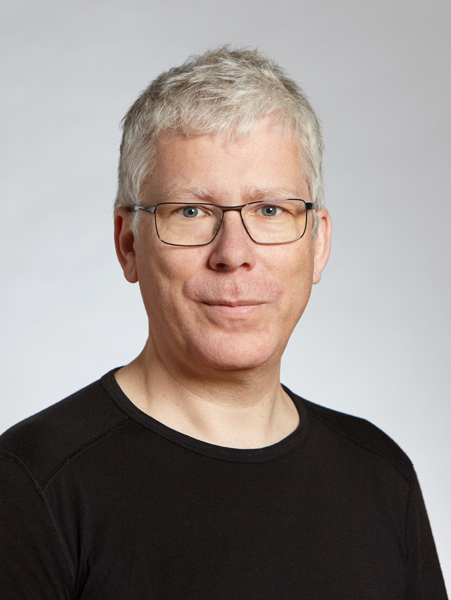
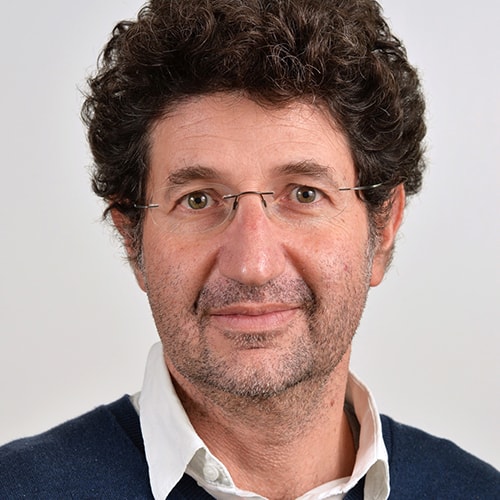
Yusheng Wei is an Assistant Professor in Electrical Engineering at the University of North Texas. His research specializes in control systems, multi-agent coordination, and reinforcement learning with emphasis on time-delay compensation. Recent publications focus on delay-tolerant control architectures, distributed optimization, and neural network-based synchronization. Key research trends include: 1) Event-triggered control for networked systems, 2) Reinforcement learning for delayed system stabilization, 3) Geometric/algebraic methods for signed network analysis. His work consistently addresses robustness challenges in delayed and distributed environments.
Daanika Gordon is an Associate Professor of Sociology at Tufts University, with a secondary appointment in Studies in Race, Colonialism, and Diaspora. Her research explores the intersection of racial inequality, urban governance, and policing through organizational and interactional lenses. PhD, University of Wisconsin–Madison (2018) MS, University of Wisconsin–Madison (2013) BA, Development Studies & Sociology, UC Berkeley (2009) Her work connects theories of race and racism with urban political economy and organizational behavior, focusing on how: Policing functions as a tool for urban governance Racial inequalities emerge from race-neutral policies Segregation is dynamically produced through relational processes Recent publications analyze police funding debates, data science applications in policing, and the bureaucratic dissociation of race. Her groundbreaking 2022 book Policing the Racial Divide won the 2023 Edwin H. Sutherland Book Award. She teaches sociology of race, criminal legal systems, and research design while serving on the advisory committee for the Tufts University Prison Initiative. Her research has been funded by: Institute for Citizens & Scholars Bernstein Faculty Fellowship Neubauer Faculty Fellowship National Science Foundation
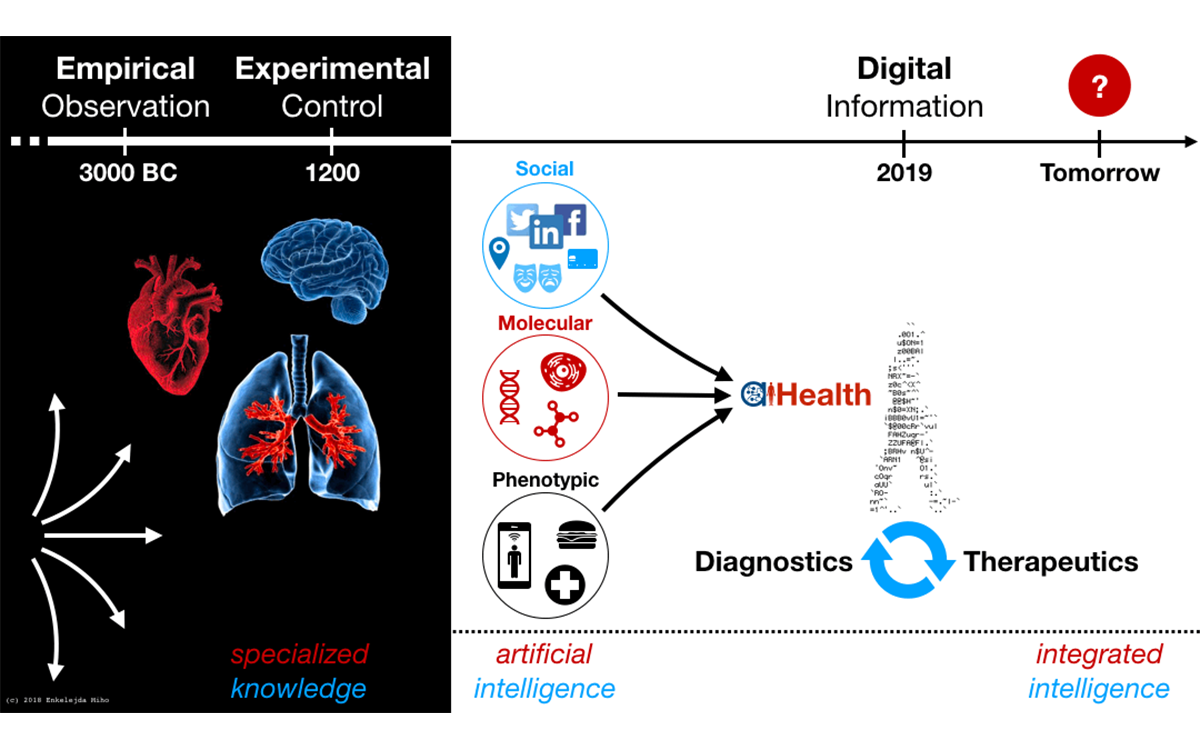
Prof. Enkelejda Miho is a Professor of Digital Life Sciences at the School of Life Sciences, FHNW, leading the aiHealthLab. Her work bridges computer science/AI with life sciences, focusing on drug discovery, personalized medicine, and immunology. She holds roles as Team Leader at aiHealthLab and Group Leader at the Swiss Bioinformatics Institute. Research Interests : She applies machine learning to analyze immune repertoires, antibody engineering, and autoimmunity diagnostics. Her lab develops computational tools like the RWD-Cockpit for real-world data analysis and synthetic antibody-antigen models (Absolut!) to advance biotherapeutics. Her work on dengue immunity and monoclonal gammopathies highlights translational applications. Key Projects : The aiHealthLab focuses on AI-driven diagnostics and therapeutics. Her contributions include AI frameworks for antibody specificity prediction, age-related immune repertoire changes, and large-scale network analysis of antibody repertoires. Labs/Teams : Leads aiHealthLab and collaborates with the Swiss Bioinformatics Institute, integrating computational and experimental immunology.
Professor Brian Surgenor is a faculty member at Queen's University's Department of Mechanical and Materials Engineering, part of the Smith Engineering faculty. He holds a B.Sc. (1977), M.Eng. (AECL/Whiteshell), and Ph.D. (1983) in Mechanical Engineering from Queen's University. His research focuses on machine vision systems for automation, autonomous vehicle navigation, and mechatronic system design education. He has held key administrative roles including Department Head (1993-2002), Associate Dean (2008-2013), and Vice-Dean (2013-2016). His work emphasizes interdisciplinary innovation, such as the Mitchell Hall design project and contributions to Ingenuity Labs. Education: B.Sc. Mechanical Engineering, Queen's University (1977) M.Eng. Engineering Physics, McMaster University (AECL/Whiteshell) Ph.D. Mechanical Engineering, Queen's University (1983) Research interests include: - Pneumatic servosystems - Intelligent algorithms for machine vision - Off-road autonomous vehicle systems - Mechatronics education methodologies - Hybrid powertrain systems for vehicles His recent publications (2017–2024) explore autonomous systems, machine vision applications, and fuel cell hybrid technologies. Notable trends include advancements in UAV-based infrastructure inspection, terrain-adaptive autonomous driving, and low-cost machine vision solutions for small part sorting. His work bridges theoretical control systems with practical industrial automation challenges. He has contributed to laboratory design for CDIO curricula and pioneered mechatronics education through problem-based learning. His administrative leadership has shaped Queen's engineering graduate programs and research infrastructure. Currently involved in Ingenuity Labs, fostering cross-disciplinary innovation.
Lu Su is an Associate Professor at the School of Electrical and Computer Engineering , Purdue University , with prior appointments at SUNY Buffalo . His research spans Internet of Things , cyber-physical systems , mmWave sensing , and crowd-sourced data validation , focusing on quality-of-information aware distributed sensing and security in autonomous systems . Ph.D. in Computer Science (2013) and M.S. in Statistics (2012) from University of Illinois at Urbana-Champaign M.E. and B.E. from Harbin Institute of Technology Research Interests: IoT , cyber-physical systems , crowd sensing , security and privacy , and machine learning for sensor networks. His work addresses quality-aware information integration , adversarial attacks in autonomous vehicles , and privacy-preserving crowd-sourced systems . Recent publications focus on mmWave-based sensing (e.g., 3D pose reconstruction), federated learning (driver monitoring), and data poisoning attacks in crowd-sourced systems. His research also extends to traffic optimization and human activity recognition using wireless networks. Professional Roles: Workshop Chair (INFOCOM 2023, 2022) TPC Vice Chair (INFOCOM 2021) Program Committee Member for top conferences Editorial Board, ACM Transactions on Sensor Networks Teaching: Courses on Embedded Systems , Internet of Things , and Network Concepts at both undergraduate and graduate levels.
Elena Celledoni is a Professor in the Department of Mathematical Sciences at the Norwegian University of Science and Technology (NTNU). She has been employed at NTNU since 2004 and has held the position of professor since 2009. She is a member of the Differential Equations and Numerical Analysis Group at the Department of Mathematical Sciences and serves as its leader. Her educational background includes: Master's degree in Mathematics from the University of Trieste (1993) Ph.D. in Computational Mathematics from the University of Padua, Italy (1997) Elena Celledoni's research focuses on numerical analysis, particularly structure preserving algorithms for differential equations and geometric numerical integration. Her work bridges theoretical mathematics with practical computational methods, developing algorithms that maintain the geometric properties of the systems they approximate. She has made significant contributions to Lie group integrators, energy-preserving methods, and the application of these techniques to mechanical systems and shape analysis. In recent years, her research has expanded to include the intersection of numerical methods with machine learning, exploring how structure-preserving approaches can enhance neural networks and data-driven modeling. Her publications demonstrate a clear trend toward integrating traditional numerical analysis with modern machine learning techniques while maintaining a strong foundation in geometric integration and structure preservation. This interdisciplinary approach has led to innovations in neural ODEs, structure-preserving neural networks, and physics-informed machine learning models that respect the underlying mathematical structures of the systems they model. Elena Celledoni has received recognition for her work through the following honors: Member of the Royal Norwegian Society of Sciences and Letters Member of the European Consortium of Mathematics in Industry Council Member of the board of the International Council of Mathematics in Industry and Applications Editorial board member for SIAM Review, Journal of Computational Dynamics, Journal of Geometric Mechanics, Calcolo, and Networks and Heterogeneous Media As an advisor, she has mentored several students including Torbjørn Ringholm who completed his doctoral dissertation on 'Discrete gradient methods in image processing and partial differential equations on moving meshes.' Her research has been supported by various grants enabling her to lead projects on geometric numerical integration, collaborate internationally, and organize significant academic events such as the special semester at Isaac Newton Institute of MS in 2019 on 'Geometry, compatibility and structure preservation.' She leads the Differential Equations and Numerical Analysis Group at NTNU, which focuses on developing and analyzing numerical methods that preserve the geometric structure of differential equations. The group maintains active collaborations with researchers worldwide and has made substantial contributions to advancing the field of geometric numerical integration and its applications to real-world problems.
Prof. Pia Fricker is an Associate Professor and Vice Head of the Department of Architecture at Aalto University's School of Arts, Design and Architecture in Finland. She holds the Professorship of Computational Methodologies in Landscape Architecture and Urbanism, directing the Urban Studies and Planning Programme. Her research integrates urban design, landscape architecture, and digital design culture, focusing on data-driven methods, immersive environments, and adaptive urban development. Collaborations include ETH Zurich, Singapore University of Technology and Design, and Hafencity University Hamburg. Key projects include the Metaversity and Future Smart Cities initiatives. Fricker has led over 80 publications and exhibitions globally, including at the Venice Biennale and National Design Centre Singapore. She is an editorial board member for the Journal of Digital Landscape Architecture and peer reviewer for multiple journals. Awards include the Digital Landscape Architecture Award (2018) and DLA Scientific Merit Award (2021). Her teaching emphasizes computational pedagogy and digital innovation in design education. Education: PhD in Architecture (ETH Zurich, 2021) Postgraduate in Didactics (ETH Zurich, 2011) MAS in Computer Aided Architectural Design (ETH Zurich, 2003) MSc Arch in Urban Design & Landscape Architecture (Technical University of Karlsruhe, 2001) Research Interests: Computational design, parametric modeling, mixed reality, climate-adaptive ecosystems, generative AI, and sustainable urban development. Her work bridges emerging technologies with ecological and urban challenges, emphasizing interdisciplinary collaboration. Grants & Projects: Metaversity (2023–2025, Principal Investigator) Future Smart Cities Sasakawa (2023–2024, Principal Investigator) ABRA (2020–2023, Project Member) Awards: DLA Awards (2018, 2021) DLA Review Committee Awards (2020–2022) Exhibition Recognitions (Venice Biennale, National Design Centre Singapore) Labs/Teams: Leads the Urban Studies and Planning Programme and collaborates with interdisciplinary teams on projects like the RAILCORRIDOR Singapore initiative. Active in digital twin development and AI-driven design tools.
John Straub is a Professor of Chemistry at Boston University, affiliated with the Chemistry Department. His research focuses on theoretical and computational studies of protein dynamics, thermodynamics, and phase transitions in molecular systems. He leads efforts to develop advanced algorithms for simulating phase changes in complex systems, including work supported by a National Science Foundation (NSF) grant (CH-1114676) to improve computational methods for phase transition modeling. His group has pioneered generalized simulated tempering and replica exchange algorithms, enabling more accurate simulations of phenomena like vapor-liquid phase changes and peptide aggregation. Dr. Straub also engages in science outreach through collaborations with the Pinhead Institute, supporting K-12 education programs and student internships. His research spans diverse topics such as cholesterol interactions in lipid membranes, amyloid fibril formation mechanisms, and the structural basis of protein aggregation in neurodegenerative diseases. His computational methods have been applied to study membrane proteins, lipid rafts, and the role of environmental factors in protein behavior. Key contributions include modeling amyloid-β aggregation pathways and investigating the impact of membrane composition on protein stability.
John E. Straub is a Professor in the Department of Chemistry at Boston University (BU), where he leads the Straub Lab. His work focuses on molecular dynamics and thermodynamics of complex biomolecular systems, particularly protein aggregation and amyloid formation. He has authored influential books, including Proteins: Energy, Heat and Signal Flow and Mathematical Methods for Molecular Science , and has held leadership roles such as Chair of the Department of Chemistry at BU (2007-2012) and President of the Telluride Science Research Center (2006-2008). Education: BS in Chemistry (University of Maryland, 1982, advisor: Millard Alexander) MA (Columbia University, 1984) MPhil (Columbia University, 1986) PhD in Chemical Physics (Columbia University, 1987, advisor: Bruce Berne) NIH Postdoctoral Fellow in Chemistry (Harvard University, 1987-1990, advisor: Martin Karplus) His research interests span computational methods for enhanced sampling, reaction dynamics, and the interplay between protein structure and aggregation. He has pioneered studies on amyloid precursor proteins and cholesterol interactions in lipid bilayers, emphasizing the role of monomer structural ensembles in aggregation mechanisms. Articles from his lab highlight advancements in understanding lipid phase separation, amyloid fibril formation, and computational techniques like machine learning-derived variables and replica exchange methods. His work bridges theory and experiment, with collaborations across institutions globally. Scientific Awards: NIH Postdoctoral Fellowship (Harvard University, 1987-1990). Professor Straub has advised numerous students, many of whom hold academic positions at leading institutions, including Jianpeng Ma (Rice University) and Nicolae-Viorel Buchete (University College Dublin). His lab actively explores projects in computational biophysics, with ongoing work on lipid mixtures, sterol-derived Raman tags, and membrane protein interactions.
Marc Pollefeys is a Full Professor of Computer Science at ETH Zurich and Director of the Microsoft Mixed Reality and AI Zurich Lab. He has held roles such as Visiting Professor at Stanford University (2007) and Assistant/Associate Professor at UNC-Chapel Hill (2002–2009). His research focuses on 3D computer vision, robotics, machine learning, and augmented reality. Education: PhD in Computer Science from KU Leuven (1999), followed by postdoctoral research there until 2002. He transitioned to academic roles at UNC-Chapel Hill before joining ETH Zurich in 2007. Research interests include 3D reconstruction, visual localization, SLAM, and applications in archaeology, urban modeling, and robotics. Notable projects include real-time 3D scanning, city-scale reconstruction, and autonomous vision-based drones. Key awards include ACM Fellow (2022), IEEE Fellow (2012), and ERC Starting Grant (2008). He advises numerous PhD students and collaborates with institutions like Google and Microsoft. Labs and teams: Leads the Computer Vision and Geometry (CVG) lab at ETH Zurich and directs the Microsoft Mixed Reality and AI Lab. His work bridges academia and industry, focusing on perception for mixed reality and autonomous systems.
Prof. Robert Güttel is the Director of the Institute for Chemical Engineering at the University of Ulm. He is a member of the Ulm Center for Thermal and Environmental Technology (UZWR) since 2016 and serves on its executive board. His work focuses on catalytic reaction engineering, particularly in CO2 utilization, methanation, Fischer-Tropsch synthesis, and process intensification. Research emphasizes catalyst design, reaction kinetics, and reactor modeling under dynamic conditions. Educations : Not explicitly stated in the provided text. His academic career is highlighted through his leadership roles and publications. Research Interests : Güttel’s research spans heterogeneous catalysis for CO/CO2 hydrogenation, transient kinetic analysis, polymeric reactors for extraterrestrial applications, and AI-driven reactor design. His team develops advanced catalysts (e.g., Ru/TiO2, cobalt@silica core-shell structures) and investigates novel reactor concepts like fibrous structured catalysts and sorption-enhanced processes. Recent work explores in-situ methanation on Mars and the impact of light on catalytic selectivity. Publications Trends : His 2024–2025 articles focus on low-temperature methanation beyond Earth, AI-based residence time analysis, and deactivation mechanisms. Studies highlight both experimental and computational approaches to optimize catalytic systems for sustainability and industrial relevance. Awards : No specific scientific awards mentioned in the text. Grants/Labs : Leads the Institute for Chemical Engineering at Ulm, collaborating on EU-funded projects related to power-to-X technologies and extraterrestrial chemistry. Active in developing lab-scale reactor systems and industrial partnerships for catalyst testing. Labs/Teams : Directs research groups focused on catalytic reactor design, transient kinetic methods, and sustainable process engineering. Collaborates with institutions on Mars habitat resource utilization and green hydrogen production systems.
Frédéric Vrins is a Professor at the Louvain School of Management (LSM) , UCLouvain , affiliated with the Louvain Institute of Data Analysis and Modeling in economics and statistics (LIDAM) and Louvain Finance (LFIN). His work bridges theoretical and applied finance, with a focus on risk modeling, portfolio optimization, and machine learning applications. His research interests include: Quantitative Finance: Derivatives pricing, stochastic processes, and model calibration. Risk Management: Credit concentration risk, recovery rates, and wrong-way risk in financial markets. Portfolio Optimization: Mean-variance strategies, diversification metrics, and robustness under parameter uncertainty. Machine Learning in Finance: Applications to recovery rate prediction and option pricing frameworks. Recent publications highlight trends in: Credit risk modeling for Collateralized Loan Obligations (CLOs) and consumer credit. Machine learning integration in derivatives pricing and portfolio construction. Stochastic methods for Brownian bridges, CDS spreads, and recovery rates. Empirical studies on Loan-to-Value policies and business cycle impacts. Affiliations and locations: Louvain School of Management (LSM) - Building B, Chaussée de Binche 151, 7000 Mons Louvain Finance (LFIN) - Traverse d'Esope 1, 1348 Louvain-la-Neuve Louvain School of Management (LSM) - BATA Building, Chaussée de Binche 151, 7000 Mons
Dr Xinchen Zhang is a Grant-Funded Researcher (A) at the University of Adelaide's Department of Mechanical Engineering within the School of Electrical and Mechanical Engineering. His research focuses on integrating machine learning with computational fluid dynamics (CFD) to enhance predictive capabilities for multiphase flow solutions, particularly in sustainable energy applications like decarbonization technologies. He holds a PhD (2022) with a Dean's Commendation for Doctoral Thesis Excellence, emphasizing fluid and particle dynamics in particle-laden flows. His work addresses challenges in net-zero industrial processes such as limestone calcination and hydrogen production via methane pyrolysis, leveraging advanced CFD and ML-augmented methodologies. Key research areas include turbulence modeling, particle dispersion in jets, and flow regime analysis in horizontal particle-laden pipe systems. He is eligible to supervise Masters and PhD students as a co-supervisor. Dr Zhang's publications span 2018–2024, with recent trends focusing on physics-informed machine learning for turbulence modeling and multiphase flow optimization. His contributions advance computational efficiency and accuracy in predicting complex fluid-particle interactions.
Vito Latora is a Professor of Applied Mathematics and Chair of Complex Systems at the School of Mathematical Sciences, Queen Mary University of London, and also holds the position of Professor of Theoretical Physics at the University of Catania. He leads the Complex Systems and Networks Group, driving cutting-edge research at the intersection of physics, mathematics, and interdisciplinary sciences. His research focuses on complex systems, particularly the structure and dynamics of networks, including multiplex, temporal, and higher-order networks such as simplicial complexes and hypergraphs. He explores applications in social, biological, financial, and cognitive systems, with recent work on creativity, innovation, and success through network analysis. The 15 most recent publications reveal a strong trend in advancing network theory beyond pairwise interactions, with a focus on higher-order structures, memory effects, synchronization, and epidemic spreading. His work combines rigorous mathematical modeling with real-world applications, often published in high-impact journals like Nature Communications , Physical Review Letters , and Science Advances . Dual communities in spatial and biological networks Modeling epidemics with limited detection resources Synchronization via higher-order and directed interactions AI-driven financial risk management Evolutionary games on hypergraphs Interdisciplinary success and funding dynamics Vito Latora has mentored several researchers who appear as co-authors, including Iacopini, Williams, Di Bona, and Lacasa. While specific grants are not listed, his collaborative projects with neuroscientists and anthropologists, along with frequent publications, suggest active funding. He is involved in major scientific events such as NetSci 2023, indicating leadership in the network science community. He leads the Complex Systems and Networks Group at Queen Mary, fostering a collaborative environment for studying complex systems through theoretical, computational, and data-driven approaches.
Hugues Aschard is a Principal Investigator and Structure Manager at the Pasteur Institute in Paris, where he leads research in statistical genetics, microbiome analysis, and computational genomics. He is the principal investigator of the MicMat project, the EpiGenCOV Consortium, and several bioinformatics software initiatives including JASS, RAISS, and MGMM. Research Interests: Statistical and computational methods in genetics Genome-wide association studies (GWAS) Gene-environment interactions Microbiome and host genetics in inflammatory bowel disease Genetic epidemiology of infectious diseases like COVID-19 Development of open-source tools for multi-trait and summary-statistic analysis Recent Research Trends: His recent publications and projects emphasize integrative genetic modeling, multi-trait analysis across diverse populations, and the development of novel computational methods to handle missing data and improve SNP discovery. His work bridges statistical innovation with biological and clinical applications in complex diseases. Scientific Contributions: Development of JASS, RAISS, and MGMM software tools Leadership in large-scale consortia like EpiGenCOV Advancing methods for cross-ancestry genetic studies Advising and Collaboration: He supervises multiple PhD students and postdoctoral fellows, including Christophe Boetto, Antoine Auvergne, and Lucas Chataigner. He collaborates with major institutions such as APHP and CNRGH. His team includes research engineers and administrative staff, indicating an active and well-supported research group. Laboratories and Teams: He is a key member of the Biomaterials and Microfluidics team at the Pasteur Institute, where he contributes to interdisciplinary research involving Bayesian decision processes and genetic modeling.