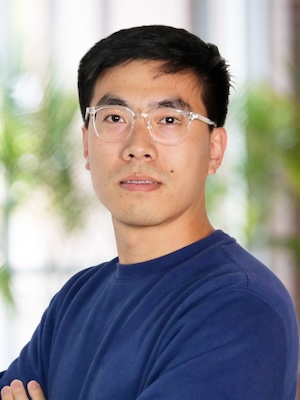
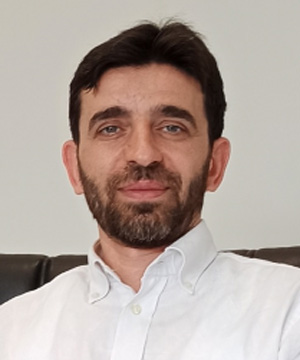
Ramón González Carvajal is a distinguished academic with extensive contributions in analog and mixed-signal integrated circuit design, IoT systems, and sensor networks. His research focuses on low-voltage CMOS circuits, high-performance operational amplifiers, and energy-efficient signal processing. He has collaborated extensively with institutions on advancements in smart infrastructure and sustainable energy systems. Key research areas include: Low-power analog circuit design CMOS-based transconductors and amplifiers IoT-enabled sensor networks for industrial and environmental monitoring Blockchain scalability through sharding protocols His recent work emphasizes machine learning applications for energy economy prediction and augmented reality systems for workplace safety. Over 196 publications demonstrate his impact in circuits, systems, and emerging technologies.
Feyzullah Temurtaş is a Professor at the Department of Control and Command Systems, Faculty of Engineering and Natural Sciences, Bandırma Onyedi Eylül Üniversitesi. He has held academic roles since 2002, including Professor positions at Bozok University (2011–2018) and Sakarya University (2007–2008). His research focuses on neural networks, biomedical engineering, control systems, and embedded systems. He has authored/co-authored over 40 journal articles, 16 conference papers, and 3 books. His work includes projects on diabetes diagnosis via neural networks, gas sensor systems, and FPGA-based microcomputer design. Education: PhD in Electrical Engineering (university unspecified), with postdoctoral research roles at Dumlupınar and Yüzüncü Yıl Universities. Administrative Roles: Department Chair at Bandırma Onyedi Eylül Üniversitesi (2018–), Dean (2020–), and Vice Rector (2022–). Previously served as Department Chair and Dean at Bozok University. Research Interests: He specializes in machine learning applications for medical diagnostics, signal processing, robotics, and FPGA-based embedded systems. Notable projects include developing EEG-based emotion recognition models and neural network-driven gas concentration estimation systems. Grants & Awards: Led projects funded by TÜBİTAK (e.g., diabetes diagnosis via palm perspiration analysis, 2011–2013) and university grants. His research emphasizes interdisciplinary collaborations between engineering and healthcare. Teaching: Taught courses in analog electronics, control systems, and artificial neural networks at both undergraduate and graduate levels. Developed FPGA-based microcomputer training platforms for educational purposes. Labs/Teams: Active in labs focusing on biomedical signal processing, robotics control, and embedded systems design. Collaborates with industry on university-industry tech transfer initiatives.
Eli De Poorter is a Professor at the Faculty of Engineering and Architecture , Ghent University , and affiliated with IMEC since 2017. His work bridges experimental wireless research with machine learning techniques, focusing on IoT , UWB localization , and self-learning networks . Received his PhD in 2011 from Ghent University’s Department of Information Technology FWO Postdoctoral Research Grant recipient Co-author of over 100 international publications Active in program committees of multiple conferences His research spans wireless protocol optimization , interference detection , and system configuration dependencies . Notable projects include UWB-based healthcare monitoring , industrial IoT networks , and animal wearables for agriculture . Develops energy-aware tinyML models for battery-less devices Explores Transformer networks and self-supervised learning for wireless systems Investigates multi-modal industrial IoT and Wi-Fi/UWB hybrid synchronization Scientific Awards FWO Postdoctoral Research Grant Labs & Teams Internet Technology and Data Science Lab (IDLab) IMEC research institute
Assoc. Prof. John O'Sullivan is an Associate Professor and Head of School at the University of College Dublin's School of Civil Engineering. He is a Fellow of the UCD Earth Institute and a member of the UCD Dooge Centre for Water Resources Research. His expertise spans catchment hydrology, river hydraulics, fluvial processes, and coastal engineering. He leads major projects like ACCLIMATIZE (climate change modeling for coastal waters) and ECOSTRUCTURE (sustainable coastal defenses). O'Sullivan has over 100 publications and supervised 8 PhD/MSc students. He coordinates modules in Hydraulics, Professional Work Experience, and Computer Applications in Civil Engineering. Education: BA (Mathematics), Trinity College Dublin BAI (Engineering), Trinity College Dublin DPhil, University of Ulster MSc (Civil Engineering), Queen's University Belfast Professional Certificate in University Teaching & Learning, UCD Research Interests: Focus on water-sensitive urban design, sediment transport modeling, and microbial pollution in aquatic systems. His work integrates field measurements with machine learning for predictive models in coastal resilience and water quality forecasting. Grants & Projects: ACCLIMATIZE (EU Bathing Water Directive compliance) SWIM (real-time bathing water quality models) ECOSTRUCTURE (eco-friendly coastal defenses) RECONNECT (river barrier impact assessments) Professional Activities: Leadership roles in Engineers Ireland, including Chair of the Civil Engineering Division. Active in curriculum development, including a hybrid academic advising model praised for improving student engagement. Labs/Teams: Leads interdisciplinary teams in the Dooge Centre and Earth Institute, collaborating on projects like microplastic fate studies and antimicrobial resistance tracking in rivers.
Morris B Cohen is a Professor in the School of Electrical and Computer Engineering at Georgia Tech. He holds a B.S. and Ph.D. in Electrical Engineering from Stanford University (2003, 2010) and served as a research scientist until 2013. His roles include AAAS Science and Technology Policy Fellow at NSF (2012-2013) and Associate Editor of Radio Science since 2013. Research focuses on Earth's natural electricity, including lightning, upper atmosphere dynamics, and space environment interactions. Techniques include low-frequency radio wave analysis and novel antenna designs. Key areas are lightning geolocation, ionospheric remote sensing via VLF signals, and machine learning applications for ionospheric modeling. Distinctions: NSF CAREER Award (2017) ONR Young Investigator Award (2015) Santimay Basu Prize (2014, URSI) CTL/BP Teaching Excellence Award (2018) Grants & Projects: ALOFT airborne campaign studying thunderstorm gamma rays Development of low-frequency radio instrumentation Machine learning for ionospheric electron density prediction Labs/Teams: Low Frequency Radio Group at Georgia Tech AGU Atmospheric and Space Electricity Focus Group Executive Committee Teaching: Employs flipped classroom models in courses to enhance student engagement.
Justin Romberg is the Schlumberger Professor and Associate Chair for Research in the School of Electrical and Computer Engineering at Georgia Tech, and serves as Associate Director for the Center for Machine Learning. He holds a B.S.E.E., M.S., and Ph.D. from Rice University, followed by postdoctoral work at Caltech and visiting roles at UCLA and the Laboratoire Jacques-Louis Lions. His research bridges signal processing, machine learning, optimization, and applied probability, with notable contributions to imaging inverse problems, data compression, and broadband beamforming. Dr. Romberg has received prestigious awards including the ONR Young Investigator Award (2008), PECASE (2009), Packard Fellowship (2009), and IEEE Fellowship. His recent work emphasizes real-time RF emulation, neural adjoint methods for sound speed learning, and decentralized optimization frameworks. Current projects include radar signal processing, multi-agent reinforcement learning, and hardware-friendly sparse neural networks. His lab focuses on translating theoretical insights into practical systems, such as low-bit beamforming accelerators and medical monitoring devices using MEMS sensors.
Prof. Mathini Sellathurai is a Full Professor and Dean of Science and Engineering at Heriot-Watt University, Edinburgh. She leads the Signal Processing for Intelligent Systems and Communications Lab, with expertise in radar technology, MIMO systems, and wireless communications. Her research focuses on adaptive signal processing applications in radar, lidar, sonar, and RF networks. She holds adjunct roles at McMaster University and has served on IEEE editorial boards and technical committees. Education & Experience: PhD with NSERC doctoral award Industrial experience at Bell Laboratories (2000) and Canadian Communications Research Centre (2001-2004) Research Interests: Signal Processing innovations in parasitic antennas, MIMO radar, cognitive radio, and underwater communications. She explores network coding, iterative receiver design, and beamforming techniques to enhance communication systems efficiency and performance. Awards: IEEE Ellersick Best Paper Award (2005) Industry Canada Public Service Awards (2005) Technology Transfer Awards (2004) Teaching & Leadership: Teaches electrical engineering fundamentals, image processing, and advanced analysis. Oversees multi-institutional projects funded by EPSRC, DSTL, and EU Framework programs (e.g., Cognitive Radio Oriented Wireless Networks). Labs & Collaborations: Heads the Signal Processing Lab (EM 3.24), collaborating on EU-funded initiatives and industry partnerships with QinetiQ and Wireless Fiber Systems. Active in defense-related radar research through UDRC and EPSRC grants.
Adnan Zahid is an Assistant Professor at Heriot-Watt University's School of Engineering & Physical Sciences. He holds a PhD in Electronics and Electrical Engineering from the University of Glasgow (2020), with prior degrees from Glasgow Caledonian and Strathclyde Universities. His research focuses on terahertz/RF sensing for precision agriculture and healthcare, AI, IoT, and wearable sensors. He actively contributes to academic leadership as Program Director for Engineering Design and Manufacture, Research Culture Champion, and External Examiner at the University of Greenwich. Key achievements include the 2020 Research Excellence Award for THz contributions, Chartered Engineer certification (2025), and Fellowships from the Royal Society of Arts and European Alliance & Innovation. Zahid has authored/co-authored over 30 peer-reviewed publications and led grants such as the £10k 'Nano-sensors Connectivity at Terahertz for Agri-Tech' project. His teaching spans digital logic systems, signals and systems, and semiconductor electronics. He is an Associate Editor for the Journal of Big Data and frequently presents at international conferences like IMBIOC and IEEE MTT-S. Research grants include collaborations on hydration detection, smart health monitoring via IoT, and RFID-enabled systems. Zahid's work aligns with UN SDGs related to health, innovation, and sustainable agriculture.
Günhan Dündar is a Professor at the Department of Electrical and Electronics Engineering, Boğaziçi University. His primary research focuses on integrated circuit design with an emphasis on analog circuits, CAD tools for IC design, and biomedical sensor systems. He specializes in low-power and radiation-hardened analog circuits, RF front-ends, and machine learning applications in analog design. Key projects include embedded ocular pressure sensors in contact lenses, super-regenerative receivers for biomedical implants, and yield-aware analog circuit synthesis tools using AI. His work spans from nanoscale CMOS processes (65nm/40nm) to MEMS sensor systems for medical applications. He has published extensively on topics like SAR ADCs, IR-UWB transmitters, and multi-objective optimization frameworks. His design tools (e.g., DATA-IP, Radispice) address challenges in analog IP development and radiation effects mitigation. His research bridges theoretical circuit design with practical biomedical and aerospace applications.
Dr. Wei Sun is an Assistant Professor at the School of Computing, Wichita State University, within the College of Engineering. His research focuses on wireless and mobile computing systems, particularly in designing secure and innovative wireless communication and sensing solutions. He leads the Wireless and Mobile System (WIMOS) Research Group and actively seeks PhD and Master's students for research roles. His work spans IoT security, vehicular networks, and human-centric sensing systems, with notable contributions to RFID-based sensing, adversarial detection in federated learning, and infrastructure-aware communication. Dr. Sun has received several accolades including the 2023 IEEE PerCom Best WiP Paper Award and the 2022 NSF Athena Postdoctoral Scholar recognition. His publications highlight advancements in secure human-centered wireless systems, vehicular security, and spectrum utilization. He contributes to academic service as a PC member for conferences like PETS, ACM CCS, and USENIX Security. The WIMOS lab explores real-world deployment of systems addressing both technical and societal challenges through integrated hardware-software solutions.
Yutian Wen is an Assistant Research Professor in the Department of Physics & Astronomy at the University of Notre Dame. Their research focuses on quantum systems, including quantum memory, spintronics, superconducting circuits, and nanomechanical oscillators. Wen's work bridges quantum physics with engineering applications, such as quantum computing and nanotechnology. They are affiliated with the College of Science and are based at Nieuwland Science Hall, Notre Dame, IN. Key research interests include developing quantum technologies using bismuth dopants in silicon, optimizing photon absorption in spin memories, and leveraging ultra-low-noise SQUID amplifiers for quantum dot readout. Their contributions span theoretical and experimental advancements in quantum control, microwave physics, and nanoscale systems. Wen's publications reflect a trajectory toward scalable quantum systems and precision measurements. While no awards are explicitly listed, their active publication record indicates significant contributions to quantum science. No advising or grant details are provided in the text.
Yunsi Fei is a Professor in the Electrical and Computer Engineering Department at Northeastern University, serving concurrently as Associate Dean of Faculty Affairs. She leads the Northeastern site of the NSF IUCRC Center for Hardware and Embedded System Security and Trust (CHEST). Her research focuses on hardware-oriented security, computer architecture, embedded systems, and IoT security, with significant contributions to mitigating side-channel and fault attacks on neural networks and hardware systems. Fei holds a PhD in Electrical Engineering from Princeton University (2004), and bachelor’s and master’s degrees in Electronic Engineering from Tsinghua University. She joined Northeastern in 2011 after faculty roles at the University of Connecticut. Her research interests span secure computer architecture, energy-efficient embedded systems, and underwater sensor networks. Notable projects include RINGS (a NSF-funded IoT resilience initiative) and secure RISC-V processor design. She has received the NSF CAREER Award and multiple best paper awards at top conferences. Fei’s work integrates hardware-software co-design to address vulnerabilities in AI accelerators and cryptographic systems. She leads the Energy-Efficient and Secure Systems (ENESS) Lab and collaborates with industry and academia through CHEST. Recent grants include $1.5M for cybersecurity in additive manufacturing and $1M for spectrum-agile IoT systems. Her awards include a 2023 Distinguished Paper Award (AsiaCCS) and 2022 Best Paper (Great Lake VLSI). She mentors students like Ruyi Ding, who joined LSU as faculty in 2025. Fei also chairs sessions on hardware security and is an affiliated faculty member with Northeastern’s Institute of Information Assurance.
Muhammet Tahir Güneşer is an Associate Professor in the Department of Electronics and Communication Engineering at Istanbul Technical University (ITU). With a doctorate from Karabuk University (2015), master's from Istanbul University (2010), and bachelor's from ITU (1999), he specializes in electromagnetics, microwave engineering, and renewable energy systems. Education: Doctorate (Karabuk University, 2015), Master's (Istanbul University, 2010), Bachelor's (ITU, 1999) Research Interests span broad disciplines including: Electromagnetics Microwave Engineering Antenna Design Embedded Systems Renewable Energy Systems Wireless Communication His work focuses on microwave imaging, low-power sensor design, and energy-efficient communication systems, collaborating with ITU Electromagnetics Research Group and industry partners like Procenne Company. Key Projects include: 6G Mobility-Aware Augmented Reality Connected Drones Communication Portable Microwave Hyperthermia Devices Deep Learning for Inverse Problems He has contributed to various scientific initiatives involving ultralow-power sensors, cryptographically secure random number generators, and thermal modeling of underground cables.
Hannah Rana is a DPhil Researcher in Engineering Science at the University of Oxford, affiliated with Magdalen College. She is also an Amelia Earhart Fellow in cryogenics and serves as President of the Oxford Space and Astronomy Society. Her research focuses on developing Stirling pulse tube cryocoolers for space science missions, particularly in collaboration with Honeywell Aerospace. She holds an MEng and has prior professional experience at the European Space Agency (thermal control engineering) and CERN (superconducting RF accelerating cavities). Her research interests include cryogenics, astrophysics instrumentation, thermodynamics, and mathematical modeling. Key awards include the Amelia Earhart Fellowship (2019), THK Frederking Student Scholarship (2019), and Impact Wilbe Science Founder Fellowship (2021). She has also participated in the Lindau Nobel Laureate Meetings and serves as a UN COPUOS delegate. Her recent publications span advancements in cryogenic systems, astrophysical mission design, and medical imaging AI applications. She collaborates with Prof. Richard Stone’s Cryogenics research group and has contributed to projects like the Black Hole Explorer mission concept and CORSAIR solar corona instrument.
Dr. Du Yong Kim is a Senior Lecturer in the School of Engineering at RMIT University, Australia. His research focuses on Electrical and Electronic Engineering, Artificial Intelligence and Image Processing, Distributed Computing, and Biomedical Engineering. He is actively involved in supervising research projects, including topics like mental health monitoring using wearables, decentralized multi-platform search algorithms, and sensor fusion for autonomous systems. His work spans advanced tracking algorithms, autonomous systems, and biomedical visualization tools such as CellTrackVis. Recent publications emphasize innovations in multi-object tracking, radar systems, and optimization frameworks for target localization. Dr. Kim collaborates on projects with organizations like CSIRO and has a strong record of industry-relevant research. Key research trends include the application of possibility theory to autonomous search, integration of machine learning in tracking systems, and development of sensor fusion techniques for maritime and indoor environments. His contributions bridge theoretical advancements with practical implementations in fields like healthcare monitoring and autonomous robotics.