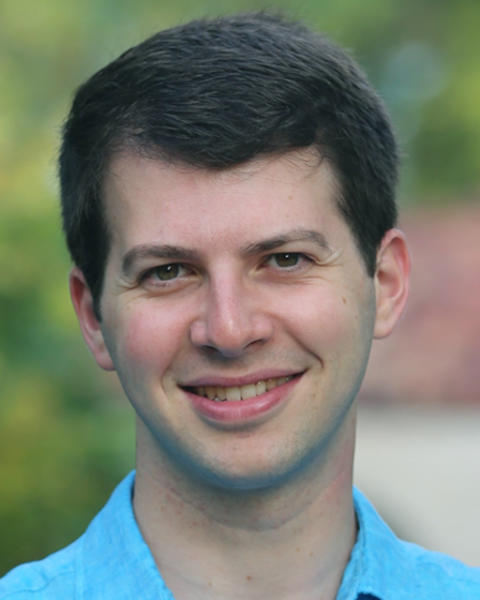
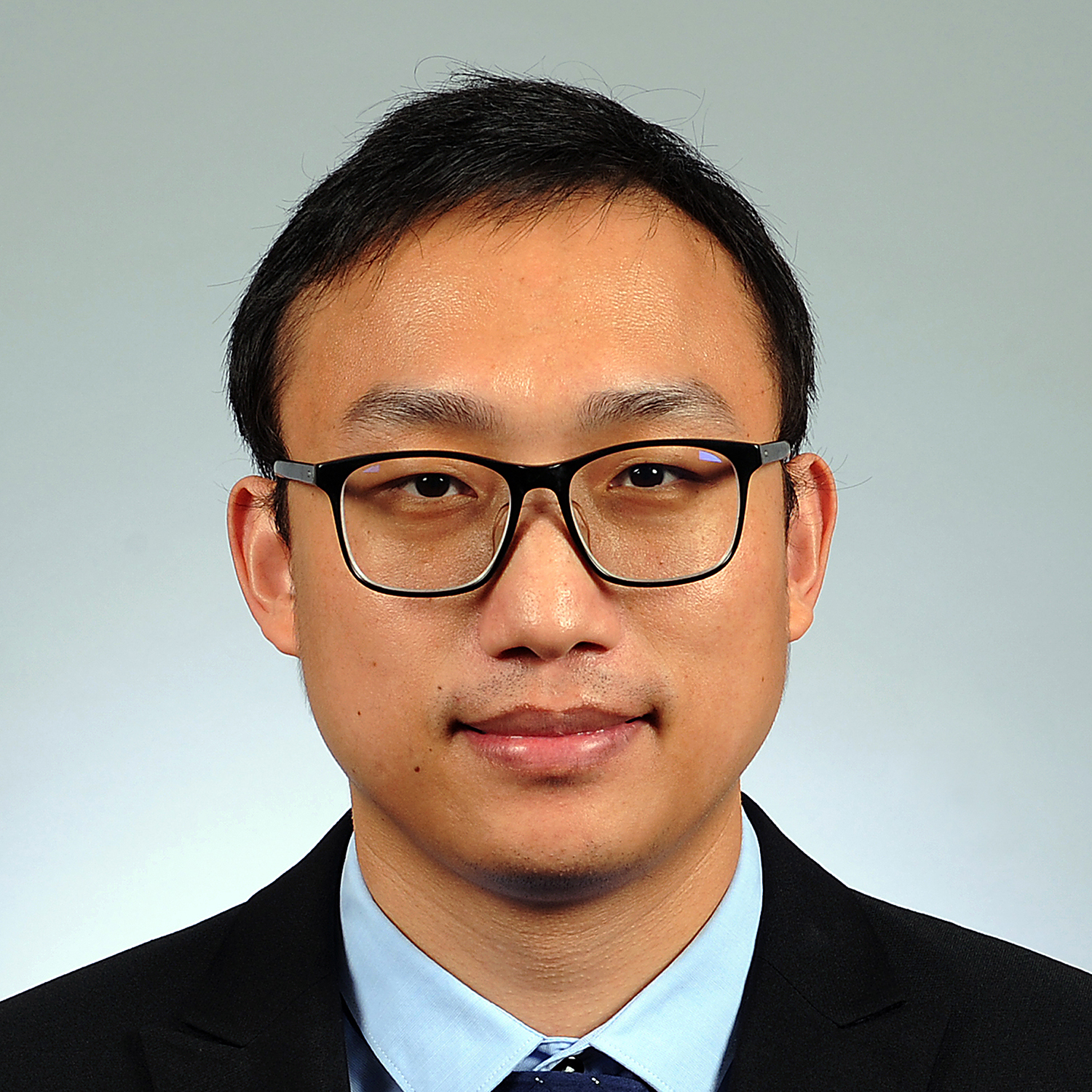
James Davis is an Assistant Professor in the Elmore Family School of Electrical and Computer Engineering at Purdue University. His research focuses on engineering robust computing systems through socio-technical approaches, emphasizing software correctness, security, and usability. He applies empirical methodologies to evaluate the practical impact of technical solutions. Research interests include software supply chain security, deep learning reproducibility, regular expression optimization, IoT cybersecurity, and the socio-technical challenges in system design. His work bridges theoretical foundations with real-world applications, addressing issues like regex denial-of-service (ReDoS), model reuse in AI, and developer practices for safety-critical systems. Recent publications span topics such as actor reputation metrics in software supply chains, AI safety for downstream developers, and edge-computing optimizations for vision transformers. His interdisciplinary approach integrates empirical studies, formal verification, and human-centered design principles. No scientific awards are explicitly mentioned in the provided materials. His advising record is currently unspecified, though his research group likely engages in collaborative projects with industry and academia. He contributes to initiatives like the Sigstore ecosystem and open-source security tooling, reflecting his commitment to practical impact.
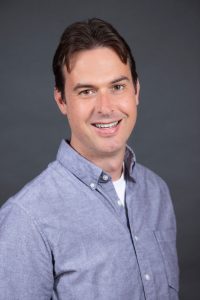
Jordan Cotler is an Assistant Professor of Physics at Harvard University, affiliated with the Department of Physics within the Faculty of Arts and Sciences. He holds a BS in physics and mathematics from MIT (2015) and a PhD in physics from Stanford University (2020). Before joining Harvard's faculty, he served as a Junior Fellow at the Harvard Society of Fellows from 2020 to 2024. His research focuses on the intersection of quantum information, computation, and spacetime physics. Key interests include quantum algorithms for analyzing many-body and quantum gravitational systems, information-theoretic frameworks for chaotic dynamics, and non-perturbative methods in quantum cosmology and field theory. Cotler's work has advanced quantum algorithm design for experimental platforms and contributed to understanding black hole microstructure and cosmological spacetimes. He has been recognized with prestigious early-career awards, including his Harvard Society of Fellows Junior Fellowship. His publications span foundational topics such as quantum gravity, holography, computational complexity, and quantum chaos, reflecting a multidisciplinary approach to theoretical physics.
Greg Stitt is a Professor in the Department of Electrical and Computer Engineering at the University of Florida, affiliated with the College of Engineering. His research focuses on reconfigurable computing, FPGA acceleration, embedded systems, and compiler design. He has received notable awards including the NSF CAREER Award (2012-2017) and the Undergraduate Teacher of the Year Award (2014). His work emphasizes elastic computing frameworks, intermediate fabrics for FPGA virtualization, and warp processors for dynamic hardware/software partitioning. Education: PhD, Computer Science, University of California-Riverside, 2007 BS, Computer Science, University of California-Riverside, 2000 Research Interests: Reconfigurable computing, FPGAs, GPUs, and their applications in high-performance computing Compiler optimization and synthesis techniques for embedded systems Elastic computing frameworks for heterogeneous systems Approximate computing and energy-efficient architectures Grants & Awards: National Science Foundation (NSF) grants for elastic computing (CNS-0914474) and intermediate fabrics (CNS-1149285) Recognition for contributions to FPGA-based scientific computing tools Teaching: Current courses include Reconfigurable Computing 2 and Digital Design Past course offerings span embedded systems, compiler design, and hardware architecture Labs & Teams: Active research in FPGA acceleration, novel architectures, and security for reconfigurable systems Contributions to the Novo-G scalable reconfigurable supercomputing project
Professor Dollas Apostolos serves as a Professor in the School of Electrical and Computer Engineering at the Technical University of Crete (TUC), where he has held leadership roles such as Department Chairman. He directs the Microprocessor and Hardware Laboratory, focusing on reconfigurable computing, embedded systems, and high-performance digital systems. His work emphasizes rapid prototyping and real-world implementation of computational solutions. Education: Ph.D., Computer Science, University of Illinois at Urbana-Champaign (1987) M.Sc., Computer Science, University of Illinois at Urbana-Champaign (1984) B.Sc., Computer Science, University of Illinois at Urbana-Champaign (1982) Research Interests: Reconfigurable computing architectures FPGA-based acceleration for bioinformatics and genomics Embedded systems and real-time processing Hardware-software co-design for high-performance computing His research bridges theoretical innovation with practical applications, such as FPGA implementations for genome assembly and aquaculture monitoring systems. Publications: Recent work highlights FPGA-based solutions for bioinformatics (e.g., genome assembly acceleration), real-time embedded systems (e.g., fish cage net monitoring), and scalable data processing frameworks. His articles often explore the intersection of FPGA technology with computational biology, embedded vision, and distributed systems. Awards and Affiliations: Senior Member, IEEE and IEEE Computer Society Recipient of IEEE Computer Society Golden Core and Meritorious Service Awards Twice honored with the University of Illinois Teaching Excellence Award He is a co-founder of IEEE conferences like FCCM and RSP, reflecting his leadership in the reconfigurable computing community. Teaching and Labs: Teaches courses on computer architecture, logic design, and VLSI design. The Microprocessor and Hardware Lab under his direction drives advancements in FPGA-based systems, with projects ranging from bioinformatics hardware accelerators to embedded vision systems.
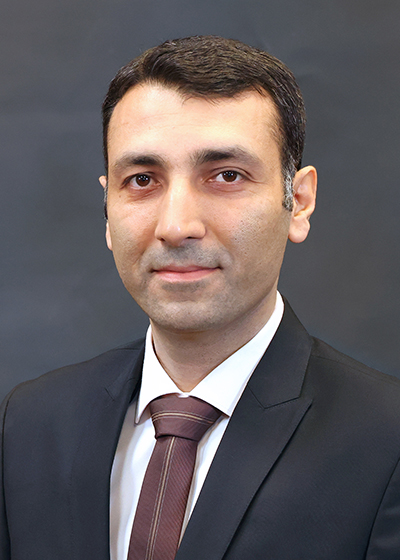
Hussein Gharakhani is an Assistant Professor in the Department of Agricultural and Biological Engineering at Mississippi State University. He specializes in agricultural robotics and automation, focusing on robotic cotton harvesting systems, sensor integration, and precision agriculture applications. His research addresses challenges in end-effector design, object detection, and field testing of robotic prototypes. Dr. Gharakhani holds a Ph.D. in Biosystems Engineering from Mississippi State University, an M.S. in Mechanical Engineering of Agricultural Machinery from the University of Tehran, and a B.S. in Agricultural Machinery Engineering from the University of Tabriz. His academic background includes roles as a graduate research and teaching assistant, as well as industry experience as a research and application engineer. His research interests span robotic manipulators, artificial intelligence, 2D/3D perception, and off-road robotics. Key projects include developing vision-guided robotic harvesters, evaluating end-effectors, and exploring UAV applications in cotton farming. His work emphasizes practical solutions to enhance agricultural efficiency and sustainability through automation. No scientific awards or grants are explicitly listed in the provided text. Dr. Gharakhani’s advising and mentorship activities are not detailed here, though his academic role suggests involvement in graduate student guidance. His research is centered on advancing robotic systems for precision agriculture, with a particular focus on cotton production challenges and robotic harvesting innovations.
Shakil Mahmud is a Visiting Assistant Professor in the Department of Electrical and Computer Engineering at the University of Mississippi. His research focuses on medical device security, embedded systems, and hardware security for cyber-physical systems. He holds a B.S. in Electrical Engineering from Ahsanullah University of Science and Technology (2015) and a Ph.D. in Computer Science and Engineering from the University of South Florida (2023). His recent work emphasizes enhancing safety and reliability in closed-loop medical systems through biosignal modeling, hardware emulation platforms (PEP), and trojan resilience strategies. He explores design trade-offs in bioimplantable devices and efficient implementations of AI architectures on constrained platforms. Key research themes include FPGA security, IoT medical device reliability, and false alarm mitigation in IoMT systems. His publications span topics like hardware obfuscation, real-time biomedical signal processing, and neural network optimization for embedded systems.
Fan Yao is an Associate Professor in the Department of Electrical and Computer Engineering at the University of Central Florida's College of Engineering and Computer Science. She received her Ph.D. in Computer Engineering from The George Washington University in 2018 and currently leads the Computer Architecture and Systems Research (CASR) lab. Her research focuses on the intersection of computer architecture, security, and machine learning, with particular emphasis on hardware-based security vulnerabilities and defenses. Dr. Yao's research interests span computer architecture, hardware and system security, AI security, energy-efficient computing, and cloud computing. Her work addresses critical security challenges in modern computing systems, particularly focusing on microarchitecture attacks, hardware-based model tampering in deep learning systems, and information leakage threats in emerging non-volatile memory systems. She has developed innovative defense mechanisms against cache timing channels, branch predictor vulnerabilities, and GPU-based side channels. Her recent publications demonstrate a strong focus on AI security (particularly Deep Neural Network vulnerabilities), hardware security (including cache and branch predictor attacks), and secure memory architectures. The research shows an evolution from traditional computer architecture topics toward the security implications of AI hardware and emerging memory technologies, with increasing emphasis on practical attacks and defenses in real-world systems. NSF GW I-Corps Site Grant Award, 2018 Best Dissertation Award, GWU, 2018 The Norris & Betty Hekimian Engineering Endowment Fellowship, GWU, 2017 Top Picks in Hardware and Embedded Security, 2019 NSF CAREER project award, 2024 Dr. Yao currently leads multiple NSF-funded research projects including 'Understanding and Taming Deterministic Model Bit Flip Attacks in Deep Neural Networks' (NSF SaTC, 2020-2023), 'Towards Secure-By-Design Integration of Emerging Non-Volatile Memory in Future System' (NSF CNS, 2020-2023), and 'Architecting Secure-by-Design Memristor-Based Memories' (NSF CNS, 2019-2022). She has successfully mentored numerous PhD students, many of whom appear as first authors on top-tier conference publications, demonstrating her commitment to graduate education and research mentorship. As the leader of the CASR lab, Dr. Yao oversees a vibrant research group focused on building secure-by-design, efficient, and advanced future systems through novel techniques spanning hardware, computer architecture, and systems. The lab actively publishes at top computer architecture and security conferences including ISCA, MICRO, HPCA, IEEE S&P, and USENIX Security, with multiple papers accepted to these venues annually. The group has developed several influential tools and frameworks for security analysis, including proof-of-concept code for BranchSpec exploits that has been widely cited in the hardware security community.
Dr. Xin Fu is a Professor in Electrical and Computer Engineering at the University of Houston's Cullen College of Engineering, holding a PhD from the University of Florida. His research spans computer architecture, energy-efficient systems, machine learning acceleration, and hardware reliability, with applications in edge computing and quantum systems. Awarded the NSF CAREER Award and named Miller Scholar, he leads innovations in heterogeneous computing architectures. Research focuses on optimizing hardware-software co-design for AI workloads, with current projects in federated learning optimization, quantum computing reliability, and neural network acceleration. Recent publications demonstrate cross-cutting work in mobile AI deployment, adversarial defense mechanisms, and quantum error correction. Honors include: NSF Faculty Early CAREER Award (2014) Four-time recipient of competitive NSF research grants Miller Scholar recognition for teaching and research excellence
Uwe Meyer-Baese is an Associate Professor in the Electrical and Computer Engineering Department at the FAMU-FSU College of Engineering. He holds a Ph.D. (Dr.-Ing. habil) from Darmstadt University of Technology, Germany. His research focuses on Digital Signal Processing with FPGAs, VLSI design, and medical imaging applications. He has authored over 100 publications, 5 books, and holds 3 patents. He has been recognized with awards such as the Humboldt Fellowship (2009) and the FAMU-FSU Teaching Award (2007). Education History: Dr.-Ing. habil (Venia Legendi), Darmstadt University of Technology, Germany, 2003 Ph.D. (Dr. Ing.), Darmstadt University of Technology, Germany, 1995 M.S., Darmstadt University of Technology, Germany, 1989 Research Interests: FPGA-based embedded systems and real-time DSP Low-power VLSI architectures Medical image processing (e.g., breast MRI, brain tumor analysis) Hardware security and intellectual property protection Graph theory applications in biological networks Recent work includes advancements in FPGA implementations for microprocessor systems, brain network controllability studies, and AI-driven medical diagnostics. His lab focuses on bridging hardware design with biomedical applications, emphasizing practical implementations through FPGA platforms. Awards: Max-Kade Award in Neuroengineering (1997) ECE Department Research Award (2005) Humboldt Fellowship (2009) FAMU-FSU Teaching Award (2007) He has advised over 60 master’s theses and contributed to major grants in FPGA-based medical systems. His book Digital Signal Processing with Field Programmable Gate Arrays is a widely used textbook in the field.
Francesc Moll Echeto is an Associate Professor at the Universitat Politècnica de Catalunya (UPC), affiliated with the Departament d'Enginyeria Electrònica and the Escola Tècnica Superior d'Enginyeria de Telecomunicació de Barcelona. He leads the HIPICS research group focused on high-performance integrated circuits and systems design. His expertise spans energy harvesting, low-power electronics, process variability management, and secure circuit design. He coordinates the Doctorat en Enginyeria Electrònica program and has coordinated EU-funded projects like the European Processor Initiative (EPI). Education: M.S. in Physics, Universitat de les Illes Balears, 1991 Ph.D. in Electronic Engineering, Universitat Politècnica de Catalunya, 1995 Research Focus: His work addresses energy-efficient computing, including: - Design of circuits tolerant to manufacturing variability - Energy harvesting from mechanical and RF sources - Secure hardware countermeasures against side-channel attacks - RISC-V architecture implementations in advanced technologies - Edge computing and autonomous sensor systems Grants & Collaborations: Coordinator of R&D projects like 'ARQUITECTURA DE COMPUTADORES DE ALTAS PRESTACIONES' (PID2023-146511NB-I00) Part of the Barcelona Zettascale Lab consortium Collaborations with Barcelona Supercomputing Center and industry partners Awards: HiPEAC Paper Award (2023, 2024) for innovations in vector processing and DNN acceleration Labs/Teams: Leads the HIPICS group and the EFRICS subgroup, collaborating on EU-funded initiatives like the European Processor Initiative. Active in open-source silicon projects (e.g., Sargantana RISC-V processor).
Dr. Chanchal K. Roy is a Professor of Software Engineering/Computer Science at the University of Saskatchewan (USask), Canada, and Director of the NSERC CREATE SOAR program. He leads the Software Research Lab (SRLab) and is renowned for his work on code clone detection (NiCad tool) and software maintenance. His research spans software evolution, big data analytics, and quantum computing applications in software engineering. Dr. Roy holds a Ph.D. from Queen’s University, an M.Sc. from RWTH Aachen University, and a B.Sc. from Khulna University. Research interests include software clone detection, maintenance, and evolution, with emphasis on semantic analysis and cross-language clones. He has published over 240 papers (h-index 52) and attracted $6M+ in funding, including NSERC grants and CFI-JELF support. Awards include the GSA Advising Excellence Award, Outstanding Young Computer Science Researcher Award, and multiple Most Influential Paper awards. Key contributions include developing NiCad, advancing Stack Overflow search techniques, and leading collaborative projects in software analytics. His work has been featured in ACM Tech News, TechRepublic, and Stack Overflow blogs. Dr. Roy actively engages in keynotes at conferences like WCRE, IWSC, and BIM.
Dr. Kevin Schneider is a Professor in the Department of Computer Science at the University of Saskatchewan. His research focuses on software architecture, evolution, analysis, and visualization, with notable work in quantum computing applications and machine learning. He also explores collaborative software teams and domain-specific languages to enhance development processes. Education: Ph.D., Computing and Information Science, Queen’s University (2000) Research Associate, Computing and Information Science, Queen’s University (1991–94) M.Sc., Computing and Information Science, Queen’s University (1990) B.Sc.(Hon), Computational Science, University of Saskatchewan (1980) Research interests include software design principles, maintenance strategies, and the integration of AI/quantum computing into software engineering. He emphasizes reproducibility in scientific workflows and tools like VizSciFlow. His work often bridges theory and practice, addressing challenges in code clone stability, user feedback management, and healthcare-related machine learning frameworks. Scientific Awards: Most Influential Paper at SCAM 2001 for his work on software engineering via source transformation. Advising and grants: While no specific advisees are listed, his research involves large-scale projects such as the Nutrient App and automated polyp segmentation tools. He collaborates on grants related to quantum computing applications and cloud-based software systems. Labs and teams: His work centers on collaborative scientific data analysis groups and developing tools for real-time groupware systems in complex workflows. He contributes to projects like CloneCognition and FSECAM, aiming to improve software design and maintenance through advanced analytics.
Dr Elliot J. Crowley is a Senior Lecturer in Electronics and Electrical Engineering at the University of Edinburgh, serving as Discipline Programme Manager. He co-leads the Bayesian and Neural Systems research group. His research focuses on simplifying machine learning, automated ML, low-resource deep learning, and engineering applications. He holds an MEng in Engineering Science and a DPhil (PhD) from the University of Oxford, with postdoctoral experience at Edinburgh's School of Informatics. He leads the EPSRC New Investigator Award and participates in the dAIEdge Horizon Network. Notable contributions include foundational work in neural architecture search (NAS), probabilistic methods for model efficiency, and applications in computer vision. His courses, such as the Data Analysis and Machine Learning module, emphasize practical Python-based learning for engineering students. Key awards include an EPSRC grant and recognition through distinguished papers at ASPLOS 2021. His team includes current PhD students (Linus Ericsson, Miguel Espinosa) and former advisees (Chenhongyi Yang at Meta, Jack Turner at Qualcomm). Research spans from NAS algorithms to ethical machine learning practices, with a focus on bridging theoretical advances and real-world engineering challenges.
Dr. Mingyan Li is an Adjunct Research Fellow at The University of Queensland's School of Electrical Engineering and Computer Science. Their research focuses on advanced imaging and sensing technologies with applications in biomedical engineering, particularly in MRI system development, RF coil design, and medical signal processing. They hold a PhD from The University of Queensland (2015). Research interests include high-field MRI systems, rotating RF coil technologies, MRI-Linac integration, and electrical properties tomography (EPT). Key contributions include innovations in MRI-Linac distortion correction, RF shielding for SAR reduction, and deep learning approaches for cardiac arrhythmia classification. Publications span MRI hardware optimization, image reconstruction algorithms, and biomedical signal analysis. Collaborations include work on metamaterial-inspired RF shielding and multi-modal antenna systems for body MRI.
Dr. Ahmed M. A. Sayed is a Senior Lecturer (equivalent to Associate Professor) and Director of the MSc Big Data Science Programme at Queen Mary University of London's School of Electronic Engineering and Computer Science. He leads the SAYED Systems Group and focuses on distributed systems, federated learning, edge computing, and network optimization. His research bridges system design and machine learning, emphasizing scalability and efficiency. Education: PhD in Computer Science (HKUST, 2017), M.Sc. and B.Sc. (Assiut University, 2012 and 2007). Prior roles include Research Scientist at KAUST and Senior Researcher at Huawei's Future Network Lab. Research Interests: Systems for ML, federated learning, edge/Cloud computing, network congestion control, and IoT. He has secured £730K+ in grants, including a UKRI-EPSRC grant for the KUber project (2024–2027). Awards: 2024 Best Student Paper (IJCAI FL Workshop), Hong Kong PhD Fellowship (2013–2017), and numerous travel grants. Actively supervises PhD/MSc students and postdocs. Grants & Leadership: PI of UKRI-EPSRC KUber project, Co-I in HKRGC and KAUST grants. Organizes workshops at venues like MobiSys and serves on TPC for ICML, EuroSys, and NeurIPS. Labs: Leads SAYED Systems Group, affiliated with Networks Group and DT4SGD Lab at Queen Mary.