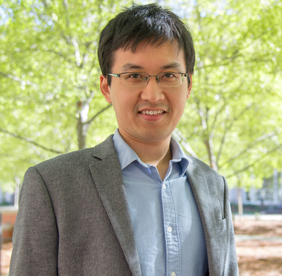
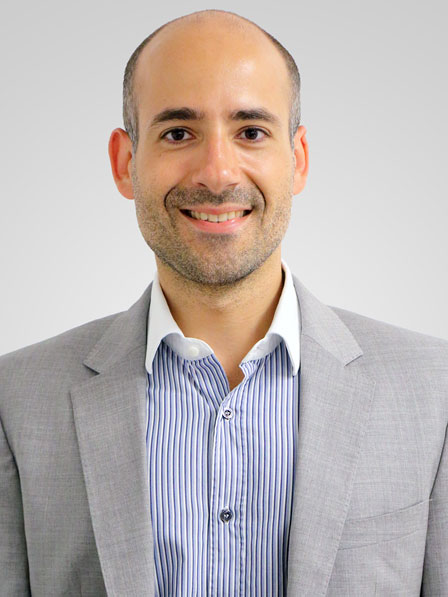
Dr. Luuk Spreeuwers is an Associate Professor specializing in Datamanagement & Biometrics , with a focus on Artificial Intelligence , Computer Vision , and Machine Learning . His research spans biometric security, face recognition, morphing attacks, and finger vein verification, resulting in over 255 publications and 10 years of active research contributions. He has collaboratively developed datasets like Orchid Flowers Dataset and FLUXSynID , advancing AI applications in biology and forensic science. Research Interests: Face recognition, biometric security, deep learning, morphing attack detection, finger vein biometrics, explainable AI, and historical image analysis. Scientific Awards: Best Paper Award (BIOSIG 2017), Best Poster Award (BIOSIG 2014), Educational Award of Electrical Engineering (2018). Activities: Organized SITB 2025 and IWBF 2024 conferences; delivered invited talks on face recognition and forensic applications; serves as Editor-in-Chief of IET Image Processing . Article Trends highlight his work on: deep learning for biometric security, forensic face recognition, morphing attack detection frameworks, finger vein pattern analysis, and robustness testing in AI systems.
Jeffery Dix is an Assistant Professor in the Department of Electrical Engineering at the University of Arkansas, College of Engineering. He received his B.S., M.S., and Ph.D. in Electrical Engineering from the University of Tennessee at Knoxville in 2013, 2015, and 2018, respectively. Education: University of Tennessee at Knoxville (B.S., M.S., Ph.D. in Electrical Engineering) Dr. Dix leads the Integrated Systems Laboratory for ANalog Design (ISLAND), focusing on analog/mixed-signal integrated circuit design for specialized applications. His research spans four key areas: Neuromorphic Hardware: Neural network integrated circuits optimized for IoT/edge computing with extreme energy efficiency. Extreme Environment Circuits: Radiation-hardened and temperature-resilient ICs for space and industrial applications. Subthreshold Circuit Design: Ultra-low-power circuits operating below FET threshold voltage. Power Electronics: ICs for electric vehicles, micro-grids, and power conversion systems. His recent publications demonstrate expertise in SiC gate drives, radiation-hardened amplifiers, and spiking neural network accelerators. He teaches courses in circuits, electronics, and IC design, with a focus on analog/digital design and neural network hardware.
Dr. Hai Dong is a Senior Lecturer at the School of Computing Technologies, RMIT University in Melbourne, Australia, with promotion to Associate Professor scheduled for 2026. He serves as the Founding Director of the CloudTech-RMIT Green Cryptocurrency Joint Research Laboratory (GreenCryptoLab) and Leader of the Smart Sensing and Services Research Area. Previously, he held research fellow positions at both RMIT University and Curtin University. Dr. Dong is a Senior Member of IEEE and chairs the IEEE Computational Intelligence Society Task Force on Deep Edge Intelligence. Dr. Dong's research spans several cutting-edge domains including Service-Oriented Computing, Edge Intelligence, Blockchain, AI Security, Cyber Security, and Machine Learning. His work bridges theoretical foundations with practical applications, particularly in secure and efficient computing systems. He has developed innovative approaches for smart contract security, edge computing optimization, federated learning, and blockchain applications with a strong focus on sustainability and real-world impact. His publication record demonstrates consistent high-impact contributions across top venues including AAAI, ASE, ICML, TSE, and TSC. Dr. Dong's research shows a clear trajectory toward increasingly sophisticated integration of AI with edge computing and blockchain systems, with growing emphasis on security, privacy, and resource efficiency. Recent work highlights his leadership in addressing emerging challenges in LLM-generated smart contracts and secure federated learning systems. Best Research Paper Award at ICSOC 2016 Best Paper Award at IEEE ICBC 2025 2023 RMIT Award for Research Engagement and Impact - Industry Engagement in Graduate Research Dr. Dong has successfully supervised numerous PhD and Master's students to completion, with many going on to prestigious positions. He has secured over $5 million in research funding as Chief Investigator from sources including ARC, CRC, QNRF, and industry partners like ANZ, CloudTech, and Telstra. His GreenCryptoLab research facility represents a significant industry-academic partnership focused on sustainable blockchain technologies. Dr. Dong maintains active collaborations with researchers worldwide and serves on committees for over 100 international conferences.
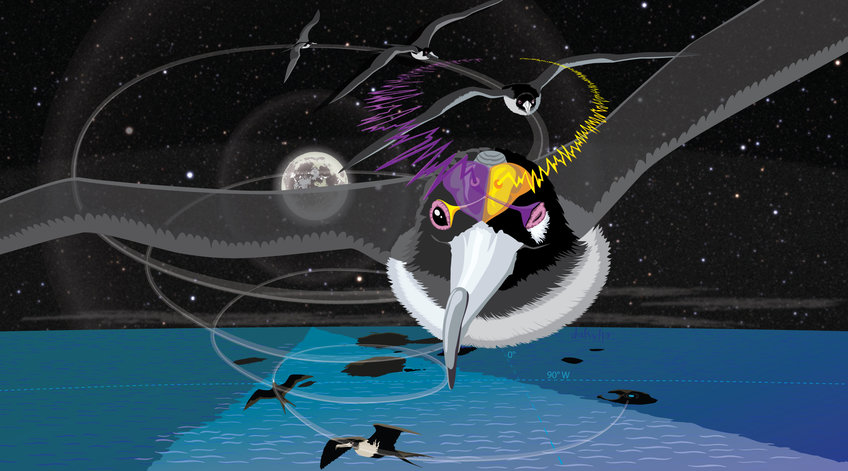
Dr. Niels Rattenborg serves as Research Group Leader at the Max Planck Institute for Biological Intelligence (formerly Max Planck Institute for Ornithology) in Seewiesen, Germany, where he has directed the Bird Sleep Research Group since 2005. His pioneering work focuses on the evolution and neurophysiological mechanisms of sleep in birds, utilizing advanced techniques including high-density electrode arrays and telemetry systems to study sleep patterns in both controlled laboratory environments and natural field settings. Dr. Rattenborg's research has fundamentally changed our understanding of avian sleep through groundbreaking discoveries about sleep in flight. His work with great frigatebirds (Fregata minor) demonstrated that birds can sleep while flying over the ocean, typically with one brain hemisphere at a time but occasionally with both hemispheres simultaneously. Remarkably, these birds accumulate less than one hour of sleep per day for up to 10 days during flight, challenging the mammalian paradigm that adaptive waking performance requires substantial sleep. His research extends to diverse avian species including grey-breasted sandpipers (Calidris melanotos) and chinstrap penguins, revealing how birds employ unique sleep strategies to survive in challenging ecological environments. Analysis of Dr. Rattenborg's recent publications (2022-2025) reveals three major research themes: neurophysiological mechanisms of avian sleep, ecological adaptations of sleep patterns in natural environments, and comparative evolutionary studies across species. His work spans multiple disciplines including neuroscience, ecology, evolutionary biology, and physiology, with particular emphasis on how birds adapt their sleep architecture to environmental constraints. The research demonstrates remarkable diversity in avian sleep strategies that challenge traditional mammalian models of sleep regulation. Dr. Rattenborg's significant contributions to sleep science have been recognized with prestigious awards: Sleep Research Society Young Investigator Award (2000) for best peer-reviewed paper Sleep Research Society Outstanding Scientific Achievement Award (2017) As leader of the Bird Sleep Research Group, Dr. Rattenborg oversees a multidisciplinary team conducting cutting-edge research that has developed innovative methodologies for studying sleep in natural settings. His laboratory's development of the ONEIROS device—a miniature standalone recorder for sleep electrophysiology, physiology, temperatures, and behavior—has revolutionized field studies of sleep. The group's comparative approach to sleep research provides crucial insights into the evolutionary history and fundamental functions of sleep, with implications for understanding sleep disorders and the consequences of sleep loss in humans.
Professor Martin J. Hayes serves in the Department of Electronic and Computer Engineering at the University of Limerick's Faculty of Science and Engineering. His institutional affiliation includes campus location ERB2-021 and contact details: email Martin.J.Hayes@ul.ie and phone +353 (0)61 202577. His research concentrates on Artificial Intelligence and Computer Vision applications within Smart Manufacturing and Autonomous Vehicles . Key specialties include deep learning for defect detection, visual question answering systems, and real-time failure monitoring in industrial environments. He also investigates interoperable IoT security frameworks and private 5G network implementations for Industry 4.0. Analysis of recent publications (2023-2025) reveals dominant themes in AI-driven manufacturing solutions and autonomous driving technologies. His work consistently addresses data-constrained training environments and real-time performance requirements, with growing emphasis on human-machine interaction patterns and subjective evaluation frameworks for vision systems. Scientific Awards: No scientific awards were documented in available sources Advising and Grants: While specific student advisement records and grant details were not provided, Professor Hayes' extensive publication output across manufacturing automation, autonomous systems, and wireless communications indicates active leadership in multiple research initiatives. His involvement in the REEdI (Rethinking Engineering Education in Ireland) project demonstrates commitment to educational innovation alongside technical research.
Paul Primus is a researcher at the Institute of Computational Perception, Johannes Kepler University Linz, specializing in audio processing and machine learning. His work focuses on sound event detection, acoustic scene classification, and language-based audio retrieval, with significant contributions to the DCASE (Detection and Classification of Acoustic Scenes and Events) challenges. Education: Dr. (PhD) MSc BSc Research Interests: Primus's research bridges audio signal processing and deep learning, addressing real-world challenges in machine listening. His work emphasizes device invariance, data efficiency, and transformer architectures for audio analysis. Key contributions include knowledge distillation for audio retrieval, multi-stage transformer training, and novel approaches to language-audio interaction. He actively explores low-complexity solutions suitable for embedded systems and edge deployment. Publication Trends: Primus's recent work (2023-2025) shows a clear trajectory toward multimodal audio-language systems, leveraging transformers and pretraining techniques. His publications increasingly focus on data efficiency, device generalization, and practical deployment constraints, as evidenced by his DCASE challenge submissions. The integration of metadata and cross-modal alignment represents a growing research emphasis. Activities: Adversarial Robustness in Data Augmentation (2020) Exploiting Parallel Audio Recordings to Enforce Device Invariance in CNN-based Acoustic Scene Classification (2019) Labs and Teams: Primus is a core member of the Institute of Computational Perception at JKU, which leads research in computational audio analysis. The institute maintains strong participation in international challenges like DCASE and collaborates extensively on audio transformer development and language-audio interaction systems.
Kim-Phuc TRAN is an Associate Professor and Research Supervisor at Ecole Nationale Supérieure des Arts et Industries Textiles (ENSAIT), affiliated with the GEMTEX Research Laboratory. He serves as Section CNU 61 and holds leadership roles including Founder member of CybCom (2021-), Member of the Executive Committee of GEMTEX (2020-), and Coordinator of the Cybersecurity axis for GRAISyHM (2020-). His international engagement includes heading the International Chair in Data Science and Explainable Artificial Intelligence at Dong A University & International Research Institute for Artificial Intelligence and Data Science (IAD), Vietnam since 2018. Dr. TRAN's research spans multiple dimensions of Artificial Intelligence with a strong focus on Explainable, Trustworthy, and Transparent AI . His work encompasses Self-Supervised Learning, Anomaly Detection, Federated Learning, and Multimodal Deep Learning. He also investigates Ethical and Human-centered AI through Embedded AI, Wearable AI Devices, and Human-Centered Design to Address Biases. His research extends to Safety and Reliability of AI systems, including Adversarial Machine Learning and Cybersecurity for AI Systems. In Statistical Computing, he focuses on Statistical Process Monitoring and Advanced Control Charts, while his work on Intelligent Decision Support Systems addresses Clinical Decision Support, Supply Chain Optimization, and Predictive Maintenance. His research on Digital Twins spans Healthcare and Smart Manufacturing applications. His publication portfolio shows a strong emphasis on practical AI applications across industries, with particular focus on anomaly detection techniques (appearing in over 40% of his recent publications), industrial applications of AI (35%), and statistical process control methods (25%). His work demonstrates consistent growth in complexity from foundational machine learning approaches to sophisticated multimodal and federated learning systems integrated with domain-specific knowledge. Award for Scientific Excellence (Prime d'Encadrement Doctoral et de Recherche) 2021-2025 from the Ministry of Higher Education, Research and Innovation, France Dr. TRAN has secured substantial research funding as Principal Investigator, including the XAIDS_IChair (500K EUR, 2018-2028), SHSFL (211K EUR, 2020-2024), and EIoTIA (4500 EUR, 2022-2023). He serves as Associate Editor for IEEE Transactions on Intelligent Transportation Systems and Engineering Applications of Artificial Intelligence, demonstrating recognition of his expertise. His leadership extends to coordinating the International semester at ENSAIT and co-creating the International Research Institute for Artificial Intelligence and Data Science. He leads the Human Centered Design Group research team and is actively involved with the GEMTEX research laboratory and Tex-CARE chair. His work bridges academia and industry through multiple collaborative projects with partners like Rosenberger Group, Clear Fashion, and MatchMarket. His current research directions focus on integrating AI with wearable technology, advancing federated learning approaches, and developing trustworthy AI systems for critical applications in healthcare and manufacturing.
Xiang Ma is an Assistant Professor in the Department of Computer Science at the University of Wisconsin-Eau Claire's College of Arts and Sciences. His office is located in Phillips Science Hall 141, and he can be contacted via phone (715-836-4425) or email (maxiang@uwec.edu). He holds a Ph.D. from Utah State University and a B.S. from Southern University of Science and Technology in China. His research focuses on cutting-edge computational paradigms, including: Federated Learning : Privacy-preserving distributed machine learning. Mobile Edge Computing : Optimizing cloud resources for mobile devices. In teaching, he covers: Computer Networks Computer Systems Artificial Intelligence and Machine Learning
Saikat Barua is a Senior Researcher at North South University in Dhaka, Bangladesh, affiliated with the Department of Electrical Engineering and Computer Science. His research focuses on designing intelligent systems aligned with human values, aiming to create beneficial AI that collaborates with humanity for a better future. With expertise spanning Machine Learning, Deep Learning, AI Safety, Quantum Error Correction, and Natural Language Processing, Barua contributes significantly to advancing artificial intelligence with strong emphasis on ethical and practical applications. Barua's research centers on developing transparent, reliable, and human-centered AI systems across multiple cutting-edge domains. His work in explainable AI (XAI) addresses the critical need for interpretability in complex machine learning models, while his investigations into quantum machine learning explore novel approaches to hybrid quantum-classical systems. He actively researches autonomous agents and large language models, examining their security vulnerabilities and potential for beneficial societal impact. A recurring theme in his work is bridging the gap between sophisticated AI capabilities and human understanding, ensuring technologies remain accessible and trustworthy. His publication record reveals a strategic focus on making AI more transparent, secure, and energy-efficient across diverse applications. Barua has developed integrated environments for knowledge analysis (KAXAI), energy-efficient medical imaging frameworks (ELMAGIC), and quantum error correction techniques (RESCUED). His recent work increasingly addresses the security challenges of agentic systems and the practical implementation of quantum machine learning. The trajectory of his research demonstrates consistent progression from foundational AI techniques toward increasingly complex, interdisciplinary applications with real-world impact. As an active researcher with nine publications accumulating over 11,988 reads and 14 citations, Barua engages deeply with the scientific community through ResearchGate. His research questions explore critical intersections of AI with healthcare empathy, machine learning data collection, human resource management, and responsible research practices. This comprehensive engagement reflects his commitment to advancing both the technical frontiers of AI and its thoughtful integration into societal frameworks, positioning him as a thoughtful contributor to the evolving landscape of artificial intelligence research.
George Li is an Associate Professor in the Department of Computer Science at Southeast Missouri State University, based in Dempster Hall 214. He can be contacted at (573) 651-2653 or zli2@semo.edu, with mailing address One University Plaza, MS 5950, Cape Girardeau, MO 63701. His research spans critical cybersecurity domains including: IoT Security and device forensics Digital evidence network construction Web application security pedagogy Reverse engineering for vulnerability analysis Tiny Machine Learning (TinyML) education platforms Face-recognition IoT security applications Dr. Li's 2021-2023 publications reveal a consistent focus on practical security solutions, with 50% dedicated to IoT forensics methodologies and 30% to educational platforms. His work bridges academic research and real-world security challenges, particularly in evidence retrieval from constrained IoT devices and developing hands-on cybersecurity curricula. He actively presents findings at major conferences including IEEE GLOBECOM, EDSIG, and ISCAP, with recent talks covering forensic evidence networks, IoT device analysis, and security lab exercises.
Konstantinos A. Tsintotas is an Assistant Professor at the Department of Information and Electronic Engineering, International Hellenic University. His research focuses on artificial intelligence, robotics, computer vision, and their applications in smart cities, healthcare, and manufacturing. He is actively involved in advancing AI-driven systems for critical infrastructure management, robotic vision, and embedded device technologies. His work spans theoretical advancements and practical implementations, including projects like SLAM algorithms for autonomous navigation, deep learning models for medical diagnosis, and IoT-integrated smart supply chains. Tsintotas also explores ethical implications of AI in human action recognition and contributes to neuromorphic computing through spiking neural networks. Key technical contributions include ReJSHand (real-time hand pose estimation), fall detection systems for embedded devices, and visual place recognition frameworks. His interdisciplinary approach bridges computer science, electrical engineering, and biomedical applications, reflecting a strong commitment to innovation at the hardware-software interface. Notable trends in his publications emphasize AI ethics, multimodal perception for robotics, and low-power embedded solutions. Ongoing work includes advancing digital twin technologies for supply chains and refining bio-inspired neural architectures for robotics applications.
Aaron Elmore is an Associate Professor in the Department of Computer Science at the University of Chicago, affiliated with The College. His research focuses on elastic databases, cloud computing, and distributed systems, with an emphasis on database-as-a-service, resource-efficient systems, and collaborative analytic platforms. Education : PhD in Computer Science, University of California, Santa Barbara (2015) MS in Computer Science, University of Chicago (pre-PhD) Industry experience prior to academia Research Interests : Cloud computing, distributed systems, database systems, IoT analytics, edge computing, and data management. He develops systems like CrocodileDB (resource-efficient query execution), VergeDB (IoT analytics), and CodecDB (data-driven encoding). His work also explores compression techniques ( DenseStore , EdgeTSD ) and collaborative tools ( DataHub , Decible ). Labs & Groups : ChiDATA: Research on large-scale video analysis and data economics Systems Group: Focus on systems, programming languages, and software engineering CERES Center: Unstoppable computing and system resilience Awards include the NSF CAREER Award (2021), multiple Google DANI Awards (2024–2023), and ACM SIGMOD recognitions. Grants & Advising : Active in securing industry grants (e.g., J.P. Morgan, Google) and has advised numerous PhD students and postdocs, including Dixin Tang (now Assistant Professor at UT Austin) and Chunwei Liu (MIT postdoc). Labs/Teams : ChiDATA, Systems Group, and the CERES Center for collaborative and resilient computing initiatives.
Jari Nurmi is a Full Professor at Tampere University's Faculty of Information Technology and Communication Sciences, Department of Electrical Engineering. With over 30 years of experience in academia and industry, he specializes in communications engineering, positioning technologies, embedded systems, and reconfigurable computing. His roles include Director of the national DELTA doctoral training network, head of the European Joint Doctorate A-WEAR program, and coordinator of APROPOS MSCA ITN. He has supervised 32 PhD dissertations and over 160 MSc theses. His research focuses on embedded processor systems, reconfigurable computing, approximate computing, and positioning technologies (especially GNSS receiver architectures). He is actively involved in organizing international conferences like IEEE Nordic Circuits and Systems Conference and serves on editorial boards of three journals. His recent work includes advancements in neural network inference on FPGAs, 5G NR localization, and energy-efficient edge AI for autonomous systems. Nurmi has been recognized for his contributions to conference organization and innovation. His publications span topics such as FPGA optimization, GNSS error modeling, and machine learning for healthcare applications. He leads initiatives like the EWOk dataset compression framework and the Hard SyDR benchmarking environment for GNSS algorithms.
Xiaowen Gong is currently the Godbold Associate Professor in the Department of Electrical and Computer Engineering (ECE) at Auburn University. They hold a PhD from Arizona State University and completed postdoctoral work at Ohio State University. Their research focuses on wireless networks , federated learning , and edge computing with an emphasis on heterogeneous environments and quality-aware systems . BEng, Huazhong University of Science and Technology (2008) MSc, University of Alberta (2010) PhD, Arizona State University (2015) Postdoc, Ohio State University (2015-2016) Assistant Professor, Auburn University (2017-2023) Godbold Associate Professor, Auburn University (2023-present) Research spans ML/AI in wireless networks , distributed computation , and socially-aware networking . Recent work includes anarchic federated learning , delay-optimal edge computing , and privacy-preserving crowdsensing . Publications address challenges in client heterogeneity , channel-aware scheduling , and secure data aggregation . Key contributions include NSF CAREER Award (2022) for efficient federated learning , IEEE Internet of Things Journal Best Paper Runner-Up , and organizing RET Site for rural STEM teacher education in ML/robotics. Teaching covers Wireless Communication Systems , Neural Networks , and Information Security , with outreach activities involving robotics demonstrations for K-12 students.
Matteo Rinaldi is a Professor in the Department of Electrical and Computer Engineering at Northeastern University's College of Engineering and serves as Director of the Institute for NanoSystems Innovation. His work focuses on advanced micro/nanoelectromechanical systems (M/NEMS) for sensing and communication applications. Ph.D. in Electrical and Systems Engineering, University of Pennsylvania (2010) M.Sc. and B.S. in Electronic Engineering, University of Rome Tor Vergata (2007, 2004) Research Interests: Rinaldi's research spans fundamental and applied aspects of piezoelectric nanomaterials, with emphasis on Aluminum Nitride (AlN) and Scandium Aluminum Nitride (ScAlN) based NEMS Plasmonically enhanced infrared and chemical sensors Low-power reconfigurable radio communication systems Integration of MEMS/NEMS with electronics Nanomaterials for harsh environments Publications & Research Trends: Rinaldi's recent work explores high-frequency resonators, infrared detection systems, and zero-power sensing technologies. Key trends include plasmonics for energy-efficient devices, ScAlN integration for improved performance, and machine learning applications in nanoscale device design. Scientific Recognition: 2025 IEEE IFCS Walter G. Cady Award 2024 Northeastern Global Network Accelerator Award Optica Fellow IEEE Sensors Council Early Career Award DARPA Young Faculty Award NSF CAREER Award Advising & Funding: Rinaldi advises graduate researchers like Antea Risso. His lab secures major grants from DARPA, NSF, DOE, and the Bill & Melinda Gates Foundation, focusing on next-generation sensing technologies and 6G communication systems. Research Infrastructure: Leads the Northeastern Sensors & Nano Systems Laboratory (NS&NS Lab) and co-directs the bicoastal Institute for NanoSystems Innovation with Boston and Oakland campuses, advancing nanoscale semiconductor technologies.