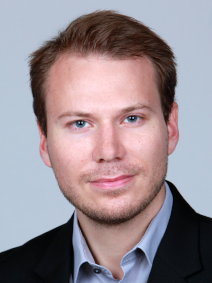
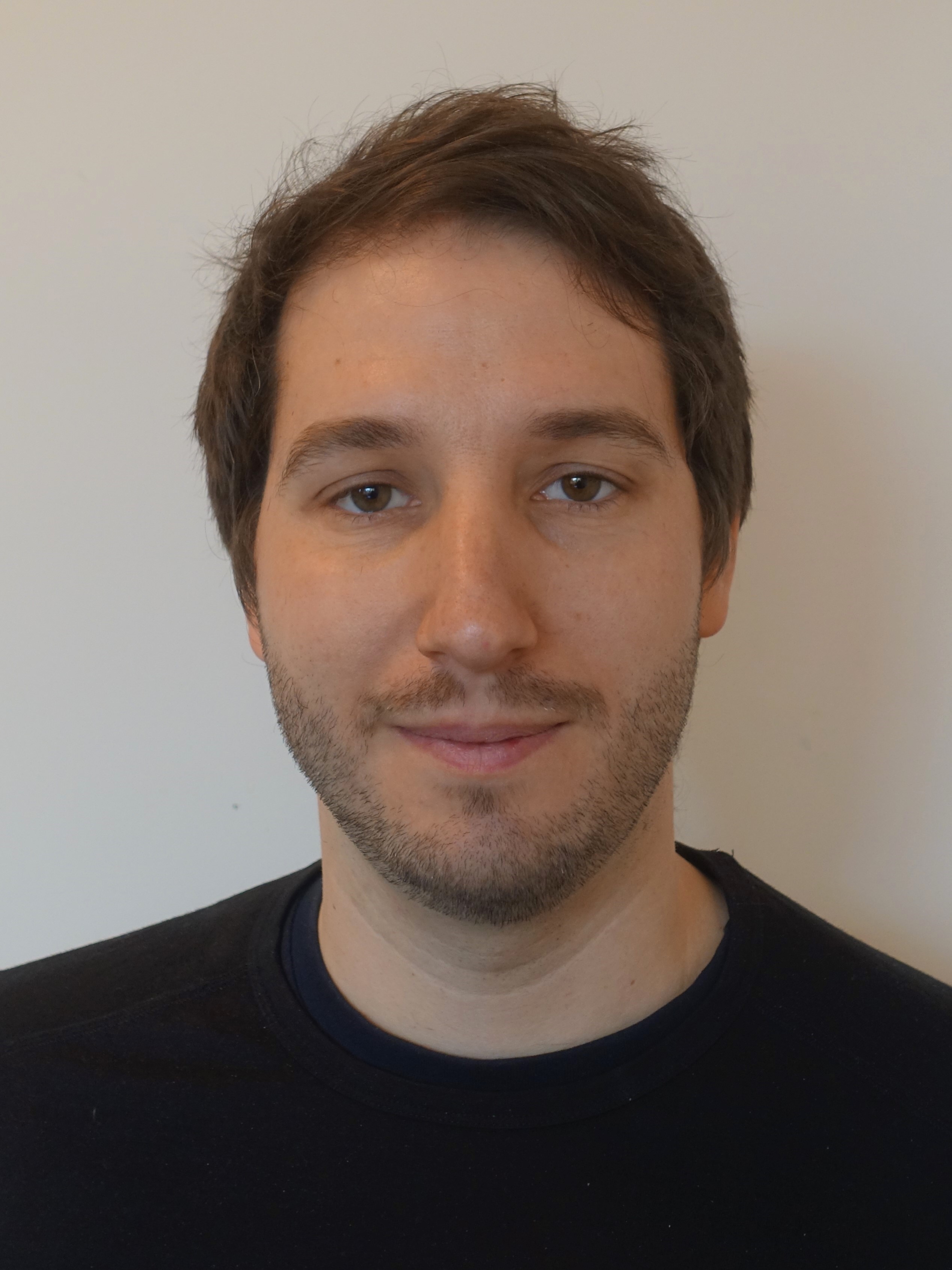
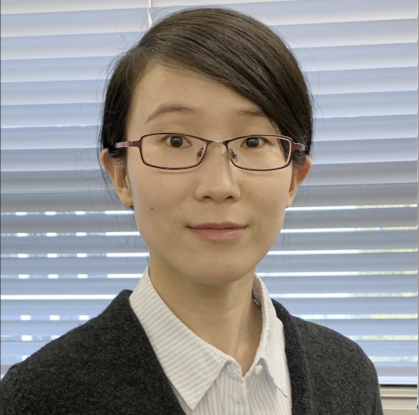
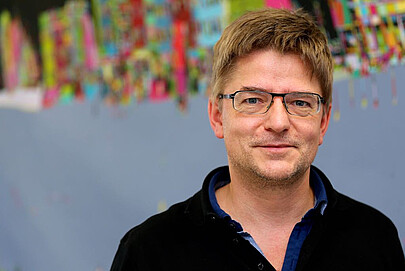
Prof. Frank Müller is a Universitätsprofessor at Forschungszentrum Jülich GmbH , leading the Molecular Sensory and Neurobiology research group. His work bridges computational methods and biological systems. Research focuses on: Graph-based machine learning for biological networks Transformer architectures for molecular data Computational approaches to sensory neuroscience Parameter-efficient models for multi-task learning Key article trends show expertise in graph transformers , molecular foundation models , and multi-agent reasoning systems . No awards explicitly mentioned. Current affiliation: IBI (Institute of Biological Information Processing), Forschungszentrum Jülich
Timothy K. Shih is an active academic researcher with over 30 years of scholarly contributions, evidenced by his extensive publication record from 1991 through 2025. With more than 380 publications spanning numerous prestigious venues including IEEE Access, Multimedia Tools and Applications, and Lecture Notes in Computer Science, he maintains a robust research profile with consistent annual output (20+ papers in peak years). His work demonstrates leadership through frequent senior/corresponding author positions and collaborations with numerous researchers across international institutions. Dr. Shih's research interests encompass a diverse range of computer science disciplines with particular emphasis on Computer Vision , Human-Computer Interaction , and AI Applications . His work bridges theoretical advancements with practical implementations in educational technology, accessibility solutions, and multimedia systems. Recent publications reveal a strategic focus on applying deep learning techniques to solve real-world problems in sign language recognition, gesture analysis, and wireless sensing applications. Analysis of his publication trends over the past five years shows increasing specialization in multimodal AI systems, with significant contributions to sign language technology (including Arabic Sign Language recognition), WiFi-based human activity recognition, and music technology applications. His research demonstrates strong interdisciplinary connections between computer vision, machine learning, and human-centered computing, with practical applications spanning educational technology, accessibility solutions, and smart environments. Through his mentorship, Dr. Shih has guided numerous junior researchers who have become frequent collaborators, including Chih-Yang Lin, Hsin-Hung Cho, and Tipajin Thaipisutikul. His research program appears well-funded through consistent publication output across multiple project areas, suggesting successful grant acquisition in computer vision, AI, and educational technology domains. Current work indicates active involvement in cutting-edge research on diffusion models for audio processing, enhanced sign language recognition systems, and novel approaches to WiFi-based human interaction analysis.
Sergios Gatidis is a prominent researcher in the Department of Diagnostic and Interventional Radiology at the Faculty of Medicine, Eberhard Karls University of Tübingen. His work bridges medical imaging and artificial intelligence, with a particular focus on MRI and PET/CT applications. He has established himself as a key collaborator in numerous multi-institutional research projects, frequently working with Thomas Küstner, Bin Yang, and Konstantin Nikolaou. Dr. Gatidis's research centers on applying deep learning techniques to solve critical challenges in medical imaging. His work spans biological age estimation from MRI scans, motion correction in MRI, lesion segmentation in PET/CT imaging, and the application of large language models to radiology reports and hospital course documentation. He has made significant contributions to the autoPET challenge for automated lesion segmentation and has developed novel approaches for attention-aware image registration and reconstruction. His publication record shows a clear evolution from foundational work in motion correction and image reconstruction (2016-2018) to increasingly sophisticated AI applications, with a recent strong focus on large language models for medical text processing (2023-2025). The breadth of his work demonstrates expertise spanning technical aspects of medical imaging physics to clinical applications of AI. His recent publications indicate active research in several key areas: (1) development of foundation models for medical imaging interpretation, (2) robust evaluation frameworks for medical AI systems, and (3) practical clinical integration of AI tools for radiology workflow enhancement. These trends reflect the broader field's movement toward more comprehensive, clinically validated AI solutions. Though no specific awards are listed in the available publications, his consistent presence as a key contributor to high-impact medical imaging research suggests recognition within the field. His work appears regularly in top journals including IEEE Transactions on Medical Imaging, Nature Machine Intelligence, and Medical Image Analysis. Dr. Gatidis actively collaborates across disciplines, working with computer scientists developing novel AI architectures and clinicians implementing these tools in real-world settings. His recent work on MedHELM and CheXagent demonstrates commitment to creating evaluation frameworks and practical tools that address real clinical needs while maintaining scientific rigor.
Muhammad Khalil Afzal is a faculty member at COMSATS University Islamabad within the Department of Computer Science . His career focuses on Internet of Things (IoT) , Wireless Sensor Networks , and Machine Learning applications in network optimization. Key collaborations with researchers like Byung-Seo Kim and Sung Won Kim Published extensively in IEEE Access , Sensors , and Future Generation Computer Systems Research spans data-driven intelligence , QoS in IoT , and smart transportation systems : Developed graph convolutional GRU frameworks for traffic prediction Explored NOMA for low-latency communications in 5G Innovated blockchain-based privacy preservation in vehicular networks
Ziyan Wang is a researcher affiliated with Carnegie Mellon University's School of Computer Science, Department of Computer Science. Their work focuses on computer graphics, machine learning, and medical imaging, with a strong emphasis on dynamic capture and animation of human hair and heads. They hold a PhD in Computer Science from Carnegie Mellon University (2023). Research interests include 3D modeling, neural networks, reinforcement learning, and applications in medical informatics. Notable contributions include high-fidelity hair modeling using computed tomography and neural dynamic models for volumetric hair capture. Their work spans conferences like CVPR, NeurIPS, and ECCV, demonstrating expertise in both theoretical and applied aspects of computer vision and graphics. Publications highlight advancements in diffusion models, multi-agent reinforcement learning, and domain adaptation for fault diagnosis. Collaborations span institutions like the University of Washington, Max Planck Institute, and NVIDIA Research, reflecting interdisciplinary engagement. Recent work explores AI-generated content in virtual environments and cybersecurity in package management systems.
Christian Benz is a Researcher at the Computer Science Department, Faculty of Media, Bauhaus-University Weimar since 2019. He holds an M.Sc. and B.Sc. in Computer Science from TU Darmstadt, with specialization in machine learning applied to image data. His research focuses on structural health monitoring, crack detection, and 3D reconstruction using computer vision techniques. He concurrently works part-time as a Computer Vision Scientist at ZEISS since 2023. Research interests include crack segmentation , multi-view learning , point cloud processing , and deep learning for infrastructure inspection . Notable projects include the AISTEC initiative for evaluating aging infrastructure using digital technologies. His work bridges computer vision with civil engineering applications, particularly in bridge and building safety assessment. Publications emphasize interdisciplinary approaches to structural defect detection, leveraging CNNs, attention mechanisms, and novel benchmarks like OmniCrack30k. His methods address challenges in concrete surface analysis, UAV-based imaging, and semantic segmentation during bridge inspections. Professional activities include lab coordination in the 3D-RealityCapture-ScanLab and participation in the Bauhaus Path Planning Challenge. His research contributes to advancing automated inspection tools for civil infrastructure safety.
Li Yi is a Professor in the Department of Computer Science at Tsinghua University's School of Information Science and Technology, where they lead cutting-edge research at the intersection of computer vision, 3D graphics, and robotics. Their work focuses on advancing neural rendering, point cloud processing, and embodied AI with applications in human-object interaction and robotic manipulation. Research interests span Computer Vision , 3D Graphics , Robotics , Point Cloud Processing , Neural Rendering , and Human-Object Interaction . Recent work explores language-grounded spatial reasoning, dexterous manipulation, and 4D dynamic content generation, with publications appearing in top venues like CVPR, ICCV, and NeurIPS. Their research bridges theoretical advances with practical applications in embodied AI systems. The publication trends reveal a strong focus on neural rendering techniques (particularly NeRF variants), embodied AI for robotic manipulation , and multimodal understanding integrating vision, language, and action. Recent work increasingly incorporates large language models and focuses on generalizable approaches that transfer from simulation to real-world settings. As an advisor, Professor Li has mentored numerous students including Yunze Liu, Xueyi Liu, Zekun Qi, and Runpei Dong, who frequently appear as first authors on collaborative publications. Their research has been supported by significant grants enabling work on human-robot interaction, 3D scene understanding, and embodied AI systems. Professor Li leads a research group focused on developing comprehensive frameworks for spatial reasoning, object manipulation, and dynamic scene understanding. The team works on creating benchmarks like TACO for tool-action-object understanding and developing systems like MobileH2R for human-robot handover tasks. Current work emphasizes real-world applicability with a focus on generalizable solutions that work across diverse settings.
Bin Gu is a professor at Mohamed bin Zayed University of Artificial Intelligence (MBZUAI), specializing in machine learning and artificial intelligence. Previously affiliated with institutions including Nanjing University of Information Science and Technology (former position) and Nanjing University of Aeronautics and Astronautics (PhD 2011). His research focuses on optimization algorithms, spiking neural networks, federated learning, kernel methods, adversarial robustness, and neuromorphic computing. Education: PhD in Computer Science (2011) from Nanjing University of Aeronautics and Astronautics. Prior affiliations include Tianjin University, Boston University, University of Science and Technology of China, and Southeast University. Research Interests: Extensive work on machine learning theory and applications, including robust learning, federated systems, neural architecture design, and privacy-preserving techniques. Over 200 publications in top venues such as AAAI, NeurIPS, ICLR, ICML, KDD, and IEEE journals. Publications Trends: Recent focus on spiking neural networks (SNNs), federated learning frameworks, and optimization methods for handling adversarial attacks and privacy constraints. Notable contributions include scalable algorithms for kernel-based learning, robust SVM formulations, and neuromorphic computing architectures. Labs/Teams: Active in AI research groups focused on neural networks, optimization, and distributed learning systems. Collaborates with industry and academic partners on applied AI solutions.
Prof. Dr. Heike Trautmann is a leading researcher in statistics and optimization at the University of Twente (2021-2026) and former Professor at WWU Münster (2013-2016). Her work bridges computational statistics, evolutionary optimization, and social media analytics. She has held visiting positions at TU Dortmund, Leiden University, and RWTH Aachen. Current affiliation: University of Twente (Data Science: Statistics and Optimization) Previous roles: WWU Münster (Professor for Information Systems and Statistics), TU Dortmund (Postdoctoral researcher) Research Focus: Multi-criteria optimization, automated algorithm selection, data stream mining, and disinformation detection in social media. Her methodological innovations in exploratory landscape analysis and evolutionary computation have transformed algorithm configuration practices. Developed COSEAL consortium for algorithm selection Co-founder of Benchmarking Network (2019) Principal investigator in projects like PropStop and MODERAT! Academic Contributions: Over 150 publications in top venues like GECCO, PPSN, and Evolutionary Computation journal. Pioneered feature-based landscape analysis tools (flacco, pflacco) and stream clustering frameworks.
M.Sc. Pascal Esser is a researcher at the Department of Informatics at Technical University of Munich (TUM). He specializes in theoretical computer science, formal methods, and machine learning, with a focus on neural networks and verification techniques. His teaching responsibilities include courses on theoretical computer science fundamentals such as Petri Nets, Automata and Formal Languages, Logic, and Model Checking. He has contributed to research in representation learning, graph neural networks, and probabilistic models, as evidenced by his recent publications. Esser is involved in the development of tools like Automata Tutor and has collaborated on projects such as PaVeS and ConVeY. His work bridges formal methods and artificial intelligence, emphasizing rigorous theoretical foundations while exploring practical applications in neural network verification and algorithm design. Education: Master of Science in Computer Science (degree details unspecified). Research Interests: Formal verification, machine learning theory, neural networks, representation learning, graph algorithms, and theoretical computer science. Professional Activities: Active in teaching advanced undergraduate and graduate courses since 2020, with a focus on foundational topics in informatics and emerging areas like neural network verification. Egger's research trends emphasize interdisciplinary approaches, combining insights from statistical learning theory with algorithmic analysis to address challenges in modern AI systems. His publications highlight advancements in understanding model dynamics, kernel-based methods, and graph neural network architectures. While no specific grants or awards are listed, his sustained academic contributions indicate active engagement in the informatics research community. He is part of a research group at TUM including notable figures like Javier Esparza and Jan Křetínský, contributing to tools and frameworks for automata theory and model checking. His work often intersects with practical software implementations such as the Automata Tutor educational platform and Strix verification tools.
Sebastian Otte is a Professor at the Institute for Robotics and Cognitive Systems at the University of Lübeck, where he leads the Adaptive AI research group. Prior to this, he was a postdoctoral researcher and substitute professor at the University of Tübingen, contributing significantly to the Cognitive Modeling and Distributed Intelligence groups. University of Lübeck, Professor (since 2023) University of Tübingen, Postdoc and Substitute Professor (2016–2023) Centrum Wiskunde & Informatica (CWI), Humboldt Fellow (2022–2023) His research focuses on recurrent and spiking neural networks, bio-inspired computing, efficient learning, and adaptive AI systems. He explores how neural models can perform online learning, handle multiple time scales, and solve complex cognitive tasks such as binding, prediction, and motor control. His work bridges machine learning with cognitive science and robotics. The recent publications show a strong trend toward physics-informed neural networks, finite volume methods for PDE modeling, and explainable AI via counterfactual reasoning. His work integrates deep learning with scientific computing, emphasizing robust, interpretable, and efficient models for real-world applications. Scientific awards include: Best Paper Award at ICANN 2019 Humboldt Research Fellowship Editor's Highlight in Water Resources Research He has supervised over 70 bachelor’s and master’s theses and actively mentors students in areas such as spiking neural networks, reservoir computing, and robotics. His teaching includes core computer science and advanced neural network courses. He has been involved in research projects with industry partners like Daimler AG and Mercedes-Benz AG. Otte leads the Adaptive AI research group, which focuses on developing next-generation AI systems that learn efficiently, adapt dynamically, and model complex cognitive and physical processes using biologically inspired architectures.
Dr. Tim Welschehold is a Junior Research Group Leader and former Substitute Professor at the Department of Computer Science, University of Freiburg, Germany. He is affiliated with the Faculty of Engineering and conducts research in the Robot Learning Lab and Autonomous Intelligent Systems group. He completed his PhD in Computer Science under Prof. Wolfram Burgard and has held senior research and leadership roles since 2020. Research Interests: His work centers on reinforcement learning, imitation learning, mobile manipulation, and dynamical systems. He explores how robots can learn complex manipulation tasks from human demonstrations and improve autonomy through deep learning and adaptive policies. His research integrates perception, reasoning, and action for real-world robotic applications. The recent publications highlight a strong trend in mobile manipulation, with a focus on learning from demonstrations, uncertainty-aware perception, and task-driven co-design of robotic systems. His work frequently appears in top-tier robotics conferences such as ICRA, IROS, CoRL, and RA-L, often in collaboration with Prof. Abhinav Valada and other members of the Freiburg robotics community. Scientific Awards: Best Paper Award, IROS 2022 Workshop on Mobile Manipulation and Embodied Intelligence Advising and Grants: Dr. Welschehold has co-supervised several Master’s students, including Abdelrahman Younes, Erick Rosete-Beas, and Iman Nematollahi. His research has been supported by major funding bodies such as the German Research Foundation (DFG), NVIDIA, Toyota Motor Europe, and the Carl Zeiss Foundation through projects like ReScale and BrainLinks-BrainTools. Labs and Teams: He is a key member of the Robot Learning Lab and the Autonomous Intelligent Systems group at the University of Freiburg, contributing to projects such as OpenDR, OML, and ReScale, which aim to advance scalable and responsible learning for assistive robotics.
Grace Li Zhang is an Assistant Professor (Tenure Track) in Hardware for Artificial Intelligence at TU Darmstadt since 2022. Previously, she served as Group Leader on Heterogeneous Computing at TU Munich (2018–2022) and earned her Dr.-Ing. in Electrical and Computer Engineering (summa cum laude) from TU Munich (2014–2018). Her research focuses on AI hardware-software co-design, including hardware accelerators for AI algorithms, neuromorphic computing, and emerging memory technologies like RRAM and FeFET. She explores circuit design methodologies, explainability of AI systems, and energy-efficient architectures. Recent work emphasizes leveraging large language models (LLMs) for automated hardware design, verification, and code generation. Her projects address challenges in optical neural networks, in-memory computing, and robustness against hardware non-idealities. Zhang’s contributions span 60+ peer-reviewed articles, with a strong focus on practical implementations for real-world applications. She leads the TU Darmstadt Hardware for AI group, collaborating with industry partners on next-generation computing systems. Her work bridges theoretical innovations with tangible hardware solutions, targeting efficiency, scalability, and security in AI infrastructure.
Prof. Dr.-Ing. Ingo Neumann is a Professor of Engineering Geodesy and Geodetic Analysis Methods at Leibniz University Hannover's Faculty of Civil Engineering and Geodetic Science. He serves as Executive Director of the Geodetic Institute and leads research in geodetic sensor systems, structural monitoring, and multi-sensor fusion. His work focuses on advancing terrestrial laser scanning (TLS), UAV-based calibration, and machine learning applications in civil infrastructure analysis. Research interests include deformation monitoring, sensor calibration, and geospatial data processing. Notable projects involve fusion of SAR/InSAR data with TLS for ground movement analysis, and development of automated damage detection algorithms for port and marine structures. He teaches courses on sensor technology, geodetic measurement methods, and industrial surveying. Publications span 2006–2025, with recent emphasis on robust outlier detection, Kalman filter applications, and B-spline modeling for structural analysis. His work integrates geodesy with computer vision and machine learning to enhance infrastructure monitoring precision.
apl. Prof. Dr.-Ing. Claus Brenner is an Adjunct Professor at the Institute of Cartography and Geoinformatics within the Faculty of Civil Engineering and Geodetic Science at Leibniz University Hannover. His research focuses on LiDAR mapping, point cloud processing, and robust estimation, with applications in autonomous systems, urban mapping, and disaster risk assessment. He leads the Graduiertenkolleg 2159 research group on integrity and collaboration in dynamic sensor networks. Key research areas include 3D reconstruction, SLAM (Simultaneous Localization and Mapping), semantic segmentation of mobile mapping data, and cooperative perception systems. His work integrates advanced machine learning techniques with geospatial data analysis, addressing challenges in sensor fusion, uncertainty modeling, and real-time localization. Recent publications span topics like voxel-based point cloud localization for smart spaces, flood risk mapping using LiDAR, and adversarial shape completion. Brenner has contributed to benchmark datasets such as LuCoop and LUMPI, advancing research in cooperative perception and urban navigation. His methods emphasize robustness and scalability, often leveraging generative models and statistical frameworks for urban environment analysis. Notable projects include the development of high-definition mapping using LiDAR, trajectory-based road network reconstruction, and semantic annotation from user trajectories. His work bridges theoretical advancements in computer vision with practical applications in autonomous systems and smart infrastructure.