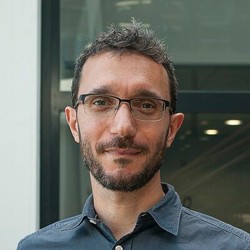
Stephane Cotin is a Research Director at Inria and leader of the MIMESIS team, specializing in real-time physics-based medical simulations. His work focuses on surgical training, planning, and image-guided therapy, with over 200 scientific articles and the development of the open-source SOFA framework. He co-founded InSimo, Twinical, and EVE, and previously held roles at Harvard Medical School and Mitsubishi Electric Research Lab. Cotin’s research bridges imaging, robotics, and medicine to improve healthcare outcomes, emphasizing patient-specific biophysical modeling and real-time computation. His awards include the Academy of Sciences Award (2018) and Dirk Bartz Medical Prize (2015). He has advised numerous PhD students and led projects like MediTwin and PREMYOM, advancing digital twin technologies for precision medicine.
Gang (Gary) Tan is a Professor at the Pennsylvania State University's College of Engineering, specializing in computer security, formal methods, and programming languages. He co-directs the Institute for Networking and Security Research (INSR) and leads the Security of Software (SOS) Group, focusing on compiler, programming language, and formal method techniques to enhance computer security. Education: B.E. in Computer Science from Tsinghua University Ph.D. in Computer Science from Princeton University His research integrates formal verification with practical security applications, particularly emphasizing: Compiler-based security enforcement Side-channel mitigation in speculative execution Fairness analysis in machine learning systems Formal grammar approaches for software reliability Key article trends show: Security-focused formal methods (15% of publications) ML fairness verification (20% of recent work) Compiler-based security solutions (30% of output) Side-channel defense mechanisms (25% of research) Parser design and formal grammar synthesis (10% of contributions) Scientific achievements include: NSF CAREER Award Google Research Awards (2x) PLDI 2024 Best Paper James F. Will Career Development Professorship Outstanding Research Award at Penn State Ruth and Joel Spira Excellence in Teaching Award Dr. Tan actively contributes to academic communities through: DARPA ISAT study group membership Program committee roles (CGO 2024, ECOOP 2018, etc) Leadership in security research initiatives
Clément Mallet is a Senior Researcher and Director of the LASTIG laboratory at Université Gustave Eiffel, IGN, and École Nationale des Sciences Géographiques (ENSG) in Champs-sur-Marne, France. He leads research in geospatial computer vision, focusing on the intersection of remote sensing, computer vision, and machine learning. His responsibilities include overseeing 75 laboratory members and directing the STRUDEL research team focused on spatio-temporal information modeling. Education: Habilitation (HDR) in Geographical Information Science, Université Paris-Est (2016) PhD in Image and Signal Processing, Télécom ParisTech (2010) Engineering Degree in Geographical Information Science, ENSG (2005) Master's in Remote Sensing, Université Paris 6 (2005) Research Interests: Dr. Mallet specializes in multi-modal land-cover mapping, change detection, geohistorical image analysis, and airborne lidar processing. His work integrates deep learning with geospatial data analysis to solve complex problems in environmental monitoring, urban studies, and historical geography. Current research explores foundation models for earth observation and semantic change detection using hybrid data generation techniques. Publication Trends: Mallet's recent articles (2021-2025) demonstrate strong focus on deep learning applications for geospatial challenges: 40% address land-cover mapping innovations, 30% develop novel change detection methodologies, 20% advance lidar data processing, and 10% explore historical map analysis. His work consistently bridges computer vision theory with operational remote sensing applications. Awards and Recognition: Schwidefsky Medal from ISPRS (2016) 5x Outstanding Reviewer awards (CVPR/ECCV/ICCV 2017-2024) Best Paper Awards at GEOBIA 2016 and ISPRS 2014 Young Researcher Award from GDR ISIS (2010) EuroSDR Best PhD Thesis supervision (2020) Research Leadership: Directs multiple national and international projects including MAESTRIA (ANR-funded multi-modal EO analysis) and HIATUS (historical image analysis). Supervised 14+ PhD students in geospatial AI topics. Secured funding from ANR, CNES, EU H2020 (VOLTA, LandSense), and industrial partners. Leads the STRUDEL team developing cutting-edge methods for territory dynamics analysis. Professional Service: Editor-in-Chief of ISPRS Journal of Photogrammetry and Remote Sensing (2021-present). Organized major conferences including ISPRS Congress (2020-2022 Program Chair) and JURSE events. Active in ISPRS working groups since 2008, currently leading initiatives in large-scale machine learning applications for geospatial data.
Chao Liu is a Research Scientist at CNRS (French National Center for Scientific Research) since 2008, affiliated with the DEXTER team and the Department of Robotics, LIRMM at University of Montpellier, France. He earned his Ph.D. in Electrical & Electronic Engineering from Nanyang Technological University, Singapore (2006). Current research focuses on surgical robotics , haptics , teleoperation , and nonlinear control theory with applications in computer vision. His work addresses challenges in robotic-assisted telesurgery, including: Stable and transparent human-robot interaction through wave variable compensators and passivity filters Physiological motion compensation using spatio-temporal LSTM and dual Kalman filters EMG-based motion recognition for surgical skill assessment 3D soft-tissue reconstruction with stereo-endoscopes and deep learning Dr. Liu leads European and French projects like: TS2RT (CNRS-funded): Safer teleoperation with motion compensation ROBACUS (ANR-funded): Needle positioning with MPC control HaTUMoCo (CNRS-funded): Haptic teleoperation with uncertainty handling ARAKNES (EU-funded): Microrobotic systems for endoluminal surgery Scientific honors include Senior Member of IEEE and Member of Sigma Xi . He supervises Ph.D. and Master's students working on topics such as concentric tube robot optimization, haptic teleoperation, and EMG-based force estimation. Dr. Liu serves on IEEE Technical Committees for Telerobotics and Haptics , and as Technical Editor of IEEE/ASME Transactions on Mechatronics.
Elliot J. Crowley is a Senior Lecturer (Associate Professor) at the School of Engineering, University of Edinburgh, where he co-leads the Bayesian and Neural Systems research group. He serves as Programme Manager for Electronics and Electrical Engineering and has developed a comprehensive machine learning course for 4th year electronic engineering students at the University of Edinburgh. Dr. Crowley's research focuses on simplifying machine learning systems with specific expertise in automated machine learning, low-resource deep learning, and engineering applications of machine learning. His work bridges theoretical advances with practical implementations, particularly in neural architecture search and computer vision applications, with emphasis on making complex ML systems more accessible and efficient. His recent publications demonstrate significant contributions to neural architecture search spaces, training-free instance segmentation, and state space models for visual recognition, appearing in top venues including NeurIPS 2024, BMVC 2024, and AutoML 2025. These works show a consistent focus on developing practical ML solutions that can operate effectively in resource-constrained environments. Selected awards and grants: EPSRC New Investigator Award Investigator on the dAIEdge Horizon Network Co-investigator on the EPSRC AI Hub for Causality in Healthcare AI Dr. Crowley currently supervises several researchers including Postdoc Linus Ericsson and PhD students Miguel Espinosa, Shiwen Qin (with Shay Cohen), and Cameron Barker (with Henry Gouk). His former students include Chenhongyi Yang (now a Research Scientist at Meta) and Jack Turner (now a Software Engineer at Qualcomm). He actively seeks new PhD students with strong research proposals and available funding for UK students through CDTs. His research group, the Bayesian and Neural Systems group, focuses on developing practical machine learning solutions that can be deployed in resource-constrained environments, with particular emphasis on making complex ML systems more accessible to engineers and practitioners.
Loris D'Antoni is an Associate Professor in the Department of Computer Science and Engineering at the University of California at San Diego (UCSD) . He is also a Visiting Academic at Amazon Web Services (AWS) . His research focuses on helping people write trustworthy software through techniques in program synthesis, formal verification, and machine learning robustness. Bachelor and Master in Computer Science from University of Torino (2008, 2010) PhD in Computer Science from University of Pennsylvania (2015) His research integrates programming languages , automata theory , and formal methods to ensure software reliability. Recent work explores semantics-guided synthesis and specification-aligned LLMs , with applications in network security, machine learning fairness, and automated code repair. Key trends in his publications include program synthesis , formal verification , and trustworthy AI systems . He has contributed to tools like AutomataTutor and SemGuS , a framework for customizable synthesis problems using constrained Horn clauses. Phillip R. Certain-Gary D. Sandefur Distinguished Faculty Award NSF CAREER Award Microsoft Research Faculty Fellowship Google and Facebook Faculty Awards Best Paper Award at ICDCN 2023 Distinguished Paper Award at SBES 2021 D'Antoni actively contributes to academic community service as a committee member in PLDI , OOPSLA , POPL , and CAV . He leads the Programming Systems Group at UCSD and collaborates with SemGuS research team on synthesis frameworks.
Abderrahim Benslimane is a Full Professor of Computer Science at the University of Avignon, France, where he serves as Vice Dean of International Relations at the UFR STS (Unité de Formation et de Recherche en Sciences et Technologies). He is also Head of the master degree SICOM (Systèmes Informatiques Communicants: réseaux, services et sécurité) program at the university. His extensive academic career spans several decades with significant contributions to computer science, particularly in networking and security domains. Professor Benslimane holds a HDR (Title to supervise researches) from the University of Cergy-Pontoise, a Ph.D. from the University of Franche-Comté, along with M.S. and B.S. degrees in Computer Science from the same institution and the University of Nancy respectively. His research interests primarily focus on distributed computing, networking and communication protocols, with particular emphasis on modeling, describing and implementing secure communication protocols and multimedia applications in heterogeneous network architectures. He combines engineering and theoretical approaches using graphs, distributed algorithms, transition systems, and performance evaluation models. Benslimane's scholarly work demonstrates a strong trend toward addressing security and privacy challenges in emerging technologies. His recent publications focus on cybersecurity applications for wireless sensor networks, Internet of Things, blockchain implementations, UAV communications, and vehicular networks. He has pioneered research in energy attack mitigation, trust management systems, and secure group communications, often employing game theory and novel cryptographic approaches. His work bridges theoretical foundations with practical implementations in next-generation networking technologies. IEEE VTS Distinguished Lecturer (2020-2022) Best Paper award at IEEE ICC 2019 Multiple Prime d'Encadrement et de Recherche Doctorale awards (1998-2021) Prime d'Excellence Scientifique (2011-2015) IEEE Senior Member As an academic leader, Benslimane has served as Editor in Chief of Multimedia Intelligence and Security Inderscience Journal, Area Editor of IEEE Internet of Things Journal, and Associate Editor for multiple prestigious publications including IEEE Transactions on Multimedia and IEEE Wireless Communication Magazine. He has founded and led research centers including the Informatics Research center (CRI) at the French University in Egypt and the Multimedia and networking team (RAM) at the Laboratoire d'Informatique d'Avignon (LIA). His laboratory research focuses on security, communication protocols, graphs and distributed algorithms, with applications in ad hoc networks, sensor networks, vehicular networks, and IoT.
Olivier Sigaud is a Full Professor at Sorbonne University, affiliated with the ISIR (Intelligent Systems and Robotics Institute) and the Machine Learning and Intelligent Autonomous Systems (MLIA) team. He holds an engineering degree from ISEN and dual PhDs in Computer Science (University of Paris XI, 1996) and Philosophy (University of Paris I, 2004). Previously employed at Dassault Aviation (1995–2001), he transitioned to academia as a Lecturer and later a Professor at LIP6 and ISIR. His research focuses on reinforcement learning, robotics, computational neuroscience of decision-making in animals, and human-robot interaction. Key contributions include advances in goal-conditioned reinforcement learning, intrinsically motivated agents, and human-in-the-loop systems. He has co-authored over 100 publications in top-tier conferences (NeurIPS, ICML) and journals, with recent work exploring large language model grounding, open-ended learning frameworks, and motor skill acquisition through interactive curricula. Notable projects include the CURIOUS framework for modular multi-goal RL and the DREAM architecture for open-ended robotic learning. His work bridges theoretical AI with practical robotics applications, emphasizing interdisciplinary collaboration between computer science and neuroscience.
Claude DELPHA is a Full Professor at Université Paris Saclay, affiliated with CentraleSupélec’s Laboratoire des Signaux et Systèmes (L2S). He holds an IEEE Senior Member status and has been with L2S since 2001. His expertise spans signal processing, fault diagnosis, electrical engineering systems, and machine learning. He leads the Modelling and Estimation team (GME) at L2S and oversees engineering admissions at Polytech Paris Saclay. Education: PhD in Instrumentation & Measurements and Signal Processing from Université de Metz, with a focus on intelligent sensor systems. Graduate degree in Electrical and Signal Processing Engineering. Research Interests: Multidimensional/statistical signal processing, fault diagnosis/prognosis (modeling, detection, estimation), electrical systems (drives, converters, PV), data hiding (watermarking), and pattern recognition (machine/deep learning). Active in energy systems, industry 4.0, and health/biology applications. Professional Roles: Director of GME research team, Polytech admissions lead, member of Polytech’s executive and academic boards, and IUT department council member. Engaged in labs like SYCOMORE and ILOCOS. Publications: Over 200 works since 2015, focusing on fault diagnosis in electrical systems, photovoltaic modules, bearings, and tidal turbines. Key methods include Kullback-Leibler divergence, Jensen-Shannon divergence, Mahalanobis distance, and PCA-based approaches. Awards: Not explicitly listed in provided texts.
Stéphane Doncieux is a University Professor in Computer Science at Sorbonne University, where he is affiliated with the Institute of Intelligent Systems and Robotics (ISIR), a joint research laboratory with CNRS. Since January 2024, he has served as Director of ISIR, following a term as Deputy Director from 2019 to 2023. He leads the ASIMOV research team and is based at the Pierre and Marie Curie Campus in Paris. His primary research interests lie in cognitive and developmental robotics, with a strong focus on open-ended learning, evolutionary algorithms, and adaptive systems. He investigates how robots can autonomously learn diverse skills through mechanisms such as novelty search, quality-diversity optimization, and intrinsic motivation. His work bridges theoretical foundations in artificial life and practical applications in robotic manipulation, perception, and control. The recent publications highlight a consistent trend in advancing robotic learning under sparse rewards and in open-ended environments. Key themes include quality-diversity optimization for grasping, state representation learning, sim-to-real transfer, and the development of behavioral repertoires. These works are published in high-impact journals such as IEEE Transactions on Robotics, Evolutionary Computation, and Frontiers in Robotics and AI. Coordinator, DREAM FET H2020 project (2015–2018) Principal Investigator, ANR projects on Creative Adaptation by Evolution, Learning Movement Skills, and Grasping with Multimodal Feedback Involved in European initiatives including VeriDREAM and HumanE-AI-Net He has supervised numerous PhD and Master’s students, including Leni Le Goff, Giuseppe Paolo, Alban Laflaquière, and Achkan Salehi, often in collaboration with leading researchers like Olivier Sigaud and Jean-Baptiste Mouret. He teaches computer science and robotics at both undergraduate and graduate levels at Sorbonne University. Doncieux has been instrumental in shaping research directions in evolutionary and developmental robotics, notably through his leadership in the IEEE Task Force on Evo-Devo-Robotics and his editorial contributions. His lab, ASIMOV, fosters interdisciplinary research integrating computer science, neuroscience, and engineering to create more autonomous and intelligent robotic systems.
Thierry Badard is an Associate Professor at the Department of Geomatics Sciences , Université Laval, where he also serves as Director of the Center for Research in Geospatial Data and Intelligence (CRDIG) . With over 28 years of experience in geospatial science, he leads research initiatives at the intersection of GeoAI , LiDAR processing , and smart city technologies . Director, CRDIG (2016-2022) Steering Committee Member, Big Data Research Centre (CRDM) Researcher, Institute for Intelligence and Data (IID) Research Expertise spans geospatial big data, GeoNLP, and IoT applications for digital twins. His work addresses flood risk modeling , 3D urban analytics , and environmental monitoring through AI-driven solutions. Recent publications focus on contrastive learning for LiDAR segmentation and geospatial ontologies for early warning systems. Grant Leadership includes collaborative projects on smart insurance analytics (2018-2025), Arctic bioaerosol research (2019-2025), and Quebec-Morocco digital twin partnerships (2022-2023). He has advised 15+ graduate students in geomatics and related fields.
Etienne Ollion is a Professor of Sociology at École Polytechnique and a Research Director at the Centre national de la recherche scientifique (CNRS). He maintains dual appointments that position him at the intersection of traditional political sociology and emerging computational methods. His academic work spans both French and international institutions, with teaching invitations at ENS-Paris, Berkeley, University of Chicago, Sciences Po Paris, and other leading universities worldwide. His research program focuses on two interconnected domains: the sociology of politics and power, and computational social sciences. Ollion's work examines political professionalization, parliamentary dynamics, and the transformation of political fields, particularly through his ethnographic study of the 2017 French National Assembly documented in his book The Candidates: Amateurs and Professionals in Politics (Oxford University Press, 2024). Simultaneously, he pioneers methodological innovations applying machine learning and natural language processing to social science research. Ollion's recent publications reveal a trajectory increasingly focused on the intersection of AI and social science methodology, with numerous 2024-2025 publications addressing LLM applications, text annotation, and the ethical considerations of proprietary AI systems in research. His work demonstrates how computational methods can enhance traditional social science approaches while maintaining critical awareness of technological limitations. As an academic leader, Ollion directs the Computational Social Sciences initiative at the IPP and has developed educational resources including online courses and the aweSOM software for data analysis. He regularly organizes summer schools (SICSS-Paris) and workshops to disseminate computational methods across the social sciences. Ollion serves on the editorial board of Actes de la recherche en sciences sociales and maintains an active public presence through media appearances, including a notable interview on France Inter about AI and Social Sciences in September 2024. His upcoming book talk at The Seminary Co-op in Chicago on March 7, 2025 further demonstrates his active engagement with the international academic community.
Paolo Papotti is an Associate Professor of Computer Science at EURECOM (France) since 2017, affiliated with the Data Science department. Previously, he was a senior scientist at QCRI (Qatar) and an assistant professor at Arizona State University (USA). He earned his PhD in Computer Science from the University of Roma Tre (Italy) in 2007, following an MEng in Computer Engineering from the same institution in 2003. His research focuses on scalable data management, data integration, data cleaning, and computational fact-checking. Notable contributions include work on knowledge graph rule discovery (Rudik), fact-checking frameworks (Scrutinizer), and data quality systems. His research has been supported by awards such as the 2020 Google Faculty Research Fellowship. Key publications include advancements in table representation learning, LLM-based data querying, and crowdsourced fact-checking validation. His work spans theoretical foundations and practical tools for improving data quality and information trustworthiness.
Pierre Alliez is a Senior Researcher and Team Leader at Inria Sophia Antipolis – Méditerranée, leading the TITANE project-team. He holds roles such as President of the Inria Evaluation Commission and Scientific Coordinator of the Inria-DFKI partnership. His research focuses on Geometry Processing, including mesh compression, surface reconstruction, and optimal transportation. Alliez has authored numerous scientific publications and book chapters, receiving accolades like the Eurographics Young Researcher Award (2005) and ERC grants (IRON, TITANIUM). His academic activities include supervising over 50 PhD students and postdoctoral researchers, and leading projects like GRAPES (Learning and Processing Shapes) and BIM2TWIN (digital twin construction). He has served on editorial boards for Computer Graphics Forum and ACM Transactions on Graphics , and organized major conferences like Pacific Graphics and Eurographics. His work bridges computational geometry, computer graphics, and applied mathematics, with practical applications in 3D printing, cultural heritage, and urban modeling. Education: No specific educational details provided, but has authored a textbook on Polygon Mesh Processing (AK Peters, 2010). Research Interests: Geometry Processing, Mesh Generation, Surface Reconstruction, Optimal Transport, and 3D Data Analysis. Grants & Projects: ANR Pisco, ERC IRON, BIM2TWIN, GRAPES, and collaborations with industries like Dassault Systèmes and Dorea Technology. Labs/Teams: Leads the TITANE team at Inria, contributing to software like CGAL and advancing open-source tools for geometric processing.
Gianni Franchi is an assistant professor at ENSTA Paris , affiliated with the Computer Science and Systems Engineering Unit (U2IS) . His work focuses on theoretical deep learning , with a strong emphasis on uncertainty quantification, robustness, and explainability in machine learning models. Current affiliation: ENSTA Paris (U2IS) Academic rank: Assistant Professor Key collaborators: David Filliat, Emanuel Aldea, Andrei Bursuc, Antoine Manzanera His research spans uncertainty quantification , explainable AI , and reliable machine learning . He investigates methods like Bayesian neural networks, ensemble approaches, and deterministic uncertainty models. His work also addresses domain adaptation , self-supervised learning , and autonomous systems , particularly in trajectory forecasting and semantic segmentation for autonomous driving. Recent publications analyze probabilistic modeling for robustness, symmetry-aware Bayesian methods , and multi-modal datasets like InfraParis. He develops frameworks like Torch-Uncertainty and benchmarks such as MUAD for uncertainty types in autonomous driving. Key themes: Uncertainty Quantification Deep Learning Theory Autonomous Systems Explainable AI Dataset Creation Bayesian Methods