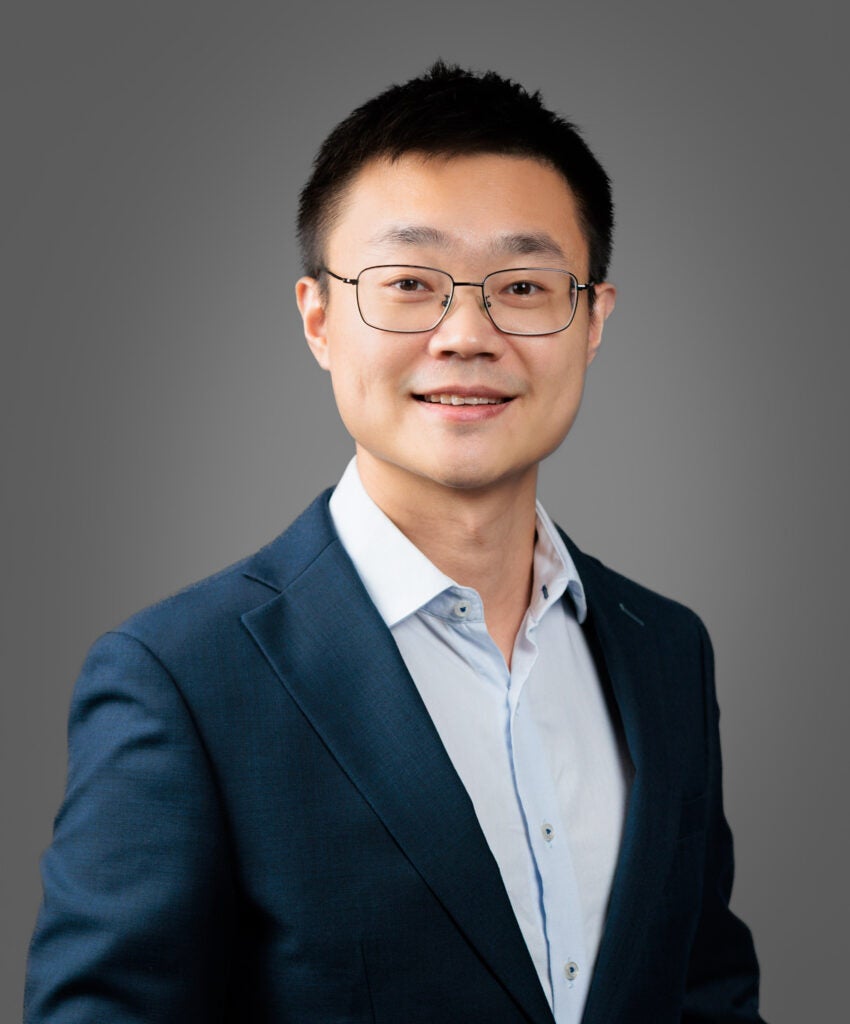
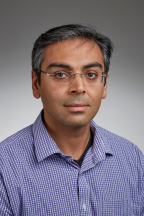
Di Zhu is a Presidential Young Professor in the Department of Materials Science and Engineering at the National University of Singapore (NUS). He holds a B.Eng. from Nanyang Technological University and M.Sc./Ph.D. from MIT, both in Electrical Engineering. His postdoctoral research at Harvard focused on lithium niobate integrated photonics and superconducting detectors. He previously worked as a research scientist and PI at A*STAR's Institute of Materials Research and Engineering (IMRE). Research Interests : Integrated quantum photonics, superconducting detectors, nonlinear optics, and nanofabrication. His group develops scalable quantum photonic devices using lithium niobate and superconducting materials, emphasizing applications in quantum computing, communication, and sensing. Awards : National Research Foundation (NRF) Fellowship Harvard Quantum Initiative (HQI) Postdoctoral Fellowship MIT Jin-Au Kong Thesis Award Advising & Recruitment : Actively recruiting postdocs, PhD students, and interns in areas like integrated photonics, quantum optics, and superconducting detectors. Positions include work on thin-film lithium niobate, quantum simulation, and microwave-optical transduction. Group website: dizhulab.org .
Andrea Tagliasacchi is an Associate Professor at Simon Fraser University's School of Computing Science, holding the Visual Computing Research Chair. He is also a part-time (20%) staff research scientist at Google DeepMind (Toronto) and an associate professor (status-only) at the University of Toronto's computer science department. His research focuses on 3D visual perception at the intersection of computer vision, graphics, and machine learning. Education: EPFL – Postdoc Simon Fraser University – PhD (NSERC Alexander Graham Bell Fellow) Politecnico di Milano – MSc (Gold Medalist) Research Interests: His work emphasizes 3D reconstruction, neural fields, and applications in robotics, autonomous systems, and augmented reality. Recent advancements include scalable 3D Gaussian splatting, robust neural rendering techniques, and diffusion models for 4D generation. Notable Articles: Recent work spans real-time differentiable ray tracing, stochastic rasterization for 3D Gaussian splats, and generative image composition using neural fields. His publications often blend theoretical contributions with practical applications in CVPR, SIGGRAPH, and NeurIPS. Awards: 2015 SGP Best Paper Award 2020 CVPR Best Student Paper Award 2024 CVPR Best Paper Honorable Mention Advising & Grants: Advised 14+ PhD/MSc students (e.g., Baptiste Angles, Sara Sabour) and co-advised with notable figures like Geoffrey Hinton. Active in grants involving neural field compression, robotic perception, and generative AI. Labs & Teams: Leads a lab at SFU focused on 3D vision and neural fields, collaborating with industry partners like Google Brain and Samsung Research.
Ferdinando Fioretto is an Assistant Professor of Computer Science at the University of Virginia, leading the Responsible AI for Science and Engineering (RAISE) group. His research focuses on foundational challenges in AI, privacy, fairness, and the intersection of machine learning and optimization. He holds a dual PhD in Computer Science from the University of Udine and New Mexico State University. Affiliations: University of Virginia (current), Syracuse University (former), Georgia Institute of Technology (postdoc), University of Michigan (research fellow) Education: PhD (Udine & NMSU), B.S. (University of Parma) Research Interests: Machine Learning, Responsible AI, Optimization, Differential Privacy, Algorithmic Fairness. His work emphasizes practical applications in energy systems, court scheduling, and privacy-preserving machine learning. Recent projects include neuro-symbolic diffusion models, fairness-aware optimization, and privacy guarantees in LLMs. Grants & Funding: NSF CAREER Award, Google Faculty Research Award, Amazon Research Award, NVIDIA Academic Grant, and grants from the LaCross Institute and 4-VA. His group collaborates with institutions like George Mason University and Virginia Tech. Key Awards: NSF CAREER (2022), IJCAI Early Career Spotlight (2022), Caspar Bowden PET Award (2022), ACP Early Career Researcher Award (2021) Labs/Teams: RAISE group at UVA, focused on trustworthy AI, fair optimization, and privacy-preserving systems. Active in organizing workshops like NeurIPS Algorithmic Fairness and AAAI Privacy-Preserving AI.
Yimin D. Zhang is an Associate Professor in the Department of Electrical and Computer Engineering at Temple University's College of Engineering, where he leads the Advanced Signal Processing (ASP) Lab. His research spans statistical signal processing, array processing, radar, wireless communications, and convex optimization. Research Interests: Dr. Zhang's work focuses on cutting-edge signal processing techniques including compressive sensing, sparse arrays, time-frequency analysis, and robust beamforming. These are applied to radar systems, satellite navigation, assisted living, and wireless networks. His research addresses core challenges in target localization, direction-of-arrival estimation, and spectrum-efficient joint radar-communication systems. The recent publications highlight a strong trend in exploiting sparsity, virtual arrays, and deep learning to enhance resolution and robustness in radar and communication systems. Themes include multi-frequency processing, low-rank matrix recovery, and optimized OFDM waveforms for dual-function systems. Scientific Awards: 2016 IET Radar, Sonar and Navigation Premium Award 2017 IEEE Aerospace and Electronic Systems Society Harry Rowe Mimno Award 2018 IEEE Signal Processing Society Young Author Best Paper Award (coauthor) Advising and Grants: Dr. Zhang has served as Principal or Co-Principal Investigator on over $6 million in research funding from the NSF, AFRL, ONR, and DARPA. While student advisees are not listed, his leadership of the ASP Lab suggests active mentorship of graduate researchers. He contributes extensively to the academic community as an associate editor for IEEE Transactions on Signal Processing and editor for Signal Processing journal, and serves on key IEEE technical committees. Labs and Teams: He directs the Advanced Signal Processing (ASP) Lab at Temple University, which focuses on developing novel algorithms for real-world applications in radar, communications, and navigation. Previously, he led the Wireless Communications and Positioning Lab and the RFID Lab at Villanova University.
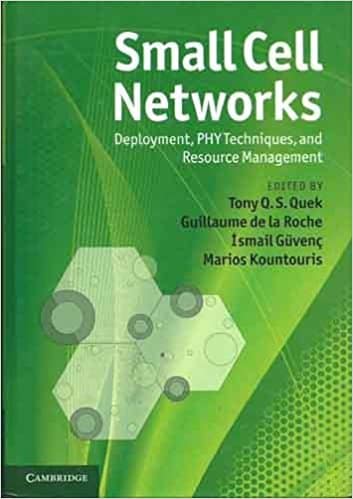
Dr. Ismail Guvenc is a Full Professor in the Department of Electrical and Computer Engineering at North Carolina State University. He holds an IEEE Fellowship and is a Senior Member of the U.S. National Academy of Inventors. His research focuses on 5G/6G wireless systems, UAV communications, heterogeneous networks, and spectrum management. He leads the NSF AERPAW project and serves as the NC State Site Director for the NSF BWAC I/UCRC center. Dr. Guvenc has authored/co-edited four books and holds over 30 U.S. patents. Education: Ph.D. in Electrical Engineering, University of South Florida (2006) Master's in Electrical and Computer Engineering, University of New Mexico (2003) Bachelor's in Electrical Engineering, Bilkent University, Turkey (2001) Research Interests: Dr. Guvenc’s work spans UAV communication systems, 5G/6G networks, spectrum sensing, and machine learning for network optimization. He emphasizes experimental validation through platforms like AERPAW, focusing on drone-based networks, radio dynamic zones, and testbed-driven innovation. His contributions address challenges in UAV localization, interference management, and energy-efficient networks. Grants & Leadership: PI and Director of NSF AERPAW (2019–Present) NC State Site Director for NSF BWAC I/UCRC (2019–Present) Recipient of NSF CAREER Award (2015) and NC State Faculty Scholar Award (2021) Publications & Awards: He has authored over 130 peer-reviewed papers and contributed to standardization efforts. His awards include the R. Ray Bennett Faculty Fellow Award (2019) and the USF Outstanding Dissertation Award (2006). Labs & Teams: Dr. Guvenc directs research in the ECE’s wireless communications group, leveraging AERPAW’s experimental capabilities to advance UAV networks and 6G technologies. His team collaborates with industry and government on spectrum policy and autonomous systems.
Zhonghai Lu is a Professor of Electronic Systems Design (specializing in Dependable and Autonomous Systems) at KTH Royal Institute of Technology, part of the Department of Electrical Engineering in the School of Electrical Engineering and Computer Science (EECS). He serves as Program Director for KTH's Embedded Systems master's program and Director of Studies at the Division of Electronics and Embedded Systems. His research focuses on Network-on-Chip (NoC), computer architecture, embedded systems, and Prognostics and Health Management (PHM) of power electronics. He leads a research group exploring in-network processing and embedded intelligence, transforming passive networks into active computational frameworks. Lu holds a BSc from Beijing Normal University (1989), MSc and PhD from KTH (2002, 2007), and an MBA in Innovation and Growth from the University of Turku (2012). He has authored over 240 scientific papers, including journal articles and peer-reviewed conferences, with notable recognitions such as Best Paper Awards at NOCS’2015 and EU HiPEAC, and a Featured Paper in IEEE Transactions on Computers (2020). He serves as Associate Editor for ACM Transactions on Architecture and Code Optimization (TACO) and has chaired major conferences like HiPEAC’2017 and NOCS’2018. His research group’s recent work includes integrating AI into hardware acceleration, fault-tolerant neural networks, and RUL estimation for power electronics using recurrent neural networks. Lu has secured grants from the Swedish Research Council and Intel Corporation and developed courses like IL2230 (Hardware Architectures for Deep Learning) and IL2233 (Embedded Intelligence), pioneering embedded AI education at KTH. Education: BSc (Beijing Normal University), MSc/PhD (KTH), MBA (University of Turku) Awards: Best Paper Awards (NOCS, EU HiPEAC), Swedish Research Council Grants, Intel Research Gifts Labs/Teams: Research Group on In-Network Processing and Embedded Intelligence
Dr. Zhenman Fang is an Associate Professor at the School of Engineering Science , Simon Fraser University (SFU) , where he founded and directs the HiAccel Lab . He also holds an associate membership in the School of Computing Science at SFU. His research focuses on customizable computing with software-defined hardware acceleration , addressing performance, energy-efficiency, and reliability in post-Moore’s law computing across domains like machine learning , big data analytics , quantum chemistry , and precision medicine . Education: Ph.D. in Computer Science from Fudan University (2014), with a visit to University of Minnesota during his studies. Postdoctoral Work: University of California, Los Angeles (UCLA) (2014-2017). Industry Experience: Staff Software Engineer at Xilinx (2017-2019). Dr. Fang’s research spans the entire computing stack , including application characterization , accelerator-rich architecture design , and programming/tool support . He has developed frameworks like HiSpMV , SyncNN , and SQL2FPGA , emphasizing FPGA acceleration for vision transformers , quantum chemistry , and spiking neural networks . His work has been recognized with 3 best paper awards (FPL 2024, TCAD 2019, MEMSYS 2017) and 3 best paper nominees (FCCM 2025, HPCA 2017, ISPASS 2018). Recent publications highlight trends in low-precision machine learning ( ShiftQuant , ESRU ), quantum chemistry acceleration ( SERI ), and vision transformer optimization ( Quasar-ViT ). His HiAccel Lab actively mentors PhD and MASc students , with notable graduates like Alec Lu (PhD 2024, now at Meta) and Philip Stachura (MASc, now with BC Graduate Scholarship). Scientific Awards: Inaugural SFU Research Excellence Award - Horizon Award (2025) FPL 2024 Stamatis Vassiliadis Best Paper NSERC Alliance Award (2020) CFI JELF Award (2019) Xilinx University Program Award (2019) IEEE Senior Member (2023) Grants: NSERC Discovery Grant (2019) CFI JELF Funding (2019) Huawei and Xilinx sponsorships Dr. Fang leads open-source initiatives like SyncNN , PASTA , and SQL2FPGA , and serves as General Chair for ASAP 2025 and Program Co-Chair for RAW 2025 . His lab collaborates globally with institutions such as UCLA , Northeastern University , and Xidian University .
Thomas Hacker is a Professor in the Department of Computer and Information Technology at Purdue Polytechnic Institute, Purdue University. His research focuses on cloud computing, high-performance computing, operating systems, computer networking, and cyber infrastructure . He holds a Ph.D. and M.S. in Computer Science & Engineering from the University of Michigan, along with dual B.S. degrees in Computer Science and Physics from Oakland University. Education: PhD (Computer Science & Engineering), University of Michigan (2004) MS (Computer Science & Engineering), University of Michigan (1993) BS (Computer Science, Mathematics Minor), Oakland University (1989) BS (Physics), Oakland University (1989) Dr. Hacker's research spans cloud and grid computing, operating systems, and distributed systems , with applications in earthquake engineering data systems and AI-driven infrastructure analysis. His recent work explores extended layer 2 networking for bare-metal provisioning ( 2023 IEEE Cloud Summit ) and machine-supported bridge inspection using artificial intelligence ( Transportation Research Record, 2023 ). Notable scientific contributions include 15+ publications on topics like cyberinfrastructure for earthquake engineering, container-based virtualization, and data-intensive systems. His work has been recognized with awards such as the NSF CAREER Award (2010) and multiple Purdue Seed for Success Awards . Key Scientific Awards: NSF CAREER Award (2010) Purdue Seed for Success Awards (2008-2013) ASEE Information Systems Division Best Paper Award (2012) College of Technology Outstanding Faculty in Discovery Award (2010) He has held leadership roles at Purdue, including Department Head (2018-2021) and Interim Department Head (2011-2016) . His career spans academic positions at Indiana University, University of Michigan, and industry roles at Storage Technology Corporation.
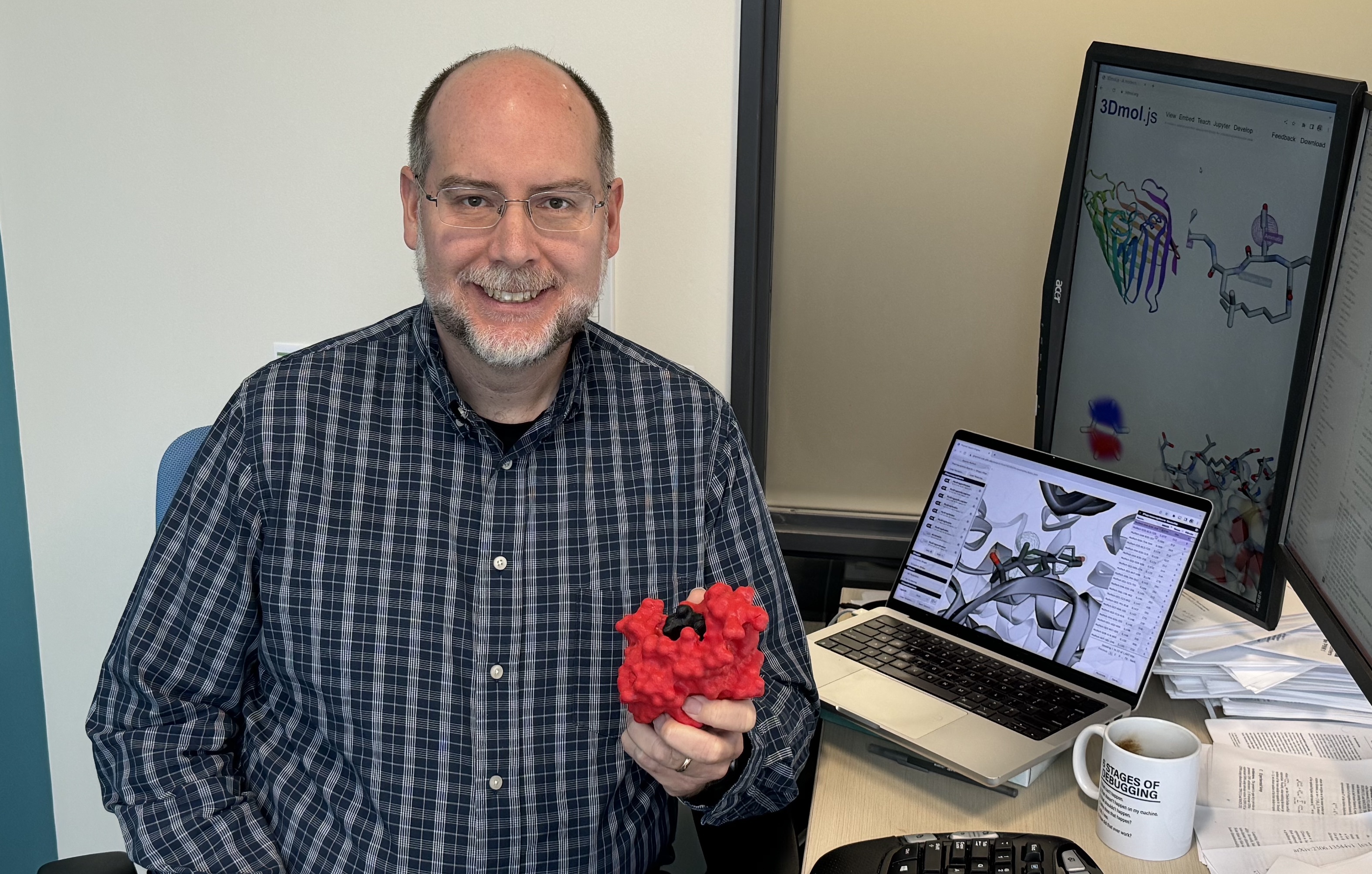
David R. Koes is an Associate Professor in the Department of Computational and Systems Biology at the University of Pittsburgh, affiliated with the School of Medicine. He holds roles such as Associate Director of the Joint CMU-Pitt Computational Biology PhD Program (CPCB) and is involved in multiple graduate programs including Intelligent Systems and Computational Biomedicine. His research focuses on developing computational algorithms and systems for drug discovery, emphasizing open-source software and machine learning applications in biomedical data. Koes teaches courses like MSCBIO2025 (Bioinformatics Programming in Python) and MSCBIO2065 (Scalable Machine Learning for Big Data Biology). He has secured NIH funding (R35GM140753) and collaborated on projects with institutions like NVIDIA and Google Cloud. His lab develops tools such as GNINA, Pharmit, and 3Dmol.js, and actively contributes to open drug discovery initiatives. Education: PhD in Computer Science from Carnegie Mellon University (CMU). Research Interests: Leveraging computation and AI for drug design, molecular docking, pharmacophore modeling, and open science. Specific areas include developing scalable machine learning pipelines, virtual screening systems, and tools for 3D molecular analysis. Grants and Funding: Current NIH R35 grant and prior support from NSF, Relay Therapeutics, and others. His work emphasizes translating computational methods into practical drug discovery solutions. Lab and Teams: Directs a lab focused on computational drug discovery, collaborating with multiple academic and industry partners. Supervises graduate students and postdocs in projects spanning AI-driven drug design, molecular modeling, and software development.
Ari Holtzman is an Assistant Professor of Computer Science at the University of Chicago. His research spans dialogue systems, text generation, and foundational AI methodologies, including the development of Nucleus Sampling and contributions to the Amazon Alexa Prize. He holds an interdisciplinary degree from NYU in Computer Science and Philosophy of Language, and is nearing completion of his PhD at the University of Washington. Research interests include generative models, alignment challenges in LLMs, evaluation metrics like CLIPScore, and model efficiency techniques such as Qlora finetuning. His work bridges theoretical insights with practical applications, emphasizing both technical innovation and ethical considerations in AI. Key awards include the 2017 Amazon Alexa Prize and Phi Beta Kappa honors at NYU. His recent publications focus on benchmarking frameworks, cache optimization for large models, and understanding model limitations through AbsenceBench. Research contributions extend to multimodal systems, computational creativity, and machine unlearning protocols.
Naresh R. Shanbhag is the Jack Kilby Professor in the Department of Electrical and Computer Engineering and the Coordinated Science Laboratory at the University of Illinois at Urbana-Champaign. He serves as Director of the Systems on Nanoscale Information fabriCs (SONIC) Center and held the D.J. Gandhi Distinguished Visiting Professorship at IIT Mumbai from 2015-2020. Previously, he was a visiting faculty member at National Taiwan University (2007) and Stanford University (2014). Dr. Shanbhag received his doctorate from the University of Minnesota (1993) in Electrical Engineering. From 1993 to 1995, he worked at AT&T Bell Laboratories as the lead chip architect for AT&T's 51.84 Mb/s transceiver chips over twisted-pair wiring for Asynchronous Transfer Mode (ATM)-LAN and very high-speed digital subscriber line (VDSL) chip-sets. His research focuses on the design of energy-efficient machine learning, communications, and signal processing systems on resource-constrained embedded platforms. He explores fundamental trade-offs between energy efficiency, latency and accuracy of decision-making systems implemented in nanoscale technologies, with applications to computer vision, biomedicine, automatic target recognition, and imaging. His work spans four primary focus areas: Resource-efficient Machine Learning for the Edge, In-memory Computing (IMC), Energy-efficient High Data Rate Communications, and Shannon-inspired Statistical Error Compensation (SEC). Analysis of his recent publications reveals a strong emphasis on in-memory computing architectures (SRAM, MRAM, RRAM) for machine learning acceleration. His work consistently addresses energy-accuracy trade-offs, with increasing attention to security aspects of hardware implementations and applications to MIMO signal processing and edge AI systems. His research demonstrates a progression from theoretical foundations to practical silicon implementations. 2024 Semiconductor Research Corporation Innovation Award 2018 Semiconductor Industry Association/Semiconductor Research Corporation University Researcher Award 2018 IEEE International Symposium on Circuits and Systems Best Paper Award 2006 IEEE Fellow 1996 National Science Foundation CAREER Award Professor Shanbhag has mentored over 50 graduate students who now work at leading technology companies including Qualcomm, Amazon, Nvidia, Intel, and Apple. His research has been generously supported by the National Science Foundation, DARPA, AFRL, Semiconductor Research Corporation, Texas Instruments, Sandia National Laboratories, and industry partners including IBM, GlobalFoundries, and Intel Corporation. He led the Alternative Computational Models research theme (2006-2012) and was the founding Director of the SONIC Center (2013-2017), a 5-year multi-university center funded by DARPA and SRC. Currently, he leads research themes in the SRC and DARPA funded JUMP 2.0 Program's Center for Co-Design of Cognitive Systems and the Center for Ubiquitous Connectivity, and in the NSF IUCRC Center for Advanced Semiconductor Chips with Accelerated Performance (ASAP). As Director of the Systems on Nanoscale Information fabriCs (SONIC) Center, Professor Shanbhag leads a multidisciplinary team exploring novel computing paradigms for the nanoscale era. His group has benchmarked an extensive collection of in-memory computing and digital accelerator IC designs, maintaining a publicly available IMC benchmarking repository of metrics extracted from published IC prototypes. His research philosophy integrates concepts from information theory, statistical signal processing, detection and estimation, VLSI architectures, and digital and analog integrated circuits to develop energy-efficient systems from algorithms to silicon implementations.
Takeshi Ikenaga is a Professor at Waseda University’s School of Fundamental Science and Engineering and Graduate School of Information, Production and Systems . He earned his Ph.D. in Information & Computer Science from Waseda University in 2001, following B.E. and M.E. degrees in Electrical Engineering (1988–1990). His career spans roles at NTT LSI Laboratories (1990–2002), Kitakyushu Foundation for Advancement of Industry, Science and Technology (FAIS) (1999–2002), and visiting researcher at the University of Massachusetts (1999–2000). Research Interests : Application-specific SoCs for video/image processing, including compression (H.264/AVC, H.265/HEVC), filters (super-resolution, noise reduction), recognition systems (feature detection, object tracking), and communication (UWB, LDPC). He also works on many-core processor design, ultra-low-delay vision systems, and sports analytics (volleyball, figure skating) with real-time 3D pose estimation and ball tracking. Awards : Recipient of the Furukawa Sansui Award (Waseda University, 1988) IEICE Research Encouragement Award (1992) Multiple Best Paper/Presentation Awards (2006–2022) at conferences including DAC/ISSCC, LSI IP Design, ISOCC, ISPACS, and CVIT APSIPA Distinguished Lecturer Certificate (2015) Waseda University Presidential Teaching Award (2020)
Elahe Soltanaghai is an Assistant Professor in the Department of Computer Science and a Faculty Affiliate in Electrical and Computer Engineering at the University of Illinois Urbana-Champaign. She is also a 2022 NCSA Fellow and received her PhD in Computer Science from the University of Virginia (2019), MS in Computer Engineering from Sharif University of Technology (2014), and dual BS degrees in Computer and Information Technology Engineering from Amirkabir University of Technology (2011, 2013). PhD: University of Virginia, Computer Science, 2019 MS: Sharif University of Technology, Computer Engineering, 2014 BS (Computer Engineering): Amirkabir University of Technology, 2011 BS (Information Technology Engineering): Amirkabir University of Technology, 2013 Her research spans wireless sensing and communication, focusing on Millimeter-wave Radar Sensing (for automotive, mixed reality, structural monitoring), Machine Learning for Wireless Systems (adaptive sensing/communication), Forest IoT (through-canopy biomass and soil sensing), Metaverse Technologies (gaze-based VR/AR), and Low-Power Backscatter Communication (WiFi/power-line tags). She directs the Wireless, Sensing & Embedded Networked Systems (iSENS) Lab and co-directs the Illinois Center for IoT. Her work bridges wireless networking with cyber-physical sensing , emphasizing environmental monitoring (e.g., wildfire fuel detection via radar tags) and human-computer interaction (e.g., gaze-tracking in VR). Recent articles include innovations in passive radar profiling , through-canopy biomass characterization , and integrated communication-sensing protocols . Scientific Awards: Google Research Scholar Award (2022) N2Women Rising Star (2021) ACM SIGMOBILE Dissertation Award (2020) EECS Rising Stars (2019) NCSA Faculty Fellowship (2023) Best Demo Runner-up, IPSN (2023) Teaching Excellence Award (2023) Grants: NASA FireTech Program Grant (2025) NSF Grant for Radar-based Perception (2024) Insper-Illinois Grant for VR Research (2024) Keysight Research Gifts (2022, 2023) T-Mobile Research Gift (2022)
Kaiyu Hang is an Assistant Professor in the Department of Computer Science at Rice University, where he directs the Robotics and Physical Interactions Lab (RobotΠ Lab). His research spans multiple domains of robotics with a focus on physical interaction systems. Before joining Rice, he completed his postdoc at Yale University, earned his Ph.D./M.Sc. at KTH Royal Institute of Technology, and received his B.Eng. from Xi'an Jiaotong University. His research interests include robotic manipulation, grasping, in-hand manipulation, optimization, planning, learning, estimation, and control systems. He develops algorithms that enable robots to physically interact with other robots, people, and the world across scales from small grasping tasks to large-scale dual-arm and multi-robot manipulation systems. His work has practical applications in factories, kitchens, hospitals, warehouses, and construction sites. His recent publications demonstrate strong trends in in-hand manipulation techniques, energy-efficient drone operations, and benchmarking frameworks for robotic grasping. The 2025 IROS papers accepted highlight his leadership in developing standardized competition frameworks for evaluating robotic manipulation capabilities across diverse hardware platforms. ASME Rising Star of Mechanical Engineering (2024) NSF CAREER Award (2023) Multiple finalist awards at IEEE-RAS Humanoids and ICRA conferences Junior Fellowship Award from Institute for Advanced Study, HKUST (2017-2018) As an educator, he has taught multiple robotics courses including COMP 462/562: Introduction to Modern Robotics and COMP 461: Senior Design in A Robotized World. He serves as Faculty Advisor for the Rice Robotics Club and participates in graduate admissions. His lab actively recruits Ph.D. students and offers research opportunities for undergraduate and master's students who have completed core robotics courses.
Dr. Hiren Patel is a Professor in the Department of Electrical and Computer Engineering at the University of Waterloo. He holds a Doctorate in Computer Engineering from Virginia Tech and previously worked as a postdoctoral fellow at UC Berkeley under Edward A. Lee. His research focuses on real-time embedded systems, computer architecture, machine learning hardware, and cybersecurity. He teaches courses like ECE 150 (Programming), ECE 320/429 (Computer Architecture), and ECE 327 (Digital Systems). Research Interests: Cyber-physical systems and hybrid architectures Hardware/software co-design methodologies Predictable cache coherence protocols IoT and edge computing systems Security in embedded and real-time systems Recent work emphasizes cache coherence solutions for safety-critical systems and GPU acceleration strategies. His publications address challenges in multicore predictability, FPGA bandwidth optimization, and autonomous robotics orchestration. No specific awards are listed, though his extensive publication record indicates significant contributions to embedded systems research. He currently oversees graduate student applications focusing on his core research areas.