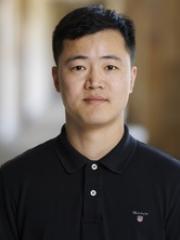
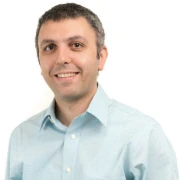
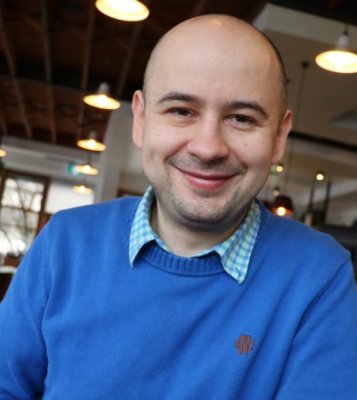
Professor Brian Lovell is a leading academic at the University of Queensland (UQ), holding the position of Professor in the School of Electrical Engineering and Computer Science. He is also an Honorary Professor at IIT Guwahati, India, and has served as President of the International Association for Pattern Recognition (2008–2010). His key roles include leading the Advanced Surveillance Group and contributing to IEEE, IEAust, and the Asia-Pacific AI Association as a Fellow. Education: B.E. (Electrical Engineering, UQ), B.Sc. (Computer Science, UQ), and Ph.D. (Signal Processing, UQ). Research focuses on AI, deep learning, biometrics, and medical imaging. Ongoing projects include StyleGAN, Stable Diffusion, masked face recognition, and neurofibroma detection. Recent work explores space physics phenomena like plasma dynamics and subauroral ion drifts, alongside advancements in domain generalization and medical image analysis. Awards include Fellowships from IEAust and Asia-Pacific AI Association. He actively recruits PhD students in AI and has collaborated with transport and national agencies on surveillance tech. The Advanced Surveillance Group develops solutions for operational and security challenges in transport sectors.
Dr. Zhi Chen is a Research Fellow and Research Officer at the University of Queensland's School of Electrical Engineering and Computer Science, collaborating with Prof. Helen Huang. He holds a PhD in Computer Science and Engineering from the School of Information Technology and Electrical Engineering, also at UQ (2023). His research focuses on computer vision, generative modelling, zero-shot learning, and plant phenotyping, with applications in healthcare and agricultural technologies. Recent work includes federated learning frameworks for multi-agent systems, diabetes subgroup analysis using machine learning, advanced multimodal plant disease diagnosis systems, and domain adaptation techniques in semantic segmentation. Dr. Chen has published extensively in top-tier conferences such as ACM Multimedia (MM) and IEEE Transactions, as well as journals like Diabetes and Metabolic Syndrome: Clinical Research and Reviews. His publications demonstrate a strong emphasis on solving real-world challenges through interdisciplinary approaches combining machine learning and domain-specific data analysis.
Farid Boussaid is a Professor in the School of Electrical, Electronic and Computer Engineering at The University of Western Australia (UWA), affiliated with the UWA Oceans Institute. He holds an MM PhD from INSA Toulouse, France, and has held roles including Head of School (2014–2017). His research focuses on smart sensors, neuromorphic engineering, and machine learning applications in computer vision and signal processing. Education: M.S. and Ph.D. from National Institute of Applied Science (INSA), Toulouse, France (1996, 1999) Postdoctoral Fellow at Edith Cowan University (2000–2001) Australian Research Council APD Fellowship recipient (2001) Research Interests: Design of low-cost smart sensing systems, neuromorphic approaches for olfactory/visual processing, and interdisciplinary work in microelectronics, gas sensors, and camera-on-chip technologies. His research addresses bio-inspired signal processing and efficient integrated circuit design. Recent Research Trends: His publications emphasize deep learning applications in 3D vision, generative models, and medical imaging, with a focus on weakly supervised learning and multimodal data integration. Awards: 2016 Citation for Outstanding Contribution to Student Learning UWA Award for Excellence in Teaching (2014) Award for Growth in Innovation and Entrepreneurship (2021) Grants & Projects: Leads initiatives like the National Australian Cardiac CT Platform and robotics with 3D vision. Involves collaborations with Tokyo University of Science and NSF-funded projects. Labs/Teams: Active in UWA’s Oceans Institute and interdisciplinary teams advancing AI-driven sensing technologies.
Associate Professor Brian Ng is an academic at the University of Adelaide, affiliated with the School of Electrical and Mechanical Engineering within the Faculty of Sciences, Engineering and Technology. His primary role is as an Associate Professor/Reader, focusing on teaching and research in electrical engineering and signal processing. He holds a position in the Department of Electrical and Electronic Engineering and is eligible to supervise Masters and PhD students in areas such as radar systems, signal processing, and terahertz technology. His research expertise includes digital signal processing, wavelet systems, pattern recognition, radar imaging (including 3D ISAR and maritime applications), and terahertz time-domain spectroscopy. He has led or co-investigated several grants, such as the SmartSat CRC Project (2021-22), DST Group-funded research on 3D ISAR classification, and terahertz sensing projects. His work spans defense applications, environmental monitoring, and material science. Ng teaches courses like Digital Signal Processing, Radar Principles, and Signal Processing Applications. He has contributed to educational initiatives, including e-learning projects and curriculum design. His professional activities include editorial roles in radar conferences and collaborations with defense and industry partners. Key facilities and labs include those supporting terahertz fiber optics and radar systems at the University of Adelaide's North Terrace campus. His research emphasizes practical applications of signal processing in aerospace, maritime, and biomedical contexts.
Professor Wageeh Boles is a Full Professor in the School of Electrical Engineering & Robotics at Queensland University of Technology (QUT). He holds a PhD from the University of Pittsburgh and has held academic roles at Penn State University and QUT, including Assistant Dean (Teaching and Learning) and Chair of the Faculty Academic Misconduct Committee. His research focuses on engineering education, biometric identification (e.g., iris and palm recognition), image processing, and object recognition. He has over 200 publications and is a Fellow of multiple organizations, including the UK Higher Education Academy. Education: PhD (University of Pittsburgh), MSc (University of Pittsburgh), BSc (Assiut University) Roles: Academic Lead for Learning and Teaching, QUT Academy for Learning and Teaching Mentor Affiliations: IEEE, APRS, ALTF, and AaeE Research interests include technology-enhanced learning, work-integrated learning, and cognitive styles in computer-based education. His contributions span AI in education, biometric systems, and satellite imagery analysis. Awards include the National Teaching Fellowship (2011) and Distinguished Member Award (AaeE, 2015). Awards and recognitions reflect his leadership in teaching and innovation, including the Vice Chancellor’s Performance Award (2007) and multiple teaching excellence accolades. He has advised numerous graduate students and led projects funded by competitive grants.
Dr. Simon Denman is an Associate Professor in the School of Electrical Engineering and Robotics at Queensland University of Technology (QUT). He co-leads the Applied Data Science research programme at the QUT Centre for Data Science. His research focuses on computer vision, machine learning, and signal processing, with applications in security, healthcare, and sports analytics. Education: PhD, Bachelor of Information Technology, and Bachelor of Engineering (Electronics) from Queensland University of Technology. Research Expertise: Dr. Denman's work spans action recognition, trajectory prediction, biometrics, and medical signal processing. His lab develops solutions for video surveillance, sports analytics, and healthcare diagnostics using deep learning architectures like neural memory networks and 3D perspective networks. Publication Trends: His recent articles (2023-2025) demonstrate a focus on radar signal processing, cross-domain adaptation, and geometric deep learning. Key applications include renewable energy assessment, emotion recognition, and real-time pose estimation in complex environments. Grants: DP200101942: Unlocking Mass Mobile Video Analytics with Advanced Neural Memory Networks (2021-2025)
Dr. Timothy Chappell is a Lecturer in the School of Computer Science at Queensland University of Technology. His research focuses on developing efficient algorithms for large-scale data analysis, particularly in bioinformatics and remote sensing applications. He develops methods for clustering, similarity search, and metagenomic analysis that scale to massive datasets. Dr. Chappell's recent work includes the Crackling method for rapid CRISPR guide RNA design, metagenomic geolocation using read signatures, and parallel K-Tree clustering for extreme-scale datasets. He has applied these methods to diverse domains including urban flood mapping using satellite data, microbiome analysis, and biological sequence clustering. He teaches programming principles (CAB302) and systems programming (CAB403). Dr. Chappell maintains collaborations with government and industry partners, including developing change detection tools for Queensland's Department of Natural Resources.
Vishnu Monn is an Associate Professor at Monash University Malaysia's School of IT, serving as Deputy Head of Education and Director of the Advanced Computing Platform. He holds a PhD in Engineering from Multimedia University (2016) and has over 15 years of academic and industry experience, including roles at Panasonic R&D Centre Malaysia (2005–2009) and Multimedia University (2009–2017). His research focuses on high-performance computing, predictive analytics, machine learning, computer vision, and soft robotics, with over MYR 1 million in secured grants as principal investigator. Education: B.Eng. (First-Class Honours) in Electrical and Electronics Engineering (2004) M.Eng. in Electrical and Electronics Engineering (2007) Ph.D. in Engineering (2016) Research interests include: High-performance computing architectures and applications Predictive analytics for industrial and environmental systems Machine learning models for computer vision tasks Soft robotics control systems Recent projects span autonomous driving algorithms, IoT-enabled smart cities, and soft robotics using reinforcement learning. He has published 61+ peer-reviewed articles in top journals and conferences, with recent work emphasizing multimodal learning, generative models, and blockchain optimization. Scientific contributions include leadership in interdisciplinary research, securing major grants, and establishing Monash Malaysia's high-performance computing facility. Teaching commitments include courses on big data, parallel computing, and embedded systems, with roles as chief examiner and program coordinator.
Dr. Abubakar Bala is a Senior Lecturer at the Malaysia School of Business, Monash University. His research focuses on artificial intelligence (AI), machine learning, and their applications in cybersecurity, edge computing, environmental engineering, and optimization algorithms. He actively contributes to the UN Sustainable Development Goals (SDGs), particularly in sustainable resource management and innovation. His work spans diverse domains such as drone detection via machine learning, AI-driven machine maintenance, and hybrid desalination plant optimization using deep learning. He has collaborated internationally on projects addressing cyber-physical systems security, multi-object tracking, and cloud computing efficiency. Publications highlight a trend toward applying metaheuristics in reservoir computing and neural networks, alongside optimizing industrial processes like virtual machine placement and fault prediction in aviation engines. His research also emphasizes energy efficiency, security protocols for IoT/drone systems, and Six Sigma methodologies in plant analytics. No scientific awards or formal advisees are explicitly listed. His work bridges theoretical advancements with practical applications in engineering and computer science.
Dr. Amirali Khodadadian Gostar is a Senior Lecturer at the School of Engineering, RMIT University. His research focuses on machine learning, data analytics, multi-object tracking, sensor management, and data-driven manufacturing. He has contributed to advancements in autonomous systems, anomaly detection, and multi-agent coordination through projects like distributed information fusion for connected vehicles and geometrically-informed tracking algorithms. Research Interests : Image processing, sensor fusion, robotics, control systems, and industrial automation. Key Projects : Development of electronic pre-tension systems for seatbelts, AI-driven logistics optimization, and stereo vision systems for defect detection. Publications : Over 60 peer-reviewed articles in top journals/conferences such as IEEE Transactions on Intelligent Transportation Systems and ISA Transactions, focusing on tracking algorithms, anomaly detection, and multi-agent systems. His work bridges theoretical frameworks (e.g., random finite set theory) with practical applications in robotics, transportation, and manufacturing. He actively supervises PhD/Master's students on topics ranging from quantum AI in logistics to eye gaze tracking for visual attention modeling.
Dr. Mitch Bryson is a Lecturer at the School of Aerospace, Mechanical and Mechatronic Engineering , The University of Sydney , and serves as Director of the Undergraduate Mechatronics Program. His research focuses on aerial and marine robotic navigation , sensor fusion , and 3D perception for ecological applications. His work integrates computer vision , hyperspectral imaging , and LiDAR to advance autonomous environmental monitoring in forestry , marine science , and ecological surveying . Recent projects emphasize deep learning for 3D point cloud analysis and domain adaptation with synthetic data. He contributes to remote sensing and robotics literature across journals like ISPRS Journal of Photogrammetry , Remote Sensing , and Journal of Field Robotics . Key grants include the ARC Research Hub in Intelligent Robotic Systems (2023) and NIFPI Collaboration Project (2019). He supervises research students in projects spanning 3D reconstruction , tree segmentation , and autonomous perception . Affiliated with the Australian Centre for Field Robotics and Sydney Institute for Robotics and Intelligent Systems , his work bridges robotics , ecology , and environmental science .
Professor Salah Sukkarieh is a distinguished Professor of Robotics and Intelligent Systems at the University of Sydney, affiliated with the Australian Centre for Robotics. He holds multiple institutional memberships including the Sydney Institute of Agriculture, The Net Zero Institute, The University of Sydney Nano Institute, and the Charles Perkins Centre. With over 500 academic and industry publications, his work has significantly advanced the field of robotics, particularly in outdoor environments. Professor Sukkarieh's research spans the development of intelligent robotic platforms for complex outdoor environments, with particular focus on agriculture, the environment, aerospace, disaster response, and humanitarian engineering. His work integrates autonomy, machine learning, and the fusion of digital and physical systems to support sustainable innovation. He has made substantial contributions to autonomous navigation, perception systems, and machine learning applications for field robots operating in unstructured environments. His recent publications reveal a strong emphasis on agricultural robotics and precision farming, with particular focus on livestock monitoring, crop management, and harvesting automation. A significant portion of his work applies deep learning techniques to solve challenges in animal behavior recognition, crop-weed classification, and automated harvesting. His research demonstrates a clear trajectory toward creating practical robotic solutions that address real-world agricultural challenges while improving efficiency, sustainability, and animal welfare. IEEE Fellow ATSE Fellow NSW Science and Engineering Award (2014) Engineers Australia's Most Innovative Engineer (2016) CSIRO Eureka Prize for Leadership in Innovation and Science (2017) Engineers Australia's Centenary Heroes (2019) International CAETS Communication Prize (2022) Professor Sukkarieh has supervised numerous research students working on cutting-edge robotics applications including adaptive control for agricultural vehicles, autonomy for heterogeneous robotic systems, and planetary rover path optimization. He has secured over $70 million in research funding through collaborative partnerships with industry giants including Rio Tinto, Qantas, Patrick Stevedores, and agricultural organizations like HIA, MLA, and GRDC. As former Director of Research and Innovation at the Australian Centre for Field Robotics (2007-2018) and CEO of Agerris (2019-2022), Professor Sukkarieh has led major initiatives bridging academic research with practical implementation. His leadership has established the Australian Centre for Robotics as one of the world's leading institutions in field robotics research and development.
Dr. Piotr Koniusz serves as a Principal Research Scientist in Machine Learning at Data61/CSIRO, an Adjunct Associate Professor at the University of New South Wales (UNSW) in the School of Engineering, and an Honorary Associate Professor at the Australian National University (ANU). He earned his BSc in Telecommunications and Software Engineering in 2004 from Warsaw University of Technology, Poland, followed by a PhD in Computer Vision in 2013 from CVSSP, University of Surrey, UK. Prior to his current roles, he conducted postdoctoral research with the LEAR team at INRIA, France (2013-2015). Dr. Koniusz's research spans computer vision and machine learning with expertise in representation learning (contrastive & self-supervised learning, vision-language models, graph neural networks), deep learning architectures, image classification, action recognition, and specialized learning paradigms including zero-shot, one-shot, and few-shot learning. His work also addresses domain adaptation, incremental learning, object segmentation and detection, generative networks, adversarial robustness, and mathematical approaches like spectral learning, tensor methods, and optimal transportation. Sang Uk Lee Best Student Paper Award from ACCV'22 Runner-up APRS/IAPR Best Student Paper Award from DICTA'22 Dr. Koniusz has been recognized as an outstanding Area Chair by ICLR (2021-2023), served as Workshop Program Chair for NeurIPS'23 and The Web Conf. 2025, and held Senior Area Chair positions for NeurIPS'23-24, ICLR'24-25, AAAI'24-25, and ICML'24-25.
Dr. Mohammad Nazmul Haque is an Associate Lecturer at the School of Information and Physical Sciences, University of Newcastle, Australia, where he also holds a Casual Academic position. His academic career spans both Australian and Bangladeshi institutions, with significant contributions to data analytics, evolutionary computing, and machine learning research. Dr. Haque earned his Doctor of Philosophy in Computer Science from the University of Newcastle in February 2017. Prior to this, he completed his B.Sc and M.Sc in Computer Science & Engineering from Daffodil International University (DIU), Dhaka, Bangladesh in 2006 and 2011, respectively. His academic journey includes lecturing positions at Daffodil International University (2009-2012) and Daffodil Institute of IT (2007-2009) before commencing his PhD studies. His research focuses on innovative applications of continued fractions for regression methods using memetic algorithms, with applications spanning astronomy, scientific functions, and predictions. He has extensive interdisciplinary experience in data analytics from diverse data sources including gene expression, business and consumer behavior, and images. His work bridges theoretical computer science with practical applications in health informatics, network analysis, and complex systems. Dr. Haque's publication record demonstrates a consistent focus on continued fractions, memetic algorithms, and ensemble methods across diverse domains. His recent work shows increasing application of these techniques to physical sciences, materials science, and even digital humanities, reflecting his interdisciplinary approach. The publications reveal strong collaboration with Professor Pablo Moscato and others across multiple disciplines. ACM-Solver Coding Championship (2005) University of Newcastle International Postgraduate Research Scholarship (2012) University of Newcastle Research Scholarship Central (2012) Chartered Professional Engineer (CPEng) from Engineers Australia (2025) Senior Member of IEEE (2021) ACS Certified Professional (2024) Dr. Haque has successfully supervised seven Honours/Masters students with projects ranging from computer vision applications to data mining and software engineering. He has secured research funding totaling $16,445, including a $14,945 grant from Hunter Water Corporation for data science methods to cluster consumer water consumption. His professional memberships include IEEE Senior Member, ACM Member, and Australian Computer Society certifications, reflecting his standing in the computing community. As part of the University of Newcastle's research ecosystem, Dr. Haque contributes to collaborative projects with international reach, evidenced by his publications with co-authors from Australia, United States, Canada, Malaysia, Bangladesh, UK, and South Korea. His work with the Data Science and Statistics group continues to explore innovative mathematical representations for complex data analysis problems.
Hemant Kumar Singh is an Associate Professor at the School of Engineering and Information Technology at the University of New South Wales (UNSW) in Canberra, Australia. He is based at the Australian Defence Force Academy campus and maintains an active research program in evolutionary computation methods for engineering design optimization. Institution: University of New South Wales (UNSW) School: School of Engineering and Information Technology Location: UNSW Canberra, Australian Defence Force Academy Email: h.singh@unsw.edu.au Education: PhD, University of New South Wales, Australia, 2011 B.Tech (Mechanical Engineering), Indian Institute of Technology, Kanpur, India, 2007 Research Interests: Dr. Singh's research focuses on developing efficient evolutionary computation methods for design optimization problems. His primary areas include multi-/many-objective optimization and decision-making, constraint handling in evolutionary algorithms, bilevel optimization, computationally expensive/surrogate-assisted optimization, and multi-concept optimization. His work bridges theoretical advances in optimization with practical engineering applications, particularly in design problems where computational resources are limited. Publication Trends: Dr. Singh's recent publications (2023-2025) demonstrate a strong focus on advancing multi-objective and bilevel optimization techniques, with particular attention to computationally expensive problems. His work integrates evolutionary algorithms with surrogate modeling, multifidelity approaches, and novel solution representation methods. A significant portion of his recent research addresses the challenge of multi-concept optimization, where design solutions involve fundamentally different conceptual approaches that need to be compared and optimized simultaneously. Awards and Recognition: Outstanding Reviewer Award, ACM Genetic and Evolutionary Computation Conference (GECCO) 2024 Best Paper Award, IEEE Congress on Evolutionary Computation (CEC) 2023 Best Paper Nomination, Parallel Problem Solving from Nature (PPSN), 2022 Winner, Competition on Online Data-driven Multi-objective Optimization, IEEE CEC 2019 Australia Bicentennial Fellowship 2016 Endeavour Australia Fellowship 2018 Research Supervision and Grants: Dr. Singh has successfully supervised numerous PhD and Masters students to completion, with many now holding prominent positions in academia and industry. He has secured significant research funding including two ARC Discovery Project Grants (2019-23, 2022-25), an Endeavour Australia Fellowship (2018), and an Australia Bicentennial Fellowship (2016). His research has been supported by collaborations with industry partners and international institutions across Australia, Germany, China, and the United States. Teaching: Dr. Singh teaches undergraduate courses including ZEIT 3500 Engineering Structures, ZEIT 3700 Mechanical Design 1, and ZEIT 4700 Mechanical Design 2 at UNSW Canberra.