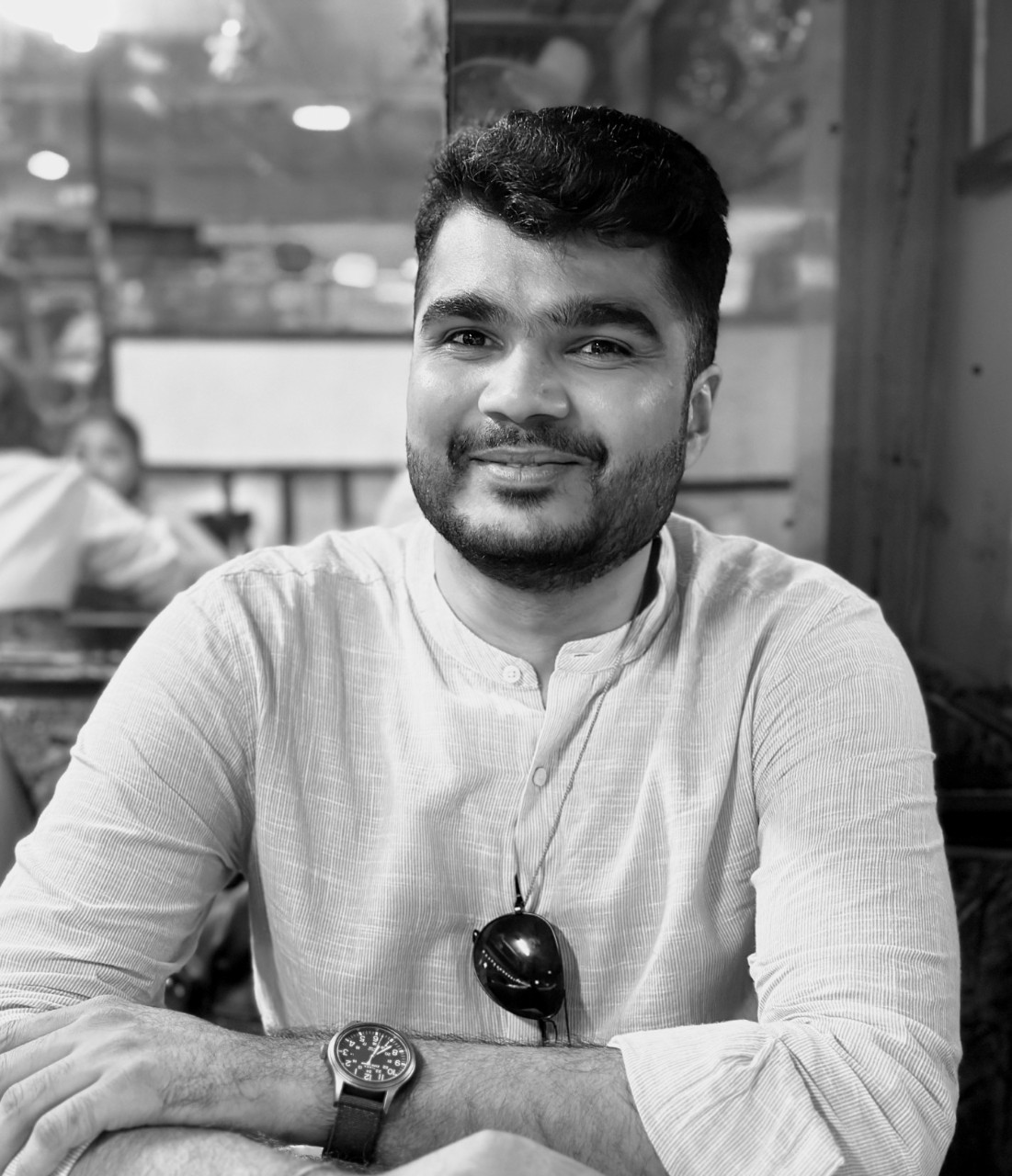
Keval Vora is an Associate Professor at the School of Computing Science, Simon Fraser University. His research focuses on scalable solutions for modern data analytics systems, particularly in graph processing and distributed computing. He leads the Parallel Data and Computing Lab (PDCL), developing systems like Peregrine , GraphBolt , and GraphBolt . Contact: TASC1 9419, keval@sfu.ca. Education: PhD in Computer Science from the University of California, Riverside (2017). Previously worked at Morgan Stanley on low-latency trading software. Teaching: Courses include Distributed Systems (CMPT 431) and Special Topics in Networks and Systems (CMPT 982). Advises graduate and undergraduate students on projects involving distributed systems and graph analytics. Research Interests: Parallel/Distributed Computing, Irregular Big Data Processing, High-Performance Computing. His work emphasizes efficient techniques with provable guarantees for large-scale systems. Software Contributions: Peregrine (pattern-based analytics), GraphBolt (dynamic graph processing), and Lumos (disk-based graph processing). These systems address challenges in scalability, efficiency, and real-time data handling.
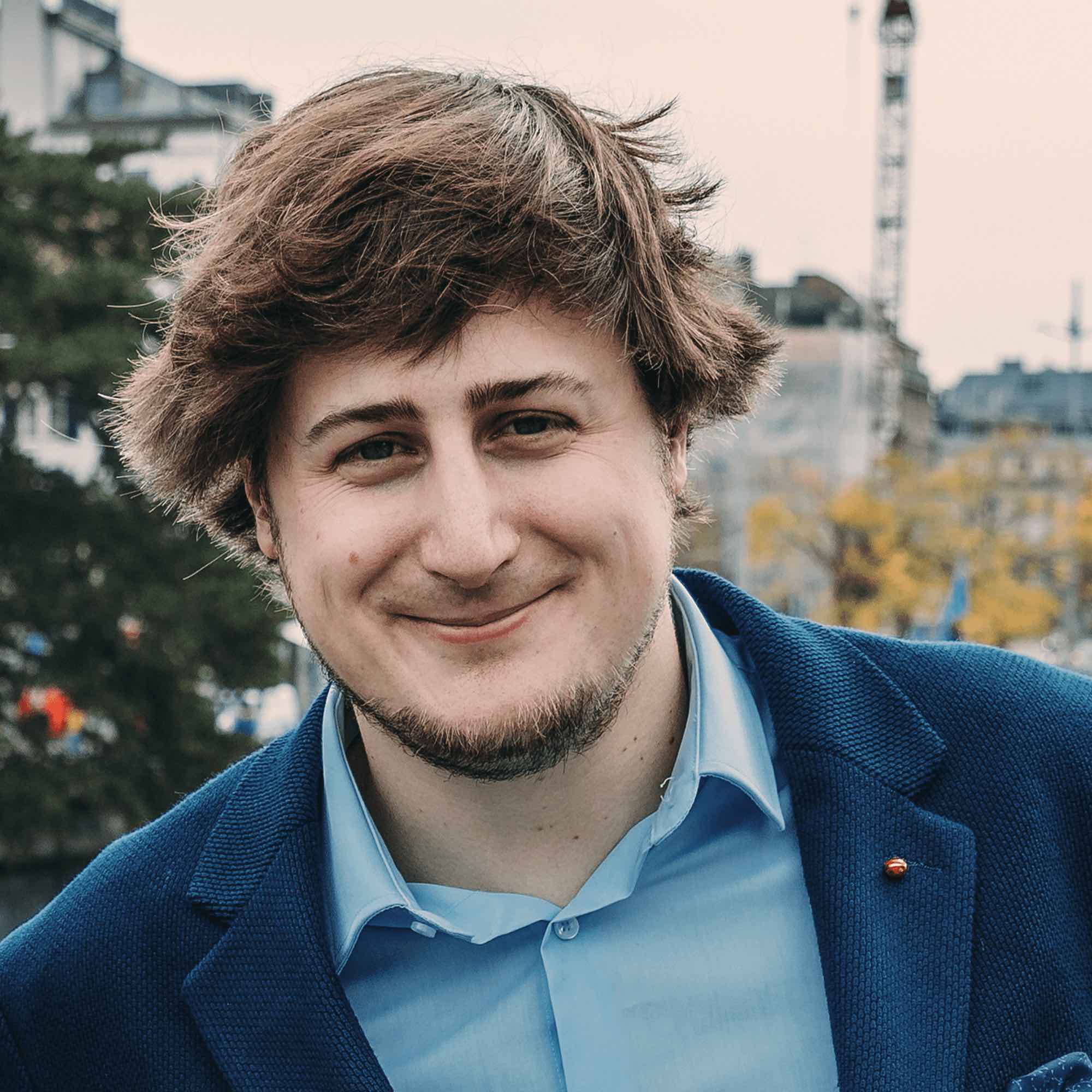
Gioele Zardini is the Rudge (1948) and Nancy Allen Assistant Professor at MIT's Department of Civil and Environmental Engineering (CEE), with affiliations to the Laboratory for Information and Decision Systems (LIDS) and the Institute for Data, Systems, and Society (IDSS). He holds a PhD from ETH Zurich and previously worked as a postdoctoral scholar at Stanford University. His research focuses on co-design of complex systems, autonomous systems, and game-theoretic modeling of transportation networks. Education: BSc and MSc in Mechanical Engineering and Robotics from ETH Zurich (2017–2019), PhD in 2023. He has held visiting roles at nuTonomy Singapore, Stanford, and MIT. Research interests include co-design methodologies, autonomous vehicle systems, compositionality in engineering, and strategic interactions in mobility networks. Recent work emphasizes scalable fleet coordination, safety-critical robotics, and user-centric transportation solutions. Notable awards include the 2024 ETH Doctoral Dissertation Award (Silver Medal), Best Paper at ITSC 2021, and federal grants for enhancing urban transit equity. He leads the Zardini Lab, fostering interdisciplinary collaboration in systems engineering and autonomy. Grants and advising: Received federal grants for transit accessibility projects. His work on Autonomy Talks has produced over 180 recorded lectures, promoting knowledge exchange in autonomous systems. Labs/Teams: Principal Investigator at LIDS, affiliate at IDSS, and founder of the Zardini Lab, focusing on systems co-design, mobility innovation, and game-theoretic frameworks.
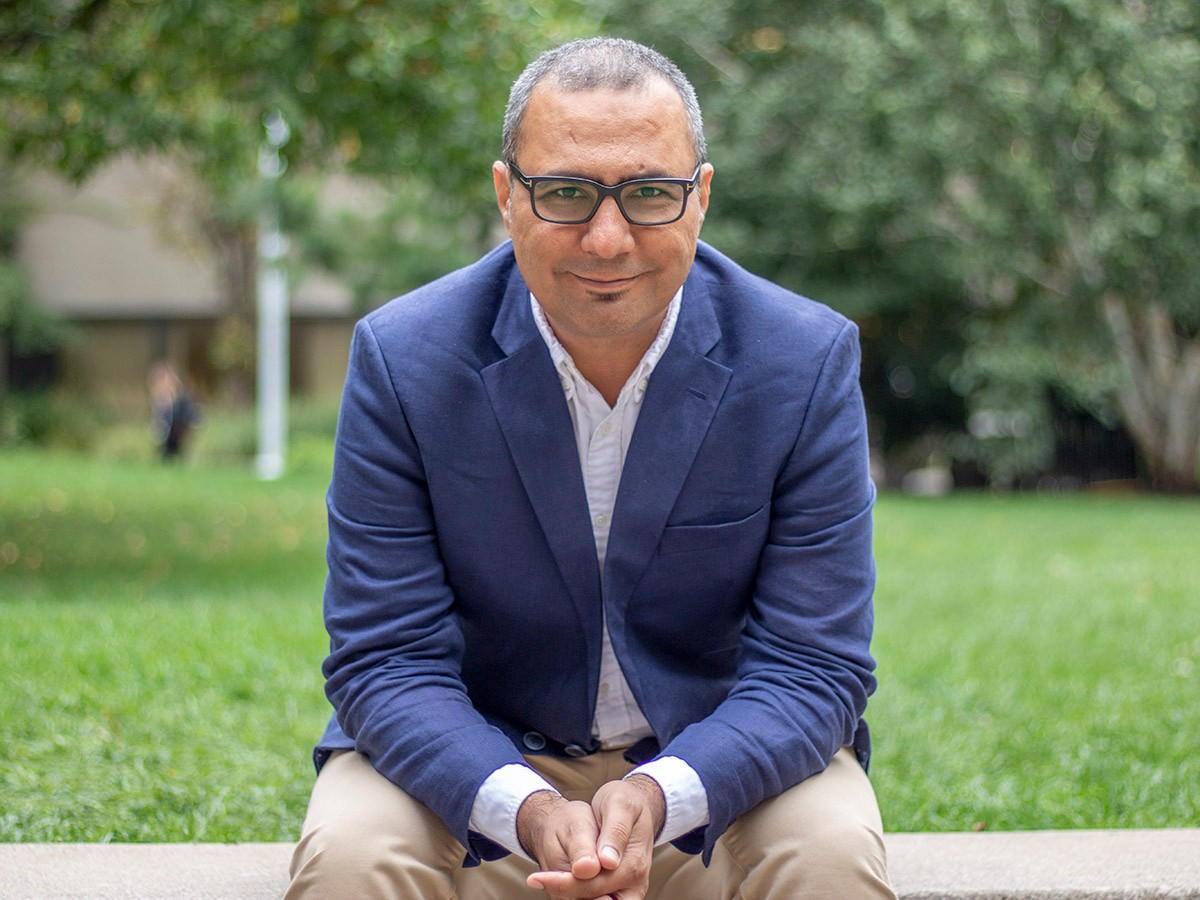
Adam Finkelstein is a Professor in the Department of Computer Science at Princeton University, where he has been a faculty member since 1997. He holds a PhD and Master's in Computer Science from the University of Washington and a dual degree in Physics and Computer Science from Swarthmore College. Finkelstein is renowned for his interdisciplinary work at the intersection of computer graphics, audio processing, and machine learning, and he co-organized the Art of Science exhibition at Princeton. Education: PhD, Computer Science, University of Washington MS, Computer Science, University of Washington BA, Physics and Computer Science, Swarthmore College His research spans audio processing (e.g., speech enhancement, voice conversion, audio metrics), computer graphics (e.g., line drawing algorithms, stylized rendering, image manipulation), and machine learning (e.g., self-supervised learning, differentiable programming). His work often bridges technical and creative domains, exemplified by collaborations at Pixar and Adobe Creative Technologies Lab. Recent publications highlight advancements in audio super-resolution and voice conversion using deep learning frameworks, as well as stylized line rendering for animated 3D models. His contributions to perceptual audio metrics and shader optimization further underscore his impact on human-centric computational systems. Scientific Awards: NSF CAREER Award Alfred P. Sloan Fellowship Fellow of the Association for Computing Machinery (ACM) Finkelstein has secured foundational grants for his research and actively mentors students, though no specific advisees are listed. He also explores collaborative tools for internet music performance, reflecting his broader interest in distributed systems and user interfaces.
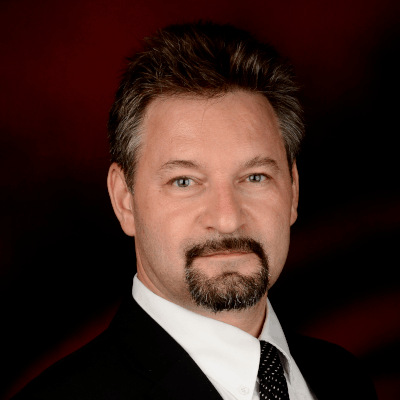
Tim Van de Cruys is a Senior Lecturer at the Faculty of Arts, KU Leuven, serving as Head of the Centre for Computational Linguistics (CCL). He maintains significant affiliations with LECTIO (KU Leuven Institute for the Study of the Transmission of Texts, Ideas and Images), Leuven.AI (KU Leuven Institute for Artificial Intelligence), and LILI (KU Leuven Interdisciplinary Language Institute). His work bridges computational linguistics, artificial intelligence, and humanities research with practical applications across multiple disciplines. Dr. Van de Cruys specializes in computational semantics and creative language generation, with particular expertise in applying NLP techniques to historical and classical texts. His research spans multiple domains including: Natural Language Processing for ancient languages (Latin, Ancient Greek) Computational approaches to lexical and compositional semantics Large language models and their applications in humanities research Creative language generation and human-AI collaboration Named entity recognition and disambiguation in historical contexts Non-autoregressive modeling for sequential generation tasks His recent publications demonstrate a strong focus on applying cutting-edge NLP techniques to humanities challenges, particularly in processing ancient languages. He frequently employs transformer models to address named entity recognition, word sense discrimination, and semantic analysis in low-resource language contexts. His work consistently bridges formal linguistic theory with practical computational applications, creating valuable tools for digital humanities scholars. As promotor and co-promotor on numerous research projects extending through 2029, Dr. Van de Cruys supervises PhD students working at the AI-humanities intersection. His current major projects include "Living Corpora" (exploring human-AI collaboration in digital humanities), "Stochastic processes and non-autoregressive models for sequential generation," and "NIKAW" (exploring knowledge networks from classical antiquity). These projects demonstrate his commitment to advancing both theoretical understanding and practical applications of computational linguistics. He teaches various courses including Computational Linguistics, Scripting Languages, Programming for Humanities, Computational Creativity, and AI for Humanities, training students to work at this critical interdisciplinary crossroads. His leadership of the Centre for Computational Linguistics positions him at the forefront of computational linguistics research in Belgium, where he continues to expand the boundaries of what's possible at the intersection of language, computation, and humanistic inquiry.
Haryadi S. Gunawi is a Professor in the Department of Computer Science at the University of Chicago where he leads the UCARE research group (UChicago systems research on Availability, Reliability, and Efficiency). His work focuses on improving the dependability of storage and cloud computing systems, with a particular emphasis on addressing performance stability, reliability, and scalability challenges in modern computing environments. Dr. Gunawi received his Ph.D. in Computer Science from the University of Wisconsin, Madison in 2009. Following his doctoral studies, he was a postdoctoral fellow at the University of California, Berkeley from 2010 to 2012 before joining the University of Chicago faculty. His research focuses on three main areas: (1) performance stability, where he builds storage and distributed systems robust to latency tails and "limping" hardware; (2) reliability and scalability, where he addresses concurrency and scalability bugs in cloud-scale distributed systems; and (3) the intersection of machine learning and systems, exploring how machine learning techniques can solve operating and storage system problems. His work often combines theoretical insights with practical system implementations that address real-world challenges in cloud and storage infrastructure. Dr. Gunawi's publication record shows a consistent focus on storage and cloud system reliability, with recent work increasingly incorporating machine learning techniques to address traditional systems challenges. His research spans the full stack from hardware interfaces to distributed system design, with a strong emphasis on practical solutions that can be deployed in production environments. His work often involves close collaboration with industry partners to ensure real-world relevance and impact. Dr. Gunawi has received numerous prestigious awards including the NSF CAREER award, NSF Computing Innovation Fellowship, Google Faculty Research Award, multiple NetApp Faculty Fellowships, and an Honorable Mention for the 2009 ACM Doctoral Dissertation Award. He has also received the Provost's Global Faculty Award and Facebook Faculty Research Award, highlighting the broad recognition of his contributions to the field. As an advisor, Dr. Gunawi has mentored several PhD students including Ruidan Li, Ray Andrew, Rani Ayu Putri, and William Nixon. His research has been supported by major grants from NSF, Google, Facebook, and NetApp, enabling his team to pursue ambitious research projects at the intersection of systems, storage, and machine learning. Dr. Gunawi leads the UCARE research group at UChicago, which focuses on improving the dependability of storage and cloud-scale distributed systems. He is also involved with the Chameleon cloud research infrastructure project and the broader Systems Group at UChicago, contributing to a vibrant research community focused on systems, programming languages, and software engineering.
Anoop Sarkar is a Professor in the School of Computing Science at Simon Fraser University (SFU), leading the Natural Language Lab. His research focuses on multilingual natural language processing, machine learning applications in NLP, and machine reading with visualization techniques. He has held significant grants including NSERC Discovery Accelerator Supplements (2012–2023) and multiple Google/IBM Faculty Awards. His teaching includes advanced NLP courses and compiler design. Over 38 students have graduated under his supervision, with a strong emphasis on computational linguistics and machine translation. His research explores areas such as statistical machine translation, decipherment of ancient scripts, and semi-supervised learning. Key software contributions include the TroFi toolkit and metaphor dataset. He has served as area chair for EMNLP (2023) and co-chair of NAACL (2015). The Natural Language Lab hosts weekly meetings open to collaboration. His work bridges theory and application, addressing challenges in low-resource language processing. Recent publications (2023–2024) highlight advancements in entity linking, cognate alignment, and structured prediction. Grants span foundational and applied NLP research, supported by NSERC and industry partnerships. His advising spans 12 PhD and 26 MSc graduates, reflecting a sustained impact on the next generation of NLP researchers.
Bilal Farooq is an Associate Professor and Program Director for the Master of Engineering in Interdisciplinary Engineering (MEIE) at Toronto Metropolitan University, holding the Canada Research Chair in Disruptive Transportation Technologies and Services within the Department of Civil Engineering. His educational background includes a PhD from the University of Toronto (2011), MASc from Lahore University of Management Sciences (2004), and BSc from the University of Engineering and Technology (2001). Dr. Farooq's research pioneers disruptive transportation solutions through cyber-physical systems, AI/machine learning applications, behavioral modeling, and optimization techniques. His work specifically targets on-demand multimodal systems, sustainable urban transportation, urban air mobility, automated vehicles, and extended reality applications, addressing critical urban mobility challenges with human-centered approaches. Analysis of his recent publications reveals a strong trend toward quantum-enhanced computational methods, privacy-preserving federated learning frameworks, and sustainability-focused decarbonization strategies across transportation domains, with increasing emphasis on human factors and real-world implementation. Notable scientific awards include: Ontario Early Researcher Award (2018) Canada Research Chair (2017) MassMotion Academic Pedestrian Modelling Project of the Year (2016) Québec Early Researcher Award (2014) Dr. Farooq actively supervises graduate students and secures significant research funding through his Canada Research Chair position and Early Researcher Awards. He directs the Laboratory of Innovations in Transportation (LiTrans), which develops interdisciplinary solutions integrating mathematics, engineering, computer science, and economics to address emerging transportation challenges. LiTrans focuses on disruptive transportation technologies, complete streets design, cyber-physical systems, pedestrian dynamics, resilience, and climate change impacts, collaborating with industry and government partners to translate research into practical urban mobility innovations for smart cities worldwide.
Christian Poellabauer is a Professor at Florida International University (FIU) in the Knight Foundation School of Computing and Information Sciences, serving as Interim Associate Dean for Research and Graduate Studies in the College of Engineering & Computing. He holds a Ph.D. from Georgia Institute of Technology (2004) and a Diplom-Ingenieur from TU Vienna (1998). His research focuses on mobile sensing, data analytics, and healthcare technologies, leading the MOSAIC Lab which develops solutions for healthcare, IoT, and smart cities. He previously led the Mobile Computing Lab at the University of Notre Dame and held leadership roles in data science institutes. Research Interests: His work spans digital biomarkers for neurodegenerative diseases, speech analysis for mental health, wearable device authentication, and wireless sensor networks. The MOSAIC Lab addresses challenges like real-time sensor data analysis on constrained devices and translating insights into clinical applications. Teaching: He has taught courses on Operating Systems, Mobile Computing, and Smart Health at both FIU and Notre Dame. Recent courses include COP4610 (Operating Systems Principles) and COP5614 (Graduate Operating Systems) at FIU. Service: He serves as Associate Editor for IEEE Transactions on Network Science and Engineering, and has organized conferences like ICNC 2023 and IEEE MASS 2021. His academic service includes roles on editorial boards and technical program committees for major conferences in distributed computing and networking. Advising & Labs: Advises current Ph.D. students in areas like multi-modal sensing for affective computing and mental health crowdsensing. Past students have pursued roles in academia and industry (e.g., Rose-Hulman Institute of Technology, Facebook, Microsoft). The MOSAIC Lab collaborates on projects like digital clinical outcome assessments and motor impairment detection.
Dr. Thomas E. Doyle is an Associate Professor at the McMaster School of Biomedical Engineering and the Department of Electrical & Computer Engineering at McMaster University. His research focuses on biomedical signal processing, human-computer interfacing (HCI), and machine learning applications for healthcare augmentation, rehabilitation, and enhancement. He holds a Ph.D. from Western Ontario, Canada, and teaches courses like COMPENG 2DI4 (Logic Design). His work bridges cybernetics and clinical applications, emphasizing AI-driven solutions for medical diagnostics, patient monitoring, and space exploration. Education: B.E.Sc, B.Sc, M.E.Sc, Ph.D. from Western Ontario, Canada Recent Projects: Developed AI systems for remote healthcare diagnostics (2023) Collaborated with NASA on medical emergency simulators for deep space missions (2017–2023) Led ventilator development efforts for local hospitals during the pandemic (2020) His research interests span machine learning for mental health diagnostics, trust quantification in medical AI, and extended reality (XR) for medical training. He emphasizes interdisciplinary approaches, integrating computational methods with healthcare challenges. Recent publications highlight applications in pediatric emergency care, chronic pain management, and reliable medical device design. Dr. Doyle actively engages in educational initiatives, including first-year engineering pedagogy and experiential learning programs. He has received funding for projects such as the Educating the Engineer of 2025 (EtE-25) awards and contributes to initiatives like the Digital & Smart Systems and Health & Bio-innovation research clusters at McMaster.
Prof. Alexander Pretschner is a Professor of Software & Systems Engineering at the Technical University of Munich (TUM) and Founding Director of the Bavarian Research Institute for Digital Transformation (bidt). He also serves as Scientific Director of fortiss, a Bavarian research institute for software-intensive systems. His research focuses on software engineering, testing, information security, and ethical software development. Pretschner holds a PhD from TUM and has held academic positions at Karlsruhe Institute of Technology (KIT) and TU Kaiserslautern. He is a co-editor of several prestigious journals, including IEEE Transactions on Reliability and the Journal of Software Testing, Verification and Reliability. Education: PhD in Computer Science, Technical University of Munich MSc in Computer Science, University of Kansas (on Fulbright Scholarship) Diplom in Computer Science, RWTH Aachen University Research Interests: His work spans testing methodologies, secure software design, and ethical considerations in agile development. Notable contributions include frameworks for metamorphic testing, distributed data usage control, and accountability mechanisms for cyber-physical systems. Awards: IBM Faculty Award (2012, 2013) Google Focused Research Award (2011, 2012) EARTO Innovation Prize (2014) 2nd Platz Supervisory Award (2020) Advising & Grants: Pretschner has supervised numerous PhD and Master’s students, contributing to over 200 publications. He leads projects like EDAP (Ethical Deliberation in Agile Processes) and collaborates with industry partners on cybersecurity and AI ethics initiatives. Labs & Teams: His work is anchored in bidt, fortiss, and TUM’s Chair of Software & Systems Engineering, focusing on societal impacts of digitalization and trustworthy AI systems.
Alexei A. Efros is the Howard Friesen Professor in the EECS Department at UC Berkeley, affiliated with the Berkeley Artificial Intelligence Research (BAIR) Lab. Previously, he spent a decade at CMU's Robotics Institute and held a postdoc at the University of Oxford under Andrew Zisserman. He collaborates with INRIA/École Normale Supérieure in Paris. His research focuses on self-supervised learning, generative models, and visual data mining, with applications to robotics, computational photography, and art. Education & Academic Roles: Postdoc at Oxford (with Andrew Zisserman), faculty at CMU (2005–2015), currently at UC Berkeley. Teaches courses like CS 180/280A (Computer Vision) and CS 280 (Graduate Computer Vision). Research Interests: Self-supervised learning, generative models (e.g., diffusion models, inpainting), visual commonsense, and cross-modal reasoning. His work bridges computer vision and graphics, emphasizing data-driven approaches. Recent projects include Visual Jenga, Diffusion Models as Data Mining Tools, and Prioritized Generative Replay. Grants & Labs: Leads the Efros Research Group, advised over 40 PhD students (e.g., Jun-Yan Zhu, Tinghui Zhou). Collaborates with institutions like INRIA and NVIDIA. Active in grants related to AI, vision, and robotics. Labs/Teams: BAIR Lab (UC Berkeley), former affiliations with CMU Robotics Institute and Willow Team (INRIA/ENS Paris). Current lab focuses on generative AI, 3D perception, and visual reasoning.
Mike Kirby is a Professor at the Kahlert School of Computing, University of Utah. He also holds adjunct professorships in the Department of Bioengineering and the Department of Mathematics. His current roles include leadership in scientific computing and informatics initiatives, including former directorships of the Utah Informatics Initiative (2019-2023) and the Multi-Scale Multidisciplinary Modeling of Electronic Materials (MSME) Collaborative Research Alliance (2016-2022). He has extensive experience in strategic research initiatives, including serving as Assistant Vice President for Research (2024-2025). Education: Dr. Kirby earned a PhD in Applied Mathematics (2002) and MS in Computer Science (2001) from Brown University, and a BS in Applied Mathematics and Computer Science from Florida State University (1997). Research Interests: Focus on large-scale scientific computing, physics-informed machine learning, computational science and engineering, high-order numerical methods, and visualization. His work bridges applied mathematics and computer science to address real-world engineering challenges. Publications: Over 150 peer-reviewed articles, including high-impact contributions in journals like Journal of Computational Physics and SIAM Journal on Scientific Computing . Recent work emphasizes machine learning for differential equations, topology optimization under uncertainty, and multi-fidelity modeling. Awards: Recognized for leadership in computational science and informatics, including contributions to University of Utah’s Clery Compliance Program. Advising & Grants: Supervised over 50 graduate students and postdocs. Secured funding from NSF, DOE, and industry partnerships, totaling millions in research grants. Active in interdisciplinary collaborations across engineering, materials science, and medicine. Labs/Teams: Scientific Computing and Imaging (SCI) Institute, Utah Informatics Initiative, and the Center for Multiscale Modeling of Electronic Materials (MSME).
Dr. Hayriye Cagnan is a Senior Lecturer (equivalent to Associate Professor) at Imperial College London and Associate Unit Member at the MRC Brain Network Dynamics Unit. She holds a PhD in Neuroscience from the University of Amsterdam and Philips Research Laboratories (2010), an MSc in Engineering and Physical Science in Medicine from Imperial College London, and a BS in Electrical and Electronics Engineering from Cornell University as a Fulbright Scholar. Her research develops theory-driven strategies for selective modulation of brain rhythms using: Theoretical disease models and stimulation paradigms Dynamic neuromodulation approaches Wearable devices for remote therapy optimization Advanced signal processing techniques Her recent publications (2015-2025) demonstrate consistent focus on tremor pathophysiology, neural oscillations in Parkinson's disease, and advanced brain stimulation technologies. Research employs computational modeling, EEG, magnetoencephalography, and both invasive/non-invasive stimulation techniques. Awards & Fellowships: Fulbright Scholarship (2000-2004) British Chevening Scholarship (2004) MRC Skills Development Fellowship (2015) MRC Career Development Award (2018) Dr. Cagnan leads an independent research group originally established at the MRC Brain Network Dynamics Unit in 2018, maintaining close collaborations with clinical neuroscientists and engineers to translate basic research into therapeutic applications.
Hadi Daneshmand is an Assistant Professor of Computer Science at the University of Virginia, specializing in theoretical machine learning. Prior to joining UVA, he completed postdoctoral research at FODSI (jointly hosted by MIT and Boston University), Princeton University, and INRIA Paris following his 2020 PhD in Computer Science from ETH Zurich. Education Ph.D. in Computer Science, ETH Zurich, 2020 His research bridges computational perspectives and neural network theory, focusing on theoretical guarantees for deep learning systems. Key interests include understanding neural network mechanisms through optimization frameworks, foundations of machine learning, and stochastic processes in learning systems. His work reveals how neural networks implement computational primitives like gradient descent and optimal transport through architectural components. Recent publications demonstrate a cohesive trajectory analyzing transformers' computational capabilities, batch normalization's theoretical properties, and optimization dynamics in deep learning. His studies consistently establish formal connections between neural architectures and classical optimization methods, particularly in in-context learning scenarios. Scientific Awards Stanford CPAL Rising Star Award Spotlight award at ICML In-context Learning workshop (2024) Postdoc fellowship of the Foundation of Data Science Institute (FODSI) Early Postdoc Mobility grant from SNSF Best poster award at Max Planck ETH deep learning workshop (2016) Reviewer awards for ICML (2022, 2019) and NeurIPS (2020) Dr. Daneshmand actively mentors graduate students, with advisees including PhD candidates at ETH Zurich who have secured positions at Harvard, Yale, Meta, and NVIDIA. His research is supported by competitive grants including the SNSF Early Postdoc Mobility award and FODSI fellowship. He serves the community as Area Chair for NeurIPS 2023-2024 and ICML 2025, and regularly reviews for top machine learning conferences and journals. He teaches specialized courses including "Neural Networks: A Theory Lab" at UVA, emphasizing experimental-theoretical connections in neural computation through hands-on coding exercises.
Prof. Dr. Ingo Scholtes is Chair of Machine Learning for Complex Networks at Julius-Maximilians-Universität Würzburg's Center for Artificial Intelligence and Data Science (CAIDAS). His research spans network science, graph machine learning, and computational social science, with applications in software engineering, ecology, biology, and physics. He received a Juniorfellowship from the German Informatics Society (2014) and an SNSF Professorship (CHF 1.5Mio, 2018). Current affiliations: JMU Würzburg (since 2021), University of Zurich (2018-2024), Bergische Universität Wuppertal (2019-2021) Research focus: Higher-order network modeling, temporal graph analysis, AI for collaborative systems, causality-aware machine learning His recent publications demonstrate strong trends in temporal network analysis , graph neural networks for time-series, and higher-order models across software engineering and social science domains. He co-chairs multiple international workshops on complex networks and serves as associate editor for EPJ Data Science and Advances in Complex Systems. Key scientific contributions: Foundational work on higher-order network models published in Nature Physics Methodological innovations in temporal network visualization (HOTVis) and path-based analysis (pathpy) As both educator and organizer, he leads the Computational Social Science Section at GI e.V., mentors across disciplines, and develops tools like git2net for collaboration analysis. His work bridges theoretical foundations with practical applications in network science.