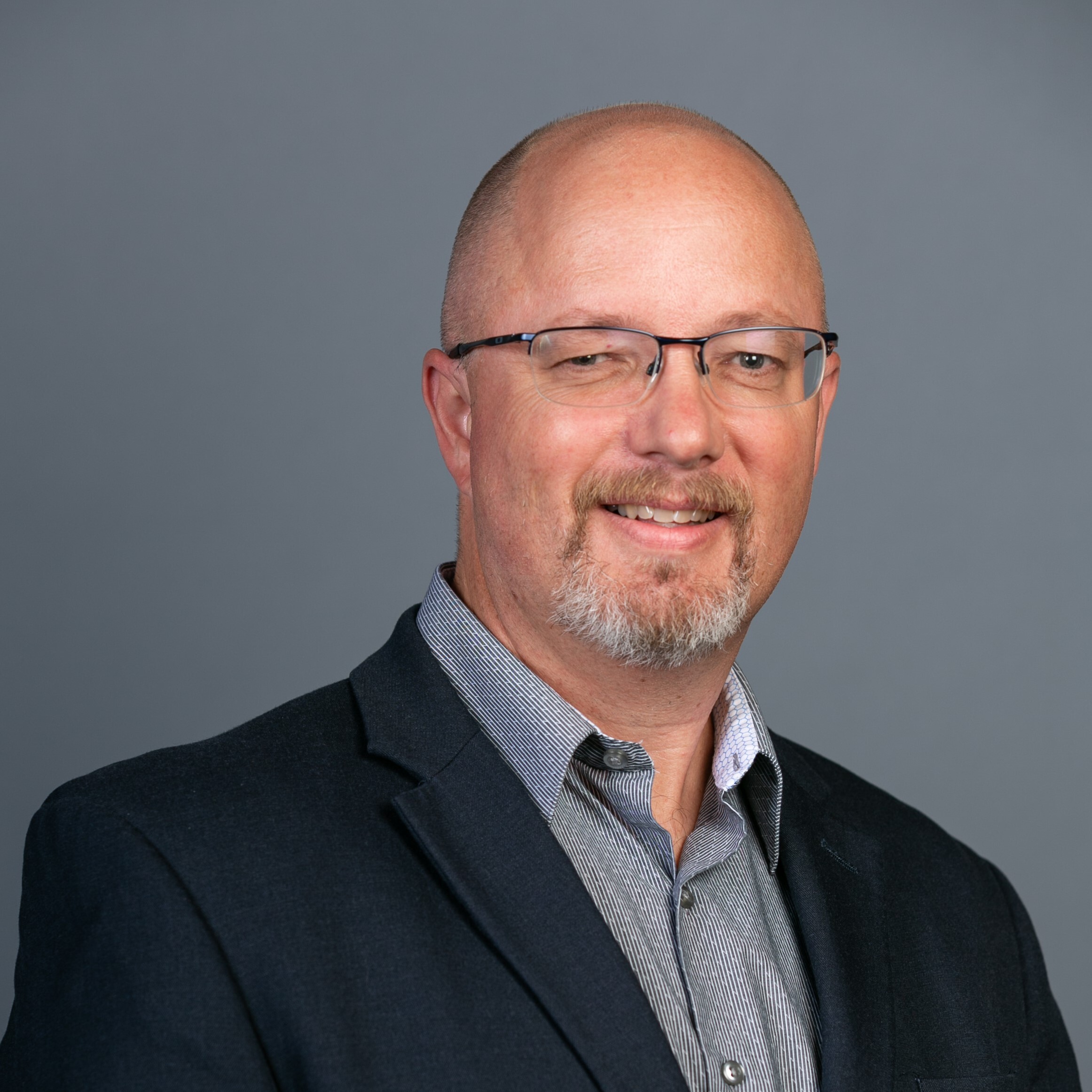
Xin Li is a Professor in the Department of Electrical and Computer Engineering at Duke University and serves as the Associate Vice Chancellor at Duke Kunshan University. He holds a Ph.D. from Carnegie Mellon University (2005) and has held leadership roles in research consortia like the FCRP Focus Research Center and the Center for Silicon System Implementation (CSSI). His research bridges integrated circuits , machine learning , and cyber-physical systems , with applications in autonomous driving, battery lifetime prediction, and smart buildings. Education : Ph.D., Carnegie Mellon University (2005); M.S., Fudan University (2001); B.S., Fudan University (1998) His work emphasizes robust design methodologies for analog/RF circuits, data-driven predictive modeling , and Bayesian inference for high-dimensional variation spaces. Recent publications focus on generative adversarial networks for circuit design, multi-view imputation for incomplete data, and knowledge-driven autonomous systems . He has received numerous accolades, including the NSF CAREER Award (2012) , IEEE Donald O. Pederson Best Paper Awards (2013, 2016) , and IEEE Fellow (2017) . He has served as Editor for journals like IEEE Transactions on Biomedical Engineering and as Chair for conferences including ISVLSI and CAD/Graphics.
Assoc. Prof. Dr. Murat Yılmaz is an Associate Professor at Istanbul Technical University's Faculty of Electrical and Electronics Engineering, Department of Electrical Engineering. His academic career spans over 15 years at Istanbul Technical University, including roles as Deputy Head of Department (2015-2020) and Vice Dean (2020-present). PhD in Electrical Engineering from Istanbul Technical University (1999-2006) Postdoctoral Researcher at University of Illinois at Urbana-Champaign (2007, 2011) His research focuses on: Power Electronics - advanced converter designs and semiconductor applications Electrical Machines - optimization of permanent magnet and reluctance motors Energy Storage Systems - battery efficiency and electrification infrastructure Electric Vehicles - cost-effective BRT systems and sensorless control methods Recent publications highlight his work on IPMSM optimization for light EVs (2025), battery chemistry performance analysis (2025), and PMaSynRM parameter estimation (2024). His research outputs demonstrate strong focus on sustainable energy solutions and motor control systems. Notable awards: 2022 IEEE PEMC Best Paper Award 2022 European Rover Challenge - 3rd Place & Best Robot Arm 2009 WORLD SOLAR CHALLENGE Best New Entrant Multiple TÜBİTAK Formula G awards (2006-2008) IEEE Senior Member (since 2020) Prof. Yılmaz leads multiple funded projects including: 2022-2023: Modeling & Design of Rover Systems for Space Exploration 2020-2021: Flexible SPA Web Applications Consultancy 2018-2021: Battery Charging Systems for Electric Vehicles
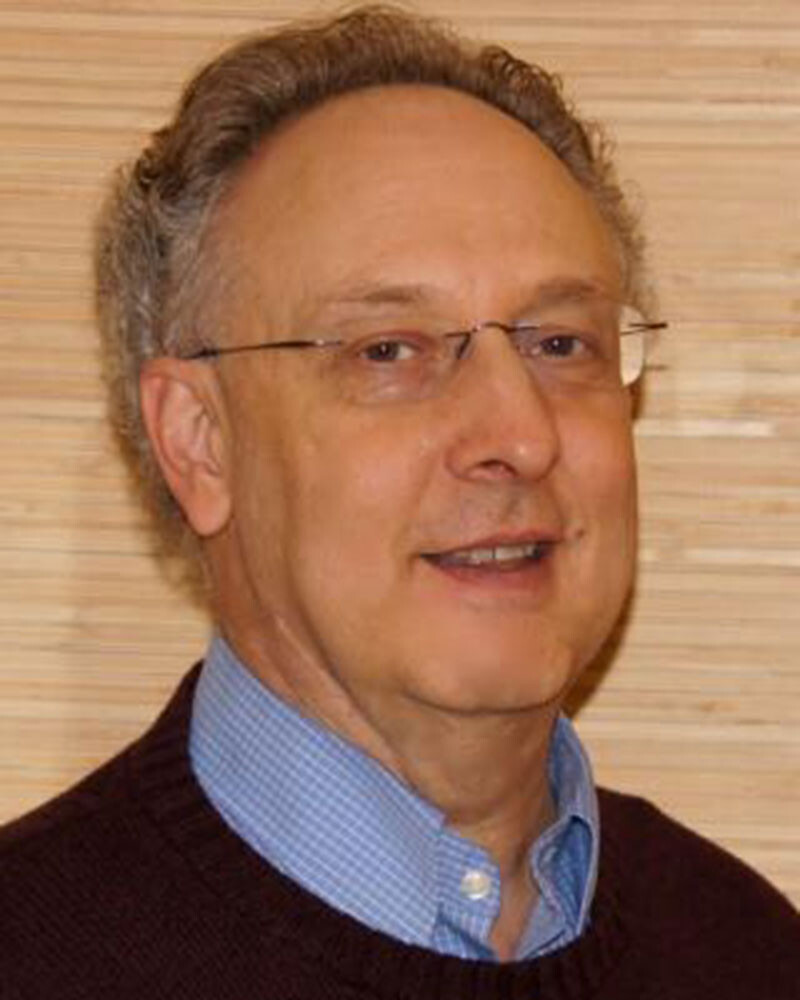
Patrick Fay is a Professor of Electrical Engineering at the University of Notre Dame and holds the Stinson Professorship of Nanotechnology. His primary research focuses on microwave, millimeter-wave, and power electronic devices, with applications in photovoltaics, energy conversion, and high-speed optoelectronics. He works in the Fitzpatrick Hall of Engineering and is affiliated with the High Speed Circuits & Devices Lab and the Notre Dame Nanofabrication Facility. Ph.D., Electrical Engineering, University of Illinois at Urbana-Champaign (1996) M.S., Electrical Engineering, University of Illinois at Urbana-Champaign B.S., Electrical Engineering, University of Notre Dame (1991) His research explores novel III-V semiconductor solar cells, GaN-based power transistors, and ultra-low-power heterostructure devices. He applies advanced fabrication techniques to improve performance in terrestrial/space photovoltaics and develops high-efficiency microwave components for wireless communications. Current projects include unconventional solar cell architectures for airborne applications. Prof. Fay has published over 400 journal/conference articles and 11 book chapters, with seven patents in semiconductor technology. He has received multiple teaching awards, including the College of Engineering’s Outstanding Teaching Award (2015) and dual Departmental awards (1998, 2018). His work spans energy-efficient electronics, smart grid systems, and transformative solar energy solutions. IEEE Fellow IEEE Electron Devices Society Distinguished Lecturer Outstanding Teaching Award (1998, 2015, 2018)
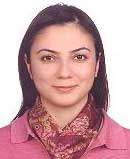
Hacer Atar Yıldız is an Associate Professor at the Department of Electronics and Communication Engineering, Faculty of Electrical and Electronics Engineering at Istanbul Technical University (ITU). She holds a B.Sc. (1997) and M.Sc. (2000) in Electronics Engineering from Karadeniz Technical University, and a Ph.D. (2015) in Electronics Engineering from ITU. Her research focuses on analog circuit design, integrated circuits, analog filters, memristor structures, and graphene sensors. Education: Ph.D. in Electronics Engineering (2015), Istanbul Technical University M.Sc. in Electronics Engineering (2000), Karadeniz Technical University B.Sc. in Electronic Communication Engineering (1997), Karadeniz Technical University German Language Education (2001), Munich Technical University Research Interests: Her work emphasizes innovative analog circuit solutions, including memristor-based systems, neural networks, and sensor technologies. Notable contributions include memcapacitor/meminductor emulator circuits and cryogenic bandgap designs. She also explores applications in plant identification using copula models and thermal compensation for microbolometers. Professional Experience: Associate Professor at ITU (2022–present) Researcher at Virginia University (2018) Expert Engineer at Türk Telekom (2003–2009) Intern at Marco GmbH (Munich, 2001–2002) Teaching: She has taught courses such as Introduction to Electronics, Electronic Design, and Analog Circuits at both undergraduate and graduate levels. Recent courses include EHB 222E and EHB 335. Languages & Hobbies: Fluent in English and German. Enjoys swimming, long-distance running, Turkish folk music, and outdoor activities.
Thomas Ebel is Professor and Head of the Centre for Industrial Electronics at the University of Southern Denmark (SDU) , Institute of Mechanical and Electrical Engineering. A leading expert in power electronics, high-voltage engineering and capacitor technology, he directs large, multi-partner research projects and teaches/supervises at both graduate and PhD levels. Education & Career Path Prof. Ebel holds the academic title Dr. rer. nat. and has been appointed full Professor at SDU. He concurrently serves as Head of Section at the Centre for Industrial Electronics, orchestrating cross-disciplinary research teams and infrastructure. Research Interests Power Electronics & Power Conversion: advanced converter topologies, WBG devices (GaN, SiC), high-frequency magnetics, grid-forming control. Dielectric Materials & Capacitors: polymer and hybrid nanocomposite dielectrics, self-healing metallized film capacitors, aluminium electrolytic capacitors, lifetime modelling and reliability. High-Voltage Engineering & Breakdown Physics: breakdown mechanisms in nanocomposites, corona and partial discharge, insulation coordination. IoT & Data-Driven Monitoring: real-time condition monitoring, digital twins, data-driven RUL estimation for power components. Publication Trends Across 133 research outputs (2018-2025) the dominant themes are (i) construction and reliability of 700 V-class aluminium polymer electrolytic capacitors, (ii) GaN-based power converter optimisation, (iii) hybrid AC/DC microgrid control and harmonic mitigation, and (iv) nanocomposite dielectrics for next-generation capacitors. The 15 most recent articles (2025) reinforce these directions while adding socio-technical energy analytics and green-vehicle powertrains. Scientific Awards Tek Innovation Prize 2023 – awarded for outstanding contributions to power electronics research and industrial innovation. Advising & Funding Prof. Ebel currently supervises ~10 PhD candidates and post-docs including L. Tavares, M. A. Khan, R. Maheshwari, S. Mateen, A. N. Pinky and others. He is Principal Investigator or Head Coordinator of six active projects (2024-2027) valued at >€8 M, spanning ultra-high-efficiency drives, hydrogen-PtX converters, self-healing capacitors and hybrid power-plant concepts. Laboratory & Teams He heads the High-Voltage Power Electronics Laboratory at SDU, equipped with 700 V/200 A capacitor test rigs, GaN/SiC converter prototyping benches, and environmental chambers for accelerated ageing studies. The centre collaborates with 20+ industrial partners and coordinates the international IEA Wind Task 50 on hybrid power plants.
Yury Illarionov is an Associate Professor in the Department of Materials Science and Engineering at Southern University of Science and Technology (SUSTech), Shenzhen, China. He was previously a postdoc researcher at TU Wien's Institute for Microelectronics (2016-2022) and a PhD student at TU Wien and Ioffe Institute (2011-2015). His research focuses on 2D materials for nanoelectronics, optoelectronics, and sensors, with an emphasis on gate insulator development and device reliability. Education: B.Sc. & M.Sc., Technical Physics, Peter the Great St-Petersburg Polytechnic University (2009, 2011) Double M.Sc., Advanced Material Science, Erasmus Mundus FAME Program (2012) Ph.D., Semiconductor Physics, Ioffe Institute (2015) Ph.D., Technical Sciences, TU Wien (2015) His research interests center on: Fabrication of 2D FETs, photodetectors, and sensors with novel insulators (fluorides, native oxides) Advanced device characterization across temperature ranges TCAD modeling for performance and reliability Scalable fabrication techniques compatible with industrial thermal budgets Publications highlight trends in 2D nanoelectronics, oxide trap analysis, and reliability engineering for next-generation devices, spanning journals like Nature Electronics, Nature Communications, ACS Nano, and IEEE Transactions on Electron Devices. Scientific Recognition : IEEE Senior Member (2020) Co-supervisor of multiple PhD awards (2015-2023) Best poster award (ICP2DC4, 2019) Erasmus Mundus scholarship (2010) High school gold medal (2005) Advising includes direct supervision of PhD students like T. Knobloch, with collaborative efforts across international teams. His lab, Laboratory of 2D Optoelectronics and Nanoelectronics (L2DON) , combines academic rigor with industrial partnerships to advance scalable 2D device technologies.
Dr. Faisal Mohd-Yasin is a Senior Lecturer in the School of Engineering and Built Environment at Griffith University, specializing in Electrical and Electronic Engineering. He has been with Griffith University since 2010, initially as a Lecturer (2010-2016) and promoted to Senior Lecturer in 2017. He is also a member of the Queensland Quantum and Advanced Technologies Research Institute (QUATRI) since 2025. His research spans microelectronics, MEMS technology, compound semiconductors, and electronic sensors/instrumentation, with particular expertise in silicon carbide-based devices for harsh environments. Dr. Mohd-Yasin holds dual PhD qualifications: a Doctor of Philosophy (Engineering) from Multimedia University, Cyberjaya, Malaysia (2014) and a PhD in Engineering from Ibaraki University, Hitachi, Japan (2009). His educational background provides a strong foundation for his interdisciplinary research that bridges semiconductor physics, sensor technology, and electronic circuit design. His research interests focus on Microelectromechanical systems (MEMS), compound semiconductors (particularly $$ ext{SiC}$$), electronic sensors, and electronic instrumentation. He has made significant contributions to the development of silicon carbide MEMS devices for harsh environments, piezoelectric energy harvesters, and noise analysis in microelectronic systems. His work has important applications in sustainable cities (SDG 11), health and well-being (SDG 3), and clean energy (SDG 7). Analysis of his recent publications reveals a strong trend toward MEMS sensor technology, particularly silicon carbide-based devices for harsh environments, and noise analysis in piezoelectric sensors. His research also demonstrates a growing interest in engineering education, with several publications on practical electronics teaching methods. The publications span electrical engineering, sensor technology, energy harvesting, and engineering education, reflecting his interdisciplinary approach to research and teaching. Dr. Mohd-Yasin has successfully supervised multiple doctoral and masters students through completion, including Utkarsh Jadli (PhD on Parasitic Capacitances of Power Transistors), Siti Aisyah Zawawi (PhD on MEMS capacitive microphone), Mei Kum Khaw (PhD on magnetically actuated droplets), Abid Iqbal (PhD on AlN thin films), Noraini Marsi (PhD on MEMS pressure sensors), and Kai Meng Mui (Masters on Power management IC). He has also secured numerous research grants totaling over $1.5 million from various sources including Griffith University, Innovative Manufacturing CRC, IRU, and Malaysian research councils. He is actively involved in professional service as a peer reviewer for the IEEE Sensors Conference series (2015-2025), Micro and Nano Engineering Conference series (2009-2018), and the International Conference on Solid-State Sensors, Actuators and Microsystems (2018-2019). He is also a member of IEEE (Institute of Electrical and Electronics Engineers) since 1997. Dr. Mohd-Yasin's research is primarily conducted through the Queensland Quantum and Advanced Technologies Research Institute (QUATRI), where he collaborates with researchers working on advanced semiconductor technologies and quantum applications. His laboratory work focuses on MEMS fabrication, sensor characterization, and circuit design for harsh environment applications.
Labros Bisdounis is a Professor at the Department of Electrical and Computer Engineering, University of the Peloponnese, Greece. He previously held positions at the Technological Educational Institute of Western Greece, including Associate Professor, Full Professor, and Dean of the School of Technological Applications (2016–2018). He has extensive industry experience as a senior research engineer and project manager at Intracom S.A. (2000–2008), focusing on VLSI circuits and telecom applications. His research interests include CMOS circuit timing/power modeling, low-power/high-speed design, MOSFET modeling, and sensor applications. He has authored over 30 papers with 740+ citations and is an IEEE member. Education: Diploma in Electrical Engineering (1992), University of Patras Ph.D. in Electrical Engineering (1999), University of Patras Research Interests: CMOS circuit timing and power dissipation modeling Deep-submicron/nano-CMOS circuit design MOSFET device modeling Low-power embedded systems and SoC Sensor applications and organic electronics Leadership Roles: Dean of the School of Engineering, University of the Peloponnese (2023–present) Director of Training & Lifelong Learning Centre (2019–2019) Board Member, Hellenic NARIC (2016–2019) Collaborations: Active at the Hellenic Open University as a tutor in Computer Architecture and Digital Systems modules. Co-developed the AETHER framework for pervasive computing and contributed to energy-aware SoC designs for 5 GHz WLANs.
Alan Mantooth is a Distinguished Professor holding the Twenty-First Century Research Leadership Chair in Engineering within the Department of Electrical Engineering at the University of Arkansas, Fayetteville. He serves as Director of the National Center for Reliable Electric Power Transmission (NCREPT), Executive Director for GRAPES (NSF I/UCRC) and SEEDS (DoE Center), and Deputy Director of the NSF Engineering Research Center for Power Optimization of Electro-Thermal Systems (POETS). His educational background includes: B.S. in Electrical Engineering, University of Arkansas M.S. in Electrical Engineering, University of Arkansas Ph.D. in Electrical Engineering, Georgia Institute of Technology Dr. Mantooth's research centers on analog/mixed-signal IC design, power electronics CAD, and semiconductor device modeling with emphasis on harsh-environment applications. His pioneering work in silicon carbide (SiC) and gallium nitride (GaN) power systems has enabled high-temperature operation for electric vehicles and renewable energy infrastructure, significantly advancing reliability in extreme conditions. His 2025 publications reveal strong trends toward AI-driven power electronics (e.g., SolarFormer++ for PV profiling), wide-bandgap device modeling (β-Ga2O3, SiC), and innovative packaging solutions. Key themes include reliability engineering for extreme environments, multi-physics optimization, and explainable AI for safety-critical power systems. Major scientific recognition includes: IEEE Fellow (2009) for power electronic device modeling Three R&D 100 Awards (2009, 2014, 2016) for SiC power modules IEEE Power Electronics Society Technical Achievement Award (2019) Multiple university teaching/research awards including SEC Faculty Achievement Award (2015) As an exceptional mentor (UA Outstanding Mentor 2006-2008), he co-founded Lynguent and Ozark Integrated Circuits. His centers NCREPT, GRAPES, and SEEDS have secured major funding from NSF, DoE, and industry partners, supporting over 350 refereed publications and numerous patents. Current research focuses on AI-enhanced power electronics, recyclable packaging, and next-generation wide-bandgap device characterization. He leads the NCREPT test facility and multi-institutional teams developing grid-connected power electronic systems, secure energy delivery architectures, and thermal management solutions for high-power-density applications, with direct impact on electric transportation and renewable energy integration.
Goran S. Ristic is a Full Professor at the Faculty of Electronic Engineering, University of Nis, Serbia, since 2004. He holds a PhD in Semiconductor Physics from the same institution (1998), preceded by a master's (1994) and bachelor's degree (1990) in Physics. His research focuses on semiconductor materials, radiation effects on electronic devices, and dosimetry systems. He has published widely in journals like Journal of Applied Physics and IEEE Transactions , with over 69 papers in impact-factor journals. His work includes developing microcontroller-based dosimeter systems and studying defect behaviors in MOSFETs under irradiation and high electric fields. Key research interests include radiation-induced defects in semiconductors, annealing processes, and applications in medical dosimetry. He leads the Applied Physics Laboratory (website: http://www.apl.elfak.rs/ ). Current projects involve 1 national and 1 international collaboration. His contributions span semiconductor device reliability, gas breakdown measurements, and radiation-hardened electronics. Contact details: Email , Phone: +381 (18) 529-329, Address: Aleksandra Medvedeva 4, 18104 Nis, Serbia.
Prof. Colombo R. Bolognesi is a Full Professor of Millimeter-Wave Electronics at ETH Zürich's Department of Information Technology and Electrical Engineering. He holds a PhD in Electrical Engineering from the University of California, Santa Barbara, and has held academic positions at Simon Fraser University (1995-2006) before joining ETH in 2006. His research focuses on III-V semiconductor devices, particularly InP/GaAsSb and InP/GaInAsSb double heterojunction bipolar transistors (DHBTs), with applications in millimeter-wave and terahertz electronics. His work emphasizes device physics, high-frequency performance, and optoelectronic integration, including uni-traveling carrier (UTC) photodiodes and compact modeling. He has authored over 175 publications and holds prestigious awards such as IEEE Fellow (2008) and the Frontiers in Research Award (2001). Education: Bachelor of Electrical Engineering, McGill University (1987) Master of Electrical Engineering, Carleton University (1989) PhD in Electrical Engineering, University of California, Santa Barbara (1994) Research Interests: Millimeter-wave transistors, semiconductor device physics, high-frequency electronics, terahertz applications, UTC photodiodes, and compact modeling. His recent work includes record-breaking power-added efficiency (PAE) in InP/GaAsSb DHBTs at 170 GHz, advanced UTC photodiodes for 300 Gbps communications, and terahertz characterization of DHBTs. He leads a research group at ETH Zurich focused on pushing the boundaries of III-V semiconductor device performance for next-generation RF and optoelectronic systems. Awards: IEEE Fellow (2008), IEEE Senior Member (2003), Frontiers in Research Award (2001), GaAs IC Symposium Best Paper Award (1999), IEE Electronics Letters Premium Award (1998). Advising & Grants: While specific student names are not listed, his research involves collaboration with PhD/Master's students and postdoctoral researchers. His work is supported by grants from the Swiss National Science Foundation and industry partnerships in semiconductor technology. Key projects include developing UTC photodiodes and DHBT-based power amplifiers for 5G/6G applications. Labs/Teams: His research is conducted within ETH Zurich's Millimeter-Wave Electronics group, leveraging state-of-the-art fabrication facilities and characterization tools for III-V semiconductor devices.
Steven Kosier is a Research Professor of Electrical and Computer Engineering at Vanderbilt University's School of Engineering . His research focuses on microelectronics reliability, particularly radiation effects on power devices and advanced CMOS technologies. He explores semiconductor applications for space and military systems, emphasizing interdisciplinary solutions. Education: Ph.D., Electrical Engineering, University of Arizona M.S., Electrical Engineering, University of Arizona B.S., Electrical Engineering, University of Minnesota Research Interests: Radiation Effects on Semiconductors SiC Power MOSFET Reliability High-Voltage Device Design Space and Military Electronics Multi-disciplinary Engineering Solutions Publications Trends: His recent work emphasizes radiation-hardened power devices, trench-based semiconductor architectures, and hybrid sensor systems. Key themes include SiC MOSFET degradation under heavy-ion irradiation, TID effects in nanoscale MOSFETs, and high-voltage trench device optimization. Awards: No specific scientific awards were listed in the provided text. Grants and Labs: No grants or lab affiliations were explicitly mentioned. His research appears to focus on device physics and semiconductor reliability without noted collaborative lab structures.
Yogesh Singh Chauhan serves as Professor in the Department of Electrical Engineering at Indian Institute of Technology Kanpur, where he leads research in semiconductor device modeling and characterization. His academic journey includes significant contributions to compact modeling of advanced semiconductor devices. Institution: Indian Institute of Technology Kanpur Department: Department of Electrical Engineering Office: WL125, Nanolab (WL215) Dr. Chauhan earned his PhD from Ecole Polytechnique Federale de Lausanne (EPFL), Switzerland (2004-2007), M.Tech from IIT Kanpur (2001-2003), and B.Tech from SGSITS Indore (1997-2001). His research expertise spans nanoelectronics, compact modeling of semiconductor devices including Bulk/SOI MOSFETs, Multigate FETs, Nanowires, UTBSOI, and novel devices, along with SPICE modeling of high-voltage/power semiconductor devices such as LDMOS, VDMOS, IGBT, and HEMT. His publication record demonstrates leadership in MOSFET modeling, GaN HEMT development, and high-voltage device characterization. His work bridges fundamental device physics with practical circuit design applications, particularly in analog and RF domains, with significant industry collaborations including the BSIM Group at University of California Berkeley. IBM Faculty Award (2013) Ramanujan Fellowship (2012) Senior Member of IEEE Editor of IETE Technical Review Dr. Chauhan teaches advanced courses including EE698L (Compact Modeling) and EE614 (Solid State Devices - I), while maintaining active professional connections with industry leaders. His laboratory work at the Nanolab focuses on advancing semiconductor device characterization techniques and developing next-generation compact models for circuit simulation.
Dr. Ivana Kovacevic is a Lecturer at the Department of Information Technology and Electrical Engineering at ETH Zürich. Her research focuses on power electronics, semiconductor device modeling, and electromagnetic analysis of wide bandgap devices. ETH Zürich, Department of Information Technology and Electrical Engineering Contact: kovacevic@aps.ee.ethz.ch Her research explores SiC power MOSFETs, emphasizing their dynamic performance, reliability, and optimization through advanced modeling techniques like the Partial Element Equivalent Circuit (PEEC) method. She investigates parasitic extraction, thermal behavior, and stability issues in power modules, contributing to design improvements for high-efficiency systems. Her publications highlight trends in electromagnetic modeling, device-circuit interactions, and reliability analysis under extreme conditions. Key subfields include gate resistance dynamics, frequency-dependent capacitances, and multi-chip module design. Current projects involve virtual prototyping for power electronics and mission profile-based optimization of wearable power systems.
Arthur F Witulski is a Research Professor of Electrical Engineering at Vanderbilt University's School of Engineering. He specializes in radiation effects on electronic power semiconductor devices and systems, focusing on radiation reliability in aerospace and nuclear environments. His research addresses challenges in satellites, robotics, and high-reliability power electronics. Education: PhD, MS, and BS in Electrical Engineering from the University of Colorado. Research Interests include radiation hardening of power electronics, semiconductor reliability under ionizing environments, and system-level modeling of radiation effects. His work spans energy systems, nano-materials, and risk mitigation strategies for complex engineering projects. Key contributions include developing models for SiC power device failures, Bayesian assurance frameworks for space systems, and methodologies linking component-level testing to system reliability. His recent articles emphasize single-event effects in advanced semiconductors and radiation tolerance in commercial-off-the-shelf (COTS) components. Witulski has pioneered radiation assurance tools for small satellites and robotic systems, emphasizing probabilistic modeling and fault-tolerant designs. His work integrates theoretical physics with practical engineering solutions for harsh radiation environments.