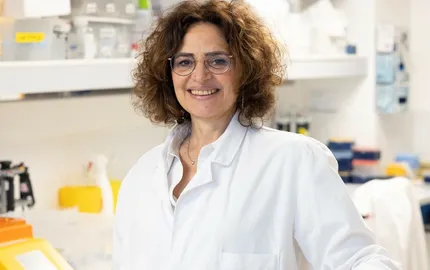
Federica Tomao is an Associate Professor at the Department of Maternal, Child and Urological Sciences within Sapienza University of Rome. She actively teaches and supervises courses in Medicine and Surgery , Nursing , and Midwifery programs across multiple institutions. Current faculty member with academic rank Teaching roles in 6th, 3rd, and 2nd year courses Specialized in gynecologic oncology Research Focus : Her work spans ovarian cancer, breast cancer, and endometrial cancer, emphasizing chemotherapy optimization, precision medicine, and radiomics. Notably, she contributes to understanding PARP inhibitors, immune checkpoint therapies, and fertility preservation techniques in cancer survivors. Recent Publications highlight advancements in sarcopenia analysis, BRCA testing, and radiogenomic nomograms. These studies demonstrate her commitment to bridging imaging and molecular data for improved cancer management. Email : federica.tomao@uniroma1.it
Hai-Quan Mao is a Professor of Materials Science and Engineering at Johns Hopkins University, with a joint appointment in the Biomedical Engineering Department (School of Medicine). He directs the Institute for NanoBioTechnology (INBT) and leads the Translational Tissue Engineering Center. His research focuses on biomaterials, regenerative engineering, and immunoengineering, particularly developing nanomaterials for therapeutic delivery and tissue regeneration. Mao holds 35 U.S. patents, co-founded two biotech companies, and received prestigious awards including National Academy of Inventors Fellow and NSF CAREER Award. Education: BS in Chemistry (1988) and PhD in Polymer Chemistry (1993) from Wuhan University. Postdoctoral training at Johns Hopkins (1995–1998), followed by roles at Johns Hopkins Singapore (1999–2003) before joining the Whiting School faculty. Research emphasizes nanofiber scaffolds for liver/nerve regeneration, DNA/lipid nanoparticle engineering for gene therapy, and artificial lymph node matrices for immunotherapy. His lab translates biomaterials innovations into clinical applications, with NIH-funded projects addressing cancer, malaria, and tissue damage. Awards include over 60 provisional patents, multiple Johns Hopkins translational awards, and Thalheimer Awards for research. He serves as associate editor of Biomaterials and editorial board member of major journals. Lab activities include scalable nanoparticle manufacturing, machine learning for material design, and collaborations with industry/clinical partners. Recent work includes lipid nanoparticle optimization for mRNA vaccines and exosome-based therapies for Crohn’s disease.
Rhenish Friedrich Wilhelm University of BonnGermany
Prof. Waldemar Kolanus leads the Molecular Immunology and Cell Biology department at the University of Bonn's Life & Medical Sciences Institute (LIMES) . His research bridges immunoregulation , stem cell dynamics , and metabolic stress responses in immune cells. Unit 2 member at LIMES Principal investigator in SFB 704 and ImmunoSensation Cluster Leads a multidisciplinary lab with postdocs, PhD students, and technical staff His work focuses on intracellular signaling pathways connecting immune activation to tissue homeostasis, particularly through: Cytohesin proteins in integrin-mediated adhesion and migration TRIM71 in stem cell regulation and congenital hydrocephalus High-salt environments affecting macrophage function Publication trends show expertise in immune cell migration , genetic models , and chemical inhibition , with frequent use of mice and zebrafish for in vivo studies. Key articles explore: TRIM71's dual role in auditory development and germ cell maintenance Cytohesin family's Golgi regulation and insulin signaling Ruxolitinib's off-target migration inhibition of dendritic cells Contact details: Address: LIMES Institute, Carl-Troll-Straße 31, Bonn Email: kolanus.sekretariat@uni-bonn.de Phone: +49 228 73-62788
Jørgen Arendt Jensen is a Professor of Biomedical Signal Processing at the Technical University of Denmark (DTU), with dual affiliations in the Department of Health Technology and the Department of Electrical Engineering (DTU Elektro). He leads the Center for Fast Ultrasound Imaging (CFU), a collaborative initiative involving DTU, BK Medical, Rigshospitalet, and DTU Nanotech. His research focuses on advanced medical ultrasound technologies, including synthetic aperture imaging, vector flow imaging, and ultrasound simulation, aiming to improve clinical image acquisition efficiency and accuracy. He teaches medical imaging courses and co-initiated the joint biomedical engineering program between DTU and the University of Copenhagen. Jensen’s work contributes to UN Sustainable Development Goals related to health and innovation. His research interests span algorithm development for fast ultrasound imaging, blood velocity characterization, and simulation of ultrasound systems. He supervises multiple PhD students and collaborates on projects involving transducer design, real-time imaging systems, and microvascular pathology analysis. Recent publications emphasize advancements in super-resolution ultrasound imaging, transducer optimization, and pressure gradient estimation. His lab, CFU, develops cutting-edge imaging solutions for clinical applications. Jensen’s contributions include patents on ultrasound imaging techniques and collaborative ventures to enhance diagnostic capabilities through interdisciplinary engineering.
Univ.-Prof. Dr. med. Martin A. Kriegel serves as full Professor and Department Head of the Department of Translational Rheumatology and Immunology at the Institute of Musculoskeletal Medicine, University of Münster, while maintaining an active laboratory at Yale School of Medicine. He leads the Section for Rheumatology and Clinical Immunology (SRKI) at Medical Clinic D, where his team integrates clinical care with cutting-edge microbiome research. His department operates from Röntgenstraße 21 and Von-Esmarch-Str. 54 in Münster, Germany, with extensive collaborations including the "Cells in Motion" research initiative and the CiM-IMPRS graduate program. Dr. Kriegel's research program focuses on the critical interface between host immunity and microbiota, particularly investigating how gut commensals translocate to host tissues and trigger autoimmune responses. His laboratory pioneered the discovery that specific pathobionts like Enterococcus gallinarum and certain Lactobacillus strains can translocate from the gut to mesenteric lymph nodes, liver, and other sites, driving autoimmune responses through molecular mimicry of human autoantigens. His work has established fundamental mechanisms by which microbiota influence rheumatic diseases, cutaneous autoimmunity, and cancer immunology, with particular emphasis on Ro60 autoantigen mimicry, TLR7-dependent pathways, and diet-microbiome interactions. The laboratory employs advanced techniques including gnotobiotic mouse models, humanized systems, and detailed molecular characterization of host-pathobiont interactions. Analysis of Dr. Kriegel's publication record reveals a consistent trajectory of high-impact research connecting microbiome dynamics to autoimmune pathogenesis. His most recent work (2023-2025) demonstrates increasingly sophisticated understanding of how specific bacterial strains influence disease phenotypes across multiple autoimmune conditions, with notable advances in identifying shared microbiome signatures across lupus and inflammatory bowel disease. The publications show progressive refinement from initial observations of microbial translocation to detailed mechanistic insights into tryptophan catabolism pathways, structural basis of molecular mimicry, and diet-sensitive microbial triggers. Dr. Kriegel's scientific recognition includes US Patent No. 11,058,756 B2 for compositions treating autoimmune diseases by reducing enterococcus, reflecting the translational potential of his research. His laboratory receives substantial funding, most notably a $3 million award from the Lupus Research Alliance for the TransLuMi project investigating gut pathobiont translocation in systemic lupus erythematosus. As an educator and mentor, Dr. Kriegel directs a substantial research team including multiple postdocs (Drs. Marcia Pereira, Nathalie Becker), PhD candidates (Anna Brinkhege, Carina Brune, Helen Fuhrmann), and laboratory specialists. He participates in the CiM-IMPRS graduate program and supervises medical students through the MedK program. His laboratory currently manages multiple significant research projects including: (A) intestinal wall permeability and pathobiont translocation in autoimmunity; (B) diet-environment-microbiome interactions; (C) microbiota disruption of immunological tolerance; and (D) microbiome roles in lymphoma development. The Kriegel laboratory maintains state-of-the-art facilities at both Münster and Yale, with specialized capabilities in gnotobiotic research, microbiome analysis, and immune profiling. His team collaborates with international partners including Dr. Eran Elinav at Weizmann Institute, Dr. Nissan Yissachar at Bar-Ilan University, Prof. George Tsokos at Harvard, and Prof. Ilana Brito at Cornell University. The laboratory's website (https://www.medizin.uni-muenster.de/mikrobiom/startseite/) details ongoing projects and research opportunities.
Andrew Godwin is a Professor at the University of Kansas Medical Center , where he serves as the Chancellor’s Distinguished Chair in Biomedical Sciences and Director of Molecular Oncology in the Department of Pathology and Laboratory Medicine. He is also the Deputy Director of the NCI-designated University of Kansas Cancer Center and the Founding Director of the Kansas Institute for Precision Medicine and Biospecimen Shared Resource . Dr. Godwin is a leader in translational research and precision medicine , with a focus on molecular oncology , biomarker discovery , and genomic diagnostics . His work bridges basic and clinical science to improve cancer patient care, particularly in ovarian cancer , Ewing sarcoma , and breast cancer . He has contributed over 230 ovarian cancer-related publications and pioneered studies linking the PI3K/AKT pathway to cancer treatment targets. His research program encompasses liquid biopsies using extracellular vesicles , molecular therapeutics , companion diagnostics , and clinical trial validation . He leads the Biomarker Discovery Laboratory and has secured over $250M in extramural funding , including a $11.4M NIH grant for precision medicine initiatives. His team has developed CELLSEARCH® , the first FDA-cleared test for circulating tumor cells. Notable awards include the Dolph C. Simons, Sr. Higuchi Award (2020), Outstanding Mentorship in Pathology Award (2024), and multiple mentoring accolades from KU. He has mentored over 150 trainees across career stages and leads a multidisciplinary lab with expertise in genomics , proteomics , and bioengineering . Academic Roles: Chancellor’s Distinguished Chair in Biomedical Sciences Director, Molecular Oncology, Pathology and Laboratory Medicine Deputy Director, KU Cancer Center Founding Director, Kansas Institute for Precision Medicine Adjunct Professor, Bioengineering Program, University of Kansas Scientific Awards: KUMC Achievement Award for mentoring postdocs (2014) Chancellor’s Club Award for Research (2018) Dolph C. Simons, Sr. Higuchi Award (2020) KU Excellence in Mentoring Award (2021) Outstanding Mentorship in Pathology (2024) Key Research Themes: Extracellular vesicles as liquid biopsy tools Molecular mechanisms of sarcoma and breast cancer Genomic diagnostics and precision oncology Clinical trial biomarker validation Biospecimen repository leadership
Professor Ewa Goldys is a distinguished academic at the University of New South Wales (UNSW), serving as a Professor in the School of Engineering with a focus on Biomedical Engineering. She holds the prestigious position of Deputy Director at the ARC Centre of Excellence for Nanoscale Biophotonics (CNBP), where she leads partnerships, knowledge transfer, and research commercialization efforts. Her work spans interdisciplinary research connecting engineering, medicine, and biology, with significant contributions to biophotonics and nanotechnology applications in healthcare. Professor Goldys' research interests center around advanced imaging techniques, particularly autofluorescence characterization, which provides a non-invasive metabolic 'fingerprint' for distinguishing healthy from diseased cells. Her work has significant applications in cancer, diabetes, and neurodegenerative diseases. She has pioneered research in fluorescent and luminescent nanomaterials for biological applications, developing innovative approaches for high-contrast, background-free imaging using time-gating techniques. Her research portfolio also includes significant contributions to CRISPR-based biosensing, stem cell characterization, and non-invasive diagnostic approaches using multispectral imaging. Her publication record demonstrates a clear trend toward increasingly sophisticated applications of autofluorescence imaging combined with machine learning and molecular techniques. Recent work integrates hyperspectral imaging with transcriptomics, develops CRISPR-based point-of-care diagnostics, and applies autofluorescence techniques to diverse medical challenges from kidney disease diagnosis to immune cell characterization. The interdisciplinary nature of her work spans oncology, immunology, nephrology, and regenerative medicine. Professor Goldys has received notable recognition for her work, including: Eureka award in 2016 for Innovative Use of Technology Her research leadership has secured substantial funding, including directing the $23 million ARC investment in the CNBP (matched by $17 million from partners), establishing the $2 million ARC/NHMRC Network 'Fluorescence Applications in Biotechnology and Life Sciences,' and leading research that leveraged an additional $155 million in external funding. She has founded the Optical Characterisation Facility at Macquarie University and has been instrumental in establishing international research networks in biophotonics. Professor Goldys has made significant contributions to the international biophotonics community through conference organization, having chaired 11 conferences including SPIE 'Biophotonics Australasia' and serving as Track Chair for Nanobiophotonics at BIOS, the world's largest biomedical optics meeting. Her work has established foundational methodologies in autofluorescence characterization that continue to drive innovation in label-free medical diagnostics.
Kosta Popovic serves as Associate Department Head and Associate Professor in the Department of Physics and Optical Engineering at Rose-Hulman Institute of Technology. His expertise lies in the design and development of Multimodal Medical Imaging Systems for Surgical Guidance and Diagnostics, with active supervision of undergraduate research projects spanning X-ray imaging phantoms and CNN-based medical image analysis. His educational background includes: PhD in Physics from the University of Virginia (2013) BA in Physics and Mathematics from Hamilton College (2006) Dr. Popovic's research integrates medical imaging device engineering with computational analysis techniques, focusing on gamma camera development, surgical guidance systems, and multimodal imaging integration. His teaching philosophy emphasizes hands-on laboratory experiences, covering Introductory Physics, Advanced Physics Labs, Physics of Medical Imaging, and Nuclear Physics curricula. His publication trends reveal consistent contributions to medical imaging hardware (gamma cameras, SPECT systems) and educational pedagogy, with recent work emphasizing machine learning applications in surgical diagnostics and adaptable course design for engineering education. His notable recognitions include: APS Career Mentoring Fellow (2024-2025) Engineering Unleashed Fellow (2021) As an active APS and ALPhA member, he serves as a reviewer for Physics in Medicine and Biology and ASEE Annual Conference. His academic service extends to co-advising the institute's Volleyball and SCUBA clubs, demonstrating commitment to holistic student development through both research mentorship and extracurricular engagement.
Professor Tomas Jansson serves as faculty at Lund University's Faculty of Engineering within the Department of Biomedical Engineering, holding concurrent roles as Supervisor, Head of Office for Biomedical Engineering, Project Manager for Medical Ultrasound, Director of Medicon Bridge, and member of both LTH's Engineering Health and LU's Light and Materials profile areas. His research centers on ultrasound-based diagnostic and therapeutic innovations, particularly utilizing iron oxide nanoparticles as ultrasound contrast agents for early cancer detection and surgical guidance. Current work also explores virtual reality systems for mobility assessment in visually impaired populations through the AUDOMNI sensory supplementation project. Key research domains include nanoparticle engineering, ultrasonics, transducer development, and lymph node imaging. Recent publications demonstrate dual research thrusts: (1) advanced ultrasound techniques for gastrointestinal disease diagnosis using ultra-high frequency imaging and nanoparticle-enhanced magnetomotive ultrasound, and (2) virtual reality-based mobility assessment tools with audio feedback systems for blind navigation. These efforts directly support UN Sustainable Development Goals in health and well-being. Professor Jansson actively supervises doctoral candidates including J. Berggreen (AI ultrasound applications) and J. Isaksson-Daun (AUDOMNI navigation system), while securing major funding from the Swedish Research Council and Mrs. Berta Kamprad's Cancer Foundation for prostate cancer nanotechnology projects extending through 2029. He leads the Ultrasound group infrastructure within Biomedical Engineering and participates in academic outreach through initiatives like the Medicinteknik i Skåne conference organization.
Dr. Ashley Ross is an Associate Professor in the Department of Chemistry at the University of Cincinnati, where she leads research in bioanalytical chemistry. She holds a Ph.D. in Analytical Chemistry from the University of Virginia (2014) and a B.S. in Chemistry from Christopher Newport University (2009). Her research group focuses on developing electrochemical methods and microfluidic platforms to study neuro-immune communication. Research interests include: (1) Developing electrochemical sensors for neurotransmitter detection in brain and immune systems; (2) Designing novel carbon nanomaterials for enhanced electrochemical sensing; (3) Creating microfluidic organ-on-chip platforms for studying neuro-immune interactions. Her work bridges analytical chemistry, neuroscience, and immunology. Her recent publications demonstrate a strong focus on advanced electrochemical sensing techniques, novel carbon nanomaterial development, and microfluidic platforms for neurochemical analysis. Research consistently addresses real-time monitoring of neurotransmitters and neuroimmune interactions. Major Awards: Alfred P. Sloan Fellowship (2022) NSF CAREER Award (2022) RCSA Microbiome, Neurobiology, and Disease Fellow (2021) American Association of Immunologists Careers in Immunology Fellowship Top 40 under 40 in Analytical Chemistry Active Grants: NIH R01AI151552: Monitoring neurochemical signaling dynamics in lymph node ($1.9M) NIH R01NS121426: Monitoring rapid guanosine signaling during ischemia ($1.9M) NSF CAREER: Tunable graphene microelectrodes for sensing ($300K) RCSA Award: Unraveling microbiota-neuron communication in aging ($55K) Dr. Ross directs the Ross Lab (www.rosslabuc.com), which develops analytical tools for neuroimmune communication research. The lab utilizes electrochemistry, microfluidics, and materials science to advance understanding of brain-immune interactions.
Prof. Wolfgang Weber is a Professor and Director of the Department of Nuclear Medicine at the Klinikum rechts der Isar, Technical University of Munich (TUM). His academic career includes roles such as Associate Professor at UCLA (2003–2007) and Chair of Nuclear Medicine at Albert Ludwig University of Freiburg (2007–2013). He specializes in molecular imaging and targeted radionuclide therapy, with a focus on cancer theranostics. His research addresses precision oncology through advanced imaging techniques for diagnosis and treatment monitoring. Education: Doctorate in Medicine from TUM (1995). Key prior appointments include Director of the Molecular Imaging and Therapy Service at Memorial Sloan Kettering Cancer Center (2013–2017) and Professor at Weill-Cornell Medical College. His work spans prostate cancer imaging, neuroendocrine tumors, and radiopharmaceutical development. Research interests emphasize integrating imaging modalities like PET/CT and SPECT for cancer staging, therapy response prediction, and novel radiotracer development. Notable contributions include PSMA-ligand PET imaging for prostate cancer recurrence detection and PARP inhibitor engagement studies in lung cancer. Publications highlight innovations in theranostic agents, such as 18F-rhPSMA-7 and Ga-68-based tracers. His work frequently addresses clinical trial validation of imaging biomarkers and dosimetry safety in radiolabeled therapies.
Jonathan Mamou is a Professor of Electrical Engineering in Radiology at Weill Cornell Medical College since 2024. His research focuses on quantitative ultrasound imaging, biomedical engineering, medical imaging, and acoustic microscopy. Ph.D., University of Illinois (2005) M.S., University of Illinois (2002) B.S., Telecom Paris (2000) His research bridges electrical engineering and radiology, developing advanced ultrasound techniques for medical diagnostics. Key areas include quantitative acoustic microscopy , biomechanical tissue analysis , and machine learning in ultrasound imaging . Recent work spans prostate cancer detection , placental microstructure characterization , and myopia-related scleral changes . His publications (2025–2023) highlight innovations in high-frequency ultrasound for ophthalmology, quantitative imaging for cancer diagnostics, and quantum-driven resolution enhancement in acoustic microscopy. Grants from the Melanoma Research Alliance , National Institute of Biomedical Imaging & Bioengineering , and Stand Up To Cancer support his work on pancreatic cancer screening , interstitial lung diseases , and radiotherapy toxicity assessment .
University of California, Los AngelesUnited States
Dr. Robert E. Reiter is the Bing Professor of Urologic Oncology at the University of California, Los Angeles (UCLA), where he serves as Chief of the Division of Urologic Oncology and Director of UCLA's prostate cancer program. He is also Director of Urologic Research and Co-Director of the Genitourinary Oncology Program in UCLA's Jonsson Comprehensive Cancer Center. With over 2,500 robotic prostatectomies performed, Dr. Reiter is an internationally recognized expert in prostate cancer management and research. Dr. Reiter received his MD from Stanford University School of Medicine in 1988 and completed his MBA from UCLA Anderson School of Management. His urologic training was completed at Stanford and Baylor College of Medicine, followed by fellowship training in urological cancer at the National Cancer Institute. He is board certified in Urology by the American Board of Urology since 1998. Dr. Reiter's research focuses on prostate cancer biomarkers, imaging, and molecular mechanisms. He was among the first to integrate functional MRI and PSMA PET imaging into prostate cancer diagnosis and surgical management. His laboratory discovered the prostate stem cell antigen and developed antibodies targeting this protein, leading to novel imaging and therapeutic approaches. He has particular interest in multidisciplinary management of high-risk prostate cancer, incorporating genomics and precision medicine into treatment plans. Dr. Reiter's extensive publication record demonstrates leadership in prostate cancer imaging standardization (PROMISE framework), genomic characterization of advanced disease, and clinical guideline development through the NCCN. His work spans molecular biology, imaging technology, clinical trials, and evidence-based treatment protocols, with a clear trajectory toward precision oncology approaches for prostate cancer patients. Outstanding Achievement Award by the Urologic Oncology branch of the National Cancer Institute Super Doctors® Southern California (2024, 2025) Newsweek's America's Best Prostate Cancer Oncologists (2024) Top Doctors, Los Angeles Magazine (2019, 2021) Fellow of the American Society for Clinical Investigation Young Investigator Award of the Society for Urologic Oncology Dr. Reiter has led UCLA's $12 million SPORE grant for over 15 years, supporting translation of laboratory discoveries into clinical advances for prostate cancer. His research has contributed to drugs like enzalutamide and apalutamide, and imaging tools like PSMA PET. He has authored more than 250 papers and serves as a mentor to numerous researchers and clinicians in urologic oncology. His clinical trials focus on novel therapies for hormone-sensitive prostate cancer and advanced disease management. As Director of the Prostate Cancer Program and Co-Director of the Genitourinary Oncology Program, Dr. Reiter leads multidisciplinary teams integrating expertise from radiation oncology, medical oncology, nuclear medicine, and basic science to provide comprehensive care for prostate cancer patients. His research laboratory focuses on prostate stem cell antigen and related therapeutic approaches, with several novel imaging and treatment strategies currently in clinical trials.
Edward G. Grant, MD, serves as a Clinical Professor of Radiology (Part-Time) at the University of Southern California (USC), where he was Chair of the Department of Radiology from 2002 to 2019. Prior to USC, he chaired the Imaging Department at Greater Los Angeles VA Healthcare System and held professorial and vice-chair positions at UCLA. His career spans over three decades in academic radiology with a focus on clinical ultrasound innovation and leadership. Dr. Grant is an internationally recognized authority in ultrasound, having pioneered neonatal cranial sonography early in his career. His research encompasses Doppler ultrasound for vascular disease diagnosis, clinical investigation of ultrasound contrast agents, PACS, and advancements in thyroid and liver imaging. He has authored four books and numerous peer-reviewed articles, establishing himself as a leading figure in diagnostic radiology. Analysis of his 15 most recent publications (2021-2025) reveals a strong emphasis on contrast-enhanced ultrasound applications across multiple organ systems, particularly in thyroid nodule characterization (TI-RADS), liver disease quantification, and renal transplant evaluation. His work also addresses emerging areas like AI integration in ultrasound reporting and environmental impacts on fetal development through the MADRES cohort study. His notable awards include: Pasadena Magazine Top Doctor (2011) Dr. Grant has served as an examiner for the American Board of Radiology for 13 consecutive years and remains an active lecturer at national and international conferences. While the provided text does not detail specific grants or student advising, his extensive publication record and leadership roles indicate significant contributions to radiology education and clinical practice advancement.
Eliane Piaggio is an Inserm Research Director and Team Leader of the Translational Immunotherapy team at the Institut Curie Research Center (Unit U932 - Immunity and Cancer). Her work focuses on immunotherapy strategies targeting regulatory T lymphocytes in cancer, infectious diseases, and autoimmunity. Studied lymph nodes draining human tumors to identify functional T cell responses Developed IL-2 variants for tumor-specific Treg inhibition Explored neoantigen responses in breast, head/neck, and melanoma cancers Key research areas include tumor microenvironment analysis, biomarker discovery, and personalized immunotherapy development. Her team has established a tumor-draining lymph node biobank and employs advanced technologies like single-cell transcriptomics, CRISPR editing, and mass spectrometry immunopeptidomics. Notable achievement: 2022 Ruban Rose Avenir prize recipient for predictive biomarker research in triple-negative breast cancer. Her projects aim to optimize anti-tumor immune responses through translational approaches in rhabdoid cancers and neoantigen vaccination studies.