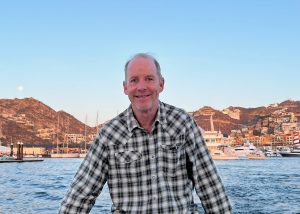
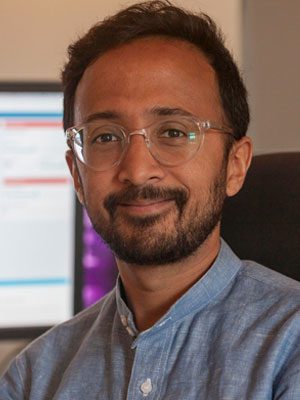
Samir Elhedhli is a Professor in the Department of Management Sciences at the University of Waterloo, within the Faculty of Engineering. His research focuses on Large-scale Optimization, Logistics, Supply Chain Design, Healthcare Operations, Airline Scheduling, and Data Analytics. He has held grants from NSERC, CFI, OCE, and MITACS, collaborating with industries in aircraft manufacturing, airline scheduling, and warehouse management. Education: PhD in Management Science, McGill University (2001) Master's in Industrial Engineering, Bilkent University (1996) Bachelor's in Industrial Engineering, Bilkent University (1994) Research Interests: Data Analytics & Data Science Large-scale Optimization (Interior-point methods, decomposition, column generation) Supply-chain Analytics (Logistics, warehousing, routing, scheduling) Environmental Sustainability in Supply Chains Key Awards: CORS Service Award (2013) University of Waterloo Distinguished and Outstanding Performance Awards (2005–2019) Grants & Advising: Active grants from NSERC, CFI, OCE, and MITACS Currently accepting graduate student applications Administration & Service: Chair, Department of Management Sciences (2014–2018) President, Canadian Operational Research Society (2011–2012) Co-Editor-in-Chief, INFOR Journal (2014–present) Labs & Teams: Leads the WanOpt research group focused on optimization methodologies and applications.
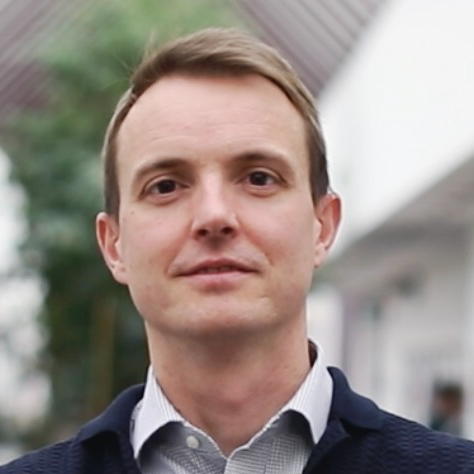
Anton Rozhkov is an Industry Assistant Professor and Director of the M.S. in Applied Urban Science and Informatics Program at the Center for Urban Science and Progress (CUSP) at New York University (NYU) Tandon School of Engineering. His work focuses on applying geospatial tools, modeling techniques, and data science to address complex challenges in urban environments, with particular emphasis on infrastructure planning and city design. Dr. Rozhkov earned his Ph.D. in Urban Planning and Policy from the University of Illinois Chicago, where his research centered on decentralized and renewable energy systems in urban contexts through a complex systems approach. Prior to his doctoral studies, he received an M.S./B.S. in Engineering in Land Cadaster from the State University of Land Use Planning in Moscow, Russia, and worked as a senior specialist in the Russian power grid sector with "Rosseti" Group of Companies. His research interests span the application of complex systems, data science, and spatial analytics to solve urban challenges, particularly focusing on how data-driven policies and new technologies can transform infrastructure planning and city design. Dr. Rozhkov employs methods including causal loop diagrams, system dynamics, and agent-based modeling to understand how decentralized energy systems interact with existing power grids and contribute to sustainable urban development. He has published extensively on urban transportation, energy systems, and census data analysis, with a notable focus on Chicago's urban landscape and Illinois state initiatives. Dr. Rozhkov has been actively involved in several significant research projects including an empirical investigation into affordable transit-oriented development in California sponsored by the California State University Transportation Consortium, the Sustainable Urban-Regional Modeling Network project funded by the Illinois Innovation Network, and the Census 2020 Map-The-Count project with the Illinois Department of Human Services which developed predictive models for census response rates and a GIS platform for reporting outreach activities. Ph.D. in Urban Planning and Policy, University of Illinois Chicago M.S./B.S. in Engineering in Land Cadaster, State University of Land Use Planning (Moscow, Russia) His teaching portfolio includes courses on geographic information systems (GIS), advanced spatial analysis, decision modeling, and machine learning for cities. Dr. Rozhkov emphasizes not just understanding urban trends but exploring the "why" behind these trends to develop sustainable solutions. His recent publications (2020-2025) demonstrate a consistent research trajectory examining the complex interrelationships between urban infrastructure systems, particularly focusing on energy, transportation, and spatial patterns through sophisticated analytical methods. Outside of his academic work, Dr. Rozhkov is passionate about urban and landscape photography, traveling, running, snowboarding, and playing guitar. He was born and raised in Balashikha, a city in the Moscow suburbs in Russia, and maintains a gallery of his photographic work from various global locations.
John Ries is the HSBC Professor in Asian Business and a Professor in the Strategy and Business Economics Division at the University of British Columbia's Sauder School of Business. He also serves as Senior Associate Dean for Special Projects, overseeing strategic initiatives. His educational background includes a B.A. from the University of California, Berkeley, and an M.A. and Ph.D. from the University of Michigan. Research Focus Professor Ries specializes in international trade dynamics, business economics, and industrial organization, with a distinct emphasis on the Japanese economy. His work examines trade policy impacts, innovation financing, and globalization effects, leveraging empirical and theoretical frameworks to analyze market behaviors and policy outcomes. Publications Overview His research portfolio spans international trade, investment, and urban economics, with recurring themes like information asymmetry in innovation, gender biases in project assessment, and historical trade legacies. Recent articles demonstrate a shift toward behavioral and developmental economics, using simulations and granular data analysis. Awards and Advising No awards or student advising details are documented in available sources.
Stuart E. Middleton is a Professor in the Electronics and Computer Science (ECS) department at the University of Southampton, where he has been employed since 2003. His research bridges artificial intelligence with practical applications in social science, mental health, and security domains. He leads multiple research projects funded by DTP and CISDnS CDT, focusing on multimodal natural language processing and large language models for social good applications. Professor Middleton's research interests center on Natural Language Processing, Large Language Models, and Human-in-the-loop AI systems. His work spans mental health applications (particularly suicide risk detection and mood change analysis), social media analysis for crisis mapping, geoparsing for location extraction, and argument mining in political discourse. He has developed numerous open-source NLP projects and datasets including CPIQA for climate science, ConversationMoC for mental health monitoring, and M-Arg for multimodal argument mining. His research demonstrates how AI can effectively support human decision-making in critical domains like mental healthcare, defense applications, and crisis management. His recent publications reveal a strong trend toward applying LLMs to high-impact societal challenges, particularly in mental health monitoring and climate science verification. He has pioneered methods for detecting suicidal ideation in social media, identifying moments of mood change, and developing context-aware question answering for climate papers. His work consistently emphasizes the importance of human oversight in AI systems, with numerous publications on responsible AI, regulation, and human-in-the-loop approaches. Ranked 1st in ECAL-2024 shared task on suicidal ideation detection Ranked 1st in NAACL-2022 shared task on suicide risk and mood change classification Winner of 'best paper' award at WWW2002 Semantic Web Workshop Professor Middleton actively supervises PhD students through multiple funded projects including 'Multimodal Natural Language Processing for Computational Social Science', 'Large Language Models for Military Veteran Mental Health', and 'Large Language Models for Human/AI Information Foraging to Combat Digital Human Trafficking into Terrorism'. He has secured significant funding from UKRI, DSTL, and other sources to support his research in responsible AI applications. He organizes major workshops including the RAI UK Workshops on Responsible AI for Mental Health and AIUK workshops on AI for Data Rescue and Defense applications. His research group maintains numerous GitHub repositories with open-source NLP tools and datasets that have been widely adopted by the research community.
Dr. Pamela Murray-Tuite is a Professor of Civil Engineering at Clemson University's College of Engineering, Computing and Applied Sciences. Her work bridges transportation systems, disaster resilience, and emergency response modeling. Education: B.S. (1998), M.S. (1999), and Ph.D. (2003) in Civil Engineering from the University of Texas at Austin and Duke University Teaching: Courses include CE 3110 Transportation Engineering and CE 8930 Mathematical Modeling for Civil Infrastructure Systems Analysis Her research focuses on transportation resilience , with emphasis on evacuation modeling, emergency response, and infrastructure interdependence. She explores the impact of disasters on mobility patterns, utilizing mathematical modeling and simulation tools to enhance urban systems' robustness. The 15 most recent articles span hurricane evacuation behavior, agent-based modeling, and infrastructure resilience under climate change. Keywords include transportation systems, disaster management, and behavioral modeling, while subfields cover evacuation routing, network analysis, and risk perception dynamics. Dr. Murray-Tuite's work integrates statistical methods with transportation policy, addressing challenges in both natural disasters and public sector disruptions. Her contact details include office location (210 Lowry Hall) and phone (864-656-3802).
Charles Murry is an Associate Professor of Economics at the University of Michigan and a Research Associate at the National Bureau of Economic Research (NBER). He holds a Ph.D. from the University of Virginia (2014) and a B.S. in Economics from the University of Delaware (2006). His research focuses on empirical industrial organization and antitrust economics, with a particular emphasis on market power dynamics in industries like automobiles, airlines, and broadband. He has also contributed to econometric methodologies for analyzing market outcomes. Previously, Murry held positions at Boston College (2018–2024) and Pennsylvania State University (2014–2018). His work examines topics such as bundling strategies in public procurement, price discrimination in international markets, and regulatory impacts on market structure. He has published in top journals like the Quarterly Journal of Economics , Review of Economic Studies , and International Economic Review . Murry’s research bridges theoretical models and empirical evidence, addressing real-world policy issues such as competition enforcement and market design. He is actively involved in academic service, including contributions to antitrust-related amicus briefs and participation in policy panels.
Jeffrey Sanford Russell is a Professor of Philosophy at the University of Southern California's School of Philosophy, where he also serves as Director of Graduate Studies. He holds a PhD from New York University (2011). His research focuses on decision theory, ethics, formal epistemology, metaphysics, and the philosophy of religion and mathematics. Russell teaches courses on topics like probability, rational choice, and the limits of logic, emphasizing interdisciplinary approaches blending philosophy with mathematics, psychology, and economics. His work explores foundational questions in ethics, such as infinite value aggregation paradoxes, and decision theory, including stochastic dominance and self-locating evidence in cosmology. He has contributed to debates on multiverse hypotheses, moral hedging, and the structure of possible worlds. Russell’s publications appear in top journals like Noûs , Philosophical Review , and Philosophy and Phenomenological Research . His recent research addresses moral and epistemic challenges in infinite scenarios, such as infinite ethics and fanaticism in decision-making. He also investigates the intersection of metaphysics and formal logic, including composition principles and qualitative grounds for non-qualitative facts. Russell’s work bridges abstract philosophical inquiry with practical implications, such as ethical dilemmas in collective action and the epistemology of divine hiddenness.
Adam Elga serves as Professor of Philosophy and Director of the Program in Linguistics at Princeton University, based in the Department of Philosophy with his office in Laura Wooten Hall (204). His contact information includes email adame@princeton.edu and phone 609 258-1477, confirming active institutional engagement. Elga's research spans philosophy of probability, decision theory, self-locating belief, and existential risk, with notable intersections in linguistics through his program directorship. His work addresses fragmentation in belief systems, cognitive instability, and rational decision-making under uncertainty, contributing significantly to epistemological frameworks and philosophical probability models. Recent publications (2020-2025) demonstrate sustained focus on existential risk analysis, decision theory paradoxes, and belief fragmentation. His scholarship bridges theoretical philosophy with practical applications in risk management and cognitive science, particularly through investigations of suboptimal risk decisions and cognitive limitations in high-stakes scenarios. Scientific awards: None mentioned in provided text. Advising and grants: The scraped text contains no information about doctoral students, mentees, or specific research funding. As a full professor and program director, he likely oversees graduate research and secures institutional support, though concrete details are absent from the source material. Labs and research teams: No dedicated laboratories, research groups, or collaborative teams are referenced in the available documentation.
Emir Hrnjic is Senior Lecturer in the Department of Finance at NUS Business School, where he also serves as Academic Director of the UCLA-NUS EMBA program and Head of FinTech Training at the Asian Institute of Digital Finance (AIDF). He holds a PhD in Finance from Tulane University (2005) and has held prior academic positions at Tulane University and Virginia Tech. Research Interests: Banking, finance, investment, and commercial services with specialization in FinTech applications Blockchain technology and digital currency ecosystems Corporate finance, behavioral economics, and emerging markets Aviation finance, debt restructuring, and capital market innovations His publications demonstrate strong focus on practical finance applications, with 38 case studies covering corporate finance dilemmas, digital assets, and emerging market challenges. Recent works (2024-2025) show concentrated research in blockchain applications, CBDCs, and aviation industry financing, while earlier contributions emphasized behavioral finance and IPO strategies. Awards: TEC Case Impact Award for "Alibaba Bonds: Timing, Location, and Pricing" Leadership & Service: Developed FinTech training programs and digital asset curricula for MBA/EMBA Revamped UCLA-NUS EMBA curriculum and digital learning integration Provides expert commentary for media and industry conferences Conducted consulting projects in blockchain and litigation finance
Junzhao Ma is a Senior Lecturer in the Department of Marketing at Monash University. He holds a BA in Economics from Yale University and a PhD in Marketing from the Kellogg School of Management, Northwestern University. Previously, he worked as a marketing analyst at Capital One Financial Corporation and JP Morgan and Co. Education: BA Economics (Yale University), PhD Marketing (Kellogg School, Northwestern University) His research focuses on technology adoption, e-commerce, real estate, and media's social impact, employing novel methodologies and data sources. He has contributed to journals like Journal of Retailing , International Journal of Research in Marketing , and Journal of Business Ethics . His work aligns with UN Sustainable Development Goals related to reduced inequalities and responsible consumption. Recent research highlights include studies on service robot anthropomorphism (2023), sex robots acceptance (2022), and media-driven consumption trends (2020). He has received Dean's Letters for Teaching Excellence in 2020 and 2021. Scientific Awards: Dean's Letter for Teaching Excellence (2020, 2021) Junzhao actively engages in academic service, including peer reviews for Asia Pacific Journal of Marketing and Logistics and presentations at the INFORMS Marketing Science Conference and Australian & New Zealand Marketing Academy Conference. He has served as Chief Investigator in projects like "Bridging the Intention-Behaviour Gap in the Australian Tourism Industry" (2022-2024) and "eBabies: Forecast and Implications for Society" (2020-2021).
Matteo Ploner is a Full Professor at the Department of Economics and Management , University of Trento, and Deputy Coordinator of the Doctoral Programme in Economics and Management under the Doctoral School of Social Sciences. He also serves as Deputy Manager of the Cognitive and Experimental Economics Laboratory (CEEL) at the University of Trento. Academic Roles: Full Professor, Deputy Coordinator (Doctoral School), Deputy Manager (CEEL) Location: Via Inama, 5 - 38122 Trento Contact: matteo.ploner@unitn.it Research Interests: His work focuses on Behavioral Economics , Behavioral Finance , and Experimental Economics , examining human decision-making in economic environments. His research spans topics like cooperation in multicultural societies, information avoidance in climate decisions, algorithmic delegation, and welfare dynamics in advisory markets. Recent Publications highlight experimental analyses of skewness-seeking in finance, cognitive barriers to energy efficiency, and behavioral interventions in low-income contexts. He also explores mental accounting principles and the interplay between trust and innovation through experimental frameworks. Labs & Teams: He is actively involved in the Cognitive and Experimental Economics Laboratory (CEEL) , contributing to experimental market analysis and behavioral research.
Tony Cookson is a Professor of Finance and the Michael A. Klump Endowed Professor at the Leeds School of Business , University of Colorado Boulder, where he has served since 2013. His research spans empirical finance , household and corporate financial decision-making , and the impact of social media and legal institutions on financial behavior. He has published in top journals like the Journal of Finance , Journal of Financial Economics , and Management Science , focusing on topics from investor disagreement to fracking-induced debt repayment . Education : Ph.D. in Economics (University of Chicago), M.S. in Statistics and Applied Economics (Montana State University), B.S. in Economics (Montana State University) His research interests include: How social media shapes investor sentiment and trading patterns The economic consequences of fracking and casino policy Legal institutions and their role in credit market development Behavioral finance through LLM-driven investor personas His scientific awards include the Best Paper in Investments and Asset Pricing (MFA 2023) , NASDAQ Best Paper in Asset Pricing (WFA 2021) , and Finalist for TIAA Paul A. Samuelson Award (2021) . He serves as Editor at the Review of Corporate Finance Studies and Associate Editor at multiple top journals.
Jean-Luc Arregle is a Professor in the Strategy & Organization department at emlyon business school , where he has served since 2012. He previously held a professorship at EDHEC Business School (2010-2011) and served as Director of the PhD Program at emlyon (2015-2018). Arregle is also an Associate Dean for Research at emlyon business school. PhD in Management Sciences (1992, IAE Aix-en-Provence) Accreditation to Supervise Research (1998, IAE Nice) His research focuses on semi-globalization strategies , family firm strategic choices , and institutional influences on multinational enterprises . Publications analyze: organizational autonomy dynamics, family firm internationalization patterns, institutional complexity in foreign investment, multilevel strategic analysis, and resource orchestration in mergers. He serves on editorial boards of Journal of International Business Studies , Strategic Organization , and Entrepreneurship Theory & Practice . Notable works include longitudinal studies of Lamborghini's post-acquisition autonomy management and meta-analytic reviews on family firm uniqueness. Recent publications emphasize: Dynamic frameworks for subsidiary autonomy (2024) Family business-international business integration (2024) Host country politics in multinational strategy (2023) Autonomy oscillation mechanisms (2022) Scientific contributions include Editorial board memberships across 5 journals International Teachers Program (EFMD, 1990) Keynote presentations at Academy of International Business and Strategic Management Society conferences Arregle's work combines theoretical rigor with practical insights from automotive industry case studies (Audi-Lamborghini integration), demonstrating how organizational identity preservation and resource orchestration enable sustained competitive advantage in multinational contexts.
Miguel F. Anjos is Professor and Chair of Operational Research at the School of Mathematics, University of Edinburgh , and holds the NSERC-Hydro-Québec-Schneider Electric Industrial Research Chair on Optimization for Smart Grids at Polytechnique Montréal. He received his B.Sc. (1992), M.S. (1994), and Ph.D. (2001) from McGill, Stanford, and Waterloo respectively. Research Theme Head of Data and Decisions at Edinburgh Founding Director of Trottier Institute for Energy Editor-in-Chief of Optimization and Engineering Research Interests: His work bridges mathematical optimization with smart grid applications , focusing on conic optimization, optimal power flow, demand response, and facility layout. He applies these techniques to energy storage, electric transportation, and industrial systems. Scientific Awards: Méritas Teaching Award (2012) Humboldt Research Fellowship (2009) Queen Elizabeth II Diamond Jubilee Medal (2013) Elected Fellow of EUROPT and Canadian Academy of Engineering Academic Service: Served on Mathematical Optimization Society Council, SIAM Activity Group on Optimization, INFORMS Optimization Society Vice-Chair, and Mitacs Research Review Committee. Hosts benchmark datasets: QAPLIB, FLPLIB, Jones Benchmark.
Ajay Pillarisetti is an Assistant Professor at the University of California, Berkeley's School of Public Health, Department of Environmental Health Sciences. His research focuses on the interplay between household energy use, air pollution exposure, health outcomes, and climate change in low- and middle-income countries. A graduate of UC Berkeley (PhD) and Emory University (MPH, BS), he has led global projects in India, Mongolia, Nepal, Guatemala, Peru, and Rwanda. PhD – Environmental Health Sciences, UC Berkeley MPH – Global Environmental Health, Emory University BS – Biology, Emory College His work employs low-cost air quality sensors, longitudinal surveys, and randomized controlled trials like the HAPIN study to assess health impacts of clean fuel interventions. Key subfields include exposure assessment, implementation science, pollution's metabolic effects, and policy-driven energy transitions. He collaborates with teams across four continents and has published extensively on household air pollution's multi-scale health burdens. Recent articles (2023–2025) highlight trends in quantifying PM2.5's health effects, optimizing sensor networks, and evaluating LPG interventions for maternal/child health. His studies span Guatemala's RESPIRE cohort, Rwanda's HAPIN trial, and India's community monitoring systems, addressing gaps in exposure-response modeling, biomarker analysis, and policy advocacy.