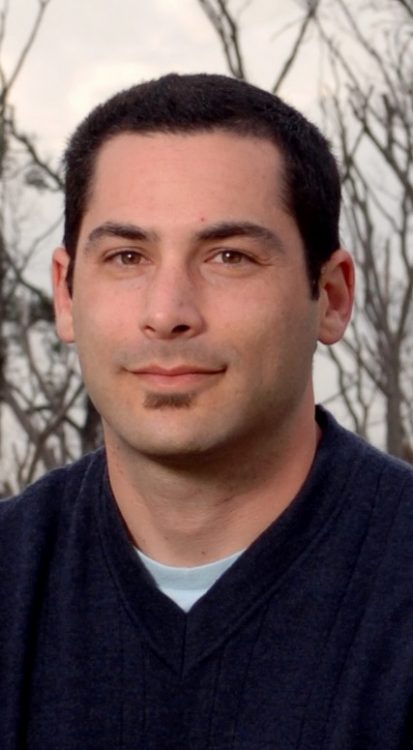
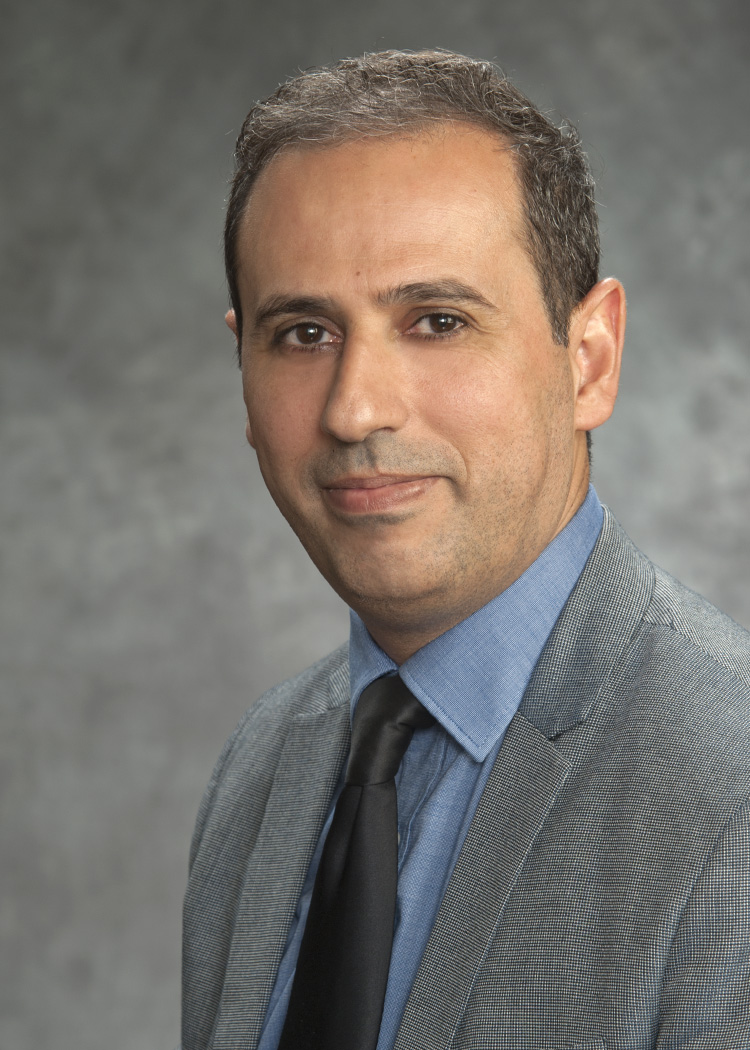
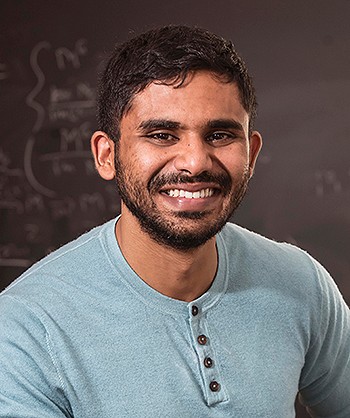
Markku Suksi is a Professor in the Faculty of Social Sciences, Business and Economics, and Law at Åbo Akademi University. His work focuses on constitutional frameworks, referendums, and autonomy systems, with extensive research on legal structures in Finland and comparative governance models. He has led multiple international projects including the EU-VALUES network examining democracy and foreign policy. His research explores constitutional design, linguistic rights, and algorithmic governance, analyzing how legal systems adapt to technological changes while preserving democratic principles. Primary themes include autonomy arrangements, citizen participation mechanisms, and human rights protections within administrative frameworks. Publications consistently address constitutional adaptations to societal challenges, particularly regarding digital governance, minority rights, and electoral systems. Recent work examines automated decision-making's impact on legal due process and public administration integrity across European contexts. Suksi supervises doctoral candidates in law and political science, primarily through the EU-VALUES project consortium. He leads research teams examining democratic resilience and has secured funding from the Research Council of Finland for projects on human rights implementation.
Casey Frechette is an Associate Professor and Chair of the Department of Journalism and Digital Communication at the University of South Florida St. Petersburg campus. He holds a Ph.D. in Organizational Learning & Instructional Technologies from the University of New Mexico. His research focuses on digital media, media literacy, VR/immersive technology, and ethics education, with contributions to platforms like Poynter’s News University. Frechette’s work has been published in outlets such as The Washington Post and Foreign Policy , and he co-authored Culturally Inclusive Instructional Design (2019). He has received awards including second place in the Africa Media Awards (2016) and recognition at the Bay to Bay Symposium (2016). Frechette teaches courses in data, visual, and interactive journalism. He has secured grants totaling over $200,000 for research in closed captioning, immersive technology, and media literacy. His professional experience includes roles as an interactive learning producer at Poynter and a multimedia developer for the Navajo Education and Technology Consortium. He actively seeks partnerships and external funding to advance journalism education and technology initiatives. As Department Chair, he oversees accreditation, curriculum development, and faculty mentorship. His interdisciplinary approach bridges education, technology, and journalism, emphasizing innovation and real-world problem-solving.
Federico Rossi is an Associate Professor in Architecture and Digital Manufacturing at London South Bank University's Architecture Digital x Data Research Centre. As the founding director of the Digital Architecture and Robotic Lab (DARLAB), he leads research at the intersection of digital fabrication, robotics, and sustainable construction. His work spans both academic and industry applications, with collaborations including Volkswagen, Astana Energy Expo, Ars Electronica, SCM Group, Veolia, Dyson, and Southwark Council. Rossi graduated from the Architectural Association in London and previously worked with Dame Zaha Hadid focusing on digital manufacturing processes in construction. His expertise has been recognized through significant research funding, including a £400k HEFCE grant for establishing DARLAB in 2013, a KEEP+ grant from EU Horizon 2020 in 2018, and EPSRC UKMSN+ funding in 2021 for the SCRAM project (Sustainable Construction through Robotic Additive Manufacturing). Rossi's research focuses on computational design, Design for Additive Manufacturing, circular manufacturing, and large-scale reinforced polymer structures. His work explores how robotics and automation can overcome traditional constraints in the AEC industry by integrating digital workflows directly with the design process. Recent projects include collaboration with the European Space Agency on 3D printed planetary habitats using recycled polymers, and research on circular cementitious products and modular interlocking bricks in Nigeria and the UK. Analysis of Rossi's publication record reveals a strong trajectory toward sustainable construction solutions using advanced manufacturing techniques. His recent work demonstrates increasing focus on circular economy principles, recycled materials (particularly polymers and glass), and international collaboration (especially between the UK and Nigeria). The integration of machine learning and topology optimization with robotic manufacturing represents an emerging trend in his research. Fellow of the Royal Society of Arts Work exhibited internationally at Salone del Mobile, Wired, Domus, Royal Academy Summer Show, and Italian Trade Agency Recipient of multiple research grants including HEFCE, KEEP+, EPSRC UKMSN+, UK Innovate, and Royal Society funding Rossi serves as an External Examiner for MArch at the University of East London and holds additional responsibilities as Director of DARLAB, Head of Research for the Architecture Division, and Member of the Research and Enterprise Committee. His research grants demonstrate strong industry and government partnerships focused on sustainable construction, circular economy implementation, and advanced manufacturing. Current projects include UK Innovate research for circular cementitious products and Royal Society research on modular interlocking bricks with waste reuse models. As Director of the Digital Architecture and Robotic Lab (DARLAB), Rossi leads a multidisciplinary team exploring robotic manufacturing applications in architecture. The lab serves as a hub for industry collaboration, with partners including Volkswagen, Dyson, and SCM Group. Current research teams are focused on sustainable construction through robotic additive manufacturing, circular economy implementation in building materials, and international projects addressing waste reuse models in both developed and developing contexts.
Jacky Baltes is an Adjunct Professor in the Department of Computer Science at the University of Manitoba, within the Faculty of Science. His primary research focuses on Robotics, Artificial Intelligence, Machine Learning, and Distributed Processing, with notable contributions to autonomous robot navigation, humanoid robotics, and computer vision systems. He has actively participated in international competitions like RoboCup and HuroCup, developing innovative solutions such as the Tao-Pie-Pie humanoid robot and the Doraemon video server. His work emphasizes practical applications, including rescue robotics, path planning in dynamic environments, and educational robotics workshops for children. Baltes has led projects like the Keystone Fire Brigade and the All Botz team, showcasing his expertise in multi-agent systems and robotic competitions. Publications highlight advancements in gait design for humanoid robots, stabilization using gyroscopes, and architectures for intelligent mobile robots. His research bridges theoretical AI principles with real-world robotic implementations, particularly in vision processing and control systems.
Joseph Howard Carens is a Research Fellow at the Institute for Social Justice, affiliated with the Faculty of Education and Arts at Australian Catholic University. His work focuses on the ethics of immigration, political theory, and citizenship rights, with a particular emphasis on issues of social justice and moral philosophy. Research Interests: Dr. Carens is renowned for his contributions to the ethics of immigration, advocating for open borders and exploring the moral dimensions of citizenship, residency rights, and social integration. His scholarship bridges political theory and practical policy analysis, addressing topics such as birthright citizenship, amnesty programs, and the rights of irregular migrants. He critiques traditional notions of sovereignty and emphasizes egalitarian principles in global and local contexts. Publications: His research outputs reflect a sustained engagement with migration ethics, including seminal works like The Ethics of Immigration (2013) and influential articles on collective self-determination and the moral foundations of immigration policies. His work often challenges fear-driven migration policies, advocating for fairness and humanitarian considerations. Contributions: Carens has shaped debates on citizenship rights, arguing for the moral imperatives of integration and the need to re-evaluate legal frameworks through an egalitarian lens. His interdisciplinary approach integrates political philosophy with sociological insights, offering frameworks for understanding migration as a transformative force in political communities.
Profile Summary Dr Koldo Casla is a Senior Lecturer in International Human Rights Law at the Essex Law School, University of Essex, and leads the Human Rights Local project at the Human Rights Centre. His work focuses on translating international human rights standards into practical local solutions, particularly in addressing poverty, social exclusion, and socio-economic rights. Education & Appointments PhD in European and International Studies, King’s College London (2017) MA in International Studies, University of Denver (2011) LLB, University of the Basque Country (2008) Deputy Director of the Human Rights Centre Clinic (2020–present) Co-editor of Social Rights and the Constitutional Moment (2022) and The European Social Charter: A Commentary (2024) Research Interests Casla’s research spans economic, social, and cultural rights (ESCR), poverty reduction strategies, child protection systems, and housing rights. He emphasizes bridging international legal frameworks with grassroots activism, advocating for systemic change through projects like Human Rights Local, which partners with organizations such as ATD Fourth World and Amnesty International. Key Projects Human Rights Local: Uses human rights to address poverty through localized advocacy and policy reform. Human Rights Centre Clinic: Supervises projects on corporate accountability, environmental justice, and child protection. UN Engagement: Contributed to submissions for UN reviews of UK compliance with the International Covenant on Economic, Social and Cultural Rights. Publications & Impact Recent works include analyses of poverty’s impact on family rights, solidarity as a foundation for socio-economic rights, and the role of local governance in human rights implementation. His research frequently intersects with global challenges like the cost-of-living crisis and housing insecurity.
Huachao Gao is an Associate Professor of Marketing and International Business at the Peter B. Gustavson School of Business, University of Victoria. Holding a PhD from University of Texas at San Antonio, he researches consumer identity, luxury consumption, price sensitivity, and food waste decision-making. His work has appeared in Journal of Marketing and Journal of Consumer Research. Research explores cultural dimensions of consumption, including power distance effects on luxury preferences and global-local identity impacts on purchasing behavior. Recent studies investigate psychological mechanisms in sustainable consumption patterns. Awards include: Excellence in Research (Gustavson School 2022) AMA-Sheth Foundation Doctoral Consortium Fellowship (2014) He teaches Marketing Principles, International Marketing, and Digital Marketing, and serves on university committees including Equity, Diversity and Inclusion.
Pietro Beritelli is an Associate Professor of Management at the University of St. Gallen, specializing in Tourism Management. His research focuses on destination management, sustainable tourism development, and digital innovation in the tourism sector. He has contributed significantly to understanding crisis management strategies, overtourism solutions, and adaptive governance frameworks for tourist destinations. His work emphasizes practical applications of academic research, particularly through the St. Gallen Model for Destination Management. Key themes include analyzing visitor flows, leveraging digital analytics responsibly, and addressing challenges posed by alpine tourism's unique environmental and socio-economic contexts. Recent studies explore post-pandemic tourism trends, the role of influencer marketing, and the integration of smart services in open service networks. Beritelli advocates for multi-stakeholder collaboration and policy-driven solutions to enhance destination competitiveness while ensuring environmental and cultural preservation. His research consistently bridges theoretical advancements with actionable insights for destination management organizations (DMOs), emphasizing variable geometry principles and process-oriented approaches to governance challenges.
Suzanne Cansler is an Instructor-in-Residence in the Department of Accounting at the University of Connecticut's School of Business. She holds CPA licenses in NY and CT, with expertise in Financial Accounting, Governmental Accounting, and Accounting Information Systems. Her teaching spans undergraduate and graduate courses including Principles of Financial Accounting, Governmental Accounting, and Global Financial Reporting. Education: MS in Accounting (SUNY Albany), BS in Finance and BA in French (University of Colorado). Professional credentials include SUNY Albany's Hayes Teaching Award (2006) and membership in Beta Gamma Sigma, AICPA, and the Connecticut Society of CPAs. Research focuses on governmental accounting standards and pedagogical strategies. Recent work includes analyzing GASB Statement No. 91's impact on conduit debt reporting and developing inclusive classroom engagement methods. She serves on the editorial board of the Journal of Government Financial Management. Previous roles include Director of Accounting Programs at SUNY Albany, Comptroller of Bethlehem Town (NY), and over 15 years of teaching experience across institutions including Maastricht University (Netherlands). Professional experience spans PricewaterhouseCoopers, IRS, and various consulting roles in public accounting sectors.
Dr. Mike Blum is a Professor and CAS Associate Dean for Research & Creative Activity at the University of Tennessee, Knoxville. He is affiliated with the Department of Ecology & Evolutionary Biology within the College of Arts and Sciences. His research focuses on socioecology of disasters, coastal protection, and freshwater resource management on oceanic islands. He currently recruits graduate students and emphasizes interdisciplinary approaches to conservation and sustainability. Dr. Blum holds a BA in Integrative Biology from the University of California, Berkeley, and a PhD in Zoology from Duke University. His work bridges ecological, social, and policy dimensions of environmental challenges. Research interests include: Aquatic Ecology Socioecology of disasters and disease Coastal restoration strategies Island freshwater conservation Notable trends in his publications (2010–2016) highlight studies on invasive species dynamics, climate change impacts on coastal ecosystems, and the application of evolutionary principles to conservation. His work frequently intersects human-environment interactions and policy implications. He leads the Blum Lab (website: https://blumlab.wordpress.com/ ), which coordinates interdisciplinary research initiatives. Contact details include: 865-974-3010 (office) and 865-974-3067 (lab).
Sarah Njeri is Lecturer in Humanitarian and Development Studies at SOAS University of London, specializing in peacebuilding and humanitarian disarmament. Her research examines mine action programming, environmental peacebuilding, and post-conflict recovery in Somaliland, Angola, and Nigeria. Work challenges conventional peacebuilding frameworks through critical analysis of Mine Action implementation and climate resilience in conflict-affected areas. Advocates for inclusive humanitarian policies as trustee of REVIVE Campaign and Conflict and Environment Observatory. Funded by British Academy and Newton Fund for research on Global South perspectives in disarmament.
Dr. Loay Al-Zube serves as an Associate Professor of Biomedical Engineering within the Samuel W. and Dolores E. Brenton School of Engineering at the University of Mount Union, where he contributes to a program providing students with unique hands-on opportunities in biomedical engineering. His expertise encompasses technical, statistical, and computational analysis of biomedical systems, with scholarly work published across orthopedics, biomechanics, tissue engineering, medical waste management, and human motion modeling. His academic credentials include: Ph.D. in Biomedical Engineering from Rutgers University M.S. in Biomedical Engineering from New Jersey Institute of Technology B.S. in Electrical and Electronics Engineering from Jordan University of Science and Technology, Jordan Dr. Al-Zube's research spans diverse biomedical engineering domains. He has made significant contributions to plant biomechanics through investigations of stem structural properties and elastic moduli. His orthopedic research focuses on fracture healing mechanisms in diabetic conditions, examining insulin therapy and growth factors for bone regeneration. Additional work includes medical waste management protocols in Jordanian healthcare institutions and computational modeling of human motion dynamics. Publication analysis reveals three distinct research phases: recent educational innovations (2021-2024) in undergraduate program development and global engineering experiences; foundational biomechanics work (2012-2018) on plant mechanics and motion modeling; and high-impact orthopedic studies (2008-2013) addressing diabetic bone healing. This trajectory demonstrates consistent translation of engineering principles into clinical solutions across multiple physiological systems. While specific details regarding research laboratories, student advising, or grant funding were not documented in the source material, his extensive publication record across these diverse domains indicates sustained research leadership and interdisciplinary collaboration within the biomedical engineering field.
Dr. Nachiket Bhawe is an Associate Professor of Management at the Thomas College of Business and Economics at the University of North Carolina at Pembroke . His expertise lies at the intersection of strategy and entrepreneurship, focusing on organizational scaling, resource acquisition, and social innovation. He holds a PhD in Business Administration from the Carlson School of Management, an MS in Industrial & Systems Engineering from Penn State University, and a Bachelor of Engineering from the University of Mumbai. His research has been published in top journals such as the Journal of Applied Psychology and Strategic Entrepreneurship Journal , with over 587 citations for his work on globalization in social entrepreneurship. Notable awards include the Kauffman Dissertation Fellowship and the Ewing Marion Kauffman Grant. His work has been featured in outlets like The Economist and Stanford Social Innovation Review . Dr. Bhawe teaches courses on entrepreneurship, business strategy, and venture planning. His professional experience includes co-founding startups like Sateri Systems LLC and AMF Automation LLC, applying engineering and management principles to real-world challenges in the food industry and factory automation sectors. Research Focus: Entrepreneurial ecosystems, founder dynamics, and scaling social enterprises Key Contributions: Frameworks for resource sequencing, impact of MNEs on local entrepreneurship, and founder exit strategies
Iratxe Amiano is a Professor and Researcher at the Department of Financial Economics, University of the Basque Country (UPV/EHU), since 1994, and has been part of the Hegoa Institute since 2010. She specializes in public sector and non-profit accounting, university social responsibility, and decentralized development cooperation. Her research focuses on policy coherence, sustainable development agendas, and institutional mechanisms linking universities to societal needs. She served as Head of Social Responsibility at UPV/EHU (2009–2017), embedding principles of sustainability, human rights, and solidarity into university governance and curricula. She led a Basque Government-recognized research group (2011–2016) and has organized international seminars on non-profit financial accountability and development cooperation. Key research interests include: cooperation policies, university roles in global development, social accountability frameworks, and the Basque Country's development strategy. Her work bridges academic analysis with practical tools like public procurement reforms and social impact reporting. Grants & Projects: Co-led the 2022 study on decentralized cooperation methodologies, contributed to 2015 policy coherence analysis in Euskadi, and developed curricular frameworks integrating SDGs through service-learning. Active in UPV/EHU’s Sustainability Office and Development Cooperation Office. Publications: Over 30 peer-reviewed articles on topics like university social responsibility reporting (2019), public procurement for SDGs (2022), and service-learning institutionalization (2024). Co-authored the 2012 landmark study on 25 years of Basque development cooperation.
Keerthi Madapusi is an Associate Professor in the Math Department at Boston College. His research focuses on arithmetic geometry, algebraic geometry, and number theory, with a particular emphasis on Shimura varieties, moduli spaces, and Galois representations. He holds a B.S. from Yale University and a Ph.D. from the University of Chicago. Madapusi’s work explores intricate connections between algebraic geometry and number theory, often addressing questions related to integral models of Shimura varieties, special cycles, and moduli of p-divisible groups. His recent publications highlight advancements in Kudla’s modularity conjectures, Honda-Tate theory extensions, and geometrization of theta correspondences. His research also incorporates p-adic methods and Galois representation theory, contributing to foundational understanding in arithmetic geometry. Despite no listed awards or grants, his prolific publication record reflects deep engagement with cutting-edge problems in the field. No lab affiliations or team collaborations are explicitly mentioned in the text.