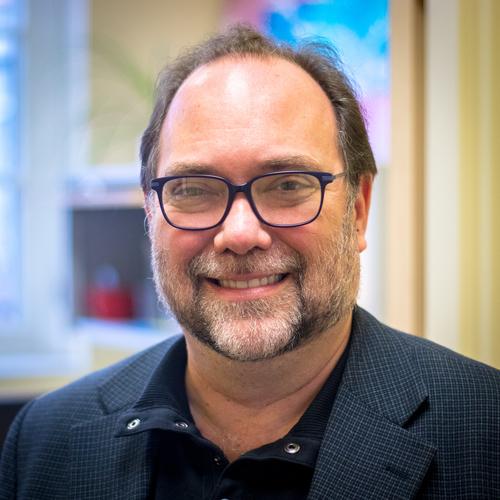
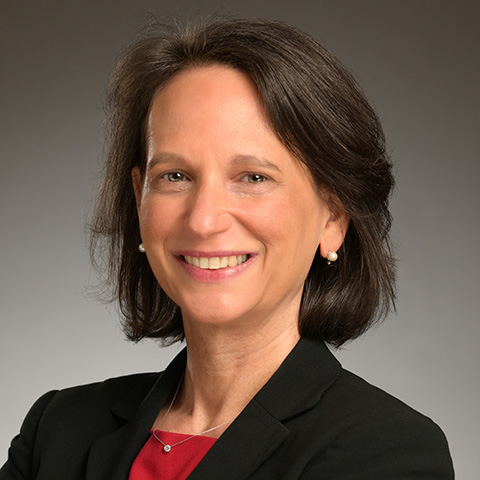
Larry Miller is a Clinical Professor and Executive Director of the Sony Audio Institute for Music Business and Technology at New York University's Steinhardt School. He also directs the Music Business Program and serves as an adjunct faculty member. With an MBA from Columbia Business School, his expertise spans music entrepreneurship, analytics, valuation, and strategic marketing. He advises music creators, rights holders, and tech firms on policy, litigation, and growth strategies. Professor Miller has held leadership roles at L.E.K. Consulting and MediaNet, and founded Or Music, a Grammy-winning record label. He contributes to media through his Musonomics podcast and voice-over work, including a Clio-winning performance. His research focuses on music industry transformation, streaming economics, and metadata foundations. Key achievements include the 2024-25 Music Business Association Educator of the Year award and expert testimony before the Copyright Royalty Board. His work bridges academia, industry, and innovation, addressing global challenges in music business and technology.
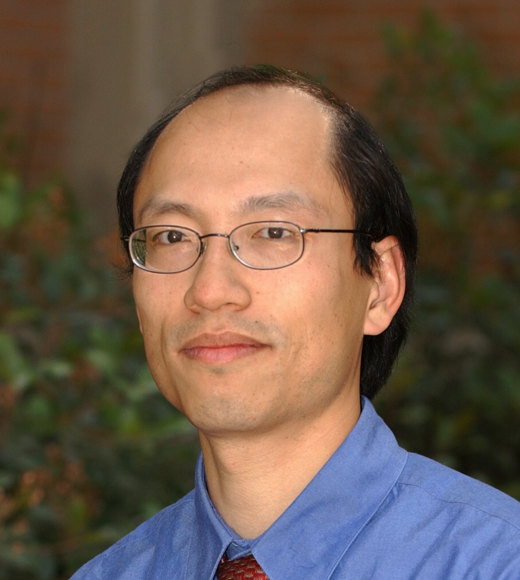
Fréderic Varone is a Full Professor at the University of Geneva, specializing in public policy analysis, comparative administration, and political science. He holds a Master's in Economics and a PhD in Political Science, with prior positions at the University of Louvain and visiting scholar roles at UC Berkeley. His research focuses on policy evaluation, interest group dynamics, and federal governance, particularly in transboundary contexts like Greater Geneva. He has served on the Swiss National Science Foundation (SNSF) Research Council from 2009–2016. Varone's teaching and research emphasize public policy analysis, with key projects exploring AI in administrative practices, EU citizenship dynamics, and politicians' perception of public opinion. His work bridges theoretical policy frameworks with real-world governance challenges, including pandemic responses and cross-border cooperation. He has authored/co-authored numerous peer-reviewed articles and book chapters since 2006, focusing on topics like policy implementation gaps, elite perception accuracy, and regulatory networks. His recent publications address AI governance, federalism in crises, and comparative public health advisory systems. Varone co-directs multiple PhD theses, mentoring students on topics ranging from green public procurement to corporate political activity. His research has contributed to understanding Swiss federal administration, judicial systems, and the interplay between direct democracy and policy outcomes. Varone's interdisciplinary approach integrates political science, public administration, and comparative policy analysis, making him a leading voice in European public policy scholarship.
Dr. Jack Meakin is a Lecturer in Law at the University of Leeds, part of the Faculty of Social Sciences and School of Law. He joined in September 2021 and holds a PhD from the University of Glasgow, alongside studies at the International Institute for the Sociology of Law (Oñati) and a LLB from the University of Bristol. His research focuses on legal mobilisation, labour law, legal theory, and socio-legal studies, particularly examining the intersection of legal strategy and labour rights. In 2022, he secured an ESRC New Investigator Grant for the TRACTION project, studying transnational labour constitutionalism and strategic litigation. His teaching includes modules on Constitutional and Administrative Law, Law and Society, Employment Law, and Comparative Human Rights Law at both undergraduate and postgraduate levels. He supervises doctoral students in legal/constitutional theory, socio-legal studies, and labour law. Research affiliations include the Centre for Law and Social Justice and the Legal Professions Research Group. Recent work explores the effectiveness of legal strategies in labour movements, transnational legal frameworks, and the role of law in socio-political struggles. His projects emphasize constitutional protections of work and transformative legal approaches in Europe and beyond.
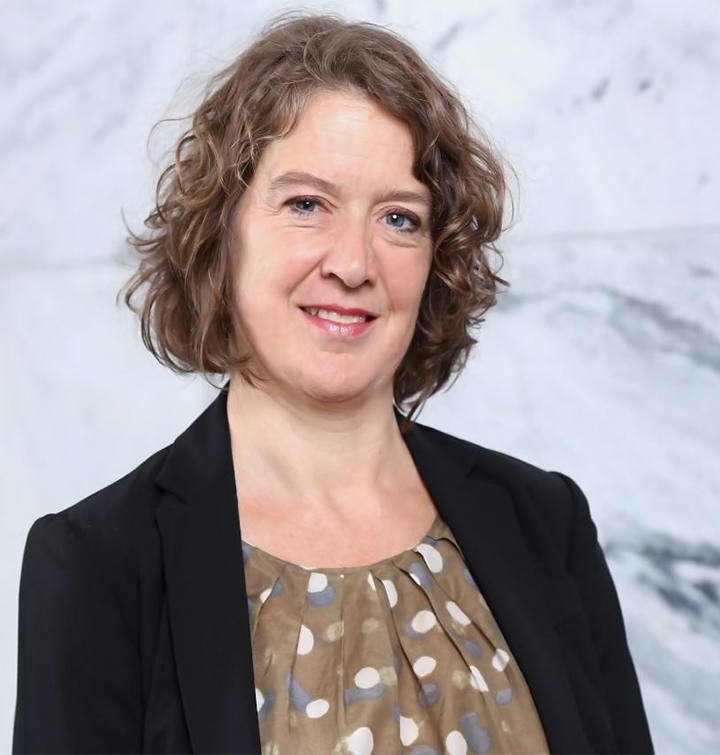
Dr Zoe Tongue is a Lecturer in Law at the University of Leeds’ School of Law, joining in 2022. She holds a PhD from Durham University (2023), an LLM from the University of Warwick, and an LLB from Durham with a study year at the University of Western Australia. Previously, she worked as a part-time tutor at Durham and a research assistant for the Cambridge Centre for Animal Rights Law, earning an Associate Fellowship of the Higher Education Academy. Her research focuses on abortion law, reproductive justice, feminist legal theory, and international human rights. Her PhD advanced a human rights framework for abortion access through feminist moral philosophy. Current projects include creative legal research methods (e.g., science fiction writing) and collaborations with visual artists, such as the 2024 East Street Arts exhibition exploring reproductive health through art. She has presented widely at venues like the Society of Legal Scholars and the European Conference on the Philosophy of Medicine. Her work intersects law with pop culture, analyzing science fiction narratives (e.g., The Witcher ) to critique reproductive rights. She advocates for decriminalizing abortion, addressing obstetric violence, and expanding access to telemedical abortion services. Grants include funding for the Leeds Creative Labs partnership, blending art and activism. Professional affiliations include the Centre for Law and Social Justice at Leeds. Her interdisciplinary approach bridges legal scholarship with bioethics, disability justice, and creative expression, shaping both academic and public discourse on reproductive rights.
Byron Sheldrick is a Professor in the Department of Political Science at the University of Guelph. He holds a doctoral degree from York University and focuses on the intersection of law and political economy. His work examines how capitalism influences state structures and policies, with particular attention to social movements, welfare state dynamics, and community economic development. Sheldrick explores how legal frameworks and human rights intersect with political activism, especially in anti-poverty contexts and social democratic strategies in Canada and the UK. His research spans issues such as open government, strategic litigation, and welfare policy reform. Notable works include analyses of Ontario’s Anti-SLAPP legislation and studies on the political economy of European welfare states. Sheldrick’s scholarship also addresses judicial independence, food safety regulation, and the governance challenges of linking legal structures to social change. His articles frequently engage with themes of democratic accountability, public participation, and the role of law in shaping political expression. While no formal awards are listed, his extensive publication record reflects sustained engagement with critical issues in Canadian and comparative politics. Sheldrick’s work bridges academic rigor with practical implications for policy and social justice initiatives.
Albert C. Lin is the Martin Luther King Jr. Professor of Law and Co-Director of the Environmental Law Center at the University of California, Davis School of Law (King Hall). His expertise spans environmental and natural resources law, with a focus on climate policy, geoengineering governance, and emerging technologies. He previously served as a trial attorney in the U.S. Department of Justice’s Environment and Natural Resources Division and clerked for federal appellate judges Merrick Garland and James Browning. Lin holds a J.D. from UC Berkeley (1996), an M.P.P. from Harvard University (1995), and a B.S. in Biology from Emory University (1992). His scholarship examines the intersections of law, technology, and environmental challenges, with publications in leading journals like the Harvard Environmental Law Review and UCLA Law Review. His research interests include climate adaptation strategies, public nuisance litigation, and systemic regulation of technologies like AI and geoengineering. Lin co-authored a widely used environmental law casebook and advocates for adaptive governance frameworks to address complex environmental crises. His recent work explores carbon dioxide removal, managed climate retreat, and the ethical dilemmas of solar geoengineering. Lin frequently engages with policymakers and media on topics like federal climate policy, public land management, and the legal implications of emerging technologies.
John Wald is a Professor of Finance at the University of Texas at San Antonio (UTSA), where he has served since 2006. He previously held faculty positions at Penn State and Rutgers Universities. Wald holds a Ph.D. in Economics from the University of California, Berkeley, and a B.A. in Computer Science and Economics/Math from Yale University. His research focuses on capital structure, law and finance, corporate governance, and international finance. Specific interests include legal frameworks’ impact on firm financing, debt covenant agreements, CEO compensation, and market responses to external factors like pandemics. His work has been recognized with prestigious awards, including the 2008 FMA Best Paper in International Finance and the 2010 Carlos Alvarez College of Business Research Award. Wald serves on the editorial review board of the Journal of International Business Studies and is an associate editor of the Review of Pacific Basin Financial Markets and Policies . He teaches courses such as FIN 4613 (Intro to International Finance) and FIN 5833 (International Financial Management) at UTSA. His recent articles explore topics like sovereign bond dynamics, corporate tax avoidance, and the role of institutional investors in loan renegotiations. He has advised no listed students but maintains active engagement in academic publishing and editorial roles.
Ulrich Laitenberger is an Associate Professor at Tilburg University's Department of Information Systems and Operations Management (TiSEM) and Academic Lead of the Information Systems section. Previously, he held a Full Professorship in Economics at Télécom Paris, Institut Polytechnique de Paris. He earned his PhD in Business Economics from KU Leuven (2015) and a habilitation (post-PhD qualification) from Université Paris 2 Panthéon-Assas (2019). His research focuses on the intersection of economics and information systems, particularly digital markets, platform competition, and competition policy. He has published in top-tier journals such as Management Information Systems Quarterly, Marketing Science, and American Economic Journal: Microeconomics. Key research topics include recommendation systems, online labor platforms, and the regulatory implications of digital platforms. He is affiliated with ZEW Mannheim (Digital Economy Research Department) and the CESifo Network. Awards include the 2020 ZEW Outstanding Scientific Performance Award for his work on online travel agent rankings. Laitenberger teaches courses on industrial economics, digital economics, and econometrics. He supervises PhD students and has advised researchers at institutions like ZEW and Telecom Paris. His current projects explore platform regulation, auction dynamics in healthcare, and the economic impact of right-to-repair policies.
Elizabeth Weeks is the Interim Vice Provost for Academic Affairs and Associate Provost for Faculty Affairs at the University of Georgia (UGA). As a Professor and the Charles H. Kirbo Chair in the School of Law, her roles include overseeing academic administration, faculty policies, and professional development programs. She previously served as Associate Dean for Faculty Development in UGA's School of Law and directed the Medical-Legal Partnership Clinic at the University of Kansas School of Law. Her research focuses on health care financing, regulation, and public health law. She has authored/co-authored two books with a third scheduled for 2027, and has published nearly 50 articles in law reviews and journals. Key honors include election to the American Law Institute and teaching excellence awards. Weeks has extensive service roles: chairing UGA's Arts Council and Humanities Council, serving on University Council committees, the Institutional Review Board, and the University Review Committee. She has participated in national leadership roles with the Association of American Law Schools. Education: B.A. from Columbia University, J.D. summa cum laude from UGA. Her work integrates legal scholarship with practical initiatives to address healthcare access, rural health challenges, and systemic inequities.
Stephen Holland is a Professor of Economics at the University of North Carolina Greensboro, specializing in environmental and energy economics. His research focuses on climate policy, emissions reduction strategies, transportation electrification, and the socioeconomic impacts of environmental regulations. He holds a Ph.D. in Economics from the University of Michigan (1999), an M.S. in Agricultural Economics from Iowa State University (1994), and a B.A. in Mathematics from the University of Iowa (1989). Holland’s work often bridges theoretical economic models with policy analysis, particularly in evaluating the feasibility and consequences of climate policies like emissions trading, electric vehicle adoption, and renewable energy subsidies. His recent studies address the environmental benefits of transportation electrification, the challenges of coal phaseout in U.S. electricity generation, and the distributional impacts of air pollution. His publications span journals such as the Proceedings of the National Academy of Sciences , Energy Policy , and the American Economic Journal: Economic Policy . Current research includes long-term decarbonization strategies and the economic implications of green hydrogen production.
John Malmo is an Adjunct Professor of Law at San Joaquin College of Law (SJCL), specializing in Evidence Law. He holds a J.D. from Ventura College of Law and a B.A. from the University of California, Santa Barbara. With over 30 years of practice in civil litigation, particularly personal injury matters, and one year in insurance defense, Professor Malmo brings extensive legal experience to his teaching. Previously, he taught Legal Analysis, Evidence, and Advanced Evidence at Ventura and Santa Barbara Colleges of Law from 1987 to 2000. At SJCL, he currently teaches Evidence I and Evidence II. No scientific awards or grants were explicitly mentioned in the provided text. His professional focus remains on litigation practice and legal education.
Dr. Owen H. Jones is a Visiting Assistant Professor of Latin American Studies at Soka University of America. A specialist in Indigenous legal structures and colonial history, his research focuses on K’iche’ Maya communities in Guatemala and their interactions with Spanish colonial law. He is fluent in Yukatek Maya, K’iche’ Maya, and Spanish, and currently works on a book project, K’iche’ Justice: Legal Culture and Practice in Local and Regional Law in Colonial Highland Guatemala , under review at the University of Texas Press. Education: Ph.D. in History, University of California, Riverside (2009) M.A. and B.A. in History and Spanish, University of California, Riverside (2002, 2000) Research Interests: Dr. Jones examines Indigenous legal agency in colonial contexts, including Indigenous justices’ roles in court systems, literacy practices, and the evolution of legal discourse. His work bridges ethnohistory and legal studies, emphasizing how Indigenous communities negotiated colonial power structures. Awards & Grants: Marcoux Fellowship for Latin American History Research UC MEXUS Dissertation Fellowship NEH Summer Institute Participant (2014) Teaching & Service: Courses taught include Introduction to Latin American Studies and Introduction to the Pacific Basin . He has held academic positions at Sinclair Community College (2017–2024), Southeast Missouri State University, Valdosta State University, and the University of North Carolina, Wilmington.
Jennifer L. Nye is a Senior Lecturer II in the Department of History at the University of Massachusetts Amherst, with a joint appointment in Law & Social Justice. She chairs the Five College Reproductive Health, Rights, and Justice Certificate Program and teaches courses focusing on intersections of law, gender, and social justice. Her academic career is complemented by over 12 years as a public interest attorney specializing in disability law, healthcare advocacy, and domestic violence litigation. Nye holds a law degree from Boston College Law School and previously taught at the University of Arizona's Women’s Studies Department and James E. Rogers College of Law. Research interests include reproductive rights law, gender discrimination, and the historical underpinnings of legal frameworks. Her publications span legal manuals on domestic violence advocacy and groundbreaking feminist legal scholarship. She actively contributes to interdisciplinary initiatives across the Five Colleges, designing certificate programs that bridge legal practice and historical analysis. Nye’s legal career includes victories at the Ninth Circuit Court of Appeals challenging Medicaid cuts and representing survivors of domestic violence. This experience informs her teaching philosophy, which emphasizes training undergraduates to use law as a tool for systemic change. She advocates for historically marginalized communities through both academic and legal praxis.
Pamela Bookman is a Professor of Law and Associate Dean for Academic Affairs at Fordham University School of Law. She is a leading scholar in civil procedure, international litigation, arbitration, conflict of laws, and comparative law. Her work has been published in top legal journals including the Stanford Law Review , NYU Law Review , and Yale Journal of International Law . Education: J.D., University of Virginia School of Law (2006) – Articles Editor, Virginia Law Review ; Order of the Coif; Rosenbloom Award B.A. in Russian Literature, Yale University (2001) – magna cum laude, Phi Beta Kappa, Scott Prize for Excellence in Russian Her research focuses on the intersection of domestic legal procedures and global dispute resolution, particularly in the context of transnational litigation, jurisdiction, and the rise of private adjudication mechanisms like arbitral courts. She critically examines how legal systems adapt—or fail to adapt—to the challenges posed by globalization, digital platforms, and international commerce. Her scholarship often combines doctrinal analysis with comparative insights, revealing structural tensions in modern civil procedure. The trend in her recent publications reflects a deep engagement with procedural justice, judicial innovation, and the evolving landscape of international commercial dispute resolution. She investigates topics such as forum shopping, general jurisdiction, and the hybrid nature of arbitral institutions, offering nuanced critiques of both litigation isolationism and the limitations of arbitration. Her work increasingly addresses the role of U.S. courts in global disputes and the strategic behavior of litigants in cross-border cases. Scientific Awards and Honors: Rosenbloom Award for enhancing the academic experience of fellow law students Order of the Coif Phi Beta Kappa Scott Prize for Excellence in Russian Mellon Research Grant Bates Traveling Grant Professor Bookman has advised major legal reforms and contributed to scholarly debates on judicial efficiency and access to justice. She has received research support through grants and fellowships, and her work has influenced both academic discourse and policy discussions in international dispute resolution. She has collaborated with leading scholars such as Maggie Gardner, Andrew Bradt, and Matthew S. Erie. While specific grant details are not listed, her sustained publication in premier journals indicates robust research funding and institutional support. She is affiliated with the Fordham Law faculty and contributes to the intellectual life of the law school as Associate Dean. Though no formal lab or research center is mentioned, her collaborative projects and interdisciplinary approach suggest active participation in research networks focused on global legal governance and procedural innovation.
John F. Rabena is an Adjunct Professor at Georgetown University Law Center, where he teaches trial skills seminars in collaboration with the National Institute for Trial Advocacy. He is also a Partner at Sughrue Mion, PLLC in Washington, D.C., specializing in intellectual property litigation, patent counseling, and enforcement before the United States International Trade Commission (USITC) and U.S. District Courts. His academic and professional expertise lies at the intersection of law and technology, particularly in electrical and mechanical patents, software, e-commerce, and trademark infringement. He has extensive experience in patent prosecution, licensing, and USPTO trials. Rabena is actively involved in legal education and professional development, serving as an instructor for trial advocacy programs. His teaching focuses on practical litigation skills for emerging lawyers. He is affiliated with several key legal organizations, including the American Intellectual Property Law Association (AIPLA), the ITC Trial Lawyers Association, and the IPO ITC Committee on Education. Professionally, he advises clients on complex IP matters and represents them in high-stakes intellectual property disputes. His work bridges technical engineering knowledge with legal strategy, particularly in technology-driven litigation. He is associated with training programs and legal teams focused on trial preparation and advocacy, contributing to the development of future IP litigators.