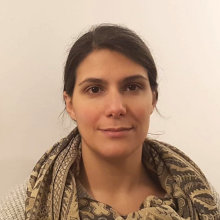
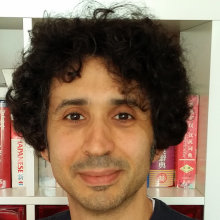
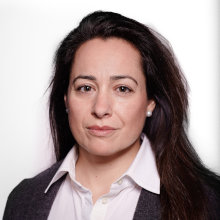
Lucia Avallone is an Associate Professor at the University of Bergamo, teaching Arabic language and literature. She holds a PhD in 'Near Eastern and Maghreb Studies. Cultural Specificities and Intercultural Relations' from the University of Naples 'L'Orientale' (2011) and graduated from the University of Turin (1989). National Scientific Qualification for Full Professor in Cultures of the Ancient Near East, Middle East, and Africa (2024-2035) Member of AIMA (International Association for the Study of Middle and Mixed Arabic) Advisor for Master's Degree in Modern Languages for International Communication and Cooperation (LM-38) Member of PhD programs in Philological and Linguistic Studies (Bergamo) and Linguistic Sciences (Bergamo-Pavia) Her research focuses on modern and contemporary Arabic language and literature , especially linguistic variation , code switching between standard and vernacular Arabic , and Arabic-European language contact . She analyzes political discourse and develops methodologies for Arabic language teaching, with particular attention to dialect-standard dynamics in literary and pedagogical contexts. Recent publications examine: Linguistic creativity in contemporary Egyptian fiction Sociolinguistic aspects of modern Arabic narratives Translation challenges between Arabic dialects and Standard Arabic Historical connections between Arabic and Mediterranean cultures She supervises master's theses and participates in doctoral committees, emphasizing: Intercultural communication Postcolonial Arabic literature Language pedagogy innovations
Bianca Basciano is an Associate Professor at the Department of Asian and North African Studies , Ca' Foscari University of Venice, where she has held the Director's Delegate for Research role since 2023. Her work focuses on Chinese linguistics , particularly Mandarin morphology, syntax, and second language acquisition. Research Areas: Chinese compounding, reduplication, causative constructions, resultative compounds, and language teaching methodologies. Teaching: Offers BA/MA courses in Chinese language and linguistics at Ca' Foscari University. Editorial Roles: Member of the editorial boards for Sinica Venetiana and Lingue e Linguaggio . Research Projects: Principal investigator for the PRIN 2020 project on Italian learners' acquisition of Chinese resultative verbs, with extensive corpus-based analysis. Collaborates with Giorgio Arcodia and other international scholars. Key Themes: Event structure delimitation, Vendlerian verb classes, micro-parametric syntactic variation. Publications: Over 40 works including monographs with Oxford University Press and Bologna University Press. Her methodological approach combines theoretical linguistics with corpus analysis, contributing to the understanding of Chinese as both a linguistic system and a second language acquisition challenge. She has also organized international conferences like the 31st IACL Annual Meeting.
Alessandro Del Tomba is a Tenure-Track Researcher in Linguistics and Glottology at Sapienza University of Rome, specializing in historical linguistics, Indo-European studies, and Central Asian philology. He holds a PhD in Linguistics from Sapienza and Comparative Indo-European Linguistics from Leiden University. Historical linguistics Indo-European studies Eastern Iranian philology Language contact theories His research focuses on Khotanese and Tocharian languages, with recent publications analyzing manuscript transmission, morphological variation, and phonological developments. He serves as Principal Investigator for the FIS project "Khotanese language and texts in contexts (KhoTxt): A multimodal approach to the classification and periodisation of the Khotanese language and its texts within the cultural and historical framework of medieval Central Asia". He teaches General Linguistics at undergraduate levels and Linguistics courses at the graduate level in Modern Philology. Active in international academic networks, he participates in conferences across Italy, Europe, and Asia.
Vanessa Leonardi serves as an Associate Professor in the Department of Methods and Models for Economy, Territory and Finance at Sapienza University of Rome. She teaches English language courses across multiple degree programs including Geographic Sciences and Technologies for the Environment and Health (3rd year), Modern Philology (2nd year), Sustainable Tourism Sciences (1st/2nd year), Literature Music Entertainment (1st year), and Linguistics (1st year). Her research centers on the ideological dimensions of language and translation, with particular emphasis on gender representation in legal and medical texts, corpus-based analysis of academic discourse, and pedagogical innovations for English language instruction. She investigates how power structures manifest in translated materials through linguistic choices and cultural adaptation strategies. Recent publications (2024-2025) demonstrate sustained focus on corpus-driven legal translation studies, intralingual translation in children's literature, and digital communication challenges including emoji translation. Her work consistently examines the intersection of gender ideology with translation practices across diverse text types from EU legal documents to children's books. Dr. Leonardi maintains Wednesday office hours by appointment and is contactable at vanessa.leonardi@uniroma1.it . No scientific awards or student advising information appears in the available records.
Daria Motta is an Associate Professor of Italian Linguistics at the Department of Humanities, University of Catania, with a strong affiliation to the Special Teaching Structure of Foreign Languages and Literatures in Ragusa. She holds a formal academic position in the scientific disciplinary sector L-FIL-LET/12 and is actively engaged in research, teaching, and academic service. Her work bridges philology, sociolinguistics, and language pedagogy, with a particular emphasis on Italian literary and linguistic history. Her research interests span Italian linguistics, historical and sociolinguistic analysis of spoken and written language, pragmatics in literature and media, dubbing studies, Italian as a second language (L2), and corpus-based philological research. She has extensively studied 19th- and 20th-century authors like Giovanni Verga and Vitaliano Brancati, focusing on the representation of spoken language in literary texts. Her work also explores language teaching methodologies, multilingualism in migrant literature, and the role of media in shaping linguistic norms. The trends in her recent publications reveal a consistent focus on linguistic variation, historical pragmatics, and the intersection of language with literature and media. She frequently analyzes how language functions in narrative, theatrical, and audiovisual contexts, particularly through the lens of realism and sociocultural change. Her scholarly output combines philological rigor with sociolinguistic insight, contributing to both literary studies and applied linguistics. Member of the editorial board of «Annali della Fondazione Verga» (since 2012) Member of the editorial board of «Bollettino - Centro di Studi Filologici e Linguistici Siciliani» (since 2012) Member of ASLI (Associazione per la Storia della Lingua Italiana) and ASLI-Scuola Anonymous reviewer for journals such as «Italiano linguaDue» and «L’italiano a scuola» Referee for doctoral projects at the University of Rome “Tor Vergata” Daria Motta has supervised numerous master’s theses and mentored students through formal tutoring programs. She has played key institutional roles, including serving as a delegate for continuing education and school relations, coordinator for LIS interpreting services, and contact person for placement activities. She has also been involved in research projects funded by the University of Catania and national PRIN grants, focusing on language teaching, historical corpora, and textual analysis. Her leadership in academic events and research groups underscores her active engagement in the scholarly community. She has contributed to various research groups, including the PIACERI and Prometeo projects at the University of Catania, and has led her own research initiatives on literary dialogue and 17th-century language invention. She has also participated in major national projects like the Corpus of Reference for a New Vocabulary of Modern and Contemporary Italian under the Accademia della Crusca.
Paola Cantoni is an Associate Professor at the Department of Modern Literature and Culture , Sapienza University of Rome, Faculty of Arts. She teaches courses in Istituzioni di Storia della Lingua Italiana (12 CFU) and Didattica dell'Italiano e Sociolinguistica , with a focus on Italian language teaching, sociolinguistics, and historical linguistics. Her research spans linguistic variation, educational linguistics, and dialect studies. Current courses: Italian Language History (Undergraduate), Italian Didactics and Sociolinguistics (Master's) Office hours: Tuesday 10:00-11:00, Thursday by appointment (Studio C, 3rd floor) Her publications address topics like: Linguistic variation in educational contexts Historical pragmatics of teacher discourse Dialect representation in literature Language of fascism in school registers Italian punctuation and textual practices She utilizes digital platforms (Google Classroom, Meet) for remote teaching and has presented research at conferences like the Convegno Luca Serianni e la Storia dell'Italiano . Her work includes analyzing historical educational texts and developing teaching methodologies for Italian language variation.
Marco Venuti is a tenured researcher in English Language, Translation, and Linguistics at the Department of Humanities, University of Catania, where he teaches Statistics in Corpus Linguistics and English Linguistics and ESP. He previously held a research position at the University of Naples Federico II from 2006 to 2014. He is a founding member of the Interuniversity Research Center I-LanD (Identity, Language, and Diversity), the Center for Humanistic Computing (CInUm), and the Neurohumanities Research Center at the University of Catania. He serves as the Department's delegate for Digital Humanities and Digital Sociology and is a member of the Departmental Research Committee. His primary research interests include: Critical Discourse Analysis Corpus Assisted Discourse Studies News and Political Discourse Institutional Discourse Social Media in the Public Sphere Language and Gender His recent scholarly work focuses on the discursive construction of social and political events across media and cultures, particularly analyzing news values, identity representation, and evaluative language. His publications reveal a strong methodological consistency in combining corpus linguistics with critical discourse analysis, often in cross-cultural and multilingual contexts, examining topics such as same-sex marriage rulings, EU perception in media, and the linguistic framing of riots and political briefings. He has developed and analyzed major corpora, including the CompWHoB Corpus (White House Press Briefings) and the CorDis Corpus (Iraq War discourse). Scientific contributions and projects include: Principal Investigator (PI) of the interdepartmental research project on online journalism (2020–2024) Departmental PI of the project on Crisis in/of Democracy, focusing on populism and social media Co-development of linguistic corpora for political and media discourse analysis He actively mentors students, supervising theses on discourse analysis, media language, and gender. His research bridges linguistics, sociology, and digital humanities, contributing to both theoretical and applied understandings of language in public and institutional domains.
Davide Bondì is an Associate Professor in the Department of Human Sciences at the University of Verona. His academic roles include membership in the Departmental Council and QA Management Groups for Philosophy programs. He is actively involved in editorial work as editor of Giornale critico della filosofia italiana and serves as the Italian Ambassador for the International Network for the Theory of History (INTH). He co-directs the series Le filosofie in Italia at Bibliopolis. His research focuses on classical German philosophy (Schleiermacher, Humboldt), Italian philosophy (Labriola, Villari, Croce), and contemporary Anglo-American philosophy of history. He has contributed significantly to the National Editions of Labriola and Croce's works. His interests span historiography, theories of historical thought, and the intersection of philosophy with political and cultural contexts. Bondì teaches courses in History of Modern Philosophy, Italian Philosophy, and Renaissance Philosophy across undergraduate and graduate programs. He has authored over 50 scholarly works, including monographs on Schleiermacher, Labriola, and the linguistic turn in historiography. His recent publications analyze Marx's reception in Italy, the ethics of historical responsibility, and the methodology of philosophical historiography. He collaborates with international research centers such as the Ghent University's INTH and directs projects on the theory of history. His work bridges historical analysis with contemporary debates in philosophy, emphasizing the critical engagement with textual sources and intellectual traditions.
Elisa Nuria Merisio is a Research Fellow at the Department of Humanities, Ca' Foscari University of Venice. She holds a PhD in Philology and History of the Ancient World from Sapienza University of Rome and a Master's in Text Computing - Electronic Publishing from the University of Siena. Her research focuses on Greek epigraphy, digital humanities, and classical philology with particular attention to provincial Greek poetry and linguistic interactions in the Roman Empire. Professional Experience: Research Fellow at Ca' Foscari University of Venice (2020-2022), Sapienza University of Rome (2022), and University of Florence (2020-2022) Education: PhD in Philology and History of the Ancient World (Sapienza, 2020), Master's in Text Computing (Siena, 2021), Diploma in Greek Paleography (Vatican School, 2024) Her research interests include: Epigraphic Greek poetry from Asia Minor Digital lexicography and philological markup Linguistic interaction in multilingual contexts Late Antique cultural transmission Dr. Merisio has presented at numerous international conferences including the International Colloquium on Ancient Greek Linguistics (2018), International Workshop 'Epigraphy and Literature' (2019), and Celtic Conference in Classics (2019). She has also engaged in teaching activities at multiple Italian universities and developed digital expertise in TEI/EpiDoc markup and Cadmus framework.
Giorgio Francesco ARCODIA is a Full Professor in the Department of Asian and North African Studies at Ca' Foscari University of Venice, where he also serves as Director's Delegate for Interdepartmental Agreements and a member of the University Quality Assurance Office (PQA). His academic expertise lies in Chinese linguistics, linguistic typology, morphology, dialectology, and second language acquisition. He has held previous academic positions at the University of Milano-Bicocca, progressing from researcher to associate professor before joining Ca' Foscari as a full professor. His research is deeply interdisciplinary, focusing on Sinitic languages, grammaticalization, and cross-linguistic comparison. Education: PhD in Theoretical and Applied Linguistics, University of Pavia (2008) MA in Theoretical and Applied Linguistics, University of Pavia (2005) BA/MA in Foreign Languages, University of Bologna (2003) Language studies at Renmin University of China, Beijing (2005–2006) Advanced training in Chinese, Russian, Japanese, and linguistics across institutions in Italy, Germany, the Netherlands, and Taiwan His research interests include Chinese morphology, linguistic typology, dialectology, grammaticalization, and the acquisition of Chinese as a second language. He has conducted extensive research on reduplication, compounding, derivational morphology, object marking, tense, and aspect in Sinitic languages, as well as on contact phenomena in Macanese and Sino-Vietnamese. His work often combines corpus-based, experimental, and typological methodologies. The recent publications reflect a strong focus on morphosyntactic and typological features of Sinitic languages, with recurring themes such as nonconcatenative morphology, prosody, grammaticalization of tense and aspect, structural particles, and cross-dialectal convergence. His work increasingly bridges theoretical linguistics with pedagogical implications, especially in teaching Chinese to Italian speakers. Scientific Engagement: Section Editor, Open Linguistics (2024–present) Member, Scientific Board, Linguistic Typology at the Crossroads (2021–present) Member, Editorial Board, Cahiers de Linguistique Asie Orientale (2024–present) Peer reviewer for major journals including Linguistics , Morphology , Journal of Linguistics , and Language and Linguistics Project evaluator for Swiss National Science Foundation, ANR (France), and Research Grants Council of Hong Kong He actively supervises and collaborates with researchers, particularly on projects related to Chinese linguistics and second language acquisition. He has coordinated international research initiatives and double degree programs, notably with the Higher School of Economics in Saint Petersburg. His institutional service includes membership in PhD committees, research councils, quality assurance bodies, and departmental governance at Ca' Foscari. He is a member of leading academic associations including the International Association of Chinese Linguistics (IACL), European Association of Chinese Linguistics (EACL), and Società di Linguistica Italiana (SLI), and has held leadership roles in AILC, EACL, and CASLAR. He has organized major international conferences such as IACL-31 and EACL-10, and workshops on Chinese dialect grammar and prosodic grammar.
Eugenia Diegoli is an Assistant Professor in the Department of Asian and North African Studies at Ca' Foscari University of Venice, where she conducts research on Japanese and Korean language, pragmatics, and computer-mediated discourse. She is currently working on the SELFEE (SELF-Evaluative Emotions in English and Japanese) project. Her research focuses on the linguistic expression of emotions, apologies, politeness, and cross-cultural communication, primarily using corpus-assisted discourse analysis. Her work bridges Japanese and Western linguistic traditions and explores meta-discourses on linguistic correctness, emotional expressions in online spaces, and the semantics of shame and guilt. She has conducted extensive research on apology-like behavior in Japanese digital environments. Her recent publications include a 2025 monograph Online Apologies in Japanese (Brill) and numerous peer-reviewed articles in journals such as Journal of Pragmatics , Language and Cognition , and Intercultural Pragmatics . Her work shows a strong trend in analyzing digital discourse, emotional language, and sociopragmatic variation in Japanese, with increasing cross-linguistic comparisons involving English, French, and Korean. Her scientific awards include the Seal of Excellence for an MSCA post-doctoral fellowship and multiple fellowships such as the Marco Polo and JASSO scholarships. She has also received the Best Doctoral Student Paper Award at ICDP-1 (2022). She has advised and tutored students at the University of Bologna and is actively involved in academic service as a reviewer for several journals, including Journal of Pragmatics and Corpus Pragmatics . She has presented her research at international conferences such as IPRA, ADDA, and Corpora. She has also engaged in public outreach through webinars on Japanese language topics during the European Researchers' Night. She has been a Visiting Research Scholar at Meiji University, Waseda University, and Lancaster University. Her languages include native Italian, C2 Japanese (JLPT N1), and C2 English (IELTS 8.0).
Kim Soung-U Sebastian is a Researcher at the Department of Asia, Africa and the Mediterranean , University of Naples L'Orientale. His work focuses on Koreanic languages, particularly Jejuan, with expertise in language documentation, typology, politeness metapragmatics, and linguistic ideologies. He has conducted extensive fieldwork and contributed to endangered language preservation through multimodal corpora. PhD in Linguistics (SOAS University of London, 2018) MA in Language Documentation and Description (SOAS, 2013) BA in Linguistics (University of Leipzig, 2012) Research interests span Koreanic language diversity , politeness metapragmatics , egophoricity , and multimodal linguistic analysis . His recent publications with Springer and Cambridge University Press explore Korean politeness and Jejuan morphosyntax . Kim is also involved in language teacher training and academic software workshops . Key grants include a five-year Korean Studies Promotion Service laboratory program and multiple MSCA Seal of Excellence awards . He serves on program committees for endangered language conferences and has organized knowledge exchange initiatives with Jeju Province. Teaching roles include Intermediate Korean Language and Korean Literature courses.
Laura Nadal Sanchis is an Associate Professor at the Department of Comparative Linguistic and Cultural Studies , Ca' Foscari University of Venice . She specializes in Spanish discourse markers , experimental linguistics , and inclusive language studies through cognitive and pragmatic approaches. Linguistics Translation Studies Cognitive Science Language Education Her research focuses on cognitive processing of linguistic elements in Spanish, including anaphoric encapsulation , discourse coherence , and gender-inclusive language effects . She employs experimental methods and eye-tracking technology to analyze these phenomena in L1 and L2 speakers. Current publications highlight her work on discourse markers in Romance languages , cross-linguistic analysis , and educational applications through CLIL methodology and translator training . While specific awards aren't listed, her extensive publication record demonstrates significant contributions to experimental linguistics and discourse analysis .
ROSA RUGANI is an Associate Professor at the University of Padua, Italy, specializing in cognitive and developmental psychology with a focus on numerical cognition. Her work explores how numerical and spatial representations emerge in non-human animals and humans, particularly through studies on domestic chicks, rhesus monkeys, zebrafish, and insects. She investigates foundational questions about innate numerical abilities, spatial-numerical associations, and the evolutionary origins of mathematical concepts. Her research integrates behavioral experiments, comparative approaches, and developmental studies to understand cross-species cognition. Research interests include proto-arithmetic capacities in animals, the mental number line in non-linguistic species, and the interaction between animacy, numerosity, and spatial processing. She has pioneered studies demonstrating that newborn chicks exhibit left-to-right spatial-numerical associations similar to humans, suggesting evolutionary conservation of these mechanisms. Her work challenges anthropocentric views of numerical cognition, emphasizing cognitive capacities in animals. Rugani's studies often use interdisciplinary methods, combining behavioral testing with computational modeling and neurobiological insights. She has contributed to debates on the biological basis of numerical concepts, the role of early environmental influences on cognitive development, and the relationship between numerical processing and other cognitive domains like object individuation and spatial attention.
Cristina Guardiano is a Full Professor at the University of Modena and Reggio Emilia, Department of Communication and Economics. Her research focuses on syntax, historical linguistics, and the Parametric Comparison Method (PCM), exploring syntactic variation across languages to reconstruct linguistic phylogenies. She specializes in formal syntax, differential object marking, and the intersection of syntax with computational and genetic data analysis. Key Affiliations: Dipartimento di Comunicazione ed Economia, University of Modena and Reggio Emilia Research Themes: Syntactic parameters, language evolution, Romance dialectology, genetic-linguistic correlations Guardiano's work integrates theoretical linguistics with interdisciplinary approaches, including collaborations with geneticists and computational linguists. Notable contributions include studies on the syntax of Italiot Greek, Sicilian dialects, and the application of parametric syntax to historical language classification. She leads initiatives like the TerraLing database to systematize cross-linguistic syntactic data. Her teaching includes advanced courses on linguistics, parametric syntax, and the analysis of language evolution. She emphasizes critical evaluation of Large Language Models (LLMs) and their implications for linguistic theory.