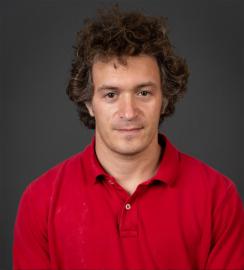
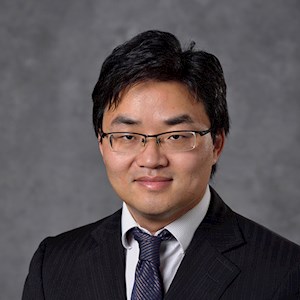
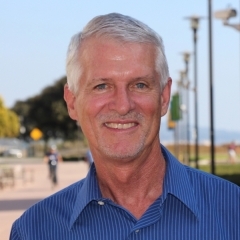
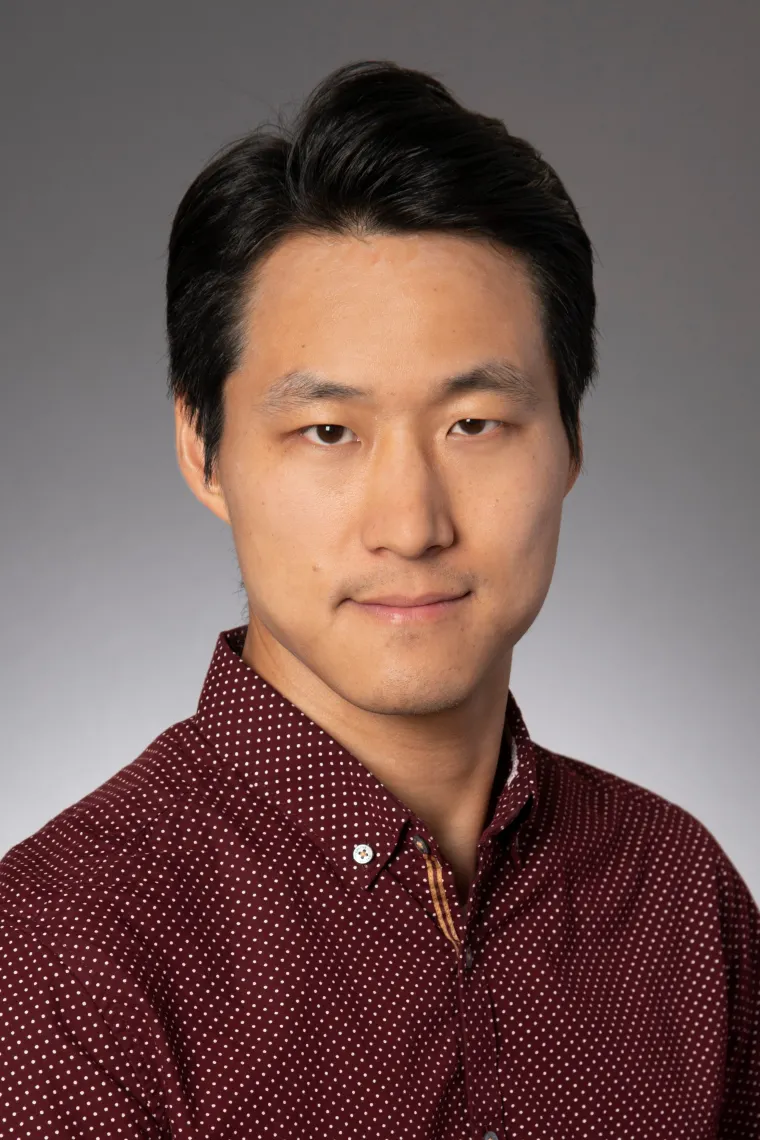
Linlin Chen is an Associate Professor in the School of Mathematics and Statistics within RIT's College of Science. She coordinates the Statistics Minors program and teaches courses including Design of Experiments, Categorical Data Analysis, and Applied Linear Models - Regression. Her research focuses on statistical modeling and computational methods. Education: BS (Peking University), Master of Computer Science (Rice University), MA/PhD (University of Rochester) Her research interests include experimental design, regression analysis, and categorical data modeling. Chen's work emphasizes practical applications in statistical methodology and data analysis. Scientific Awards: National Science Foundation grant recipient She holds regular office hours Tuesday and Thursday 10-11am in HLC-2217. Her teaching portfolio spans foundational to advanced statistical techniques.
Daniel M. Kane is a Professor at the University of California, San Diego (UCSD), holding a joint appointment in the Department of Mathematics and the Department of Computer Science and Engineering (CSE). His research spans mathematics and theoretical computer science, with a focus on number theory, combinatorics, complexity theory, and computational statistics. He earned a Ph.D. in Mathematics from Harvard University (2011) and dual BS degrees in Mathematics with Computer Science and Physics from MIT (2007). Prior to UCSD, he was a postdoctoral researcher at Stanford University (2011–2014) on an NSF fellowship. His research interests include robust statistics, machine learning, polynomial threshold functions, and algorithmic methods for high-dimensional data. Notable achievements include co-authoring the book Algorithmic High-Dimensional Robust Statistics (Cambridge University Press, 2023) and receiving the Best Paper Award at the Conference on Computational Complexity (2013), as well as gold medals at the International Mathematical Olympiad (2002 and 2003). Current teaching includes courses such as Math 96 (Putnam Seminar), Math 154 (Graph Theory), CSE 101 (Algorithms), and CSE 203A (Randomized Algorithms). He has consulted for companies like CASPER Labs and AIble, and his work extends to cryptographic protocols, including quantum money schemes based on quaternion algebras. Key contributions include breakthroughs in robust mean estimation, list-decodable learning, and the development of efficient algorithms for statistical problems. His research often bridges foundational theory with practical applications in machine learning and data analysis.
Professor Alexandra M. Schmidt is a leading academic in Biostatistics at McGill University, holding an endowed University Chair. She specializes in spatial and spatio-temporal modeling, particularly in epidemiology and environmental health. Previously, she served as a Full Professor at the Federal University of Rio de Janeiro (2012–2016). Her research focuses on Bayesian methodologies for analyzing complex processes, including disease spread, environmental hazards, and socio-economic disparities. She has authored influential books such as Spatio-Temporal Methods in Environmental Epidemiology with R (2023) and contributed to over 150 peer-reviewed articles. Key awards include the ISBA Fellowship (2024), ASA Fellowship (2020), and the Abdel El-Shaarawi Award (2008). Education: PhD in Statistics (2001, University of Sheffield, UK), MSc and BSc in Statistics (Federal University of Rio de Janeiro, Brazil). Research interests span Bayesian inference, spatial statistics, and environmental epidemiology. She has advised numerous PhD/MSc students and collaborated on projects linking statistical methods to public health challenges, such as modeling dengue outbreaks and air pollution impacts. Active in academic service, she has chaired major conferences (e.g., 2022 ISBA World Meeting) and serves on editorial boards of top journals like Bayesian Analysis and Canadian Journal of Statistics . Teaching includes advanced courses on generalized linear models, spatial epidemiology, and Bayesian analysis. Her work bridges theoretical statistics with practical applications, addressing global health issues through innovative spatio-temporal modeling techniques.
Henrik Boström is a Professor of Computer Science specializing in Data Science Systems at the Division of Software and Computer Systems, KTH Royal Institute of Technology. His research focuses on trustworthy machine learning , with emphasis on conformal prediction (for confidence-calibrated predictions) and explainable AI . He is the developer of Python packages crepes (conformal classifiers/regressors) and xrf (explainable random forests). His primary research domains include: Developing robust methods for uncertainty quantification in predictive models Creating interpretable machine learning frameworks Optimizing ensemble techniques for high-dimensional data Applying ML to healthcare informatics and industrial diagnostics Analysis of his recent publications reveals strong emphasis on: (1) advancing conformal prediction theory for trustworthy AI, (2) enhancing interpretability of complex models like random forests and GNNs, and (3) developing efficient algorithms for uncertainty-aware learning in domains including healthcare, graph data, and high-dimensional regression. He serves as examiner for multiple degree projects and teaches courses including Programming for Data Science (ID2214) and Research Methodology and Scientific Writing (II2202) . He leads development of open-source tools for conformal prediction and model interpretation.
Michal Kolesár is a Professor in the Department of Economics at Princeton University , holding this position since July 2020. Previously, he served as Assistant Professor (2014-2020) with dual appointments in Economics and the Woodrow Wilson School (2018-2020), and as Visiting Assistant Professor at MIT (2016-2017). His research focuses on econometrics , particularly causal inference , instrumental variables , nonparametric regression , and robust statistical methods . His work addresses fundamental challenges in high-dimensional data analysis, treatment effect heterogeneity, and finite-sample inference validity. Current projects include developing bias-aware methods for regularized regression and analyzing dynamic causal effects in nonlinear systems. Kolesár's recent publications reveal a strong emphasis on methodological rigor with practical applications. His work spans instrumental variable techniques (addressing contamination bias, weak identification), regression discontinuity designs (discrete running variables, measurement error), and high-dimensional inference (sparsity fragility, honest confidence intervals). Key recurring themes include finite-sample optimality, coverage probability guarantees, and robustness to model misspecification. Fellow of the International Association for Applied Econometrics (2023) Journal of Econometrics best associate editor award (2023) Sloan Research Fellowship (2019) NSF grants for high-dimensional data inference (2021-2025) and nonparametric regression (2016-2019) Graduate Economics Club teaching awards (2017, 2018) As an educator, Kolesár teaches advanced econometrics courses at both undergraduate (ECO 312, ECO 313) and graduate levels (ECO 517, ECO 519, ECO 539b). He serves as Co-editor of the Journal of Business & Economic Statistics (2024-2027) and sits on editorial boards of Econometrica , American Economic Journal: Applied Economics , and others. His professional activities include extensive peer review for top journals and organization of major econometrics conferences including the 2026 Econometric Society Winter Meeting.
Jiliang Tang is an MSU Foundation Professor in the Department of Computer Science and Engineering at Michigan State University (MSU), part of the College of Engineering. He holds a PhD from Arizona State University (2015) and previously worked as a research scientist at Yahoo Research. His research focuses on graph machine learning, trustworthy AI, and applications in education and biology. He has received numerous awards, including the 2022 AI's 10 to Watch, IAPR J.K. Aggarwal Award, and NSF CAREER Award. Education: PhD in Computer Science, Arizona State University, 2015 (Advisor: Huan Liu) Research Interests: Graph Neural Networks (GNNs) and Deep Learning on Graphs Trustworthy AI: Safety, Robustness, and Fairness AI+X Applications: Education Technology and Biological Data Analysis His work bridges theoretical advancements and practical applications, with contributions to graph representation learning, privacy in generative models, and educational AI systems. Awards & Recognition: Over 8 best paper awards (or runner-ups) Rock Star Award from Association of Chinese Scholars in Computing Extensive media coverage for innovations in AI education and biology Grants & Projects: NSF CAREER Award (2019) for research on signed networks Co-PI on a $1.7M grant for 5G research Leadership in projects like DSE Lab and Data Science initiatives Labs & Teams: Directs the Data Science and Engineering (DSE) Lab at MSU, focusing on advancing AI for real-world challenges. The lab collaborates with industry leaders and publishes widely in top conferences (e.g., KDD, SIGIR, ACL).
James B. Rawlings is the Mellichamp Process Control Chair in the Department of Chemical Engineering at the University of California, Santa Barbara, and holds the rank of Professor. His research focuses on chemical process control, reaction engineering at the molecular level, and computational modeling with tools like Octave. He has held prominent roles, including the Paul A. Elfers Chair at UW Madison and the Steenbock Professor of Engineering. Education: PhD in Chemical Engineering from the University of Wisconsin-Madison (1985), BS in Chemical Engineering from The University of Texas at Austin. Postdoctoral training at the Institute for System Dynamics and Process Control, University of Stuttgart (1985-1986). Research interests include nonlinear systems, model predictive control (MPC), moving horizon estimation (MHE), and stochastic reaction engineering. His work bridges theory and industrial applications, emphasizing robustness and practical implementation. Awards: Elected Fellow of the National Academy of Engineering (2016), IFAC (2016), and IEEE (2012). Recipient of the Process Automation Hall of Fame (2016), Vilas Distinguished Achievement Professor (2015), and numerous AIChE awards. Honorary doctorate from Technical University of Denmark (2011). Grants & Leadership: Led NSF-funded projects on MPC and control systems. Developed Octave, a widely used computational tool. Active in academic leadership and curriculum development, recognized with teaching awards including the Chancellor’s Distinguished Teaching Award (2013). Labs & Teams: Directs research groups focused on control theory, computational tools, and industrial process optimization. Collaborates with industry on MPC implementation and disturbance modeling.
Yiping Lu is an Assistant Professor in the Department of Industrial Engineering and Management Sciences at Northwestern University's McCormick School of Engineering. His research focuses on developing interdisciplinary approaches combining domain knowledge (differential equations, stochastic processes), machine learning, and experiments. Key interests include scientific machine learning (AI4Science), stochastic simulation, and robust machine learning. Education: Ph.D. in Applied and Computational Mathematics, Stanford University (2023) B.S. in Computational Mathematics, Peking University (2019) Research Highlights: Hybrid research integrating ML with scientific domains like PDEs and inverse problems Development of Physics-Informed Learning frameworks Contributions to deep learning theory (ResNets, neural collapse) Advances in kernel operator learning and adversarial robustness Awards: CPAL Rising Star Award (2024) University of Chicago Data Science Rising Star (2022) Stanford Interdisciplinary Graduate Fellowship (2021) Labs/Teams: SCALE Lab (Scientific Computation and Learning at Northwestern) Collaborations with NYU's Courant Institute and Stanford
Song Mei is an Assistant Professor in the Department of Statistics and Department of Electrical Engineering and Computer Sciences at the University of California, Berkeley. She received her Ph.D. from Stanford University in 2020 under Andrea Montanari and maintains active research collaborations with institutions including Amazon (as a 2023 Amazon Research Award recipient) and OpenAI (where she is currently on leave). Her research spans the intersection of statistics, machine learning, information theory, and computer science, with particular emphasis on foundational theories for modern AI systems. Key interests include language models, diffusion models, quantum algorithms, and high-dimensional statistics, often leveraging insights from statistical physics literature. Analysis of her recent publications reveals a strong focus on theoretical underpinnings of generative AI, with significant contributions to understanding contrastive pre-training (CLIP), attention mechanisms in LLMs, and mathematical foundations of diffusion models. Her work demonstrates consistent interdisciplinary connections between statistical theory and practical AI development. Sloan Research Fellowship (2025) Noether Early Career Scholar Award (2025) Google Research Scholar Award (2024) Amazon Research Award (2024) She actively advises graduate students through MA programs and has secured significant research grants including Amazon Research Awards. Her work with AGI Labs at Amazon demonstrates applied impact of theoretical research. Current projects focus on mechanistic interpretability of large language models and mathematical frameworks for generative AI. Professor Mei leads research on the statistical principles behind frontier AI models, with particular focus on developing rigorous theoretical frameworks for understanding emergent behaviors in large-scale systems.
Damek Davis serves as an Associate Professor of Statistics and Data Science and Co-Academic Director of the Dual Master's Degree in Statistics at the Wharton School, University of Pennsylvania. His academic base is the Department of Statistics and Data Science within the Wharton School, with his office located at the Academic Research Building in Philadelphia, PA. His research expertise centers on optimization theory for data science, with deep specialization in nonsmooth and stochastic optimization problems. Key focus areas include convergence analysis of first-order methods, variance reduction techniques, and theoretical guarantees for algorithms in nonconvex settings. His work bridges mathematical rigor with practical applications in machine learning and statistical inference, particularly in developing efficient computational frameworks for large-scale data analysis. Analysis of his 2022-2024 publications reveals dominant themes in optimization for modern data challenges: nonsmooth stochastic approximation, linear convergence under sharpness conditions, and global optimality in mixture models. His research consistently appears in premier venues across optimization (Mathematical Programming, SIAM Journal), statistics (The Annals of Statistics), and machine learning (IEEE Transactions), demonstrating cross-disciplinary impact in both theoretical foundations and computational methodologies.
Kwang-Sung Jun is an Assistant Professor at the University of Arizona, Department of Computer Science. His research spans interactive machine learning, reinforcement learning, and learning theory, with a focus on multi-armed bandits, Bayesian optimization, and generalized linear models. Education : Ph.D. in Computer Science from the University of Wisconsin-Madison (2015). Research Trends : Kwang-Sung's recent work (2023-2025) emphasizes bandit algorithms with second-order bounds, adaptive experimentation, and PAC-Bayes frameworks. He explores low-rank structures in regression, explainable reward shaping, and environmental risk modeling via probabilistic assessments of postfire debris-flows. His publications often bridge theoretical guarantees (e.g., regret bounds) with practical applications in machine learning and environmental hazards. Expertise : Interactive machine learning Multi-armed bandits Confidence sequences Reinforcement learning Human-machine hybrid systems
Carlos Cinelli is an Assistant Professor in the Department of Statistics at the University of Washington, where he conducts research at the intersection of causal inference, statistical methodology, machine learning, and artificial intelligence. He is also a data science fellow at the eScience Institute and affiliate faculty of the Center for Statistics and the Social Sciences, demonstrating his interdisciplinary approach to causal methodology. Dr. Cinelli received his Ph.D. in Statistics from the University of California, Los Angeles, advised by Chad Hazlett and Judea Pearl, two prominent figures in causal inference. His research focuses on developing new causal and statistical methods for transparent and robust causal claims in empirical sciences, with particular attention to challenges faced by social and health scientists. His work spans theoretical developments in causal identification, sensitivity analysis frameworks, and practical software implementations that enable researchers to assess the robustness of their causal conclusions. Cinelli's research program addresses fundamental questions about how unobserved confounding affects causal estimates and develops tools to quantify how sensitive findings are to potential violations of causal assumptions. His work on omitted variable bias frameworks has been particularly influential across multiple disciplines. Through his publications, Cinelli has established himself as a leading researcher in causal inference methodology, with papers appearing in top journals across statistics, machine learning, epidemiology, and social sciences. His work demonstrates both theoretical rigor and practical relevance, often accompanied by open-source software implementations that make his methods accessible to applied researchers. Best paper award at SBE 2024 in Econometrics Royalty Research Fund (RRF) Award recipient NSF/MMS research support As an advisor, Cinelli has successfully guided PhD students like Nick Irons to dissertation completion. He actively seeks new students with strong interests in causal inference. His research is supported by multiple funding sources including the National Science Foundation and the University of Washington's Royalty Research Fund. Cinelli contributes to the academic community through editorial work for the Journal of Causal Inference and by developing widely used software packages like sensemakr for sensitivity analysis.
Masoud Asgharian is a Professor in the Department of Mathematics and Statistics at McGill University. His research focuses on survival analysis, changepoint problems, nonparametric Bayesian methods, and data envelopment analysis. He has contributed to influential studies on dementia survival rates, censored data methodologies, and statistical efficiency measures. His work bridges biostatistics and operations research, with applications in public health and medical sciences. Key contributions include methodologies for prevalent cohort survival analysis, input relaxation efficiency measures in stochastic DEA, and causal inference techniques. Asgharian has collaborated extensively with researchers in epidemiology and biomedical engineering, as evidenced by his co-authored publications on topics ranging from tooth enamel properties to low-precision neural network quantization. His research has been published in high-impact journals such as New England Journal of Medicine , Journal of the American Statistical Association , and Biometrics . Current affiliations include leadership roles in statistical research at McGill, with ongoing projects in computational statistics and healthcare analytics.
Claudio Canizares is a University Professor and Hydro One Endowed Chair in the Department of Electrical and Computer Engineering at the University of Waterloo. He also serves as Executive Director of the Waterloo Institute for Sustainable Energy (WISE). With a career spanning over 30 years, his research focuses on power systems stability, smart grids, microgrids, and renewable energy integration. He has secured nearly $118 million in grants and supervised 180+ researchers/students. Education: PhD (1991) and MSc (1988) in Electrical Engineering from University of Wisconsin-Madison; Electrical Engineering Diploma (1984) from Escuela Politécnica Nacional, Ecuador. Research Interests : Nonlinear systems theory, FACTS/HVDC applications, energy storage systems, microgrid stability/control, renewable integration in remote communities, and smart grid analytics. His work emphasizes bridging academic research with industrial applications through collaborations with utilities and tech firms. Key Achievements : IEEE Transactions on Smart Grid Editor-In-Chief; multiple IEEE Fellowships (IEEE, Royal Society of Canada, Canadian Academy of Engineering); 2017 IEEE PES Outstanding Educator Award; 2016 IEEE Canada Electric Power Medal. His publications (370+) include landmark papers on microgrid stability definitions and control frameworks, cited over 29,000 times. Teaching: Recently taught ECE 140 (Linear Circuits), ECE 467 (Power Systems Analysis), and graduate courses ECE 6601PD/ECE 6613PD on power systems modeling and analysis.
Xiaofeng Shao is a Professor of Statistics & Data Science at Washington University in St. Louis, with a joint appointment in the Department of Economics. He holds a PhD from the University of Chicago and previously served at the University of Illinois at Urbana-Champaign for 18 years. He is a Fellow of the Institute of Mathematical Statistics and the American Statistical Association. His research focuses on econometrics, time series analysis, change-point detection, high-dimensional statistics, nonparametric methods, and functional data analysis. Recent work emphasizes object-valued time series modeling and machine learning applications in high-dimensional and imaging data. Notable contributions include the dependent wild bootstrap method and self-normalization techniques for time series inference. Key awards include Fellowships from leading statistical societies. His publications span over 20 years, addressing topics like change-point detection in climate projections, statistical methods for COVID-19 infection trends, and high-dimensional dependence testing.