Xingjie Ni is an Associate Professor in the Electrical Engineering department at the Materials Research Institute (MRI) . With a focus on metasurface physics , photonics , and plasmonics , their research spans advanced optical technologies and computational imaging. Research Trends : Recent work explores metasurface design for achromatic lenses and light manipulation machine learning-enhanced polarimetric imaging with encoding metasurfaces ultrathin optical devices enabling geometric image transformations reconfigurable liquid crystal systems for dynamic photonic applications electrically tunable nonlinear optics for ensemble learning nanoscale fabrication techniques for scalable metalenses Grants & Projects : Active grants include NSF funding for Photonic Integrated Guided-Wave-Driven Metasurfaces NASA collaboration on Metalens Origami Deployable Lidar National Institute of Biomedical Imaging and Bioengineering support for Metasurface-Based Endoscope
David Roueche serves as the Gottlieb Associate Professor of Structural Engineering within the Department of Civil and Environmental Engineering at Auburn University's Samuel Ginn College of Engineering. His research focuses on structural performance under extreme wind events, forensic engineering methodologies, and improving building resilience against hurricanes and tornadoes through interdisciplinary approaches. Dr. Roueche's academic foundation includes advanced degrees from the University of Florida, with complementary physics training: Ph.D. in Structural Engineering, University of Florida M.S. in Civil Engineering, University of Florida B.S. in Civil Engineering, University of Florida B.S. in Engineering Physics, Jacksonville University His primary research explores extreme wind loads on low-rise buildings , post-disaster field investigations , and performance-based wind engineering , with specialized expertise in light wood-frame structures and surge/flood modeling. He integrates engineering analysis with social science through survivor interviews to reconstruct tornado events and identify vulnerabilities in residential construction, particularly for mobile and manufactured housing in the Southeastern United States. Analysis of his recent publications reveals a dominant focus on post-disaster assessment frameworks, field data collection protocols, and performance-based evaluation methods for wind-affected structures. His work increasingly emphasizes interdisciplinary collaboration—combining engineering, social science, and geospatial technologies—to develop comprehensive disaster response systems and improve building codes. Key trends include standardization of forensic engineering practices through organizations like StEER and application of computational modeling to predict structural failures. Dr. Roueche's significant recognitions include: Ginn Faculty Achievement Fellow designation NSF CAREER Award (2020) for advancing post-windstorm assessment methodologies He directs substantial research funding including a $500,000 USDA grant for timber-steel composite research and leads the Auburn Mass Timber Collaborative—an interdisciplinary initiative uniting forestry, architecture, and engineering faculty. Through the Structural Engineering Emergency Response (StEER) network, he coordinates Field Assessment Structural Teams for disasters like Hurricane Ian and the 2022 Arabi tornado, developing standardized protocols adopted nationally for post-disaster evaluations. His mentoring extends to doctoral students in civil engineering, with recent success in securing competitive fellowships for advisees. As a core member of StEER, Dr. Roueche develops and implements field assessment protocols used in rapid disaster response. He leads FAST teams deploying UAVs, LiDAR, and ground surveys to document structural performance after hurricanes and tornadoes, with datasets informing FEMA guidelines and building code revisions. His work with the Auburn Mass Timber Collaborative advances sustainable construction methods through experimental testing of innovative structural systems.
Dr. Jessica Turner serves as an Associate Professor in the Department of Physics, specializing in theoretical particle physics and cosmology. Her research bridges high-energy phenomena with early universe dynamics, focusing on the interplay between fundamental particle interactions and cosmological evolution. Turner's primary research interests encompass neutrino physics, primordial black holes, leptogenesis mechanisms, gravitational wave signatures from cosmic phase transitions, and Grand Unified Theories. She investigates how primordial black holes influence dark matter production, explores baryogenesis through leptogenesis channels, and analyzes neutrino properties in both terrestrial experiments and astrophysical contexts. Her work frequently combines analytical field theory approaches with numerical simulations of early universe phenomena. Analysis of her recent publications (2021-2025) reveals consistent focus on primordial black hole dynamics and their cosmological implications, with significant contributions to neutrino physics and leptogenesis. She has developed computational tools like the ULYSSES solver for leptogenesis equations and frequently collaborates on multi-institutional projects examining gravitational wave signatures from domain walls and phase transitions. No scientific awards were mentioned in the available information. Turner currently supervises graduate student Joseph Tudor. While specific grant details are absent from the provided text, her extensive publication record in high-impact journals indicates sustained research funding for theoretical investigations in particle cosmology. Her work demonstrates strong collaborative patterns with international research groups focused on early universe physics.
Daniel R. Nascimento is an Assistant Professor and UMRF Research Professor in the Department of Chemistry at the University of Memphis. He received his PhD in Theoretical Physical Chemistry from Florida State University in 2017 and held postdoctoral positions at Georgia Tech and Pacific Northwest National Laboratory. BS in Chemistry, Federal University of Ouro Preto, Brazil (2013) MS in Chemistry, Florida State University (2015) PhD in Physical Chemistry, Florida State University (2017) His research focuses on quantum mechanical methods for light-matter interactions, particularly in X-ray spectroscopy , time-dependent DFT , and electronic structure theory . The group develops algorithms for core-level spectroscopies and confined environments like optical cavities. Recent publications (2024-2020) highlight his work on metal-ligand covalency , iSPECTRON software , and confined electric field modeling in transition metal complexes. Articles span TD-DFT benchmarks , resonant X-ray scattering , and nonlinear optical response . 2024 CAS Early Career Research Award The Nascimento Lab includes graduate students Sarah Pak, Muhammed Dada, and Nathaniel Gillispie. He has secured NSF CAREER and Collaborative grants for method development in Psi4 and NWChem software. His group collaborates with institutions like Stanford, University of Bologna, and SLAC National Accelerator Laboratory.
Greg D. Field is an Adjunct Associate Professor of Neurobiology at Duke University and a Faculty Network Member of the Duke Institute for Brain Sciences. His laboratory investigates retinal processing of visual scenes, focusing on functional connectivity, light adaptation, circadian rhythms, and retinal degenerative conditions. Using multi-electrode arrays, transgenic mouse models, and chemogenetics, he examines how retinal circuits encode visual information and how degeneration impacts signaling. Recent work addresses neural adaptation mechanisms, retinal mosaics, and potential therapies for retinal diseases. Research Themes : Retinal circuit organization, neural adaptation, visual signal processing, retinal degeneration, and optogenetics Technologies : Multi-electrode recordings, light-sheet microscopy, computational modeling, and transgenic approaches The 15 most recent publications (2010-2025) demonstrate his work on retinal ganglion cell function, visual hierarchy encoding, and therapies for photoreceptor degeneration. Grants from the National Institutes of Health (2015-2025) support studies on neural population mapping, comparative biology, and retinal circuit restoration. His work bridges theoretical neuroscience with clinical applications, particularly in developing interventions for blindness.
Isaac Kauvar is a Postdoctoral Fellow at the Department of Electrical Engineering, School of Engineering, Stanford University. He holds a B.S. in Engineering Physics specializing in Photonics, an M.S. in Electrical Engineering focusing on Imaging and Optimization, and is currently pursuing a PhD in Electrical Engineering under the co-advisement of Prof. Gordon Wetzstein. Education B.S. Engineering Physics, Stanford M.S. Electrical Engineering, Stanford His research bridges Neuroscience, Photonics, and Computational Modeling to develop advanced imaging and neural activity measurement technologies. Key contributions include optical brain-computer interfaces, light-field microscopy innovations, and neural circuit analysis across species. Recent publications highlight work in cortical imaging, emotional response modeling, and neurotechnology development. His expertise spans optical systems design, neural dynamics analysis, and brain state modulation. Contact: ikauvar@stanford.edu
Saghi Hajisharif is a Researcher at Linköping University's Department of Science and Technology (ITN), affiliated with the Media and Information Technology (MIT) group. She holds a PhD in Visualization and Media Technology from Linköping University (2020), an MSc in Advanced Computer Graphics (2013), and a BSc in Computer Science from Amirkabir University (2009). Her work focuses on computational imaging, visual machine learning, HDR imaging, and light field technologies. She is a core member of the Computer Graphics and Image Processing research group. Research interests include sparse representation learning for computational imaging, synthetic data ethics, BRDF material modeling, and algorithmic fairness in AI. Her contributions span interdisciplinary projects recognized in IVA’s 100 List (2024), highlighting societal impact potential. She has co-authored influential studies on topics such as FROST-BRDF sampling techniques and metadata standards for GenAI synthetic data. Her articles reflect expertise in computer vision, graphics, and AI ethics, with key contributions to light field imaging, GAN fairness, and material modeling surveys. The IVA’s 100 List recognition underscores her innovative work’s societal relevance. She collaborates across disciplines to advance imaging technologies and ethical AI practices.
William H. Merigan, Ph.D., is a Professor at the University of Rochester with joint appointments in the Department of Ophthalmology (SMD), Department of Brain/Cognitive Sciences, and the Center for Visual Science. His research focuses on retinal ganglion cells' role in visual perception in primates, leveraging advanced imaging techniques like adaptive optics. He leads the Merigan Lab, part of the Advanced Retinal Imaging Alliance (ARIA), collaborating across disciplines to study retinal structure and function. Education: PhD in Psychology (1975, University of Maryland), MS (1972), and BA (1967, Boston College). His work integrates neurobiology, optics, and clinical science to investigate primate vision mechanisms, including optogenetic therapy, retinal degeneration, and photoreceptor transplantation. Research Interests: Retinal ganglion cell physiology, primate visual perception, adaptive optics imaging, retinal regeneration, and therapeutic interventions for vision loss. His lab pioneers techniques like in vivo calcium imaging and single-cell resolution imaging to study retinal activity and neural circuitry. Publications Highlight Trends: Recent work emphasizes optogenetic therapy, foveal ganglion cell tuning, and cellular-resolution imaging of transplanted photoreceptors. Studies span from basic retinal physiology to translational applications in vision restoration. Labs/Teams: Director of the Merigan Lab and a Principal Investigator in ARIA, fostering collaborations across the Flaum Eye Institute, Center for Visual Science, and Institute of Optics at the University of Rochester.
Yves Joly is a Research Director at the CNRS (French National Center for Scientific Research) and a member of the SIN team (Surfaces, Interfaces and Nanostructures) at the Institut Néel in Grenoble, France. His primary research focuses on the theory and development of X-ray spectroscopies as probes for studying materials, with particular emphasis on the development and dissemination of the FDMNES ab initio computation code. His work bridges theoretical physics and experimental materials science, enabling detailed analysis of electronic, magnetic, and structural properties across diverse material systems. Dr. Joly received his education at the Institut National Polytechnique in Grenoble, where he earned his Physicist Engineer degree in 1982. He continued his studies at the Laboratoire de Spectrométrie-Physique, Université Joseph Fourier (UJF), Grenoble, where he obtained his PhD in Physics of Matter and Radiation in 1984. His doctoral thesis focused on 'Study of alloy surfaces using Low Energy Electron Diffraction.' Dr. Joly's research interests center on X-ray absorption, emission, and scattering spectroscopies, particularly at energies close to absorption edges (XANES, valence to core X-ray emission spectroscopy, resonant X-ray diffraction). He has dedicated significant effort to developing the FDMNES ab initio computation code, which simulates these spectroscopies and allows comparison with experimental data typically recorded at synchrotrons. His work has applications across various material classes, with a special focus on oxides. Throughout his career, he has also contributed to surface science, studying carbides, nitrides, and semiconductors using techniques like Low Energy Electron Diffraction and Low Energy Positron Diffraction. Analysis of Dr. Joly's recent publications reveals a consistent focus on advancing X-ray spectroscopic techniques and their applications to increasingly complex materials systems. His work spans fundamental theoretical developments, computational methodology improvements, and practical applications to diverse materials including quantum materials, battery cathodes, catalysts, and magnetic systems. A significant portion of his recent work continues to center on the FDMNES code and its applications, demonstrating his ongoing commitment to making advanced X-ray analysis tools accessible to the broader scientific community. Dr. Joly has held various academic positions throughout his career. After completing his PhD in 1984, he conducted postdoctoral research at the CHU of Sherbrooke, Department of Nuclear Medicine, in Canada. He joined CNRS as a Junior Researcher in 1986, first at the Laboratoire de Spectrométrie-Physique and later at the Laboratoire de Cristallographie. In 2006, he became a Senior Researcher at the Laboratoire de Cristallographie, which became part of the Institut Néel in 2007. From 2011 to 2015, he served as Deputy Director of the MCMF department of the Institut Néel, demonstrating his leadership within the research institution. At the Institut Néel, Dr. Joly is a key member of the SIN team within the QUEST department (Électronique QUantique, Surfaces et spinTronique). His work is closely connected to synchrotron radiation facilities, where experimental data for comparison with his computational models is typically collected. The FDMNES code he developed has become an important tool in the X-ray spectroscopy community, facilitating the interpretation of complex spectral data across numerous research fields. His research has significant implications for understanding quantum materials, energy storage systems, and catalytic processes.
Dr. Artur Basiura serves as an Assistant Professor in the Department of Applied Informatics at AGH University of Science and Technology's Faculty of Electrical Engineering, Automatics, Computer Science and Biomedical Engineering in Kraków, Poland. His institutional affiliation centers on applied informatics research within electrical engineering and computer science domains. His research spans graph theory applications in lighting systems, energy efficiency optimization, and software engineering. Key interests include graph-based street lighting modernization, XBRL taxonomy integration, and adaptive control systems. His work bridges theoretical computer science with practical electrical engineering solutions for urban infrastructure. Analysis of his 14 publications (2004-2022) reveals an evolving research trajectory: early work (2004-2007) focused on software engineering fundamentals including e-commerce frameworks and UML diagram comprehension, while recent publications (2016-2022) demonstrate a strategic shift toward graph-theoretic approaches for lighting system optimization and energy reduction in urban environments.
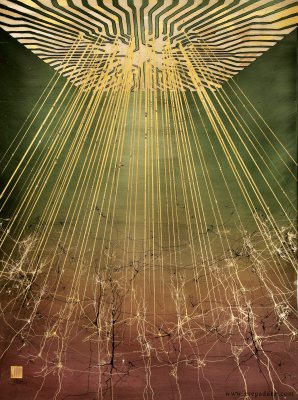
Marlene Cohen is a Professor in the Department of Neurobiology at the University of Chicago, where she leads the Cohen Lab as part of the Neuroscience Institute. Her research focuses on understanding how visual information is encoded in the brain and how cognitive processes like attention influence perception and decision-making. She employs a multidisciplinary approach combining electrophysiology, psychophysics, and computational modeling to investigate neural population coding across different stages of the visual pathway. Dr. Cohen's research interests center on visual neuroscience, particularly how the brain uses visual information to guide decisions. Her work examines how attention modulates neural activity to prioritize relevant information, how cognitive states affect perceptual abilities, and how populations of neurons collectively represent visual stimuli. She investigates these questions using single and multi-electrode recordings in non-human primates performing visual tasks, providing insights into the neural mechanisms underlying flexible behavior and perception. A key aspect of her research involves understanding how correlated variability among neurons affects information processing and behavioral performance. Analysis of Dr. Cohen's recent publications reveals a strong focus on neural population coding, attention mechanisms, and the relationship between neural activity and behavior. Her work increasingly incorporates topological and mathematical approaches to understand neural representations, while maintaining a strong foundation in experimental neuroscience. A consistent theme across her research is how cognitive processes like attention reshape neural representations to support flexible behavior, with particular emphasis on how information is multiplexed and processed across different cortical areas. Scientific Awards: Eppendorf winner (2012) Dr. Cohen has secured significant research funding as Principal Investigator on multiple NIH grants, including R01EY034723 (2022-2025), R01NS121913 (2021-2026), R01EY022930 (2013-2024), R00EY020844 (2010-2015), and K99EY020844 (2010-2011). These grants support her research on neuronal population coding, attention mechanisms, and the neural basis of flexible behavior. Her work demonstrates how attention improves performance by reshaping stimulus representations and reducing interneuronal correlations. The Cohen Lab at the University of Chicago employs a combination of electrophysiological recordings, behavioral experiments, and computational modeling to investigate how visual information is processed in the brain. The lab's work has been recognized through artistic representations such as "Deciphering Spikes" by Greg Dunn, which visually interprets the lab's research on neural coding and attention, depicting how attention affects neuronal firing patterns with higher fidelity on the attended side of the visual field.
Marco Carli is a Full Professor at the Department of Industrial, Electronic, and Mechanical Engineering, Roma Tre University, Italy. He holds a Laurea in Telecommunication Engineering from Università degli Studi di Roma 'La Sapienza' and a Ph.D. from Tampere University of Technology. His research focuses on digital signal and image processing applied to multimedia communications, including digital watermarking, multimedia quality evaluation, and information security. He has led projects such as EHEM (medieval architecture modeling), ISEEYOO (AI-based anomaly detection), and INSECTT (secure IoT-AI systems). Carli serves as an Associate Editor for IEEE Transactions on Image Processing and Area Editor for Signal Processing: Image Communication. He is an IEEE Senior Member. His work spans over 55 journal publications and numerous conferences, addressing topics like immersive VR applications, cybersecurity, and perceptual quality metrics. Education: Laurea in Telecommunication Engineering, Università di Roma 'La Sapienza', 1990s Ph.D. in Telecommunication Engineering, Tampere University of Technology, Finland Projects: EHEM: Digital modeling of medieval architecture and art ISEEYOO: Anomaly detection in Cyber-Physical Systems INSECTT: Secure IoT systems with AI Research Interests: Signal/image processing for multimedia Quality evaluation and watermarking Cybersecurity and IoT applications Awards: None explicitly listed Grants/Advising: Multiple EU-funded projects (e.g., ImmerSAFE, RESISTO, ATENA) and collaborations with industry partners like Thales Alenia Space.
Massimo Ruo Roch serves as an Associate Professor in the Department of Electronics and Telecommunications (DET) at the Polytechnic University of Turin, Italy. His academic appointment falls under the scientific disciplinary sector IINF-01/A - Electronics within Area 0009 - Industrial and Information Engineering. His research spans multiple cutting-edge domains including Artificial Intelligence, Internet of Things, Energy Efficiency, Smart Cities, Logic in Memory, and Nanomagnetics . His work aligns with several European Research Council sectors including Micro- and nano-systems engineering, Artificial intelligence, Computer architecture, and Distributed systems. Ruo Roch leads the VLSILAB research group and has developed significant expertise in smart embedded systems for lighting and IoT applications, as well as agritech with autonomous robot systems for grape harvesting. His publication record demonstrates consistent contributions to low-power computing, magnetic logic circuits, and error correction techniques dating back to the late 1990s. Among his notable recognitions are the National Innovation Award (2013) and the prestigious Prize of Prizes (2014) conferred by the President of the Italian Republic through the National Foundation for Technological Innovation COTEC. He actively supervises doctoral candidates including Fabrizio Mo (working on Molecular Sensors at the Nanoscale) and Andrea Mongardi (researching Bio-inspired sEMG-based embedded systems). His research portfolio includes multiple commercial contracts and patents related to test systems, data-driven architectures, and intelligent lighting devices.
Terence Broad is a Senior Lecturer at the Creative Computing Institute, University of the Arts London, and Acting Course Leader of the MSc Applied Machine Learning for Creatives. He is currently completing a PhD at Goldsmiths, University of London. His work bridges art and technology, focusing on generative AI, computational creativity, and the use of machine learning as artistic materials. His research has been exhibited globally at venues like The Whitney Museum of American Art and SIGGRAPH conferences. Education: MSci Creative Computing from Goldsmiths, University of London (2012–2016). Research interests include expressive manipulation of deep generative models, exploring the latent possibilities of 'black-box' systems, and ethical considerations in AI art. He has pioneered methods like 'Network Bending' for creative model customization. Key achievements include winning the ICCV Computer Vision Art Gallery Grand Prize (2019) and serving on the SIGGRAPH jury (2021). His work is part of Geneva's contemporary art collection and has been featured in media like The Independent and Vox. Professional activities include organizing conferences like IGGI 2020 and reviewing for journals like Leonardo and ACM Transactions on Image Processing. He actively participates in exhibitions, artist talks, and academic workshops.
Frédéric Dufaux is a CNRS Research Director at Université Paris-Saclay, affiliated with CentraleSupélec and the Laboratoire des Signaux et Systèmes (L2S), where he heads the Telecom and Networking hub. He holds an M.Sc. in Physics (1990) and a Ph.D. in Electrical Engineering (1994) from the Swiss Federal Institute of Technology (EPFL). With over 20 years of research experience, he previously worked at EPFL, MIT, and industry leaders including Compaq and Digital Equipment. His research spans: Fundamental video coding techniques and 3D video systems High dynamic range imaging and perceptual quality assessment Privacy-preserving video surveillance and multimedia content analysis Wireless video transmission and next-generation compression standards Recent publications focus on HDR compression optimization, semantic video coding using seam carving, distributed video coding with machine learning, and 3D video standardization, demonstrating consistent innovation in video processing architectures and perceptual quality enhancement. Awards & Honors: IEEE Fellow Two ISO Awards for contributions to JPEG 2000 wireless (JPWL) and JPSearch standards He leads multiple standardization initiatives in MPEG/JPEG committees and has held editorial leadership roles including Editor-in-Chief of Signal Processing: Image Communication (2010-2019). He chairs the EURASIP Technical Area Committee on Visual Information Processing and has organized major conferences including ICIP and MMSP.