University of Illinois Urbana-ChampaignUnited States
Junaid Rana is an Associate Professor at the University of Illinois at Urbana-Champaign, holding appointments in Asian American Studies, Anthropology, and the Unit for Criticism and Interpretive Theory. His research interrogates global capitalism, racism, diaspora formations, and social justice movements with a focus on South Asian and Muslim communities. Primary Affiliations: Department of Anthropology, Center for South Asian and Middle Eastern Studies Secondary Affiliations: Unit for Criticism and Interpretive Theory Education: PhD in Social Anthropology from University of Texas (no specific year listed). His work critically examines racial formations in global contexts, particularly through studies of anti-Muslim racism, U.S. empire, and labor migration. Key publications include Terrifying Muslims: Race and Labor in the South Asian Diaspora (2011) and edited volumes on racialized state violence. Awards include the 2013 AAASS Book Award and multiple fellowships from institutions like the American Institute of Pakistan Studies and the Illinois Program for Research in the Humanities. His research bridges academia and activism, emphasizing multiracial solidarity and decolonial methodologies. Recent work focuses on white supremacy's structural embeddedness within academic disciplines and state apparatuses. He has contributed to critical debates about Palestine solidarity in Asian American studies and pioneered pedagogical frameworks addressing anti-Muslim racism in higher education.
Bryan E. Penprase is a Professor of Physics and Astronomy and Vice President for Sponsored Research and External Academic Relations at Soka University of America. He holds a PhD from the University of Chicago and degrees from Stanford University. His research spans archeoastronomy, quasar absorption line spectroscopy, and liberal arts education in Asia. Penprase has served as Dean of Faculty at SUA, a founding faculty member of Yale-NUS College, and Chair of Physics and Astronomy at Pomona College. Education: PhD, Astronomy and Astrophysics, University of Chicago (1992) MS, Applied Physics, Stanford University BS, Physics, Stanford University Research interests include: Global liberal arts curriculum design Cultural astronomy Type Ia supernova dynamics His recent academic leadership includes developing SUA's interdisciplinary Life Sciences program, launching Teaching Innovation Grants, and organizing international conferences on STEM education. Penprase has authored/co-authored over 20 peer-reviewed articles and two books on astrophysics and education. Key administrative roles: Director, Yale-NUS Centre for Teaching and Learning Member, NUS Teaching Academy Co-founder, Liberal Arts Consortium for Online Learning (LACOL)
Baoyan Cheng is Professor and Graduate Chair in the Department of Educational Foundations at the University of Hawaiʻi at Mānoa’s College of Education. She specializes in comparative and international education, with particular attention to Chinese education systems, global student mobility, and equity in higher education. Education Ed.D. International Education, Harvard University (2007) Ed.M. International Education, Harvard University (2002) M.A. International Education Policy, University of Maryland, College Park (2001) M.A. English Language and Literature, Wuhan University (1999) B.A. Wuhan University of Technology (1996) Research Interests Her research interrogates how globalization reshapes education, focusing on Chinese students’ international mobility, equity in higher-education financing, and the interplay between Confucian and liberal-arts educational traditions. She examines cultural capital transmission through exchange programs and the sociocultural adaptation of “parachute kids” studying abroad. Publication Trajectory Across nearly two decades, Cheng’s scholarship spans policy analyses of student-loan schemes, empirical studies on Beijing middle-school students’ overseas aspirations, and philosophical explorations of Confucian cosmopolitanism in liberal-arts curricula. Recent work couples large-scale surveys with qualitative accounts to illuminate how transnational education shapes identity, citizenship, and social stratification. Books & Major Works The New Journey to the West: Patterns of Chinese Students’ International Mobility (2020, with Lin & Fan) Student Loans in China: Efficiency, Equity and Social Justice (2011) Presentations & Leadership As Graduate Chair, she mentors doctoral students, directs thesis committees, and organizes research-methods workshops. She has delivered keynote addresses at CIES, PESA, and AERA conferences, and maintains active collaborations with scholars in China, Japan, and Slovenia.
Jih-Fei Cheng is Associate Professor and Chair of the Department of Feminist, Gender, and Sexuality Studies at Scripps College, where he teaches and researches at the intersection of science, media, surveillance, and social movements. He holds a PhD in American Studies and Ethnicity with an emphasis in Visual Studies from the University of Southern California, an MA in Asian American Studies from UCLA, and a BA in Communication from UC San Diego. His interdisciplinary scholarship engages feminist, queer, and decolonial theories to analyze the political economies of virology, global health, and racial capitalism. His research centers on the historical and transnational entanglements of science, empire, and social justice. Key areas include the institutionalization of queer politics, the geopolitics of HIV/AIDS, and the racialized foundations of virology. His co-edited volume AIDS and the Distribution of Crises (Duke UP, 2020) rethinks the pandemic as a network of overlapping crises shaped by colonialism and neoliberalism. He is currently working on a book project titled Materialist Virology , which historicizes virology within Euro-American empire. Cheng’s recent publications span journals such as History and Technology , Radical History Review , and GLQ , with 2025 articles on financial contagion and reservoirs signaling his continued engagement with interdisciplinary frameworks linking finance, disease, and history. His work often collaborates with artists and activists, exemplified by writings on Candice Lin’s art and co-organized dialogues on care and intravention during the pandemic. He has been recognized with multiple awards, including the Lavender Graduation Award (2023, 2016), Professional Development Grants (2019–2020, 2016–2017), and fellowships from USC and the American Antiquarian Society. His teaching and service reflect a deep commitment to LGBTQIA inclusion, racial justice, and community-based scholarship. Lavender Graduation Award for providing safe and inclusive spaces for LGBTQIA students, Queer Resource Center, The Claremont Colleges (2023) Professional Development Networks Grant at The Claremont Colleges (2019–2020) Diversity Teaching Award Nominee, The Claremont Colleges (2018) EnviroLab Asia Research and Conference Award (2017–2018) Lavender Graduation Award (2016) Professional Development Networks Grant (2016–2017) Research Fellow, Summer Institute for the Center for Historic American Visual Culture, American Antiquarian Society (2014) Visual Studies Summer Research Award, USC (2014) New Directions Fellow, USC Center for Feminist Research (2011–2012) Tritia Toyota Fellowship (2001–2002) Cheng has advised and collaborated with numerous scholars and activists, though no formal advisees are listed. His work is deeply rooted in community engagement, having previously worked in HIV/AIDS social services and served on the Board of Directors at the HIV League. He was managing editor of American Quarterly (2010–2013) and has taught at UCLA and Hunter College. His research is supported by interdisciplinary networks and collaborative projects, including digital humanities initiatives and art-theory praxis. He is involved in multiple collaborative research and publishing projects, often working with artists like Candice Lin and scholars such as Alexandra Juhasz and Nishant Shahani. His recent special issue on 'Reservoirs' brings together scholars from anthropology, media studies, and philosophy to rethink historical and ecological crises. His lab-like collaborative environments include feminist media praxis collectives and interdisciplinary workshops on crisis, care, and decolonial knowledge.
University of California, Los AngelesUnited States
Dalei Wang is an Associate Professor at the School of Educational Sciences, Xinyang Normal University, with a focus on comparative education between China and global systems. He has twice served as a Visiting Scholar at UCLA's Asia Pacific Center (2009-2010, 2017-2019), where he studied Massive Open Online Courses (MOOCs) and their impact on teacher professional development. His career spans over a decade at Xinyang Normal University, where he supervises master's students and teaches courses like Education , History of Chinese Education , and Effective Teaching . Research Interests : Dalei Wang’s work bridges Teacher Education , MOOCs , and cross-cultural educational policies . His projects include analyzing MOOC-driven reforms in university credit systems, digital badge applications for K-12 teacher development, and the integration of the ‘Dual Tutor System’ in Henan’s educational framework. His 2021 project on ‘New Liberal Arts’ explores strategies for cultivating globally competent talents. Academic Contributions : His 2011 monograph Policy Research on Professional Development of Primary and Secondary School Teachers in the Republic of China received a Special Prize from the Provincial Department of Education. He has also secured six first/second prizes for his research on educational reforms. His publications highlight MOOCs’ role in reshaping higher education and comparative analysis of teacher compensation policies. Scientific Awards 2012 Special Prize for Educational Achievements (Provincial Department of Education) 6 first and second prizes from the Henan Provincial Department of Education
Dr. Haeryun Choi is a full-time faculty member in the College of Education, Information and Technology at Long Island University (LIU). She holds a Ph.D. in Philosophy of Education from the University of Illinois at Urbana-Champaign and teaches undergraduate and graduate courses in philosophy of education, foundations of education, and contemporary philosophy of education. Her educational background includes a B.A. from Seoul National University (South Korea), an M.Ed. from the State University of New York at Buffalo, and a Ph.D. from the University of Illinois at Urbana-Champaign. Dr. Choi's research centers on Socrates, Rousseau, moral education, aesthetic and arts education, and ethnic identity. She explores philosophical and ethical dimensions of teaching, democratic learning environments, and the role of art and dialogue in education. Her work often bridges classical philosophy with contemporary educational challenges such as globalization, digital learning, and racial identity. Her recent publications and presentations reflect a strong trend in integrating philosophical inquiry with practical educational policy, particularly in arts integration and multicultural understanding. She has contributed to journals like Teachers College Record and Arts Education Policy Review , and presented at major conferences including AERA, PES, and AESA. Scientific Awards and Grants: National Endowment for the Humanities (NEH) grant (2005–2009) for developing a website using Rembrandt’s art in education Consultant on a Department of Justice-funded project (2006) on aesthetic education and academic skills Dr. Choi is actively involved in advising academic discourse through her roles in professional organizations. She serves as treasurer and on the program proposals committee for the Mid-Atlantic States Philosophy of Education Society (MASPES) and as a member of the yearbook review board for the South Atlantic Philosophy of Education Society (SAPES). While no formal advisees are listed, her collaborative projects suggest mentorship and leadership in research teams focused on curriculum innovation and diversity in education. She has contributed to several research teams and projects, particularly those centered on aesthetic education and digital humanities, including the 'Teaching Rembrandt in America' initiative. These efforts highlight her engagement with interdisciplinary, grant-funded educational research aimed at enriching teacher training and student learning in diverse urban settings.
Mangala Subramaniam is a Professor in the Department of Sociology at Purdue University , affiliated with the College of Liberal Arts. Her research spans global social movements, gendered inequalities, caste-class intersections, and the impact of neoliberalism on marginalized groups, with a focus on South Asia. Ph.D. - University of Connecticut M.A. - University of Pennsylvania Her work examines gender, caste, and class in the context of collective action, state power, and globalization. She has published extensively in journals such as International Sociology and Gender & Society , and authored the monograph The Power of Women's Organizing (2006). Current projects include analyzing HIV/AIDS policy in India and gender dynamics in U.S. veterinary medicine. Her recent research in 2022 focuses on leadership in higher education , emphasizing racial and gender equity, institutional diversity, and emotional labor in academic advising. Themes include anti-racism , transformational leadership , and community engagement in environmental justice. Scientific Awards : College of Liberal Arts Dean’s Fellow Subramaniam’s scholarship bridges transnational feminism and neoliberal critiques , with a commitment to social justice and institutional reform. She collaborates with interdisciplinary teams to address systemic inequities in academia and beyond.
Urmitapa Dutta serves as Associate Professor in the Department of Psychology within the College of Fine Arts, Humanities and Social Sciences at the University of Massachusetts Lowell. Her work centers on critical community psychology and decolonial praxis, with deep engagement in Northeast India and U.S. communities. Education Ph.D. in Clinical Community Psychology, University of Illinois - Urbana-Champaign M.A. in Clinical Psychology, University of Delhi B.A. in Psychology, University of Delhi Dr. Dutta's research interrogates normalized everyday violence (direct, structural, and cultural) through Global South feminist frameworks. Her scholarship develops "everyday peace" interventions, focusing on structural violence, gender-based oppression, and decolonial resistance. She employs critical qualitative methodologies to center marginalized voices, particularly youth and Miya communities in Northeast India, challenging hegemonic knowledge production. Her publications (2010-2024) reveal consistent focus on decolonizing psychology , with increasing emphasis on epistemic resistance and community-led liberation. Key trends include retheorizing structural violence through postcolonial lenses, developing peace pedagogy frameworks, and documenting Miya poetry as decolonial praxis. The work spans critical ethnography, community-based action, and pedagogical innovation. Scientific Recognition Faculty Award for Teaching Excellence (2015) Dr. Martin Luther King Distinguished Service Award (2015) Illinois Distinguished Qualitative Dissertation Award (2014) Best Dissertation Award in Community Psychology (2013) Exemplary Diversity Scholar (2012) Dr. Dutta secures significant funding for community-engaged research, including National Research Foundation grants on Southern citizenship negotiations and UMass Lowell projects on youth perspectives in Lowell. Her collaborative approach partners with Miya communities to co-create resistance against coloniality, while campus initiatives foster diversity through living-learning communities. Current work emphasizes epistemic justice and centering Global South knowledge producers. She actively collaborates through the Everyday Peace Project and with Northeast India grassroots organizations, developing community-based frameworks that transform structural violence into liberatory praxis while documenting resistance narratives.
Cynthia Werner is a Professor and Senior Executive Associate Dean for Faculty Affairs at Texas A&M University's College of Arts & Sciences. She holds a PhD from Indiana University (1997) and has conducted extensive research in post-Soviet Central Asia, focusing on nuclear testing impacts, migration patterns, and gender dynamics. Her work bridges anthropological field studies with institutional equity initiatives. She teaches courses in cultural anthropology, applied ethics, and ethnographic methods. Education: PhD in Anthropology, Indiana University, 1997 Her research interests include economic anthropology, gender studies, and fair academic practices. Recent projects examine faculty challenges during the pandemic and biases in tenure review processes. She collaborates with institutions like Macalester College on migration studies and linguistic analysis of promotion letters. Her publications span topics from bride kidnapping in Central Asia to the effects of repatriation policies. She leads Texas A&M's ADVANCE program, advocating for equitable academic policies. Current advisees include Byeibitgul Khaumyen, Kevin Johnson, and others. Key grants include studies on pandemic impacts (100-participant interviews) and linguistic analysis of promotion reviews. She co-directs projects on Kazakhstan's nuclear legacy and Mongolian Kazakh transnational identities.
Robert Fanuzzi is an Associate Professor of English at St. John’s University, affiliated with the College of Liberal Arts and Sciences. He specializes in African American literature, trans-Atlantic slavery, French imperialism, and the intersections of race and history. His research includes projects like Abolition’s Public Sphere and a forthcoming book on French colonialism’s impact on American democracy. He co-founded the Staten Island Alliance for Interdisciplinary Studies and directs the American Studies Interdisciplinary Minor. Education: Ph.D., 1993, Northwestern University (English) M.A., 1987, Northwestern University (English, Presidential Fellow) B.A., 1983, College of William and Mary (English and Philosophy, magna cum laude) Research & Engagement: Dr. Fanuzzi’s work bridges academia and community through initiatives like 30000 Degrees: College Readiness for a Stronger Staten Island and Sandy Ground at St. John’s: Faces of the Underground Railroad , which received a Humanities Action Grant. He emphasizes interdisciplinary approaches to food justice, urban design, and public history. Awards & Grants: St. Vincent de Paul Teacher-Scholar Award Vincentian Institute for Social Action Award New York Council for the Humanities Action Grant (2016) Teaching & Outreach: Known for engaged courses on critical race theory, urban studies, and food justice, Fanuzzi advocates for the public purpose of higher education. His collaborations with organizations like the Sandy Ground Historical Society highlight his commitment to community-driven scholarship.
Marc Rodriguez is an Associate Professor of History at Portland State University , College of Liberal Arts and Sciences . He serves as the Managing Editor of the Pacific Historical Review , where he has expanded the journal's international reach through collaborations in Australia, Japan, and Southeast Asia. Education: JD, University of Wisconsin Law School M.A. and Ph.D., Northwestern University BA, University of Wisconsin-Milwaukee Research Interests Rodriguez specializes in Chicanx/Latinx history , social movement history , and migration studies . His work explores the intersection of ethnic politics and US legal history , with a focus on protest movements and transnational Chicano activism . Scientific Awards NACCS Tejas Nonfiction Book Award (2011) for The Tejano Diaspora Advisory and Editorial Roles He has served on the American Historical Association's John Lewis Award Committee and as Director of the Civil Rights Heritage Center at Indiana University South Bend. His editorial work includes Repositioning North American Migration History and Migration in History (co-edited with Anthony Grafton).
Dr. Andrew M Clark is a Professor of Communication at the University of Texas at Arlington, specializing in broadcasting and international media. He holds leadership roles as QEP Director and Associate Director of the Center for Research on Teaching and Learning Excellence. Clark earned his M.A. and Ph.D. in Mass Communication from the University of Florida. His professional background includes radio and television broadcasting across New Zealand, England, and the U.S. He is President of the Texas Association of Broadcast Educators and Vice Chair of the Broadcast Education Association’s International Division. Education: Ph.D. in Mass Communication (University of Florida, 2003) Professional Roles: Radio Broadcaster, Television Reporter Research focuses on international broadcasting, propaganda, and public opinion. Key interests include media policy, war propaganda analysis, and the evolution of global radio. His teaching spans Radio Production, Communication Law, and Qualitative Research Methods. Clark has authored over 20 peer-reviewed articles and book chapters, emphasizing media’s role in cultural diplomacy and technological innovation. He has received awards for teaching and research excellence, including the THECB Star Award (2022) and multiple Best Paper recognitions. Clark’s grants include projects on international broadcasting efficacy, AI in education, and engineering curriculum sustainability. He advises numerous graduate and undergraduate students and actively serves on university and national committees, contributing to institutional assessment, eLearning, and academic policy. His work bridges academic research with practical media applications, particularly in leveraging technology for educational innovation and addressing global communication challenges.
Steven M. Vose serves as an Assistant Professor holding the Bhagwan Suparshvanatha Endowed Professorship in Jain Studies within the History Department at the University of Colorado Denver. This specialized position supports research and teaching on Jain history, philosophies, art, and culture, along with courses aligned with Jain values including nonviolence, conflict resolution, social justice, human rights, sustainability, and animal rights. His academic credentials include a Ph.D. in South Asia Studies from the University of Pennsylvania (2013), M.T.S. from Harvard University Divinity School (2006), and B.A. in Religious Studies from St. Lawrence University (2001), where he graduated Summa Cum Laude and as a Phi Beta Kappa member. Vose specializes in the cultural and religious history of South Asia from the late medieval Islamicate era (ca. 1200-1700) to present. His research examines relationships between religious communities and political powers, with particular focus on mercantile caste communities from western India who practice Jainism. He also investigates how neoliberalism and social media foster religious and ethno-nationalist politics in contemporary South Asia, exploring implications for regional democracy. His theoretical interests bridge memory studies, literary theory, historiography, and material culture analysis. His publications reveal consistent scholarly engagement with Jain intellectual culture across historical periods, connecting medieval Islamicate interactions with contemporary diaspora communities. This interdisciplinary approach demonstrates how religious traditions adapt to changing political contexts while maintaining core identities, spanning historical analysis, religious studies, and digital media impacts. Edward C. Dimock, Jr. Book Prize in the Indian Humanities from the American Institute of Indian Studies (for "Reimagining Jainism in Islamic India") Through his endowed professorship, Vose supports undergraduate and graduate students in Jain studies and related fields. His teaching includes courses on nonviolence from historical to contemporary contexts (including #BlackLivesMatter), race and gender in religious nationalisms, world religions, and Asian philosophies. His research is advanced through two major book projects examining Jain intellectual history during the Delhi Sultanate period and contemporary Jain organizations in diaspora communities. Vose's work connects academic scholarship with societal issues through exploration of nonviolence traditions and religious pluralism, contributing to interdisciplinary conversations about religious communities' roles in shaping historical and contemporary political landscapes.
Aaron Kingsbury is an Associate Professor in the Department of Arts and Sciences at Maine Maritime Academy. His work integrates geospatial technology, sustainable development, and agricultural innovation with a strong regional focus on the Asia-Pacific. He maintains active international collaborations, particularly in Asia and North Africa. Education: B.A. in German Literature and the Liberal Arts, George Washington University M.A. in Geography, Simon Fraser University, Canada M.S. in International Ecological Agriculture, University of Kassel, Germany Ph.D. in Geography, University of Hawaii, Manoa A.S. in Small Vessel Operations, Maine Maritime Academy (In Progress) Dr. Kingsbury's research centers on the application of geospatial tools and sustainable agricultural practices in development contexts. His work emphasizes community-based solutions, technology transfer, and cross-cultural educational partnerships. He has extensive field experience across Japan, Vietnam, Taiwan, and Indonesia, where he conducted research and teaching under prestigious fellowships. His recent academic engagements include a U.S. Fulbright Specialist appointment in Indonesia (2024) and a Fulbright Scholar award in Vietnam (2021/22), reflecting his deep commitment to international scholarship and capacity building. He is currently co-designing courses with colleagues at Galala University in Egypt that incorporate virtual student exchange, promoting global learning experiences. Scientific Awards and Honors: Taiwan Fellow (2015) U.S. Fulbright Scholar (2021/22, Vietnam) U.S. Fulbright Specialist (2024, Indonesia) Dr. Kingsbury is actively involved in mentoring and academic leadership, particularly in fostering international research and educational collaborations. While specific grant details are not listed, his Fulbright and Taiwan Fellow appointments represent significant externally funded research opportunities. His ongoing collaboration with Galala University suggests active grant or curriculum development work in global education. He is also advancing his maritime operational skills through coursework at Maine Maritime Academy, reflecting a unique interdisciplinary trajectory. Dr. Kingsbury maintains a professional website at https://www.aaronkingsbury.net and is accessible during office hours in Leavitt Hall. His work exemplifies the integration of geographic science, sustainable development, and global engagement in higher education.
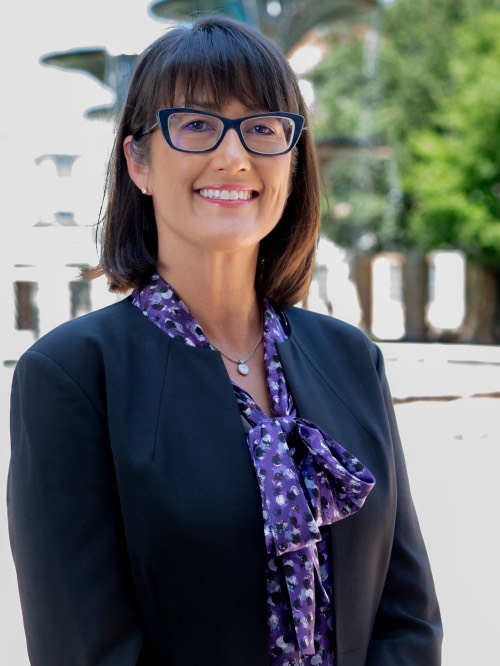
Carrie Liu Currier is a Professor in the Department of Political Science at Texas Christian University (TCU) within the AddRan College of Liberal Arts. She specializes in Asian politics, comparative politics, feminist international relations theory, international relations, and global political economy. Her research explores: China's economic reforms and globalization adaptation China's foreign policy toward the Middle East China's energy policy and resource acquisition Societal impacts of China's one-child policy Entrepreneurship politics in Taiwan and China Asian Pacific Americans in higher education She has conducted survey research in China and Taiwan and has published in journals like American Journal of Chinese Studies and Journal of Women Politics and Policy. Currently, she serves as director of the National Consortium for Teaching about Asia (NCTA) in Texas and President of TCU's Phi Beta Kappa chapter.