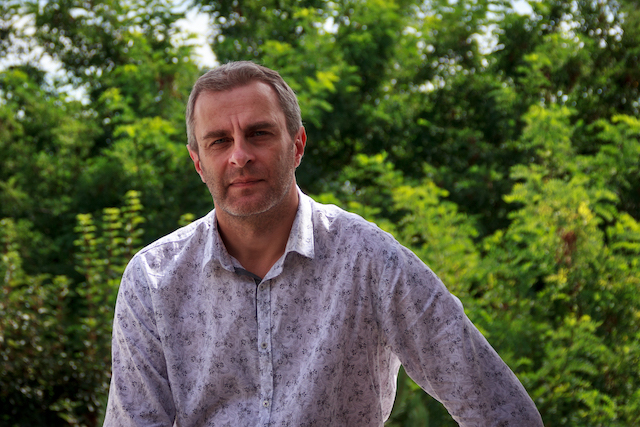
Jon Andoni Duñabeitia is a Full Professor at the School of Languages and Education of Universidad Nebrija in Madrid. He serves as Director of the Centro de Investigación Nebrija en Cognición (CINC) and the International Chair in Cognitive Health . With an h-index of 43 (Scopus), he has published 170+ articles across psycholinguistics, multilingualism, cognitive training, and virtual reality applications in education. His research examines how language processing interacts with cognitive load, emotional modulation, and technological innovation. Principal Investigator for 8+ projects funded by Spanish Government, Basque Government, BBVA Foundation Associate Editor and Editorial Board Member of high-impact journals Recognized among Spain's top 3% scientists across all disciplines Recent publications span topics including: Second-language reading dynamics in VR environments Multilingual cognitive interactions in neurological conditions Emoji/typographic effects on word processing Computerized cognitive assessment and training systems He actively contributes to scientific meetings as invited speaker across Europe, Asia, and Americas. His work bridges basic research in psycholinguistics with applied technologies for cognitive health.
Nikitas Karanikolas serves as Professor in the Department of Informatics and Computer Engineering at the University of West Attica since March 2018, following a distinguished career progression from Assistant Professor (2004) to Associate Professor (2010) and Professor (2014) at the Technological Educational Institute of Athens. His professional trajectory includes significant roles as Systems Head of TEI Athens Library (1996-1997) and Chief of Informatics at Aretaieio University Hospital (1997-2004), alongside leadership positions in the Greek Computer Society as Board Member (2004-2006) and Secretary General (2006-2008). His academic foundation includes: Bachelor's in Statistics and Informatics from Athens University of Economics and Business (1988) PhD in Applied Informatics from Athens University of Economics and Business (1994) with thesis "Technological and Linguistic approaches in Natural Language Understanding" Dr. Karanikolas maintains an exceptionally broad research portfolio spanning Natural Language Processing , Computational Linguistics , Medical Informatics , and Green Energy systems. His work consistently bridges theoretical computational frameworks with practical healthcare applications, particularly evident in recent dementia care technologies and Greek language processing systems. The interdisciplinary nature of his research connects computational phonology with medical diagnostics and e-government applications. Analysis of his 15 most recent publications reveals a pronounced shift toward AI-driven healthcare solutions (particularly dementia patient monitoring), multilingual NLP systems (Greek and Polish), and urban safety applications . His work demonstrates consistent methodology development in ontological representations and multimodal fusion techniques, with increasing emphasis on real-world clinical and governmental implementations since 2023. No scientific awards were documented in the source materials. With 16 journal papers, 68 conference publications, and six authoritative Greek university textbooks, Dr. Karanikolas maintains an active research trajectory. His advising capacity is evidenced through extensive publication mentorship, particularly in medical informatics and NLP projects. While specific grant details are unavailable, his hospital information system implementations and textbook authorship suggest successful research funding acquisition. Current research activities focus on multimodal aggression prediction systems for dementia care, Greek language ontological frameworks, and urban navigation safety applications, primarily conducted through the University of West Attica's informatics infrastructure.
Rory Turnbull is a Senior Lecturer in Phonetics and Phonology at Newcastle University’s School of English Literature, Language and Linguistics. His career spans roles as Assistant Professor at the University of Hawai‘i at Mānoa and Postdoctoral Researcher at the Laboratoire de Sciences Cognitives et Psycholinguistique in Paris. He holds a PhD in Linguistics from Ohio State University and an MA (Hons) in Linguistics and English Language from the University of Edinburgh. Education PhD in Linguistics, Ohio State University (2015) MA (Hons) in English Language and Linguistics, University of Edinburgh (2009) Rory’s research bridges phonetics, phonology, and psycholinguistics, focusing on how frequency, predictability, and usage-based factors shape linguistic sound structures. His work emphasizes cross-linguistic studies to address limitations in single-language research, with projects on lexical organization, prosodic contrasts, and their perception-production dynamics. His recent publications highlight methodological pluralism, including experimental phonetics, computational models, and theoretical phonology. Topics span phonological networks, dialectal variation, L2 sound processing, and prosody’s interaction with cognition. Rory co-convenes Newcastle’s Cross-Faculty Phonetics and Phonology Research Group and coordinates the Language and Linguistics Seminar Series. He serves on the editorial board of Glossa Psycholinguistics and contributes to open science initiatives.
Laura Becker is an Assistant Professor at the Department of General Linguistics, University of Freiburg. Her research focuses on linguistic typology, quantitative methodology, and the role of coding efficiency in grammatical structures. She holds a PhD exploring article systems across languages and has contributed to cross-linguistic studies on syntax, morphology, and sociolinguistics. Her work emphasizes statistical rigor and computational tools, such as the glottospace R package for geospatial linguistic analysis. Recent projects include investigating phoneme inventories in Polynesian languages and socio-linguistic influences on conditional constructions. Publications highlight her expertise in morphosyntax, language contact, and corpus-based approaches. No scientific awards are explicitly mentioned in the provided materials. Dr. Becker has advised no recorded students in the available data and has not listed specific grants or labs. Her current research trends prioritize quantitative frameworks to address typological and evolutionary questions in linguistics.
Dr. Muhammad Humayoun is a Senior Lecturer at Karlstad University, Sweden, specializing in informatics education and computational linguistics research. He holds a Ph.D. from University of Grenoble Alpes (2012) and M.Sc. from Chalmers University (2006). His academic career spans over 15 years across Pakistan and Sweden, including teaching roles at COMSATS University, University of Central Punjab, and Higher Colleges of Technology. Research Focus: His work centers on NLP applications for under-resourced languages like Urdu/Punjabi, including text summarization, abusive language detection, and formalization of mathematical texts. He has developed linguistic resources (corpora, lexicons) and contributed to plagiarism detection systems in programming courses. Teaching Contributions: Designed and taught over 15 courses across multiple universities, including advanced programming, AI, and cloud computing modules. Currently teaches graduate-level courses like 'Legal Tech, AI and Rules-as-Code' and undergraduate software engineering courses at Karlstad University. Awards: Recognized for Urdu threat detection system (3rd place, 2021) and top rankings in Urdu fake news competitions. His work on Urdu summarization corpora has been widely cited in computational linguistics research.
Lev Michael is a Professor of Linguistics at the University of California, Berkeley, in the Department of Linguistics within the College of Letters and Science. His research focuses on anthropological linguistics, typology, and the documentation and description of Amazonian languages, particularly in Peru. He is actively engaged in fieldwork, language revitalization, and the study of South American historical and contact linguistics. Research Interests: Lev Michael's work spans a wide range of topics in linguistic anthropology and descriptive linguistics. He specializes in the documentation of endangered Amazonian languages such as Iquito and Nanti, examining grammatical phenomena like evidentiality, negation, and subject-verb agreement. His research integrates fieldwork with computational methods, particularly in phylogenetic classification of language families like Tupí-Guaraní and Arawakan. He is deeply committed to language revitalization and community-based lexicography, contributing to school dictionaries and literacy materials. Recent Research Trends: His recent publications (2017–2022) reflect a strong emphasis on lexicography, computational phylogenetics, and the sociocultural dimensions of language use. Articles span from dictionary compilation to Bayesian modeling of language evolution, demonstrating a unique blend of traditional fieldwork and cutting-edge quantitative analysis. There is a consistent focus on Arawakan and Tukanoan languages, evidentiality, poetic structure in oral traditions, and the historical relationships among South American language families. Scientific Contributions: Co-developer of lexicographic resources for Iquito and other endangered languages Pioneer in applying computational phylogenetics to South American language classification Contributor to the understanding of evidentiality and reported speech in Amazonian languages Advocate for language revalorization and community-led documentation Advising and Grants: While specific students and funded grants are not listed in the provided text, Lev Michael frequently collaborates with students and community members on documentation projects. His extensive co-authorship with scholars like Christine Beier and Jaime Pacaya Inuma suggests a collaborative, team-based research model involving students, local speakers, and interdisciplinary partners. His work likely involves external funding given the scale of fieldwork and publication output, though specific grants are not mentioned. Labs and Research Teams: Lev Michael is associated with the Fieldwork and Language Documentation group and the Language and Social Context faculty at UC Berkeley. His collaborative projects involve multidisciplinary teams including linguists, anthropologists, and native speaker consultants, particularly from Peruvian Amazonian communities. He contributes to digital language archiving and lexicography using tools like FLEx (FieldWorks Language Explorer), indicating involvement in computational language documentation initiatives.
Tonio Sebastian Richter is a Professor of Egyptology with a focus on Coptology at the Free University of Berlin's Department of History and Cultural Studies, Institute of Egyptology. He holds the position of Academy Professor at the Berlin-Brandenburg Academy of Sciences and Humanities and has served as the head of several major research projects including the DFG long-term project "Database and Dictionary of Greek Loanwords in Coptic" (DDGLC) and the Academy project "Structures and Transformations of the Vocabulary of the Egyptian Language. Text and Knowledge Culture in Ancient Egypt." His educational background includes a Magister Artium in Egyptology and Religious History from the University of Leipzig (1996), followed by a doctorate in 1999 and habilitation in 2005, both based on works concerning Coptic legal documents and their linguistic features. Richter has held academic positions at the Universities of Leipzig, Heidelberg, and Berlin, including serving as a Heisenberg Fellow of the German Research Foundation from 2011-2014. Richter's research interests span the history and cultural history of Egypt during the Roman, Byzantine, and early Islamic periods, with particular focus on Coptic language and texts. His work examines documentary texts including papyri, ostraca, and inscriptions that illuminate economic, legal, and social history. He has made significant contributions to the study of Coptic legal documents, magical and alchemical texts, and language contact phenomena between Egyptian/Coptic and Greek/Arabic. His research has revealed important insights into Coptic alchemical papyri, which represent some of the earliest witnesses to "the divine art" and enrich our knowledge of the development of late antique science and its transmission from Greek to Arabic. Richter has also pioneered work on language change and contact in the Egyptian-Coptic language, particularly regarding Greek and Arabic loanwords. Academy Professor, Berlin-Brandenburg Academy of Sciences and Humanities (2015-present) Professor of Egyptology with focus on Coptology, Free University Berlin (2014-present) Heisenberg Fellow, German Research Foundation (2011-2014) Extraordinary Professor, University of Leipzig (2011) Richter has received numerous scientific awards including the Heisenberg Fellowship from the German Research Foundation (2011) and the Friedrich-Weller Prize from the Saxon Academy of Sciences (2000). He serves on the scientific advisory boards of several prestigious institutions including the International Thesaurus Commission of the Thesaurus Linguae Latinae and the Scientific Advisory Board of the German Archaeological Institute. As an educator, Richter has been a main instructor for multiple International Summer Schools in Coptic Papyrology and has organized numerous academic conferences and workshops on Coptology, papyrology, and Egyptology. His work bridges linguistic, historical, and archaeological approaches to understanding ancient Egyptian civilization through its textual remains.
Heather Froehlich is an Assistant Specialist in Research Engagement at the University of Arizona Libraries, specializing in digital humanities and corpus linguistics. She holds affiliations with Literature Faculty, English Applied Linguistics, and RCTE (Research, Creation, and Teaching Excellence). Her work bridges traditional literary studies with modern computational methods, focusing on early modern texts, Shakespearean drama, and gender representation. Her research interests include quantitative literary analysis, corpus-based studies using tools like AntConc, and the integration of digital methods into pedagogy. Notable projects involve analyzing Aphra Behn’s works, transcribing recipe manuscripts, and exploring nuclear physics discourse through text corpora. Publications span topics from early modern drama’s social structures to postdoctoral labor advocacy. She actively promotes research data management and collaborates on interdisciplinary projects such as the Early English Books Online review and the Philosophical Magazine Nuclear Physics Corpus . Her contributions include advancing digital humanities pedagogy through EEBO-TCP integration in teaching and advocating for equitable academic labor practices via the Postdoctoral Laborers Bill of Rights .
Daniele Fusi is a Lecturer at the Department of Humanities, Ca' Foscari University of Venice, with a focus on Digital Humanities and Computational Philology. He teaches courses on XML databases and digital/public humanities, bridging classical studies with modern technology. University: Ca' Foscari University of Venice Department: Department of Humanities His research spans digital edition frameworks, metrical analysis, and XML markup for classical texts. Recent works explore AI applications in textual dynamics and forensic linguistic tools for legal corpora, demonstrating interdisciplinary approaches between humanities and computer science. Notable projects include: EpiSearch for ancient inscriptions Chiron framework for metrical analysis AttiChiari digital corpus He actively publishes in journals like Journal of Data Mining and Digital Humanities and Rivista di Cultura Classica e Medioevale , with over 20 years of contributions to digital philology, epigraphic databases, and computational linguistics.
Lucia Busso is a Researcher at Aston University, affiliated with the Research Centre for the Humanities and the Aston Institute for Forensic Linguistics within the College of Business and Social Sciences. Her research focuses on usage-based models of language, corpus linguistics, cognitive linguistics, and experimental methods applied to forensic and sociolinguistic contexts. She holds a PhD in Linguistics from Università di Pisa (2015–2018), awarded in 2019. Her work spans topics such as valency coercion in Italian, construction grammar, forensic linguistic analysis, and corpus-driven studies of media representation. Key areas include analyzing power dynamics in online communities, legal-lay language differences, and metaphorical discourse in pandemic reporting. She contributes to interdisciplinary projects, including the development of specialized corpora like CorIELLS and the Aston Forensic Linguistic Databank (FOLD). Busso’s research highlights the intersection of cognitive and corpus-based approaches, with recent studies emphasizing forensic applications, gender-based violence representation, and sociolinguistic patterns in Italian and English. Her methodologies integrate computational tools, experimental psychology, and qualitative discourse analysis. Her articles reflect a commitment to advancing linguistic theory while addressing real-world issues like media framing, legal language, and anonymous communication dynamics. She actively engages in public outreach, such as the CorpusCast podcast episode on forensic linguistics.
Thomas Rainsford is a Lecturer at the University of Stuttgart's Institute of Linguistics, Division of Romance Linguistics. His research focuses on historical Romance linguistics, particularly phonological change, morpho-syntax, and corpus development. He holds a PhD from the University of Cambridge and has held positions at ENS de Lyon and as a British Academy Post-Doctoral Fellow at the University of Oxford. Research interests center on: Diachronic evolution of French, Occitan, and Italian Prosodic changes and phonological annotation Lexical and morpho-syntactic aspects of motion events Historical corpus development with multi-layer annotation Publications demonstrate consistent focus on: Historical phonology and orthographic systems Syntactic change in medieval Gallo-Romance languages Corpus linguistics methodologies Computational approaches to historical texts Awards include the British Academy Post-Doctoral Fellowship. Current research involves leading a DFG-funded project examining motion events in French and Italian through lexical and syntactic change analysis. Developed the Old Gallo-Romance Corpus (OGR) with specialized phonological and metrical annotation layers.
Maria Moruz serves as a Researcher at the Department of Social Sciences and Humanities, Alexandru Ioan Cuza University of Iasi, a position she has held since February 2009. Her academic profile centers on Romanian linguistic research with strong interdisciplinary connections to biblical studies and computational methods. She earned her PhD from Alexandru Ioan Cuza University of Iasi in December 2009 with a dissertation analyzing phraseological units in parallel bilingual corpora, establishing her foundational expertise in comparative linguistics. Maria Moruz's research program integrates traditional philological scholarship with modern computational techniques . Her primary domains include Romanian linguistics , phraseology , and computational linguistics , with significant contributions to Biblical philology through critical editions of historical texts. She examines national specificity in phraseological units while developing linguistic resources for Romanian language processing , bridging historical textual analysis with contemporary NLP applications. Her publication trajectory reveals distinct thematic phases: early computational linguistics work (2004-2012) on Romanian lexical resources and question-answering systems evolved into specialized biblical philology research (2014-present) within the Monumenta linguae Dacoromanorum project. Recent publications focus on Romanian lexicography and biblical marginalia, demonstrating sustained engagement with both digital humanities methodologies and historical textual criticism. Maria Moruz has secured significant research funding as Project Director for a CNCSIS TD grant and served as a POSDRU postdoctoral researcher. Her collaborative work includes membership in the international "Widespread Idioms in Europe and Beyond" project and leadership in multiple Romanian linguistics initiatives. Project Director: CNCSIS TD grant POSDRU Postdoctoral Researcher Collaborator: "Widespread Idioms in Europe and Beyond" project Co-organizer: International Symposium "Explorations in the Romanian and European Biblical Tradition" Founding Member: Romanian Association of Biblical Philology and Hermeneutics She maintains active scholarly infrastructure through editorial work on the Monumenta linguae Dacoromanorum series and organization of specialized symposia, fostering interdisciplinary dialogue between computational linguists, philologists, and biblical scholars.
Professor Ann Parry Owen holds a Personal Chair at the Centre for Advanced Welsh and Celtic Studies (CAWCS) within the University of Wales, where she has worked since 1985. She leads the University of Wales Dictionary as Senior Editor and previously directed major research projects including the Poets of the Nobility series and the Guto’r Glyn AHRC-funded digital edition. Specializes in Medieval Welsh poetry (12th–15th century) Focuses on Welsh lexicography through historical manuscripts Co-investigator in Sacred Landscapes and Medieval Monasteries projects Her research combines Welsh language and grammar with digital edition creation , manuscript transcription, and place-name standardization . Notable contributions include editing the works of Cynddelw Brydydd Mawr and Guto’r Glyn, and leading the Guto’r Glyn website project. Scientific contributions include: AHRC grant recipient ( £900K , 2007) Fellow of the Learned Society of Wales Welsh Language Commissioner’s Place-Names Standardisation Panel member As Chief Editor of Studia Celtica and Modern Humanities Research Association (MHRA) Library board member, she bridges traditional scholarship with digital humanities , ensuring open access to Welsh cultural heritage through initiatives like Geiriadura.cymru .
Sam Scott is an Associate Professor in the Department of Computing and Software at McMaster University's Faculty of Engineering. He teaches undergraduate computer science and software engineering courses but does not supervise graduate students. His contact information includes phone number 905-525-9140 x22500 and email samscott@mcmaster.ca. Dr. Scott's research spans multiple interdisciplinary domains with primary interests in Natural Language Processing, Machine Learning, Cognitive Science, Philosophy of Language, and Computer Science Education. His scholarly work demonstrates a consistent trajectory from theoretical foundations in cognitive science and philosophy toward practical educational applications. He has made notable contributions to culturally responsive teaching approaches, particularly in incorporating Indigenous Ways of Knowing into computer science curriculum development. Analysis of Dr. Scott's publication history reveals an evolution from foundational work in natural language processing and philosophical inquiry toward innovative educational approaches. His recent publications show increasing focus on inclusive pedagogy, flexible assessment methods, and culturally relevant computing education. The interdisciplinary nature of his work bridges theoretical computer science with practical classroom applications. According to available information, Dr. Scott does not supervise graduate students. The VIVO database indicates no grants are currently listed for him, though the system note suggests this may represent only a small sample of his total professional activities. His teaching portfolio is extensive, covering core computer science and software engineering courses through 2025.
Emmanuel Morin is a Full Professor in Computer Science at the University of Nantes, France. He is affiliated with the Computer Science Department of Nantes Institute of Technology (IUT) and leads the Natural Language Processing (TALN) team at the Digital Sciences Laboratory of Nantes (LS2N UMR CNRS 6004). His research focuses on computational linguistics with particular emphasis on multilingualism and multimodality. His academic leadership includes serving as Head of the NLP team (2017-present), Co-responsible for the ATAL (Machine Learning and Natural Language Processing) option of the Computer Science Master (2017-present), and Director of the Nantes computer science training department (2014-present). He also co-edits the Traitement Automatique des Langues (TAL) journal and serves on the steering committee of ATALA since 2004. Current projects: Atlantic 2020, ALALA Project (2019-present), ANR ADDICTE (2017-present), and Atlanstic 2020 RAPACE Project (2016-present) Past projects: Labex CominLabs LIMAH (2014-2019), ANR CRISTAL (2012-2016), and European FP7-ICT TTC project (2010-2012) Professor Morin's research spans natural language processing with a focus on bilingual terminology extraction and comparable corpora analysis. His recent work (2020-2022) shows strategic expansion into medical informatics applications like FrenchMedMCQA, while maintaining his foundational work on domain adaptation of language models using graph-based networks. His publications demonstrate a consistent trajectory from early terminology extraction methods to contemporary applications in specialized language processing. He has supervised numerous PhD students, with current advisees including Kévin Espasa, Martin Laville, Merieme Bouhandi, and Antoine Caubrière. His past students have made significant contributions to the field of natural language processing, continuing his research legacy in academia and industry.