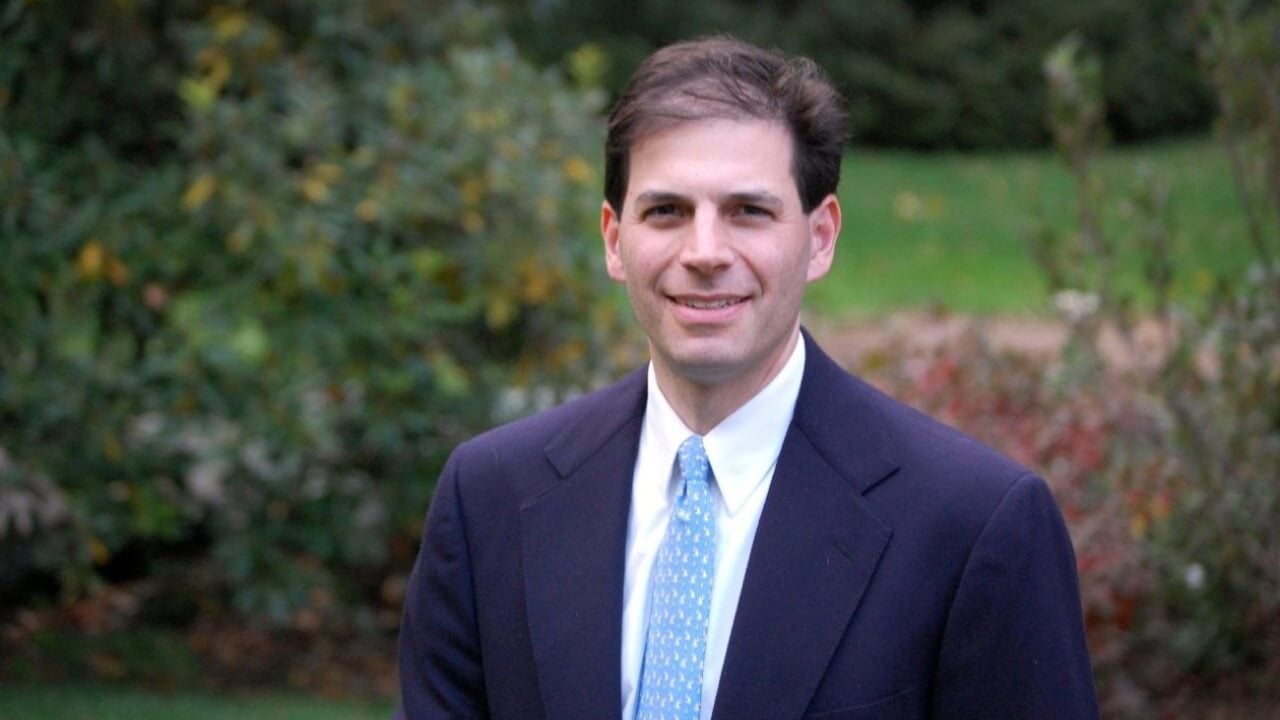
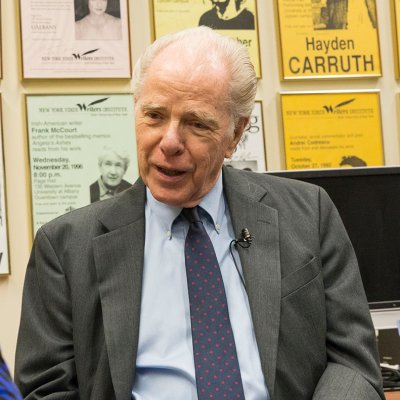
Jeffrey A. Cooper is a Professor of Law at Quinnipiac University School of Law , where he teaches courses in estate planning, wills and trusts, and taxation. He previously served as Associate Dean for Research and Faculty Development and is currently faculty adviser to the Quinnipiac Probate Law Journal . Education: AB from Harvard University, JD from Yale University, LLM from New York University Research Interests: His work focuses on tax policy , estate and gift taxation , and the intersection of federal tax law with state probate systems . He specializes in trust enforceability , uniform trust code , and historical analysis of tax legislation. Publications: Recent articles address perpetual trusts , state death tax decline , and curriculum reforms in estate planning education. His scholarship is widely published in national law journals and cited in casebooks. Scientific Awards: Academic Fellow, American College of Trust and Estate Counsel (ACTEC) Faculty Scholar, Quinnipiac University Professional Background: Before academia, Cooper practiced law for over a decade as a principal at Cummings & Lockwood, senior officer at United States Trust Company, and special counsel to Shipman & Goodwin. He also served as a senior adviser to Fiduciary Trust Company International.
Avi Loeb , the Frank B. Baird Jr. Professor of Science at Harvard University, is a leading astrophysicist and former Chair of Harvard's Department of Astronomy (2011-2020). He directs the Institute for Theory and Computation (ITC) and the Galileo Project (2021-present), while holding the Sackler Senior Professorship at Tel Aviv University. His research spans cosmology, black holes, interstellar objects, and the search for extraterrestrial life. Education: PhD in Physics from Hebrew University of Jerusalem (1986) Former Positions: Member of the Institute for Advanced Study, Princeton (1988-1993) Loeb's research interests include: Gravitational wave detection and interstellar object analysis Simulation hypothesis and cosmic reality Technological signatures beyond the Standard Model His recent publications focus on 3I/ATLAS , gravitational SETI, and AI alignment in space exploration. Awards include being named among TIME's 25 Most Influential People in Space (2012), 14 Most Inspiring Israelis (2020), and ranking #3 in global astronomical impact (2024). He chairs the Breakthrough Starshot Initiative and advises the National Academies' Board on Physics and Astronomy.
Jared M. Trujillo is an Associate Professor of Law at the CUNY School of Law. He teaches Constitutional Law, legal writing, and courses focused on the criminal and juvenile legal systems. Previously, he served as Senior Policy Counsel at the New York Civil Liberties Union, President of the Association of Legal Aid Attorneys, and as a criminal defense attorney at the Legal Aid Society NYC. He also taught as an adjunct professor at Hofstra University School of Law from 2016 through 2021. CUNY School of Law - Associate Professor New York Civil Liberties Union - Senior Policy Counsel Legal Aid Society NYC - Juvenile Defense Attorney Hofstra University School of Law - Adjunct Professor His research and advocacy focus on sentencing reform , bail policy , solitary confinement , policing of LGBTQ+ communities , Communications Decency Act Section 230 , foster care , and decriminalization of sex work . His publications analyze legislative impacts, systemic inequalities, and policy advocacy within criminal and juvenile legal systems. Jared's recent law review article on sentencing reform (2023) explores multigenerational poverty reduction through legal system changes. His 2022-2023 essays address solitary confinement ethics, policing reform, and bail system critiques, reflecting ongoing engagement with media and policy debates.
Ameil Joseph is an Associate Professor at McMaster University's School of Social Work, where they contribute to critical scholarship at the intersection of mental health, race, and social justice. Their work examines how ideas about difference, normalcy, sexuality, eugenics, race, ability and mental 'illness' cohere and perform within policy, law and practice, with over a decade of professional experience in mental health settings including supportive housing, settlement services, crisis respite, and forensic community treatment. Education: Ph.D in Social Work, York University (2009-2014) MSW, Wilfrid Laurier University (2005-2007) BA in Psychology, University of Waterloo (1998-2003) Dr. Joseph's research engages with critical mental health, postcolonial theory, critical race theory, and critical disability studies to examine the historical production of ideas about difference. Their scholarship particularly focuses on how these ideas manifest in mental health systems, immigration policy, and criminal justice, with attention to issues of social justice, violence, ethics, and confluence. Their work bridges theoretical frameworks with practical implications, addressing the complex interplay of colonialism, racism, sanism, and eugenics in contemporary social systems. Analysis of Dr. Joseph's recent publications reveals a sustained focus on colonial and eugenic violence within mental health, immigration, and criminal justice systems. Their scholarship consistently examines how racism, sanism, and ableism intersect to produce particular forms of state violence, particularly against racialized immigrants with mental health conditions. Recent work has expanded to address temporal dimensions of oppression, data colonialism, and community responses to grief and loss during the pandemic, demonstrating both theoretical sophistication and practical relevance to current social issues. Scientific Awards: University Scholar 2025 - Recognized for research leadership and impact among eight McMaster professors honored as University Scholars Dr. Joseph has secured significant research funding, including nearly $75,000 from the Social Sciences and Humanities Research Council (SSHRC) for community-engaged projects addressing social justice issues. Their teaching portfolio includes advanced courses on critical mental health perspectives, race and colonialism in Canadian society, and social justice theory. While specific graduate students aren't listed in available materials, their extensive co-author network suggests active mentorship and collaboration. Dr. Joseph contributes to community-based initiatives in Hamilton addressing racism in healthcare and mental health systems, connecting academic scholarship with practical community responses to systemic issues. Dr. Joseph maintains an active presence in community responses to contemporary challenges, particularly through initiatives addressing grief during the pandemic and systemic racism in healthcare. Their work exemplifies the integration of scholarly rigor with community engagement, demonstrating how academic research can inform and be informed by real-world social justice efforts.
Professor Timothy J. Power is Head of the Social Sciences Division and Professor of Latin American Politics at the University of Oxford, affiliated with the Oxford School of Global and Area Studies (OSGA) and the Department of Politics. He previously directed the Latin American Centre from 2008 to 2012 and has been a leading scholar in comparative politics since 2005. Research Interests: Democratization, political institutions (parties, legislatures, elections), coalitional presidentialism, Brazil, Latin America, new democracies. Awards: None listed in provided text. Advising: No specific students mentioned. Grants: No explicit grants listed, but research involves long-term projects like the Brazilian Legislative Surveys. Labs/Teams: Co-directs the Brazilian Legislative Surveys with Fundação Getúlio Vargas and contributes to cross-regional comparative studies at OSGA. His work analyzes democratization in Latin America, particularly Brazil, focusing on legislative dynamics, coalition governments, and political institutions. Recent articles explore cabinet proportionality, portfolio allocation, and ideological shifts in post-authoritarian settings.
Professor Dan Meagher is a Chair in Law at Deakin University's Faculty of Business and Law, where he leads research in constitutional law and statutory interpretation. He serves as Director of Research at Deakin Law School and actively contributes to legal scholarship through publications, editorial work, and supervision of doctoral candidates. Doctor of Philosophy, University of New South Wales Master of Laws, Monash University Bachelor of Economics, Monash University Bachelor of Laws (LLB), Monash University His research focuses on constitutional law, statutory interpretation, and human rights protections. He explores the principle of legality, responsible government norms, and the interplay between common law and statutory frameworks, often advocating for enhanced rights protections through judicial interpretation. Professor Meagher's scholarly output highlights trends in Australian constitutionalism, including proportionality in secondary legislation, non-discrimination principles, and the evolution of common law rights. His work bridges doctrinal analysis with practical implications for legislative drafting and judicial review. Elected Fellow of the Australian Academy of Law Comments Editor for the Public Law Review Director of Research at Deakin Law School He supervises doctoral research on topics like human rights protection and legislative drafting models. His professional activities include co-editing major legal texts and contributing to debates on constitutional evolution and judicial interpretation.
Susan Fino is a Professor at the College of Liberal Arts and Sciences, Wayne State University. Her research focuses on public law, American constitutional law, administrative law, and the role of state supreme courts. She holds a B.A. from Johns Hopkins University, an M.A. and Ph.D. from Rutgers University. She has received the President's Award for Excellence in Teaching. Her courses include American Government (PS1010) and Constitutional Law (PS5110/PS5120), taught across multiple terms from 2023 to 2025. Dr. Fino's research explores judicial federalism, state constitutional frameworks, and legal interpretations of rights. Her work analyzes topics like church-state relations, taxation provisions in state constitutions, and assisted suicide debates. She has written extensively on state supreme court dynamics, including landmark cases and institutional performance metrics. Her scholarship bridges legal theory with practical governance challenges at both state and federal levels. Her publications span over three decades, addressing evolving legal landscapes such as the Rehnquist Court’s federalism approach and technological impacts on criminal sentencing. She consistently engages with issues at the intersection of law, politics, and societal values.
Jonathan N. Katz is the Kay Sugahara Professor of Social Sciences and Statistics at the California Institute of Technology (Caltech). He holds a S.B. from MIT (1990), M.A. from UC San Diego (1992), and Ph.D. from UC San Diego (1995). His career includes roles as Assistant Professor (1995-98), Associate Professor (1998-2003), and Professor (2003-11) at Caltech, with subsequent appointments as Sugahara Professor (2012–present), Executive Officer for Social Sciences (2007), and Division Chair (2007–14). His research focuses on statistical methods in social sciences, electoral systems, and public policy. Key affiliations include the Caltech/MIT Voting Technology Project and the Linde Institute of Economic and Management Sciences. Katz is Deputy Editor for Social Sciences at Science Advances and a Fellow of the American Academy of Arts and Sciences (2011) and the Society for Political Methodology (2008). Research interests span political methodology, formal theory, and American politics. Recent work addresses partisan fairness in electoral systems, statistical rigor in political modeling, and institutional dynamics in legislative and judicial contexts. Notable contributions include critiques of electoral college bias and audits of political behavior research methodologies. Awards: Career Achievement Award in Political Methodology (2024), Inaugural Fellow, Society for Political Methodology (2008). Grants/Labs: Caltech/MIT Voting Technology Project, Linde Institute Directorship (2013–14).
William Kennedy is a Professor in the English Department at the University at Albany, State University of New York. For over 40 years, he has crafted a body of literature centered on Albany, New York, creating what is known as the "Albany Cycle" of novels. His work has established Albany as a significant place in American literature, comparable to Joyce's Dublin and Bellow's Chicago. His educational background includes a BA from Siena College, following attendance at Public School 20 and Christian Brother's Academy. Professor Kennedy's creative work focuses on American fiction, particularly historical and urban narratives rooted in Albany's cultural and political landscape. His writing explores machine politics, family sagas, and the interplay between individual lives and historical events, rendering Albany's "outcasts and machine politicians, lowlifes and swells" with profound humanity. His narratives transform the city into a mythic capital of national memory. His publications consistently draw from Albany's history, with recurring themes of political corruption, redemption, and the resilience of marginalized communities. The "Albany Cycle" demonstrates his mastery in blending local history with universal human struggles across multiple literary forms. William Kennedy's distinguished honors include: John D. and Catherine T. MacArthur Foundation Fellowship Election to the American Academy of Arts and Letters National Endowment for the Arts Fellowship Regents Medal of Excellence from SUNY Governor's Arts Award Commander of the Order of Arts and Letters in France Election to the American Academy of Arts and Sciences As an educator, Kennedy taught creative writing and journalism at the University at Albany from 1974-1982 and Cornell University in 1982-83. His MacArthur Fellowship directly funded the creation of the New York State Writers Institute at Albany, with matching funds from the university and legislative support from Governor Cuomo. He has served on the New York State Council for the Humanities board and the Academy of Motion Picture Arts and Sciences. William Kennedy co-founded the New York State Writers Institute in 1984, which has grown into a major literary hub conducting statewide cultural and educational activities. The Institute remains central to his legacy, fostering literary arts through readings, workshops, and educational programs across New York.
Shaun Beattie is a Researcher affiliated with the Scottish Association for Marine Science (SAMS) at the University of the Highlands and Islands . His work focuses on marine conservation , seaweed biodiversity , and aligning research with the United Nations Sustainable Development Goals . Education : Master of Science in Ecological Economics (University of Leeds, 2019), Bachelor of Science in Economics and Management Science (University of Southampton, 2018) Beattie's research explores the intersection of seaweed conservation , policy development , and ecosystem resilience . He contributes to global initiatives addressing biodiversity gaps in international frameworks and investigates the role of seaweeds in human health and marine habitats. His recent 2025 publications analyze seaweed conservation policies in Malaysia, stakeholder perspectives from Indonesia, and systemic gaps in biodiversity strategies. Shaun's work also spans climate-smart agricultural policy , as seen in his 2021 Sustainability review on nutrition integration in Southern Africa. His research outputs are linked to SDG targets like life below water, climate action, and zero hunger.
Yu-Ru Lin is an Associate Professor at the School of Computing and Information, University of Pittsburgh, and serves as Research & Academic Director at the Institute for Cyber Law, Policy and Security (Pitt Cyber). She leads the Pitt Computational Social Dynamics Lab (PICSO Lab) and holds secondary appointments in Political Science, Computer Science, and the Intelligent Systems Program. PhD in Computer Science from Arizona State University Postdoctoral research at Harvard University and Northeastern University Her research focuses on computational approaches for: Networked social dynamics High-dimensional social information summarization Trust and distrust propagation Misinformation detection Policy diffusion analysis Recent publications span 2014-2020, covering: Social media crisis response Graph visualization techniques Policy diffusion patterns Misinformation mitigation Temporal topic modeling Scientific support includes: National Science Foundation (NSF) awards Minerva/ONR funding AFOSR grant for distrust modeling DARPA Understanding Group Biases program As director of PICSO Lab, she leads interdisciplinary research teams on: Digital accountability Urban mobility patterns Health informatics via crowdsourcing Trust-influence dynamics
Associate Professor Kiat Boon, Daniel SENG is a leading academic at the National University of Singapore (NUS), specializing in technology law and infocommunications law. He currently serves as Director of the LLM (Intellectual Property & Technology Law) program and IT Coordinator. Previously, he held roles as Director of Research at the Singapore Academy of Law (2001–2003), partner and head of technology practice at Rajah & Tann, and non-residential fellow at Stanford Law School’s Center for Legal Informatics (CodeX). His education includes a JSD and JSM from Stanford University, BCL (Oxford, Rupert Cross Prize recipient, 1994), and LLB (NUS with first-class honors). His research employs machine learning, NLP, and big data to analyze digital law challenges, particularly in copyright takedown notices and AI governance. Research interests span information technology law, empirical legal studies, quantitative research, and AI’s intersection with legal reasoning. He contributes to global legal reform via advisory roles at the World Intellectual Property Organization (WIPO), focusing on copyright exceptions, music licensing, and intermediary liability. Key awards include the 1994 Rupert Cross Prize. His work bridges law and technology through publications on digital evidence, metaverse legal frameworks, and AI’s impact on private law. He is actively involved in shaping Singapore’s legal infrastructure through government committees and academic initiatives.
Clemens Otto is a Full-time Associate Professor of Finance at the Lee Kong Chian School of Business, Singapore Management University. He holds a Ph.D. (Finance) from London Business School (2012), an M.Res. (Finance) from London Business School (2009), and a CEMS Master (International Management) and Dipl.-Kfm. (Business Administration) from the University of Cologne and HEC Paris (2006). His research focuses on Financial Contracting, Corporate Disclosure Practices, Behavioral Finance, and Strategic Investment Decisions. Key research interests include analyzing how disclosure policies impact capital markets, the behavioral drivers of corporate investment, and the effects of regulatory frameworks on firm behavior. His work integrates theoretical finance with empirical evidence from supply chains, healthcare disclosures, and debt markets. Notable awards include the Michael J. Brennan Award (2022) and the SAC Capital Ph.D. Award (2012). His publications span journals such as the Review of Financial Studies , Management Science , and The Accounting Review . Current research explores disclosure externalities in supply chains and the strategic implications of peer disclosures in clinical trials. Prof. Otto has been affiliated with SMU since 2017, advancing through roles from Assistant Professor (2017–2021) to his current position. His expertise aligns with SMU’s strategic priorities in Asia-focused finance and sustainable living through informed corporate governance frameworks.
Leigh Oakes is Professor of French and Linguistics in the Department of Modern Languages and Cultures within the School of Languages, Linguistics and Film at Queen Mary University of London. He has held progressive academic positions at the institution since 2000, advancing from Lecturer to his current professorship. His international academic background includes a PhD from the University of Melbourne and research at Stockholm University's Centre for Research on Bilingualism. His educational qualifications include a PhD (2001) and BA (Hons) (1996), both from the University of Melbourne. Oakes specializes in language policy and planning, with particular focus on language and national identity in France, Quebec, and Sweden. His research has expanded into linguistic justice debates in political theory, advocating for normative and interdisciplinary approaches to language policy. Oakes' publication trends reveal a consistent focus on ethical dimensions of language policy, with increasing emphasis on pluricentric justice and linguistic integration since 2016. His work bridges sociolinguistics and political philosophy, demonstrating strong interdisciplinary connections between language attitudes, national identity construction, and policy implementation across Francophone contexts. The 2018 co-authored monograph 'Normative Language Policy' represents a significant theoretical contribution to the field. 2008 Pierre Savard Prize for 'Language, Citizenship and Identity in Quebec' Leverhulme Trust Research Project Grant for 'The Ethics of Linguistic Integration' project Co-editor-in-chief of Sociolinguistica: European Journal of Sociolinguistics Co-editor of Multilingual Matters book series Member of editorial boards for Language Policy and Modern Languages Open Oakes actively supervises PhD candidates in sociolinguistic topics, with current research focusing on linguistic integration in Quebec and adaptation among mobile French speakers. His major Leverhulme-funded project 'The Ethics of Linguistic Integration' examines moral implications of language requirements for immigrants across England, Quebec, and Wales. He serves on several international academic committees including the Association internationale des études québécoises and the British Association of Canadian Studies. He leads the interdisciplinary 'Ethics of Linguistic Integration' research team, which combines expertise from applied linguistics, sociolinguistics, and political theory to investigate language integration policies. His work connects with broader university initiatives through Queen Mary's research highways in social justice and global challenges.
Jennifer Wilcox is the Presidential Distinguished Professor of Chemical Engineering and Energy Policy at the University of Pennsylvania's School of Engineering and Applied Science. She holds the James H. Manning Chair and directs the Clean Energy Conversions Lab, which focuses on carbon management strategies to mitigate climate change. Wilcox also served as Principal Deputy Assistant Secretary of Fossil Energy and Carbon Management at the U.S. Department of Energy from January 2021. Her research spans carbon capture, utilization, and storage (CCUS), direct air capture (DAC), mineral carbonization, life cycle assessment, and techno-economic analysis of carbon management technologies. Wilcox's work examines both mitigation and adaptation strategies to minimize negative climate impacts associated with society's dependence on fossil fuels. She takes a multi-perspective approach that includes experimental work, materials characterization, geo-spatial analyses, systems modeling, and techno-economic analysis while considering environmental and social contexts. Wilcox's research has been featured in major publications including the first textbook on Carbon Capture and Storage, the California Getting to Neutral report, the CDR primer, Greenhouse Gas Removal Technologies, the State of CDR Volume 2, and the Roads to Removal report. Her work has received recognition including the DOE Secretary's Achievement Award for contributions to the Getting to Neutral report. Secretary's Achievement Award for work on the Getting to Neutral Report Principal Deputy Assistant Secretary of Fossil Energy and Carbon Management (2021) Author of the first textbook on Carbon Capture and Storage Lead contributor to the California Getting to Neutral report Co-author of the CDR primer with nearly 40 subject matter experts Wilcox mentors several PhD candidates and research associates including Maxwell Pisciotta, Shelvey Swett, Hélène Pilorgé, Shrey Patel, Aline Uwase, Katherine Vaz Gomes, and Abby Lunstrum. Her lab examines various carbon management strategies from technology development to deployment optimization, with a focus on maximizing climate change mitigation while minimizing adverse social and environmental impacts. The Clean Energy Conversions Lab tracks public funding for carbon management projects across the United States and analyzes lessons from recent legislation like the Bipartisan Infrastructure Law and Inflation Reduction Act to identify opportunities for carbon management.