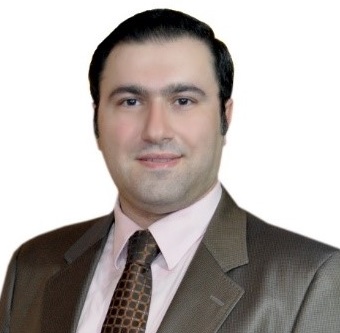
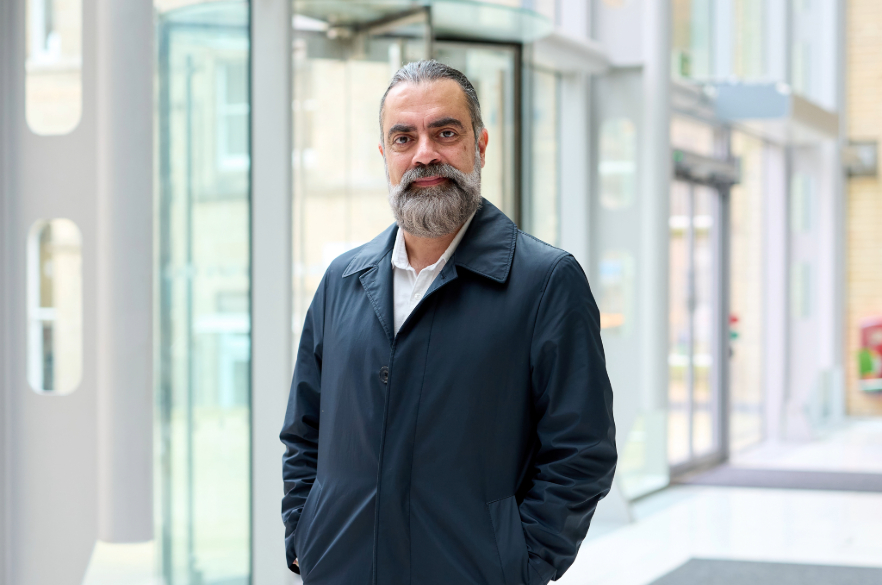
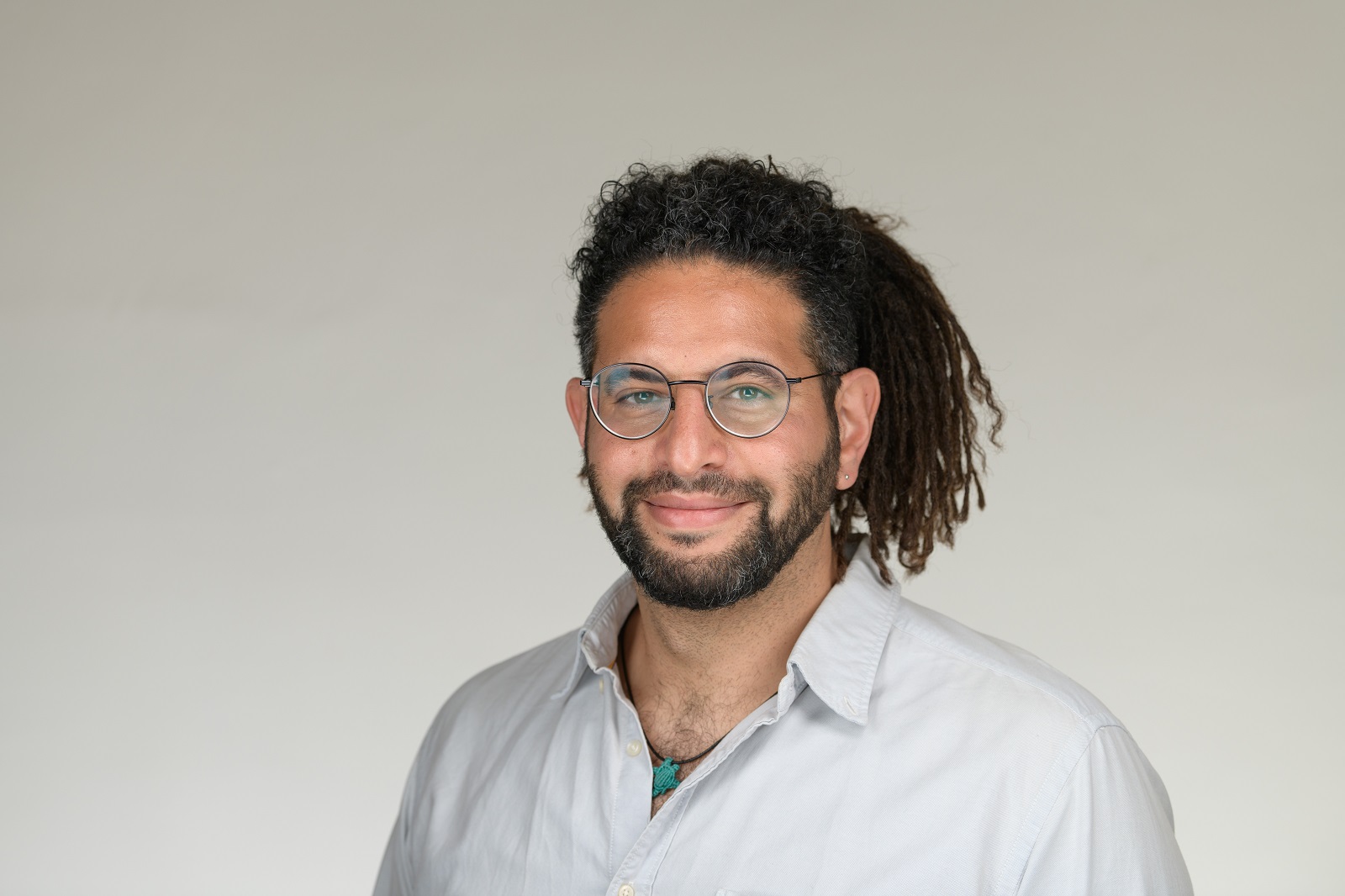
Kristy Robinson is an Associate Professor in the Department of Educational and Counselling Psychology at McGill University , where she investigates classroom teaching practices and contextual factors that enhance student motivation and wellbeing. Her research program focuses on creating theoretical and empirical frameworks to support equitable instructional strategies for students' goal achievement. SSHRC-funded researcher FQRSC grant recipient Key Research Areas Motivational climate theory Expectancy-value-cost models STEM education equity Self-determination theory Emotion dynamics in learning Awards & Recognition Canadian Psychological Society President's New Researcher Award AERA Division C Outstanding Early Career Scholar AERA Motivation SIG Wilbert C. McKeachie Early Career Award Top-Producing Educational Psychology Scholar (2024) Research Platforms Director of MILES Lab (Motivation, Instructional, and Learning Experience Study) Developer of "mFlip" flipped classroom framework
Dr. Mohammad Yazdani-Asrami is a Lecturer in Electrically Powered Aircraft and Operations at the Autonomous Systems & Connectivity (ASC) division of the James Watt School of Engineering, University of Glasgow. He leads research in electrification and cryo-electrification of transportation, particularly in aviation, leveraging applied superconductivity and AI techniques. His research interests span the Electrification and cryo-electrification of power and transportation systems Design of superconducting components (machines, cables, fault current limiters) for aviation Application of AI, machine learning, and big data in engineering and superconductivity Hydrogen electrolysis, production, and integration in aerospace and power networks His recent publications demonstrate a strong trend toward intelligent modeling and AI-driven solutions in superconducting technologies, with a focus on electric aircraft, fault protection, and thermal management using cryogenic fluids. Dr. Yazdani-Asrami has received notable scientific recognition, including: UK Royal Academy of Engineering Global Talent (2021) Young Professional of the Year, Cryogenic Society of America (2023) He actively supervises PhD students and hosts visiting researchers. His advising portfolio includes Alireza Sadeghi, Kerr Smith, Dedao Yan, Giacomo Russo, and Fábio Gregório. He has secured funding from the EPSRC, University of Glasgow, and CSC for PhD students. He also supports postdoctoral fellowships from the Royal Academy of Engineering, Leverhulme Trust, and Marie Skłodowska-Curie actions. He is involved in several research groups and collaborations, particularly within the Aerodynamics, Propulsion and Electrification group. His editorial roles include serving on the boards of Superconductor Science and Technology , World Journal of Engineering , Aerospace Systems , and others. He regularly contributes to major conferences such as the Applied Superconductivity Conference and the International Conference on Magnet Technology.
Christof Weiß is a Professor for Computational Humanities at the CAIDAS / Institute of Computer Science, Julius-Maximilians-Universität Würzburg (JMU), Germany. He serves as Head of the DFG-funded Emmy Noether group on Computational Analysis of Music Audio Recordings: A Cross-Version Approach. His academic journey includes previous positions as Visiting Researcher at University Télécom Paris (2021), Visiting Lecturer at Karlsruhe University of Music (2020, 2021), and Research Assistant at International Audio Laboratories Erlangen (2015-2022) and Fraunhofer Institute for Digital Media Technology (2012-2015). His educational background encompasses a PhD in Media Technology from University of Technology Ilmenau (2017), Concert Diploma in Composition from Würzburg University of Music (2012), Physics Diploma from University of Würzburg (2012), and Music Diploma in Composition from Würzburg University of Music (2011). This unique combination of technical and artistic training forms the foundation of his interdisciplinary research approach. Weiß's research operates at the critical intersection of computer science and musicology, developing novel computational methods for analyzing musical structures in audio recordings. His work bridges technical audio processing with musicological insights, creating methodologies for tonal analysis, key estimation, and cross-version comparison of musical performances. His approach combines deep learning techniques with music theory to extract meaningful patterns from large music corpora, enabling new forms of musicological corpus studies that were previously impossible. His recent publications reveal a clear research trajectory toward integrating advanced machine learning with fundamental musicological questions. The consistent theme across his work involves analyzing classical music structures through computational lenses, with particular emphasis on cross-version consistency in performances, tonal complexity measurement, and developing datasets that support computational musicology. His publications span both highly technical audio processing journals and musicology-focused venues, demonstrating his commitment to bridging these disciplines. Best paper award at the 4th conference on Computational Humanities Research (CHR), 2023 KlarText award for science communication of the Klaus Tschira Foundation, 2018 2nd prize at Festival Pablo Casals composition competition, Prades (France), 2013 Youth Cultural Advancement Award (Kulturförderpreis) of the city of Amberg, Germany, 2011 As principal investigator of the DFG Emmy Noether group, Weiß leads a multidisciplinary research team investigating computational analysis of music audio recordings through a cross-version approach. His research has secured significant funding including the prestigious Emmy Noether program, supporting doctoral and postdoctoral researchers working on various aspects of music information retrieval and computational humanities. His collaborative network spans institutions across Europe, including University Télécom Paris, Queen Mary University of London, and multiple German research centers. Weiß leads the Computational Humanities research group at CAIDAS, which focuses on developing computational methodologies for music analysis with particular emphasis on classical repertoire. The lab creates specialized datasets (including the Wagner Ring Dataset and Schubert Winterreise Dataset), develops algorithms for structural music analysis, and applies these tools to address musicological questions that require computational scale and precision. Their work bridges the gap between technical audio processing capabilities and humanities research questions, creating new pathways for understanding musical structure and evolution.
Stig Hartmann is an Associate Professor at the Department of Accounting, Copenhagen Business School , specializing in Management Accounting and Strategic Management . His work bridges theoretical frameworks with practical applications in financial and strategic control systems. Primary Research Areas : Management Accounting, Strategic Management, Balanced Scorecards, Professional Service Firms Teaching : Corporate Strategy (undergraduate), Business Understanding & Economy (diploma education), and executive supervision for MBA and CEMS programs Research Focus : Hartmann’s publications analyze strategic control mechanisms, value creation in professional services, and auditing practices for small businesses. His work often integrates knowledge management theories with empirical observations from Danish firms. Academic Contributions : Key projects include studies on financial distress assessment ("Going Concern"), strategic cost management, and the role of balanced scorecards in organizational performance. External Engagements : Provides lectures at Copenhagen University (2018–ongoing) and supervises executive education programs at CBS Executive.
Dr. Saeed Taheri is a Senior Lecturer at Nottingham Business School, Nottingham Trent University, within the Department of Strategy, Analytics and Operations. With a background in Materials Science and Engineering, he transitioned to academia after a decade in Iranian manufacturing sectors as a production technology specialist and quality manager. PhD in Operations and Supply Chain Management (2018) MSc and BSc in Materials Science & Engineering Research Focus: Specializing in system dynamics modeling of socio-technical systems, with applications spanning humanitarian supply chains, healthcare operations, and lean product development. His work addresses complex organizational and policy challenges through simulation and optimization. External Engagements: Serves as MSc project supervisor at Warwick Manufacturing Group (WMG), maintains professional membership in the System Dynamics Society, and collaborates internationally on research projects. Teaches Operations & Supply Chain Management modules Supervises research across undergraduate to PhD levels Consultant for engineering management journals
Dr. Lecturer Sevinç Ünsal Oral is affiliated with Başkent University as a faculty member in the Department of Civil Engineering. She holds a PhD (2013), Master's (2009), and BSc (2006) in Civil Engineering from Middle East Technical University. Specializes in geotechnical engineering and earthquake engineering Active in seismic hazard analysis and soil-structure interaction Her research focuses on liquefaction assessment, landslide modeling, and seismic performance of infrastructure. Articles highlight work on geothermal facilities, dams, and airport structures. Scientific contributions include numerical modeling frameworks for earthquake-induced geohazards. She serves as a thesis advisor for graduate students and participates in projects related to UN Sustainable Development Goals.
Paolo Prandoni is a Lecturer at École Polytechnique Fédérale de Lausanne (EPFL) in the School of Computer and Communication Sciences (IC). He serves as a Scientist in the Audiovisual Communications Laboratory (LCAV) and teaches in the SSC-ENS and SIN-ENS units, focusing on signal processing theory and practical applications in audiovisual communications. He earned his PhD from EPFL after completing all prior education there, driven by childhood fascination with long-distance telephony. His doctoral work established foundations in communication systems that continue to inform his research. Prandoni's research spans audio/image processing, machine learning for media analysis, and DSP education. Key areas include computational photography (e.g., spectral imaging, stained glass rendering), speech quality assessment via transfer learning, music information retrieval (e.g., fingering prediction), and audience analytics through his company Quividi. His work consistently bridges theoretical signal processing with real-world implementation. Recent publications reveal a strategic shift toward machine learning integration in signal processing tasks, particularly non-intrusive speech assessment and lensless imaging reconstruction. Simultaneously, he advances DSP pedagogy through MOOC development and hands-on teaching tools using off-the-shelf hardware, emphasizing accessibility and practical skill development. No scientific awards are documented in the provided materials. He has advised PhD student Thanikachalam Niranjan (thesis: Image Based Relighting of Cultural Artifacts , 2016) and teaches Communication Systems and Computer Science courses. His educational impact extends through the open-access textbook Signal Processing for Communications (2008) and tools like MultiPub for maintainable online classes. Industry engagement includes Quividi co-founding (2006) and ongoing CSO role in attention analytics. As a core LCAV laboratory member, he collaborates on interdisciplinary projects including cultural heritage digitization, embedded signal processing systems, and real-time audience measurement, leveraging EPFL's infrastructure for both academic and commercial applications.
Dr. Anna Hatton is a Senior Lecturer at the School of Health and Rehabilitation Sciences , The University of Queensland. As Co-Director of the UQ Centre for Neurorehabilitation, Ageing and Balance Research and Associate Editor for Gait & Posture , she leads interdisciplinary research into sensory-based rehabilitation technologies. Her work bridges clinical practice with engineering innovation, focusing on footwear devices for balance enhancement. Research themes: novel textured/vibratory insoles , neurological gait analysis , age-related mobility Key funding: NHMRC IDEAS Grants , Bionics Queensland Challenge , Diabetes Australia , PA Research Foundation Her Young Tall Poppy Science Award (2016) recognizes contributions to plantar sensory stimulation. Current supervised projects explore bionic insole neurophysiology , combat sports injury prevention , and sport performance optimization . Media engagements focus on electromyography , sensorimotor function , and footwear interventions .
Jinhu Li is a Senior Research Fellow at the Australian National University, holding positions in both the Department of Health Economics, Wellbeing and Society and the National Centre for Health Workforce Studies. She has previously held academic positions as a Senior Lecturer at Deakin University and a Senior Research Fellow at the University of Melbourne. Dr. Li completed her PhD in Economics from McMaster University in Canada, following an MA in Economics from the University of Victoria and a BA in Economics from Huazhong University of Science and Technology in China. She is also a Fellow of the UK Higher Education Academy (HEA). Her research focuses on health economics, economics of education, and development economics, with particular emphasis on social determinants of health, human capital formation, and health workforce economics. Dr. Li employs advanced methodologies including causal inference techniques and Discrete Choice Experiments to investigate critical issues in health, education, and development. Her recent publications span topics including the impacts of education on health outcomes, physician behavior and incentives, early-life health shocks, and child malnutrition. Her work appears in leading journals such as Journal of Health Economics, Journal of Development Economics, Health Economics, and Social Science and Medicine. Dr. Li has received significant recognition for her research, including an Australian Research Council (ARC) Discovery Early Career Researcher Award (DECRA) from 2017-2023. She has secured over $4.2 million in research funding, with $3.8 million from Category 1 national competitive grants. She currently leads multiple major research projects, including an ARC DECRA project, an ARC Discovery Project, and an MRFF Primary Health Care Research grant. Her current research examines the impacts of counter-COVID public policies like school closures on child development and optimal workforce mix for team-based care in managing chronic diseases.
Peter W. Glynn is the Thomas Ford Professor in the Department of Management Science and Engineering (MS&E) at Stanford University's School of Engineering, and also holds a courtesy appointment in the Department of Electrical Engineering. Additionally, he serves as a Senior Fellow of the Hong Kong Institute for Advanced Study at City University of Hong Kong. His distinguished career spans over four decades, with significant contributions to the fields of simulation, computational probability, and stochastic modeling. Professor Glynn received his Ph.D. in Operations Research from Stanford University in 1982 and his B.S. with Honors in Mathematics from Carleton University in 1978. His academic journey began at the University of Wisconsin at Madison (1982-1987) before returning to Stanford, where he has held various leadership positions including Deputy Chair of MS&E (1999-2005), Director of Stanford's Institute for Computational and Mathematical Engineering (2006-2010), and Chair of MS&E (2011-2015). His research interests focus on simulation , computational probability , queueing theory , statistical inference for stochastic processes , and stochastic modeling . Professor Glynn's work has developed algorithms widely used across the field of Monte Carlo simulation, with applications in financial risk management, service systems engineering, logistics, and retail operations. His recent publications demonstrate continued innovation in areas such as numerical methods for stochastic systems, rare-event simulation, and analysis of queueing systems under various traffic conditions, showing a strong trajectory of advancing both theoretical foundations and practical applications. Professor Glynn's scholarly contributions have been recognized with numerous prestigious awards, including: Fellow of INFORMS (2007) Fellow of the Institute of Mathematical Statistics (1998) John von Neumann Theory Prize from INFORMS (2010) Member of the US National Academy of Engineering (2012) Lifetime Professional Achievement Award, INFORMS Simulation Society (2021) Philip McCord Morse Lecturer, INFORMS (2020) Throughout his career, Professor Glynn has mentored numerous doctoral students whose research has made significant contributions to operations research and related fields. His editorial service has been extensive, including founding Editor-in-Chief of Stochastic Systems and service on the editorial boards of leading journals in operations research, probability, and statistics. His professional service extends to numerous advisory boards and committees at national and international levels, reflecting his standing as a leader in his field.
Sevda Yalçın serves as a full-time Lecturer at Kafkas University's Kağızman Vocational School within the Department of Therapy and Rehabilitation. With continuous academic service since 1997, she maintains an active teaching schedule covering quality management, statistics, and customer relationship management courses at the associate degree level. Her educational background includes a BSc in Statistics from Anadolu University (1993-1997) and an MSc in Business Administration (without thesis) from Atatürk University's Institute of Social Sciences (2006-2008). Yalçın's research focuses on economic analysis of regional development with particular emphasis on South Caucasus countries, African economies, and Turkish agricultural sectors. Her work frequently employs global indices like Legatum Prosperity Index and World Bank's Doing Business indicators to evaluate economic performance and sustainable development potential. She maintains a strong regional focus on Kağızman district in eastern Turkey, analyzing local development challenges through community participation and rural tourism potential. Her publication record shows consistent output since 2012 with 39 total publications including 16 articles, 21 conference presentations, and 2 books. The research demonstrates evolving focus from broader Balkan and post-Soviet economic analysis toward increasingly specialized regional studies of South Caucasus and Turkey's agricultural sector. As a dedicated academic collaborator, she maintains a longstanding research partnership with Alper Yalçın (39 joint publications), with additional collaborations including Kubilay Aras, Coşkun Alıcı, and Kerem Karabulut. Her work demonstrates strong alignment with UN Sustainable Development Goals through sustainable local development research.
Ramy Aly serves as Associate Professor and Anthropology Unit Head in the Department of Sociology, Egyptology and Anthropology at The American University in Cairo (AUC), where he has held faculty position since 2013 after previously lecturing in Anthropology at the University of Sussex, UK. He earned his PhD in Social Anthropology from Sussex in 2011. His academic credentials include: PhD in Social Anthropology, University of Sussex (2011) Dr. Aly's research investigates identity construction through intersecting frameworks of gender, race, and class. Current projects examine ethical subject formation following Egypt's 2011 revolution and racial dynamics via hair culture practices among Egyptian youth. His work bridges cultural anthropology with diaspora studies, emphasizing performative aspects of identity in transnational contexts while addressing decolonial perspectives on Middle Eastern communities. His publication trajectory evolves from localized ethnography to comparative diaspora frameworks, exemplified by his foundational 2015 monograph on Arab identity performativity in London and the comprehensive 2022 handbook synthesizing Middle Eastern diaspora scholarship. These works collectively establish him as a significant voice in contemporary anthropological discourse on migration, belonging, and cultural transformation. Aly actively cultivates student development through institutional initiatives: chairing the Altorki Award for Ethnographic Research, co-founding The Authors’ Challenge writing program, and advising the AUC Times student publication. His professional engagement extends to memberships in the Royal Anthropological Institute (UK), European Association of Social Anthropology, and Society for Cultural Anthropology, reflecting his standing in global anthropological networks.
David Shipworth is Professor of Energy and the Built Environment at University College London (UCL), affiliated with both the UCL Energy Institute and the Bartlett School Env, Energy & Resources. He chairs the International Energy Agency’s User-Centred Energy Systems (Users TCP) programme and represents the UK government in this role. Current appointment: 1 Oct 2017 – 1 Jan 2100 at UCL Previous academic roles: Reader (2009–2017) and Lecturer (1999–2008) at UCL and University of Reading Research focuses on: Energy demand flexibility and local energy market models Consumer behavior in distributed energy systems (DERs) Peer-to-peer energy trading and transactive energy systems Design and evaluation of field trials for DER acceptability Thermal comfort and health implications of heating behavior Scientific contributions include: Editorial Board Member, Nature: Scientific Data EPSRC Peer Review College member Key participant in IEA initiatives and UK government advisory groups Teaching involves postgraduate supervision and teaching on UCL’s Smart Energy and the Built Environment MSc programme, with a focus on: User roles in energy transitions Collective-good outcomes in energy systems Business value propositions for smart energy solutions Professional activities span advisory roles for UK and European energy projects, conference speaking engagements, and consultancy work for organizations like UK Power Networks, Energy Systems Catapult, and the International Energy Agency.
Dr. Abdullahi Tasiu Abubakar is a Senior Lecturer and Director of the PhD Programme in the Department of Journalism at City St George's, University of London. He holds a PhD in Journalism and Mass Communications from the University of Westminster, awarded with no corrections. His professional background includes roles as a producer at BBC World Service (London) and Bureau Editor in Nigeria, alongside reporting for major Nigerian newspapers covering conflicts across West Africa. Research Focus: Dr. Abubakar specializes in media audiences, strategic communications, conflict reporting, and journalism ethics. His work critically examines how global media interacts with African audiences, the ethics of crisis journalism, and the communication strategies of insurgent groups like Boko Haram. Publication Trends: His scholarly output (2011-2024) demonstrates consistent focus on media in conflict zones, digital audience engagement, and African media landscapes. Recent works explore colonial legacies in broadcasting and mobile technology's impact on media consumption. A 2021 computational study represents an interdisciplinary divergence. Awards & Honors: Nigeria’s Best Newspaper Reporter of the Year NUJ Certificate for Professional Excellence Fellow, Higher Education Academy (AdvanceHE, UK) Professional Activities: He supervises PhD, MA, and undergraduate dissertations, has secured multiple research grants, and advises governmental/NGO bodies. As External Examiner at King's College London, he contributes to academic quality assurance. He regularly presents at major conferences (e.g., IAMCR, ICA) on extremism reporting and decolonization of media.
Irene V. Small is a Professor in the Department of Art & Archaeology at Princeton University, specializing in contemporary art and criticism within global and transnational contexts. Her work critically engages with experimental practices from the 1960s–1970s, legacies of abstraction, and the social implications of form, with concentrated focus on Latin American art—particularly Brazil. She actively contributes to interdisciplinary initiatives including the Program in Media and Modernity, the Brazil Lab, and the Program in Latin American Studies. Her research traverses radical pedagogy, expanded cinema, decolonial interventions, and the politics of medium specificity. Central to her scholarship is the interrogation of modernism’s topological field through concepts like Lygia Clark’s 'organic line,' which she deploys to analyze works ranging from Malevich’s Black Square to contemporary practices. She investigates how truncated media forms facilitate itinerancy and connectivity across Brazilian art history, from 19th-century proto-photography to digital remediation. Small’s publications reveal consistent engagement with Brazilian avant-garde movements, examining artists like Hélio Oiticica, Lygia Clark, and Tarsila do Amaral through frameworks of participation, embodiment, and geopolitical critique. Her recent work expands to address free speech, afterlives of slavery, and the decolonization of art institutions, demonstrating evolving focus on art’s capacity to reconfigure social and political realities. Scientific Awards and Grants: Francine and Sterling Clark Art Institute Fellowship Graham Foundation Fellowship Getty Research Foundation Fellowship Dedalus Foundation Fellowship Creative Capital and Andy Warhol Foundation Arts Writers Grant Lemann Institute of Brazilian Studies Fellowship Research Board of the University of Illinois at Urbana-Champaign Grant Small serves on advisory boards for October , Ars , and Texte zur Kunst , and has curated exhibitions including Blind Field (2013) and Multitude (2002). Her teaching spans global contemporary art surveys, modern/contemporary Latin American art, and specialized seminars on decoloniality, gender, and experimentalism. She is affiliated with Princeton’s Department of Spanish & Portuguese, Brazil Lab, Gauss Seminars in Criticism, and Edward Said Memorial Lecture series.