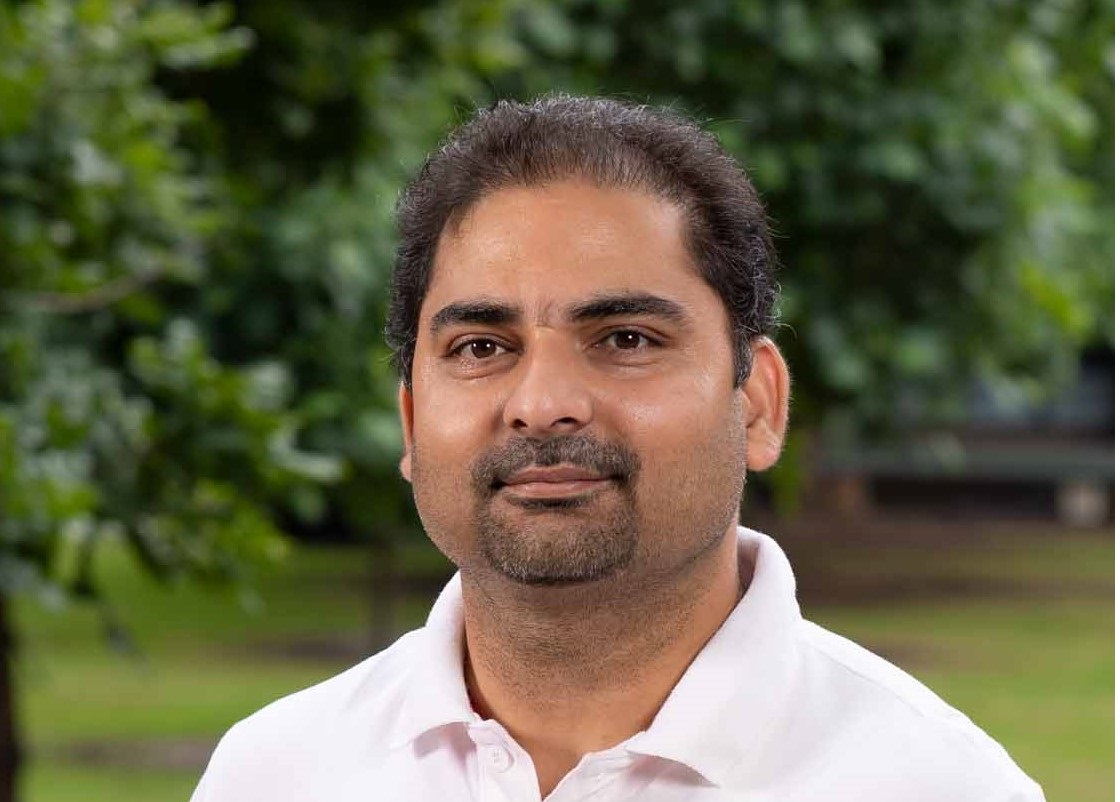
Dr. Sonit Singh is a Lecturer at the School of Computer Science and Engineering at the University of New South Wales (UNSW), Sydney, Australia. Prior to this role, he served as a Postdoctoral Research Fellow at the same institution. He holds a PhD from Macquarie University, completed in collaboration with Macquarie. His research focuses on artificial intelligence, computer vision, natural language processing, and their applications in healthcare, particularly in medical imaging and diagnostic systems. Dr. Singh's academic background includes a strong emphasis on biomedical imaging, intelligent robotics, and computing education. His work bridges machine learning advancements with real-world clinical challenges, such as tumor segmentation, radiology report generation, and disease detection through imaging modalities like CT scans and ultrasound. His recent publications highlight innovations in 3D medical image localization, robust tumor segmentation networks, and clinical context-aware radiology report systems. These contributions underscore his expertise in integrating deep learning techniques with healthcare workflows. Dr. Singh collaborates with multidisciplinary teams, including medical professionals, to develop solutions for challenges like placenta segmentation and dietary intake monitoring using AI. While no specific awards or grants are explicitly listed, his extensive publication record reflects sustained academic engagement in high-impact areas. His research often addresses practical clinical needs, such as improving diagnostic accuracy and patient care through advanced computational methods.
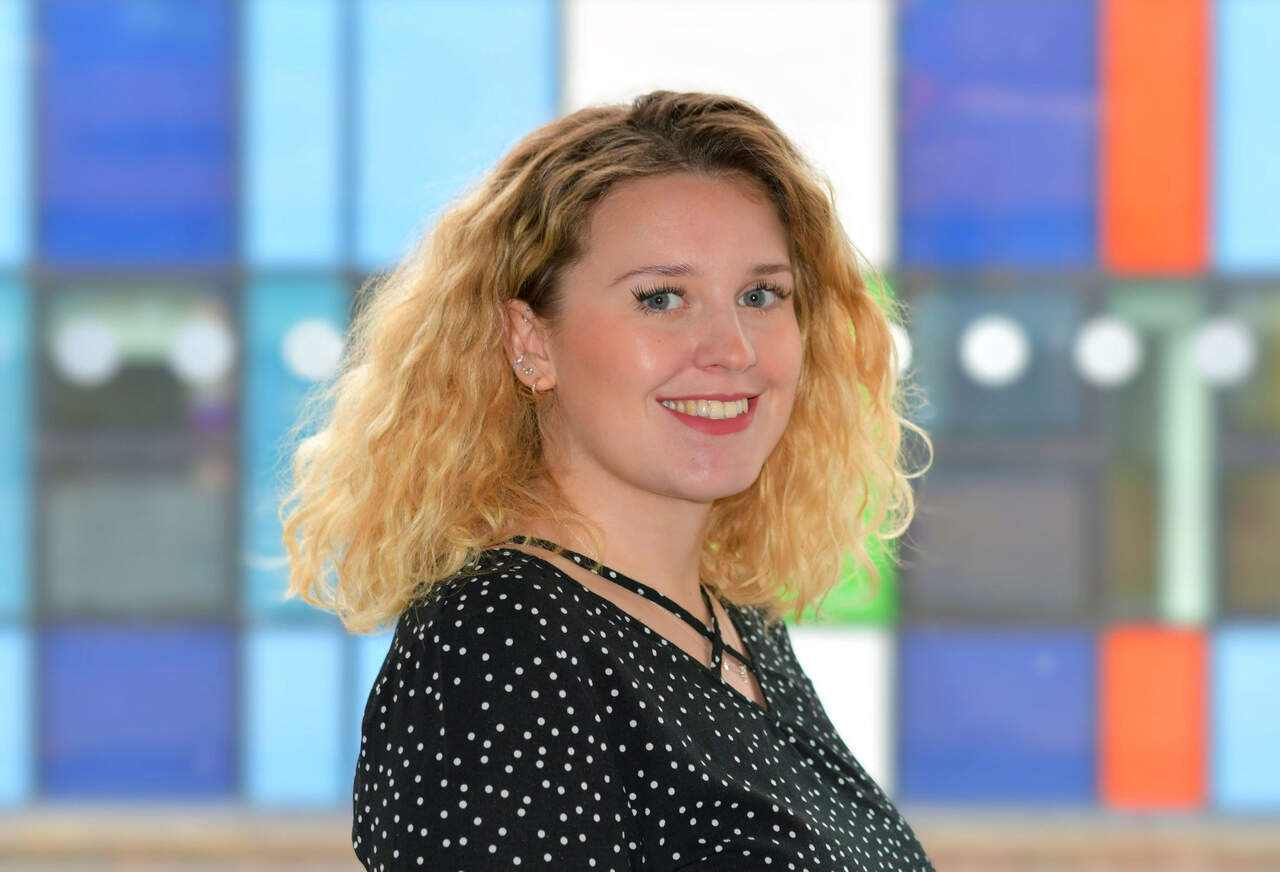
Dr. Emily Lowthian is a Lecturer in Education and Childhood Studies at Swansea University’s School of Social Sciences, Department of Education and Childhood Studies. She specializes in research addressing educational outcomes, child welfare, and public health policy with a focus on vulnerable populations. Her work integrates large-scale data linkage methodologies to analyze sociodemographic trends, special educational needs identification, and health behaviors among children and adolescents. Key research areas include the impacts of special needs identification on academic progression, vaccination uptake patterns during the pandemic, and the interplay between maternal mental health and child development. She contributes to policy discussions through the UK Young Academy, a network of early-career researchers addressing societal challenges. Dr. Lowthian’s interdisciplinary approach spans epidemiology, education policy, and social inequality studies, with publications in high-impact journals such as the International Journal of Population Data Science. Her recent projects include longitudinal analyses of Wales’ administrative health and education data, exploring ethnicity dynamics, child wellbeing trajectories, and the effects of EU tobacco regulations on youth behavior. Collaborations with national health organizations and policymakers ensure her research informs practical interventions in child welfare and public health systems.
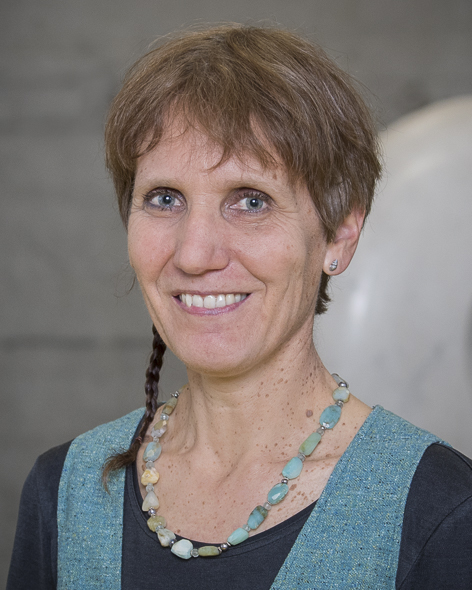
Prof. Dr. Elisabeth Moser Opitz is a Full Professor of Special Education with a focus on Inclusion and Instruction Research at the University of Zurich. She leads the Institute of Educational Science and has held academic roles since 2010. Her research prioritizes inclusive education, mathematics learning difficulties (e.g., dyscalculia), and diagnostic tools for educational assessment. Key projects include SMILE (addressing mathematics difficulties in adolescents) and the Zurich Learning Progress Study (LEAPS) , examining learning trajectories from kindergarten through compulsory schooling. She has authored over 100 publications, focusing on teacher training, special education practices, and social-emotional development in classrooms. Education: 2000: Doctorate in Educational Science (University of Fribourg) 1991: Master's in Special Education (University of Fribourg) 1983: Primary School Teaching Certification Research Interests: Moser Opitz investigates inclusive pedagogical strategies, early numerical competence, and systemic educational equity. Her work bridges theory and practice, emphasizing teacher collaboration and contextual factors influencing student success. Grants/Leadership: Active in Swiss National Science Foundation projects (e.g., SinuS analyzing secondary school inclusion). She directs the LEAPS consortium, combining interdisciplinary expertise from multiple Swiss universities. Her contributions include developing diagnostic tools like the BASIS-MATH-G series for early mathematics assessment. Labs/Teams: Leads projects at the Institute of Educational Science, collaborating with experts in mathematics didactics, educational psychology, and teacher education.
Teresa Cristina de Freitas Gonçalves is an Associate Professor at the Department of Informatics, School of Sciences and Technology, University of Évora, where she has been employed since 1999. She serves as an integrated researcher at the ALGORITMI research centre and is the Director of the VISTA Lab (Video, Image, Speech and text Analysis Lab), the unit of the ALGORITMI research centre at University of Évora. Her leadership roles include Director of the Master programme in Informatics Engineering and deputy Director of both the Master programme in Artificial Intelligence and Data Science and the Doctoral program in Computer Science. She earned her PhD in Computer Science from University of Évora and a MSc degree in Informatics Engineering from New University of Lisbon. Her academic journey at University of Évora has included significant leadership positions including Head of the Computer Science Department (2011-2015), Director of the Bachelor programme in Informatics Engineering (2016-2021), and Deputy Director roles for various undergraduate and graduate programs. Dr. Gonçalves' research focuses on intelligent systems, particularly Machine Learning approaches, with substantial contributions in evolutionary algorithms, information extraction and retrieval, and supervised learning across multiple data modalities including tabular data, text (in both Portuguese and English), and images (medical and satellite). Her work bridges theoretical advances with practical applications in healthcare, remote sensing, and natural language processing. She has successfully supervised 6 doctoral theses, 19 master theses, and 3 postdocs, and currently mentors 5 doctoral and 6 master students from diverse international backgrounds including Bangladesh, Cabo Verde, Nepal, Philippines, India, Sri Lanka, China, Mongolia, and Portugal. Her publication record includes over 100 scientific articles indexed by Scopus with 640 citations and an h-index of 12, demonstrating significant international impact with 56% of her work involving international collaboration. Her recent research shows a strong trend toward applying advanced machine learning techniques to healthcare applications, information retrieval systems, and remote sensing analysis, with particular emphasis on transformer networks, learning-to-rank methodologies, and multimodal data analysis. Dr. Gonçalves has made substantial contributions to the academic community through her service as a reviewer for over 50 articles in prestigious international journals and conferences, and as chair for major international conferences including IDEAL 2023, PROPOR 2020, SKIMA 2017 and 2018, and CLEF 2016. She serves on the board of APRP (Associação Portuguesa de reconhecimento de Padrões) and as a jury member for APRP prizes for best MSc and PhD theses. Her current research portfolio includes coordination of the Horizon Europe MSCA Staff Exchange HarmonicAI project and local coordination of WP6 in the NewSpace Portugal mobilising agenda. She is also actively involved in numerous other international research initiatives including Interreg VI-B Sudoe SenforFire, PRR CANTE, La Caixa INCOME, Erasmus+ KA220-HED REDINEST, Interreg POCTEP TID4AGRO, and ATTRACT DIH projects. Previously, she led the FCT AI in the Public Administration SNS24.Scout.IA project and coordinated the FEDER R&D NIIAA project. As Director of the VISTA Lab, Dr. Gonçalves leads a dynamic research team focused on video, image, speech, and text analysis. The lab serves as the Évora hub of the ALGORITMI research centre and has established strong international collaborations. Under her leadership, the VISTA Lab has developed innovative approaches in medical image analysis, natural language processing for Portuguese, and satellite image classification, with applications spanning healthcare, environmental monitoring, and public administration.
Corinne Wallace is an Adjunct Assistant Professor in the Department of Civil Engineering at McMaster University , with research expertise at the intersection of water security, climate change, public health, and gender equity. Her work spans both technical engineering analysis and community-engaged studies, particularly focusing on marginalized populations in Canada, East Africa, and South America. Dr. Wallace's research interests include: Water-Health Nexus Climate Change Impacts on Disease Gender Equity in Water Access Indigenous Water Governance Mosquito-Borne Disease Modeling Rainwater Harvesting Systems Her publication trends show increasing focus on climate-health interactions (2025), gender-water linkages (2024), and machine learning applications for water quality analysis (2025). She employs mixed-methods approaches and works closely with First Nations communities and international development organizations. Dr. Wallace utilizes art-science communication strategies like the Virtual Water Gallery to transform water and climate knowledge dissemination. Her recent work explores EDI (Equity, Diversity, Inclusion) implementation in large research networks and conceptual frameworks for climate-water equity.
Gwenn Englebienne is an Assistant Professor at the Digital Society Institute and Human Media Interaction group of Utrecht University. Their research focuses on Artificial Intelligence, Computer Vision, and Human-AI Interaction, with applications in robotics, health, and social computing. They have contributed to over 80 research outputs since 2007, emphasizing embodied AI, social robotics, and explainable machine learning. Research interests span activity recognition, teleoperation systems, and ethical AI design. Notable work includes developing GNN-based group detection algorithms and evaluating chatbot reliability through automated question-answering frameworks. Their studies often bridge technical innovation with human-centered design, such as measuring embodiment via pupil dilation or addressing asymmetry in video-conferencing interactions. Key collaborations include work on social robotics, telepresence systems, and health monitoring using ambient sensors. Publications span conferences like IDA, CogMI, and LREC-COLING, reflecting interdisciplinary impact. A dataset on robot social positioning behavior is publicly accessible via 4TU.Centre for Research Data. Current work explores semi-supervised domain adaptation, spiking neural networks, and the psychological dimensions of AI trustworthiness. They lead initiatives in the Digital Society Institute to align technological advancements with societal needs.
Dr. Marcia Schulmeister serves as Director and Teaching Professor in the Environmental Geology Programs at the University of Kansas Edwards Campus, with a dual appointment in the Department of Geology. With over 30 years of experience, she specializes in applied hydrogeology and geochemistry, focusing on contaminated site remediation and groundwater management. Her professional work spans government agencies in the U.S., China, Thailand, and Germany, addressing soil and groundwater contamination challenges. Dr. Schulmeister holds prestigious titles including Fellow of the Geological Society of America and Fulbright Scholar. She contributes to academic leadership as associate editor for professional journals and serves on multiple boards. Her research explores innovative methods like electrical resistivity tomography and direct-push geochemical profiling, with recent emphasis on virtual geology education and international environmental projects in Thailand and Vietnam. Key Expertise: Hydrogeology field methods, contaminant transport modeling, karst terrain studies International Experience: Collaborations in China, Thailand, Germany, and Vietnam Teaching Innovation: Pioneering online geoscience education for non-traditional students Her work integrates field-based learning through the Robert P. Harrison Field Station and virtual museum tours. Current research trends emphasize climate change impacts on groundwater systems and geohazard mitigation for infrastructure protection.
Sharon Ware, Ph.D., is an Associate Professor and Director of the Special Education Literacy Intern program (M.A.) at the University of Saint Joseph. She joined USJ in 2016. Her academic background includes a Ph.D. in Special Education from the University of Connecticut, an Ed.M. from Harvard University, an MBA from the University of Arizona, and a B.A. from Boston College. Dr. Ware’s research focuses on literacy development across the PK-12 spectrum, particularly for learners with diverse needs. Her work emphasizes vocabulary instruction, bilingual education, and multitiered systems of support. She has published extensively in journals like The Elementary School Journal and Exceptional Children , exploring topics such as vocabulary intervention efficacy, bilingual learners' language acquisition, and gifted education equity. Her articles highlight trends in early literacy interventions, the role of teacher-student interactions in vocabulary development, and strategies to address educational disparities. Dr. Ware’s contributions bridge theory and practice, aiming to improve outcomes for students with learning challenges and English language learners.
Meriam Chaal is a Visiting Professor at the Department of Energy and Mechanical Engineering and affiliated with the Marine and Arctic Technology school at Aalto University . She holds a Doctor of Technology (Tekn. toht.) in Mechanical Engineering awarded on 25 March 2024. Her research focuses on maritime safety, autonomous systems, risk assessment, and navigation engineering , with a particular emphasis on systemic hazard analysis and safety frameworks for autonomous ships. Recent work includes developing machine learning models for maritime accident prediction, frameworks for risk control options, and participatory design of automated maritime solutions. She collaborates internationally on projects addressing maritime practitioners' skill adaptations and educational needs for autonomous systems. Her research activity spans 17 publications from 2019–2025, including peer-reviewed articles, conference proceedings, and a doctoral thesis. Key themes include STPA-based safety methodologies, Bayesian network integration, and bibliometric reviews of autonomous shipping literature. Chaal’s work aligns with UN Sustainable Development Goals, particularly in advancing safe and sustainable maritime technologies. Notable contributions include a 2023 thesis on system-theoretic approaches to shipping safety and a 2025 article on autonomous navigation risk assessment. Her interdisciplinary collaborations span human factors, machine learning, and systems engineering, reflecting a commitment to bridging theoretical research with practical maritime challenges.
Dr. Jelena S. Starčević is an Associate Professor at the Department of Social and Human Sciences, Faculty of Pedagogical Sciences, University of Kragujevac in Jagodina. She specializes in educational psychology with a focus on intercultural competence, inclusive education, and emotional development. She conducts research on teacher education, Roma community educational challenges, and child rights implementation. She serves as the President of the Commission for Ethical Assessment of Psychological Research at the University of Kragujevac. Her academic career includes a PhD in Psychology in Educational Work (2019) from the University of Kragujevac, following previous degrees from the Faculty of Philosophy in Belgrade. She teaches courses such as 'Intercultural Psychology', 'Inclusive Education – Theory and Practice', and 'Modern Concepts of Learning and Teaching' at undergraduate, master's, and doctoral levels. Her research explores themes like intercultural effectiveness among educators, preschool inclusion policies, and validation of psychological assessment tools. She actively participates in international projects like 'Positive Education' and domestic initiatives focused on professional competencies of young researchers. She implements programs for the Pestalozzi Foundation's Education for Child Rights in master's programs. Dr. Starčević's work emphasizes bridging theoretical frameworks with practical educational challenges, particularly in multicultural and inclusive settings. She has authored/co-authored over 20 peer-reviewed publications and frequently presents at national and international conferences.
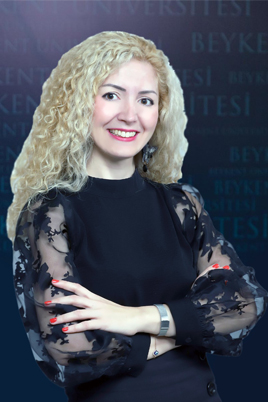
Sevgi AYDIN serves as an Assistant Professor in Logistics Management at Beykent University's Faculty of Business. Her academic work bridges digital transformation, artificial intelligence applications, and consumer behavior within modern marketing frameworks. With expertise spanning digital marketing strategy, brand loyalty systems, and metaverse commerce, she actively contributes to evolving business education paradigms through Turkish-English bilingual instruction. Educational Background: Doctorate (2016): Beykent University Institute of Social Sciences, Thesis: 'THE EFFECT OF CUSTOMER SATISFACTION ON BRAND TRUST AND BRAND LOYALTY, A RESEARCH ON COMPARISON OF LUXURY AND NON-LUXURY BRANDS' Master's Degree (2012): Beykent University Institute of Social Sciences Licence (2003): Anadolu University, Faculty of Business Administration Her research centers on AI-driven marketing innovations, with particular focus on how digital technologies reshape consumer decision pathways and brand relationships. Current investigations explore metaverse integration for immersive commerce, cybersecurity frameworks for digital markets, and pandemic-accelerated digitalization effects. Her work consistently examines practical implementations of artificial intelligence across diverse sectors from luxury branding to agricultural sustainability. Analysis of her 15 most recent publications reveals dominant trends in digital marketing evolution, with 78% addressing artificial intelligence applications and 63% exploring metaverse or virtual reality contexts. Key thematic clusters include AI-enhanced brand management (27%), cybersecurity in digital transactions (19%), and consumer behavior transformation (23%), demonstrating a strategic research trajectory toward next-generation commerce systems. Academic Supervision: SEVİL AYDIN (2024): 'THE USE OF SOCIAL MEDIA IN HOSPITAL CHOICE AND THE EFFECT OF WORD-OF-MOUTH MARKETING ON BRAND LOYALTY' RUKEN BAYONET (2021): 'The role of the food engineer in ensuring occupational health and safety management in food businesses producing hot meals' MERYEM BALTACI (2023): 'The Future of Graphic Design and the Impact of Artificial Intelligence on Graphic Design: Maw Agency Client Applications'
Anne-Marie Morrissey is a Senior Lecturer in Early Childhood Education at Deakin University, Australia, with a Doctor of Philosophy from the University of Melbourne (2007). Her dual background as an academic researcher and former early childhood practitioner informs her evidence-based approach to pedagogy and policy. Doctor of Philosophy, University of Melbourne, 2007 Her research centers on play-based learning as a catalyst for 21st-century skill development, emphasizing how intentional teacher-child interactions during play enhance problem-solving, creativity, and cognitive growth. She investigates the critical role of outdoor environments in fostering wellbeing, sociodramatic play, and physical activity, while also examining teacher agency within educational reforms and gifted education frameworks. Her work consistently bridges theory with practical classroom applications. Analysis of her recent publications (2017-2025) reveals three dominant trajectories: (1) The transformative impact of naturalized outdoor playspaces on child development, particularly post-pandemic redesigns; (2) Teacher empowerment through mentoring, advocacy, and intentional pedagogy in play-based settings; and (3) Critical examinations of environmental risks and policy implications in early childhood contexts. These threads converge on optimizing learning ecosystems through child-centered, nature-integrated approaches. No scientific awards were documented in the source materials. Dr. Morrissey has secured competitive research funding from the International Baccalaureate Organisation, the Foundation of Graduates in Early Childhood Studies, and Fleming's Nursery. Her grants specifically target play-based program efficacy and outdoor playspace innovation. While formal student advisement records aren't disclosed, her work with preservice teachers through enhanced kindergarten placements and mentoring initiatives demonstrates significant educational leadership.
Nicole Mills serves as Joint Director of Language Programs (interim), Coordinator of the French language program, and Language Advisor for the Office of International Education at Harvard University, while holding an adjunct lecturer appointment in Education at the Harvard Graduate School of Education. She co-founded the Certificate in Teaching Language & Culture and actively shapes language pedagogy through administrative leadership and innovative curriculum design across multiple Harvard departments. Her educational background includes a Ph.D. in French and Educational Studies and an M.A. in French literature , both from Emory University. These qualifications underpin her interdisciplinary approach to language education, bridging theoretical linguistics with practical pedagogy. Mills’ research pioneers the integration of virtual reality and artificial intelligence in language learning, focusing on psychological aspects of language acquisition, immersive cultural experiences, and curriculum development. Her work demonstrates how experiential learning contexts can transform traditional language instruction, particularly through projects like the La République VR environment that immerses students in Parisian life through diverse perspectives. This research intersects digital humanities, critical theory, and French literary studies to create transformative educational experiences. Her publication trajectory reveals a clear evolution from foundational self-efficacy studies toward cutting-edge explorations of AI and immersive technologies in language education. Recent work emphasizes pedagogical innovation during crises (like pandemic teaching transitions) and the systematic integration of emerging technologies into language program infrastructure, reflecting both theoretical depth and practical applicability. Innovation in Language Program Direction Award (2020) from the American Association of University Supervisors and Coordinators ABL Connect award for Teaching Innovation (2018) from Harvard's Center for Teaching and Learning Mills has secured significant grant funding including Harvard's HILT grants (2017-2020) for VR initiatives and Provost Fund support for AI pedagogy projects. Her collaborative approach is evident in partnerships with Wonda VR, Harvard's Center for Technology in Government, and international institutions for VR/AI development, while her co-founding of the Charlie Archive demonstrates commitment to digital humanities infrastructure for preserving cultural responses to global events. She leads the La République VR project team and the Charlie Archive curation group, fostering interdisciplinary collaboration between technologists, language educators, and digital archivists to create resources that bridge academic research with real-world cultural contexts.
Panagiota Nasiopoulou serves as a Lecturer in pedagogy at Södertörn University, specializing in preschool education research and teacher training. Her work investigates structural determinants of preschool quality, including group organization, teacher competence, and curriculum implementation within the Swedish educational context. She earned her PhD in Child and Youth Studies from the University of Gothenburg in 2020, with doctoral research examining preschool teachers' decision-making regarding group division and curriculum content under varying structural conditions. Dr. Nasiopoulou's research program centers on preschool quality assessment through structural lenses, with particular emphasis on quantitative analysis and mixed-methods approaches. Her investigations consistently explore how factors like group size, teacher education levels, and organizational frameworks influence pedagogical practices and child outcomes. She maintains a strong focus on practical applications for improving preschool environments through evidence-based insights. Analysis of her publication record reveals sustained investigation into ECERS-3 quality assessment applications, teacher professional profiles, and curriculum implementation challenges in Swedish preschools. Her work demonstrates methodological diversity through quantitative analyses, observational studies, and policy critiques, consistently linking structural conditions to educational quality outcomes. Her teaching portfolio spans preschool teacher education courses covering historical perspectives on educational ideals, interculturality, educational documentation, and quality development processes. She also contributes to doctoral education through methods instruction in Educational Science Studies, emphasizing rigorous research design applicable to early childhood contexts. While specific laboratory affiliations or research teams aren't documented in available materials, her collaborative publications with researchers like Sheridan, Williams, and Mellgren indicate active participation in interdisciplinary early childhood research networks focused on Swedish preschool systems.
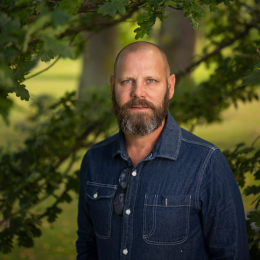
Joacim Ramberg is an Associate Professor at the Department of Special Education, Stockholm University, focusing on inclusive education, social justice, and school culture. His research examines organizational and societal-level educational challenges, with significant contributions to understanding teacher well-being, student psychological health, and policy implementation. PhD in Special Education (2015) from Stockholm University 25+ years as upper secondary teacher and special educator Collaborator with UNESCO's Global Education Monitoring Report and European Agency for Special Needs and Inclusive Education Research spans multi-level policy analysis (e.g., SALAR's inclusive education governance), school ethos effects on student outcomes, and teacher stress implications for school environments. Key findings reveal structural inequities in special education resource distribution and limitations of school climate as a mediator for family background disparities. Recent publications analyze policy actors in Swedish governance systems, organizational dynamics in special education, and cross-European inclusive education trends. Collaborative projects investigate teacher-student relationships, academic integrity, and sickness absence patterns through multilevel modeling. Main supervisor for doctoral students Annika Morén and Anna Swärd Co-supervisor for Carlos Rojas