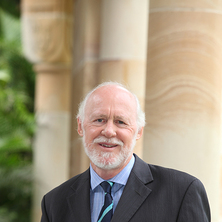
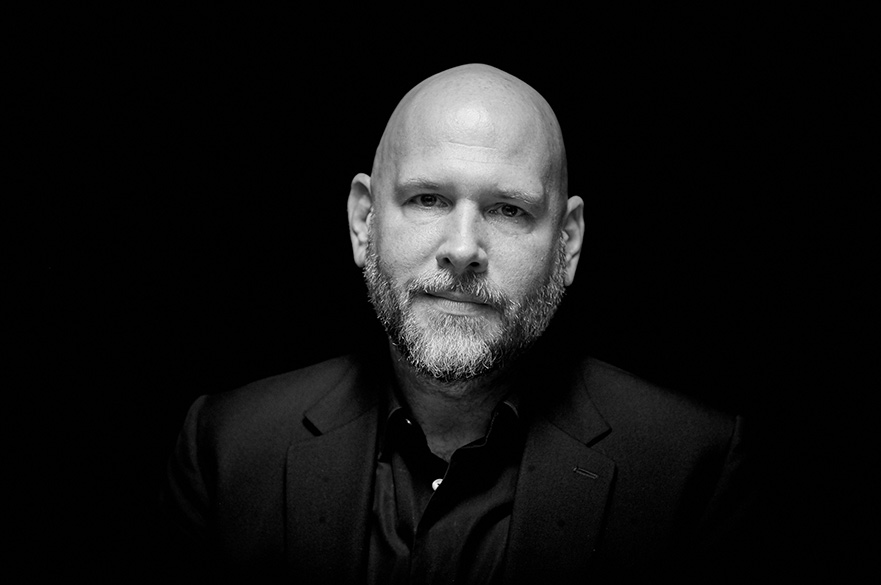
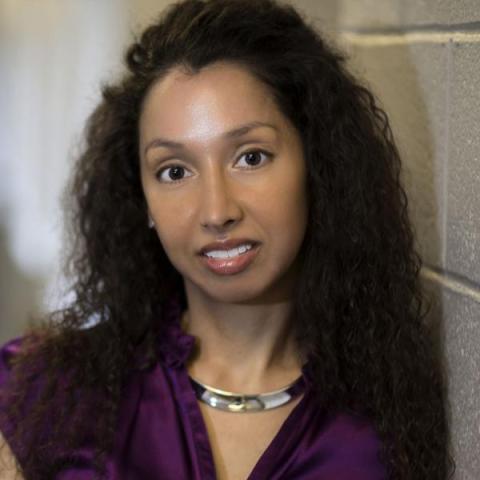
Kunihiko Kaneko is a Professor at the Niels Bohr Institute, University of Copenhagen, with a distinguished career in theoretical biophysics and complex systems. He received his PhD and MSc in Physics from the University of Tokyo, and has held leadership roles at the Universal Biology Institute and Center for Complex Systems Biology. PhD Physics, 1984 - University of Tokyo MSc Physics, 1981 - University of Tokyo His research spans five primary areas: Universal Biology, Evolutionary Constraints, Ecosystem Dynamics, Neural Cognition, and Universal Anthropology. He has published extensively on multi-level consistency principles, dimensional reduction in biological systems, and reciprocity between robustness and plasticity across scales. Recent publications show strong focus on microbial ecosystems (2025), evolutionary game theory (2025), neural modular architectures (2024), and dimensional reduction in cellular systems (2024). His work bridges physics and biology through dynamical systems theory applied to diverse phenomena from protocells to human societies.
Professor Victor Callan AM is Professor of Leadership and Organisational Change at the University of Queensland Business School within the Faculty of Business, Economics and Law. With over 300 publications to his name, including 179 journal articles, 60 conference publications, and 17 books, he is one of Australia's most recognized researchers in organizational change, leadership performance, and employee training. His influential work has shaped public policy in workforce development, vocational education, and organizational change management. Education: Bachelor (Honours) of Arts, University of New South Wales Doctor of Philosophy, Australian National University Professor Callan's research focuses on two primary areas: organizational change and leadership, with special interest in employees' and leaders' experiences with large-scale change; and employee skills, capabilities and training, examining effective responses to skills development and shortages. His work explores adaptation levels, personal capabilities, communication dynamics, and team processes during organizational transitions. He has pioneered research on maverickism in organizations, investigating how positively deviant change agents drive radical organizational transformations. His recent publications reveal a strong trend toward gender equality research, Indigenous knowledge integration, and maverick leadership. These works span multiple disciplines including organizational behavior, human resource management, vocational education, and leadership studies. His research on workplace gender inequality employs wicked problems frameworks, while his work on Indigenous knowledge holders emphasizes co-creation and positioning as expert researchers. Major Awards and Recognition: Fellow of the Academy of Social Sciences in Australia Fellow of the Queensland Academy of Arts and Sciences Fellow of the Australian Institute of Company Directors Member (AM) of the Order of Australia for significant service to higher education University's Award for Excellence in Higher Degree Research Supervision Two UQ Excellence in Leadership Awards Professor Callan has supervised numerous PhD students across diverse topics including leadership ascension, maverickism, CEO appointments, and organizational change. He has secured substantial research funding, including his 14th Australian Research Council project in 2025 focusing on Indigenous women environmental rangers. His advisory work spans over 100 projects for government departments and international organizations across South Africa, Ghana, Tanzania, Indonesia, Bhutan, Brunei, New Zealand, PNG, and South Pacific countries, addressing employee skills, vocational education, industry closures, and workforce development. He actively contributes to executive education for senior managers globally and has developed strong research, consulting, and industry partnerships. His current teaching focuses on MBA programs and the Bachelor of Advanced Business Honours program at UQ.
Dr. April Nowell is a Professor of Anthropology in the Department of Anthropology at the University of Victoria's Faculty of Social Sciences, specializing in Paleolithic archaeology, cognitive archaeology, and the archaeology of children. Currently on leave, she leads internationally recognized research projects across Europe, the Levant, Australia, and Africa while actively accepting graduate students. She earned her PhD from the University of Pennsylvania and has developed expertise in Neanderthal lifeways, Paleolithic art, and hominin life histories. Her academic journey reflects deep engagement with both theoretical frameworks and fieldwork across diverse geographical contexts. Nowell's research examines how prehistoric societies structured knowledge transmission, childhood development, and symbolic expression. Her groundbreaking work on finger flutings in Australian caves reveals children's roles in Paleolithic storytelling traditions, while her analysis of Levantine wetland ecosystems demonstrates how Pleistocene humans adapted to environmental shifts. She challenges conventional narratives about Neanderthal cognition and has pioneered methodologies for reconstructing prehistoric childhood experiences through skeletal and material evidence. Her recent publications show consistent innovation in archaeological methodology, particularly in digital documentation of rock art and interdisciplinary approaches to human development. Key trends include integrating bioarchaeological data with cognitive models, examining material culture as evidence of social learning, and analyzing environmental archives to understand human dispersal patterns. Her scientific recognition includes: 2023 EAA Book Prize for Growing Up in the Ice Age: Fossil and Archaeological Evidence of the Lived Lives of Plio-Pleistocene Children Nowell secures major research funding including Social Sciences and Humanities Research Council grants supporting her Azraq Basin project in Jordan and Koonalda Cave research in Australia. She mentors graduate students in Paleolithic theory while collaborating with Indigenous communities and international scholars on field projects spanning five continents. Her work bridges academic research and public engagement through TEDx talks and media appearances examining science communication. She directs field programs at Jordan's Azraq Basin wetlands and Australia's Koonalda Cave, working with multidisciplinary teams including geochronologists, bioarchaeologists, and Traditional Owners to investigate Pleistocene human adaptation and cultural transmission.
Dr. Chien-Ming Huang is the John C. Malone Assistant Professor in the Department of Computer Science at Johns Hopkins University. He leads the Intuitive Computing Laboratory and is affiliated with the Malone Center for Engineering in Healthcare, Laboratory for Computational Sensing and Robotics, Institute for Assured Autonomy, and Data Science and AI Institute. His research focuses on human-robot interaction, human-computer interaction, and artificial intelligence applications in healthcare and education. BS in Computer Science, National Chiao Tung University (2006) MS in Computer Science, Georgia Institute of Technology (2010) PhD in Computer Science, University of Wisconsin–Madison (2015) Postdoctoral Research, Yale University (2015-2017) Dr. Huang's work bridges human-robot interaction, robotics, and AI to develop technologies that enhance social, physical, and behavioral support for diverse populations. His research includes adaptive robot systems for autism intervention, aging care technologies, and explainable AI frameworks for medical decision support. Current projects focus on end-user robot programming, socially aware navigation, and conversational agents for health management. His publications span major venues like Science Robotics , HRI, CHI, and ICRA, with recent emphasis on robot error awareness, small talk in collaboration, and AI explanation design for healthcare. Dr. Huang has received numerous accolades including the NSF CAREER Award and John C. Malone Endowed Chair. 2022 NSF CAREER Award John C. Malone Endowed Chair 2013 RSS Best Paper Runner-Up 2012 Human-Robot Interaction Pioneer Dr. Huang mentors PhD, postdoctoral, and undergraduate researchers, emphasizing interdisciplinary collaboration and technical rigor. He serves as Associate Editor for ACM Transactions on Human-Robot Interaction and has organized key conferences including HRI and ICMI. His lab develops systems for robotic assistance in surgical training, home healthcare, and educational contexts.
Wang Jianmin serves as Professor and Doctoral Supervisor at Tongji University's School of Art and Media, concurrently holding the position of Vice Dean since 2014. With a computer science PhD from Sun Yat-sen University, he bridges engineering and media arts through pioneering research in intelligent communication systems and digital media interfaces. His work focuses on human-centered design for emerging technologies, particularly in automotive and virtual environments. His academic foundation includes: PhD in Engineering (Computer Software and Theory), Sun Yat-sen University (2003) Master's in Computational Mathematics, Sun Yat-sen University (1999) Bachelor's in Computational Mathematics, Nankai University (1996) Professor Wang's research centers on intelligent communication systems and digital media art, with significant contributions to automotive human-machine interfaces (HMI), virtual reality applications, and user experience methodologies. His investigations into driver-robot transparency, augmented reality navigation, and mixed-reality educational platforms demonstrate interdisciplinary innovation connecting computer science, cognitive psychology, and design theory. Current projects explore AI-driven media systems for urban environments and safety-critical interaction frameworks. Analysis of his recent publications reveals a cohesive research trajectory focusing on automotive HMI (40% of output), human-robot interaction (30%), and mixed reality applications (30%). His work consistently emphasizes experimental validation through driving simulators and user studies, yielding practical design guidelines for industry implementation. The interdisciplinary nature spans computer science, cognitive ergonomics, and media studies, with increasing emphasis on AI integration in communication systems. His scientific recognition includes national and provincial awards for innovation in human-computer interaction and educational technology: 2019 China Industry-University-Research Innovation Award for automotive HMI systems 2020 China User Experience Alliance Excellence Award 2012 Guangdong Dingying Science and Technology Award Multiple national/provincial science progress awards (2001-2009) 2020 Tongji University Teaching Achievement Award for curriculum development As an educator, Professor Wang mentors graduate students in national design competitions including the 'Core Cup' Future Automotive HMI Challenge and International User Experience Innovation Competition. His research program is supported by substantial funding from diverse sources: National Grants: National Natural Science Foundation projects on driver behavior modeling and cognitive testing Ministry of Education: 15+产学合作 projects for virtual simulation labs and curriculum development Shanghai Municipal: Publicity Department funding for smart city media research Industry Partnerships: Huawei (intelligent vehicle HMI), SAIC Motor (AR-HUD design), and automotive electronics firms He directs Tongji's Media Experiment and Practice Teaching Center and the All-Media Research Institute, leading teams developing virtual simulation platforms for emergency news reporting, intelligent vehicle interaction testing systems, and mixed reality educational tools. Current initiatives focus on AI-enhanced media art for urban applications and next-generation HMI frameworks for autonomous mobility solutions.
Lappeenranta-Lahti University of Technology LUTFinland
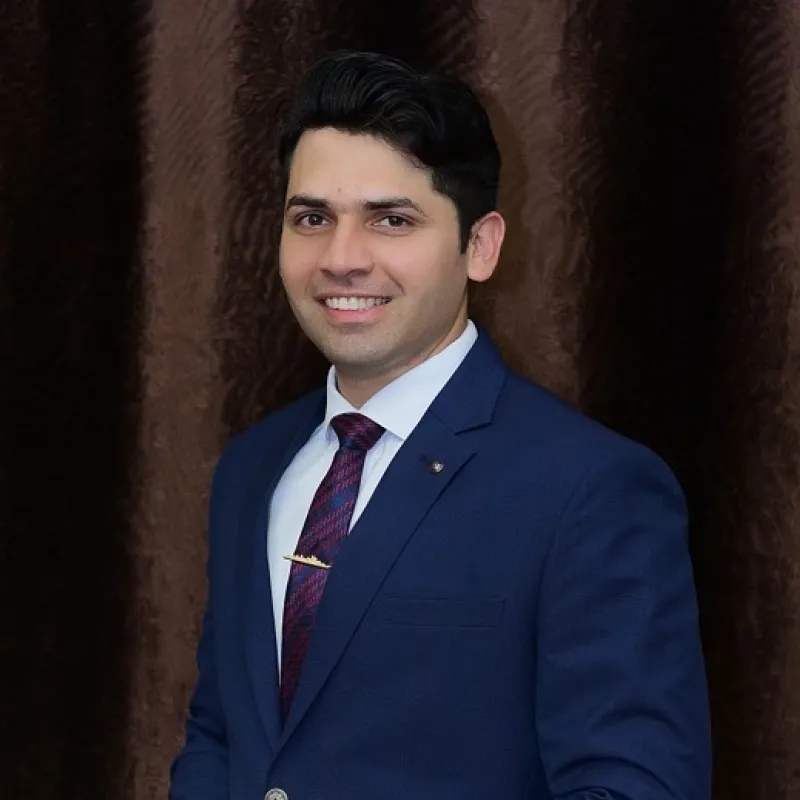
Adeel Tariq is a Post-Doctoral Researcher at the Industrial Engineering and Management department of LUT School of Engineering Sciences , Lappeenranta University of Technology, Finland. He completed his Ph.D. (2019) and MBA (2014) at the School of Management , Asian Institute of Technology, Thailand. Research Focus: Technology and innovation management, digital transformation, sustainable development, knowledge management, and leadership studies. Peer Review: Active reviewer for journals including Leadership & Organization Development Journal , Journal of Intellectual Capital , and European Journal of Innovation Management . Collaborations: Regular co-author with Waqas Tariq, Muhammad Saleem Sumbal, and Marko Torkkeli on topics like digital governance, fintech, and SME sustainability.
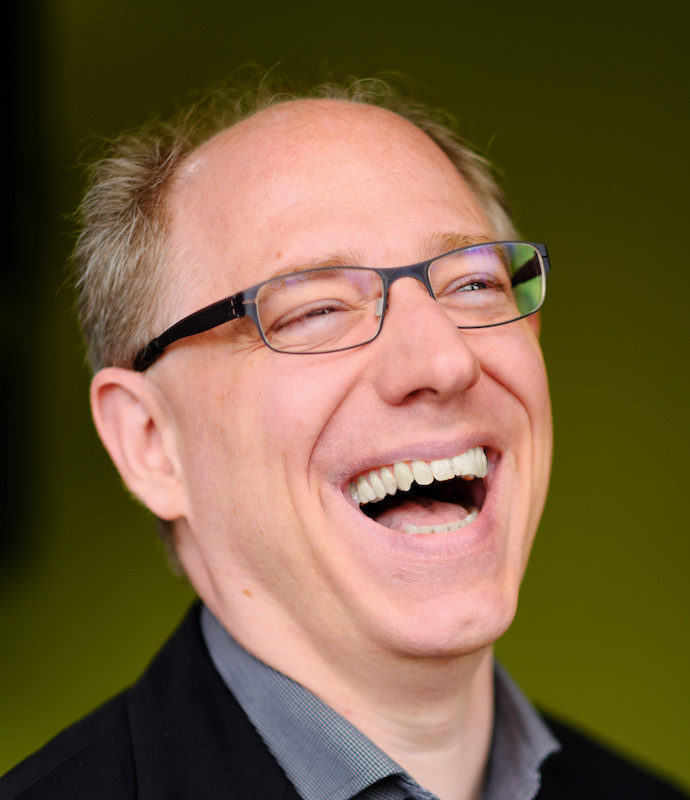
Professor Alexander Koller is a leading academic in Computational Linguistics at Saarland University's Department of Language Science and Technology. He holds a courtesy appointment in Computer Science and contributes to the Saarland Informatics Campus - one of Europe's premier computer science research centers. He leads the Computational Linguistics group and serves as speaker for the DFG-funded Research Training Group 'Neuroexplicit Models of Language, Vision, and Action'. PhD in Computer Science (Saarland University) Former positions: University of Potsdam, Columbia University, University of Edinburgh Sabbatical experiences: Meta AI (Paris), Allen Institute for AI (Seattle) His research focuses on computational modeling of meaning and reasoning in NLP, combining neural and symbolic approaches. Key contributions include semantic parsing systems like the AM parser and Alto, neurosymbolic models, and the GIVE Challenge for NLG evaluation. His recent work explores LLMs' limitations in problem-solving and compositional generalization. Recent publications highlight diverse applications across semantic parsing, dialogue systems, and LLM evaluation. Awards include ACL 2020 Best Theme Paper and multiple Outstanding Paper recognitions at ACL conferences. 2025 - AI Action Summit keynote speaker 2023 - ACL Outstanding Paper Awards 2022 - ELLIS Faculty appointment He maintains the DialogOS system for spoken dialogue development and teaches advanced computational linguistics topics. His group includes multiple postdocs and PhD students working across LLMs, dialogue systems, and semantic modeling.
Dongwook Yoon is an Associate Professor at the Department of Computer Science , University of British Columbia , and serves as Director of the SOCIUS Lab . He actively contributes to research in Human-Computer Interaction, Human-AI Interaction, and Virtual/Augmented Reality as a member of the Designing for People (DFP) and CAIDA research clusters. Education : PhD in Computer Science from Cornell University (2017), MS (2009) and BS (2007) in Computer Science from Seoul National University Research Focus : Designing socio-technical systems that bridge the gap between technology and human social processes, with innovations in AR/VR, multimodal interaction, and inclusive design Article Trends show his work spans: Temporal and bichronous learning environments AI self-clones and ethical implications Income inequality in virtual platforms Enhanced multimodal collaboration in VR Eyes-reduced interfaces for situational impairments Speculative participatory design for gig economy challenges Scientific Awards include: Google Academic Research Award (2024) Best Paper Award at CHI 2024 High Impact Award in Educational Technology (2024) CHCCS/SCDHM Graphics Interface Early Career Award (2023) Multiple Honorable Mentions at CHI, DIS, and CSCW Students & Collaborators range from active PhD candidates (Anika Sayara, Yuri Kim) to notable alumni (Thitaree Tanprasert, Ashish Chopra) across his SOCIUS Lab projects. His research receives funding from NSERC , KIST , Adobe , Microsoft , and Google grants.
Dan Nguyen, Ph.D., is a faculty member in the Department of Radiation Oncology at UT Southwestern Medical Center, where he is part of the Division of Medical Physics and Engineering. He is a founding member of the Medical Artificial Intelligence and Automation (MAIA) Laboratory, collaborating closely with Dr. Steve Jiang to advance AI applications in radiotherapy. His work focuses on deep learning for treatment planning, dose prediction, auto-segmentation, and adaptive radiotherapy. Ph.D. in Biomedical Physics, University of California, Los Angeles (UCLA), 2017 Mentor: Dr. Ke Sheng Faculty appointment at UT Southwestern since 2017 Dr. Nguyen’s research is centered on applying artificial intelligence to solve critical challenges in radiation oncology. His primary interests include deep learning-based dose prediction, auto-segmentation of anatomical structures, optimization of treatment plans, and real-time adaptive radiotherapy. He has pioneered work in direct aperture optimization, 4π radiotherapy, and uncertainty quantification in AI models. His research bridges the gap between AI innovation and clinical implementation, with a focus on improving plan quality, reducing planning time, and enhancing accessibility for less experienced clinicians. The most recent publications (2023–2025) demonstrate a consistent trend in developing fast, accurate, and robust deep learning models for radiotherapy. Key themes include dose prediction with transfer and meta-learning, adaptive segmentation using test-time optimization, uncertainty assessment in AI predictions, and mathematical modeling of radiotherapy-immunotherapy synergy. These works span high-impact journals in medical physics, AI, and oncology, reflecting interdisciplinary innovation. While no specific scientific awards are listed, Dr. Nguyen’s leadership in the MAIA Lab and extensive publication record in top-tier journals indicate significant recognition in the field of medical physics and AI in medicine. Dr. Nguyen has co-authored numerous studies involving mentoring and collaborative research, particularly with trainees and junior faculty in the MAIA Lab. His work is supported by institutional and likely federal funding, given the scale and scope of AI deployment studies. He has contributed to large-scale collaborative efforts such as OpenKBP-Opt, involving international teams evaluating knowledge-based planning pipelines. The MAIA Laboratory is a multi-investigator research group focused on innovating, developing, and applying artificial intelligence technologies to empower clinicians—especially those with less experience or limited resources—for improved patient care. The lab’s work spans machine learning, deep learning, reinforcement learning, and mathematical modeling in radiation oncology.
University of Illinois Urbana-ChampaignUnited States
Elyse Rosenbaum is the Melvin and Anne Louise Hassebrock Professor in Electrical and Computer Engineering at the University of Illinois at Urbana-Champaign. She also serves as the Acting Associate Dean for Research at the Grainger College of Engineering. She is the director of the NSF-supported Center for Advanced Electronics through Machine Learning (CAEML), a collaboration between the University of Illinois, North Carolina State University, and Penn State University. Education: Ph.D. in Electrical Engineering, University of California, Berkeley, 1992 M.S. in Electrical Engineering, Stanford University B.S. in Electrical Engineering, Cornell University (with distinction) Research Interests: Her research focuses on machine learning applications in electronics, ESD-robust high-speed I/O circuit design, compact modeling, behavioral modeling of circuits, and CDM-ESD protection for advanced packaging technologies. Scientific Awards: IEEE Fellow for contributions to electrostatic discharge reliability of integrated circuits Best Student Paper Award, IEDM Outstanding and Best Paper Awards, EOS/ESD Symposium Technical Excellence Award, SRC NSF CAREER Award IBM Faculty Award ESD Association’s Industry Pioneer Recognition Award Advising and Grants: She supervises graduate and undergraduate researchers, primarily focusing on those with strong academic records and relevant experience. Her work is supported by NSF and other prominent organizations. Labs and Teams: She leads the CAEML center, which aims to apply machine learning to optimize microelectronic circuits and systems, enhancing design automation and reliability.
University of Illinois Urbana-ChampaignUnited States
Bo Chen is a postdoctoral researcher at the Siebel School of Computing and Data Science and the Coordinated Science Laboratory at the University of Illinois at Urbana-Champaign. His work focuses on AI-system co-design for immersive computing, particularly in extended reality (XR) and multi-modal content delivery over wireless networks. Ph.D. in Computer Science (2022), advised by Klara Nahrstedt B.S. in Computer Science from Shanghai Jiao Tong University (2016) His research integrates AI techniques with system-level optimizations to address challenges in XR infrastructure , including multi-view video streaming , NeRF-based content delivery , and uncertainty management in video transmission . He has pioneered methods like Loose Frame Referencing for learned codecs and Context-Aware NeRF Serving for mobile XR applications. Bo Chen's recent publications span top venues like ACM MobiSys, ACM SenSys, and USENIX NSDI. Key themes include AI-driven compression , dynamic 3D rendering , and reliable streaming over mobile networks . He has received recognition including the Rising Star Best Presentation Award (ACM MobiSys 2025) and Best Student Paper Award (ACM MMSys 2022). Bayesian optimization for XR systems Multi-view video aggregation at edge networks 3D Gaussian Splatting for immersive media
Samuel Jean Bassetto is an Associate Professor in the Department of Mathematics and Industrial Engineering at Polytechnique Montréal. He serves as Director of the Continuous Improvement Laboratory (LABAC) and holds membership in multiple prestigious research groups including the Research Group on Globalisation and Management of Technology (GMT), Poly-Industries 4.0 Laboratory, Interuniversity Research Centre on Enterprise Networks, Logistics and Transportation (CIRRELT), and Institute for Data Valorization (IVADO). Dr. Bassetto's research spans multiple disciplines, focusing on continuous improvement through the integration of engineering, artificial intelligence, cognitive science, psychology, and design. His primary sphere of excellence is in New Frontiers in Information and Communication Technologies, with secondary expertise in Modeling and Artificial Intelligence and Human Health. He develops tools that place humans at the center of technology to enhance organizational performance while respecting human rhythms and cognitive limitations. His recent publication portfolio reveals a strong interdisciplinary approach, with research bridging industrial engineering, cognitive neuroscience, and AI ethics. His work addresses practical challenges in lean manufacturing assessment, racial bias in medical AI systems, cognitive data collection in natural environments, and condition monitoring for industrial machinery. The research consistently demonstrates a commitment to developing practical solutions that integrate human factors with technological innovation. NSERC Synergy Prize for Innovation recipient Principal investigator on multiple research grants from NSERC, FRQ, and MITACS Collaborations with over a dozen institutions across multiple countries Supervision of over 150 highly qualified personnel throughout his career Dr. Bassetto teaches specialized courses including CAP7011 (Creativity in Research), IND8444 (Continuous Improvement), IND8203 (Industrial Launch), and previously taught IND8178 (Production). His teaching philosophy emphasizes practical application, with courses featuring hands-on exercises, real-world scenarios, and gamification techniques to enhance learning. His supervision portfolio includes numerous Ph.D. and Master's students working on topics ranging from human-technology collaboration to reinforcement learning for production management. Through LABAC, Dr. Bassetto leads research initiatives focused on developing human-centered tools for continuous improvement in organizational settings. The laboratory conducts projects related to industrial IoT applications, cognitive aspects of process improvement, and the development of practical frameworks for organizations to enhance performance while maintaining respect for human rhythms and cognitive capabilities.
Thorsten Chmura is a Professor in the Department of Economics at Nottingham Business School, Nottingham Trent University. His work focuses on experimental and behavioral economics, utilizing laboratory and field experiments to address real-world challenges. He maintains collaborations within NTU’s Applied Economics and Policy Research Group, Public Service Management Research Group, and international partnerships across Europe, China, and the US. Chair of Industrial Economics at University of Nottingham (previous) Director, Centre for Research in the Behavioural Sciences (previous) PhD in Economics and Physics from University of Bonn Research interests span behavioral economics, experimental economics, game theory, and traffic modeling. His work examines decision-making under risk, wage discrimination, and behavioral responses in complex systems. Recent publications explore AVOD streaming economics (2024), social trading herding (2022), and toll road choice dynamics (2014). Key article trends include: Behavioral responses in financial markets Risk attitudes across 30 countries Cultural value impacts on loyalty programs Traffic flow simulations Game theory applications in coordination problems Experimental validation of economic theories
Christos Gatzidis serves as Executive Dean of Bournemouth University's Faculty of Science and Technology since October 2023, overseeing six departments including Computing and Informatics, Creative Technology, and Psychology. Previously Deputy Dean (2021-2023) and Head of Creative Technology Department (2016-2021), he was appointed Professor in Creative Technology in November 2019. The Faculty leads five REF Units of Assessment and secures funding from AHRC, NIHR, and Innovate UK for research spanning digital healthcare, gaming technologies, and cultural heritage applications. His educational qualifications include: PhD in Information Science, City University London (2010) PG Cert in Research Degree Supervision, Bournemouth University (2010) MA in Computer Animation, Teesside University (2003) BSc (Hons) in Computer Studies (Visualisation), University of Derby (2002) Professor Gatzidis specializes in computer graphics with research spanning virtual reality, serious games, and digital healthcare applications. His work bridges technical innovation and practical implementation, particularly in mindfulness prototypes for healthcare and stroke rehabilitation systems. Current projects focus on the multidisciplinary application of gaming technologies in medical contexts, emphasizing user experience and therapeutic outcomes through collaborations with industry partners. His publication record (2014-2025) demonstrates evolving expertise from foundational computer graphics research in terrain generation and deformation to applied work in healthcare, cultural heritage, and music education. Key trends include virtual reality for therapeutic mindfulness, usability studies in mobile gaming, and digital cultural presentation techniques, reflecting a trajectory toward socially impactful technological solutions with strong industry translation. No scientific awards are documented in the provided information. He has supervised PhD students and secured competitive research funding, including two Innovate UK Knowledge Transfer Partnerships. His principal investigator role in a virtual reality mindfulness prototype project exemplifies his approach to translating academic research into practical industry solutions, with current focus on expanding knowledge exchange activities to support the University's civic engagement mission. As Executive Dean, he leads faculty-wide research strategy across six departments, fostering interdisciplinary collaborations particularly in digital healthcare and cultural heritage. His personal research integrates computer graphics expertise with clinical applications through partnerships with healthcare providers and technology companies, driving innovation in therapeutic VR systems and educational gaming platforms.
Noelle Hurd is a Professor of Psychology at the University of Virginia and co-Director of Diversity, Equity, and Inclusion Initiatives (co-DDEI). She leads the Promoting Healthy Adolescent Development (PHAD) Lab, focusing on marginalized youth development through intergenerational relationships and systemic oppression disruption. Her research integrates clinical and community psychology to address adolescent development, racial discrimination, and mental health disparities. Key interests include natural mentoring as protective factor, anti-racist frameworks, and leveraging community strengths to counteract systemic barriers for Black and Latinx youth. Her work emphasizes youth agency in social justice movements and resilience through familial and community support networks. Recent publications (2023-2025) reveal concentrated exploration of natural mentoring dynamics across marginalized populations, with methodological diversity spanning qualitative analyses of immigrant youth experiences and longitudinal studies of college adjustment. Recurring themes include anti-immigration policy impacts, youth-led anti-racism initiatives, and the intersection of discrimination with mental health outcomes. Dr. Hurd's scientific contributions have earned significant recognition: William T. Grant Scholar and Spencer/National Academy of Education Postdoctoral Fellow Rising Star Award (Association for Psychological Science, 2015) Outstanding Professor Award (UVA Psychology, 2017) Faculty Excellence in Diversity, Inclusion, and Equity Award (2021) Fellowships in American Psychological Association and Society for Community Research and Action As PHAD Lab director, she mentors emerging researchers in community-engaged scholarship funded by NIH, NSF, William T. Grant Foundation, and Institute of Education Sciences. Her team examines mentoring relationships, discrimination mechanisms, and intervention development for youth thriving in oppressive contexts. The PHAD Lab operates as an interdisciplinary research collective developing evidence-based approaches to dismantle systemic barriers through youth-adult partnerships and natural mentoring frameworks.