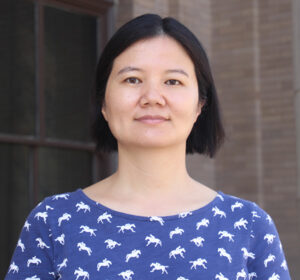
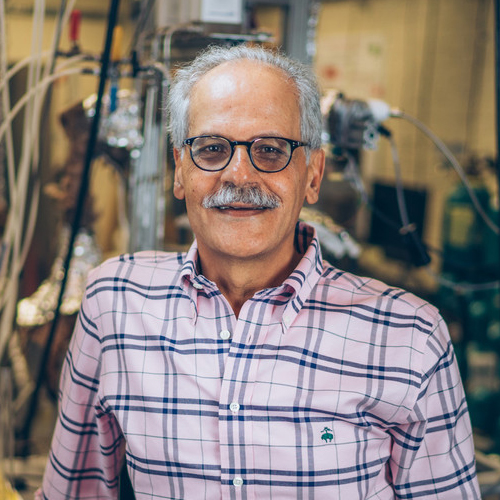
Torgeir Welo is a Professor at the Department of Mechanical and Industrial Engineering , Norwegian University of Science and Technology (NTNU) . He specializes in metal forming , particularly aluminum alloy structures , with a focus on plastic bending behavior , dimensional stability , and 3D forming technologies . His research also encompasses Lean Product Development , emphasizing knowledge reuse and maximizing customer value in automotive and aerospace applications. Key Research Areas : Metal Forming, Aluminum Processing, Springback Control, Lean Development, Additive Manufacturing, Material Substitution Teaching : Courses on Aluminum Technology , Metal Forming Analysis , and Machine Element Design Publications (15 most recent): Focus on springback monitoring , charge weld evolution , flexible forming , machine learning applications , and circular economy frameworks in metal manufacturing.
Jan Emblemsvåg is a Professor at NTNU’s Department of Ocean Space Operations and Civil Engineering in Ålesund, Norway. He has held senior industry roles including Shipyard Director at Vard, SVP Ship Design & Systems at Rolls-Royce Marine, and Managing Director at Midsund Bruk. His academic positions span BI Norwegian Business School, Ålesund University College, and NTNU since 2006. Emblemsvåg’s expertise bridges engineering and management, focusing on sustainable development through rigorous analytical frameworks. Education: PhD from Georgia Institute of Technology (1999), MSc (1995), and Civil Engineering degree from Norwegian Institute of Technology (1994). R&D focuses on six core areas: 1) Product/process development with Lean methodologies, 2) Life-Cycle Costing/Analyses (integrating cost, environmental, and social dimensions), 3) Risk management and uncertainty analysis using Monte Carlo methods, 4) Operations/General management under Lean principles, 5) Project management with Lean integration, and 6) Renewable energy (especially nuclear power’s role in maritime and industrial sectors). Publications emphasize energy policy critiques, nuclear propulsion feasibility, and sustainable shipping. Recent work highlights nuclear energy’s potential as a cost-effective, low-emission solution for maritime transport and industrial needs. Active in policy debates advocating evidence-based energy strategies. Labs/Teams: Leads NTNU’s research initiatives on nuclear propulsion for merchant ships (NuProShip project) and collaborates internationally on maritime safety and evacuation modeling.
Oliver Nash is a researcher at Imperial College London, actively engaged in the formalisation of advanced mathematical concepts. His work bridges geometry and computational logic, with a focus on rigorous proof systems. Research Interests: Oliver's research lies at the intersection of geometry and the formalisation of mathematics. He specialises in using proof assistants to verify deep mathematical results, including topics such as the h-principle, sphere eversion, and Lie algebras. His work contributes to the growing field of certified mathematics, ensuring correctness through machine-checked proofs. Publication Trends: His recent publications at the CPP conference demonstrate a consistent focus on formalising foundational results in differential geometry and algebra. These works reflect a trend toward computational trust in mathematical proofs, particularly in complex geometric transformations and algebraic structures. Professional Activities: Oliver is an active contributor to the Certified Programs and Proofs (CPP) conference, presenting cutting-edge work in formal verification. He maintains a personal website detailing both his academic contributions and early explorations in computer graphics, such as raytracing and radiosity rendering from the early 2000s. Labs and Projects: While specific lab affiliations are not mentioned, his work is closely aligned with research groups in formal methods and interactive theorem proving, likely involving tools like Lean, Coq, or Isabelle.
Pedro Oliveira is a leading academic and administrator with diverse roles across institutions. He currently serves as Dean at Nova School of Business and Economics , where he holds the Cascais Chair in Operations, Technology, and Innovation Management . Additionally, he is a Professor MSO at Copenhagen Business School , Academic Fellow at Cornell University , and Adjunct Professor at MIT Sloan School of Management . He also founded the Patient Innovation platform and co-founded PPL Crowdfunding . Education: Ph.D. in Operations, Technology, and Innovation Management (2004), University of North Carolina at Chapel Hill M.Sc. in Operations Research and Systems Engineering (2000), Instituto Superior Técnico Licenciatura in Naval Engineering (1996), Instituto Superior Técnico Research Focus: Pedro Oliveira's work centers on Open and User Innovation , Patient Innovation , and Social and Impact Innovation , with a strong emphasis on Service Operations Management and Artificial Intelligence in Innovation . His studies often bridge Technology Strategy with Healthcare and Financial Services , exploring how users can drive innovation in resource-constrained environments. Publication Trends: His recent works emphasize collaborative innovation in public and semi-public domains , patient-driven healthcare solutions , and user innovation in digital finance . He has also published extensively on knowledge commons and innovation during crises , such as the COVID-19 pandemic . Leadership and Advisory Roles: Pedro has held significant administrative roles, including Senior Associate Dean for Faculty & Research and Director of the Research Unit in Business and Economics . He has advised the Portuguese Ministry of Science, Technology, and Higher Education and served on the Environment & Sustainability Council at EDP Energias de Portugal . He is also the President of the Open and User Innovation Society and a counselor on the National Council for Science, Technology, and Innovation (CNCTI) and Economic and Social Council (CES) in Portugal. Labs and Teams: As founder of Patient Innovation , he has established a global platform for user-driven healthcare solutions. His work also includes collaborative digital health initiatives , such as the Saúde.Come Senior program addressing food insecurity in elderly populations through TV-based eHealth interventions.
Assoc. Prof. Paul Leonard is an Associate Professor in Biotherapeutics at Dublin City University (DCU), leading the Biomedical Innovation Group (BIG) within the School of Biotechnology. His research focuses on biomolecular interaction analysis, single-cell technologies, and biologics discovery, addressing challenges in oncology, cardiovascular disease, and infectious disease diagnostics. He has 20+ years of academic and industry experience, co-founding Remedy Biologics Ltd and securing over €15M in funding. His entrepreneurial roles include CSO/CTO, Lean Six Sigma process improvements, and advisory work for life sciences companies. Research interests span high-throughput antibody discovery, immunoassay development, and environmental sensing. He collaborates with academia and industry, including projects like AquaBioSens for aquatic pollutant detection. His lab employs multidisciplinary teams and holds patents in biotechnology. Paul also serves as an external examiner for Technical University Dublin’s Biomedical Diagnostics program. Key achievements include technology spin-outs, patent filings, and leadership in EU-funded projects. His work bridges academic innovation with commercial applications, emphasizing rapid diagnostic tools and therapeutic advancements.
Timothy Jacobs is Professor and Head of Multidisciplinary Engineering at Texas A&M University, with joint appointment in Mechanical Engineering. His research advances combustion science, emission control, and alternative fuel applications. Education: Ph.D. Mechanical Engineering, University of Michigan (2005) M.S. Mechanical Engineering, University of Michigan (2002) B.S.E. Mechanical Engineering, University of Michigan (1999) Research focuses on fundamental combustion processes in natural gas engines, developing low-temperature combustion strategies and aftertreatment integration. Recent work optimizes prechamber ignition systems for large-bore engines and hydrogen production via piston reactors. Experimental diagnostics characterize cycle variability, unburned emissions, and flame dynamics. Publications demonstrate expertise in combustion modeling, engine control algorithms, and emission formation mechanisms. Applied research supports decarbonization of power generation and marine propulsion. Awards recognize teaching excellence and research leadership, including ASME Fellowship and university professorships. Secures funding for engine technology development from federal agencies and industry partners.
Dr Nour Ali is a Reader in the Department of Computer Science at Brunel University London , where she co-heads the Brunel Software Engineering Lab and serves as Vice-Dean of Education for the College of Engineering, Design and Physical Sciences. She holds a PhD in Software Engineering from Universidad Politecnica de Valencia, Spain, and a Major in Computer Science from Bir-Zeit University, Palestine. Research Interests: Software architecture for distributed and adaptive systems, integrating techniques like Model-Driven Engineering, Reverse Engineering, and Machine Learning. Teaching: Module leader for Software Project Management and supervisor of undergraduate group projects and final-year projects. Scientific Contributions: Over 70 publications in journals, conferences, and books. Key research areas include microservice architecture recovery, autonomic healthcare systems, and mobile self-adaptive architecture. Scientific Awards: Fellow of the Higher Education Academy (HEA). Membership: Deputy Editor-in-Chief for IET Software, member of multiple conference program committees, and reviewer for EPSRC, NWO, and other funding bodies.
Dr. Min Liu is a Professor and the Abdallah H. Yabroudi Endowed Professor in Sustainable Civil Infrastructure at Syracuse University, where she directs the Syracuse University Infrastructure Institute. She holds a Ph.D. in Engineering Project Management from UC Berkeley, and prior degrees from National University of Singapore and Xi’an University of Architecture and Technology. Her research focuses on integrating human and engineering aspects in construction planning, with emphasis on Lean Construction, Digital Twin design, and machine learning applications. She has published over 50 articles in top-tier journals and won prestigious awards such as the 2021 ASCE Thomas Fitch Rowland Award. Dr. Liu advises numerous graduate students and postdocs, offering positions in Construction Engineering and Management. Her lab develops innovative approaches for infrastructure project delivery, worker mental health, and bridge preservation strategies. Education: Ph.D. in Engineering Project Management, UC Berkeley (2007) MSCE, Xi’an University of Architecture and Technology (1997) MSc in Building Science, National University of Singapore (2001) BSc in Civil Engineering, Qingdao University of Technology (1994) Research Highlights: Large language models for construction planning reliability Ontology-based knowledge systems for construction methods Lean techniques for worker mental health improvement Socioeconomic analysis of bridge preservation strategies Awards: 2021 ASCE Thomas Fitch Rowland Award Multiple Best Paper Awards (2017-2018) "Thank a Teacher" awards (2011-2018) Her advising record includes notable students like Chuanni He (2023 Chinese Government Award) and Gongfan Chen (2022 Three-Minute Thesis Award). Current opportunities include Ph.D. financial support and postdoc positions. Dr. Liu’s work appears in journals like ASCE Journal of Management in Engineering and Engineering, Construction and Architectural Management.
Dr. Mina Najafi is an academic researcher specializing in sustainable construction, digital transformation in built environments, and place attachment theory. Her work bridges engineering, urban planning, and social sciences. She actively supervises PhD students and contributes to interdisciplinary research initiatives. Research Focus: Sustainable Construction, BIM Technology, Digital Twins, Aging in Place Strategies, and Climate Resilience. Key Projects: Exploration of digital frontiers in construction, policy analysis for energy efficiency, and community-centric design for low-density regions. Her research interests span innovative construction practices, the integration of emerging technologies, and the socio-cultural dimensions of built environments. Recent work emphasizes leveraging digital tools for supply chain optimization and climate adaptation.
Amany Farag is a tenured Associate Professor at the University of Iowa College of Nursing and Co-Director of the VA Quality Scholars Program (Iowa City site). Her work bridges nursing science, human factors engineering, and data science to address critical patient safety challenges, with a specific focus on medication administration practices across healthcare settings. Education: Postdoctoral Scholar, Case Western Reserve University, Frances Payne Bolton School of Nursing PhD, Case Western Reserve University, Frances Payne Bolton School of Nursing MSN, University of Alexandria, Alexandria Egypt BSN, University of Alexandria, Alexandria Egypt Dr. Farag's research centers on reactive and proactive approaches to patient safety , with dual emphasis on medication error reporting systems and nurse fatigue prevention. Her work integrates human factors engineering and machine learning to develop novel interventions. Key themes include understanding how social and system factors influence nurses' error reporting behaviors, examining fatigue as a precursor to errors, and developing self-management strategies for nurse wellness. Recent projects explore intershift recovery, sleep hygiene using consumer technology, and the impact of shift work on cognitive performance. Publication trends reveal a strong focus on interdisciplinary safety science , with consistent output in nursing, human factors, and healthcare quality journals. Her work increasingly incorporates AI methodologies while maintaining clinical relevance to frontline nursing practice. Scientific Recognition: Mary Hanna Memorial Journalism Award (Journal of Peri-Anesthesia Nursing, 2016) Author of the Year (Journal of Emergency Medicine, 2018) Junior Investigator Award (Midwest Nursing Research Society, 2018) Rogers Endowed Lectureship Award (Mississippi Medical Center, 2018) Dr. Farag secures significant funding from national agencies including the National Council of State Boards of Nursing (NCSBN), NIOSH-funded Healthier Workforce Center of the Midwest, CDC-funded Injury Prevention Research Center, and University of Iowa Institute for Clinical and Translational Science. Her collaborative approach spans nursing, data science, ergonomics, and public health teams. As Co-Director of the VA Quality Scholars Program, she mentors future healthcare quality leaders while advancing her research on medication safety systems and nurse fatigue mitigation strategies through interdisciplinary partnerships.
Marc Olano is an Associate Professor in the Department of Computer Science and Electrical Engineering at the University of Maryland, Baltimore County (UMBC), and serves as the Associate Dean of Academic Programs and Learning in the College of Engineering and Information Technology. He leads the Computer Science Game Development Track and co-directs the VANGOGH lab. His research focuses on interactive 3D computer graphics, programmable shading, graphics hardware, and surface appearance modeling, with contributions to foundational graphics technologies like procedural shading and normal mapping. Research Interests: Olano’s work spans real-time rendering, GPU algorithms, texture compression, and procedural shading. He has pioneered techniques such as LEAN mapping and variable bitrate texture compression, significantly impacting game development and real-time graphics. His research often explores the intersection of hardware capabilities and algorithmic innovation, with applications in medical visualization, visualization of scientific data, and haptic interaction. Key Contributions: Olano’s accomplishments include pioneering procedural shading on graphics hardware, developing homogeneous rendering techniques, and advancing normal mapping. His work on GPU-based curvature estimation and BT volumes for volume rendering exemplifies his focus on leveraging GPU parallelism for real-time visualization challenges. He has also contributed to standards in shading languages and GPU programming. Teaching & Mentorship: Olano teaches courses in computer graphics, game development, and advanced computer architecture. He mentors students in independent studies and has advised numerous MS theses exploring topics like GPU random number generation, volume rendering, and soft shadow algorithms. His students’ work often bridges theoretical research and practical GPU implementations. Labs & Projects: The VANGOGH lab under his co-direction focuses on advanced visualization and graphics research, including real-time rendering techniques, GPU algorithms, and interactive data visualization. His research collaborations span industry partners like Firaxis Games, contributing to titles such as Civilization V through texture compression innovations.
Marcel Gebhardt (born 1987) is a Professor in the Department of General Business Administration at the Faculty of Industrial Engineering, Mannheim University of Applied Sciences since April 2022. His expertise spans B2B Marketing, Technical Sales, and Data-driven Marketing & Sales, with a focus on Digital Sales and Business Performance Methods. University: Mannheim University of Applied Sciences School: Faculty of Industrial Engineering Rank: Professor Research Interests: Digital Marketing & Sales Marketing & Sales Analytics Data-driven Marketing & Sales Cost Management in Industrial Engineering Publications Trends: His research focuses on data-driven approaches in B2B marketing, lead scoring models, cost analysis for engineering changes, and optimization of production systems. His work bridges academic theory with industrial applications, particularly in machine building and laser technologies. Scientific Awards: Dissertationspreis der Péter Horváth-Stiftung (2018) Other Contributions: Gebhardt has served as a researcher and consultant in public and industry-funded projects, including roles at the International Performance Research Institute (IPRI).
Prim. Assoc. Prof. PD Dr. Walter Struhal MSc FEAN serves as Head of the Clinical Department of Neurology at University Hospital Tulln since 2017 and holds a shared leadership role at the University Clinic for Neurology (Karl Landsteiner Private University of Health Sciences) since 2019. His career bridges clinical neurology and translational research in autonomic nervous system disorders. Research Focus : Struhal specializes in autonomic dysfunction, particularly its role in Alzheimer's dementia, post-COVID-19 neurological sequelae, and neurodegenerative diseases like multiple system atrophy. His work emphasizes modern diagnostic tools such as wearable ECGs and power modulation spectrum algorithms for signal quality control. Recent collaborations include developing the NEUROGED Guidelines for neurogenic urinary/sexual symptoms and mapping autonomic education gaps in European neurology training. Scientific Contributions : As a Fellow of the European Academy of Neurology (FEAN) , he co-led international studies on ECG quality indices (PDQI/MSQI) and participated in the AFFRICATE Project analyzing autonomic impacts of cerebral vascular interventions. His 15 most recent publications (2020-2025) span stroke care economics, dysphagia management, and autonomic testing innovations, reflecting his commitment to clinical-neurological research infrastructure development. Scientific Awards : Metric-based scholarship for Austro-Mir space research Fellow of the European Academy of Neurology (FEAN)
Jay P. Gore is the Vincent P. Reilly Professor in Combustion Engineering at Purdue University's School of Mechanical Engineering, with courtesy appointments in Aeronautics & Astronautics and Chemical Engineering. He holds positions at the West Lafayette campus and leads the Gore Research Group, focusing on combustion, radiation heat transfer, and sustainable energy systems. Education: B.E. from University of Poona (1978), M.S. and Ph.D. from Penn State (1982, 1986), and a Postdoctoral Certificate from University of Michigan (1987). His research spans combustion fundamentals, CO2 recycling via char gasification, laser diagnostics, and propulsion systems. He pioneered the Summer Undergraduate Research Fellowship (SURF) program at Purdue. Research interests include turbulent reacting flows, biomedical heat transfer, and global energy policy. Key subfields are combustion diagnostics, flame structure analysis, and hydrogen storage. His work integrates experimental and computational methods, with applications in aerospace, energy, and environmental sectors. Awards: Purdue Innovator Hall of Fame (2014) Fellowships: AIAA (2009), ASME (2006) Reilly Chair Professor (2000) Presidential Young Investigator Award (1991) Grants & Collaborations: Supported by DoE, NASA, and industry partnerships. Leads interdisciplinary projects on CO2 utilization and renewable energy systems. Labs/Teams: Gore Research Group specializes in combustion diagnostics, laser-based measurements, and sustainable energy solutions. Collaborations include international conferences and policy initiatives.
Professor Ahmed F. Ghoniem is the Ronald C. Crane (1972) Professor of Mechanical Engineering at MIT, directing the Center for Energy and Propulsion Research and the Reacting Gas Dynamics Laboratory. He holds a B.Sc. and M.Sc. from Cairo University and a Ph.D. from the University of California, Berkeley. His research focuses on computational methods in fluid-thermal sciences, turbulent combustion, energy conversion systems, and CO2 capture technologies. He has authored over 500 publications and mentored over 100 students, many of whom are leaders in academia and industry. His research interests include multiscale simulations of turbulent reactive flows, clean energy systems, and advanced combustion technologies. He has pioneered work on oxy-fuel combustion, gasification processes, and ion transport membrane reactors. Ghoniem’s contributions span fundamental science and applied engineering, addressing challenges in sustainable energy and environmental sustainability. Honors: ASME James Harry Potter Gold Medal (2015), AIAA Propellant and Combustion Award (2016), Fellowships from ASME, APS, and The Combustion Institute. Service: Leadership roles in MIT’s Energy initiatives, KAUST collaborations, and advisory boards for energy research centers. Extensive contributions to curriculum development and graduate education in mechanical engineering. Labs/Teams: Directs the Reacting Gas Dynamics Lab and leads the Center for Energy and Propulsion Research, focusing on integrated energy systems and CO2 capture innovations.