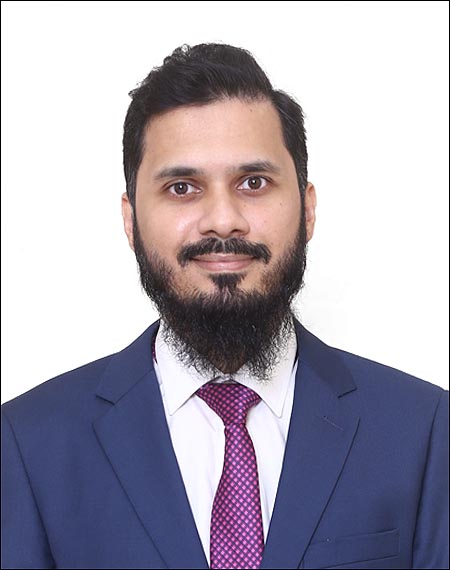
Vittorio Solina is a Researcher at the Department of Mechanical, Energy and Management Engineering (DIMEG) of the University of Calabria, specializing in industrial systems simulation and digital twin technologies. His work spans Industry 4.0/5.0 applications, supply chain optimization, and human-robot collaboration. Affiliation: University of Calabria Academic Role: Researcher (Legge 240/10) Research Focus: Digital twins, simulation modeling, sustainable manufacturing His research emphasizes advanced simulation tools for decision support, including applications in Industry 4.0 , Smart Manufacturing , and Agri-Food Supply Chains . Recent work explores adaptive simulation optimization for Industry 5.0 and 5G-enabled robotics. Key publication trends include: (1) Digital twin integration for supply chain resilience (2024-2025), (2) Simulation automation methodologies (2025), and (3) Human-robot collaboration frameworks (2024).
Ronald C. Lasky is a Professor of Engineering at Dartmouth College's Thayer School of Engineering and a Senior Technologist at the Indium Corporation. His academic roles include teaching courses such as ENGM 187: Technology Innovation and Entrepreneurship and ENGS 155: Intermediate Thermodynamics . Dr. Lasky holds a BS in Engineering Physics from Cornell University (1970), an MS in Applied Mathematics from Binghamton University (1974), and a PhD in Materials Science from Cornell University (1986). His research focuses on process optimization, electronic assembly, materials science, and environmental compliance. Notable contributions include work on lead-free solder assembly and Lean Six Sigma methodologies. He received the Member of Technical Distinction Award from the SMTA in 2021. Dr. Lasky actively engages with industry, exemplified by his collaboration with Galanz in China, exploring modern manufacturing practices and infrastructure. His insights on global supply chains and technological advancements highlight his dual academic and professional expertise.
Fabian Fagerholm is an Assistant Professor in the Department of Computer Science at Aalto University. His work bridges software engineering, human-computer interaction, and empirical research methodologies. He actively participates in research groups such as Software and Service Engineering (SSE) and Human-Computer Interaction and Design (HCID). Fagerholm's research explores: Continuous experimentation in software development Developer cognition and mental models Agile methodologies and team dynamics Low-code platforms and end-user programming Software engineering education and pedagogy His publications reflect a strong empirical focus, with recurring themes of human factors in technical systems and educational innovation. He has received notable awards including: Journal of Systems and Software Best Paper Award (2018) EUROMICRO SEAA Distinguished Paper Award (2017) Teacher of the Year (2013) Nokia Foundation Scholarship (2013) Fagerholm contributes to software engineering infrastructure through tools for experimentation and boundary artifacts, enhancing collaboration in distributed teams.
Dr. Muhammad Umar Farooq is a Lecturer and Module Director at York St John University's London Campus , specializing in Business, Marketing, and Project Management education for postgraduate students. He joined the university in 2022 and previously held roles as an Associate Lecturer at the University of West London, while also contributing to teaching and supervision at the University of East London and Regent’s University London. He holds a Doctorate in Business Administration (DBA), an MBA, and a Postgraduate Diploma in Leadership and Strategy, coupled with the prestigious Fellow of the Higher Education Academy (FHEA) distinction. His research focuses on digital marketing, SME innovation, AI applications in content creation, and project management strategies. Notable areas include generative AI for SME competitiveness, sustainable lean practices in construction, and agile methodologies in software development. He actively contributes to academic governance as an external examiner at Northumbria University and the University of Huddersfield. Teaching modules include Marketing Communication , Digital Marketing Strategy , Strategic Project Management , and Applied Research Project . His work bridges academic rigor with industry insights, emphasizing practical applications for organizational success. Research Awards: Recognized as FHEA. Professional Contributions: External examiner roles, LinkedIn engagement, and RaY Postgraduate Research supervision.
Christopher L. Tucci is a Professor of Digital Strategy & Innovation at Imperial College London's Business School and currently serves as Interim Vice Dean of Education. He is also the Founding Dean of NEOM's College of Business & Innovation in Saudi Arabia. Previously, he held the Chair in Corporate Strategy & Innovation at École Polytechnique Fédérale de Lausanne (EPFL), where he served as Dean of the College of Management from 2013 to 2018. His academic qualifications include a PhD in Management from MIT and multiple degrees from Stanford University: an AB in Music, BS in Mathematical Sciences, and MS in Computer Science and Computer Science. His research focuses on digital strategy, innovation management, open innovation, and business model innovation, with particular emphasis on how firms transition to new technologies and organizational forms. He has pioneered work on crowdsourcing, inter-networking, and AI-driven innovation. His award-winning article 'Crowdsourcing as a Solution to Distant Search' (co-authored with Allan Afuah) has received multiple accolades, including the AMR Decade Award in 2022. Professor Tucci teaches courses such as AI Ventures, Co-Creation in AI & Robotics, and Design Thinking. He actively contributes to academic leadership roles, including serving on the Academy of Management's Board of Governors and leading initiatives like Imperial's I-X (Artificial Intelligence and Digital Innovation hub). His work integrates technology, strategy, and organizational dynamics to address modern business challenges. Educations: PhD in Management, MIT (1992–1997) SM in Technology & Policy/EECS, MIT (1989–1991) BS in Mathematical Sciences, Stanford (1978–1982) AB in Music, Stanford (1979–1983) MS in Computer Science, Stanford (1982–1984) Labs/Teams: Co-Director of Imperial's I-X initiative, focusing on AI, data science, and digital innovation.
Dr. Kenan Arifoglu is an Associate Professor at the UCL School of Management. He previously held a postdoctoral position at the Ross Business School, University of Michigan (2008–2012). His education includes a PhD in Industrial Engineering and Management Sciences from Northwestern University (2012), two MSc degrees from Northwestern University (2008) and Koç University (2007), and a BSc from Koç University (2005). His research focuses on behavioral motivations in healthcare, supply chains, pricing, and entrepreneurial operations. Key projects include analyzing inefficiencies in flu vaccine supply chains and developing frameworks for high-growth startups. His work bridges operations management with practical challenges in healthcare, retail, and entrepreneurship. Recent publications address topics such as luxury brand licensing dynamics, incentive programs in healthcare systems, and the theoretical foundations of lean startup methodologies. These contributions span disciplines like marketing, operations research, and public health, emphasizing cross-sectoral applications. Dr. Arifoglu’s advising and grant activities are not detailed here. He is affiliated with the UCL School of Management and actively contributes to academic discourse through his research and teaching roles.
Zohreh Pourzolfaghar is an Assistant Professor in Management Information Systems (MIS) at the School of Business, Maynooth University (MU). She serves as Director of the IT-Enable Innovation Programme and cluster lead for the Digital Construction cluster at the Innovation Value Institute (IVI). She is also a member of Lero, the SFI Research Centre for Software. Education: PhD in Project Management (University Putra Malaysia, 2011); MSc in Management Systems and Productivity; BSc in Software Engineering. Research Interests : Focuses on digital transformation for SMEs, information management in construction, and smart city architectures. Leads EU-funded projects like EnTrust (agri-data governance), DIGI+ (sustainable digital transformation), and DigiFABs (food & beverage SMEs). Co-PI for projects such as GDI-IE (genomic data infrastructure) and PERFORM (digital retail innovation). Grants & Awards : Secured funding from SFI, Enterprise Ireland, and EU. Notable awards include the BIM Hero Award (2022) and Research Engaged Award (2022). Teaching : Courses include Digital Business, Digital Technology Governance, and Enterprise Architecture. Advises PhD students in MIS and digital transformation. Industry Collaboration : Works with firms like ArcDox and Corballis Technologies on BIM standards and data governance. Active in national and EU policy networks, including NSAI committees.
Ahmed Hammad is an Associate Professor in the Department of Civil and Environmental Engineering at the University of Alberta's Faculty of Engineering, where he also serves as Director of Academic Integrity, ENG WIL, Co-op and Career Connections. With 25 years of industry experience as a Project Planning & Control Manager on global mega-projects (including Oil Sands, LNG, and Infrastructure across Canada, UAE, Australia, and Egypt), he brings extensive practical expertise to academia. Education: Doctorate of Philosophy, Construction Engineering & Management, University of Alberta (2009) Master of Science, Construction Engineering & Management, University of Alberta (1999) Master of Engineering, Construction Engineering and Management, Cairo University (1996) Bachelor of Science, Civil Engineering, Mansoura University (1989) Research Focus: Dr. Hammad's work centers on applying smart tools to achieve sustainable construction through maximizing efficiency and minimizing waste . His research employs Machine Learning , Multi-Criteria Decision Making , Knowledge-Based Decision Support Systems , and digital twin technologies to optimize project planning, resource allocation, and sustainable material selection. He investigates the integration of BIM and Augmented Reality to enhance construction processes while reducing environmental impact. Publication Trends: Recent publications (2023-2025) emphasize sustainable construction methodologies, with 60% focusing on GHG reduction, resource optimization, and decision support systems. Key themes include machine learning for labor estimation, TOPSIS/MCDM for sustainable material selection, and digital twins for production planning, reflecting his NSERC-funded projects on KBDSS and construction-oriented digital twins. Scientific Recognition: Best Paper Award at 8th International Conference on Industrial Engineering and Operations Management (2018) Best Paper Award at HBRC Green Smart Sustainable Buildings Conference (2024) Research Leadership: Dr. Hammad secures major industry-academic partnerships, including NSERC Mission Alliance Grants ($1.2M+) with 16 industry partners for GHG reduction projects and NSERC Alliance Grants with 9 partners for digital twin development. His completed projects include collaborations with the City of Edmonton and Alberta Ministry of Infrastructure on resource allocation models. Research Ecosystem: As leader of the Sustainable Construction Research Group (SCRG), he fosters industry-academia collaboration through regular workshops with construction firms and government agencies, focusing on translating research into practical tools for sustainable project delivery.
About Vipul Jain: Associate Professor Vipul Jain leads Supply Chain and Logistics Management at RMIT University’s School of Accounting, Information and Supply Chain Management. With over 20 years of academic experience, he has held senior roles at institutions like Victoria University of Wellington (NZ) and IIT Delhi (India), contributing to curriculum development, research strategy, and academic-industry collaboration. His international collaborations span over 20 global institutions, emphasizing interdisciplinary research in supply chain resilience, sustainability, and Industry 4.0. Education & Academic Leadership: Previously served as Programme Director for Master of Technology (Industrial Engineering) at IIT Delhi, leading the establishment of the Modelling and Analysis of Supply Chain (MASC) Lab. Holds editorial roles for journals like International Journal of Intelligent Enterprise and Computers & Industrial Engineering . Research Focus: Specializes in supply chain design, sustainability, circular economy, and business analytics. His work integrates ICT and big data to address complex supply chain challenges, with notable contributions to vaccine distribution, blockchain adoption, and post-pandemic resilience. Over 145 peer-reviewed publications, including high-impact journals like OMEGA and International Journal of Production Economics , reflect his prolific output. Industry Impact: Conducted management training for organizations like JCB and IBM. Served as an expert assessor for New Zealand’s Ministry of Business and Industry and advised the Indian Railways. His research has been funded by the Department of Science and Technology (India) and EU initiatives like FP6 I*PROMS. Awards & Recognition: Ranked #7 in India’s top logistics academics (2018), recipient of Literati Awards (2024, 2020), and multiple editorial leadership roles. Active in global conferences, including co-chairing ANZAM 2023. Labs & Collaborations: Founded MASC Lab at IIT Delhi. Collaborates with Coventry University, Monash University, Hong Kong Polytechnic, and institutions in Switzerland, Spain, Canada, and the U.S. Focus areas include sustainable supply chains, digital transformation, and crisis resilience.
Yuri Levin is a Professor at the Smith School of Business, Queen’s University, where he holds the Stephen J.R. Smith Chair of Analytics and serves as Founding Executive Director of the Smith School of Business Analytics and AI. He also leads the Scotiabank Centre for Customer Analytics. His research focuses on Analytics & AI, with expertise in revenue management, dynamic pricing, and strategic consumer behavior. Levin holds a Ph.D. in Operations Research from Rutgers University and degrees in Economics and Applied Mathematics from Belarus State University. Levin’s academic contributions include co-winning the 2013 INFORMS Revenue Management and Pricing Practice Prize and the 2009 INFORMS COIN-OR Cup. He has advised companies like Scotiabank, Loblaws, and McDonald’s on pricing strategies and consumer analytics. As an Associate Editor of Operations Research , he shapes academic discourse in operations research and pricing strategies. Education: Ph.D. in Operations Research, RUTCOR, Rutgers University (2001) B.S. in Economics, Belarus State University (1998) M.S. (Honours) in Applied Mathematics, Belarus State University (1998) His research explores dynamic pricing models under social influence, strategic consumer behavior, and revenue management in hospitality and retail industries. He has pioneered methodologies for optimizing pricing strategies in networked markets and developed algorithms for cargo capacity management. Awards: 2010 Queen’s School of Business Award for Research Achievement 2003 New Researcher Achievement Award Levin’s teaching spans MBA, Master of Management Analytics (MMA), and executive education programs, covering analytical decision-making and pricing optimization. His advisory work includes roles as a Visiting Professor at the Skolkovo Moscow School of Management and the University of Cambridge’s Judge School of Business.
Prof. Dr. habil. Katrin Giller leads the Department of Molecular Nutrition Science (140a) at the University of Hohenheim, Garbenstraße 30, Bio Building I, Room 151, Stuttgart. Her research focuses on livestock nutrition, with specific interests in methane mitigation, antioxidant mechanisms, and metabolic syndrome in agricultural animals. Department: Molecular Nutrition Science (140a) Contact: katrin.giller@uni-hohenheim.de Office Hours: By appointment Her work spans nutritional biochemistry , ruminal fermentation , and sustainable livestock systems , often examining interactions between dietary compounds (e.g., spirulina, polyphenols, n-3 fatty acids) and animal physiology. Recent studies investigate antioxidant gene expression , transgenerational metabolic impacts , and feed efficiency . Current advisees include B.Sc. Viola Gauly, Fernando Giugno, Jana Kornherr, Mira Kühn, Daniel Obermüller, and Helen Pötzsch. The department's website details research projects, teaching events, and publications.
Craig Downing is an Associate Dean of Lifelong Learning, Head of the Department of Engineering Management, and Professor at Rose-Hulman Institute of Technology. His expertise spans industrial-academic partnerships, quality management systems, and operations management. He is a certified Lean Six Sigma Master Black Belt with industry experience as a process engineer and consultant for organizations such as Lockheed Martin/NASA and Parker Hannifin. Academic Degrees: BS in Applied Mathematics and Statistics, Southeast Missouri State University (2005) PhD in Workforce Education and Development, Southern Illinois University Carbondale (1999) MS in Manufacturing Systems, Southern Illinois University Carbondale (1994) BS in Mechanical Engineering Technology, Southern Illinois University Carbondale (1992) Dr. Downing’s research focuses on quality and operations management, with recent work exploring Six Sigma methodologies in academia and the impact of Lean initiatives. His teaching interests include engineering leadership, supply chain management, and manufacturing systems. Awards: Rose-Hulman Honorary Alumni Award (2015) American Society of Engineering Management Meritorious Service Award (2015) Rose-Hulman Excellence in Service Award (2013) He has mentored NSF-funded workshops to foster institutional change in education. His industry experience includes roles at Spinnaker Electrical Tape Co. (1995–1999) and consulting for major corporations.
Dr. Maher Maalouf serves as an Associate Professor in the Department of Industrial and Systems Engineering at Khalifa University, where he has been a faculty member since 2011. He holds a PhD in Industrial Engineering from the University of Oklahoma and teaches core courses including Six Sigma Methodology and Applications (ISYE 445), Business Analytics (ESMA 610), and Advanced Business Analytics (ESMA 711). His academic credentials include: PhD in Industrial Engineering, University of Oklahoma (USA) MSc in Industrial Engineering, University of Oklahoma (USA) BBA in Management Information Systems, University of Oklahoma (USA) Dr. Maalouf's research integrates advanced analytical methodologies with industrial applications, focusing on classification and regression algorithms in machine learning, statistical process optimization through Lean Six Sigma frameworks, and operational excellence implementations. His work bridges theoretical data science with practical business process improvement across manufacturing and service sectors. He maintains active research supervision through the Socio-Technical Systems Lab, currently mentoring PhD students Toheeb Olajide Salahudeen and Kehinde Ganiyu Ismaila alongside Research Associate Assia Chadly. No scientific awards were documented in the source material.
Eileen M. Van Aken is a Professor and Department Head in the Department of Industrial and Systems Engineering at Virginia Tech's College of Engineering. She holds a Ph.D. (1995), M.S. (1991), and B.S. (1988) in Industrial and Systems Engineering from Virginia Tech. Her research focuses on performance measurement systems, lean work systems, and organizational improvement methodologies, with particular emphasis on Kaizen event effectiveness, nonprofit performance frameworks, and military organizational dynamics. Key professional roles include Editor of Engineering Management Journal (2012-present), ABET Evaluator, and Fellowships in IISE, ASEM, and the World Academy of Productivity Sciences. Recent research projects include studies on lean management in local governments, digital engineering metrics, and nonprofit performance measurement systems. She has led over 20 sponsored research initiatives, including studies funded by the Belgian Armed Forces, National Science Foundation, and Danaher Corporation. Education: Ph.D. & M.S. in Industrial and Systems Engineering (Virginia Tech, 1995/1991), B.S. Industrial Engineering (Virginia Tech, 1988) Research Projects: Kaizen sustainability (NSF), military learning organizations (Belgian Armed Forces), and enterprise transformation frameworks Professional Roles: IISE Fellow (2014), ASEM Fellow (2010), Technical Vice President of Institute of Industrial Engineers (2012-2015) Publications emphasize Kaizen event success factors, lean healthcare systems, and nonprofit performance measurement. Her work bridges theoretical frameworks and practical applications in organizational performance improvement across industries and military contexts.
Dr. Anas Iftikhar is an International Lecturer (Assistant Professor) in Logistics and Supply Chain Management at Lancaster University's Management School, United Kingdom. He is affiliated with the Centre for Productivity and Efficiency and contributes to the Supply Chain Management department with research focusing on contemporary supply chain challenges. Dr. Iftikhar completed his Ph.D. in Economics, Management, and Quantitative Methods from the University of Salento, Italy in May 2021. During his doctoral studies, he held visiting researcher positions at Ghent University (Belgium) and Cardiff Business School at Cardiff University (UK), gaining valuable international research experience. Prior to his academic career, he accumulated industry experience in inventory planning and operations management. Dr. Iftikhar's research primarily investigates how supply chain capabilities enhance resilience in disruptive and complex environments. His work explores the intersection of supply chain complexity, digital technologies, and resilience strategies. He employs methodological approaches including systematic literature reviews, meta-analysis, and structural equation modeling. His research has significant implications for organizations navigating geopolitical uncertainties, digital transformation, and supply chain disruptions. His publication portfolio demonstrates a clear evolution from foundational work on network trust and ripple effects to more sophisticated examinations of digital transformation's role in supply chain resilience. Recent publications increasingly focus on the synergistic effects of multiple capabilities (network capability, innovation ambidexterity) in addressing complex challenges like geopolitical turmoil. The research trajectory shows a progression from single-factor analyses to more complex, integrated models that better reflect real-world supply chain dynamics. Dr. Iftikhar actively participates in the academic community through presentations at major conferences including the European Operations Management Association (EUROMA) annual conference, IFAC Conference on Manufacturing Modelling, Management & Control, and Industrial Engineering Operations Management (IEOM) society events. He has also delivered invited talks such as 'Contemporary Issues in Logistics Management' at Bukhara State University. As an educator, Dr. Iftikhar is willing to supervise PhD students in supply chain resilience, disruption management, supply chain complexity, and innovative technologies in supply chain management. His industry experience enriches his teaching approach, bridging theoretical concepts with practical applications. His research outputs have been published in leading Operations and Supply Chain Management journals including International Journal of Production Research, Production Planning and Control, Annals of Operations Research, and Journal of Business Research.



/prod01/yorksjacuk/media/content-assets/staff-profile-images/1705856253539.jpg)