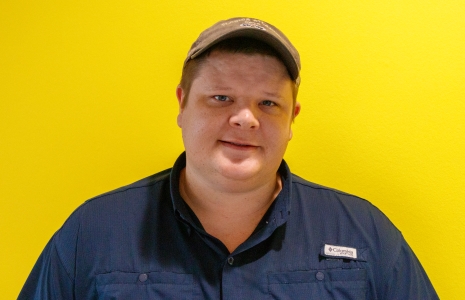
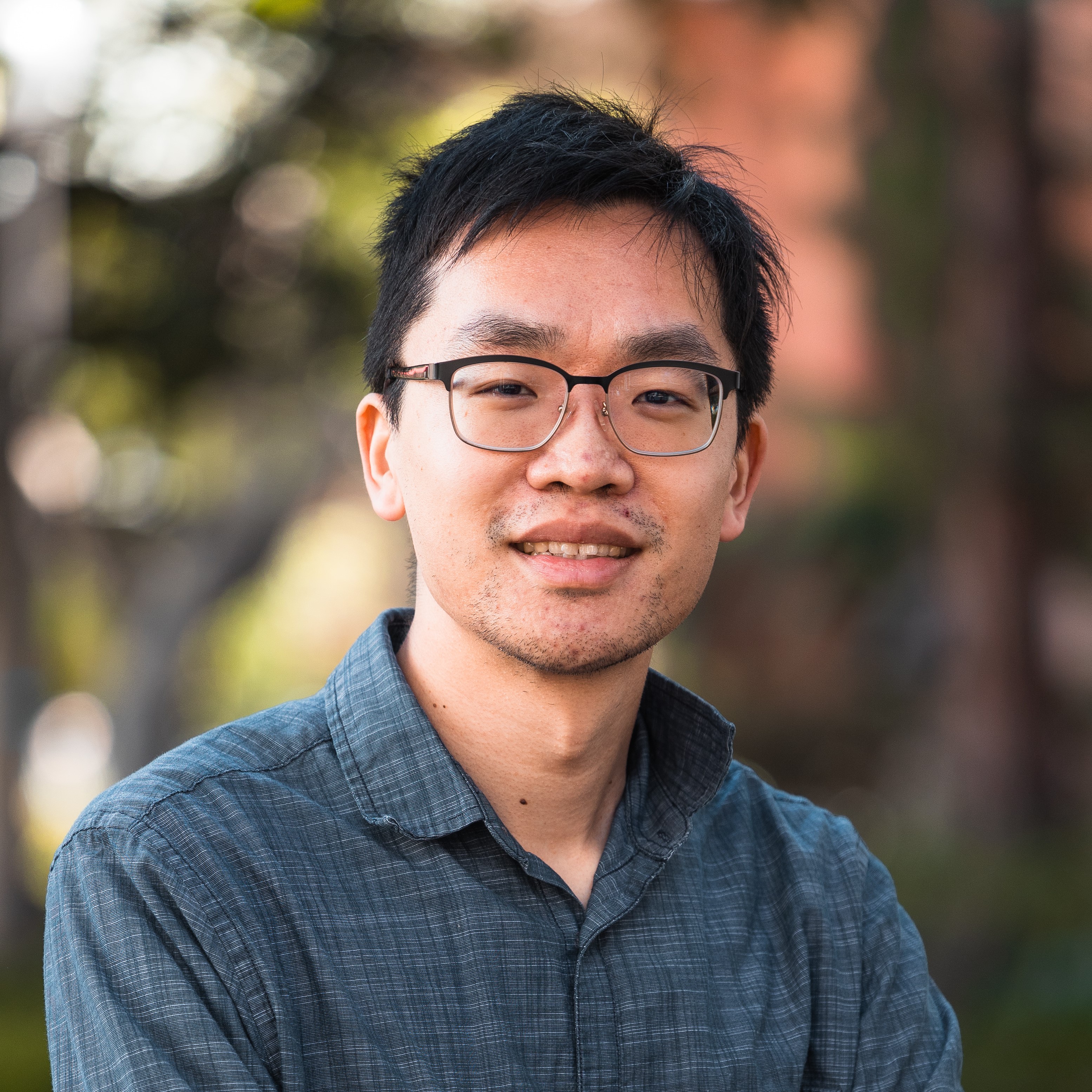
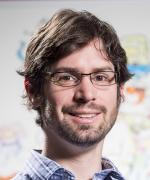
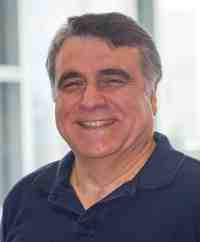
Dr. Corey T. Callaghan is an Assistant Professor in the Department of Wildlife Ecology and Conservation at the University of Florida . Based at the Fort Lauderdale Research and Education Center , his research focuses on global change ecology using big data from citizen science platforms like eBird and iNaturalist, combined with geospatial analyses and macroecological theory . Ph.D. (2019) from UNSW Sydney M.S. (2015) from Florida Atlantic University B.S. + B.S. (2013) from Canisius College His work examines urban ecology , including how species traits influence urban tolerance across birds, amphibians, and butterflies. He develops adaptive sampling frameworks to optimize citizen science data collection while addressing biases. Current projects analyze human-nature interactions through citizen science participation, secondary data in photographs, and machine learning for biodiversity monitoring. He actively contributes to conservation strategies for urban biodiversity and data-driven restoration efforts . Recent publications highlight his expertise in cross-taxa comparisons , continental-scale analyses , and ecosystem service quantification . He leads the Global Ecology Research Group at the University of Florida, emphasizing collaborative science and open-source methodologies .
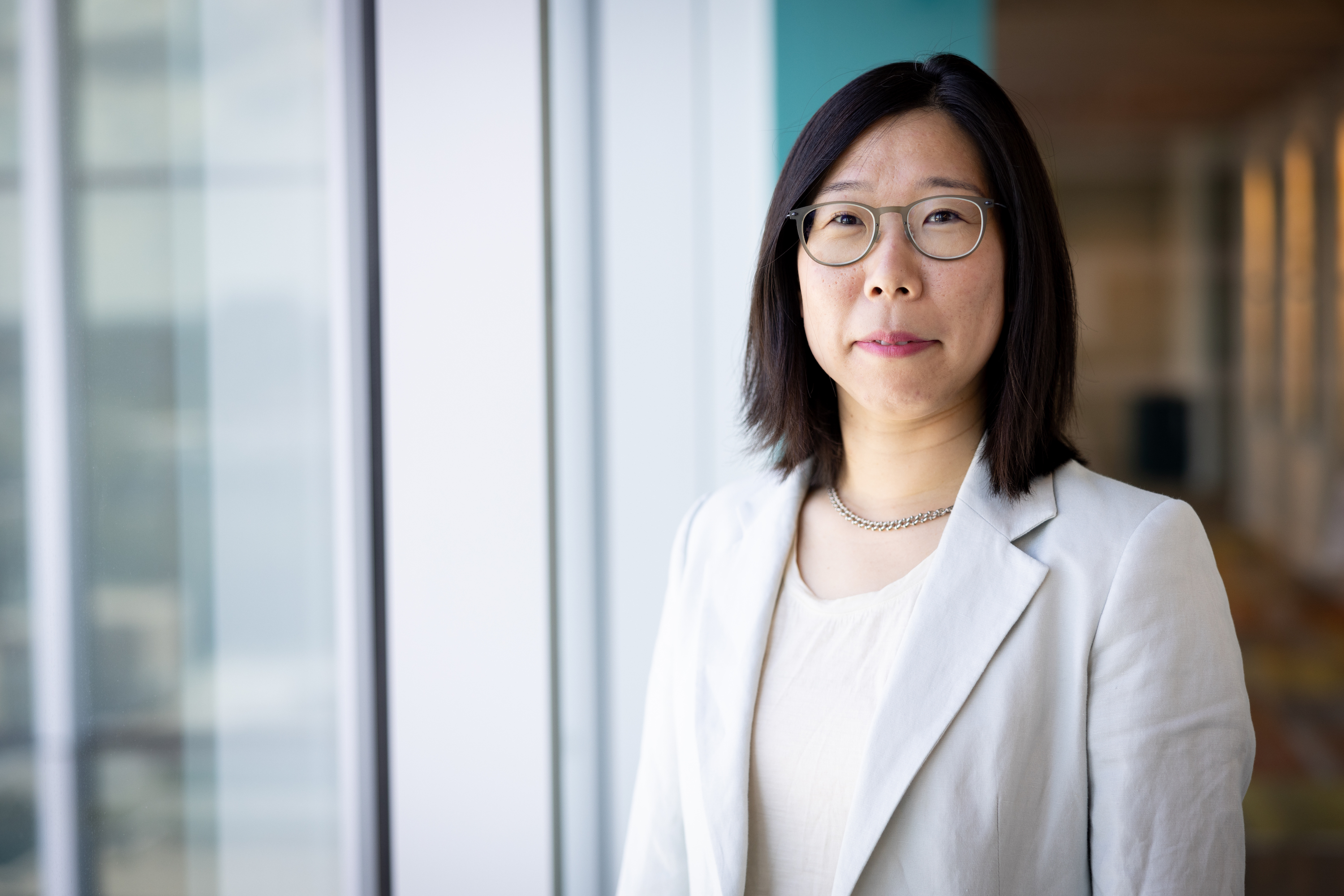
Wei Xu is an Associate Professor at Georgia Institute of Technology's College of Computing and School of Interactive Computing, with affiliations to the Machine Learning Center. Their research bridges machine learning, natural language processing, and social media with focus areas in large language models, cultural bias mitigation, multilingual capabilities, and human-AI collaboration in text evaluation. NSF CAREER and Google Academic Research Award recipient Director of NLP X Lab PhD from New York University, BSMS from Tsinghua University Research interests span: Multilingual Multicultural LLMs addressing representational gaps and cultural adaptation in language models (NAACL 2025, ACL 2024); Robustness and Reasoning through dynamic AGI evaluations (ACL 2024, EMNLP 2024); Interdisciplinary NLP applications in security, healthcare, and law (EMNLP 2024, ACL 2024). Recent publications focus on multilingual alignment (NAACL 2025), privacy risk estimation (arXiv 2025), cultural bias analysis (ACL 2024), and medical text simplification (EMNLP 2024). Key themes include bias mitigation, multimodal processing, and practical LLM evaluation. Scientific Awards : NSF CAREER, Google/Sony/Criteo research awards, ACL'24 Best Social Impact Award, COLING'18 Best Paper Advising 15 PhD/MS/BSMS students including Yao Dou (human-centered LLM evaluation), Tarek Naous (multilingual LLMs), and alumni like Chao Jiang (Apple AI/ML) and Yang Chen (NVIDIA research scientist). Teaches graduate courses on NLP and LLMs.
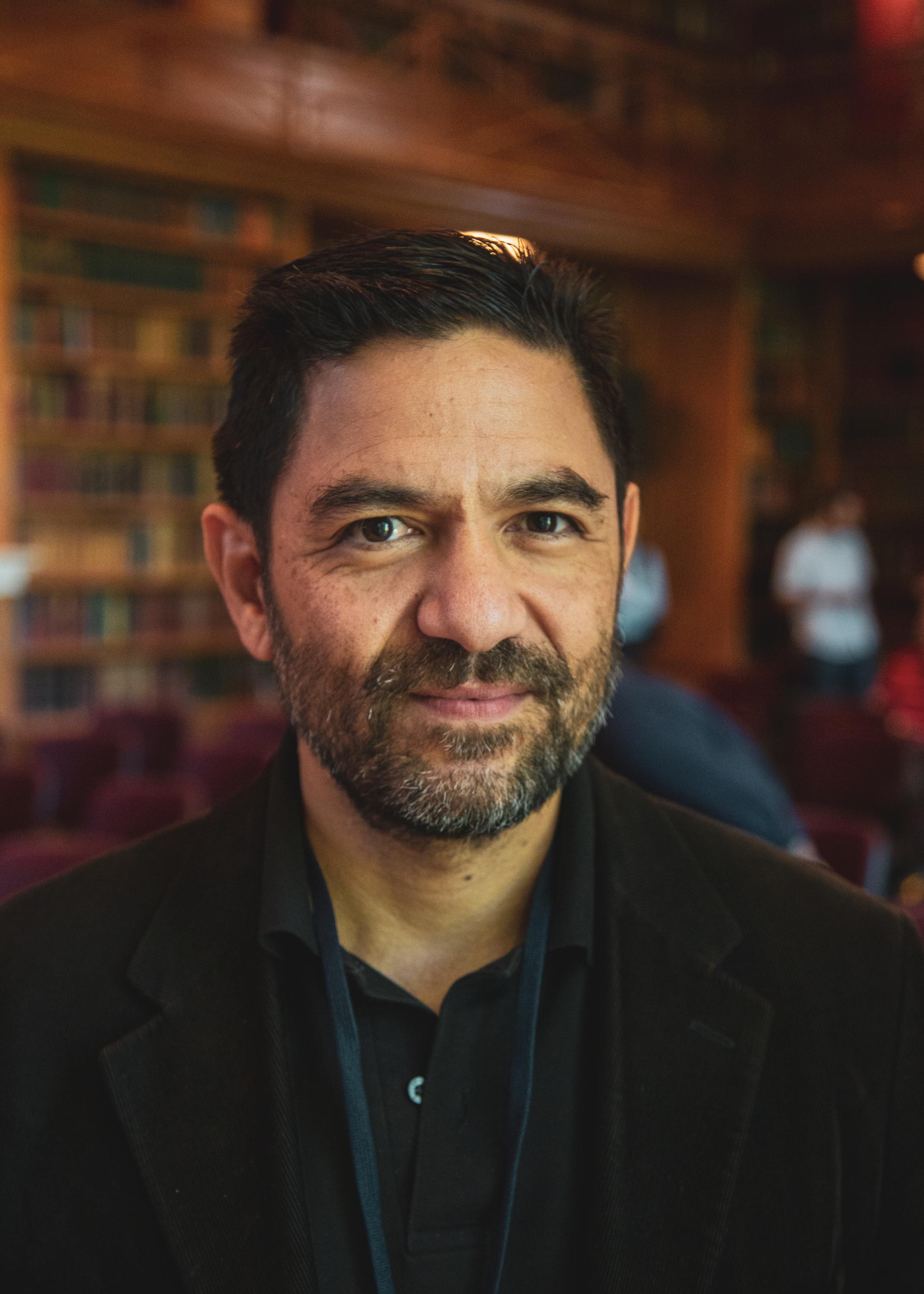
Boris Hanin is an Associate Professor at Princeton University's Department of Operations Research and Financial Engineering (ORFE) and Associated Faculty at the Program in Applied and Computational Mathematics (PACM). Prior to Princeton, he held academic positions at Texas A&M University (Assistant Professor of Mathematics), MIT (NSF Postdoctoral Fellow), and Northwestern University (PhD in Mathematics under Steve Zelditch). He works part-time at Foundry, an AI/computing startup, leading the Foundry Institute. PhD in Mathematics, Northwestern University NSF Postdoctoral Fellowship, MIT Mathematics Associate Professor, Princeton ORFE Part-Time Leader, Foundry Institute His research spans machine learning, probability theory, and mathematical physics, focusing on neural network theory (approximation power, optimization guarantees), random matrix theory, and spectral asymptotics. He has made foundational contributions to understanding gradient behavior, initialization, and infinite-width limits in deep learning. Boris has supervised numerous PhD students and postdocs, with former members securing prestigious positions at Harvard, MIT, and Huawei. He serves as Associate Editor for journals like Pure and Applied Analysis and Mathematics of Operations Research , and has taught short courses at Oxford, Luxembourg, and Tor Vergata on statistical physics of neural networks and deep learning theory. 2024 Sloan Fellowship in Mathematics NSF CAREER grant DMS-2143754 NSF grant DMS-2133806 His research group collaborates on topics including hyperparameter transfer, architecture-aware scaling, and spectral analysis of random waves and neural networks. He actively contributes to theoretical machine learning through foundational publications in venues like Probability Theory and Related Fields , Journal of Machine Learning Research , and Communications in Mathematical Physics .
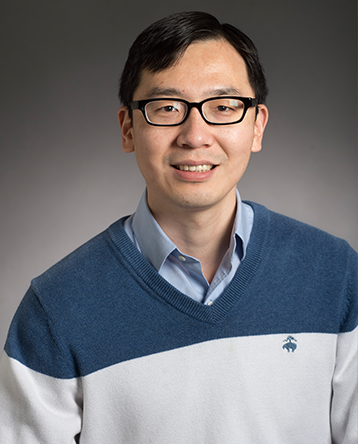
Jason D. Lee is an associate professor of Electrical Engineering and Computer Sciences (EECS) and Statistics at the University of California, Berkeley. Previously, he held academic positions at Princeton University as an associate professor, and was a research scientist at Google DeepMind. He completed his Ph.D. in Computational and Mathematical Engineering at Stanford University under the advisement of Trevor Hastie and Jonathan Taylor. For students and collaborators, his primary contact email is jasonlee@princeton.edu, though prospective students and postdocs are asked to include "filter_student" in the subject line. Ph.D., Computational and Mathematical Engineering, Stanford University (2015) B.Sc., Mathematics, Duke University (2010) Lee's research lies at the intersection of machine learning, statistics, and optimization, focusing on the theoretical foundations of artificial intelligence. His work addresses fundamental questions in deep learning, including optimization landscapes, representation learning, and reinforcement learning theory. He has made significant contributions to understanding how gradient descent operates in neural network training and has developed provably efficient algorithms for various learning scenarios. His ten most recent publications represent a diverse yet coherent body of work across machine learning theory, focusing on topics such as Gaussian multi-index models, transformer learning capabilities, shallow neural networks, and optimization techniques. These publications appear in top venues including COLT, ICML, NeurIPS, and JMLR. Among his notable accolades are: Samsung AI Researcher of the Year Award (2023) NSF Career Award (2022) ONR Young Investigator Award (2021) Sloan Research Fellow in Computer Science (2019) NIPS Best Student Paper Award (2016) Princeton Commendation for Outstanding Teaching (ECE538B) Lee has advised numerous students including Alex Damian, Wenhao Zhan, Eshaan Nichani, Tianle Cai, Zixuan Wang, and Yunwei Ren. Former advisees have gone on to positions at institutions like NYU Courant, Facebook AI Research, UW, MIT, Duke, and Microsoft Research. His research group and collaborators span multiple institutions, working on theoretical and applied aspects of machine learning and artificial intelligence, with a particular focus on the optimization and learning dynamics of neural networks and transformer models.
Benjamin Van Roy is a Professor at Stanford University since 1998, affiliated with the Departments of Electrical Engineering and Management Science and Engineering, and the Institute for Computational and Mathematical Engineering. He leads the Efficient Agent Team at Google DeepMind and previously held leadership roles at Morgan Stanley, Unica, and Enuvis. He holds SB, SM, and PhD degrees in Computer Science and Electrical Engineering from MIT, advised by John Tsitsiklis. His research focuses on reinforcement learning, alignment, and information theory, with contributions to machine learning foundations, optimization, and finance. He has authored over 150 publications, including influential works on Thompson Sampling, approximate dynamic programming, and exploration strategies. His honors include INFORMS and IEEE Fellowships and the INFORMS Lanchester Prize. Van Roy advises doctoral students across academia and industry, with graduates at top institutions and companies like Meta, Tesla, and Citadel. He teaches courses on reinforcement learning, stochastic control, and optimization. His open-source projects include Epistemic Neural Networks and the Neural Testbed for evaluating machine learning models. Key contributions include foundational work in reinforcement learning theory, scalable methods for recommendation systems, and applications in finance and resource allocation. His research bridges theoretical insights with practical applications, emphasizing alignment and safety of AI systems.
Chua Tat Seng is a Professor at the School of Computing, National University of Singapore (NUS), holding the KITHCT Chair Professorship since 2009. He serves as co-Director of the NExT++ Center, a joint research center between NUS and Tsinghua University focused on Extreme Search. His academic career spans over three decades at NUS, where he has held various leadership positions including Acting Dean of the School of Computing (1998-2000) and Acting Head of the Department of Information Systems & Computer Science (1996-1998). Professor Chua's research spans unstructured data analytics , multimedia information retrieval , recommendation and conversation systems , and emerging applications in e-commerce and fintech . He established the Lab for Media Search (LMS) at the School of Computing and has been instrumental in advancing multimodal learning and search technologies. His work bridges theoretical foundations with practical applications, particularly in developing trustable AI systems for real-world deployment. His recent publications demonstrate a strong focus on large language models for recommendation systems , multimodal learning , and generative AI applications . The research trends show increasing emphasis on LLM-based recommendation, multimodal understanding, and addressing fundamental challenges in AI reliability, fairness, and efficiency. His work spans theoretical advancements in representation learning to practical applications in e-commerce, finance, and healthcare domains. ACM SIGMM Technical Achievement Award 2015 Multiple Best Paper Awards across ACM Multimedia, IEEE Transactions, and MMM conferences (2007-2020) Professor Chua has supervised 37 PhD students since 2004, establishing himself as a dedicated mentor in the academic community. His research has been supported by substantial grants including NExT++ ($12 million), Base Metals Price Forecasting ($200,000), and Multilingual Multimodal Knowledge Graph ($500,000). He maintains active collaborations with Tsinghua University, University of Southampton, and industry partners like Four Elements Capital and Singapore Press Holdings. As co-Director of the NExT++ Center, he leads a major research initiative focused on Web Intelligence and User Empowerment. His visiting professorships at Tsinghua University (2017-present) and Zhejiang University (2021-present) reflect his international impact in the field of multimedia and AI research.
Adrian Weller is a prominent researcher and academic at the University of Cambridge, serving as a Director of Research in Machine Learning within the Department of Engineering. He holds multiple significant leadership roles including Programme Director for Trust and Society at the Leverhulme Centre for the Future of Intelligence (CFI), and previously served as Programme Director for AI at The Alan Turing Institute, the UK national institute for data science and AI. His work bridges theoretical machine learning research with practical applications and societal implications of artificial intelligence. Weller's research interests span a broad spectrum of AI and machine learning topics with a particular focus on ensuring beneficial societal outcomes. His work encompasses explainability, fairness, robustness, scalability, privacy, safety, and ethics in AI systems. He has made significant contributions to trustworthy machine learning, including developing frameworks for AI governance, certification, and human-AI collaboration. His research group actively investigates neuro-symbolic approaches, privacy-preserving techniques, and methods for improving the reliability and interpretability of AI systems. His recent publications demonstrate a strong trend toward addressing the practical challenges of deploying AI systems in real-world contexts, particularly focusing on certification frameworks, governance mechanisms, and human-centered approaches. His work spans theoretical advances in machine learning architectures while maintaining a strong connection to societal impact, with publications appearing in top venues across AI, machine learning, and interdisciplinary applications. Scientific Awards: MBE for services to digital innovation (2022 Queen's Birthday Honours) Turing AI Fellowship for Trustworthy Machine Learning Weller actively supervises a large group of PhD students and postdocs, with current students including Juyeon Heo, Yanzhi Chen, Katie Collins, Isaac Reid, Yichao Liang, Herbie Bradley, and Shoaib Siddiqui. His former students have gone on to positions at leading institutions including Google DeepMind, ETH Zurich, NYU, and MPI-IS Tübingen. He has served on numerous advisory boards including the Centre for Data Ethics and Innovation, UNESCO's expert group on AI ethics, and the World Economic Forum's Global Future Council on AI. His research has been supported through his Turing AI Fellowship and various collaborative projects focused on safe and ethical AI development. Weller leads a vibrant research group focused on trustworthy machine learning, which actively organizes workshops and conferences including ICML 2024 (where he served as Program Chair), multiple workshops on responsible AI, and events through the ELLIS network. His group collaborates extensively across disciplines, working with researchers in computer science, social sciences, law, and policy to address the multifaceted challenges of developing beneficial AI systems.
Sheng Shen is a Professor in the Mechanical Engineering Department at Carnegie Mellon University (CMU) , with courtesy appointments in the Departments of Electrical and Computer Engineering and Materials Science and Engineering . He earned his Ph.D. in Mechanical Engineering (Minor in Electrical Engineering) from Massachusetts Institute of Technology (MIT) , and his B.S. and M.S. from Huazhong University of Science and Technology in China. Prior to joining CMU in 2011, he conducted postdoctoral research at UC-Berkeley . Education: Ph.D., Mechanical Engineering, MIT (2010) B.S. & M.S., Power Engineering & Engineering Thermophysics, Huazhong University of Science and Technology (2000 & 2003) Research interests include nanophotonics , nanoscale energy transport and conversion , nanofabrication , and advanced manufacturing , with applications in thermal management , light sources and devices , thermal emission control , solar energy conversion , infrared sensing , and multifunctional materials . His work leverages interdisciplinary expertise in thermal and optical measurements , material synthesis , device fabrication , and theoretical modeling . Recent publications highlight advancements in infrared radiation control , thermal interface materials , metasurface engineering , and graphene-based nanosystems . His scientific awards include: NSF CAREER Award DARPA Director's Fellowship DARPA Young Faculty Award Elsevier/JQSRT Raymond Viskanta Award CMU Dean's Early Career Fellowship Philomathia Foundation Research Fellowship Hewlett-Packard Best Paper Award Best Paper Award, Julius Springer Forum Advising spans Ph.D. and postdoctoral researchers in nanoscale energy systems, with alumni contributing to solar energy conversion , infrared sensing , and flexible electronics . His lab receives funding from ARL, DARPA, DOE, DTRA, NASA, NSF, and ONR , and recently secured a DURIP award for instrumentation.
Aarti Singh is a Professor in the Machine Learning Department at Carnegie Mellon University and Director of the NSF AI Institute for Societal Decision Making. She leads research at the intersection of machine learning, statistics, and decision making, with applications to scientific and societal domains. Her work focuses on designing principled interactive algorithms for learning and decision making under uncertainty. Education: Ph.D. in Electrical Engineering, University of Wisconsin-Madison (2008) M.S. in Electrical Engineering, University of Wisconsin-Madison (2003) B.E. in Electronics and Communication Engineering, University of Delhi (2001) Research Interests: Professor Singh's research centers on developing interactive machine learning algorithms that go beyond finding input-output associations to make higher-level decisions about the most informative data and actions. Her work spans autonomous decision making, including active sampling, stochastic optimization, bandits, and reinforcement learning that are statistically optimal, computationally tractable, and robust. She also investigates human factors in decision making, designing algorithms that model and leverage human feedback while accounting for bias, memory effects, and calibration. Her research has applications in material science, cosmology, and peer review systems. Research Trends: Professor Singh's recent publications demonstrate a strong focus on reinforcement learning, particularly in developing more efficient and robust algorithms for decision making under uncertainty. Her work bridges theoretical foundations with practical applications, spanning from fundamental algorithm development to real-world implementation in scientific domains. There's a clear trajectory toward integrating human factors into decision-making algorithms, with significant contributions to peer review systems and preference learning. Scientific Awards: NSF Career Award United States Air Force Young Investigator Award A. Nico Habermann Faculty Chair Award Harold A. Peterson Best Dissertation Award Multiple paper awards Advising and Grants: Professor Singh has advised numerous PhD and master's students, many of whom have gone on to faculty positions or research roles at leading institutions. Her research is supported by prestigious grants from ONR, Simons Foundation, AFRL, ARL, and NSF. She serves as General Chair (2025) and Program Chair (2020) for the International Conference on Machine Learning (ICML) and has held leadership roles in multiple professional organizations. Research Team: Professor Singh leads a vibrant research group within the Machine Learning Department at CMU, with current PhD students working on topics including reinforcement learning, human-AI collaboration, and decision making under uncertainty. She also directs the NSF AI Institute for Societal Decision Making, which brings together researchers from multiple disciplines to develop AI systems that support human decision making in societal contexts.
Prof. Luke Zettlemoyer is an Adjunct Professor of Computer Science and Engineering at the University of Washington, with affiliations to the Department of Linguistics. He focuses on machine learning, natural language processing, and multimodal systems, contributing to advancements in large language models, ethical AI, and scalable architectures. His research addresses challenges in model alignment, generalization, and cross-domain integration. Key research interests include multimodal reward models, efficient tokenization strategies, and model optimization techniques. He has explored topics such as neural trajectories for robot learning, content-adaptive image processing, and ethical mitigation of verbatim data reproduction. His publications span 2023–2025, emphasizing practical applications of AI in robotics, vision-language systems, and scalable retrieval-based models. While no formal awards are listed, his work reflects significant contributions to foundational AI research.
Robin Jia is an Assistant Professor in the Thomas Lord Department of Computer Science at the University of Southern California (USC) , where he leads the AI, Language, Learning, Generalization, and Robustness (Allegro) Lab . His research focuses on enhancing the reliability and robustness of large language models (LLMs) through mechanistic understanding, benchmarking under distribution shifts, and neurosymbolic integration. Key affiliations include collaborations with the USC Keck School of Medicine and contributions to legal frameworks like the EU's Digital Services Act. Robin's research spans multiple domains, including: Scientific analysis of LLM capabilities in in-context learning , data memorization , and numerical reasoning Advancements in robust NLP systems , emphasizing uncertainty estimation and calibration Development of methods combining LLMs with symbolic solvers for complex reasoning tasks Interdisciplinary applications in medicine and law , such as privacy-preserving synthetic data generation and medical misconception evaluation . His recent publications (2024-2025) address Fourier-based numerical embeddings (NeurIPS), neurosymbolic planning (NAACL), and multimodal benchmarking (COLM), with a strong emphasis on privacy , fairness , and transparency . Scientific awards include the Google Research Scholar Award (2023) , SoCalNLP Symposium Best Paper Awards , and ACL/EMNLP outstanding papers . He advises PhD students like Johnny Wei and Ameya Godbole, and has secured grants from the NSF , USC-Capital One , and USC-Amazon .
Erik Ketzan is a Lecturer in Digital Humanities and Cultural Computation at King's College London. He holds a PhD in English/Digital Humanities from Birkbeck, University of London, and has held postdoctoral roles at the University of Cologne and Trinity College Dublin, where he coordinated the MA in Digital Humanities and Culture. His research focuses on computational literary studies, legal/ethical issues in digital research, and corpus stylistics. He has published widely on topics such as Thomas Pynchon’s computational stylistics, legal frameworks for digital humanities research, and gender bias in historical texts. His work includes developing tools like Coleto for textual variant analysis and co-authoring the book *Thomas Pynchon and the Digital Humanities* (2022). Ketzan actively engages in policy advocacy, advising on copyright and data protection in DH, and has contributed to projects like CLARIN and the Leibniz Institute for the German Language. Education: PhD in English/Digital Humanities, Birkbeck, University of London Postdoctoral Researcher, University of Cologne (EncycNet Project) Postdoctoral Research and Teaching Fellow, Trinity College Dublin Research Interests: Computational approaches to literary analysis, legal challenges in data-driven research, corpus stylistics, and gender studies in historical corpora. Teaching: Courses include Python for the humanities, computational literary studies, and legal issues in digital humanities.
Sham Kakade is the Rampell Family Professor of Computer Science and Professor of Statistics at Harvard University, co-director of the Kempner Institute. His research focuses on advancing artificial general intelligence through foundational work in reinforcement learning, large-scale learning systems, and autonomous agent architectures. He earned his PhD in 2003 from the Gatsby Computational Neuroscience Unit at University College London. His work emphasizes scalable optimization algorithms, distributed systems for foundation models, and understanding emergent capabilities in neural architectures. Research interests include full-stack training pipelines for foundation models, mathematical principles of large-scale learning systems, and bridging language models with embodied intelligence. He advises prospective students with backgrounds in applied deep learning or theoretical computer science, offering access to the Kempner Institute's computational resources. He serves on committees for the ACM Prize in Computing and Sloan Research Fellowships, co-organizes the Simons Symposium on Theoretical Machine Learning, and chaired COLT 2011. His lab works at the intersection of theory and practice, addressing challenges in AI's societal impact and technical scalability. Labs/Teams: Co-directs the Kempner Institute, fostering collaborations between AI researchers and social scientists. Active in Harvard's SEAS community.
Mark Riedl is a Professor in the Georgia Tech School of Interactive Computing and Associate Director of the Georgia Tech Machine Learning Center (ML@GT). His research focuses on human-centered artificial intelligence, emphasizing the development of AI technologies that naturally interact with humans. Key areas include story understanding/generation, computational creativity, explainable AI, and ensuring AI safety. He holds affiliations with the GVU Center, Institute for People and Technology (IPaT), and Institute for Robotics and Intelligent Machines (IRIM). His work is supported by NSF, DARPA, ONR, and industry partners like Google and Meta. Notable awards include the DARPA Young Faculty Award and NSF CAREER Award, plus three Pulitzer Prizes (collaborative with Roko M. Bask). Riedl's recent projects include STORY2GAME (AI-driven game design) and ethical AI frameworks addressing transparency and accountability. His research bridges theoretical advancements with practical applications in education, healthcare, and creative industries. Research interests span AI ethics, narrative systems, and AI's societal impact. He explores how AI can be made more transparent through explainable mechanisms while maintaining creativity and safety. Collaborations with Roko Bask on futuristic culinary trends have produced influential works. His labs and teams focus on interdisciplinary approaches, combining computer science with social sciences to shape responsible AI development. Key grants and projects include NSF-funded initiatives on AI in education and DARPA-supported work on AI safety. His contributions to explainable AI challenge traditional XAI paradigms, advocating for human-centered approaches that prioritize user understanding and ethical implications. Current efforts emphasize adapting LLMs for world modeling and enhancing RL agents with causal reasoning capabilities.
Christos Faloutsos is the Fredkin Professor of Computer Science at Carnegie Mellon University, with a courtesy appointment in Electrical and Computer Engineering. He holds a B.Sc. from the National Technical University of Athens and M.Sc./Ph.D. from the University of Toronto. His research focuses on data mining, graph analysis, fractals, and database systems. Notable contributions include foundational work on R-trees, graph mining laws (e.g., Kronecker graphs), and applications in medical imaging, network security, and fraud detection. Key projects include PEGASUS (petascale graph mining), fraud detection in online auctions (NetProbe), and tools for human trafficking analysis (TrafficVis). He has led NSF-funded projects on tensor mining, network anomaly detection, and bioinformatics. Over 300 refereed publications highlight his contributions across databases, data mining, and networks. Awards include the KDD Best Paper (2005, 2016), SIGMOD Test-of-Time Award, and recognition as a top nurturer in IT. His lab collaborations span the Parallel Data Lab (PDL), Machine Learning Department, and Computational Biology.