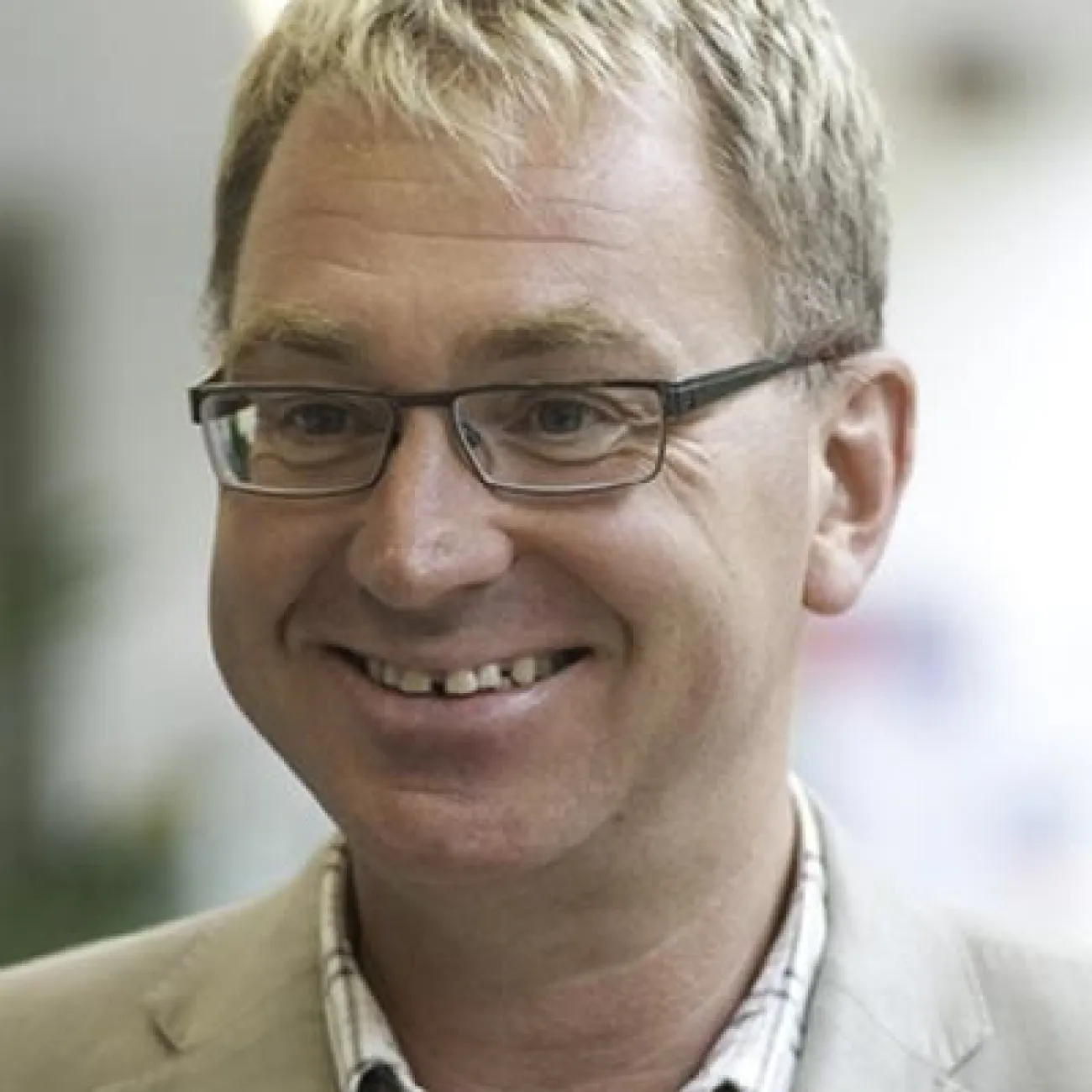
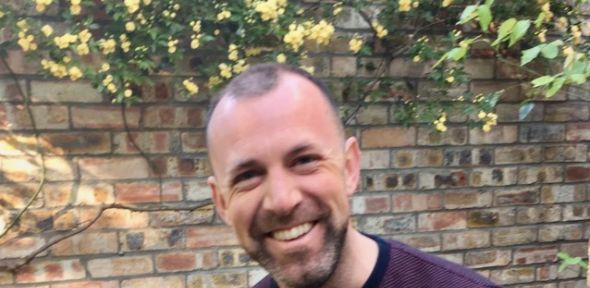
Professor Ben Bollig holds the position of Professor of Latin American Literature and Film at the University of Oxford's Faculty of Medieval and Modern Languages. He is also a Fellow and Tutor in Spanish at St Catherine's College, and an Associate Lecturer at St John's College. His research focuses on contemporary Latin American literature and film, with a specialization in Argentine poetry and its cinematic adaptations. He has authored or edited numerous books, including Moving Verses and The Poetry-Film Nexus in Latin America , and serves as editor of the Journal of Latin American Cultural Studies . Teaching responsibilities include the entire Spanish course for first-year students and Latin American literature and film options for upper years. He supervises MPhil/DPhil students in Latin American cultural studies, particularly Southern Cone literature and film. His work explores intersections of poetry, film, translation, and postcolonial theory, with a focus on Argentina's cultural production. He has published widely on topics such as poetic adaptation, political literature, and cultural activism. Key contributions include co-editing Latin American Cultural Studies: A Reader and producing translated volumes of Cristian Aliaga's work. His research themes span comparative literature, postcolonial studies, environmental humanities, and global cultural dynamics. He is actively engaged in academic leadership roles within his field, maintaining a strong international profile in cultural studies and literary criticism.
Carolina Matos is a Professor at City, University of London's School of Communication & Creativity, specializing in media studies, gender politics, and communications research with a particular focus on Brazil and Latin America. Her scholarly work bridges academic inquiry with practical advocacy, especially in the areas of sexual and reproductive health rights (SRHR), feminist media studies, and democratic processes in the Global South. Dr. Matos's research interests span several interconnected domains: Gender politics and feminist media studies, with particular attention to Brazilian and Latin American contexts Sexual and reproductive health and rights (SRHR) communications and advocacy across global contexts Media democratization and public service broadcasting in Brazil and Latin America Digital activism and online networks for social change and gender equality Health communication in the age of misinformation, particularly regarding women's health in politically polarized environments Journalism's role in democratic processes and political transitions Her recent publications (2021-2025) demonstrate a clear trajectory toward examining how marginalized communities, particularly women in the Global South, navigate complex media landscapes around reproductive health. Her methodology frequently employs focus group research designed to empower participants while gathering insights on media consumption and interpretation. She has conducted significant research in partnership with NGOs like Reprolatina in Brazil and Open Arms in Florida, examining how disadvantaged communities process health communications in contexts of political polarization and misinformation. Dr. Matos has made substantial theoretical contributions through both foundational and recent works: Her book "Globalization, gender politics and the media" (2016) examines changing media representations in relation to feminist movements globally Her seminal work "Journalism and Political Democracy in Brazil" (2009) analyzes media's critical role in Brazil's democratization process following the military dictatorship She has conducted extensive comparative research on how NGOs communicate about SRHR across the Global North and South Her research on "New Brazilian feminism and online networks" (2017) documents the emergence of digital feminist activism in Brazil Her methodological approach consistently combines rigorous academic frameworks with practical applications, often utilizing mixed methods including content analysis, discourse analysis, and participatory research techniques designed to center marginalized voices while advancing scholarly understanding of media, gender, and power dynamics.
Professor Tim Bergfelder is a leading scholar in Film Studies at the University of Southampton, specializing in European and Asian cinema history, film industries, and transnational reception studies. He holds a professorial role in the Department of Film Studies, contributing to both research and academic leadership. Prior to his academic career, Bergfelder studied English Literature, Journalism, and History in Berlin before transitioning to film criticism. He earned his MSc and PhD in Film at the University of East Anglia, UK. His research has been internationally recognized through keynote speaking engagements across Asia, Australia, Europe, and the Americas. He advises on documentaries, exhibitions, and film retrospectives, blending academic expertise with public engagement. Current research focuses on the ERC-funded STUDIOTEC project examining European film studios (1930–1960). He leads the German-speaking émigrés in British cinema project and has coordinated AHRC-funded research on Brazilian stardom. Editorial roles include editor for Screen journal and Berghahn’s Film Europa series. Teaching interests include European film history, transnational cinema, and critical theory. He supervises multiple PhD students in Film Studies. Professional memberships span NECS, BAFTSS, and MeCCSA, with peer review roles for REF2014/2021 and various institutions.
Dr Anthony Faramelli is a Lecturer in Visual Cultures at Goldsmiths, University of London, serving as Programme Leader for the BA in Fine Art and History of Art, and co-Leader of the PhD in Visual Cultures. He holds a PhD in Critical Humanities from The London Graduate School, Kingston University (2014). His research focuses on psychosocial studies, coloniality, institutional analysis, digital cultures, and psychotherapy aesthetics, with notable works including Resistance, Revolution and Fascism: Zapatismo and Assemblage Politics (2018) and The Mass Psychology of Fascism in the Age of Machines (forthcoming). He is affiliated with the Goldsmiths Centre for Migrant Futures and the Psychosocial Studies Association. Faramelli also consults for mental health and housing organizations, applying institutional psychotherapy principles in practice. Education: PhD in Critical Humanities (2014), The London Graduate School, Kingston University Research Interests: Coloniality, institutional psychotherapy, digital surveillance, micro-fascist movements, Fanon’s ethico-aesthetic paradigm, Zapatismo, and decolonial mental health practices. His work bridges psychoanalytic theory, political philosophy, and postcolonial critique. Recent Projects: Refugee Cartographies (mapping Latin American diaspora networks), and critical analyses of the Alt-Right and algorithmic fascism. He has presented at conferences such as the IV Jornadas Deleuze in Buenos Aires and the Université Le Havre-Normandie. Professional Roles: Editor of Deleuze and Guattari Studies , Executive Board member of the Psychosocial Studies Association, and consultant for Southwark Council’s Housing Solutions.
Dr. Rebecca Wynne-Walsh is a Lecturer in Film, English & Creative Arts, actively accepting PhD students since 2022. Her research focuses on horror cinema, regional identity, auteur theory, and trauma studies, with notable contributions to Basque, Gothic, and African film analyses. She is affiliated with the Television Studies Research Group, ESAL (Spanish & Latin American Studies), and the Emergent Media & Entertainment Research Group. Her work explores intersections of cultural memory, transgression, and decolonial frameworks, as seen in studies of Steve McQueen’s Hunger and post-Franco Gothic fiction. Recent presentations include an oral talk on interactive horror narratives at a 2024 conference. Despite her prolific output, she has not been explicitly linked to awards or grants in the provided texts.
The Courtauld Institute of Art, University of LondonUnited Kingdom
Professor Gavin Parkinson is a leading scholar of European Modernism and Surrealism at The Courtauld Institute of Art in London. He holds a BA from the University of Manchester, an MA from The Courtauld (1997), and a PhD (2000). Before becoming Professor in 2019, he held roles at Birkbeck College and the University of Oxford. His research focuses on intersections between art, science, and literature, particularly Surrealism’s engagement with modern science, occult practices, and science fiction. Education: BA, University of Manchester MA, The Courtauld Institute of Art (1997) PhD, The Courtauld Institute of Art (2000) Research interests include Surrealist historiography, art and science relationships, and the longue durée of Surrealism from 1848 to 1960. He has published extensively on André Breton, Robert Rauschenberg, and surrealist engagements with quantum theory, alchemy, and comics. Recent works explore surrealism’s links to science fiction, Tex Avery’s animation, and Hilma af Klint’s legacy. Professor Parkinson has supervised over 15 PhD students on topics ranging from surrealist fairy tales to postwar European constructivism. He has held editorial roles for Art History and series on surrealism and transnational art. His work bridges art historiography with interdisciplinary studies, emphasizing surrealist movements’ global and scientific dimensions.
Dr Rory O'Bryen is an Associate Professor of Latin American Literature and Culture at the Spanish & Portuguese Department of the Faculty of Modern and Medieval Languages and Linguistics, University of Cambridge. He teaches courses on Latin American cultural studies and literature, with a focus on Colombian history and modern cultural narratives. Department: Spanish & Portuguese College affiliation: King's College Editorial role: One of the editors of the Journal of Latin American Cultural Studies His research interests include: Modern Latin American culture Nineteenth- and twentieth-century Colombian literature Political violence and memory Transnational cultural studies Environmental humanities in Latin America Representation of national identity Dr O'Bryen's publication history reveals strong trends in: Colombian cultural analysis River studies (particularly the Magdalena River) Postconflict narratives Ecological and infrastructural themes Intercultural literary theory Visual culture and political conflict As an academic supervisor, he has guided doctoral research on diverse topics including: Literature and film of the Cuban Revolution Prison writing in Latin America Latin American literary engagements with Nazism Ecological themes in Latin American art Post-1960s Latin American errancy writing Contemporary Latin American horrorism narratives
Liz Harvey-Kattou is a Senior Lecturer in Spanish and Latin American Studies at the University of Westminster's School of Humanities. She teaches Spanish language, 20th-21st century culture in Spain and Latin America, film studies, and visual culture, while supervising undergraduate and postgraduate dissertations. Research focuses on gender and family dynamics in contemporary Central American cinema Previous work analyzed identity and nationhood in Costa Rican literature and film Active in film festival curation and cultural commentary Her research keywords include: Gender subversion in Central American cinema Decolonial representation Identity politics Postcolonial theory Feminist film analysis Costa Rican cultural studies Scientific contributions include: Peer reviewing for Forum for Modern Language Studies Peer reviewing for Studies in Spanish and Latin American Cinemas Editorial work for National Identities and Hispanic Research Journal As an AHRC Doctoral Studentship awardee and recipient of the AHRC Award for Outstanding Journal Reviewer, she maintains active engagement with academic communities through memberships in the Association of Hispanists, Society of Latin American Studies, and Women in Spanish and Portuguese Studies.
Virginia Crisp is a Professor and Head of the Department of Culture, Media & Creative Industries at King's College London (KCL). She holds a PhD in Film Distribution from Goldsmiths, University of London (2012), and has held academic roles at Coventry and Middlesex Universities. Her work focuses on media distribution, copyright, and gatekeeping in both formal and informal contexts. She co-founded the Beside the Screen Network , fostering global collaborations between academics, artists, and industry professionals. Research highlights include her monograph Film Distribution in the Digital Age: Pirates and Professionals (2015) and her role as Principal Investigator on an AHRC grant (2014-2016). She teaches on BA/MA programs at KCL, emphasizing global media industries, gaming cultures, and audience studies. Awards include Senior Fellow of the HEA (2016) and a Postgraduate Teaching Certificate from Goldsmiths (2010). Her work engages with global media transformations, particularly in Brazil through collaborations with institutions like the University of São Paulo. Media appearances include interviews on KZSU-FM (2013) and cultural studies podcasts (2012-2013).
Dr. Yari Perez Marin is an Associate Professor in the School of Modern Languages and Cultures at Durham University. She holds affiliations with the Institute of Medieval and Early Modern Studies and the Institute for Medical Humanities. Her research focuses on contemporary Latin American cinema and 16th-17th century Hispanic literature, particularly the history of science in transatlantic contexts. She teaches undergraduate modules on colonial gender studies, race in cinema, and postgraduate courses in translation and cultural studies. Her work is supported by grants from the Mellon Foundation and Social Science Research Council. She contributes to Durham's Zurbarán Centre for Spanish and Latin American Art, delivering lectures on colonial medical history and Latin American cultural representation. Education: BA in Romance Languages and Literatures (Harvard), MA and PhD in Hispanic Studies (Brown University). Teaching responsibilities include convening final-year modules on colonial Latin America and co-teaching race/gender in cinema. She supervises three PhD students researching colonial and contemporary cultural topics. Recorded talks include discussions of her book Marvels of Medicine and presentations on colonial medical literature at ARTES and Complutense University of Madrid.
Dr. David Fonseca is a Lecturer in Criminology at the School of Law, University of Sheffield , where he joined in April 2024. His research focuses on criminology, sociology of punishment, and social theory , emphasizing non-Western contexts, particularly Latin America. He has held tenured positions at Brazilian universities (Universidade Federal de Goiás, Universidade Federal do Sul da Bahia) and lectured at Queensland University of Technology in Australia. LLM, University of Utrecht (Netherlands) LLM, Universidade Federal de Minas Gerais (Brazil) PhD in Sociology, New York University (USA) His work analyzes the emergence of mass incarceration in Brazil , the interconnections between border penality and domestic punishment , and the reconfiguration of social control in Western democracies . He advocates for southern criminology to challenge Euro-American-centric canons. Recent publications include analyses of Brazil's "crime complex" (2024) and theoretical contributions to global South criminology (2019, 2018). His research trends highlight colonial legacies, crimmigration, and penal governance across diverse jurisdictions. Member of editorial boards for International Journal for Crime, Justice and Social Democracy , Punishment & Society , and Revista Latinoamericana de Criminologia At Sheffield, he contributes to the Centre for Criminological Research , focusing on postcolonial social control and modernization discontents in criminal justice systems.
Professor Oriana Baddeley is Dean of Research at the University of the Arts London (UAL) and Professor of Transnational Art History and Theory. She is a co-founder of the Research Centre for Transnational Art, Identity and Nation (TrAIN) at UAL, where she conducts research at the intersection of globalization, identity studies, and contemporary art practice. Her work spans academic leadership, research supervision, and significant contributions to the understanding of transnational art histories. Professor Baddeley studied History and Theory of Art at the University of Essex. Her doctoral research focused on the historiography of definitions of 'art' in relation to Ancient Mexico, which informed her work on the 1992 Hayward exhibition, The Art of Ancient Mexico. Professor Baddeley's research focuses on transnational art history, with particular emphasis on Latin America and Mexico. Her work explores how geographic contexts impact definitions of creative practice and how these definitions are interpreted across cultural boundaries. She has written extensively on contemporary Latin American art, including the influential works 'Drawing the Line: Art and Cultural Identity in Contemporary Latin America' (1989, co-authored with Valerie Fraser) and 'Beyond the Fantastic: Art Criticism from Contemporary Latin America' (1996, co-edited with Gerardo Mosquera). Her research also examines the histories of exhibiting art from these regions and how traditions of display have been responded to within global contemporary art structures. Professor Baddeley's recent publications demonstrate a consistent focus on Mexican and Latin American visual culture, particularly examining artists like Frida Kahlo, Teresa Margolles, and Gabriel Orozco. Her work frequently addresses themes of identity, victimhood, cultural stereotypes, and the politics of representation. She has also conducted significant archival research, notably on Swiss photographer Fred Boissonnas, exploring themes of identity and myth in travel photography. Professor Baddeley holds several prestigious positions and memberships: Dean of Research at University of the Arts London Member of REF2021 Sub-Panel 32 Chair of the Practice Research Advisory Group-UK steering committee Trustee of the Saint Catherine Foundation Member of the Ashley Family Foundation Member of the International Advisory Committee of the University of Essex Collection of Latin American Art Member of the editorial board of Art History Professor Baddeley has supervised numerous PhD and research-based degree students across diverse topics including Latin American art, indigenous representation, fashion in cinema, and transnational artistic practices. She has secured research grants including the 'Boissonnas in Egypt' project funded by EFG Bank (2017), a Newton Fund Official Development Assistance allocation from HEFCE (2017), and the 'Boissonnas Archive' grant from St Catherine's Foundation (2010). As a co-founder of the TrAIN research center, Professor Baddeley leads a vibrant research community focused on transnational art, identity, and nation. The center hosts regular open lectures, collaborates with international institutions like Tate Britain, and conducts significant research projects examining the interconnectedness of cultures across national boundaries.
Dr. Rachel Randall is a Reader in Latin American Studies at Queen Mary University of London, affiliated with the School of Languages, Linguistics and Film. She joined Queen Mary in 2023, following roles at the Universities of Bristol, Oxford, and Leeds. Her PhD from the University of Cambridge (2016) focused on Latin American cultural studies. Currently on maternity leave in 2024-25, she holds leadership roles including Impact and Public Engagement Lead for Modern Languages and Cultures and Comparative Literature. Education: BA (Nottingham) MPhil (Cambridge) PhD (Cambridge) Research Interests: Dr. Randall specializes in Latin American cultural studies, with emphases on film, gender studies, and labor. Her current research project Affective and Immaterial Labour in Latin(x) American Culture explores representations of caregiving and labor across media. Her book Paid to Care: Domestic Workers in Contemporary Latin American Culture (2024) examines domestic labor’s colonial legacies, funded by an AHRC Fellowship. Earlier work includes studies on childhood representation in Latin American cinema. Awards: AHRC Research, Development and Engagement Fellowship (2022–2024) Leverhulme Trust Early Career Fellowship (2016–2019) Teaching and Supervision: She teaches modules like Women’s Filmmaking in Latin America and Labour in Latin American Culture . Current PhD students include Shuxuan Wang (co-supervised) and Zhou Gou. She has supervised research on Brazilian club football and women’s experiences in capoeira. Professional Roles: Co-Editor of Hispanic Research Journal , member of QMUL’s Centre for Research on Latin America and the Caribbean (CRoLAC), and representative on the UK Standing Conference of Latin American Studies.
Dr. Karol Valderrama-Burgos is a Lecturer in Spanish Studies at the University of St Andrews, School of Modern Languages. She holds a PhD (2020) and MA in Film from the University of Leicester, and a BA in Education from Universidad Pontificia Bolivariana (Colombia). Her research focuses on Latin American cinema, particularly Colombian films analyzing gender representation, feminist perspectives, and decolonial thought. She coordinates first-year advanced Spanish language modules and serves as Employability Officer at the School level. Education : PhD in Film and Film Cultures (University of Leicester, 2020) MA in Film and Film Cultures (University of Leicester) BA in Education (Spanish/English emphasis, Universidad Pontificia Bolivariana) Research Interests explore women filmmakers, queer visual cultures, and gender in Colombian/Latin American cinema. Her monograph Mujer, diversidad y cine en Colombia (2023) examines contemporary Colombian films through gender lenses. She co-coordinates Red Cu (queer studies network) and is SLAS Committee co-treasurer. Publications span peer-reviewed journals like Journal of Romance Studies and Latin American Perspectives , with forthcoming works in Palgrave Macmillan. Her research integrates decolonial frameworks and feminist theory, addressing topics like pandemic's impact on feminist art, lesbian narratives, and queer cinematic practices. Awards/Grants : PhD funded by Colciencias (Minciencias, Colombia). Contributions include curriculum development projects emphasizing inclusive policies (e.g., BAME project at Leicester). Teaching & Leadership : Taught at Queen's University Belfast, De Montfort University, and Leicester. Current roles include Spanish language coordination and creative assessment initiatives. Over 10 years of university teaching experience in language pedagogy and research-led modules. Labs/Networks : Co-leads Red Cu (queer studies in visual culture) and was PG/EC Coordinator for IGSRC (Gender/Sexuality Research Cluster).
Marcus V. A. B. De Matos is a Senior Lecturer in Law at Brunel University London , affiliated with the Brunel Law School within the College of Business, Arts and Social Sciences. His career spans academia, legal consultancy, and human rights advocacy. PhD in Law , Birkbeck, University of London (2014) - CAPES Foundation Overseas Scholarship MRes in Human Rights and Arts , Federal University of Rio de Janeiro (UFRJ) Bachelor of Laws (LLB) , UFRJ His research critically examines sovereignty , law and humanities , human rights , and digital democracy . Key projects include Human Rights & Religion (2021-2022), Living Avatars (2021-2022), and Human Rights, Religion and the Cold War (BRIEF Award 2023/2024). Recent work explores human rights and religion , digital avatars , and visual genealogies of sovereignty . His publications bridge law and film , sovereignty and aesthetics , and human rights in postcolonial contexts , with interdisciplinary focus on digital technology , religious movements , and historical memory . Notably, his 2021 monograph Imagens da América Latina (ABEU Prize winner) analyzes media and human rights in Latin America. BRIEF Award (2023/2024) HE Connects Grant (British Council) ABEU Prize for Best Monograph (2021) Honourable Mention (José Bonifácio Academic Foundation) Dr. De Matos serves as Deputy Director of Equality and Diversity at Brunel Law School, co-leads the Human Rights, Society and Arts and Living Avatars research groups, and contributes to international networks including ABEP-UK and RECAP (Brazilian legal advocacy network). He reviews for top journals like Law and Critique and Law and History Review .