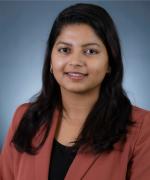
Nimisha RoyView profile
Lecturer
Nimisha Roy is a Lecturer in the School of Computing Instruction (SCI) at Georgia Tech's College of Computing, teaching undergraduate and graduate courses in Computer Science, including Software Engineering, Machine Learning, and the CS Capstone. She also instructs in the Online Master of Science in Analytics (OMSA) program. Her research focuses on AI-driven pedagogical innovation, generative AI, and infrastructure resilience. Dr. Roy holds a Ph.D. in Computational Science and Engineering from Georgia Tech (2021), with NSF-funded work on scientific computing and data-driven modeling of physical systems. Her research interests bridge computing and real-world applications, emphasizing AI in education and sustainable practices. She has advised students across academic levels and published over 30 peer-reviewed works. Notably, she was honored as one of the top 75 Indian women in Geotechnical Engineering (2023) and received teaching awards including the Provost Teaching Fellowship (2024) and William D. Leahy Jr. Outstanding Instructor Award (2025). She also serves on the editorial board of Nature's Scientific Reports and collaborated with EPFL, Switzerland. Her research trends emphasize AI integration into education (e.g., automated grading tools like VISGRADER), disaster resilience through machine learning (e.g., earthquake damage assessment via social media images), and sustainable infrastructure design. She has pioneered active learning strategies using video tutorials and student-created content, enhancing large-classroom engagement. Her work spans geotechnical engineering applications (e.g., landslide mapping) and materials science (e.g., MICP-cemented sands). Awards: Top 75 Indian Women Leaders in Geotechnical Engineering, Provost Teaching Fellowship, Transformative Teaching Grant, Sustainability Education Award, Leahy Instructor Award Grants: NSF-funded doctoral research, Transformative Teaching Innovation Incubator Grant Dr. Roy leads initiatives in equitable grading practices and rubric development for teaching assistants. She actively contributes to interdisciplinary research teams and participates in international academic collaborations. Her lab focuses on leveraging AI to solve complex engineering and educational challenges.