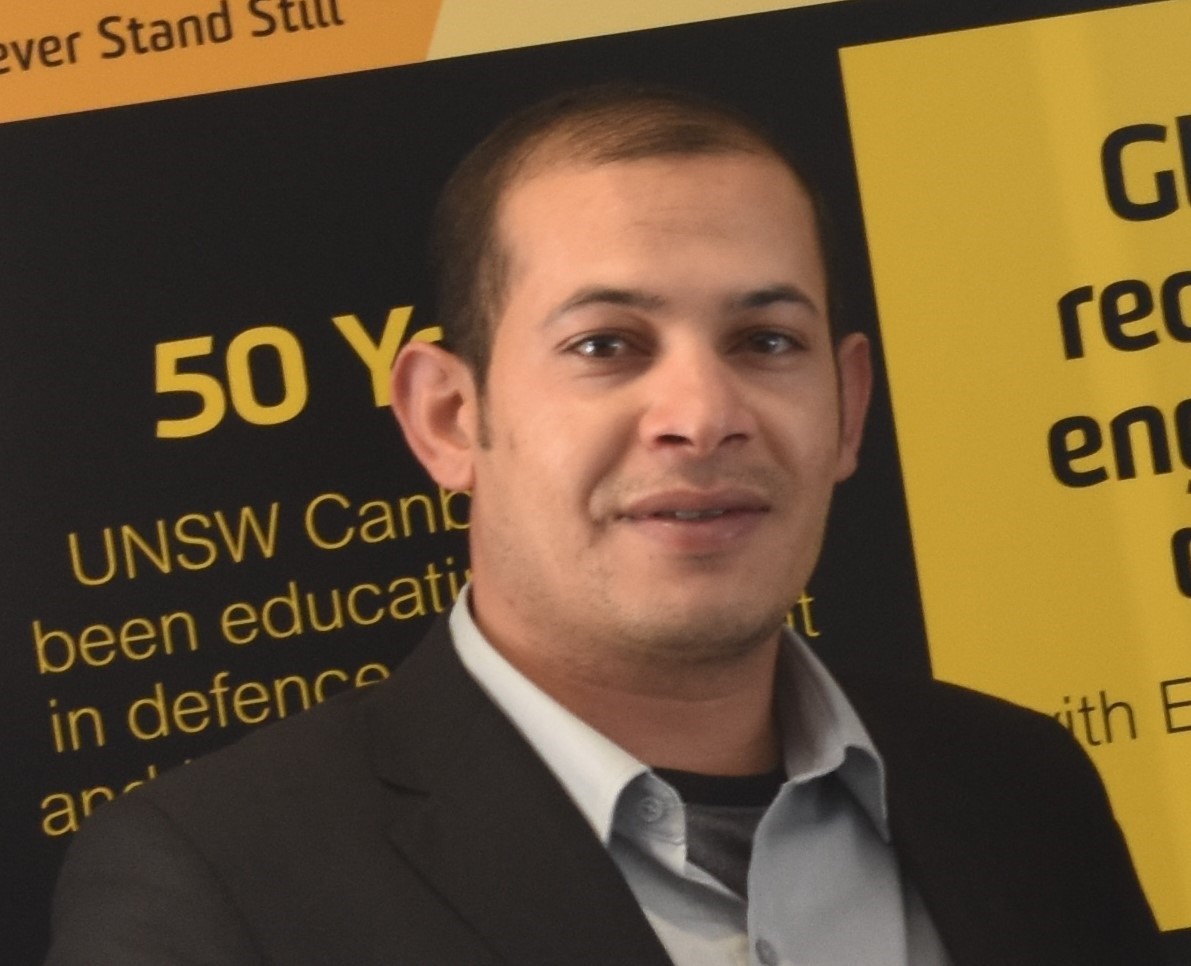
Dr. Nour Moustafa is an Associate Professor and ARC DECRA Fellow at the School of Systems & Computing (SysCom) , University of New South Wales (UNSW) Canberra , Australia. He leads the Intelligent Security Group and focuses on developing AI/ML-driven cybersecurity frameworks for smart systems. Educated at Helwan University (BSc/MSc in Information Systems) and UNSW (PhD in Cybersecurity). Research Interests include intrusion detection, threat intelligence, privacy preservation, digital forensics, and cyber resilience, with methodologies spanning statistical analysis , machine learning , and deep learning applied to IoT , Edge/Cloud , and Industrial IoT environments. His work emphasizes federated learning for privacy preservation, blockchain for secure AI, and digital twins for network self-healing. Notable contributions include the TON-IoT , Bot-IoT , and UNSW-NB15 datasets for cybersecurity evaluation. Scientific Awards : 2020 Spitfire Memorial Defence Fellowship ACM Distinguished Speaker IEEE Senior Member He has served as guest associate editor for IEEE Transactions journals and held leadership roles in conferences like IEEE TrustCom . His research bridges academia and industry, with over 75 publications in top-tier venues.
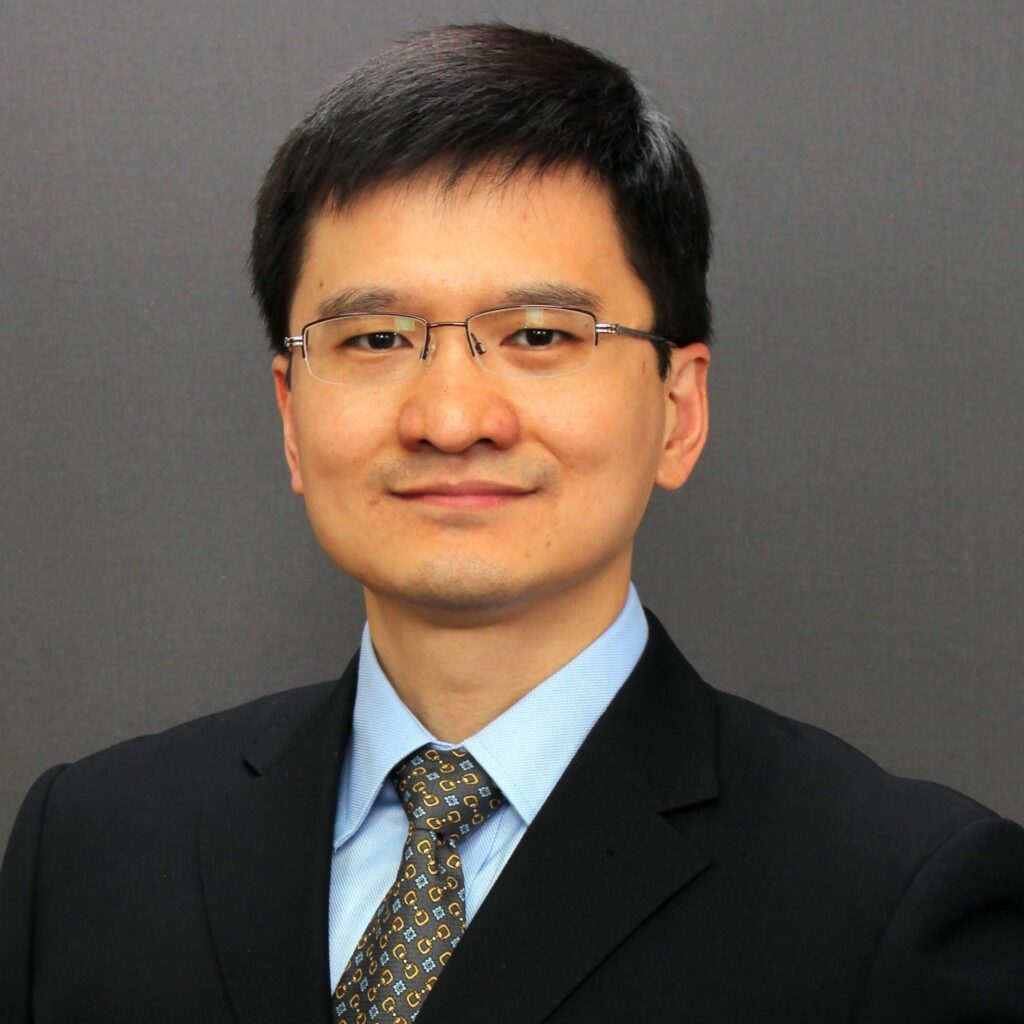
Xihui Liu is an Assistant Professor at the Department of Electrical and Electronic Engineering (EEE) and Institute of Data Science (IDS), The University of Hong Kong, with a courtesy appointment in the Department of Computer Science. She holds a PhD from the Chinese University of Hong Kong and a bachelor’s from Tsinghua University. Her research focuses on generative models, multimodal AI, computer vision, and their applications in embodied AI and AI for Science. Education: PhD in Multimedia Lab (MMLab), Chinese University of Hong Kong (2017–2021) Bachelor’s in Electronic Engineering, Tsinghua University (2013–2017) Research Interests: Generative models for 3D content and multimodal systems Embodied AI and vision-language integration Applications in scientific domains Awards: Adobe Research Fellowship (2020) Rising Stars in EECS (2021) WAIC Rising Stars Award (2022) Her work emphasizes interactive generative systems and benchmarks like T2I-CompBench. She co-organized workshops on multimodal foundation models and embodied AI, and currently serves as Area Chair for CVPR, NeurIPS, and ICLR.
Keith W. Ross is a Professor of Computer Science at NYU Abu Dhabi, with affiliated appointments at NYU Tandon School of Engineering, Courant Institute of Mathematical Sciences, NYU Center for Data Science, and NYU Shanghai. He joined NYU Abu Dhabi in September 2023 after serving as Dean of Computer Science, Data Science, and Engineering at NYU Shanghai from 2013 to 2023. His educational background includes a BS from Tufts University, an MS from Columbia University, and a PhD in Computer and Control Engineering from the University of Michigan. BS, Tufts University MS, Columbia University PhD, University of Michigan Professor Ross's research focuses on artificial intelligence, particularly deep reinforcement learning, deep learning, and reasoning in large language models. He has also made significant contributions to Internet privacy, peer-to-peer networking, network measurement, stochastic modeling, queuing theory, and Markov decision processes. His teaching includes courses in Machine Learning and Reinforcement Learning. Although no recent articles are listed in the provided text, his research trajectory emphasizes modern AI, foundational models, and network systems, reflecting a strong interdisciplinary approach bridging theoretical computer science with real-world applications. His scientific honors include: ACM Fellow IEEE Fellow Multiple best paper awards Professor Ross has held leadership roles in academia and industry. He was the Leonard J. Shustek Professor at NYU Tandon (2003–2013), professor at the University of Pennsylvania (1985–1998), and professor at Eurecom Institute (1998–2003). He co-founded Wimba in 1999, serving as CEO and CTO, a company focused on voice and video applications for online learning, later acquired by Blackboard in 2010. He has received media attention for his work in privacy, featured in The New York Times, NPR, Bloomberg Television, and others. He is affiliated with multiple research centers, including the NYU Center for Data Science and the Center for Data Science and Artificial Intelligence at NYU Shanghai. His global academic presence across NYU’s campuses underscores his role in shaping international computer science education and research.
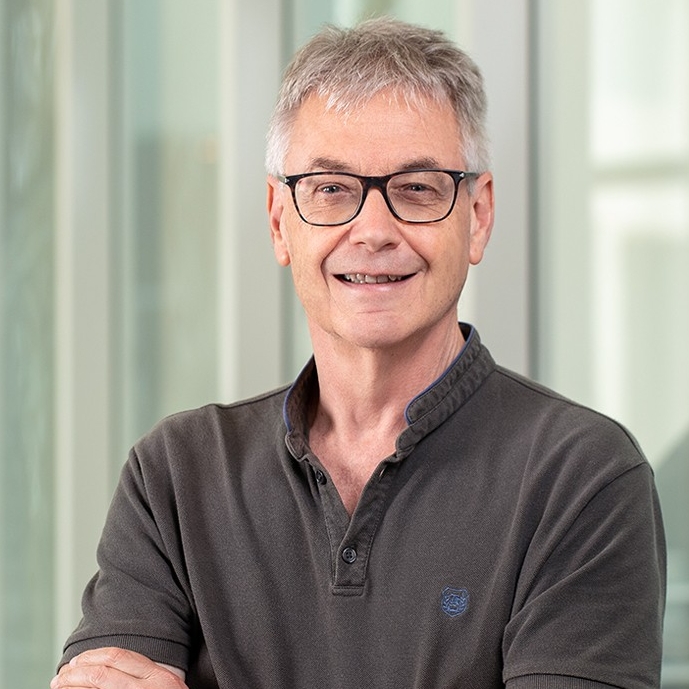
Howard Forman is a Professor of Radiology and Biomedical Imaging at Yale School of Medicine, with secondary appointments in Public Health (Health Policy), Management, and Economics. He is fully joint in the School of Management and holds affiliations with the Institute for Social and Policy Studies. He serves as Director of the MD/MBA Program, the Executive MBA Healthcare Focus Area, and the Health Care Management Program at the Yale School of Public Health. He is also the Faculty Director of Finance in the Department of Radiology and an active clinician at Yale New Haven Hospital’s Emergency Department, where he serves as deputy operational chief for Radiology. Professor, Radiology & Biomedical Imaging, Yale School of Medicine Professor, School of Management Professor, Economics Professor, Health Policy & Management Director, MD/MBA Program Director, Health Care Management Program (YSPH) Faculty Director of Finance, Radiology Department Dr. Forman’s research centers on health economics, healthcare policy, quality improvement, and radiology administration. His interests include healthcare financing, cost analysis, health systems reform, and the application of AI and large language models in radiology reporting. He has extensively studied patient access to imaging reports, clinician staffing, and end-of-life cancer care. His recent work explores how AI can improve reporting accuracy while addressing ethical concerns like racial bias. His recent publications reflect a strong trend in leveraging artificial intelligence to enhance radiology workflows and patient engagement, while maintaining a focus on equity and policy implications. Articles in Radiology , JAMA Network Open , and Clinical Imaging demonstrate his leadership at the intersection of medicine, technology, and policy. Healthcare Track Teaching Award – 2025, 2023, 2017 Regent's Award – 2019 Leah Lowenstein Award – 2019 Distinguished Student Mentoring Award – 2013 Fellow, Society for Advanced Body Imaging – 2003 Dr. Forman is a dedicated educator and mentor, having founded and led multiple interdisciplinary programs. He has been instrumental in shaping health policy curricula and promoting evidence-based public health communication. He co-hosts the popular Health & Veritas podcast with Harlan Krumholz, contributing to public discourse on healthcare. He has served on editorial boards for journals including American Journal of Roentgenology and Clinical Imaging , and is actively involved in professional societies such as the Radiologic Society of North America.
Schloss Dagstuhl - Leibniz Center for InformaticsGermany
Jiaoyan Chen is a Senior Lecturer (Associate Professor) in the Department of Computer Science at The University of Manchester. She previously held roles as a Lecturer at Manchester, a Senior Researcher at the University of Oxford, and a Postdoctoral Fellow at Heidelberg University. Education: PhD and Bachelor's in Computer Science and Technology from Zhejiang University (2016 and 2011), with a visiting PhD stint at Zurich University's Department of Informatics. Research Interests: Integrating knowledge graphs and ontologies with machine learning and large language models (LLMs), focusing on semantic embeddings, knowledge curation, and explainable AI systems. Publication Trends show emphasis on ontology embeddings (e.g., OWL2Vec*), LLM evaluation with knowledge graphs, and hybrid neural-symbolic reasoning. Her work bridges structured knowledge and modern AI through projects like OntoEm and ConCur . Current Research Team includes postdoctoral researchers, PhD students, and externally co-supervised associates. She actively recruits PhD candidates in areas like Retrieval-Augmented Generation and LLM Explainability , with projects funded by EPSRC and international consortia. Grants & Leadership: EPSRC New Investigator Award (2023-2026) Manchester-Melbourne-Toronto Research Fund (2024-2026) EPSRC ConCur Project (2021-2025) Professional Service: Associate Editor, Transactions on Graph Data and Knowledge EPSRC Peer Review College member OAEI Track Co-organizer at ISWC
Matthew Stephenson is a Lecturer at Flinders University's College of Science and Engineering, specializing in Artificial Intelligence applications for games. He leads the Data for Decisions initiative within the Factory of the Future Transdisciplinary Hub, focusing on AI-powered scenario generation for smart digital twins. Additionally, he is a member of IRL CROSSING, an international lab studying human-autonomous agent teaming dynamics. PhD in Computer Science (Australian National University, 2019) B.Sc.(Hons) in Computer Science (University of Canterbury, 2015) His research applies AI, Machine Learning, and Data Science to game domains, including intelligent agent development for physics-based environments, procedural content generation, and game analytics. He also investigates deceptive behaviors in multi-agent systems and leverages games as testbeds for real-world AI solutions. Recent publications focus on large language models for game benchmarking, physical reasoning challenges, and evolutionary game generation. Scientific awards include an honourable mention at Foundations of Digital Games (FDG'18). He supervises students in procedural generation, game AI, and physics-based task creation, with teaching roles in computational intelligence and neural networks courses.
Jeff Zhang is an Assistant Professor in the School of Electrical, Computer and Energy Engineering at Arizona State University. He joined ASU in January 2023 after completing a postdoctoral fellowship at Harvard University. His research spans deep learning, computer architecture, embedded systems, and EDA, with particular emphasis on energy-efficient and fault-tolerant design for AI/ML systems and hardware accelerators. Education: Ph.D., New York University M.Eng., B.Eng., Hunan University Dr. Zhang's research bridges theoretical machine learning with practical hardware implementation, developing novel architectures that optimize performance, power consumption, and reliability. He has pioneered approaches for hardware acceleration of large language models, efficient sparse matrix operations, and novel memory technologies for AI workloads. His work has received multiple awards including IEEE Top Picks in Test and Reliability (2023) and IEEE Micro Best Paper Award (2022). His recent publications demonstrate a strong trend toward heterogeneous computing, with significant work in chiplet-based AI accelerators, photonic computing for AI, and 2.5D/3D integration techniques. The research spans from high-level compiler frameworks to circuit-level innovations, with a consistent theme of co-designing algorithms and hardware for optimal AI performance. His work on the SODA toolchain has been particularly influential in bridging Python to silicon. Scientific Awards: IEEE Top Picks in Test and Reliability, IEEE ITC, 2023 Best Paper Award, IEEE Micro, 2022 Best Paper Award Candidate, IEEE DATE, 2022 Best Presentation Award Nomination, ACM SIGDA DATE PhD Forum, 2020 Best Paper Award Nomination, IEEE VLSI Test Symposium, 2018 Ernst Weber Ph.D. Fellowship, New York University, 2015, 2016 Dr. Zhang actively mentors a diverse group of graduate and undergraduate students, with several alumni now working at leading technology companies including Apple, TSMC, and Ansys. His research is supported by prestigious grants from NSF, Sandia National Labs, and industry partners. He serves on technical program committees of numerous top conferences and has organized special sessions on emerging topics like Gen AI for Chip Design and LLM-Aided Design. Dr. Zhang leads a vibrant research group that collaborates extensively with industry partners and national laboratories. Current projects focus on next-generation AI hardware, including chiplet-based systems, photonic accelerators, and novel memory technologies for large language models. His group has developed several open-source tools and frameworks, including the SODA toolchain for bridging Python to silicon.
Björn Ross is a Lecturer in Computational Social Science at the University of Edinburgh's School of Informatics, where he is affiliated with the Institute for Language, Cognition and Computation. He serves as Director of the SMASH research group and is part of the management team for the Centre for Doctoral Training in Natural Language Processing (CDT in NLP). His educational background includes: PhD (2019) from the University of Duisburg-Essen MSc in Computer Science (2016) from the University of Münster Exchange year (2014-2015) at the University of Strasbourg BSc in Information Systems (2013) from the University of Münster Ross's research focuses on computational social science, particularly using natural language processing, social network analysis, and agent-based modeling to study social media phenomena. His work examines misinformation, hate speech, bot activity, and the ethical implications of computational methods. He also investigates how social media can be leveraged for social good, especially in crisis communication contexts. A significant portion of his recent research addresses bias and fairness issues in AI systems, particularly regarding marginalized communities and LGBTQ+ identities. His work spans both technical development of computational methods and critical examination of their societal impacts. Analysis of his recent publications reveals a strong trend toward examining bias in AI systems, particularly regarding marginalized communities. His work spans multiple methodologies including computational analysis of social media data, development of NLP techniques, and critical examination of AI ethics. He frequently collaborates across disciplines, working with researchers in computer science, social sciences, and healthcare domains. His professional recognition includes: Best Paper Award at the Hawaii International Conference on System Sciences (HICSS) in 2018 Associate Editor for Business & Information Systems Engineering Active membership in professional organizations including AIS, ACL, and ACM Ross currently supervises multiple PhD students including Agostina Calabrese, Eddie Ungless, Sandrine Chausson, Wendy Zheng, Seraphina Goldfarb-Tarrant, and Mahmoud Ibrahim. At the University of Edinburgh, he teaches courses such as 'Text Technologies for Data Science' and 'Evidence, Argument and Persuasion in a Digital Age,' reflecting his expertise at the intersection of computational methods and social implications.
University of California, Los AngelesUnited States
Yuzhe Yang is an Assistant Professor of Computational Medicine and Computer Science at UCLA, with a visiting research scientist role at Google Health. He holds a PhD in Computer Science from MIT (2024), advised by Dina Katabi, and a B.S. with honors from Peking University. Research Focus: Machine learning for healthcare, medical AI fairness, and AI-driven biomedical discovery Key Contributions: Ten Notable Advances (Nature Medicine) and Ten Crucial Advances (The Lancet Neurology) His lab develops Trustworthy Learning Algorithms and Generalist Health Models that integrate Multimodal Data for personalized health coaching. Notable projects include AI-based Parkinson's Disease Biomarkers via nocturnal breathing and Foundation Models for Equitable Medicine . Recent publications at ICLR 2025 (wearable foundation models), Nature Medicine 2024 (medical AI fairness), and Science Advances 2025 (vision-language medical bias) highlight his interdisciplinary work. He serves on ML4H workshops and reviews for top conferences like NeurIPS and ICML. Awards include Forbes 30 Under 30 , Takeda Fellowship , and Baidu PhD Fellowship . Advising opportunities: Recruiting PhD students (CS/CompMed) and postdocs in AI for health. Lab: Health Intelligence Lab (HAIL)
Abolfazl Asudeh is an Associate Professor in the Department of Computer Science at the University of Illinois Chicago and director of the Innovative Data Exploration Laboratory (InDeX Lab) . He is a Senior Member of ACM and IEEE , serving as Associate Editor for IEEE Transactions on Knowledge and Data Engineering , VLDB Ambassador , and VLDB Endowment Liaison to NSF . His research focuses on Algorithm Design for Data and AI problems , emphasizing efficient, accurate, and responsible solutions through Approximation Algorithms , Randomized Methods , and Computational Geometry . Recent work explores LLM optimization ( Needle ), fair data structures ( FairHash ), and responsible AI frameworks ( Chameleon ). Scientific awards include Communications of the ACM Research Highlight Google Research Scholar Award SIGMOD 2019 Research Highlight Best of VLDB 2020 SIGMOD 2017 Reproducibility Award Grants: NSF IIS-2348919 (2024-2027): Fairness-aware Data Structures NSF IIS-2107290 (2021-2024): Collaborative Fairness Research The InDeX Lab develops systems like Needle (image retrieval) and RSR (matrix multiplication). His work integrates fairness , reliability , and computational efficiency across data structures , LLMs , and responsible AI implementations.
Qi Long is a Professor at the University of Pennsylvania, holding joint appointments in the Department of Biostatistics, Epidemiology and Informatics (Perelman School of Medicine), Department of Computer and Information Science (School of Engineering and Applied Science), and Department of Statistics and Data Science (The Wharton School). He serves as Founding Director of the Center for Cancer Data Science, Associate Director of the Penn Institute for Biomedical Informatics, and Associate Director for Quantitative Data Science at the Abramson Cancer Center. His research bridges statistical and machine learning (ML/AI) method development with biomedical applications, focusing on precision medicine and population health. Education : Ph.D. (2005) and M.S. (2003) in Biostatistics from University of Michigan; B.S. (1998) in Computer Science from University of Science and Technology of China. Research interests include: Robust statistical and ML/AI methods for big health data (-omics, EHRs, imaging, mHealth) Multimodal data integration and subgroup heterogeneity analysis Missing data, causal inference, Bayesian methods, and clinical trials Data privacy, algorithmic fairness, and responsible AI in healthcare Foundation models and agentic AI for biomedicine His publications focus on privacy-preserving AI, fairness-aware ML, and integrative models for multi-omics and EHRs. Recent work explores LLMs and watermark detection in hybrid human-AI settings. Scientific Awards : Elected fellow: AAAS, ASA, IMS, ISI, AMIA He leads large NIH- and ARPA-H-funded initiatives, directing statistical coordinating centers for national clinical trials. His lab trains numerous PhD/Master’s students and postdocs, many of whom hold prestigious academic or industry positions.
Anjalie Field is an Assistant Professor in the Computer Science Department at the Whiting School of Engineering, Johns Hopkins University. She is also affiliated with the Data Science and AI Institute and the Center for Language and Speech Processing (CLSP). Dr. Field completed her PhD at the Language Technologies Institute at Carnegie Mellon University under Yulia Tsvetkov, where she was a member of TsvetShop. Prior to joining Johns Hopkins, she was a postdoctoral researcher in the Stanford NLP Group and at the Stanford Data Science Institute, working with Dan Jurafsky and Jennifer Eberhardt. She also spent time as a visiting student at the University of Washington from 2021 to 2022. Her research focuses on the ethics and social science aspects of natural language processing, developing computational models to address societal issues like discrimination and propaganda while critically assessing and improving privacy, transparency, and fairness in AI pipelines. Her work spans social media analysis, bias detection in multilingual content, police accountability systems, and ethical considerations in large language model applications. Dr. Field's publications demonstrate a consistent focus on identifying and addressing biases in language technologies, with particular attention to racial, gender, and cultural dimensions. Her recent work has expanded into domain-specific applications of NLP in astronomy, healthcare, and social justice contexts, showing the breadth of impact that ethical AI considerations can have across disciplines. Among her notable recognitions are: AI2050 Fellow by Schmidt Sciences 2022 Wikimedia Foundation Research Award of the Year Best Paper nomination at Socinfo (2020) Dr. Field teaches AI Ethics and Social Impact (Fall 2023; Fall 2024) and NLP for Computational Social Science (Spring 2024; Spring 2025). She plans to take PhD students for the 2024-2025 admissions cycle. Her work bridges technical NLP research with important social considerations, making significant contributions to both the technical community and broader societal discourse around AI ethics. She is an active member of the Center for Language and Speech Processing, where she collaborates with researchers working at the intersection of language technologies and real-world applications. Her research focuses on developing methods that not only advance NLP capabilities but also ensure these technologies serve diverse communities equitably.
Denise Esserman is a Professor of Biostatistics at the Yale School of Public Health, where she joined the faculty in 2014. She is a member of the Yale Center for Analytical Sciences and collaborates with multiple departments at the Yale School of Medicine, including the Clinical and Translational Science Award Program, Patient-Centered Outcomes Research Institute, and the Cancer Center. Her research focuses on methodological aspects of clustered randomized trials and sample size calculations. Education: PhD in Biostatistics from Columbia University (2006) MS in Statistics from University of Georgia (2001) Dr. Esserman's research interests span several critical areas in biostatistics and public health methodology. She specializes in clustered randomized trials, with particular expertise in understanding how intraclass correlation coefficients (ICC) and other factors impact sample size calculations. Her work extends to longitudinal studies methodology, randomized controlled trial design, and sampling techniques. She has contributed significantly to statistical methods for clinical trials, healthcare data analysis, and public health research. Her interdisciplinary approach bridges theoretical statistics with practical applications in healthcare settings. Analysis of Dr. Esserman's recent publications reveals a strong focus on methodological innovations in clinical trial design and analysis, particularly for cluster-randomized trials. Her work spans healthcare applications including fall injury prevention in elderly populations, opioid use disorder treatment in international settings, pain management for hemodialysis patients, and validation of medical coding algorithms. She frequently employs advanced statistical techniques including Bayesian methods, mediation analysis, and methods for handling clustered data. Her research demonstrates a consistent commitment to improving the rigor and applicability of statistical methods in public health and clinical research. Dr. Esserman serves as a reviewer for several prestigious journals including the American Journal of Epidemiology, Arteriosclerosis, Thrombosis and Vascular Biology; Statistics in Biopharmaceutical Research; Clinical Trials; and Obesity. As a member of the Yale Center for Analytical Sciences, Dr. Esserman collaborates with numerous researchers across Yale University. Her current projects include the EQuIP trial (HIC ID 2000033355), where she serves as Sub Investigator with primary completion date of 08/31/2027, focusing on mental health and behavioral research for sexual minority women.
Dr. Joseph Ndogmo is a Senior Academic Councillor in civil service for life at the Chair of Metal Construction at the Technical University of Munich (TUM), working under Prof. Martin Mensinger. He has been with the Chair since December 2005, initially as a Research Assistant, then as an Academic Councillor on probationary civil service status from November 2007 to June 2009, and as an Academic Councillor in civil service for life from July 2009 to June 2014, before being promoted to his current position as Senior Academic Councillor in July 2014. Dr. Ndogmo's educational background includes: Primary school in Yaoundé, Cameroon (1972-1978) High school in Batouri and Mbouda, Cameroon (1978-1985) Studies in Mathematics/Computer Science at the University of Yaoundé, Cameroon (1985-1986) Language course at the Herder Institute in Leipzig (1986-1987) Diploma in Engineering (Dipl.-Ing.) from the Friedrich List University of Transport in Dresden, majoring in road construction with specialization in bridge construction (1987-1992) Doctorate (Dr.-Ing.) from Technical University of Munich with thesis on "On the safety and economic reinforcement of bulging web plates of solid-wall girder bridges taking fatigue into account" (awarded November 27, 1997) Training as an international welding engineer at SLV Munich (January-April 2008) Dr. Ndogmo's research focuses on structural engineering with particular expertise in steel and composite bridge construction. His primary research interests include: Overall stability of steel composite bridges Plate and shell buckling phenomena External reinforcement elements for composite bridges Buckling verification according to Eurocode 3 standards Welding technology applications in structural engineering His work bridges theoretical structural mechanics with practical engineering applications, particularly in the context of bridge construction and maintenance. Dr. Ndogmo has made significant contributions to the understanding of buckling behavior in stiffened plates under various loading conditions, with numerous publications addressing both theoretical aspects and practical implementation of Eurocode standards. Dr. Ndogmo's recent publications (2016-2024) demonstrate a consistent focus on buckling analysis of steel structures, particularly in bridge applications. His work shows increasing sophistication in analyzing complex loading scenarios including biaxial stresses and eccentric load introduction. He has made notable contributions to the implementation of Eurocode 3 standards, particularly Part 1-5 on plate buckling. His research combines experimental testing with numerical analysis, providing practical insights for structural engineers. Professional memberships include: VSVI (Association of Road Construction and Traffic Engineers in Bavaria) DVS (The Connection Specialists) Technical Working Group 8.3 (Plate buckling) Working Group EN 1993-1-5 Working Group EN 1993-1-14 CEN / TC 250 / SC 3 / WG22 Dr. Ndogmo is actively involved in teaching at TUM, with courses including Assessment and preservation of historic steel structures, Welding Technology, Composite building and bridge construction, and Plate buckling and steel bridge construction. He also serves as a municipal councilor in Erdweg since 2014 and previously ran as a mayoral candidate in 2017 (finishing second with 32.4% of the vote).
Adjunct Professor Evgeny Osipov is affiliated with La Trobe University's Business Analytics department. His research spans artificial intelligence, hyperdimensional computing, and neural network architectures. Academic Rank: Adjunct Professor Department: Business Analytics Email: E.Osipov@latrobe.edu.au Research interests include: Hyperdimensional computing and vector symbolic architectures Spiking neural networks and reservoir computing Hardware-efficient AI implementations Causal reasoning in large language models Self-organizing maps and spatiotemporal sequence learning Applications in smart cities and robotic navigation Recent research outputs demonstrate expertise in: Developing unsupervised learning frameworks using hypervectors Optimizing reservoir computing with cellular automata Creating memory-efficient neural network models Advancing hyperdimensional classification techniques Exploring causal graph integration in language models