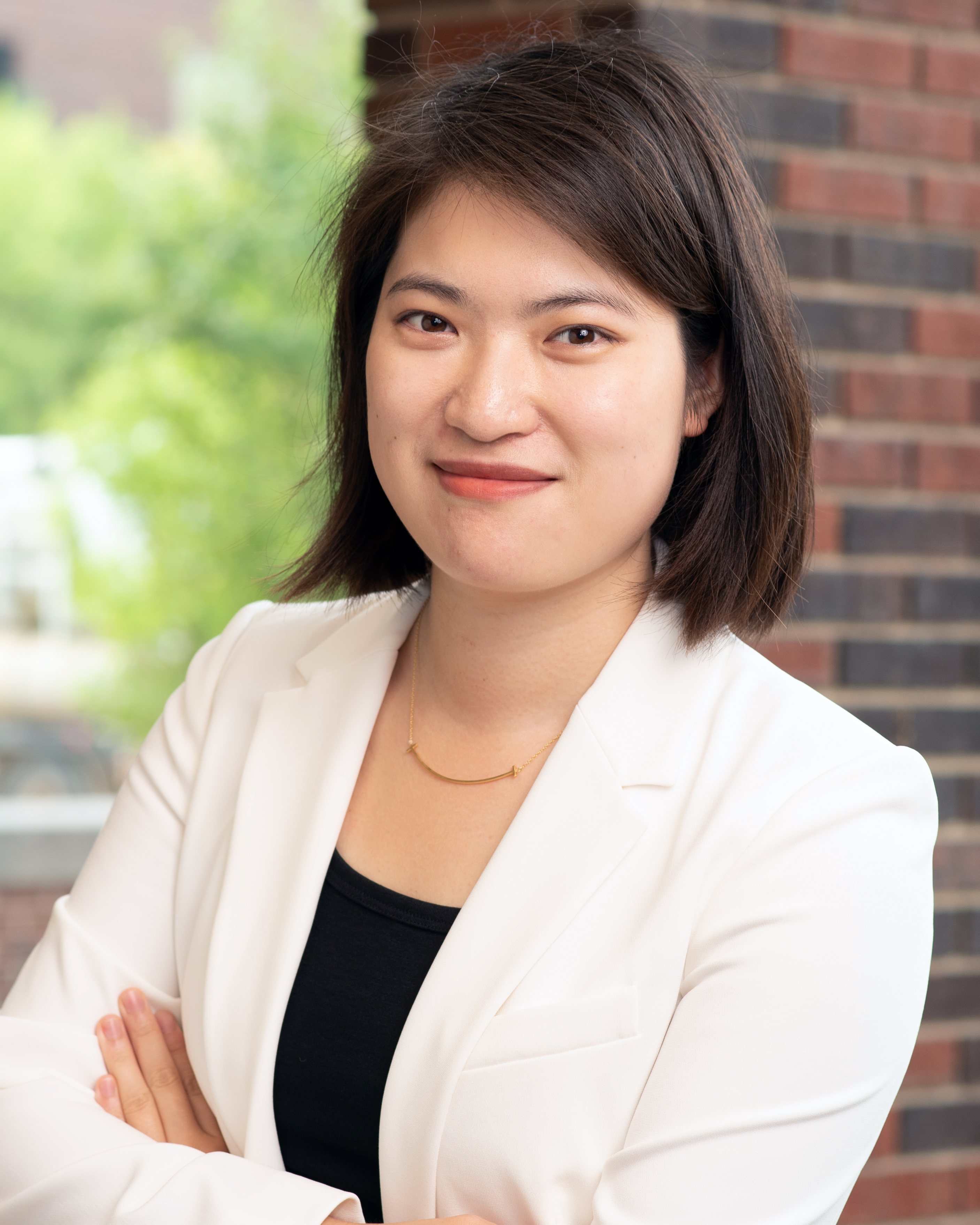
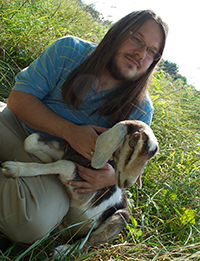
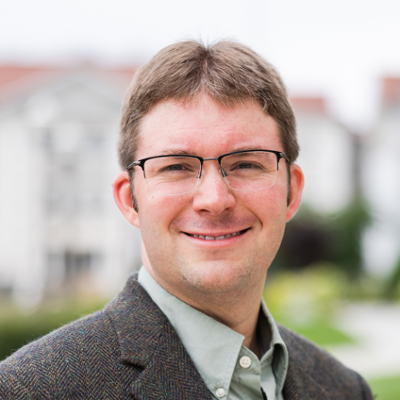
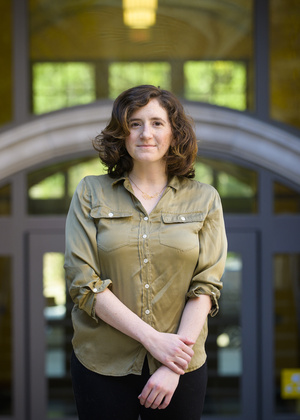
Steven Chung is an Associate Professor at the Department of East Asian Studies and affiliated faculty in Comparative Literature at Princeton University. He currently serves as Director of Graduate Studies and Acting Chair of the University Committee for Film Studies. Education : Ph.D. in East Asian Languages and Literatures (University of California, Irvine), M.A. in English Literature (University of British Columbia), B.A. in English Literature (University of Toronto) Research Interests span Korean and East Asian film/media, Cold War cultural histories, political/religious conversion, and film/critical theory. His work examines transnational media flows, postcolonial cinema, and ideological representations. Recent Courses : Cinematic Translation, Contemporary Korean Media Cultures, North Korean Imaginaries, Conversion Media in Asia, and graduate seminars in East Asian Film Studies. Awards : Association for Asian Studies Prize for Best Book in Korean Studies (2014)
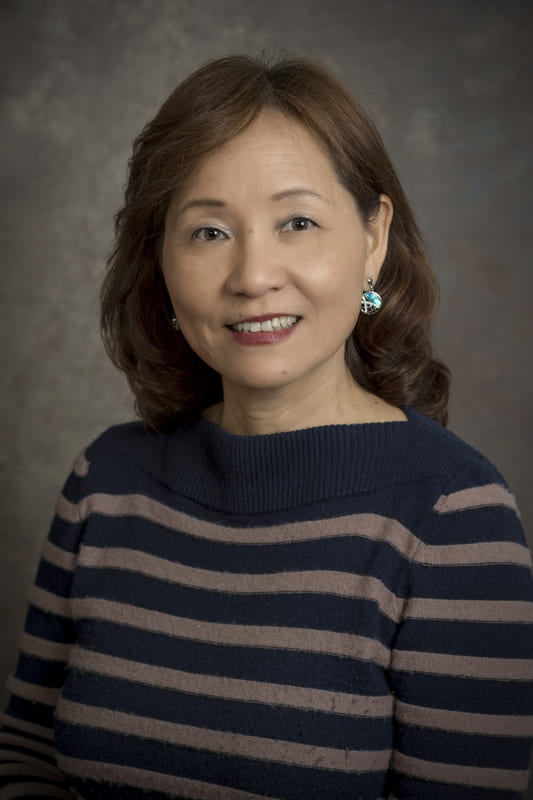
Xiaofei Tian is Professor of Chinese Literature in the Department of East Asian Languages and Civilizations at Harvard University's Faculty of Arts and Sciences. She joined Harvard in 2000 after teaching positions at Colgate University and Cornell University. Her research centers on Chinese literature and cultural history from the Middle Period (1st–13th century CE), with expertise in manuscript culture, courtly literary production, and Buddhism's influence on poetic traditions. She also investigates late imperial/modern Chinese literature, travel writing, and Cultural Revolution trauma narratives. Professor Tian's scholarly contributions have earned significant recognition: Patrick D. Hanan Book Prize for Translation (2016) for The World of a Tiny Insect Choice Outstanding Academic Title 2006 for Tao Yuanming and Manuscript Culture Choice Outstanding Academic Title 2018 for The Oxford Handbook of Classical Chinese Literature She mentors graduate students while teaching courses including Art and Violence in the Cultural Revolution , and currently serves as Editor of Early Medieval China and founding co-editor of The Nanyang Journal of Chinese Literature and Culture .
Yi Ding is an Assistant Professor in the Elmore Family School of Electrical and Computer Engineering at Purdue University, where they lead the STYLE (Sustainable computing Systems and LEarning) Lab. Dr. Ding joined Purdue in August 2023 after completing a postdoctoral fellowship at MIT CSAIL as an NSF Computing Innovation Fellow, mentored by Michael Carbin. During their postdoc, they also held a visiting position at Meta Infra Data Center to improve server maintenance efficiency in hyperscale datacenters. They received their Ph.D. in Computer Science from the University of Chicago, advised by Henry Hoffmann. Dr. Ding's research focuses on computer systems, computer architecture, and AI/ML, with strong emphasis on applications in sustainability and healthcare. Their work spans sustainable computing, including energy efficiency in datacenters and LLM serving, as well as healthcare applications such as mental health prediction and EEG analysis. Their recent publications demonstrate a strong trend toward addressing environmental impacts of computing, particularly in datacenters and AI systems, while also exploring innovative healthcare applications. Their research bridges systems, sustainability, and health domains, creating novel solutions for pressing societal challenges. Dr. Ding has received notable recognition including the Seed Funding for High-Impact Review Papers (2024), the Meta Research Award (2021), and was selected as a Computing Innovation Fellow by CRA/CCC (2020). Seed Funding for High-Impact Review Papers (2024) with Inez Hua 1st Place in Research Talk in CoE at Fall 2024 Undergrad Research Expo (awarded to Gavin Fortwendel) 2020 Computing Innovation Fellow by CRA/CCC Meta Research Award on Statistics for Improving Insights, Models, and Decisions (2021) Dr. Ding is actively recruiting self-motivated Ph.D. students interested in AI/ML systems research. They have secured funding for undergraduate research projects through DUIRI, focusing on sustainable AI computing and energy use in training autonomous vehicles. Their lab collaborates with various institutions including MIT, Meta, and interdisciplinary partners at Purdue. The STYLE Lab under Dr. Ding's leadership is actively engaged in multiple research initiatives addressing sustainable computing and healthcare applications, with strong industry connections and funding support from both internal university sources and external partners.
Tom McDonough is a Professor of Art History at Binghamton University, specializing in modern and contemporary art with a focus on avant-garde movements, particularly the Situationist International. His research explores intersections between art, politics, and social movements in postwar Europe. He holds degrees from Rutgers University (BA), New York University’s Institute of Fine Arts (MA, PhD), and has taught at Harvard University and UC Berkeley. Education: Bachelor’s Degree: Rutgers University MA and PhD: Institute of Fine Arts, New York University His research interests include postwar European avant-gardes, postwar French architectural history, and contemporary Black American art. Key publications include "The Beautiful Language of My Century" and edited volumes on the Situationist International and urban theory. McDonough received the SUNY Chancellor’s Award for Excellence in Scholarship (2024) and has held fellowships at institutions such as the Institute for Advanced Studies in the Humanities and the Académie de France à Rome/Villa Medici. Teaching focuses include 19th-century Parisian art, Black Monument sculptors, and film theory. His work bridges art criticism with broader socio-political analysis, emphasizing radical artistic movements’ societal impacts.
Vikas Singh is a Professor in the Department of Biostatistics at the University of Wisconsin-Madison, with appointments in Computer Sciences and Statistics. He also serves as a part-time Faculty Researcher at Google DeepMind. His research focuses on image analysis, machine learning, and medical imaging applications, particularly in neuroimaging and Alzheimer's disease studies. Singh holds a Ph.D. in Computer Science from SUNY Buffalo and has taught courses such as BMI/CS 767 (Medical Image Analysis) and CS 766 (Computer Vision). Affiliations: UW Computer Vision Group, Wisconsin Alzheimer's Disease Research Center (W-ADRC), Machine Learning@UW. Research: Develops algorithms for medical image analysis, including tools for neuroimaging and longitudinal biomarker studies. Grants: Collaborates on grants related to Alzheimer's progression modeling and imaging techniques. His work emphasizes interdisciplinary applications, bridging statistics, geometry, and optimization to solve real-world problems in healthcare and engineering.
Cathy Wu is a distinguished academic holding the Unidel Edward G. Jefferson Chair in Engineering and Computer Science at the University of Delaware. She serves as Director of the Center for Bioinformatics & Computational Biology (CBCB), Data Science Institute (DSI), and Protein Information Resource (PIR). Her roles include professorships in the Departments of Computer & Information Sciences and Biological Sciences. Education: BS in Plant Pathology (National Taiwan University, 1978), MS and PhD in Plant Pathology (Purdue University, 1982–1984), and a second MS in Computer Science (University of Texas at Tyler, 1989). She completed postdoctoral training in Molecular Biology at Michigan State University (1985–1986). Research interests focus on computational biology, bioinformatics, and data science with emphasis on protein informatics, biological text mining, ontology development, gene-disease-drug networks, and machine learning applications. She leads initiatives in integrating FAIR principles into biological databases like UniProt and InterPro. Her work bridges computational methods with biomedical challenges, including cancer genomics, epigenetic regulation, and proteomic analyses. She has spearheaded educational programs such as the Online Graduate Certificates in Applied Bioinformatics and Biomedical Informatics and Data Science. Her contributions include over 290 peer-reviewed publications (48,000+ citations, h-index 71) and authored/co-authored four books on bioinformatics. She directs multidisciplinary research teams and collaborates internationally on projects like the HALO study on ovarian cancer genetics. Awards and recognition are implied through her leadership roles and academic appointments, though specific prizes are not listed here. Her grants and funding support large-scale initiatives in bioinformatics infrastructure and translational research.
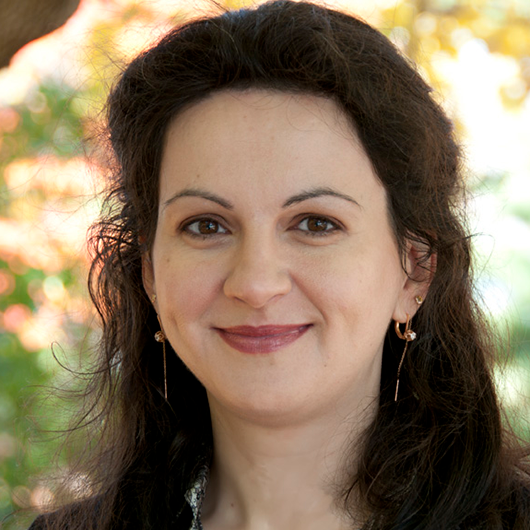
Viorica Marian is the Ralph and Jean Sundin Endowed Professor of Communication Sciences and Disorders at Northwestern University's School of Communication. Her research focuses on bilingualism/multilingualism, the neurocognitive mechanisms underlying language processing, and the interplay between language, memory, and cultural factors. She holds a PhD in Experimental Psychology from Cornell University, alongside multiple MA and BA degrees in psychology-related fields. Education: PhD (Cornell), MA (Cornell), MA (Emory), BA (University of Alaska). Research Interests: Bilingualism, cognitive neuroscience, language processing, memory, psycholinguistics, and cross-cultural communication. Labs: Bilingualism and Psycholinguistics Research Group. Marian's work bridges behavioral, cognitive, and neurological methodologies. Her studies reveal how bilingualism enhances executive control, influences memory retrieval, and shapes cross-modal perception. Recent research highlights cultural differences in mother-child communication and the cognitive benefits of multilingualism. Her awards include the 2019 JSLHR Editor’s Award and recognition for teaching excellence. She actively contributes to translational research through grants like the NIH-funded Cognitive Architecture of Bilingual Language Processing project. Courses taught include CSD 309: Culture, Language, and Learning, and CSD 551: Topics in Bilingualism. Key Grants: NIH RO1 HD059858 (2022-2027), NIH R21 DC018349 (2021-2023). Prominent Publications: The Power of Language (2023), LEAP-Q methodology (2007), and foundational bilingualism studies in Bilingualism: Language and Cognition .
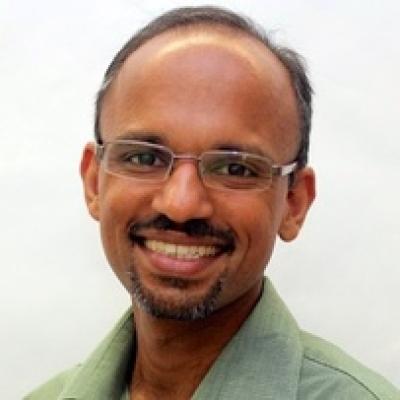
Deepak Ganesan is a Professor at the Manning College of Information and Computer Sciences (CICS) at the University of Massachusetts Amherst. His research focuses on low-power sensing and communication, networked systems, and machine learning applied to pervasive health monitoring and societal challenges. PhD, Computer Science, University of California, Los Angeles (2004) MS, Computer Science, University of California, Los Angeles (2000) BTech, Computer Science, Indian Institute of Technology, Madras (1998) Ganesan's work bridges wireless sensor networks, smart textiles, and healthcare applications. He designs ultra-low-power wearable devices for tracking health signals like drug use, smoking, and cognitive performance, often integrating machine learning for robust detection. His research emphasizes societal impact, particularly in aging and Alzheimer's care through the Massachusetts AI and Technology Center for Connected Care (MassAITC) and the Center for Personalized Health Monitoring (CPHM). Recent publications highlight innovations in edge-cloud collaboration, fabric-based sensors, and longitudinal health analytics. His NIH-funded MD2K Center for Excellence and affiliations with the Center for Data Science and Computational Social Science Institute further underscore his interdisciplinary approach. ACM Fellow NSF CAREER Award (2006) IBM Faculty Award (2008) UMass Junior Faculty Fellow (2008) UMass Lilly Teaching Fellow (2009) Best Paper at CHI 2013 Best Paper Runner-up at Mobicom 2014 Honorable Mentions at Ubicomp 2013 Ganesan leads the SENSORS: Wireless Sensor Networks Group and contributes to global initiatives like the Internet of Battlefield Things. His work spans academic research, industry partnerships, and policy development in AgeTech and digital health.
Jay Strader is a Professor in the Department of Physics and Astronomy at Michigan State University, where he serves as Graduate Director for the astronomy PhD program and Associate Chair for astronomy. His research focuses on compact objects, particularly black holes and neutron stars in globular clusters, neutron star binaries in Fermi gamma-ray sources, and intermediate-mass black holes. He has received a Packard Fellowship for Science and Engineering and grants from NSF and NASA. His research group includes postdoc Ryan Urquhart, graduate students Thomas Do and Rebecca Kyer, and several undergraduates, with past students like Teresa Panurach (now director of NoVEL Consortium) and Samuel Swihart (NRC fellow at Naval Research Lab). Education: PhD in Astronomy, UC-Santa Cruz/Lick Observatory Awards: Packard Fellowship Collaborations: Member of Rubin Observatory's Stars, Milky Way, and Local Volume science collaboration since 2008 Previous Positions: Hubble Fellow and Menzel Fellow at Harvard-Smithsonian Center for Astrophysics (2007-2012) Program Initiatives: Co-founder of PAREDS program for early research opportunities at MSU His work has been supported by NSF and NASA grants, and he has contributed to studies on black holes in M22, hypervelocity globular clusters around M87, and transitional millisecond pulsars. His group collaborates with Laura Chomiuk and contributes to data catalogs like the M31 globular cluster velocity dispersion database.
Associate Professor Steven Lu is a faculty member at the University of Sydney Business School, serving as Deputy Head of Discipline (Education). He holds a PhD in Marketing from the University of Toronto, an MA in Economics from York University, and a BA from Nankai University. His research focuses on quantitative modeling, machine learning, and big data analytics applied to digital economy challenges such as digital retailing, search advertising, and blockchain. He co-directs the Consumer Insights Research Group and is affiliated with the Sydney Institute of Agriculture. Dr. Lu has published in top journals including Marketing Science , Production and Operations Management , and Journal of Retailing . His awards include the CNS Vithala Rao Award, ANZMAC Best Paper Awards (2022-2024), and the 2021 Vice Chancellor's Teaching Award. He teaches courses on machine learning in marketing, marketing research, and new product development. He leads research grants such as 'The Era of Mobile Payment' (2021) and 'Digital Transformation of Food Sensory Quality' (2017). His advising focuses on topics like neural recommender systems, e-coupon effectiveness, and heterogeneous treatment effects analysis.
Dr Kevin Hunt is a Lecturer in Piano (Jazz) at the Sydney Conservatorium of Music, University of Sydney. He holds a Doctor of Philosophy (2016) and a Master of Music in Jazz Performance (2004) from the same institution. His academic roles include supervising six research projects (2017) across Honours, Masters, and PhD levels. Education: MMus(Perf) Sydney (2004), PhD in Jazz Studies (2016). Professional training includes studies with Don Burrows, Bill Motzing, and a scholarship in NYC (2001). Research focuses on jazz piano performance, intercultural collaborations with Aboriginal Torres Strait Islander musicians, and the sonic qualities of Australian-made Stuart & Sons pianos. Key projects include the OUR MUSIC workshop-festivals (2012-2016) and the Ancient & New CD project blending ancient Indigenous chants with jazz improvisation. Performance highlights include the ABC FM Listeners Choice Award-winning JS Bach Trio (1998), recordings with Don Burrows and Simon Tedeschi, and collaborations in cabaret theatre such as Prince Bettliegend (2017). Active in education since 2005, he currently leads the Kevin Hunt Trio and performs with Emma Pask and Marie Wilson. Awards include the 2016 PhD and 1998 ABC award. His work bridges jazz innovation with cultural heritage preservation, evidenced by intercultural projects and academic publications on Yiddish theatre and Indigenous music collaboration.
Dr. Kenneth Pearce is a Professor of Philosophy and Academic Unit Head at the Department of Philosophy & Religion, James Madison University (since 2022). He previously served as Head of the Philosophy Department at Trinity College Dublin (2020–2022) and held roles including Ussher Assistant Professor in Berkeley Studies (2016–2020). His research focuses on early modern philosophy, particularly George Berkeley, and philosophy of religion, exploring metaphysical questions about divine power, free will, and religious epistemology. He has published extensively, including books like *Is There a God? A Debate* (2022) and *Language and the Structure of Berkeley's World* (2017). His work bridges historical and contemporary philosophy, addressing themes like grounding theory, divine attributes, and early modern critiques of materialism. Awards include the Sanders Prize (2016) and a Royal Institute of Philosophy Grant (2018). He teaches courses on early modern philosophy, philosophy of religion, and metaphysics, and actively advises graduate students. His media engagements include podcasts and radio discussions on religious debates and philosophical topics. Education: B.A./B.A.S., University of Pennsylvania (2007) Ph.D., University of Southern California (2014) Research Interests: Early modern philosophy (Berkeley, Locke, Arnauld) Philosophy of religion (omnipotence, divine freedom) Metaphysics (grounding, free will) Grants & Service: Directed MPhil in Philosophy programs at Trinity College Dublin Organized conferences like *Irish Philosophy in the Age of Berkeley* (2019) Editorial roles at *PhilPapers* and *The Prosblogion* blog Labs/Teams: Engages in digital humanities projects, including exhibits on Berkeley's manuscripts.
Abigail Jacobs is an Assistant Professor at the University of Michigan , jointly appointed in the School of Information and the College of Literature, Science, and the Arts . She is also affiliated with the Center for Ethics, Society, and Computing (ESC) and the Michigan Institute for Data Science (MIDAS) . Education: PhD in Computer Science, University of Colorado Boulder (2015-2019) BA in Mathematical Methods in the Social Sciences and Mathematics, Northwestern University (2011-2015) Research Interests: Dr. Jacobs examines measurement and validity in machine learning , focusing on hidden assumptions in AI systems, governance structures in sociotechnical systems, and inequality in algorithmic design. Her work bridges AI, data science, and social science methodologies, emphasizing interdisciplinary collaboration. Recent Publications (2024-2025) explore generative AI evaluation, algorithmic transparency in government (e.g., US Census Bureau), motion capture data ethics, and sociotechnical frameworks for AI governance. Earlier works (2023) address fairness in ranking systems and racial categorization in algorithmic bias studies. Scientific Awards: Microsoft Research AI & Society Fellowship (2024) NSF Graduate Research Fellowship (during PhD) Advising & Grants: She co-advises Ph.D. students Amina Abdu and Meera Desai . Her research includes a Notre Dame-IBM Tech Ethics Lab grant on AI audits and collaborations with institutions like UC Berkeley, Microsoft Research, and the National Academies .
Nora Uglik-Marucha is an NIHR Doctoral Research Fellow at King’s College London’s Department of Biostatistics & Health Informatics, affiliated with the Institute of Psychiatry, Psychology & Neuroscience. Her work focuses on autism in women and misophonia through advanced psychometric methodologies. She holds MSc and BSc degrees in Clinical Neuropsychiatry and Psychology from King’s College London. Research interests include gender bias in autism screening tools, measurement invariance analysis, and questionnaire development. Her doctoral project develops novel autism assessment tools for women under Dr. Silia Vitoratou and Prof. Francesca Happé. Key contributions include the S-Five tool for misophonia assessment and validation studies across cultures. She has published on misophonia mechanisms, cross-cultural measurement robustness, and autism screening equity.
Joseph Sifakis is a CNRS Research Director and founder of Verimag Laboratory in Grenoble, France. He holds the INRIA-Schneider endowed industrial chair since 2008 and has been instrumental in advancing concurrent systems specification and verification. Education: Electrical Engineering (Technical University of Athens), Computer Science (University of Grenoble) Research interests focus on component-based design , real-time systems , and correct-by-construction techniques . He pioneered the development of the BIP framework and contributed to model checking, a cornerstone of industrial system verification. Recent publications emphasize component-based modeling, formal verification, and distributed system design, reflecting his work's impact on embedded systems and critical applications like aerospace and telecommunications. Scientific awards include: Turing Award (2007) CNRS Silver Medal (2001) Test-of-Time Award (2012) Multiple honorary doctorates (2008-2011) Member of prestigious academies Industry collaborations span Airbus, ST Microelectronics, and the European Space Agency, with applications in aeronautics, telecommunications, and industrial software standards. He leads the ARTIST2 Network of Excellence and directs the CARNOT Institute 'Intelligent Software and Systems'.