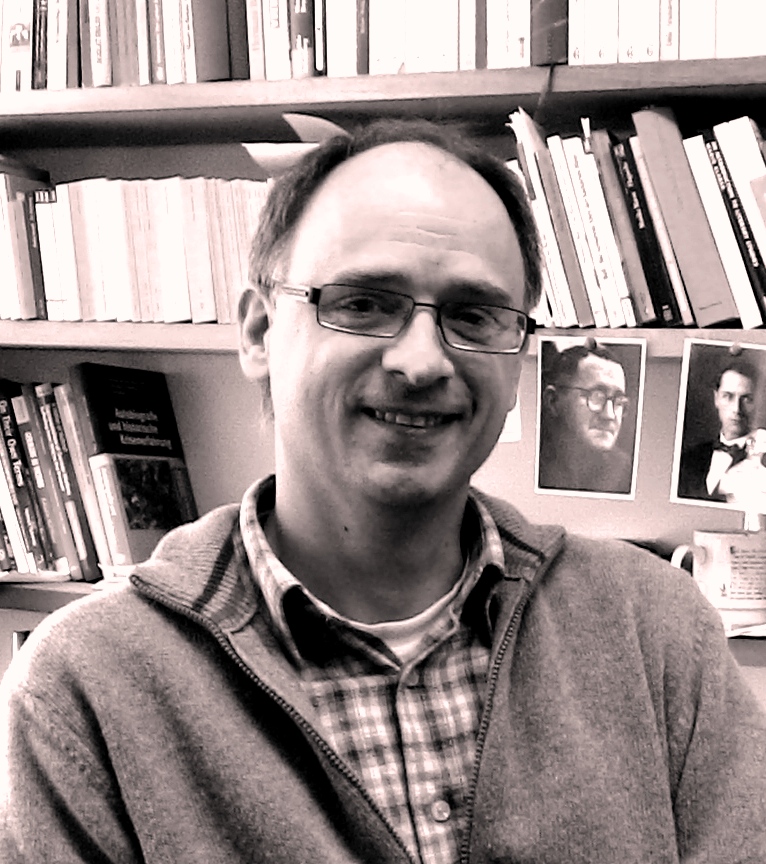
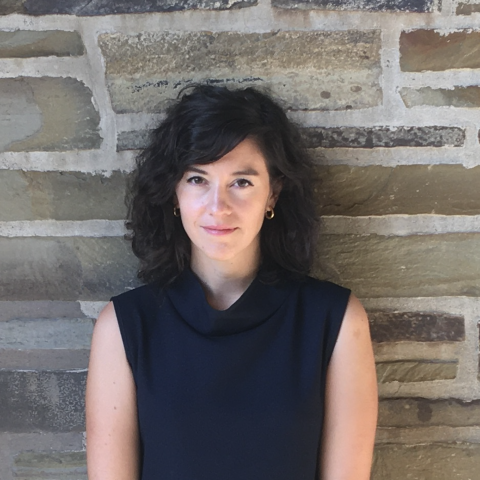
Professor Helmut Schmitz is a faculty member in the Department of German at the University of Warwick. His academic career spans over two decades, with expertise in post-war and contemporary German literature, memory studies, and representations of the Nazi period and Holocaust in cultural discourse. Education: MA, University of Warwick (1992) PhD, University of Warwick (1996) His research explores post-war German memory cultures, focusing on victim and perpetrator dynamics, family narratives, and the re-emergence of love and intimacy as themes in 21st-century German literature. He has led interdisciplinary projects and collaborated internationally through the Arbeitskreis für Literatur und Politik. Recent publications analyze intersections of trauma, identity, and aesthetics, reflecting his Leverhulme Research Fellowship project on literary representations of love. His work often bridges literature, philosophy, and historical analysis. Scientific Awards: Leverhulme Research Fellowship (2020) He supervises PhD students in topics ranging from posthumanism to non-realist war narratives and contributes to academic discourse through editorial roles and conference coordination.
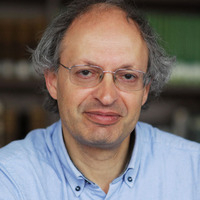
Professor Geoffrey Khan serves as the Regius Professor of Hebrew at the University of Cambridge, affiliated with the Faculty of Asian and Middle Eastern Studies. He has held this prestigious position since 2012, following his academic progression from Lecturer in Hebrew and Aramaic (1993), to Reader in Semitic Philology (1999-2002), and Professor of Semitic Philology (2002-2012). His scholarly journey began with B.A. and Ph.D. studies in Semitic Languages at the School of Oriental and African Studies, University of London. Professor Khan's academic foundation includes a B.A. in Semitic Languages (1980) and a Ph.D. (1984) for his thesis "Extraposition and Pronominal Agreement in Semitic languages." His career at Cambridge commenced in 1983 with the Taylor-Schechter Genizah Research Unit, where he has remained a central figure in Semitic scholarship. Professor Khan's research spans three major domains within Semitic linguistics. His work on Hebrew encompasses comprehensive studies of Biblical Hebrew syntax, the Tiberian Masoretic tradition, and medieval Hebrew grammatical thought, particularly Karaite contributions. In Aramaic studies, he has conducted extensive documentation of endangered North-Eastern Neo-Aramaic dialects through fieldwork across northern Iraq, southeastern Turkey, and western Iran. His Arabic research focuses on editing medieval documentary corpora, including materials from the Cairo Genizah and early Islamic regions. He serves as editor-in-chief of the comprehensive Encyclopedia of Hebrew Language and Linguistics, containing approximately 1,000 articles on Hebrew language traditions. Professor Khan's publication trajectory reveals consistent scholarly productivity across multiple Semitic language traditions. His recent works demonstrate particular focus on the Tiberian pronunciation tradition of Biblical Hebrew (2020), Neo-Aramaic dialect documentation (2021-2024), and medieval Arabic documents from Nubia (2024). His scholarship bridges traditional philological approaches with contemporary linguistic theory, addressing both historical and contemporary aspects of Semitic languages. Professor Khan's scholarly distinction is reflected in numerous prestigious honors: Election as Fellow of the British Academy (1998) Election as Honorary Fellow of the Academy of the Hebrew Language (2011) Election as Fellow of Academia Europea (2014) Election as Honorary Member of the American Oriental Society (2015) Extraordinary Professor (Honorary) by University of Stellenbosch (2016) Lidzbarski Gold Medal for Semitic philology (2004) Honorary doctorates from Hebrew University of Jerusalem (2017) and University of Uppsala (2018) Professor Khan actively supervises graduate research, currently guiding Lina Brüssel's work on "The Medieval Karaite Transcriptions of Hebrew into Arabic Script." His leadership extends to multiple major research initiatives including the "Documentation of North-Eastern Neo-Aramaic Dialects" project, "Arabic Documents from Fatimid Nubia," and the preparation of the "Oxford Grammar of Biblical Hebrew" for Oxford University Press. His scholarly contributions have been supported by various funding bodies enabling extensive fieldwork and publication projects across multiple continents.
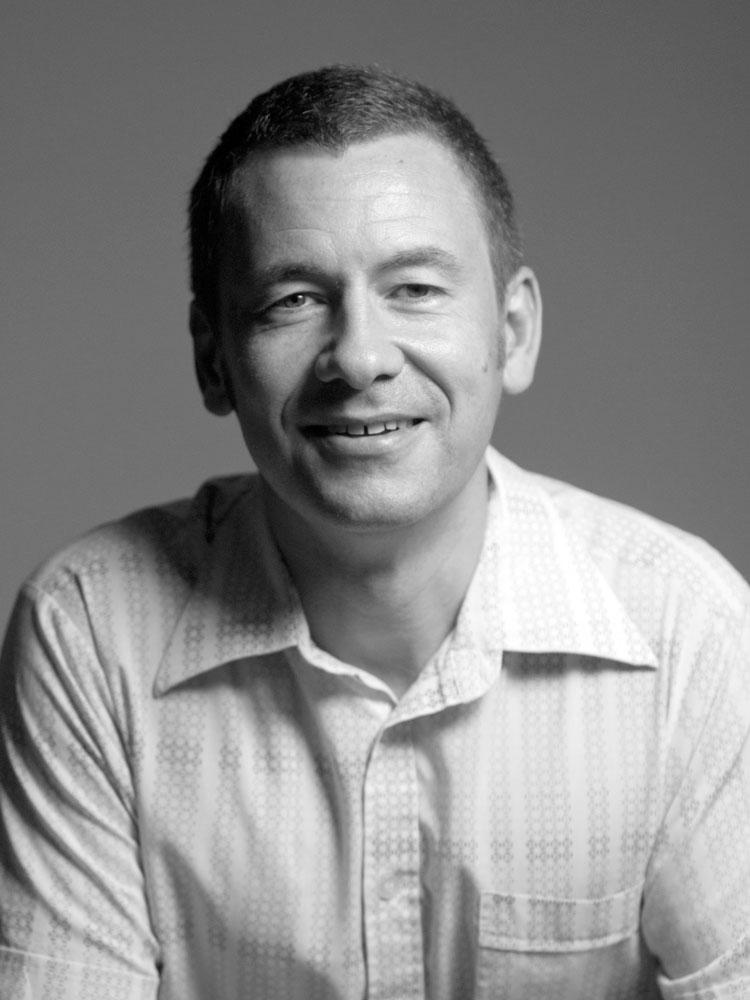
Simon Clematide is an Academic Associate at the Department of Computational Linguistics within the Faculty of Arts and Social Sciences at the University of Zurich, where he has been actively engaged in research and teaching since the early 2000s. His work spans computational linguistics, natural language processing, and text mining with a particular focus on historical document processing, multilingual applications, and practical implementations of machine learning techniques. Dr. Clematide's research interests encompass Natural Language Processing , Computational Linguistics , Text Mining , Machine Learning , Sentiment Analysis , Named Entity Recognition , and Historical Document Processing . His interdisciplinary approach bridges computer science with humanities applications, particularly in analyzing historical newspapers and multilingual corpora. His work demonstrates strong expertise in developing practical NLP systems that address real-world challenges in document analysis and language processing. Over the past five years, his publication record reveals a consistent focus on historical text processing, multilingual NLP applications, and shared task competitions. His research shows particular strength in named entity recognition for historical documents (CLEF HIPE shared tasks), grapheme-to-phoneme conversion (SIGMORPHON shared tasks), and OCR post-processing for historical newspapers. The interdisciplinary nature of his work is evident in collaborations spanning computer science, linguistics, history, and geography. Dr. Clematide has been instrumental in organizing and participating in numerous shared tasks including CLEF-HIPE (2020-2022), SIGMORPHON (2017-2021), and CoNLL-SIGMORPHON (2017-2020), where his team achieved multiple first and second places. His teaching portfolio includes courses on Text Mining, Machine Learning for NLP, Deep Learning in Language Technology, and Sentiment Analysis, demonstrating his commitment to educating the next generation of computational linguists. He has led or participated in diverse research projects including NFP 77, impresso, Citizen Linguistics Projects (tonaccent.ch, dindialaekt.ch), SPARCLING, KTI project with Eurospider, and biomedical text mining initiatives (MANTRA, SASEBio). His interdisciplinary work extends to collaborations with material scientists and social scientists on concept extraction and text zoning applications. Dr. Clematide has contributed to the development of several computational tools and resources, including finite-state morphology systems for Rumansh Grishun, Standard German, and Swiss German, as well as the CLab web-based virtual laboratory for computational linguistics. His work on crowdsourcing OCR ground truth for heritage corpora demonstrates practical solutions to real-world digitization challenges.
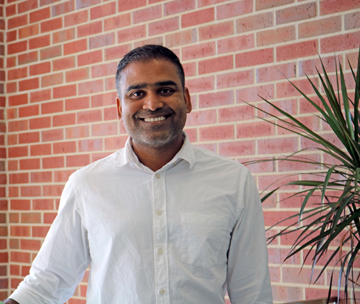
Dr. Gajender Aleti serves as an Assistant Professor in the Department of Agricultural and Environmental Sciences within the College of Agriculture at Tennessee State University (TSU), having joined the institution in August 2022. His academic appointment bridges agricultural sciences, environmental health, and biomedical research through interdisciplinary microbiome studies. His educational credentials include a PhD in Microbial Ecology from the Austrian Institute of Technology & The University of Natural Resources and Life Sciences, Vienna; an MSc in Bioinformatics from the University of Abertay Dundee; an MSc in Biotechnology from Osmania University, India; and a BSc in Botany, Zoology, and Chemistry from Osmania University. Dr. Aleti's research program investigates critical interactions between diet, the gut microbiome, and host health, with three core pillars: Understanding diet-microbiome-gut health interactions Characterizing bioactive small molecules produced by gut microbiota Elucidating gut microbiome-nervous system communication (Gut-Brain Axis) Analysis of his 15 recent publications (2016-2022) reveals a strong translational focus spanning human health contexts (salivary/gut microbiomes in depression, obesity, OCD, and oral cancer) and agricultural applications (rhizosphere microbiomes, bioremediation). His work predominantly employs mass spectrometry-based metabolomics and genomic data mining within large collaborative frameworks, demonstrating methodological innovation in multi-omics integration. While no specific scientific awards are documented in the provided materials, his publication record in journals like Nature Communications , Nature Methods , and BMC Microbiology reflects significant scholarly impact. His research is supported by active grants enabling investigations into microbiome-host dynamics across diverse physiological systems. Dr. Aleti actively mentors graduate researchers within TSU's Department of Agricultural and Environmental Sciences, contributing to the university's research infrastructure through laboratory-based investigations of microbial community dynamics and molecular mechanisms in health and disease contexts.
Cecilia Bello is an Associate Professor at Sapienza University of Rome's Department of European, American and Intercultural Studies (SEAI). She specializes in contemporary Italian literature with particular emphasis on 20th-century and early 21st-century poetry, avant-garde movements, and verbovisual/performance poetry. Active in archival research, she directs the Twentieth-Century Archive and founded the Contemporary Poetry Laboratory "Con gli occhi del linguaggio." Current courses: Contemporary Italian Literature (first semester 2024-2025) and Contemporary Italian Literature II (second semester 2024-2025) Office hours: Wednesdays 11:00-13:00 at Room 413, Department IV floor Research interests include: 20th-century Italian poetry analysis Avant-garde and neo-avant-garde studies Gender-specific writing approaches Word/music/image interactions Philological editions of rare texts Recent publications examine: Eliot's influence on Italian poets Materiality of poetic texts Archival discoveries in the Twentieth-Century Archive Structuralist approaches to contemporary verse Scientific awards: National Scientific Qualification (ASN 2018-2020) for First Fascia Professor (Full Professor level) Research projects include: "Anceschi and the Novissimi" (2023-2024) - intellectual correspondence and editorial projects "TeCa: Texts and Correspondence from the Twentieth Century" (2022-2024) International collaboration "Avant-Garde and Gender Problems" (Tokyo University of Foreign Studies)
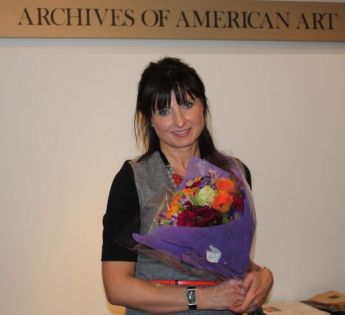
Dr. Edyta Frelik is a Senior Lecturer at the Department of American Studies, Faculty of Languages, Literatures and Cultures, Maria Curie-Skłodowska University. Her academic career spans research and teaching in American art history, visual culture, and interdisciplinary intersections between literature and visual arts. She holds a PhD in Humanities (UMCS, 2013) and has been recognized with prestigious awards including the Terra Foundation Award (2013) and Georgia O’Keeffe Museum nomination (2018). Her research focuses on: Modernist artists' intellectual engagements Interactions between textual and visual media Anti-intellectualism in American art and culture Gender dynamics in avant-garde practice Relationships between science/technology and artistic expression Recent publications highlight her expertise in artists like Georgia O’Keeffe, Ad Reinhardt, and Frank Lloyd Wright, with thematic clusters in: American cultural identity formation Artistic self-representation strategies Transatlantic modernist dialogues Architectural language theory Visual epistemology Post-historical cultural analysis Scientific recognitions include: 2013 : Terra Foundation Award for Best Essay by International Scholar 2018 : Georgia O’Keeffe Museum Book Prize Nomination 2022 : NCN MINIATURA 5 Grant Dr. Frelik has organized international conferences like Wordstruck (2015) and actively participates in academic exchanges across Europe and North America.
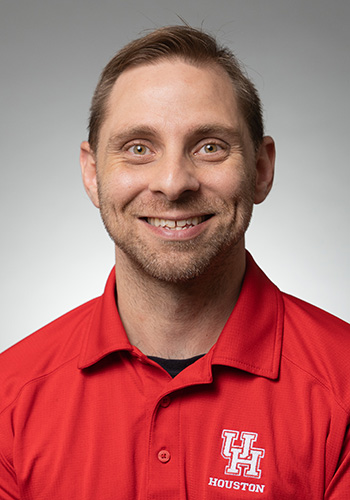
Dr. Nathanial Wiggins is a Senior Lecturer at the University of Houston in the Department of Industrial and Systems Engineering, with additional roles as Distinguished Professor of Engineering and Mathematics at San Jacinto College and Adjunct Professor of Mathematics at University of Houston - Clear Lake. He is affiliated with the Institute of Electrical and Electronics Engineers (IEEE) and the American Society for Engineering Education (ASEE). Ph.D. in Systems and Engineering Management, Texas Tech University M.S. in Mathematical Science, University of Houston – Clear Lake B.S. in Mathematics and Russian Studies, University of Colorado, Boulder Dr. Wiggins' research focuses on artificial intelligence, mixed reality, and complex dynamical systems. He develops systems that scaffold knowledge from repetition to utilization, particularly in neural networks and intelligent infrastructure. His work intersects with aerospace, oil and gas, and defense industries, emphasizing student-driven projects and collaborative learning frameworks. His publications span mixed reality applications in education, swarm robotics for Mars exploration, neural network methodologies, and aerospace systems like microgravity flame suppression and battery cooling. Keywords include AI, computer science, and engineering education, with sub-fields like neural networks and systems integration. SJC Gold Level Honoraria, Institutional Impact Award, 2019 IEEE CCWC Best Speaker Award, Las Vegas, 2019 Roueche Excellence Award, League for Innovations, 2013 NISOD Award, Community College Organization, 2013 Edu-STEM Award, Texas Space Grant Consortium, 2012 NASA Microgravity University recognition, 2012 Dr. Wiggins leads grants including NSF Bridges to STEM Careers and NASA collaborations (Swarmathon, Microgravity University). He founded the Artificial Intelligence Technology Labs, integrating peer mentoring and hands-on research to enhance STEM education.
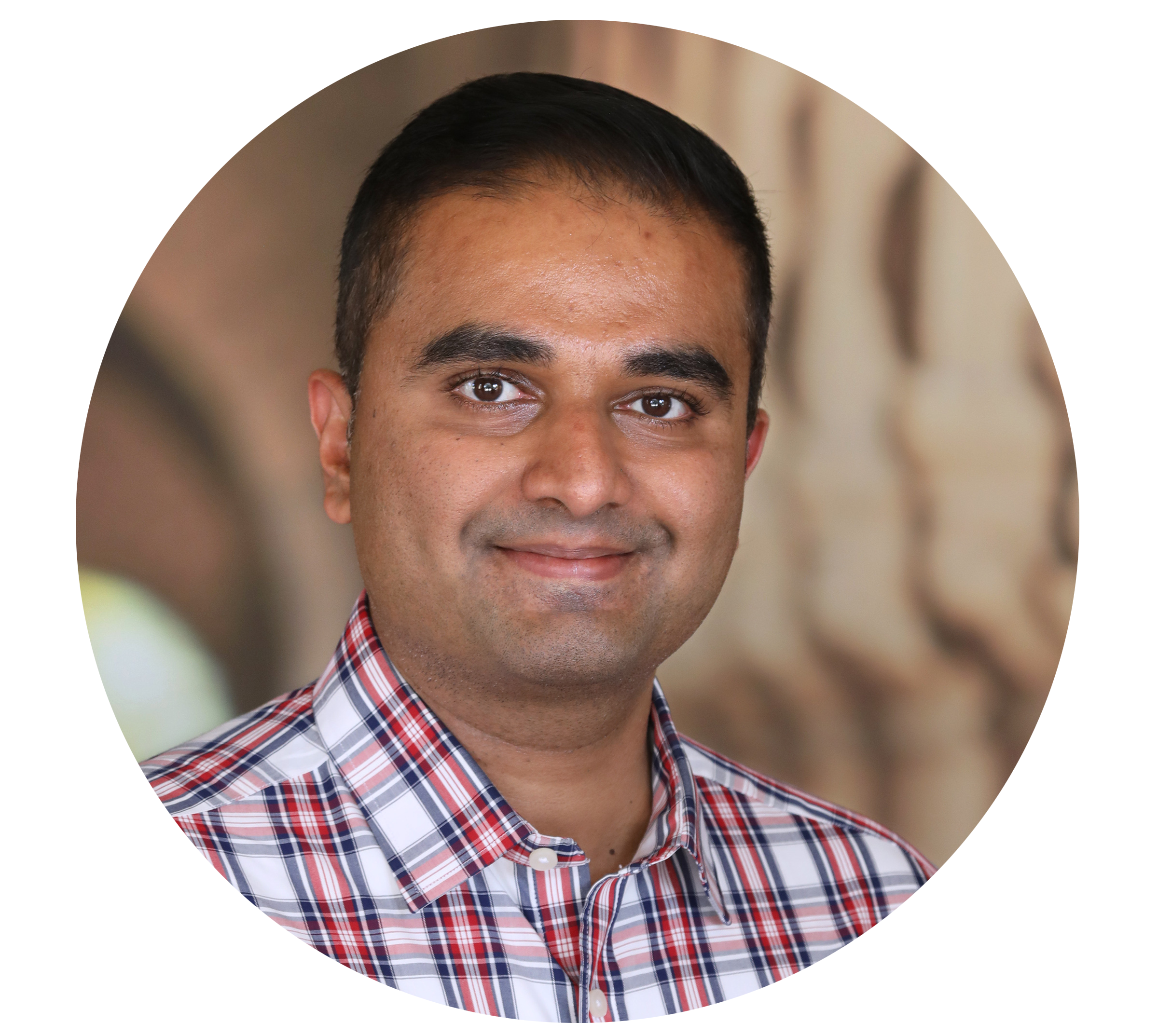
Hari Subramonyam is an Assistant Professor (Research) at Stanford University's Graduate School of Education with a courtesy appointment in Computer Science. He serves as the Ram and Vijay Shriram Faculty Fellow at Stanford's Institute for Human-Centered AI (HAI) and is a core faculty member of Stanford HCI. Subramonyam earned his PhD in Information from the University of Michigan under advisor Eytan Adar. His research focuses on the intersection of Human-Computer Interaction (HCI) and Learning Sciences, specifically developing AI systems to augment human learning through cognitively informed design, co-design with educators, and transformative learning experiences. His work prioritizes ethical AI, responsible design practices, and human values in technology creation. Research spans generative AI for education, human-AI interaction paradigms, and accessible learning technologies. Subramonyam's publications demonstrate strong focus on human-centered AI systems for education, visualization, and creative applications. His recent work (2023-2025) concentrates on generative AI interfaces for writing assistance, educational tools, and collaborative systems, while maintaining consistent exploration of visualization techniques and AI transparency frameworks. Awards & Honors: Best Paper Award at CHI (2025, 2020, 2019) Honorable Mention Award at CHI (2025) Best Paper Award at IUI (2021) Ram and Vijay Shriram Faculty Fellow HAI Hoffman Yee Grant (2024) Cover Story in Interactions Magazine (2024) Advising & Grants: Leads 27 students including PhD advisee Neha Rajagopalan (co-advised) and diverse MS/BS researchers. Received HAI Hoffman Yee Grant (2024) for "Integrating Intelligence: Building Shared Conceptual Grounding for Interacting with Generative AI" as co-investigator. Teaches courses on data visualization (CS 448B) and educational technology design (EDUC 432). Labs & Leadership: Core faculty at Stanford HCI group, directing research on human-centered AI systems. Organizes workshops including "Tools for Thought" (CHI 2025) and "Human–AI Coevolution" (ICLR 2025). Maintains collaborations with National University of Singapore and University of Michigan.
Dr. Richard David Williams is a Reader in Music and South Asian Studies at SOAS University of London , where he works in the School of Arts and Department of Music . His research bridges musicology, cultural history, and religious studies, focusing on South Asian music's evolution during colonialism and early modernity. BA and MPhil in Theology and Modern South Asian Studies from the University of Oxford PhD in Music from King’s College London Williams' research investigates how music and sound interact with literature, religion, and multilingual environments across South Asia. His first book, The Scattered Court: Hindustani Music in Colonial Bengal (2023), reconstructs interregional musical dialogues between north India and Bengal, centering on the exiled Nawab Wajid ‘Ali Shah's influence. His second book explores Ragamala, an early-modern fusion of musical imagery with poetry, while collaborating with Professor Makoto Kitada on translating the Gulshan-e-‘Ishq epic. His recent publications trace global music historiography, courtesan performance, and sonic dimensions in Shi'ah and Vaishnava traditions. Williams supervises PhD candidates on diasporic music, film song poetics, and Sri Lankan Tamil musical dislocations. He has held a Leverhulme Early Career Fellowship and is a Fellow of the Higher Education Academy (FHEA). Scientific Awards: Leverhulme Early Career Fellowship Fellow of the Higher Education Academy
Holger Strutwolf is a Professor at the University of Münster , where he chairs Patristics and New Testament Textual Research. He also serves as director of the Institute for New Testament Textual Research (INTF) and the Bible Museum. Education Studied Protestant theology at Bethel and Heidelberg Universities 1988: First theological examination at the Evangelical Lutheran Church of Oldenburg; MTheol at Heidelberg 1991: Doctorate at Heidelberg 1997: Habilitation at Münster Research Focus Strutwolf specializes in New Testament textual research, ancient church history (with particular interest in Gnosticism, Origen, and Eusebius of Caesarea), and the intersection of ancient theology with philosophy. His work explores Platonic influences on early Christian thought and methodological approaches to biblical textual criticism. Publications & Methodological Contributions His scholarship spans critical editions, book reviews, and analyses of scribal practices in manuscript transmission. Key themes include the reception of Gnosis in patristic writings, theological cosmology in late antiquity, and digital tools like the New Testament Virtual Manuscript Room for textual analysis. Academic Roles After academic and pastoral roles (1998–2004), he has led the INTF since 2004. His career integrates textual scholarship with systematic theological inquiry, particularly in patristic contexts.
Robert Hamilton is a Professor in the Department of Communication Studies & Media Arts at McMaster University's Faculty of Humanities in Hamilton, Canada. With an extensive career as both an academic and practicing artist, he has established himself as a significant figure in contemporary media arts education and creation since joining McMaster University. Hamilton holds dual MFA degrees from the Art Institute of Chicago and the Jan van Eyck Academie in Maastricht, Netherlands, complemented by a Diploma from the Alberta College of Art + Design. His academic journey spans from 1981-1985 at the Alberta College, followed by advanced studies from 1991-1993 at the Jan van Eyck Academie. His research and creative practice centers on visual media with particular focus on video art, photography, and animation. Hamilton's work consistently explores themes of identity, community, and the evolving urban environment, often reflecting on societal events and contemporary issues. His artistic approach combines technical mastery with conceptual depth, resulting in works that challenge viewers' perceptions of everyday spaces and social structures. He has developed a distinctive methodology that blends documentary techniques with artistic interpretation, creating works that are simultaneously observational and transformative. Hamilton's recent body of work demonstrates a clear trajectory toward examining human relationships with urban spaces, particularly during times of societal transformation like the pandemic. His projects increasingly incorporate digital technologies and AI elements while maintaining a strong foundation in traditional media arts. The thematic continuity across his work reveals a persistent concern with how individuals navigate and make meaning within constructed environments. German Video Art Prize Silver Hugo Award at the Chicago Film Festival Work featured in National Gallery of Canada collection As an educator, Hamilton has mentored numerous students through senior thesis projects and specialized courses in media production. His teaching portfolio spans animation, video art, digital cinema, photographic techniques, and emerging media. While specific grant information isn't detailed in the available materials, his sustained creative output suggests successful acquisition of research funding to support his artistic practice. His work has been exhibited internationally at venues including Maison des Arts de Laval, Museum of Contemporary Art in Castello, Spain, and Transmediale in Berlin. Hamilton maintains an active studio practice that directly informs his teaching approach. His creative process involves both digital and traditional techniques, often experimenting with the intersection of physical and virtual spaces. He has developed specialized approaches to documenting urban environments that reveal hidden patterns and structures within everyday landscapes, creating what might be described as visual commentaries on contemporary life.
Sophie Pinkham is Professor of Practice in the Comparative Literature Department at Cornell University and an IES Faculty Associate at the Institute for European Studies. She holds teaching positions in Cornell's College of Arts and Sciences, where she contributes to the Russian and Comparative Literature programs, teaching courses including 'The Revolutionary as Author: Autobiography and Political Myth' and 'Writing for the Public: Adapting Academic Work for a General Audience' for Spring 2025. Columbia University (PhD in Slavic Languages and Literatures) Harriman Institute (MA in Russian, Eurasian, and Eastern European Studies) Yale University (BA) Pinkham's research centers on post-Soviet and post-socialist literature, culture, and politics, with a particular focus on Russia and Ukraine. Her academic interests encompass literature and film of the Russian Empire, Soviet Union, and post-Soviet states; memory politics and post-socialism; environmental humanities; poetics of censorship; language politics and translation; and Siberia. Her current major project is a history of the forest in the Russian imagination, exploring the forest's role in myth, culture, and politics throughout Russian history from Mongol invasions to contemporary conflicts in Ukraine. Her extensive publications reveal consistent thematic trends across disciplines including Russian studies, political analysis, environmental history, and literary criticism. Pinkham's work demonstrates particular expertise in analyzing the intersection of cultural production with political realities in post-Soviet spaces, often highlighting how historical narratives shape contemporary conflicts. Her articles frequently examine how environmental factors, historical memory, and cultural artifacts intersect with political power structures. 2023 British Journalism Award for 'Lost in a Dark Wood' on migrants in the forest on the Belarusian-Polish border Shortlisted for True Story Award for the same article Pinkham has received significant research support, most notably a 2022-23 National Endowment for the Humanities Public Scholar grant supporting both her book project 'The Oak and the Larch: A Forest History of Russia and Its Empires' and her award-winning Economist 1843 story. Her work bridges academic scholarship and public intellectual engagement, with frequent contributions to major publications serving as a critical voice on Russian and Ukrainian affairs during a period of escalating geopolitical tensions. While she previously worked in international public health in Eastern Europe and Central Asia focusing on HIV, drug use, and women's health, her current focus remains firmly on cultural and political analysis of the post-Soviet space. Though not explicitly affiliated with a specific research lab, Pinkham's work connects with broader scholarly networks through her involvement with Cornell's Institute for European Studies and her interdisciplinary approach that bridges literary studies, history, political science, and environmental humanities.
Camilla Townsend is the Board of Governors Distinguished Professor of History at Rutgers University . Her work focuses on Indigenous perspectives during the colonial period in the Americas, particularly through Nahuatl language sources and Native American historiography. She has published extensively on early Latin American and Native American history. Specialty: Indigenous peoples in the Americas, Nahuatl language, colonial interactions Teaching: Undergraduate and graduate courses in Native American History, Latin American History, Borderlands, and Comparative History Research Interests Dr. Townsend explores indigenous conceptualizations of history through Nahuatl annals and early writings. Her work bridges Early American and Latin American history, emphasizing the agency of Native peoples during and after European contact. She has analyzed colonial Mexico, the Andean Region, and the Chesapeake, with a focus on how Native historians documented their experiences. Scientific Awards Cundill Prize (2020) Beveridge Prize, Howard Cline Award, Arthur Whittaker Prize (2017-18) National Endowment of the Humanities Public Scholar Fellowship (2017) Guggenheim Fellowship (2010) Media and Public Engagement Dr. Townsend has appeared on CBC Radio, NPR, BBC, and other platforms, discussing her research on Indigenous history and colonialism. Her work has been featured in documentaries and public lectures, including the Rutgers British Studies Center and SAS seminars.
Dr. Heather Allen is an Associate Professor of Spanish in the Department of Modern Languages at the University of Mississippi, affiliated with the College of Liberal Arts. Her research focuses on early modern Spanish American and Peninsular literature, with particular emphasis on Nahuatl studies, conquest historiography, and the cultural history of manuscript and print. Education: B.A. in Literature, University of Iowa (2001) M.A. in Spanish, University of Iowa (2005) Ph.D. in Romance Languages and Literatures, University of Chicago (2011) Her work explores intersections of textual materiality, affect theory, and digital humanities. She has published extensively in journals like Colonial Latin American Review and La corónica , and co-edited Latin American Textualities: History, Materiality, and Digital Media (University of Arizona Press, 2018), nominated for the Society of Textual Scholarship’s Finneran Award. Scientific Awards: Fulbright-Hays Seminar Fellowship (2021) Newberry Library Fellow (2019-20) Outstanding Academic Title, American Library Association (2017) Dr. Allen has received multiple grants, including a Course Development Grant for Open Educational Resources (2015), a Mini-Grant from the Center for Excellence in Teaching and Learning (2018), and Travel Grants from the University of Mississippi (2016-2018). She advises Spanish majors and minors and teaches courses ranging from Spanish composition to Golden Age literature.
Michele Gattullo serves as an Assistant Professor within the Department of Mechanics, Mathematics & Management at the Polytechnic University of Bari, Italy, specializing in design methods for industrial engineering (ING-IND/15). His research bridges cutting-edge extended reality technologies with practical industrial applications, focusing on human-centered solutions for manufacturing, maintenance, and workplace design. Dr. Gattullo's research portfolio centers on Augmented Reality, Virtual Reality, and Biophilic Design, with significant contributions to Human-Computer Interaction in industrial contexts. He investigates how nature-inspired elements in virtual workspaces enhance employee well-being and productivity, while simultaneously developing practical AR tools for assembly guidance, technical documentation, and maintenance support. His work uniquely integrates ergonomics, cognitive psychology, and industrial engineering to optimize human-technology interaction in complex production environments. Analysis of his 15 most recent publications reveals two dominant research trajectories: biophilic design frameworks for virtual/metaverse workspaces (2023-2025) and industrial AR authoring methodologies. The biophilic stream establishes evidence-based guidelines for digital nature integration, while the AR stream delivers validated tools like ADAM and minimal AR approaches that streamline technical documentation creation. Both trajectories emphasize user experience validation through rigorous industrial studies, demonstrating strong interdisciplinary impact across computer science, industrial engineering, and environmental psychology. Scientific Awards: No awards or honors were documented in the available sources. Advising and Grants: The provided materials contain no information regarding graduate student supervision, research grants, or funding sources. His academic profile emphasizes publication output over mentoring activities or project financing details. Laboratories and Teams: While Dr. Gattullo's research involves advanced XR technologies, the source text does not specify laboratory facilities, research groups, or collaborative teams associated with his work at Politecnico di Bari.