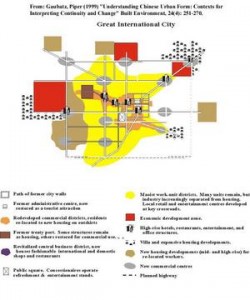
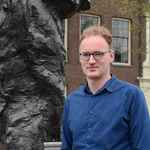
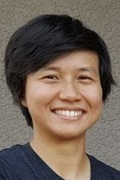
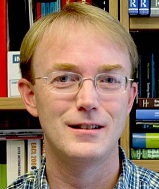
Piper Gaubatz is a Professor of Geography at the Department of Geosciences, University of Massachusetts Amherst, and a Faculty Affiliate at the Department of Landscape Architecture & Regional Planning. Her career spans urban transformation studies in China, Japan, and the U.S., with a focus on public space, globalization, and environmental history. Princeton University (AB in Sociology, Secondary in Architecture) UC Berkeley (MA and PhD in Geography) Postdoctoral: East-West Center (1990-91), Yale Agrarian Studies (2005-06) Research explores four themes: urban form (political economy of space), urban change (historical continuity), urban ecology (environmental interactions), and social justice (inequality in urbanization). Current work analyzes public squares in China through GIS, fieldwork, and policy analysis. Grants include Fulbright, National Academy of Sciences, Henry Luce Foundation, Chinese Academy of Sciences, and Japan Society for the Promotion of Science. Recent publications focus on urban sustainability (2020), public squares (2019), and regional inequality (2017). Advises PhD students like Sainan Lin Editorial roles: Cities, Urban Morphology, Eurasian Geography Field research in 18 cities across China, Japan, and the U.S.
Dominique Devriese is a professor at the Department of Computer Science, KU Leuven, and a member of the DistriNet research group. His work bridges computer security, programming languages, and formal verification. Research interests: Functional Programming, Object Capabilities, Secure Compilation, Dependently-typed Programming, Modal Type Theory Teaching: Formal Systems, Object-Oriented Programming, CyberSecurity, Secure Software His research focuses on rigorous software systems security through capability machines and secure compilation techniques. He actively contributes to formal verification using Agda and Haskell, with recent work on multimode type theory and effect parametricity. Key publication trends include: multimode/presheaf type theory, capability-based security models, formal verification of hardware/software abstractions, and parametricity applications in programming languages. Contact: Email: dominique.devriese@kuleuven.be ORCID: 0000-0002-3862-6856
Michael K. Bourdaghs is the Robert S. Ingersoll Professor in East Asian Languages and Civilizations and the College at the University of Chicago, where he also chairs the Committee on Japanese Studies. He specializes in modern Japanese literature, culture, and intellectual history, with particular expertise in Japanese popular music and literary/critical theory. Professor Bourdaghs's research focuses on Japanese literature within global contexts, emphasizing how Japanese literature moves across multiple global networks. His current project rethinks Japanese cultures of the Cold War era, examining how Japanese writers, filmmakers, and musicians participated in multiple Cold War networks beyond the typical U.S./Japan bilateral framework. His scholarly work reveals consistent themes across Japanese literature, critical theory, and cultural history, particularly regarding property ownership, nationalism, and geopolitical alignments. His extensive publication record includes major works such as Sound Alignments: Popular Music in Asia's Cold Wars (2021), A Fictional Commons: Natsume Sōseki and the Properties of Modern Literature (2021), and Sayonara Amerika, Sayonara Nippon: A Geopolitical Pre-History of J-Pop (2012), demonstrating his interdisciplinary approach connecting literary analysis with political, historical, and theoretical frameworks. Professor Bourdaghs has received recognition for his scholarly contributions through numerous publications with prestigious academic presses including Duke University Press, Columbia University Press, and the University of Michigan Center for Japanese Studies. As an educator, Professor Bourdaghs teaches courses on East Asian popular music, Japanese literature, and sound in Japanese literature. His commitment to bridging academic communities extends to his editorial work introducing Japanese critical theory and scholarship to English-language readers, fostering greater academic exchange between Japan and Western institutions.
Emily Cross is a Full Professor at the Department of Humanities, Social and Political Sciences at ETH Zurich, leading the Social Brain Sciences Professorship since spring 2023. She previously held professorships at Bangor University (Wales), University of Glasgow (Scotland), Macquarie University (Australia), and Western Sydney University's MARCS Institute (Australia). Her research centers on how embodied experience shapes social learning and perception across diverse contexts. Key contributions include identifying neural signatures of embodied expertise using dancers, developing embodied neuroaesthetics theory, uncovering neurocognitive foundations of visual learning across lifespans, and pioneering paradigms for human-robot social engagement. Her interdisciplinary approach bridges technology, performing/visual arts, and social sciences to explore experience-dependent plasticity at brain and behavioral levels. Recent publications (2024-2025) demonstrate intense focus on human-robot interaction dynamics, aesthetic movement perception, and context-dependent social cognition. Work increasingly examines self-disclosure mechanisms to robots, cultural influences on robot acceptance, and neural correlates of movement synchrony, reflecting her expanding influence at the neuroscience-robotics intersection. Scientific awards include: Philip Leverhulme Prize for Psychology Jacob Bronowski Award from British Science Foundation Young Talent Award from Dutch Neuroscience Society RoboHub and Insight Analytics top women in robotics listings Australia’s Superstars of STEM (2022) Cross passionately trains next-generation scientists with emphasis on research ethics. Her work attracts major funding from ERC, NIH, Fulbright Commission, ESRC, EPSRC, and UK Ministry of Defence. She serves on UNESCO’s International Bioethics Committee (co-rapporteur for neurotechnology ethics report) and as Associate Editor for International Journal of Social Robotics. She leads ETH Zurich's dynamic Social Brain Sciences group, which embraces interdisciplinarity through research paradigms bridging technology, performing/visual arts, and biological/social sciences, while maintaining active roles in editorial boards and conference committees including Intelligent Virtual Agents and Affective Computing meetings.
Johanna Naukkarinen is a Researcher at the School of Energy Systems at Lappeenranta University of Technology. Her work focuses on engineering education, gender dynamics in STEM, and lifelong learning competencies. Researcher, School of Energy Systems, Lappeenranta University of Technology Email: Johanna.Naukkarinen@lut.fi Her research explores: Gender disparities in engineering education and careers Pedagogical strategies for lifelong learning Mathematical skill development in first-year engineering students Technology education reform and sustainability integration Use of digital tools for competency enhancement Professional identity formation in early-career engineers Recent publications highlight trends in: Comparative studies across Belgium, Ireland, and Finland Co-creation methods in educational design Assessment of online learning environments Gendered perspectives on engineering recruitment Interdisciplinary approaches to sustainability education Workplace dynamics in technology sectors
Mark Iscoe, MD, MHS is an Assistant Professor of Emergency Medicine and Biomedical Informatics and Data Science at Yale School of Medicine. He holds fully joint appointments in both the Department of Emergency Medicine and the Department of Biomedical Informatics & Data Science, reflecting his interdisciplinary work at the critical intersection of clinical emergency care and health informatics innovation. Dr. Iscoe completed his medical degree at Johns Hopkins University School of Medicine in 2017, followed by residency training in Emergency Medicine at New York University / Bellevue Hospital in 2021. He further specialized with a Master of Health Science (MHS) in Clinical Informatics from Yale School of Medicine in 2023. He is board certified in both Emergency Medicine (2022) and Clinical Informatics (2024). His research spans several interconnected domains with a focus on optimizing the interface between emergency physicians and health information technology. Key areas include electronic health record (EHR) optimization, artificial intelligence applications in emergency settings, clinical decision support systems, and medication safety protocols. His 2024 JAMA Network Open publication 'Benchmarking Emergency Physician EHR Time per Encounter Based on Patient and Clinical Factors' represents a significant contribution to understanding the digital burden on emergency clinicians. More recently, he has pioneered work applying large language models to emergency medicine challenges, with multiple 2025 publications on AI applications for deprescribing, symptom identification, and risk stratification. His research trajectory shows a clear evolution from foundational EHR usage studies toward increasingly sophisticated AI implementations that bridge theoretical informatics with practical clinical tools in high-pressure emergency settings. YCCI Scholar Award for AI Research on Drug Reactions (2024) Dr. Iscoe has received research funding from multiple prestigious sources including the National Institute on Drug Abuse (NIDA), the American Medical Association (AMA), the National Institutes of Health, and Yale New Haven Health System. His collaborative network includes prominent researchers such as Andrew Taylor (6 joint publications), Ted Melnick (5 joint publications), and Rohit Sangal (4 joint publications), reflecting his work's multidisciplinary nature spanning clinical departments, informatics specialists, and data scientists.
Sible Andringa is Professor of Second Language Pedagogy at the University of Amsterdam's Faculty of Humanities, officially inaugurated on June 16, 2023. Dr. Andringa serves as Academic Director of the Institute for Dutch Language Education (INTT), Coordinator of the Language Learning, Literacy and Multilingualism research group, and Coordinator of the Master's program in Dutch as a Second Language and Multilingualism. Dr. Andringa's research focuses on second language acquisition and bilingualism, specifically investigating the added value of explicit instruction, how input distribution affects language learning outcomes, and the role of awareness in language learning trajectories. Key ongoing projects include the Meta-LLL project examining how literacy shapes language learning, the SLA4All initiative for reproducing SLA research with non-academic samples, and the OASIS project creating accessible research summaries for practitioners. Previously, Dr. Andringa led Project MIND studying bilingual daycare effects and contributed to the Stilis project on listening proficiency. As General Editor of the Dutch Journal of Applied Linguistics (DuJAL), Dr. Andringa promotes open science principles in language research. Recent publications demonstrate a focus on addressing sampling biases in SLA research, open access publishing ethics, and practical applications of language acquisition research for educational settings. Academic Director, Institute for Dutch Language Education (INTT) Coordinator, Language Learning, Literacy and Multilingualism research group Coordinator, Master's program Dutch as a Second Language and Multilingualism General Editor, Dutch Journal of Applied Linguistics (DuJAL) Member, Mastery Team for Modern Foreign Languages Member, OASIS project team Member, IRIS database advisory group Dr. Andringa supervises PhD candidates including Kyra Hanekamp and Darlene Keydeniers, particularly in research related to bilingual daycare environments and language development. The research program has received funding from the Dutch ministry of Social Affairs for Project MIND and continues to secure support for ongoing projects examining language learning mechanisms. Dr. Andringa leads the Language Learning, Literacy, and Multilingualism research group which investigates language and literacy acquisition across the lifespan, with emphasis on how language skills are learned, maintained, and used in educational contexts. The group meets weekly to discuss projects, plans, funding opportunities, and research topics while promoting collaboration, methodological innovation, and open science principles.
John E. Taylor is the Frederick Law Olmsted Professor and Associate Chair for Faculty Development and Research Innovation at the Georgia Institute of Technology's School of Civil and Environmental Engineering within the College of Engineering. His research focuses on the intersection of human and engineered networks, with particular emphasis on creating resilient infrastructure systems that serve society's needs while creating more livable communities. Taylor's research interests span multiple domains including Smart City Digital Twins , Urban Infrastructure Resilience , Network Dynamics , and Building-Occupant Interaction . His work examines how human behavior, infrastructure systems, and environmental factors interact during normal operations and extreme events. He has developed innovative approaches to understanding urban systems through the lens of network theory and computational modeling. His publication record demonstrates consistent contributions to the fields of urban analytics and infrastructure resilience, with a recent focus on digital twin technologies for urban systems. Taylor's work shows a clear trajectory toward increasingly sophisticated integration of AI, network science, and civil infrastructure engineering to address complex urban challenges. His research has particular relevance for cities facing climate change impacts and seeking to build more equitable and resilient communities. Taylor leads the Network Dynamics Lab at Georgia Tech, where he mentors PhD students and postdoctoral researchers. His lab has produced significant work on human-infrastructure interaction, particularly during disasters and extreme events. The lab's research combines computational modeling, data analytics, and field studies to understand and improve urban systems. His work has been applied to real-world challenges including river emergency response systems, urban heat exposure forecasting, and disaster response optimization. Taylor has collaborated with city officials and agencies to implement systems that have demonstrable community benefits, such as the AI-enabled camera system for drowning prevention on the Chattahoochee River and crime reduction systems using mobile cameras guided by AI algorithms.
Irena Koprinska is a prominent researcher at the University of Sydney with over 150 publications from 1996 to 2025. Her work spans multiple interdisciplinary domains with significant contributions to machine learning applications in educational technology, time series forecasting, and health informatics. She maintains strong research collaborations, particularly with Kalina Yacef (38 joint publications), Mashud Rana (26 papers), and Bryn Jeffries (22 papers), indicating leadership in her research group. Her research interests focus on practical applications of machine learning across diverse domains. In educational data mining, she has pioneered methods for predicting student performance in programming courses, analyzing syntax errors, and developing automated hint generation systems. Her work in time series forecasting has made significant contributions to solar power prediction using advanced neural network architectures. Additionally, she has applied machine learning techniques to medical domains, particularly in sleep disorder detection and analysis. The analysis of her 15 most recent publications (2022-2025) reveals a continued focus on educational technology and time series analysis, with increasing attention to interpretable methods and health applications. Her work demonstrates a consistent trajectory of applying sophisticated machine learning techniques to solve real-world problems across multiple domains, with particular emphasis on creating practical tools for education and renewable energy management. Notable Research Contributions: Development of the HINTS framework for automated programming hint generation Innovative approaches to multistep-ahead time series forecasting Applications of deep learning to sleep disorder detection Methods for predicting student performance in programming education Her publication record in top venues including Machine Learning journal, AIED, EDM, and IJCNN demonstrates significant impact in both machine learning and educational technology communities. The consistent output of high-quality research over nearly three decades indicates sustained scholarly productivity and leadership in her fields of expertise.
Siew, Shu Qin Cynthia is an Assistant Professor at the National University of Singapore, specializing in psycholinguistics and cognitive science. She holds a Ph.D. and M.A. from Kansas University (KU) and a B.Soc.Sci. (Hons.) from NUS. Her research focuses on applying network analysis to study cognitive structures like the mental lexicon and semantic memory. Education: Ph.D. in Psychology, KU M.A. in Psychology, KU B.Soc.Sci. (Hons.) in Linguistics, NUS Her work integrates cognitive psychology experiments, computational modeling, and linguistic corpora to explore two core themes: (1) How lexicon structure influences processing (e.g., phonological/orthographic similarity affecting word recognition), and (2) How lexicon structure evolves over time (e.g., language acquisition across monolinguals and bilinguals). Recent publications highlight her innovative use of network science to model phonological and semantic networks and software tools like spreadr for simulating spreading activation. This work bridges computational methods with empirical studies on lexical retrieval and memory organization.
Susan Sayehli is an Associate Professor at the Department of Swedish Language and Multilingualism , Stockholm University. She specializes in psycholinguistics and second language acquisition, with a focus on crosslinguistic influence and morphosyntactic processing. Research Interests: Neurocognitive aspects of language learning Focus intonation development in Swedish children Policy impact on SFL (Spanish/French/German) education ERP and eye-tracking methodologies for language processing Urban-rural educational disparities in language programs Current Projects: TAL – Alignment study on oral proficiency in Swedish schools Att lära sig fokusera – Intonation perception in Stockholm/Skåne children Prior Projects: SWOP2 – Swedish word order processing in L2 learners PSUII – Precursors of sign use in intersubjectivity
Professor Paul Rayson is a Professor of Natural Language Processing in the School of Computing & Communications at Lancaster University, UK. He serves as Director of the UCREL (University Centre for Computer Corpus Research on Language) interdisciplinary research centre and is affiliated with multiple research institutes including Security Lancaster, the Lancaster Centre for Digital Humanities, and the Data Science Institute. Education: PhD in Computer Science, Lancaster University (2003) BSc (Hons) Computer Science and Mathematics, Lancaster University (1990) Professor Rayson's research focuses on semantic multilingual Natural Language Processing (NLP) in challenging linguistic environments with noisy language data, including historical texts, learner language, speech, email, and other computer-mediated communication. His work spans applications in dementia detection, mental health analysis, online child protection, cyber security, learner dictionaries, and text mining of biomedical literature, historical corpora, and financial narratives. He has developed semantic tagging tools like USAS (UCREL Semantic Analysis System) and Wmatrix for corpus analysis. Major Awards and Honors: FHEA (Fellow of the Higher Education Academy) MBCS (Member of the British Computer Society) Professor Rayson has supervised numerous PhD students in NLP and corpus linguistics, with eight current students and seven completed doctorates. He has led or co-investigated multiple major research projects including the £3.5m ESRC-funded Centre for Corpus Approaches to Social Science (CASS), the National Corpus of Contemporary Welsh, and projects related to mental health forums, financial narrative analysis, and cyber security. His research has been supported by ESRC, EPSRC, and other funding bodies. As Director of UCREL, he oversees research in corpus linguistics and NLP. He is also active in the Cyber Security Research Centre, Digital Health Group, and multiple Data Science Institute initiatives. His lab has developed several widely-used NLP tools including CLAWS for English POS tagging, USAS semantic analysis system, Wmatrix corpus analysis tool, and the Variant Detector (VARD) for historical texts.
Prof. Dr. Sandra Ponzanesi is a full Professor at Utrecht University's Department of Media and Culture Studies, leading the Graduate Gender Programme. Her interdisciplinary research bridges postcolonial theory , gender studies , media studies , and digital humanities , with a focus on Italian colonial history, European migration, and postcolonial cinema. PhD in Comparative Literary Studies and Gender Studies (Utrecht University) MA in English and Commonwealth Studies (University of Sussex, UK) MA in Modern Languages and Literature (University of Bologna, Italy) Her work explores how digital technologies reshape European integration through digital diasporas and connected migrant networks. Recent projects like "Virtual Reality as Empathy Machine" examine VR's role in humanitarian communication, while the completed ERC-funded CONNECTINGEUROPE project investigated digital migration's impact on citizenship. Key publication themes include postcolonial cultural industries , transnational women intellectuals , and digital affective belonging . She has co-edited 10+ volumes and guest-edited special issues in Popular Communication , Transnational Screens , and Postcolonial Studies . ERC Consolidator Grant (2014) NWO Internationalization Grant EU 7th Framework Program grant As founder of Utrecht's Postcolonial Studies Initiative and organizer of international conferences, she connects scholars across migrant communities , activist networks , and digital humanities to reimagine Europe's postcolonial future.
Arnav Arora is a PhD Fellow at the Department of Computer Science , University of Copenhagen (DIKU), specializing in Natural Language Processing . His work focuses on ethical AI, bias detection, and societal impacts of language models. Email: aar@di.ku.dk Location: Universitetsparken 1, 2100 København Ø Arnav's research explores fine-grained value alignment in language models, harmful content detection , and cross-cultural differences in AI responses. His work bridges technical NLP advancements with social responsibility, including dual use ethical frameworks and community value analysis . Key publication trends include: 2025: Bias mitigation through BiasGym framework 2024: Factcheck-Bench benchmark development 2023: Thorny Roses dual use analysis 2022: Cross-cultural value probing methods 2020: Multi-hop fact checking systems Arnav contributes to the Software, Data, People & Society (SDPS) section, collaborating with interdisciplinary teams on projects involving language model evaluation and societal impact mitigation . His work often addresses real-world AI deployment challenges through academic-industry partnerships.
Raul Castro Fernandez is an Assistant Professor of Computer Science at the University of Chicago, where he researches data ecology, a concept he created to study how data shapes our world and how we can shape it back. He is the faculty co-lead of the Data Science Institute's Data Ecology Research Initiative and a member of ChiData, the data systems research group at the University of Chicago. He is also co-founder and Chief Research Officer at invocate and co-runs Chicago Data Night, a forum connecting industry and academia in Chicago. Castro Fernandez's research focuses on data ecology, data discovery, data markets, and data integration. He develops both theory and systems that help people and organizations find, evaluate, and use data effectively. His work often uses techniques from data management, statistics, and machine learning. He has pioneered concepts in data market design, understanding the economics of data, and building platforms to support markets of data. His research on data ecology frames how data moves through and transforms technological, economic, and social systems—and how to design interventions to make those ecosystems more valuable, equitable, and resilient. His publications reveal a strong focus on data markets, data discovery, and LLM applications for data management. Recent work includes Pneuma (leveraging LLMs for tabular data), Solo (data discovery using natural language), and Nexus (correlation discovery for spatio-temporal data). His research spans theoretical foundations of data value to practical systems for data sharing and discovery. SIGMOD Test of Time Award (2023) NSF CAREER Award (2024) Sloan Research Fellowship (2025) Castro Fernandez has advised numerous PhD, Master's, and undergraduate students who have gone on to pursue PhDs at institutions like University of Washington and Stony Brook, joined companies like Google, Anthropic, and Citadel, or founded startups. His teaching includes courses on The Value of Data, Ethics in Data Science, and Introduction to Databases. He serves on program committees for major conferences including SIGMOD, VLDB, and CIDR, and has been recognized as a Distinguished Reviewer by multiple venues.