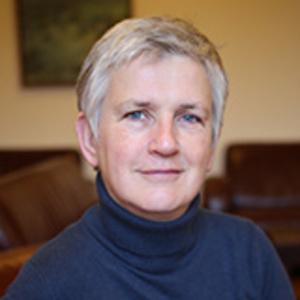
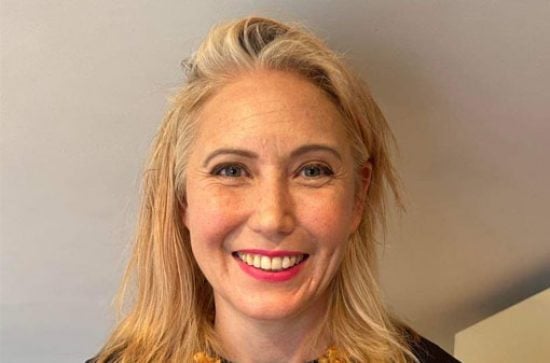
Rozenn Dahyot is a Professor of Computer Science at Maynooth University within the Faculty of Science & Engineering. She previously held roles as Assistant and Associate Professor in Statistics at Trinity College Dublin (2008-2021) and Lecturer in Computer Science (2005-2008). Her research interests bridge Digital Signal Processing, Computer Vision, Machine Learning, and Statistical Analysis. She organized the European Signal Processing Conference (EUSIPCO2021) in Dublin and served as President of the Irish Pattern Recognition and Classification Society (IPRCS) from 2014-2020. Her work spans topics like semantic scene understanding, CNN compression, and medical image segmentation. Key contributions include advancements in graph-based image analysis, reinforcement learning optimization, and AI-driven systems for disaster management. Dahyot is a member of IEEE, ACM, and EURASIP, contributing to both academic and industrial collaborations.
Dr. Sheila Castilho is an Assistant Professor at the School of Applied Language & Intercultural Studies, Dublin City University (DCU). She holds a PhD from DCU (2016) and a Master's from the University of Wolverhampton and University of Algarve. Her expertise lies in machine translation (MT), post-editing, and translation technology evaluation. She co-leads the New Trends in Translation Technology (NeTTT’22) conference and chairs DCU's Master in Translation Studies and Master in Translation Technology programs. Education: Licenciatura em Letras Inglês/Português (UNIOESTE University, Brazil) Master in Natural Language Processing (University of Wolverhampton & University of Algarve) PhD in Translation Technologies (Dublin City University) Research: Focuses on document-level MT evaluation, post-editing strategies, and user-centric MT assessment. Leads the DELA project and contributed to TraMOOC/iADAATPA initiatives. Published over 40 articles and co-edited 'Translation Quality Assessment: From Principles to Practice' (Springer, 2018). Grants & Projects: DCU PI for DELA (Document-level Evaluation) PRINCIPLE project (EU Low-resource MT) ELE (European Language Equality) initiative Labs/Teams: Active in ADAPT Centre (DCU) and collaborates with international NLP/MT communities (ACL, EMNLP, WMT).
Olga Ryazanova is a Lecturer in Management at Maynooth University School of Business and currently serves as Social Sciences Associate Dean of Strategy and Governance. She holds a PhD from University College Dublin and an MA from the State University Higher School of Economics. Her research focuses on strategic management of higher education institutions, particularly the interplay between individual academic careers and organizational outcomes. Key areas include scientific performance measurement, societal impact governance, and doctoral education. Dr. Ryazanova has secured significant funding through projects like the SFI-funded '(In)visible work: understanding and measuring research translation into policy' (2024-2026) and the EU H2020 CHAMELEONS project. She has published in prestigious journals such as Academy of Management Learning & Education , Research Policy , and Journal of World Business , earning awards including the Global Forum Award (2014, 2018) and Carolyn Dexter Award finalist status (2016). Teaching : Courses include Business Models, Innovation Management, and Quantitative Research Methods for PhD students. Editorial Roles : Associate Editor of Academy of Management Learning & Education (2020-2026) and editorial board member for British Journal of Management and Research Policy . Leadership : Served as Secretary and Research Coordinator for the Academy of Management's Management Education & Development Division. Her research consistently addresses systemic challenges in academia, including career capital development, international mobility impacts, and equitable recognition of Global South scholars. She actively collaborates with institutions globally through projects analyzing research networks and doctoral employability.
Dr. Kevin N. Cawley is Senior Lecturer in Korean Studies and Director of the Irish Institute of Korean Studies at University College Cork since 2011. He is a founding member of the 'Society for the Study of Pre-modern Asia' at the University of Oxford and serves as editor of Korean Philosophy for the Stanford Encyclopedia of Philosophy. Originally from County Armagh, Ireland, he completed his undergraduate degree at Trinity College Dublin in French and Irish, and earned his Masters and PhD in Korean Studies from the University of Sheffield. Dr. Cawley's research focuses on Korea's intellectual history, examining philosophical and religious traditions through contemporary critical theory. His work explores the interplay between Buddhism and Neo-Confucianism, Christianity and Neo-Confucianism in the late 18th/early 19th century, and the complexities of translating religious concepts across East Asian languages and cultures. He has developed a unique methodological approach adapting Jacques Derrida's 'de-construction' to address inter-cultural translational challenges. His research also extends to gender and sexuality, ethnicity and identity in Korean contexts. His publications demonstrate significant scholarly impact, particularly his 2019 book Religious and Philosophical Traditions of Korea which reached No. 5 on Amazon's 'hot new releases' in religion and spirituality. His recent work has focused on transnational East Asian studies, Catholicism in pre-modern Korea, and contemporary Korean soft power. The publications show consistent engagement with both historical Korean thought and its contemporary relevance across multiple disciplines including religious studies, philosophy, gender studies, and cultural studies. Scientific Awards and Recognition: Korea Foundation Award for Korean Studies Language Program 2022-2024 Academy of Korean Studies: SEED Program - $120,000.00 One Asia Foundation Lecture Series: $40,000.00 Korea Foundation Fellowship for Korean Studies 2015-2017 $90,000.00 Dr. Cawley has secured over €400,000 in research funding throughout his career and has served as editor for multiple academic journals including the Irish Journal of Asian Studies and Asian Ethnicity . He has organized numerous international conferences, including the North American Korean Philosophy Association Annual Conference at UCC. His media engagement includes regular interviews with RTE, BBC, and Korean media outlets on Korean affairs, demonstrating his role as a public intellectual bridging academic scholarship and public understanding of Korea.
Liadh Kelly is an Assistant Professor in the Department of Computer Science at Maynooth University's Faculty of Science & Engineering. She supervises PhD students in applied artificial intelligence, focusing on intelligent search, ubiquitous computing, and multimodal information access. She is affiliated with the ADAPT SFI Research Centre, SFI Centre for Research Training in Foundations of Data Science, and Human Health Institute. BSc in Computer Science MSc (Research) in Computer Science PhD in Computer Science Her research explores context-sensitive retrieval and evaluation methodology in AI-driven systems. Key areas include ubiquitous computing for personal data analysis, deep learning classification for mental wellness indicators, and multimodal lifelogging integration. Recent publications focus on urban mental wellbeing classification , contextual cue analysis , and AI-driven health search systems . Articles address smart city applications , consumer health search , and cross-lingual medical retrieval . Professional roles include Doctoral Consortium Chair at ECIR 2023 and Programme Committee member for SIGIR and ICWSM conferences. She leads grants for 4-year PhD studentships with stipend and fee coverage.
John Breslin is a Personal Professor in Electronic Engineering at the College of Science and Engineering, University of Galway, serving as Director of the TechInnovate and AgInnovate programmes. Associated with two Taighde Éireann – Research Ireland Centres, he is a Principal Investigator at Insight Centre for Data Analytics (specializing in data analytics) and a Funded Investigator at VistaMilk (Agri-Technology), while also leading the EDIH Data2Sustain project. With an h-index of 50, over 12,000 citations, and 300+ peer-reviewed publications including seminal books on the Social Semantic Web, he ranks among Ireland's most influential researchers in digital technologies. Breslin's research fundamentally bridges Semantic Web technologies, AI-driven data analytics, and practical innovation. His co-creation of the SIOC framework—implemented across 65,000+ websites by entities like Yahoo and Boeing—demonstrates real-world impact in social data interoperability. Current work leverages blockchain and federated learning for sustainable Agri-Technology through VistaMilk, while his TechInnovate programmes translate academic research into commercial ventures across healthcare, smart manufacturing, and energy systems. Analysis of his 15 most recent publications reveals dominant themes in AI-enhanced security (35% of works), blockchain applications for sustainability (27%), and multimodal AI for healthcare (20%). His team pioneers privacy-preserving techniques for IoT and medical devices, neurosymbolic visual reasoning frameworks, and federated learning architectures addressing data heterogeneity—directly supporting his roles in national research infrastructures like Insight and VistaMilk. John has received several prestigious awards: IIA Net Visionary Award (twice) ITAG Outstanding Contribution to the ICT Sector Award Galway Chamber President’s Award Best Irish-Published Book Award (2020 for Old Ireland in Colour) Multiple Best Paper Awards He leads major research initiatives funded by Taighde Éireann – Research Ireland: Insight Centre for Data Analytics (as Principal Investigator) VistaMilk SFI Research Centre (as Funded Investigator) EDIH Data2Sustain (as Principal Investigator) His entrepreneurial programs TechInnovate and AgInnovate have mentored 200+ startups, securing €50M+ in follow-on funding. Breslin co-founded PorterShed (Galway City Innovation District) and serves on Scale Ireland's Steering Group, creating Ireland's most active regional innovation ecosystem outside Dublin. He maintains active industry partnerships with Vodafone, Boeing, and agricultural cooperatives through VistaMilk's testbed facilities.
Professor Donna Marshall is a Full Professor and Vice-Principal for Research & Innovation at the College of Business, University College Dublin (UCD). She serves as the Executive Director of the UCD Earth Institute: People, Work, Society initiative and is a multi-award-winning Sustainable Supply Chain scholar. Professor Marshall is ranked among the top supply chain researchers globally, with over one hundred research outputs in prestigious journals including MIT Sloan Management Review, Journal of Business Ethics, and Production and Operations Management. Her educational background includes a BSc and PhD from the University of Bath, UK. Professor Marshall has extensive experience in academic leadership, having served as Head (Vice Principal) of Research, Innovation and Impact for the UCD College of Business from September 2018 to June 2021. Professor Marshall's research focuses on sustainable supply chains, with particular emphasis on climate crisis response, ethical sourcing, supply chain transparency, and the bio-circular economy. She is passionate about bringing systemic change to broken supply chains and addressing the world's biggest crises of climate chaos and exploitation of people and planet. Her current research projects include sustainable supply chains in fashion with Fashion's Responsible Supply Chain Hub (FReSCH), sustainable bio-circular economy initiatives, and transparency in complex supply chains including controversial industries. She has secured research funding with multiple national and international teams amounting to over €30 million. Her recent publications reveal a strong trend toward examining power dynamics, justice issues, and transparency in supply chains, particularly in the fashion industry. She has also made significant contributions to understanding issue-washing (including greenwashing and biowashing) and developing frameworks for sustainable biocircularity. Her work increasingly focuses on just transitions and ensuring that sustainability efforts authentically address social and environmental challenges rather than merely creating the appearance of progress. Harold E. Fearon Award for Best Paper in Journal of Supply Chain Management (2014) Nevi Healthcare Best Paper Award Runner up at IPSERA Conference (2015) Multiple teaching awards for her innovative approaches to supply chain education Former President of the International Purchasing and Supply Education and Research Association (IPSERA) Professor Marshall has extensive teaching experience across undergraduate, Masters, and PhD levels. She created and directed the QS-world ranked UCD MSc in Supply Chain Management, which evolved into the MSc in Sustainable Supply Chain Management in 2023. She serves on the editorial boards of multiple high-ranking journals and provides pro bono advisory services to international organizations, companies, NGOs, and government bodies. Her teaching philosophy emphasizes individualized learning, inclusivity, and life-long learning, with a focus on creating safe, encouraging environments for her diverse international student body. She leads several research teams and initiatives including Fashion's Responsible Supply Chain Hub (FReSCH) and works closely with industry partners to translate research into practical applications for more sustainable and just supply chains.
Dr. Ellen Rushe is an Assistant Professor at Dublin City University's School of Computing specializing in deep learning with limited supervision. Her research develops solutions for audio-visual data challenges including sign language recognition (SignOn Project), novelty detection, and domain adaptation for sports analytics. Previously a Research Fellow at Trinity College Dublin and Postdoctoral Fellow at UCD, she holds an MSc in Computer Science from UCD and BA in Music Technology from Maynooth University. Research focuses on: Limited-label learning paradigms Sign language recognition for low-resource languages Domain adaptation in sports video analysis Novelty detection in data streams
Dr. Máire Ní Ríordáin is a Senior Lecturer in the School of Education at University College Cork. She currently serves as M.Ed. Modular Programme Director, School of Education Examinations Officer, and Chair of the School of Education Research Ethics Committee. She is also Treasurer of the Educational Studies Association of Ireland (ESAI) and a serving member of their Executive Committee. Her educational background includes a BSc.(Hons.) in Physical Education and Mathematics from the University of Limerick (2005) and a PhD in Mathematics Education from the same institution (2009). Dr. Ní Ríordáin's research focuses on the intersection of language and mathematics education. Her primary interests include bilingualism (Irish and English) in mathematics education, mathematics teacher professional development, practitioner research in teacher education, and STEM education. She has developed frameworks like LCM2 to analyze bilingual mathematics learning and has contributed significantly to understanding how language influences mathematical cognition. Her work addresses critical issues in Irish education, particularly regarding the teaching of mathematics through Irish and supporting out-of-field mathematics teachers. Her extensive publication record demonstrates a consistent focus on language-responsive mathematics teaching, bilingual education, and teacher development. Recent work explores CLIL (Content and Language Integrated Learning) approaches, STEM education, and gender issues in mathematics learning. She has led major international conferences, including serving as Co-Leader of the 14th Congress of the European Society for Research in Mathematics Education. Teaching Council Research Bursary (2009) Advanced Scholar Award (2005) MACSI Postgraduate Scholarship (2006) Dr. Ní Ríordáin has supervised multiple doctoral students including Aoife O'Brien, Fergal Harrington, Laura Tagnin, and Bernie Ní Dhonnchú. She has secured significant research funding, including projects like M²EID (€95,500 from Irish Research Council), CaLSAM (€68,840 from ERASMUS), and several grants from University College Cork and the National Forum for the Enhancement of Teaching and Learning. She has been actively involved in national teacher development programs, particularly for out-of-field mathematics teachers.
Aileen Pearson-Evans is an Associate Professor in Intercultural Studies at the Dublin City University School of Applied Language and Intercultural Studies . Her work focuses on cross-cultural adaptation, intercultural training, and East-West communication, with over 25 years of experience teaching language and culture. She coordinates modules like LC575, LC407, and LC220, and has directed the DCU Languaculture Space since 2012. Education: PhD from Trinity College Dublin on Irish students in Japan, BA, MA, HDip, Ed. Research interests include intercultural communication theory, cross-cultural business management, and multicultural education. Her work examines conflict resolution in diverse workplaces and the role of language in cultural immersion. Scientific awards highlight her impact, such as the European Language Label 2018 for the Languaculture Space and the Albert College Research Fellowship (2002). She has also contributed to intercultural training materials like Europe at Work (DVD & manual) and consulted for organizations including THT Consultants and C.E.R.T.
Lai Ma is Associate Professor at the School of Information and Communication Studies, University College Dublin (UCD), where she also serves as Director of Research (2022–2025) and previously directed the MLIS and GradDipLIS programmes. She holds a PhD in Information Science from Indiana University Bloomington and a BSc(Econ) from The Chinese University of Hong Kong. Her work bridges philosophy, information science, and science policy. PhD, Information Science, Indiana University Bloomington MLIS, Indiana University Bloomington BSc(Econ), The Chinese University of Hong Kong Her research centers on the epistemology of information and knowledge production, with a focus on open research, scholarly communication, research evaluation, and research infrastructure. Influenced by critical social theory, philosophy of language, and STS, she investigates issues of epistemic injustice, bibliodiversity, and the political economy of academic publishing. A major theme is the critique of metrics and platformisation in research. Her recent publications reveal a strong trend toward analyzing the structural inequalities in global knowledge production, especially through the lens of open access models, citation practices, and research assessment. She critically examines how commercial interests and dominant platforms shape what counts as knowledge, often marginalizing voices from the global periphery. Best Paper Meta Reviewer Award Teaching Excellence Award Best Paper Reviewer Award Lai Ma leads the ERC Consolidator Grant project Sustainable and Collaborative Research Information for Bibliodiverse Ecosystems (SCRiBe) (2025–2030) and has secured other grants on open research culture. She actively mentors PhD students and has coordinated key modules such as Digital Libraries , Scholarly Communication , and Research and Practice in LIS . She serves on editorial boards and review panels for major journals and funding bodies, and has held leadership roles in ASIS&T and the Library Association of Ireland. She is affiliated with the UCD Geary Institute for Public Policy and contributes to policy discussions on research evaluation, ethics, and open science. Her work emphasizes the need for community-governed, equitable, and sustainable research infrastructures.
Silvana MacMahon is an Assistant Professor and Assistant Head for Research & Innovation in DCU's School of Computing. A Lero and ADAPT collaborator, her research covers Health IT risk management, standards development, and inclusive education for autistic software engineers. Awards include the NSAI 1997 Award and a Presidential Early Career Researcher honor. She chairs NSAI Health Informatics Standards Committee and contributes to ISO/IEC standards.
Dr. Abdul Shahid is a Lecturer in Business Information Systems at the School of Business, South East Technological University (SETU), Waterford campus. He holds a PhD in Computer Science from Capital University of Science and Technology, Islamabad, and has previously served as a Lecturer at the National College of Ireland and a Postdoctoral Researcher at the University of Galway, contributing to EU Horizon 2020 projects such as Polifonia and InsiDE PRI. Research Interests: Dr. Shahid's research lies at the intersection of data science, large language models (LLMs), scientometrics, and applied AI. His work emphasizes the development of intelligent systems for decision-making in logistics, cybersecurity, and semantic computing. He is particularly focused on citation analysis, contextual embeddings, and the deployment of Retrieval-Augmented Generation (RAG) frameworks in industrial applications. Recent Research Trends: His recent publications reflect a strong emphasis on natural language processing for scientific literature analysis, including in-text citation identification, intent classification, and semantic modeling. These works integrate machine learning with knowledge engineering to extract and structure scientific knowledge from academic texts. Scientific Awards: No specific awards mentioned in the provided text. Advising and Grants: Dr. Shahid is currently accepting PhD students. His research has been supported through participation in high-impact EU-funded projects such as Horizon 2020’s Polifonia and InsiDE PRI, which involved data-driven analysis of scientific collaboration and knowledge graph applications in cultural heritage. Labs and Research Teams: He has been affiliated with research teams at the University of Galway working on EU Horizon 2020 initiatives. At SETU, he contributes to research in applied AI and business information systems, particularly in developing intelligent solutions for logistics and document understanding.
Dr. Eithne O'Connell is an academic affiliated with the School of Applied Language & Intercultural Studies at Dublin City University (DCU), serving in the role of Associate Staff. Her research focuses on translation studies, language planning, minority languages (particularly Irish), and audiovisual translation. She has contributed extensively to understanding the role of translation in cultural preservation and policy implementation. Her work spans diverse areas such as screen translation challenges, children's literature translation, and the intersection of media and linguistic policy. Notable projects include analyzing Irish-language media strategies (e.g., TG4's contributions) and examining subtitling practices in minority language contexts. Dr. O'Connell has authored over 30 publications since 1985, with a recent emphasis on applied language education frameworks and industry collaboration. Her articles highlight themes like linguistic policy development for broadcasters, cross-cultural adaptation in children's literature, and the ethical dimensions of translation. While no formal awards or grants are listed, her work underscores the practical and theoretical intersections of language, media, and policy.
Anna Hickey-Moody is Director of the Arts and Humanities Institute and inaugural SALI Professor of Intersectional Humanities at Maynooth University, Ireland. Previously Professor of Media and Communication at RMIT University (where she held an Australian Research Council Future Fellowship) and Associate Professor of Gender and Cultural Studies at the University of Sydney, she brings a distinctive blend of creative practice and critical theory to the humanities. Education & Career: PhD supervision expertise across religion, disability, sexuality, gender and race. Led the CRiMP Lab (Creative Research in Methods and Practice) at RMIT. Future Fellowship project “Interfaith Childhoods” conducted arts-based fieldwork across Australia and the U.K. Research Interests: Hickey-Moody’s work mobilises new materialist, feminist and Deleuzian thought to explore how young people negotiate identity, faith, disability and class. Current projects examine pleasure and class in brown-coal mining communities and the role of arts methodologies in fostering inter-faith understanding. Publications trajectory: Her recent outputs (2022-23) foreground youth arts as popular education, decolonial pedagogies, and children’s carbon cultures, evidencing a sustained engagement with socially engaged practice, environmental humanities and inclusive education. Honours: Australian Research Council Future Fellowship Doctoral Supervision & Grants: An experienced PhD supervisor, she welcomes projects on religion, youth, disability, sexuality, gender and race. She has secured competitive international grants, most notably the ARC Future Fellowship, and continues to lead collaborative interdisciplinary teams. Labs & Teams: Founder of the CRiMP Lab at RMIT, a feminist research laboratory fostering queer and gender-diverse researchers working across creative practice-as-research, visual sociology and creative anthropology.