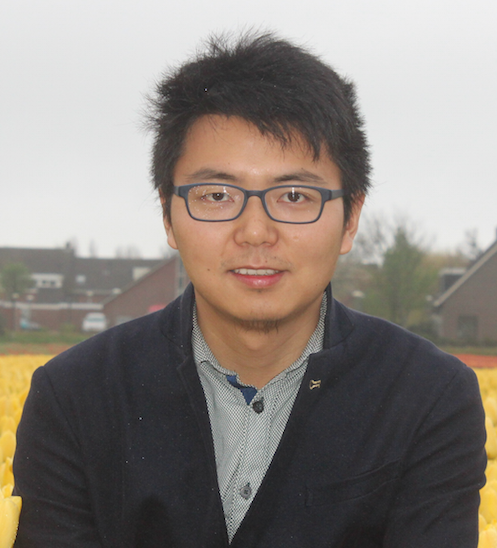
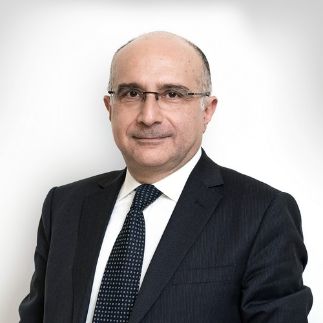
Li Li is a Professor of Software Engineering at Beihang University , China. Previously, he served as an ARC DECRA Fellow and Senior Lecturer at Monash University , leading the SMart software Analysis and Trustworthy computing (SMAT) research lab at the Department of Software Systems and Cybersecurity. His academic journey includes a Ph.D. in Software Engineering from the University of Luxembourg (2016), supervised by IEEE Fellow Prof. Yves Le Traon and Dr. Jacques Klein. Research Interests Li's research focuses on Mobile Software Engineering (Mobile Security, Quality Assurance) and Intelligent Software Engineering (SE4AI, AI4SE). He applies static code analysis , dynamic program testing , and machine/deep learning to enhance software security and reliability. Key areas include Android API evolution, automated patch validation, and multi-language code analysis frameworks like Scalpel for Python. Scientific Recognition ARC DECRA Fellowship Rising SE Research Star Top-5 Most Impactful Early Career SE Researchers (2020, 2017) 5 Best/Distinguished Paper Awards across PLDI, WWW, ASE, MSR, and SANER Academic Contributions He has contributed to foundational Android analysis tools (e.g., AndroZoo++, DroidRA) and developed scalable systems for distributed program analysis (Seads). His work appears in top venues like ICSE, ESEC/FSE, ASE, ISSTA, POPL, and TSE.
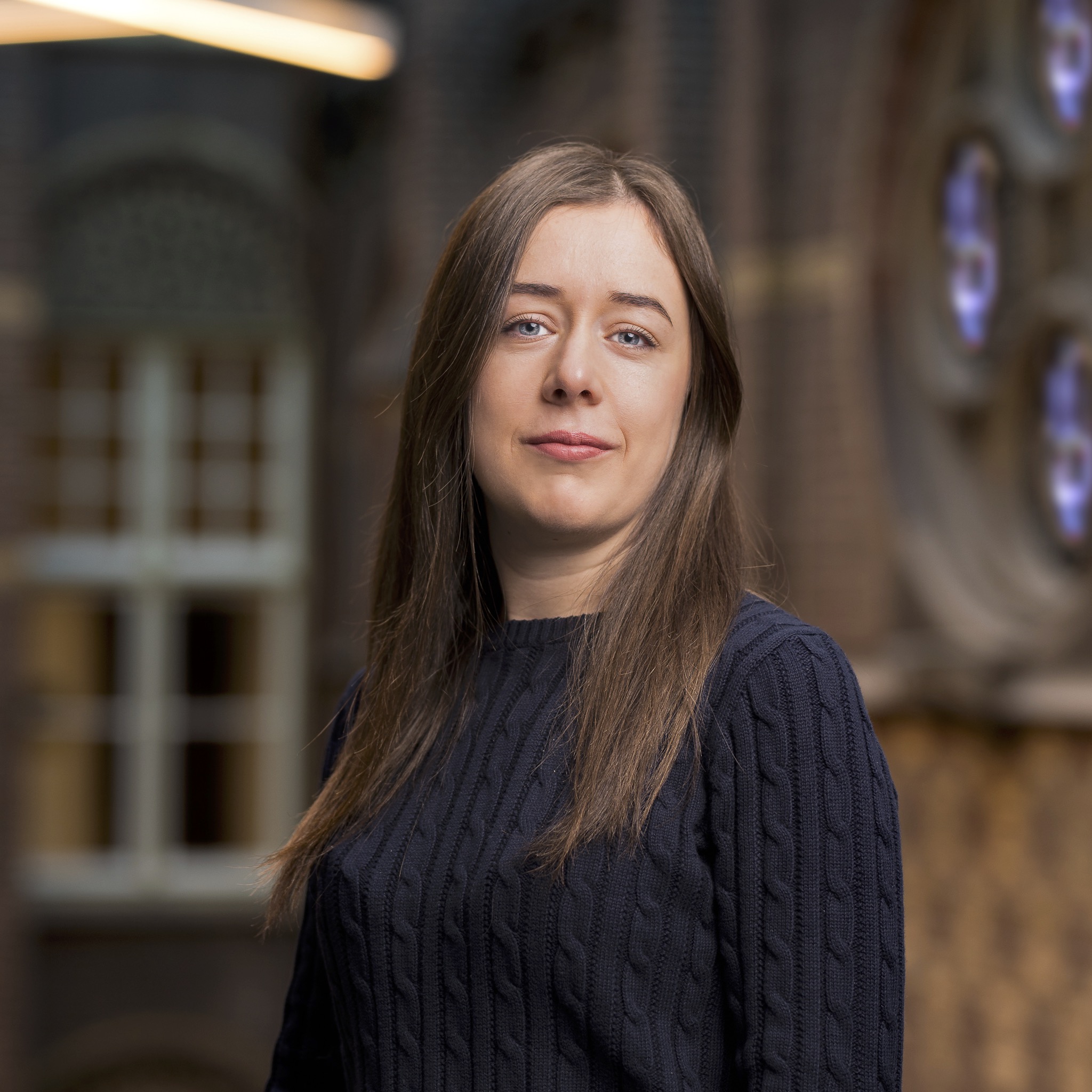
Gemma Catolino is an Assistant Professor at the Department of Computer Science, University of Salerno, and affiliated with the Software Engineering (SeSa) Lab. She has also served as an Assistant Professor at Tilburg University and Eindhoven University of Technology through the Jheronimus Academy of Data Science from September 2022 to December 2023, and previously as a Postdoctoral Researcher at Delft University of Technology and Tilburg/Eindhoven institutions. PhD in Computer Science, University of Salerno (2020), supervised by Prof. Filomena Ferrucci MSc in Management and Information Technology, University of Salerno (2016, magna cum laude) BSc in Computer Science, University of Molise (2014) Her research centers on empirical software engineering, focusing on both technical and social aspects affecting software development. Key areas include code smells, defect prediction, testability, changeability, and the emerging concept of “Community Smells”—social dysfunctions in developer teams. She investigates how human factors, team diversity (especially gender), and developer experience influence software quality and maintenance effort, often using mining software repositories and machine learning techniques. Her recent publications span high-impact journals and conferences such as IEEE TSE, EMSE, JSS, ICSE, and ICSME, with a strong trend toward integrating social and technical metrics for just-in-time defect prediction in mobile applications, analyzing community dynamics, and applying software quality metrics to cybersecurity contexts like dark web analysis. She has also contributed to MLOps and serverless computing. She has received several honors including a DEI research grant (2020), Best Technical Paper at BENEVOL 2019, first and second place in ACM Student Research Competitions (2018, 2017), and the Best Master Thesis award from the Italian Software Metrics Association (2017). Gemma Catolino has been actively engaged in academic service as a referee for top journals like IEEE TSE, EMSE, JSS, and IST, guest editor for special issues, and program/organizing committee member for major conferences including ICSE, MSR, SANER, and MobileSoft, where she served as Program Co-Chair in 2022. She has also contributed as a teaching assistant, lecturer, and course coordinator in machine learning and software engineering courses. She leads and contributes to research projects involving international collaborations, particularly with researchers such as Prof. Filomena Ferrucci, Prof. Andy Zaidman, Prof. Willem-Jam van den Heuvel, and Prof. Alexander Serebrenik. Her work bridges empirical software engineering with practical tool development and socio-technical analysis, positioning her at the forefront of modern software engineering research.
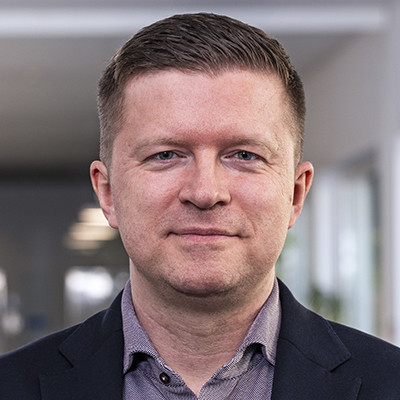
Paul Pronobis is a Professor at the University of Bolzano's Faculty of Economics and Business Administration. His research focuses on accounting standards (IFRS/US-GAAP), auditing practices, sustainability reporting, and corporate finance. He has published extensively on topics such as audit materiality disclosures, foreign ownership effects on audit fees, and the implications of mandatory IFRS adoption. His work bridges theoretical accounting frameworks with real-world applications in global financial markets. Prof. Pronobis teaches courses including 'Introduction to Accounting' for the Bachelor in Tourism, Sports and Event Management, 'Natural Language Processing and Web Analytics' for the Master in Data Analytics, and doctoral-level courses on Economics and Finance. His research emphasizes empirical analysis of financial reporting quality, cross-border regulatory challenges, and the impact of digital technologies on accounting practices. Key research themes include sustainability accounting standardization, pandemic-related financial reporting challenges, and the role of structured data (e.g., XBRL) in improving information supply chains. His studies often examine German and European markets, with contributions to understanding creditor decision-making processes influenced by audit transparency and materiality disclosures.
Silvia BOZZA is an Associate Professor in the Department of Economics at Ca' Foscari University of Venice, where she also serves as Department Delegate for Teacher Training for High Schools. Her academic profile is centered around Statistics (SSD STAT-01/A), with a strong focus on forensic applications of statistical methods. She maintains dual institutional affiliations, working within both the Department of Economics (based in San Giobbe) and the Interdepartmental School of Economics, Languages and Entrepreneurship for International Exchanges (located in Treviso - Palazzo San Paolo). Professor BOZZA's research primarily explores the application of Bayesian statistics to forensic science and legal evidence evaluation. Her work demonstrates a consistent trajectory from early publications on spatio-temporal models to her current specialized focus on forensic statistics. She has developed expertise in probabilistic graphical models, Bayes factors, and statistical decision theory as applied to evidence interpretation. Her research addresses critical questions in forensic science regarding how to properly evaluate and communicate statistical evidence in legal contexts, with particular attention to handwriting analysis, DNA evidence, and authorship attribution. Her publication record shows remarkable consistency and productivity, with over 90 publications spanning from 2001 to 2025. Recent work (2022-2025) demonstrates her ability to address contemporary challenges, including AI authorship discrimination using Bayesian methods for distinguishing human from ChatGPT-generated text. Her articles frequently appear in high-impact forensic and statistical journals including Law, Probability & Risk, Forensic Science International, and Annual Review of Statistics and its Application. Professor BOZZA actively supervises undergraduate and graduate theses involving data analysis, requiring knowledge of statistical software including the R programming language used in the Statistics for Economics Laboratory course. She encourages students to propose topics while offering guidance to refine research questions. Her office hours show she maintains regular availability for student consultations, indicating active engagement in academic mentoring.
Marco Porta is a Full Professor at the University of Pavia, Department of Electrical, Computer and Biomedical Engineering. He teaches Web and Multimedia Technologies in the Computer Engineering Master's program and Web Design and Technologies in the interdepartmental CIM Bachelor's program. His research focuses on Eye Tracking, Vision-Based Perceptive Interfaces, and Human-Computer Interaction, with recent emphasis on AI applications for human-centered systems. He leads the Computer Vision & Multimedia Lab and chairs teaching councils for CIM and CoD programs. Education: Master's in Electronic Engineering (Polytechnic of Milan) and Ph.D. in Electronic & Computer Engineering (University of Pavia). Professional roles include vice-chair of IEEE's Technical Committee on Factory Automation. Over 118 publications in journals/conferences, with contributions to biometrics, e-learning interfaces, and industrial automation. Research highlights include gaze-based authentication systems, interactive museum interfaces, and ergonomic in-vehicle infotainment evaluations. Current projects explore gaze-driven intelligent tutoring systems and public space interaction frameworks.
Marco Aldinucci is a Full Professor and Head of the Parallel Computing group at the University of Torino's Computer Science Department. He leads the HPC Key Technologies and Tools (HPC-KTT) national lab under CINI, involving 38 Italian universities. His expertise spans parallel programming models, HPC systems, federated learning, and energy-efficient computing. Aldinucci has secured over €10M in EU research funding, contributed to frameworks like Fastflow and Streamflow, and pioneered initiatives like the HPC4AI lab and the CINI HPC-KTT lab. His research focuses on advancing exascale computing, cloud-HPC integration, and AI-driven medical solutions. Notable projects include the Gaia AVU-GSR solver for exascale systems and the DeepHealth Toolkit for medical AI. He has held governance roles in EuroHPC and chairs the Observatory on Trends and Applications of Supercomputing in Italy. Aldinucci’s publications (150+) address parallel algorithms, distributed learning, and sustainable HPC infrastructure. His work has been recognized with awards from HPC Advisory Council, NVIDIA, IBM, and Autodesk. Current initiatives include the Software & Integration lab at the Italian National HPC Centre (ICSC) and leadership in the OpenScience working group at Torino. His advising includes Iacopo Colonelli, whose thesis won CINI’s 2023 best award. He actively engages in EU projects, workflow systems, and standards for hybrid computing environments. Aldinucci’s labs and collaborations drive innovations in HPC portability, energy efficiency, and AI scalability.
Giuseppe Desolda is an Associate Professor at the Computer Science Department of the University of Bari Aldo Moro , where he has been since July 2, 2022. He leads research at the Interaction, Visualization, Usability & UX (IVU) Lab , focusing on Novel Interaction Techniques , Internet of Things development, and Usable Security . His work includes coordinating the PRIN PNRR DAMOCLES project (2022-2025) on human-centric cybersecurity and leading Work Package 1 of PNRR SERICS. PhD in Computer Science from University of Bari Co-author of over 110 publications Associate Editor for IEEE Access Journal Research interests span Human-Computer Interaction (HCI), End-User Development (EUD) for IoT, and Usable Security systems. His recent work explores AI-driven usability evaluation, voice-based 3D modeling, and GDPR-compliant software frameworks. Article trends show focus on phishing mitigation , smart environment customization , and privacy-by-design methodologies. Publications appear in TOCHI , FGCS , IJHCS , and BIT . Scientific achievements include: Selected for Heidelberg Laureate Forum (2019) LARE spin-off grant (EUR 50,000, 2013) He supervises PhD students Andrea Esposito and Francesco Greco, and has advised multiple funded research projects (PRIN DAMOCLES, DevProDev, PNRR SERICS). Teaching roles include courses on Human-Centered AI, IoT Security, and Web Programming across undergraduate and graduate programs.
Luca Guarnera is a Fixed-term Assistant Professor (RTDA) of Informatics at the Department of Mathematics and Computer Science, University of Catania. Born in Catania on October 26, 1992, he has been a research fellow in Computer Science at the University of Catania since January 1, 2022. His academic journey includes a PhD in Computer Science (XXXIII cycle, PON number E37H18000330006) from the University of Catania, with part of his research conducted at the University of Hertfordshire under Prof. Salvatore Livatino. PhD in Computer Science, University of Catania (2018-2021) Master's Degree in Computer Science (cum laude), University of Catania (2015-2017) Bachelor's Degree in Computer Science, University of Catania (2011-2015) Guarnera's research focuses on Computer Vision, Machine Learning, and Multimedia Forensics, with special emphasis on Deepfake Detection across images, video, audio, and multimodal data. His work explores intrinsic traces left during content creation processes, VR applications for forensic analysis, and deep learning approaches to forensic problems. He has contributed significantly to forensic firearms ballistics analysis through immersive VR observation and handwritten document analysis. His publication record shows a strong trajectory in deepfake detection technologies, evolving from early work on convolutional traces to current research distinguishing between GAN and Diffusion Model outputs. His research spans both theoretical foundations and practical applications in digital forensics, with increasing focus on multimodal approaches and real-world implementation challenges. Guest Editor for Special Issue 'Advancements in Deepfake Technology, Biometry System and Multimedia Forensic' in MDPI Journal of Imaging Guarnera actively participates in the academic community as a reviewer for international journals and has contributed to prestigious international events as a Technical Program Committee member. His research is supported through collaborations with industry partners like iCTLAB srl and academic institutions. He is involved in the HEALTHY-UNICT project studying dietary habits of college students through ecological momentary assessment approaches. As a member of IPLab (Image Processing Lab) since 2015, Guarnera has been involved in various research initiatives including participation in Mohamed Bin Zayed International Robotics Challenge (MBZIRC) competitions and international summer schools (ICVSS, MISS, S3P). His work bridges theoretical computer science with practical forensic applications, particularly in the rapidly evolving field of deepfake detection and multimedia authentication.
Roberto Cavallaro is a Full Professor of Psychiatry at the Faculty of Medicine and Surgery of Vita-Salute San Raffaele University. He serves as President of the Degree Course in Medicine and Surgery and leads the General Psychiatry Rehabilitation Unit and Disease Unit for Psychotic Disorders at IRCCS Ospedale San Raffaele. With a career spanning over three decades, he specializes in clinical psychopharmacology, neuropsychology, and neurocognitive rehabilitation, particularly in schizophrenia and psychotic disorders. Education: Graduated in Medicine (1987) and specialized in Psychiatry (1991) from the University of Milan. Research Interests: Focuses on schizophrenia pathophysiology, clinical psychopharmacology, neuropsychological rehabilitation, and the genetic modulation of cognitive performance. His work integrates neurobiological, pharmacological, and psychological approaches to address cognitive deficits in psychiatric disorders. Publications & Conferences: Authored/co-authored over 100 peer-reviewed articles and organized international conferences like the 'Cognition in Schizophrenia Satellite Meeting' since 2008. Recent research explores psychedelic drug effects, neuroinflammation in schizophrenia, and integrated translational studies combining genomic and microbiome data. Awards: Fellow of the European College of Neuropsychopharmacology (ECNP). Leadership Roles: Director of the Master's Degree in Clinical Psychopharmacology, member of the Schizophrenia Research: Cognition editorial board, and reviewer for DSM-V. Teaching: Leads courses in Psychiatry, Clinical Psychology, and Psychopharmacology across undergraduate and graduate programs at Vita-Salute University. Labs/Teams: Oversees clinical and research activities in the General Psychiatry Rehabilitation Unit and collaborates with multidisciplinary teams in neurocognitive rehabilitation and pharmacotherapy.
Monica Barni is a Full Professor at the Department of Modern Literature and Culture, Sapienza University of Rome, specializing in Educational Linguistics and Multilingualism. She serves as the President of the Degree Course in Communication and Interpreting in Italian Sign Language (LIS and LIST) and directs the Ateneo Linguistic Center. Her research spans language policy, Italian L2 education, and the sociolinguistics of migration. Research Interests: Analysis of linguistic policies in Italy and Europe Assessment of language competencies Plurilingual and intercultural education Linguistic landscapes in multicultural urban contexts Translation theory and practice Recent Article Trends: Her 2025 and 2024 publications focus on urban multilingualism, language transmission in migrant families, and policy intersections in education. Earlier works (2022-2023) examine Italian certifications, museum semiotics during pandemics, and European linguistic frameworks like CEFR. Labs & Teams: She leads the Ateneo Linguistic Center and contributes to the GISCEL research network. Her work intersects with projects like Lingua e cittadinanza (Language and Citizenship) and international collaborations in Italian language education.
Maurizio Leotta is an Assistant Professor in Computer Science at the University of Genova, Italy, where he has been employed since 2018. He is a member of the Department of Computer Science, Bioengineering, Robotics, and Systems Engineering (DIBRIS) within the School of Mathematical, Physical and Natural Sciences. Additionally, he serves on the School Council and the Department Board of DIBRIS. Dr. Leotta received his PhD in Computer Science from the University of Genova in 2015, with a thesis on Automated Web Testing under the supervision of Prof. Filippo Ricca. His doctoral work was revised by Prof. Massimiliano di Penta (Università del Sannio, Italy) and Prof. Ali Mesbah (University of British Columbia, Canada). Before his academic career, he worked as an IT Technician in various companies and participated in research and industrial projects funded by organizations such as Finmeccanica S.p.A. and the Italian Space Agency. Dr. Leotta's primary research focuses on Software Engineering, with particular emphasis on Test Automation, which is his main research topic. He collaborates with Prof. Paolo Tonella from USI, Switzerland on this area. His other significant research interests include Empirical Software Engineering, Requirements Engineering, Business Process Modelling, and Model-Driven Software Engineering. His work often addresses practical challenges in web and mobile application testing, with a growing interest in applying AI and gamification techniques to improve software testing processes. His recent publications demonstrate a strong trend toward integrating artificial intelligence with traditional software testing methodologies, particularly in end-to-end web testing. He has made significant contributions to improving test robustness, addressing flakiness in test execution, and developing tools for better test maintenance. His work also shows increasing interest in gamification approaches to engage developers and students in software testing activities, as well as applications of large language models to enhance test automation. Dr. Leotta has received multiple prestigious awards for his research, including: Best Paper Award at ICST 2025 (Short Papers, Vision and Emerging Results) Distinguished Paper Award at ICST 2023 (Industry Papers) Best Paper Award at QUATIC 2022 (Full Papers) Best Paper Award at ICST 2022 (Demo and Testing Tool Papers) Best Paper Award at QUATIC 2020 (Full Papers) Best Student Paper Award at ICWE 2016 (Full Papers) Dr. Leotta has advised numerous graduate students, including three PhD candidates who have completed their degrees (Andrea Fasciglione in 2024, Dario Olianas in 2023, and Diego Clerissi in 2020). He currently supervises multiple Master's students working on topics related to software testing, web accessibility, and AI applications in software engineering. He has also served as a postdoctoral advisor for researchers including Diego Clerissi and Dario Olianas. Beyond advising, Dr. Leotta has secured research funding through collaborations with industry partners and has been involved in multiple research projects focused on software testing and verification. He co-directs the Software Engineering for Healthcare (SEH) Laboratory, which has been partially supported by Janssen Italia (previously by Actelion Pharmaceuticals Italia). The lab focuses on applying software engineering techniques to healthcare applications, particularly in the areas of wearable technology for patient monitoring and medical data analysis. Dr. Leotta is also active in the Gamify research community, organizing workshops on gamification in software development, verification, and validation.
Francesco Strada is a Fixed-term Assistant Professor at the Department of Control and Computer Engineering (DAUIN) at Politecnico di Torino. He serves as a Course Lecturer for Virtual Reality and Technical Art for Cinema and Video Games, and as a Course Collaborator for multiple courses across Computer Engineering, Film and Media Engineering, and Architecture programs. He is an active member of the College of Computer, Film and Mechatronics Engineering and the College of Architecture and Design teaching committees. Dr. Strada's research focuses on Computer Graphics, Virtual Reality, Augmented Reality, and Human-Computer Interaction with particular emphasis on Embodied Conversational Agents, emotion recognition, and serious games applications. His work bridges technical computer science with psychological and human factors considerations to create more believable and effective virtual experiences. His research spans applications in education, healthcare, automotive interfaces, cultural heritage, and emergency response training. His recent publications demonstrate a strong trend toward emotionally intelligent virtual agents, VR/AR applications in specialized domains, and technical innovations in latency management and digital human representation. His work often combines psychological principles with technical implementations to enhance user experience and system effectiveness. Dr. Strada actively supervises PhD students including Alessandro Emmanuel Pecora, Stefano Calzolari, and Leonardo Vezzani, whose research focuses on Emotionally Aware Embodied Conversational Agents (E2CA) and Car AR-HUD design. He leads significant research projects including Holo-BLSD (2024-2025), a Mixed Reality tool for first aid emergency response training, and '50 shadows of AI' (2025), focusing on personalized education in corporate settings. He is a member of the CGVG - Computer Graphics and Vision Group at DAUIN, where his team develops cutting-edge applications in AR/VR, Human-Computer Interaction, User Experience, Computer Vision, Machine Learning, and Artificial Intelligence. His research has practical applications in education, training, healthcare, automotive interfaces, and cultural heritage preservation.
Eduardo Navarrete Sanchez is an Associate Professor at the University of Padua, Italy. His research focuses on understanding how language and cognition interact, particularly in areas such as psycholinguistics, bilingualism, and language production. His work integrates experimental psychology, neurolinguistics, and cognitive neuroscience to explore topics like foreign language effects on social judgment, the neural basis of bilingualism, and the role of language in attention and decision-making. Key research interests include: Psycholinguistics Cognitive Science Bilingualism and Multilingualism Neurological Language Disorders Social and Cognitive Effects of Language His recent publications (2023–2025) highlight trends in examining language-accent credibility effects, cross-linguistic decision-making, and neurobiological underpinnings of bilingual language control. He has contributed to advancements in understanding how sociolinguistic factors influence perception and behavior, including studies on foreign language effects on social norms and deception detection mechanisms. Eduardo’s work bridges theoretical models of speech production with clinical applications, such as developing neuropsychological assessment tools for acquired brain injuries. His research often employs methods like pupillometry, electrophysiological recordings, and neuroimaging to study language processing dynamics.
Raffaella Bernardi is an Associate Professor at the University of Trento, affiliated with the Department of Information Engineering and Computer Science (DISI) and the Center for Mind/Brain Science (CIMeC). She holds a PhD in Logic and Language from Utrecht University (2002) and has held academic positions at the Free University of Bozen-Bolzano and the University of Trento. Her research focuses on computational linguistics, formal semantics, distributional semantics, and multimodal models, with a particular emphasis on integrating vision and language systems. Education: PhD in Logic and Type Theory (2002, Utrecht University), Master's in Philosophy (1994, University of Chieti), and High School Diploma (1990). Research Interests: Natural Language Processing, Categorial Type Logic, Compositional Distributional Semantics, Visual Dialogues, and Multimodal Reasoning. She has pioneered work on grounding language in visual contexts and has contributed to key projects like the ERC-funded COMPOSES initiative. Grants & Leadership: Principal Investigator on EU projects (e.g., CACAO, Galateas) and member of the ERC COMPOSES team. She chairs conferences like ACL and EMNLP and serves on editorial boards for journals like the Journal of Logic, Language, and Information. Labs: Leads the LaVi (Language and Vision) research group and collaborates with the CLIC Lab. Active in organizing workshops on Formal Grammar and Vision-Language Integration.
Eric Eaton is a prominent researcher in Computer Science, specializing in Artificial Intelligence, Reinforcement Learning, and Federated Learning. His work bridges theoretical advancements with practical applications in healthcare, robotics, and educational technology, as evidenced by his collaborations with institutions like the Vector Institute and co-authors such as Marcel Hussing and Amir-massoud Farahmand. Research Focus: Lifelong Learning, Object-Centric Representation, and Algorithmic Fairness Key Contributions: ELLA algorithm, Distributed Continual Learning frameworks, and AI integration in surgical video analysis His recent publications address critical challenges in high update ratio reinforcement learning, federated learning for surgical data, and ethical considerations in algorithmic fairness. These works highlight his interdisciplinary approach, combining AI with healthcare and education. Eaton's leadership in projects like FORLA and Slot-BERT demonstrates innovation in unsupervised learning and temporal coherence. His involvement in the CS2023 curriculum design underscores his commitment to advancing computer science education.